New buds sprout from old trees, and the sharp rise in storage prices has led to a sales boom of magnetic tapes.
"Buy earlier, enjoy earlier; buy later, enjoy discounts" is undoubtedly the "empirical formula" of the consumer electronics industry. However, after the price of memory chips has continued to rise for nearly a year, everything is different. Nowadays, almost all consumer electronics products that use memory chips, ranging from mobile phones and computers to cameras, have seen price hikes, so much so that the topic #Prices of the three essential back-to-school items all rise, parents say they can hardly afford it# has hit the trending list on social platforms during the school opening season.
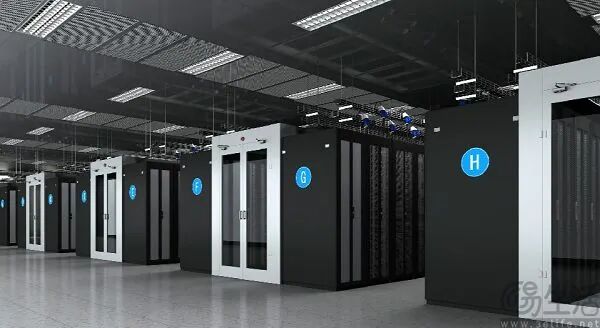
Apart from affecting consumer electronics products that use memory chips, the rising price of storage has also brought an unexpected beneficiary, which is magnetic tape. The latest data released by the LTO Consortium, composed of HPE, IBM and Quantum, shows that the total shipped capacity of LTO-compatible tape media in the first quarter of 2026 surged by 57% year on year.
According to the LTO Consortium, this growth rate could have been even more impressive if it were not for the negative impact of geopolitical uncertainties on business targets. According to Hugues Meyrath, CEO of Quantum, a data storage enterprise, magnetic tape is re-establishing its core strategic position in modern data infrastructure.
Why has magnetic tape, which is generally considered outdated by the public, re-emerged as an important cornerstone of data centers? Nowadays, the parameter scale of large AI models often reaches the trillion level, and the parameter scale of OpenAI's latest GPT-6 Astra even hits the 10-trillion level, which represents massive data behind it. These data are not disposable, and AI manufacturers also need to store them properly.
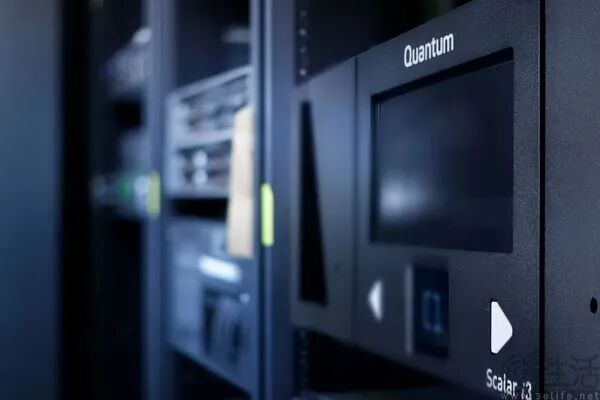
According to Wall Street analysts, AI training and inference workloads, as well as traditional data archiving demands, are jointly injecting growth momentum into the magnetic tape market. Faced with the pressure of massive data throughput and preservation, an increasing number of institutions are not only introducing magnetic tape into their auxiliary storage architectures, but even starting to consider it as a stable anchor point in the hybrid storage layer.
In practical applications, data also shows significant access heterogeneity, which is usually divided into "hot" and "cold" based on access frequency and application scenarios. Hot storage saves data that requires fast and frequent access to support real-time analysis and transactional operations, while cold storage is used for rarely accessed archived data that requires low-cost and long-term retention.
The larger the data volume, the more popular cold storage becomes, and magnetic tape is the cheapest and most cost-effective storage medium among all options. The reason why magnetic tape becomes the optimal choice for storing cold data is that SSD (Solid State Drive) using electronic media is not only expensive, but its natural discharge characteristic also means it has a limited service life. Although laser ablation optical discs are theoretically the best option, they have extremely high requirements for the storage environment: too low or too high temperature, strong light, and humidity will all cause damage to the discs.
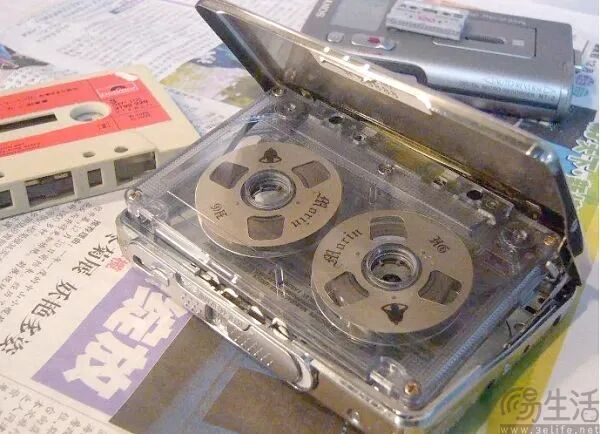
In contrast, although degaussing is indeed a problem for magnetic tape, the data loss caused by natural magnetic decay and magnetic dispersion usually occurs on the millennium order of magnitude. As for HDD (Hard Disk Drive), which also uses magnetic materials on the disk surface to store data, its defect lies in the fact that the magnetic head and disk platter are easy to be damaged.
Moreover, magnetic tape has two other hidden advantages, namely security and environmental protection. Since magnetic tape can be stored offline (Air Gap), it can isolate network attacks and virus risks after disconnection, acting as the last line of defense against cyber threats. If the online copies of an enterprise are damaged, the importance of offline copies for data recovery is self-evident.
In addition, magnetic tape is usually used for offline storage, and it does not consume power when storing data in an offline static state. In contrast, hard disks need continuous power supply, which will generate heat and increase refrigeration energy consumption. IDC's forecast shows that by transferring data storage locations from mechanical hard disks to high-density magnetic tapes, a cumulative 43.7% reduction in carbon emissions is expected by 2030, equivalent to about 664 million tons, which is equal to the annual greenhouse gas emissions of 140 million passenger cars.
As an evaluation system to measure the sustainable development performance of enterprises and organizations, ESG (namely Environmental, Social and Governance) is one of the criteria for judging the long-term value of enterprises, and almost all tech giants regard it as the core of their operations. Storing data with magnetic tape to reduce greenhouse gas emissions is also an achievement that can be recorded in the financial report.
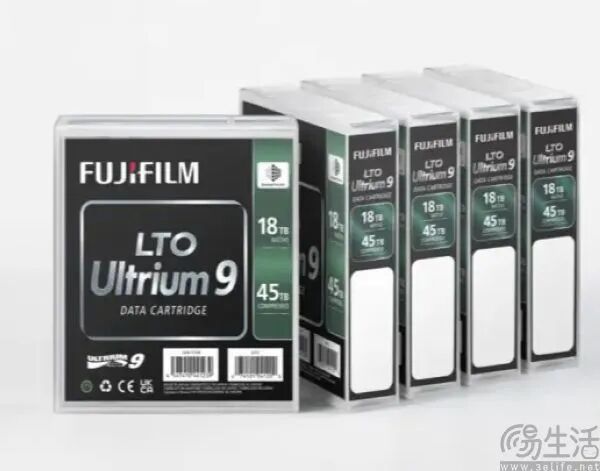
Of course, the reason why magnetic tape has become the favorite of data centers in the AI era is also inseparable from the progress of related technologies themselves. Taking the currently large-scale commercialized LTO-9 tape as an example, its native capacity per cartridge is 18TB, which can reach 45TB after compression, and its native sustained data transfer rate is about 400MB/s, with the maximum sustained transfer rate reaching 1000MB/s after compression is enabled. In addition, the LTO roadmap has extended to LTO-14, whose native capacity per cartridge is as high as 576TB, and can reach 1440TB after compression.
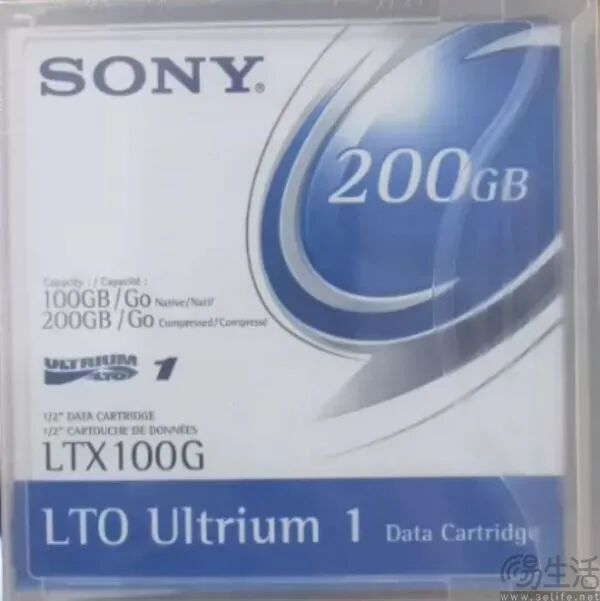
In fact, magnetic tape is favored by more and more manufacturers not because its performance is exceptionally superior, but because of its cost-effectiveness, which allows it to expand massive storage space rapidly at an extremely low marginal cost per TB.
This article is from the WeChat Official Account "3eLife" (ID: IT-3eLife), author: San Yijun, published by 36Kr with authorization.