The apparel industry finally has a new story: from the trend of overseas consumers buying Chinese clothing via reverse daigou, to Chinese brands opening stores in Paris.
What are the essential differences between the new generation of Taobao brands and the previous batch?
In the article "Why These Brands Have Become 'New Local Specialties' Sought After by Foreign Tourists", we mentioned that Taobao apparel is becoming a "new Chinese specialty" favored by overseas consumers. On social platforms such as TikTok and Instagram, researching "daigou of Taobao streetwear brands" has become a proven traffic growth hack for overseas content creators.
This cross-border aesthetic recognition has also made Chinese apparel brands on Taobao the top choice for private wardrobes of an increasing number of celebrities at home and abroad. Brands including CFIERCE, HAMCUS and 24ANS frequently appear on the stages of K-pop groups such as NewJeans and BLACKPINK; GFinnerthought, which has long ranked first in the bestseller list of Taobao designer men's clothing stores, has been worn as private outfits by male celebrities including Jackson Wang and Bai Jingting; alright then, a brand that focuses on "casual styling", even co-created the "NANA'S FARM MARKET" product line with Ouyang Nana this year.
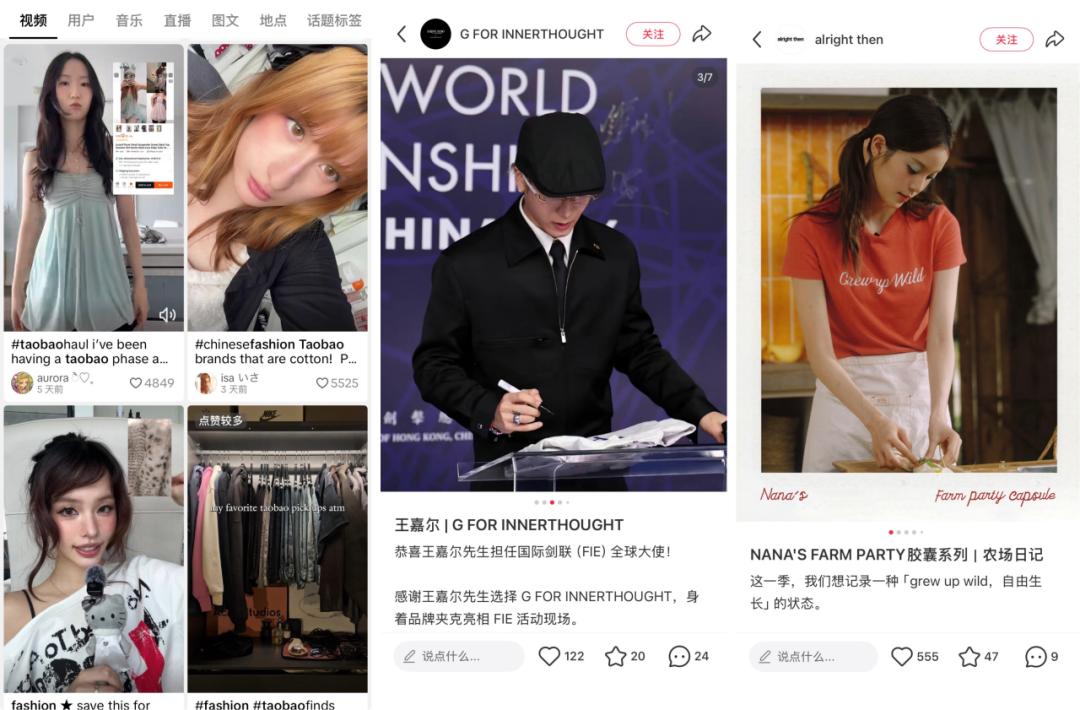
Furthermore, a large number of "hidden champions" have quietly emerged within the Taobao ecosystem. Founded in 2019, "MEIYANG" has exceeded 6 billion RMB in omnichannel annual GMV. This business scale not only outperforms the vast majority of its peers, but is even comparable to or higher than some listed domestic apparel groups.
Along with rising sales and spillover of brand momentum, these brands are collectively expanding offline, entering high-end shopping malls and non-standard commercial districts in core cities. In particular, the offline expansion momentum of the four leading Taobao women's apparel brands over the past year has become a topic of widespread industry attention.
Why has a new generation of Taobao brands emerged even as the apparel industry faces growing headwinds? What essential differences do they have from the previous batch of Taobao-originated brands? If "original design", "brand awareness" and "omnichannel operation" have become the common labels of these "new Taobao brands", is this development path worth learning from for more brands?
What Makes This Batch of Apparel "New Taobao Brands" Different
Ten years ago, the first generation of e-commerce apparel brands, whether they grew through KOL collaborations or independent store operations, succeeded by seizing the early traffic dividends of platforms and creating hit products relying on supply chain price gaps across industrial belts. However, as basic supply becomes oversaturated and traffic dividends peak, new opportunities have emerged in the apparel industry: brands must either control costs through supply chain efficiency, or build differentiation through aesthetics, originality and product quality.
As previously mentioned by Narrowcast, Chinese apparel brands represented by ICICLE and songmont are breaking the stereotype of "low price and low quality" and outputting unique aesthetics and cultural roots. Today, these "new Taobao brands" are also converting aesthetic dividends into tangible business opportunities through innovations in design or quality.
According to the China Fashion Consumption Development Report jointly released by the Fashion Research Institute of China Culture Media Group and Bain & Company, emotional drive, lifestyle expression and added cultural value have become common weights in fashion consumption decision-making across all age groups.
Meng Tianchu, founder of women's clothing brand UNICA, has deep insights into this trend. When defining their target audience, they no longer follow the traditional women's clothing practice of labeling groups by age, but focus on a group of women who pursue independent aesthetics and lifestyles, and continue to invest in raw materials, design techniques and product texture.
Kaijian, CHICJOC and C'EST M, which together with UNICA form the "Four Leading Brands" of Taobao women's clothing, have also risen rapidly by seizing this wave of aesthetic and quality dividends, jointly forming a brand identity distinct from low-cost mass-market women's clothing.
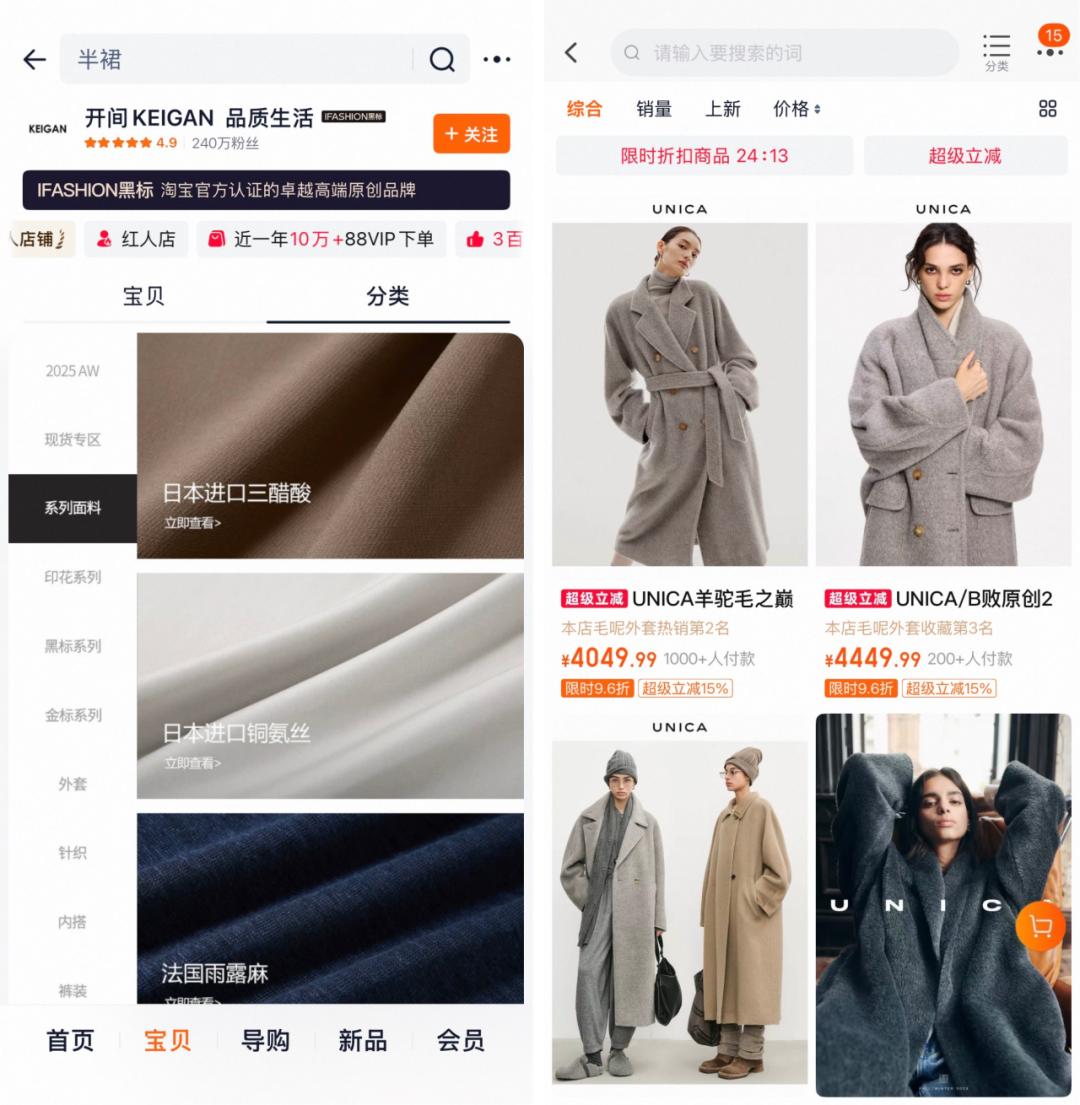
UNICA's premium alpaca wool series & Kaijian's fabric series
Women's clothing brand "Fu Zhien Firelady Fur" has reshaped the operating logic of the fur category through design innovation. As the "second-generation fur entrepreneur" in Haining, founder Sun Lina noticed the younger generation's resistance to traditional fur styling that "pairs with high heels and luxury bags, which is rigid and full of social distance". She founded the Fu Zhien brand in 2017, positioning it for a younger, more daily use scenario.
The brand's first set of visual shoots was completed on the streets of South Korea, with baseball caps, canvas shoes and jeans mixed in to eliminate the "luxurious socialite" vibe of fur. This approach hit the aesthetic preference of the younger generation, driving the brand to achieve annual sales of over 1 billion RMB in six years, and forming the brand gene of "making fur a daily wear item".
Changes in the men's wear market come from a different path. PD, founder of GFinnerthought, mentioned that the rise of outdoor apparel has made male consumers more aware of fabrics and materials, and the past consumption logic of "as long as it is wearable" has begun to fade. Under this trend, GFinnerthought focuses on the minimalist quiet luxury style, upgrades men's wear fabrics, and even adopts some fabrics traditionally used for women's clothing. These new materials in fashion men's wear can better support innovative tailoring and detailed design of auxiliary materials.
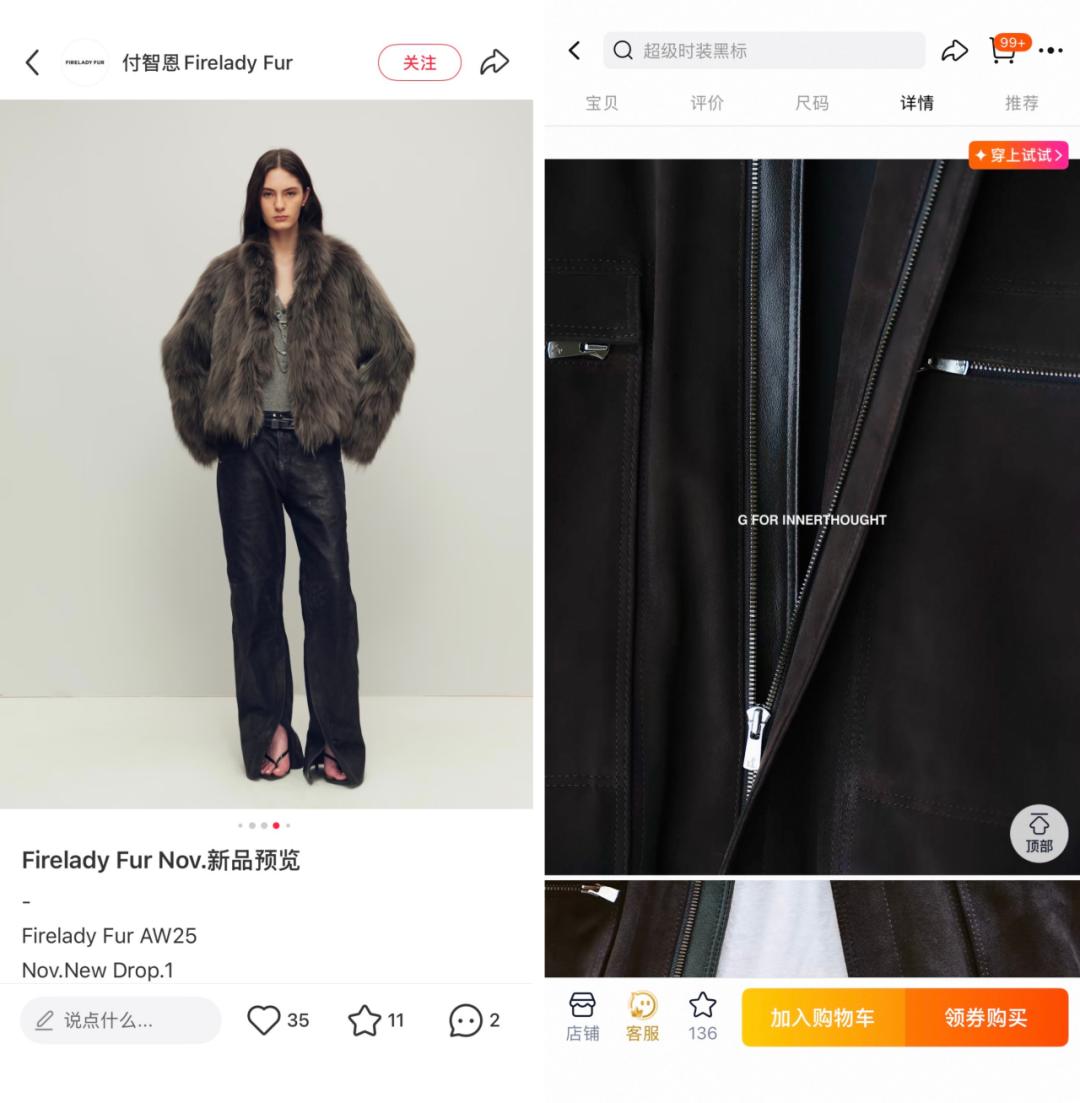
Fu Zhien that "makes fur daily wear" & GFinnerthought that focuses on auxiliary material details
These brands have different styles, but their common point is to build brand recognition through aesthetics and quality.
Taobao, as the main online apparel sales position, is also adjusting its platform rules. In August this year, Taobao officially launched the "IFASHION Black Label" program, selecting the first batch of 17 original brands from millions of merchants, with core assessment indicators including originality, visual aesthetics, the brand-oriented development trend of the store, and the presence of departments such as the marketing team in the organizational structure.
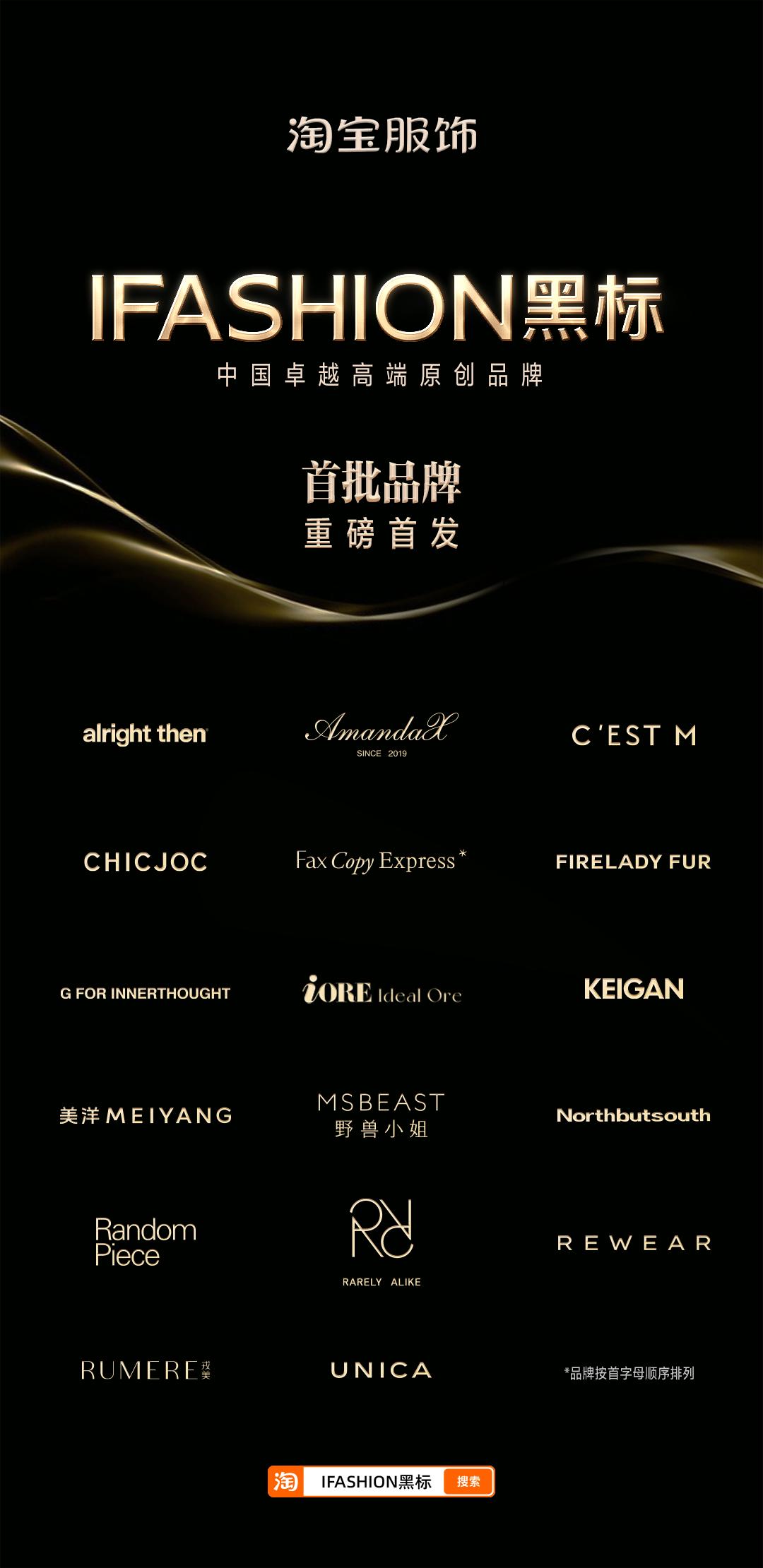
The "IFASHION Black Label" not only provides these merchants with official certification, original content protection and other support, but also provides a brand development reference system for more apparel merchants. Since last year, Taobao has successively launched more original protection mechanisms, including cross-platform rights protection that cuts the rights protection cycle from 180 days to 20 days; Taobao has also upgraded the original design requirements for IFASHION, removing two to three thousand non-compliant merchants in the first half of the year.
Protecting originality also prevents the brand equity built by merchants through aesthetics and design from being easily undermined by low-cost copycats.
From Hit Products to Brand Building: An Upgrade of Operation Logic
However, original design requires continuous investment in fabric development, pattern making, design teams and supply chains. The challenge lies in how to obtain long-term and stable business returns from these investments.
The solution for these brands is to shift from the traffic-driven hit product logic to long-term brand-oriented operation. They build recognition through more differentiated SKUs, expand across product categories around their target audience to strengthen brand symbols, and finally tell complete brand stories through content expression. This brand perception will ultimately support product pricing power, and use healthy profit margins to feed back the continuous upgrading of fabrics and designs.
In the past few years, high-end apparel brands represented by ICICLE and Songmont have verified the effectiveness of this business closed loop — even as their price ranges continue to rise, they still obtain stable repurchase rates, brand premiums and good reputation by providing better designs and products.
For new Taobao brands, hit products are still the entry point for e-commerce brands to gain recognition, but they pay more attention to building hit product recognition through design innovation and fabric upgrading, and extracting exclusive "brand symbols" from these products.
"Ideal Mineral", the only women's shoe brand selected for the IFASHION Black Label, cooperates with veteran craftsmen who have more than 20 years of experience and have served OEM factories for top luxury brands, and insists on manual work for almost all core processes. A pair of metal-buckle flat loafers with continuously upgraded craftsmanship and materials has been sold on the shelves for nearly 10 years, evolving from a hit product to a long-running bestseller.
After establishing product recognition, brands also need to refine the differentiation of single products into reusable symbols. Kaijian extracted the "architectural structured tailoring" feature from its hit products. Its e-commerce director once told Narrowcast that user perception has completed the leap from "buying luxury brand fabrics" to "appreciating Kaijian's aesthetics" and then to "identifying with the lifestyle represented by Kaijian". UNICA runs its highly recognizable "pony totem" through all categories including ready-to-wear and accessories, and launches different creative presentations every year on its store anniversary.
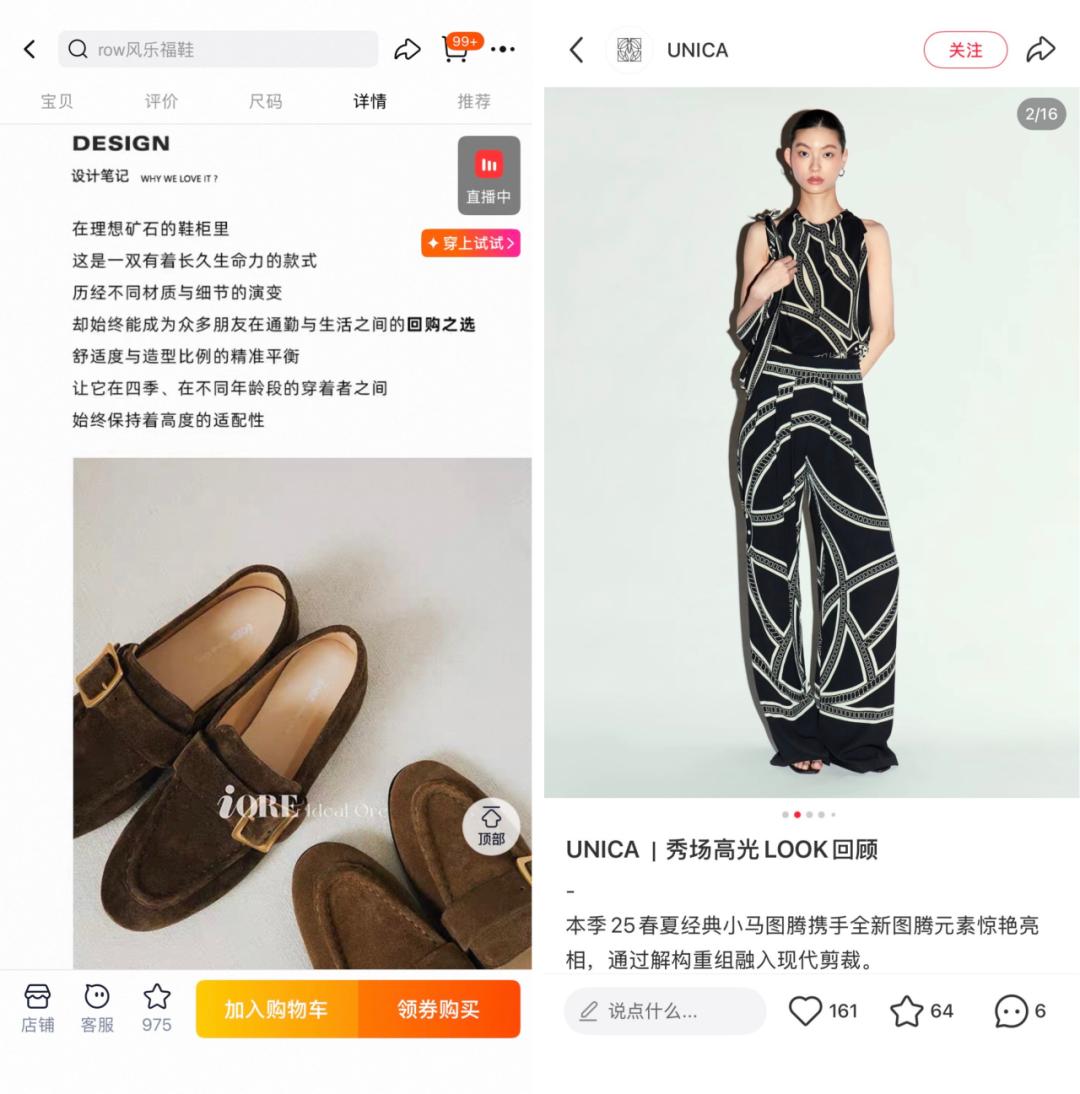
The long-running bestseller loafer of Ideal Mineral & the pony totem series products of UNICA
Apart from single products, brands are expanding product categories and consumption scenarios around their core audience, converting one-time purchases into long-term repurchases. Exclusive titles with a strong sense of identity have even emerged on social media, such as "Kaijian Girls" and "AT (alright then) Girls".
These brands are also building a more complete brand image through content expression. For example, GFinnerthought, the top-ranked Taobao designer men's wear brand, after refining the core symbol of "exquisite within social distance", specially established an auxiliary material designer position that is extremely rare in the e-commerce men's wear industry, to strengthen fashion expression in the visual system, and set up an independent content team covering graphic design, photography and videography, and brand managers to plan more video content that presents the brand's unique atmosphere.
Fashion shows provide a centralized display opportunity for brands. In August this year, 17 Black Label brands including GFinnerthought, Kaijian and Fu Zhien participated in Taobao's "Super Fashion Launch - Black Label Live Show". "Super Fashion Launch" is a large-scale fashion show IP launched by Taobao Apparel at key quarterly nodes, helping brands to fully present their seasonal product systems and tonality. Compared with independent shows held by single brands, the centralized release of 17 brands can also leverage platform resources to a greater extent and expand influence beyond existing user groups.
Some brands have also appeared in international fashion weeks: CHICJOC held an exhibition at Milan Fashion Week, Kaijian hosted a cultural salon at Paris Fashion Week, and younger brands such as Northbutsouth, which was founded only three or four years ago, also appeared on the main show stage of Shanghai Fashion Week through Taobao, using international influence to boost their domestic brand momentum.
Why Are "New Taobao Brands" Collectively Expanding Offline
Collective offline expansion is an important step for these new Taobao brands to optimize user experience and strengthen brand recognition.
Some leading brands have reached a considerable scale and are aggressively expanding into high-end shopping malls and overseas markets. Meiyang and CHICJOC have a certain scale of offline stores, and CHICJOC has even opened stores in the United States and France. The other two of the four leading brands have also shown strong momentum, having entered luxury shopping malls including Nanjing Deji Plaza and Shanghai Plaza 66. Kaijian even took over a century-old villa on West Nanjing Road in Shanghai.
Some younger brands with strong personalized expression are favored by non-standard commercial districts. RandomPiece opened its store in Chengdu CY-PARK, alright then opened its first store at L'EST on East Shuncheng South Street in Chengdu, and RARELY ALIKE will soon open a store on Huaihai Middle Road in Shanghai, which was once famous as a luxury hub and is now a landmark block that overseas tourists must visit when traveling in China.
Older generation Taobao brands are also updating their offline presence and iterating through original design. "RUMERE", which was once known for its cost-effectiveness, opened its first offline experience center "RUMERE Home" in Shanghai in April this year, hoping to reach younger consumer groups through a more complete space and product presentation.
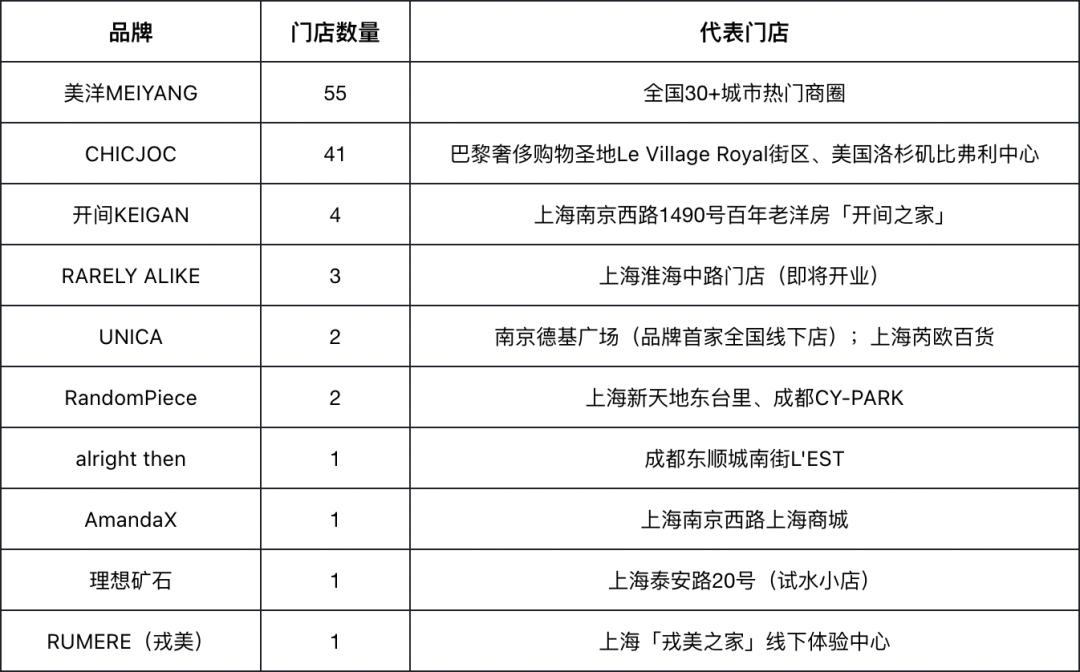
Number of stores and representative outlets of already opened "new Taobao brands"
The reason why these brands can collectively enter offline locations, even high-end shopping malls, lies in their strong performance accumulated online, especially on Taobao, and their outstanding private domain operation capabilities. Online stores expand their reach radius, and offline stores consolidate user relationships, forming a proven new path for these "new Taobao brands".
Yunsheng, head of merchant strategy and live streaming for Taobao Apparel, told Narrowcast that these Black Label brands attach great importance to the operation of user groups and membership assets, with repurchase rates reaching at least 60% to 70%, which is the advantage brought by Taobao and Tmall's store-centered operation system.
At the same time, after many traditional apparel brands reduced their store openings, offline commercial entities also need new players with high sales performance, high brand recognition and popularity among young people to fill the vacancy, and original design apparel brands emerging from Tmall and Taobao have become their supply sources. PD told Narrowcast that many commercial complexes are inviting GFinnerthought to open outlets.
Offline stores also provide brands with more tangible space for brand expression and experience. When alright then co-created the "NANA'S FARM MARKET" product line with Ouyang Nana, it transformed its L'EST flagship store in Chengdu into a farm-style space, presenting the atmosphere and concept of the series in a more immersive way from product displays to product offerings.
