Teachers who spend tens of thousands of yuan on custom-made PPTs are trapped in the performative spectacle of AI classrooms.
If we turn back the clock three years, Gao Shan, who was just a freshman back then, would never have imagined that he would find entrepreneurial opportunities thanks to AI.
Initially, this was a very low-key side business: ghostwriting copy. Back when ChatGPT first launched, he recommended AI-assisted writing to his girlfriend, but accidentally spotted a tiny business opportunity in the education sector.
Now his company has expanded from 2 people at the very beginning to 30 employees. Over the past year, he has only focused on three things: customizing AI-enabled courseware, selling digital literacy courses, and selling VR devices to schools. In this fourth-tier city in his hometown Shandong where the average salary is 7,000 yuan, the per capita monthly income of his team members reaches around 15,000 yuan, doubling the local average.
But what supported his expansion is not that he has mastered any cutting-edge core technology, but the shared anxiety of 18 million front-line teachers.
AI-enabled courses, creating new teaching performances
On May 28, 2026, a 26-year-old female teacher in Haikou collapsed on the podium during a teaching competition. This tragic incident quickly sparked widespread attention on social media.
Over the past decade, people have long been accustomed to formalistic open classes. It was not until the face of life and death that people truly realized the physical and mental pressure that formalism has brought to teachers.
Front-line teachers spoke out online, sharing the health problems they developed due to teaching competitions. Some suffered from chronic atrophic gastritis after a district-level teaching competition, while others developed severe depression with somatization symptoms after a provincial-level competition.
The rise of AI has made the digital transformation of education a hot topic. In March this year, the Ministry of Education held the 2026 deployment meeting for the national education digitalization strategic action, requiring the comprehensive and in-depth promotion of "AI + Education", and immediately issued the "AI + Education Action Plan" in April to guide the implementation of AI empowerment. The top-level macro design is well-intentioned, and its specific implementation in grassroots teaching is very straightforward: it has turned into a large number of AI-enabled courses.
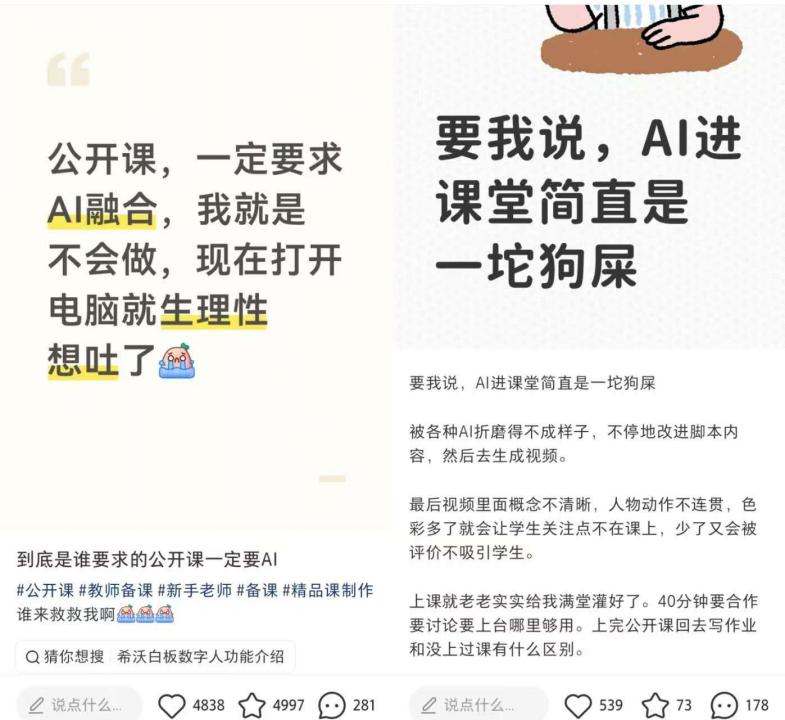
For AI-enabled courses, teachers are forced to improve their skills in using AI tools
Wang Zai'an, a post-2000s generation, teaches at a junior high school in a third-tier city in Liaoning. In his ideal vision of AI-enabled education, AI should help realize personalized education for students, so he fully supports integrating AI into teaching in advance. But the actual operation result is only adding an AI template to the PPT with two pop-up animations, which is then labeled as AI empowerment.
"Everything can have a digital human." He complains that in the open classes he sees now, no matter what the subject or class type is, the classroom content is required to add a session of talking to a digital human. Chinese language classes need to "call" Li Bai, history classes need to chat with Qin Shi Huang, and even the geography classes he teaches have been suggested to add an AI character. The problem is that he is teaching contour topographic maps, which has nothing to do with any fictional or historical character.
"It's purely to show that AI is included in the course." During teaching competitions, the judges want to see that the latest trends are being followed, so these AI-related sessions must be added, and no one seems to care whether these sessions have any in-depth connection with the actual course content.
Open classes have turned into skill demonstration competitions, from using AI to generate images and videos, to using Doubao to create agents and embed HTML web pages. If situational teaching is advocated, the digital human version of Qin Shi Huang will even replace the teacher to introduce the story of unifying the six states.
Before teaching competitions, teachers rehearse their course content over and over again. For every round of lesson polishing, judges, experts and students will put forward feedback, covering everything from teaching design to PPT layout, from classroom rhythm to word-for-word script revision, repeated over and over. After going through the process seven or eight times, they finally go on stage to perform.
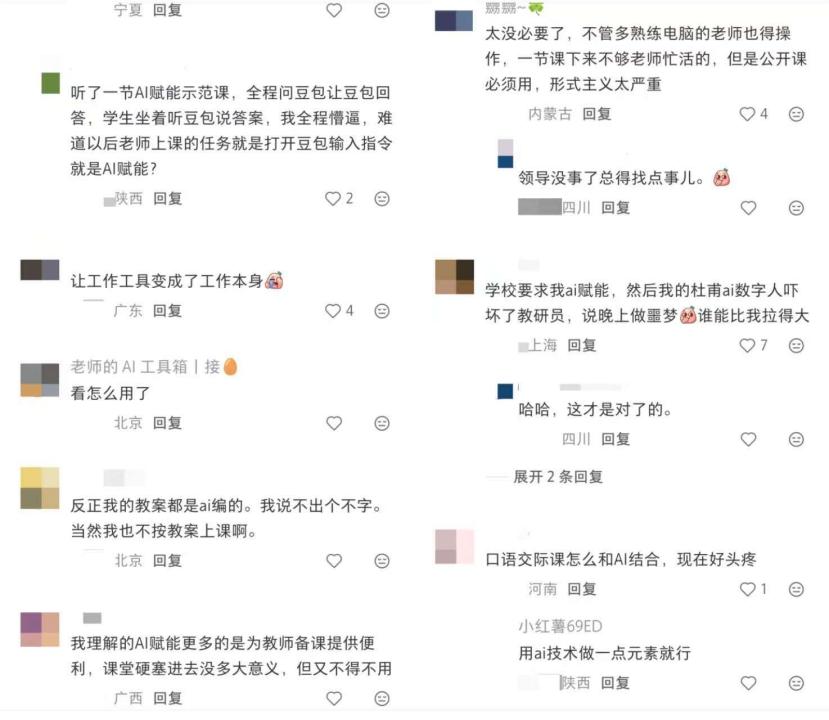
AI-enabled courses turn tool operation into extra work
Due to policy requirements, the school has also held AI empowerment seminars. However, Wang Zai'an did not find the content of these seminars practical at all.
At one event, the speaker on the stage even mistook the ChatGPT logo for the DeepSeek logo, which made Wang Zai'an even more skeptical about such training.
"But there is a colleague ten years older than me who was very excited about this training. He has always wanted to learn AI, but he never had the time, and there were no dedicated courses to help him get started systematically." In Wang Zai'an's view, teachers are still very passionate and idealistic about teaching, but the reality is completely different.
Among more than 50 teachers in the whole school, only several young teachers including Wang Zai'an can actually apply AI to teaching. Therefore, considering the practical situation, the school does not force the use of AI tools in daily teaching.
But teaching competitions are an exception. "Whether AI is used" has now become a mandatory standard in the evaluation criteria. For this reason, teachers have to squeeze time and energy from their daily teaching to learn various AI tools, adjust prompts, generate digital humans, make interactive courseware, and finally perform an AI-enabled lesson to win sparse applause from the audience.
Students are still just the audience sitting under the podium. To liven up the classroom atmosphere, a few children will be selected to go on stage to interact with the digital human. But no matter how novel the form is, the essence of teaching has not changed, and most children are clearly aware that they are just cooperating with a teaching performance.
Who makes money from the formalism of AI-enabled courses?
When integrating AI into open classes becomes a mandatory requirement, shrewd businessmen immediately smell the profit opportunities.
Gao Shan's company's business is mainly divided into three major categories: R&D of various AI-enabled courseware, AI tool learning courses, and promotion of VR devices and AI courses for schools and educational institutions. It sounds like a business that needs to stay close to cutting-edge information, but Gao Shan chose to set up his office in his hometown in Shandong, where rent and labor costs are much lower than in Beijing, Shanghai and Guangzhou.
The teaching competition seasons from March to May and from September to November every year are the busiest periods for Gao Shan's company. From primary schools to junior high schools, from Chinese language to geography, orders come in densely and urgently. In three years, his team has customized AI-enabled courseware for two to three thousand teachers. The price of each order ranges from 800 yuan to 10,000 yuan, which is not cheap.
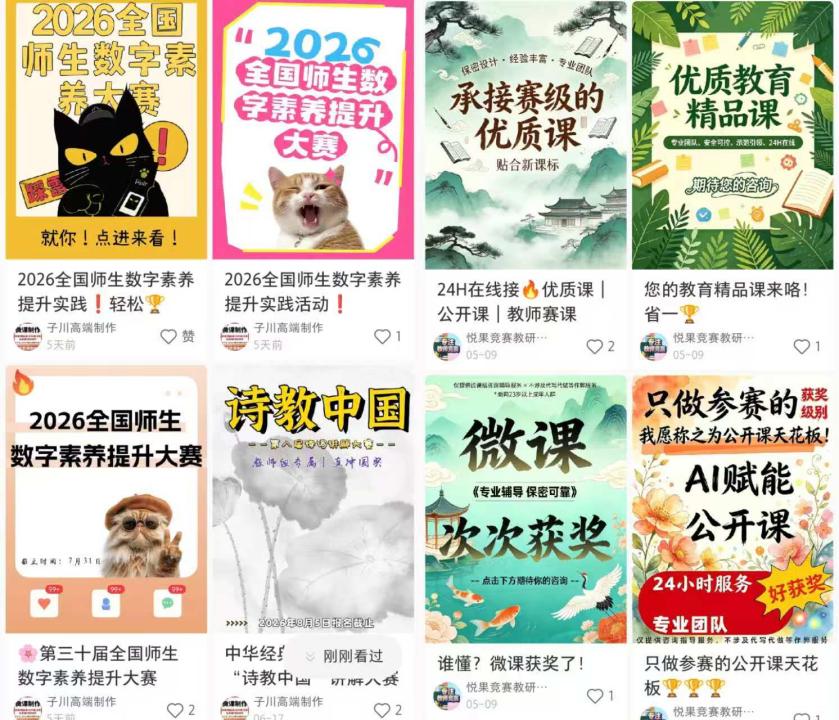
How many courseware service providers are supported by AI-enabled open classes
Why are teachers who do not have high incomes willing to spend a lot of money on custom PPTs?
Gao Shan cited a case he is proud of: Last year, a teacher from a town under a first-tier city contacted his team and spent 5,000 yuan on a custom AI PPT. This PPT includes digital human interaction, 3D scenes and dynamic data charts, and won an award in the teaching competition. With this achievement, she was transferred from the township school to the county seat, and finally entered a well-known school in the urban area.
"We can't take all the credit for that. We just added the finishing touch, because she is already a very hardworking and competent teacher." The reason why teachers attach so much importance to these competitions is that professional title evaluation and career development are directly linked to teaching competition results.
Although the detailed rules for teacher professional title evaluation vary from region to region, teaching competition results are undoubtedly a hard currency. In Linhai, Zhejiang, a first prize in provincial high-quality class competition adds 5 points. In Jiyang District, Jinan, Shandong, professional competition results account for up to 20% of the total score for promotion recommendation. And in Tianjin, having at least two municipal-level open class awards is a hard threshold for associate senior professional title evaluation.
For teachers with rich teaching experience, what they lack during teaching competitions is not the content itself, but the ability to package and present themselves. Gao Shan admits that what his team does is to help teachers complete this "face-saving project" without too much effort.
In addition to direct courseware customization, AI-enabled courses have also spawned derivative courseware production courses and equipment sales.
Such packaged AI-enabled courseware and production materials are very commonly sold on social media. Gao Shan does not sell this kind of ready-made courseware. Instead, he sells a one-week AI digital literacy course developed based on his own experience, which mainly introduces the tools and usage methods needed to make courseware. "Hundreds of teachers bought this course, but very few of them actually studied it. Most of them gave up after watching two lessons, and eventually came back to me to customize courseware."
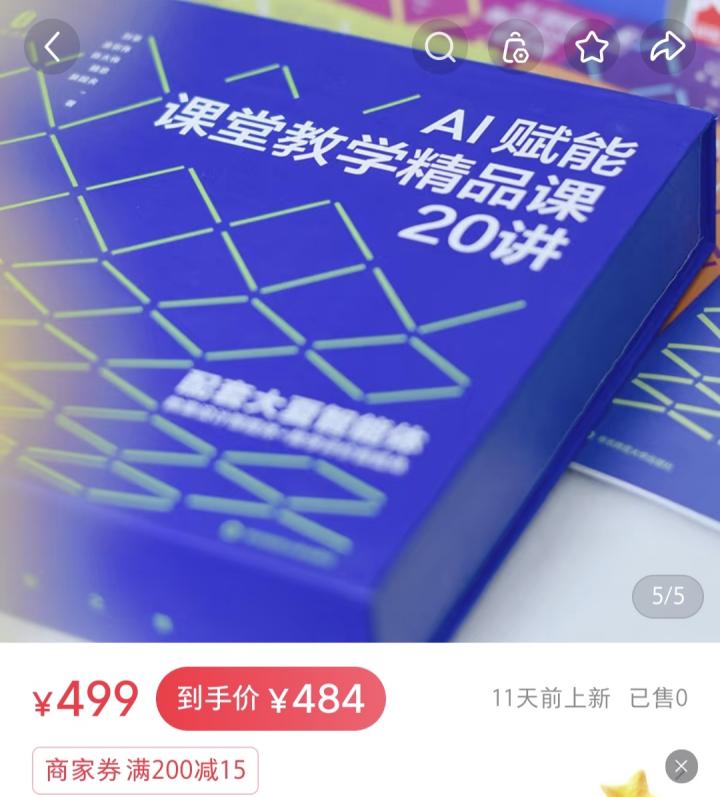
How to design AI-enabled courses has itself become a profitable course
Because for teachers, time is a scarce resource.
A 2026 survey conducted by *Educator* magazine on 81,387 primary and secondary school teachers found that 96.71% of the teachers slept less than 8 hours a day. Teachers have to spend a lot of time dealing with non-teaching tasks, leaving no time to learn new tools. In addition, many teaching competition tasks are arranged at the last minute with tight deadlines, so they can only outsource the work and get the finished product to perform on stage.
AI-enabled education is not only reflected in teachers' teaching activities, but also has become a facade that schools need to decorate.
In teaching papers, the immersive courses created by combining VR and AI have better teaching effects than traditional classrooms. In an empirical study carried out by 12 junior high schools in Zhejiang in 2023, after adopting VR teaching experiments, students' operation error rate decreased by 62%, and the completeness of experimental reports increased by 38%.
In reality, the price of a complete set of VR equipment is as high as 10,000 yuan. Based on the standard of 30 sets per class, the total cost can reach hundreds of thousands of yuan. In addition, the technology still needs to be popularized. Most teachers have not received systematic VR and AI education, so most of these devices in primary and secondary schools are left unused. Gao Shan visited more than 30 schools and found that idle equipment is a common phenomenon.
They tried to promote VR devices and their supporting courses to schools. The schools were very interested at first, but most of them dropped the idea after considering the high investment. The actual paying customers are mostly universities in Guangdong. For example, he once produced a simulation course for the college of mechanical and electrical engineering, allowing students to operate in virtual reality to avoid injuries in real experiments.
Under such circumstances, training, equipment and courseware have formed a layered industrial chain: some sell courses, some sell equipment, and some sell services.
All of them are trying to enable AI in education, but Gao Shan observed that "all current AI-enabled education products can only be used for demonstration." Even so, this does not stop his team from continuing to recruit, expand and develop new customers.
AI-enabled education, sounds great
When front-line teachers talk about AI-enabled courses, they are usually full of grievances. They are tired of formalistic performances, but cannot refuse them. This is the inevitable result of the combined effect of the entire system.
First, the penetration rate of terminal equipment in schools is very low, and there is almost no equipment on the student side.
In the school where Wang Zai'an works, all students' mobile phones are collected before entering the classroom. Without terminals, there is no interaction, let alone the possibility of integrating AI into the classroom. Back in his hometown in Shandong, Gao Shan still occasionally hears some parents calling for the return of traditional blackboards. "They have an instinctive rejection of smart screens, thinking that they hurt their eyes and make children addicted."
Without terminals, the promise of interaction anytime and anywhere becomes empty talk. Therefore, most AI-enabled courses can only be upgraded versions of PPT, and teachers are still the performers on the stage.
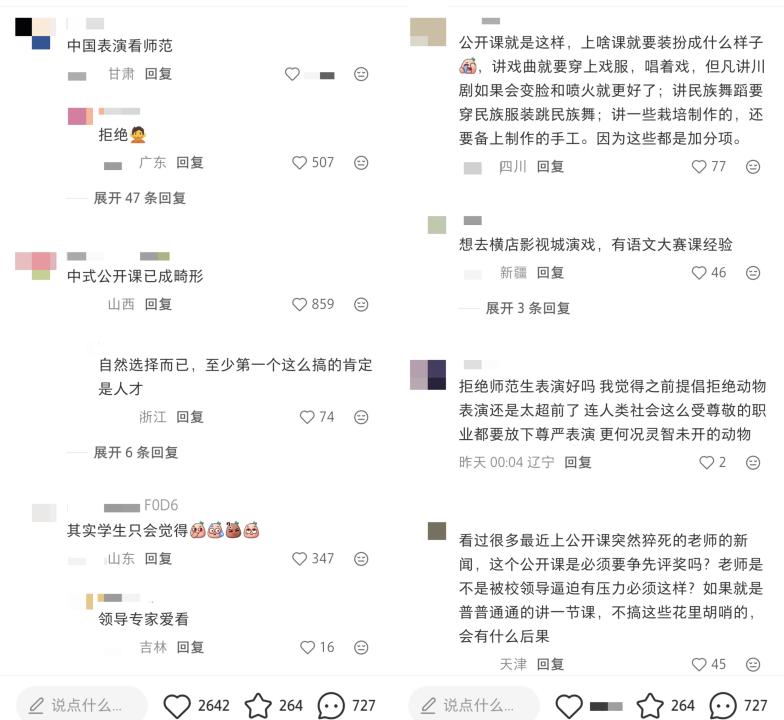
The best performances in China are staged in normal universities
In addition to the hardware gap, there is also the deep inertia of the evaluation system.
Wang Zai'an, who has just started working as a teacher, still has strong ideals and passion for education. He hopes that after AI empowers education, the education evaluation system will reduce the assessment of knowledge-based content and add more open questions that exercise thinking skills. Therefore, every time he prepares lessons, he also considers integrating scenarios and setting some open-ended questions.
But what he faces every day is an examination mechanism centered on memorizing knowledge points. Students have to memorize place names, climate types and various tables. "You go to great lengths to let AI create an interactive situational lesson to exercise students' thinking, but the exam still fills in the blanks. What is the point of you making open-ended questions?"
After the arrival of the AI era, students' critical thinking skills have received more attention, but for a long time before that, further education is still the top priority, scores are the hard currency, and any reform of AI-enabled courses is just a decorative gimmick.
"Many people think that the teaching competition evaluation system itself is creating formalism." Gao Shan is also a little confused: teachers' career development is highly tied to teaching competitions, and the judges only care about whether teachers use AI, not whether the class really helps students master the content.
"I met a teacher who gave an excellent lesson. I told him his lesson was already good enough and there was no need to force AI into it. He said he could not do that because the school required it." Under this logic, teachers can only be forced to add unnecessary content.
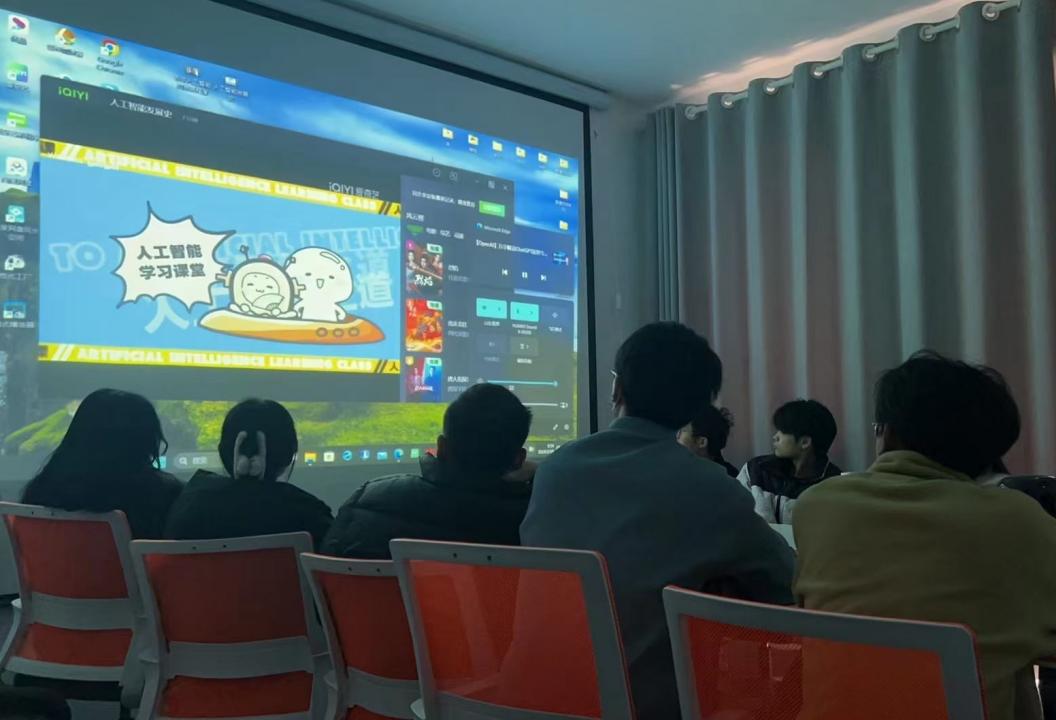
Gao Shan's company's first training event in 2024
Finally, there is the technical threshold itself.
Wang Zai'an once tried to use Claude to write a small program to assist teaching. For a simple question bank system, he spent a whole