After Kanye, Adidas is not going to cash in on traffic with Jennie.
The era of betting on a disruptive hit with a single top external IP is over. What is most valuable now is the star's continuously deliverable, productizable personal style and aesthetic system.
Adidas is making headlines again. The first co-branded collection between adidas Originals and Jennie, a member of BLACKPINK, has become the focus of online check-ins and unboxing content these days.
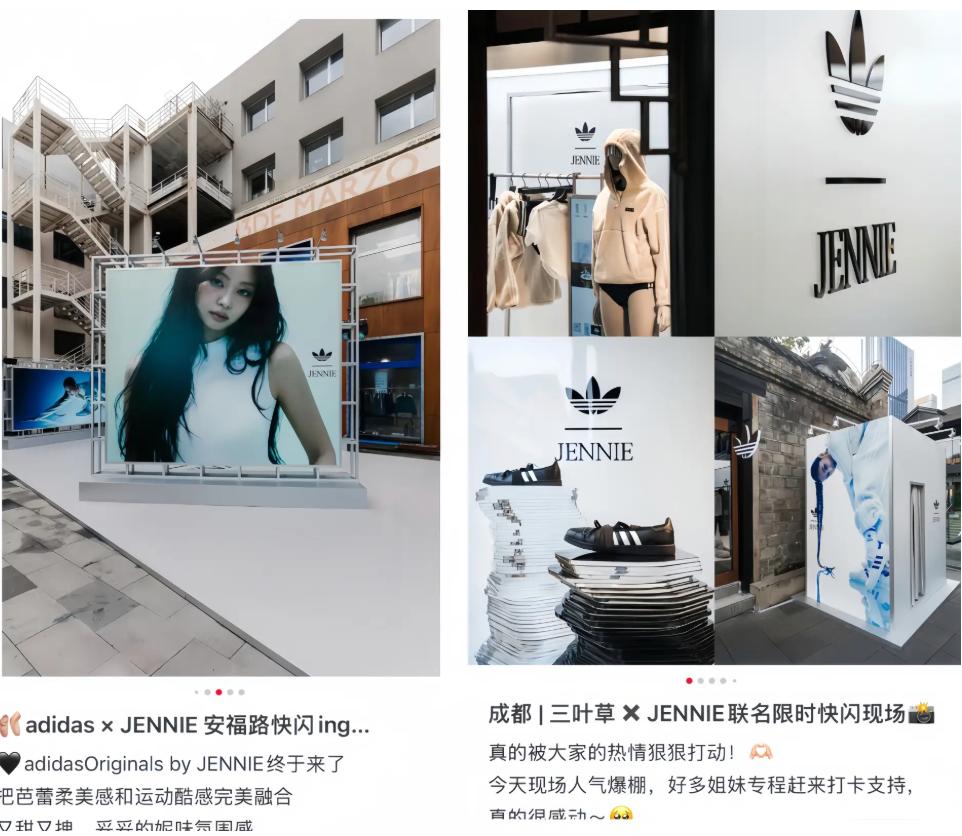
Before the official launch on September 1, adidas Originals had already completed a two-city pop-up event at its flagship stores on Anfu Road in Shanghai and Taikoo Li in Chengdu. On the first day of the launch at the Chengdu Taikoo Li store, single-day sales directly broke the store's historical record.
This is not the first time Jennie has brought such a chemical reaction to Adidas. After she became the global brand ambassador in 2023, she helped drive the popularity of fashion items such as the retro low-profile Samba shoes and sports jackets.
But this time it is the real "Jennie's same style". She led the design of a complete women's wear product line, integrating her representative ballet style.
This is still a traffic-driven business, but Adidas obviously does not intend to make money purely from traffic itself anymore.
Jennie-style Ballet Aesthetic
Fans of adidas Originals will find the product catalogue very familiar this time.
The products are based on existing classic items, but have undergone a thorough Jennie-style stylized transformation. Adidas said, "We reinterpret the brand's classics by combining Jennie's unique aesthetic perspective."
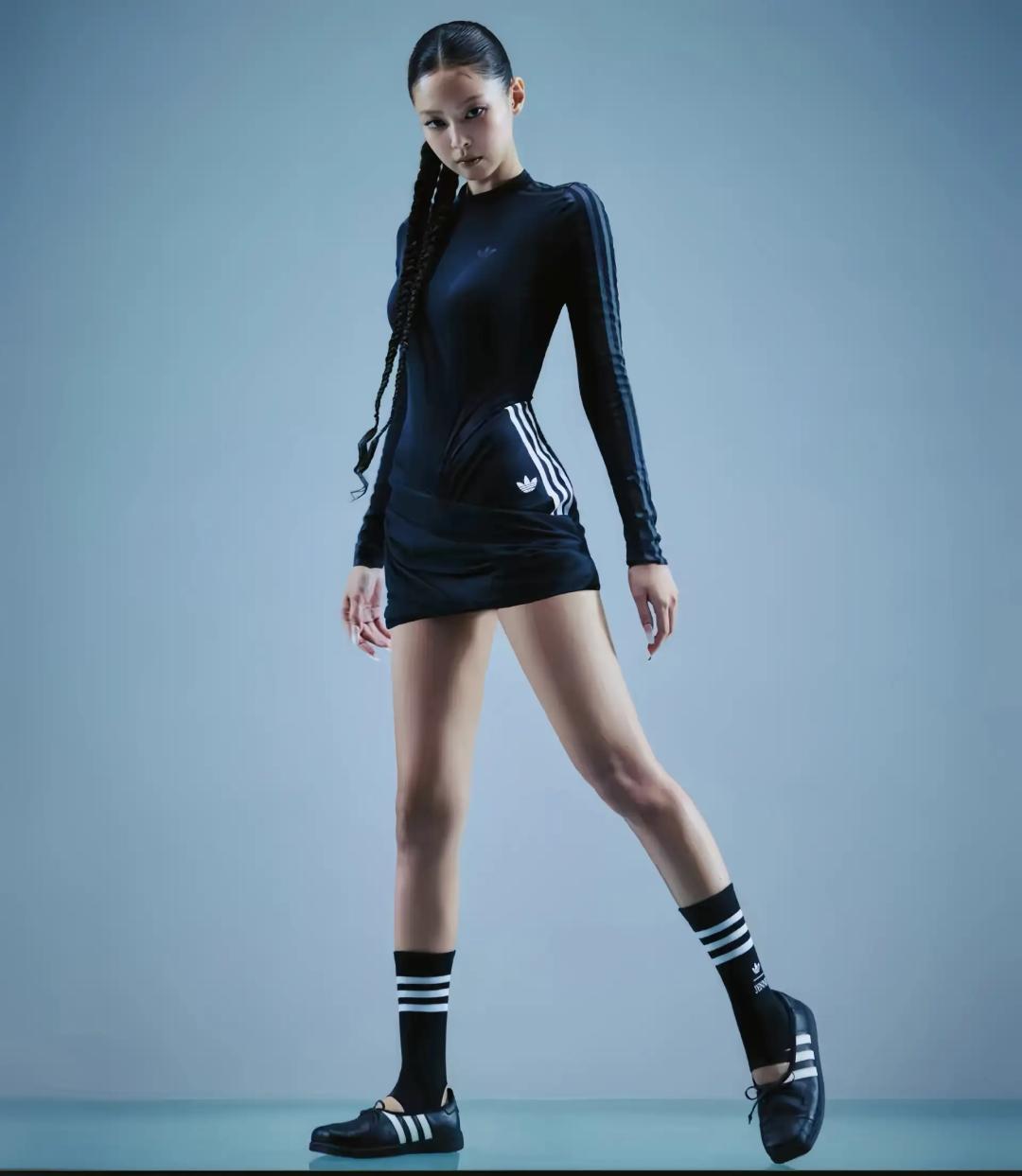
The core item, the square-toe ballet flats, is the most eye-catching, and the full collection including bodysuits, wrap skirts, shorts, and leg warmers all present a distinct ballet style. As for basic items such as jackets, T-shirts and casual pants, they are original classic models with optimized designs and upgraded fabrics.
Adidas did not carry out hunger marketing. After the official release of the products, although there are purchase limits, and there have been short-term sell-outs or out-of-stock sizes, restocks were arranged quickly. The highest price of the products is 999 yuan. Compared with other celebrity co-branded items of Adidas, there is a premium but the gap is not large.
Judging from the online sharing posts at present, in addition to fans and internet celebrity bloggers, there are also many ordinary girls who are attracted by the style. They pay for the aesthetic, and may not even care about Jennie herself.
Compared with traditional co-branding that creates "instant sell-out" through scarcity and second-hand speculation, what Adidas wants this time is continuous, repurchasable mass sales.
The two flagship stores selected for the offline pop-up event are both located in the business districts with the most fierce competition among sports brands at the moment.
On the less than 900-meter-long small road of Anfu Road, Adidas just launched the "highest-level store in the sports fashion field" last year, and then Salomon's "Fujun" concept store settled in soon after; nearby there are also a number of mid-to-high-end brands such as HOKA, On Running, and Arc'teryx that are eyeing the market.
As one of the business districts with the highest density of first stores across the country, Chengdu Taikoo Li is a trend consumption landmark radiating the southwest region. Adidas' competitors have also deployed their core stores here.
Although Adidas Greater China has achieved growth for 13 consecutive quarters, the pressure on the channel side has not disappeared. The whole industry is moving sports brands to the first floor of shopping malls and core blocks, and the competition for high-quality locations is more intense than during its low period.
In this close combat, a top IP co-branding is the best weapon to accurately divert traffic to the flagship stores. The co-branded items are just the entry point. The real value lies in strengthening the "trend benchmark" attribute of adidas Originals and its flagship stores, and improving the willingness of channel partners to invest in high-quality locations.
Co-creation between celebrities and brands has been a trend in the past two years. This wave of cooperation between Adidas and Jennie has pushed the boundary of gameplay further. Traffic can no longer create a premium myth, but can be used to continuously "empower" products and stores.
Core flagship stores build momentum, form topics that radiate to national stores and online channels, and drive the sales of classic and seasonal items across all channels of adidas Originals — this is a mature gameplay that Adidas has run through since 2025.
Take Back Dominance
Jennie has become the first Asian artist to launch a personal co-branded collection with Adidas, but this model is not new.
The real originator may be the FENTY x PUMA co-branded collection launched by Puma in cooperation with Rihanna.
This cooperation started in 2014 and was restarted once in 2023. Rihanna participated as creative director, and the first pair of Creeper platform shoes sold out within 3 hours after launch, directly driving the growth of Puma's women's business. Subsequent products also expanded to the men's and children's markets, and once became the core starting point for Puma to leverage the trend market.
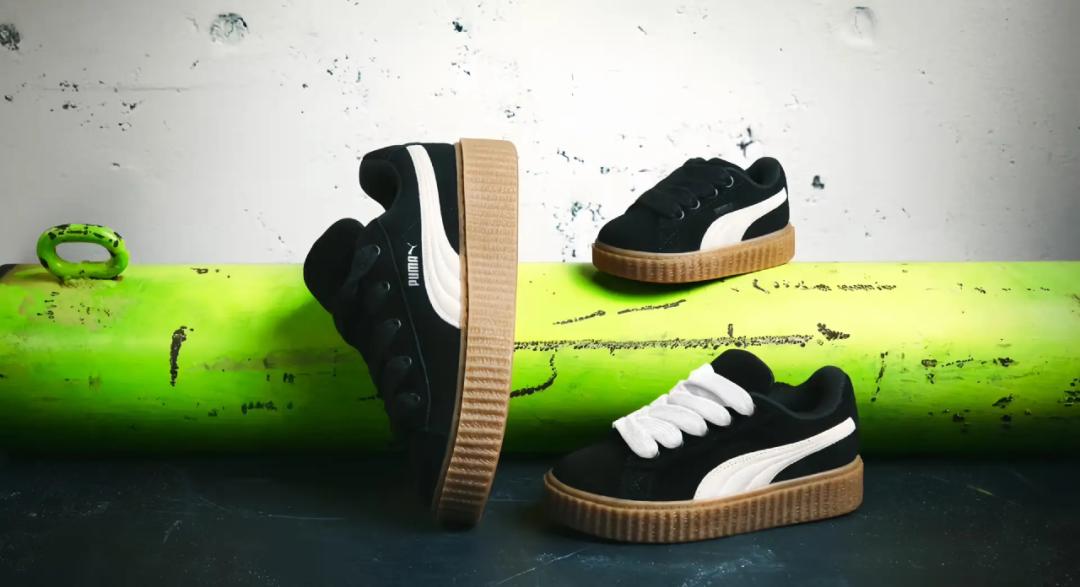
Creeper platform shoes
But this collection is targeted at the hardcore trend circle, and there has always been a distance from the public's daily wear. The cooperation between the two parties expired this year and was not renewed.
Adidas itself has actually tried similar models before. The Ivy Park collection in cooperation with Beyoncé had a higher specification than Fenty, with an independent brand and the artist leading the creativity. At that time, it was regarded as Adidas' "Yeezy-level" bet in the women's market.
As a result, the collection had a niche style and high pricing, and its sales declined all the way: it was still 93 million US dollars in 2021, but fell to 40 million US dollars in 2022, far below the internal expectation of 250 million US dollars, and the cooperation was finally terminated.
The most successful (and also the most painful) case where Adidas gave up the core of creativity and sales share is the Yeezy cooperation with Kanye West.
Kanye's almost paranoid dominance in creativity brought industry-level subversion, and established an almost religious belief in the sneaker and trend circles. At its peak, Yeezy's annual sales reached 1.7 billion US dollars.
But Kanye's personal controversies backfired on the entire brand. After the cooperation was terminated in October 2022, Yeezy generated about 1.2 billion euros of remaining inventory.
Betting on a disruptive hit with a single top external IP means success relies on one person, and failure also relies on one person. The lesson of Yeezy forced Adidas to think about whether it is still worth giving up the dominance of products to an uncontrollable individual?
In addition, Adidas' cooperation with big names also became intensive in 2022, with successive co-branding with Gucci and Balenciaga. The Gazelle shoes co-branded with Gucci directly topped Lyst's annual list of the most popular co-branded items, with excellent short-term effects.
But a hidden and fatal problem is that what consumers talk about and remember is Gucci's retro aesthetics and color matching skills, it is "Gucci x adidas", not "adidas" itself.
This is the same problem as Yeezy. Adidas outsourced its soul, hoping that others' creativity can light it up. The more successful the co-branding is, the more blurred the existence of Adidas as an independent brand becomes. The brand quietly lost its dominance over its own products and image.
When Bjørn Gulden took over as CEO in 2023, he faced such a tricky situation: the Yeezy mess, the hollowing out of the main product line and the brand recognition crisis of Adidas.
Gulden's strategy is very clear — let the product itself become the best advertisement. The resurgence and popularity of Samba is a case that continues to ferment from celebrities and internet influencers to the general public. The public is attracted by the retro silhouette and aesthetics, and actively helps spread it. It proves that Adidas' product strength is sufficient to support the brand's return.
Now, with a wealth of products in hand, Gulden is able to carry out wave management: in addition to Samba, retro shoes such as Gazelle, Spezial, and Campus become popular in different regions in turn. When the heat naturally drops, Superstar takes over for a short time. In 2026, Stan Smith will be warmed up again.
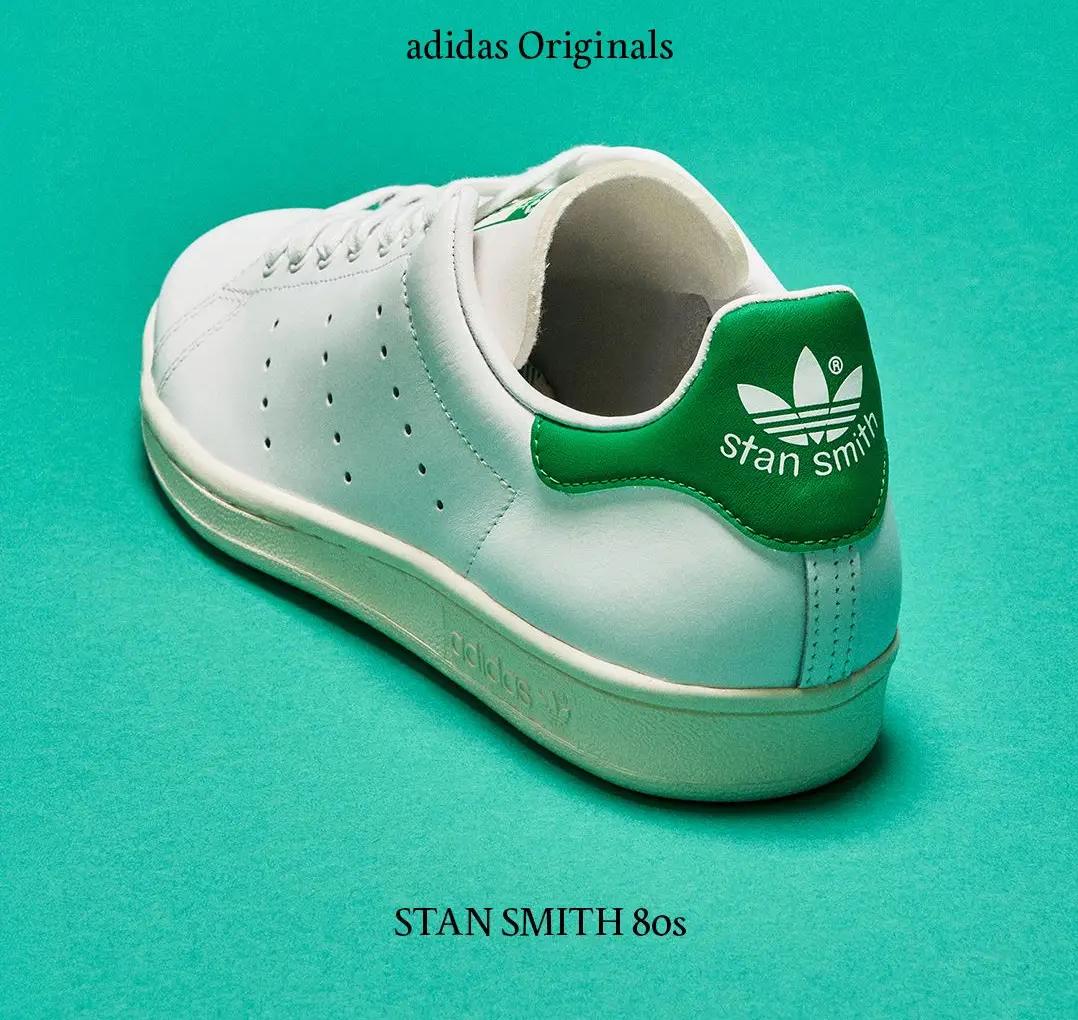
Since then, compared with which new celebrity Adidas has signed, consumers' focus on Adidas has returned to the product itself. It has taken back its own soul.
This is the general background for us to understand the Jennie co-branding.
Different from Yeezy's status as an independent sub-brand, the Jennie collection belongs to adidas Originals. Jennie is not the controller of the product line, but a "style co-creator". The star's personal style is placed in the C position, and the distinct aesthetic labels accurately capture consumers in the segmented style track.
For example, how was the most eye-catching Superstar SQ Ballet shoe designed? Jennie revealed in an exclusive interview with W Magazine that she retained the basic structure of Superstar, and added square toe and ribbon details to create a ballet-style silhouette.
What consumers buy first is a pair of adidas Originals shoes, and then the "Jennie co-branded item". This is essentially different from the Yeezy era when "what you buy is Kanye's shoes".
From a broader perspective, the adidas Originals trend line has a huge celebrity matrix — from Messi, Bad Bunny to Kendall Jenner, from James Harden to Edison Chen and Song Yuqi, different IPs correspond to different tracks.
The era of betting on a disruptive hit with a single top external IP is over. Celebrities can inject new content into Adidas, but more importantly, they represent their own audiences. To put it bluntly, celebrities play a role similar to a traffic booster.
Are Celebrities Still Sufficient?
There are not many celebrities who truly have personal style and can influence the public's aesthetic. Jennie is a rare figure who has both traffic and the ability to define fashion.
The reason why Jennie can become a co-designer for Adidas is that she has continuously output ballet-style aesthetics for several years. In particular, the balletcore in the single "You & Me" once led the trend. Ballet is her unfulfilled dance dream when she was young, and it has always run through her personal narrative and stage performances.

To be honest, the ballet style has been popular for several years. The Jennie co-branding is equivalent to systematically transforming the ballet style into a style language that can be worn daily.
The concept of this co-branding is "Functional Grace", targeting a broader mass women's daily wear market.
And ballet evolving from an element to a category is a typical example of the fashionization of sportswear. Sports brands no longer only sell functions, but more and more sell styles, aesthetics and lifestyles.
For example, the cooperation between Nike and SKIMS with Lisa, although the product direction is different, is also stepping on the ballet style trend, taking modern ballet dancers as inspiration, "reinterpreting from a modern perspective, focusing on soft lines, feminine colors and top-level materials".
In this process, the IPization of celebrities' personal styles is becoming a new commercial rich mine.
The entry path of ALO into China is a typical sample.
On August 12, ALO's Tmall flagship store went online. Without any preheating, it directly replaced the homepage with Zhao Lusi, and the transaction of the same style of products exceeded 10 million yuan in 1 minute, refreshing the record for new sports and outdoor brands opening stores on Tmall. Then it successively announced the global endorsement of Kim Jisoo and the racing scene cooperation with Wang Yibo.
ALO's celebrity matrix strategy is clear: Zhao Lusi is responsible for the first round of exposure and conversion in China, Kim Jisoo maintains the brand's global fashion background, and Wang Yibo leads the brand out of the women's yoga circle and moves towards the racing and broader sports lifestyle market.
Puma, Adidas, Anta, Li-Ning and other sports brands are building their own Celebrity Portfolio — A good celebrity matrix does not mean finding more traffic stars, but matching and complementing different dimensions of the brand personality, consumer groups and cultural context.
In the business world, what is most valuable has never been just the face of a celebrity, but the continuously deliverable, productizable personal style and aesthetic system that the celebrity can output.
A celebrity's face can bring traffic, but only the personal style that he or she truly owns and has been verified by the market can be transformed into sustainable commercial value.
So the best candidates are often very scarce. All four members of BLACKPINK are burdened with multiple KPIs to help brands realize the fashionization of sportswear.
And styles also have life cycles. Balletcore, which used to be a synonym for exquisiteness and elegance, has evolved into "chaotic ballet style", allowing classic ballet to collide with hardcore styles such as street sports and functional workwear. By 2026, the ballet style has evolved into "Sneakerina" — the ballet shoe silhouette and lace-up elements are retained, but the sole is replaced with the structure of sports shoes.
Trends are changing, and brands also need to be more flexible.