A small 4-person team dedicated to creating beautifully designed tools has secured 2 million pre-sales with "electronic pendants".
When talking about e-ink hardware, most people's first thought is still e-readers and digital photo frames.
Recently, a domestic team has come up with a creative design that turns the e-ink screen into a pendant, which can be hung on a bag as an "electronic bag charm", or used as a name badge, desktop ornament and in other scenarios. Overall, the main change of the product lies in its form, while its usage is still the same as most e-ink hardware: users can replace photos and illustrations through the supporting app.
This product was launched on Kickstarter for crowdfunding on August 11, with a selling price of 49.9 US dollars, equivalent to about 335 RMB, which is not cheap for a pendant. But about half a month after its launch, the crowdfunding amount of the product approached 380,000 US dollars, with support from more than 3300 users.
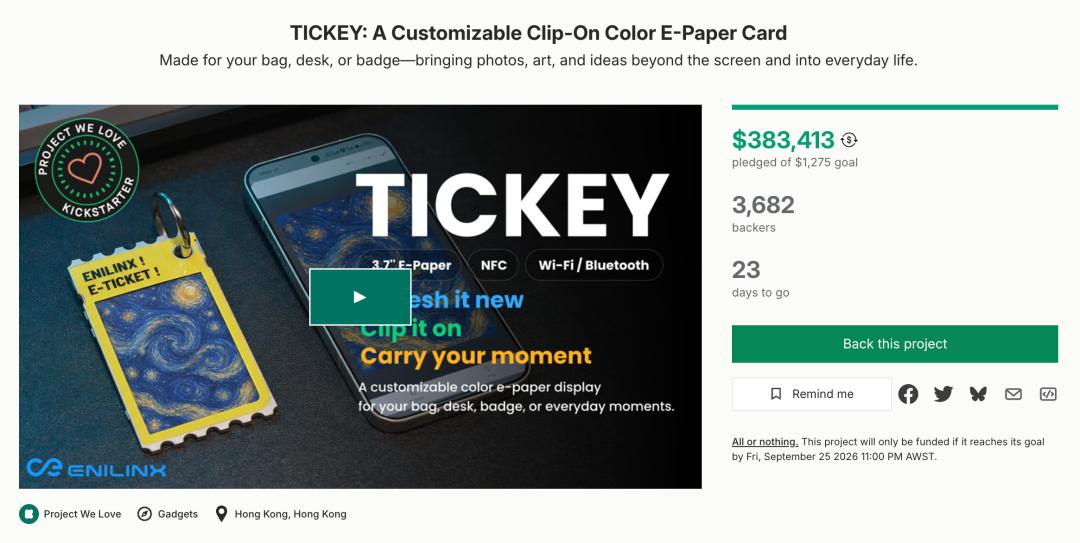
「TICKEY」launched for crowdfunding on August 11, and raised about 380,000 US dollars as of September 2 | Source: Kickstarter
I. Realize customizable pendant experience with e-ink screen
As an "electronic bag charm", 「TICKEY」 first attracts users with its visual effect and appearance.
The product is 3.8mm thick and weighs 45g, which is about the same weight as an ordinary acrylic pendant, making it easy to carry around. The top and bottom ends of the device adopt a design similar to a movie ticket stub, and hanging holes are reserved at the upper right corner and the top, so that it can be hung on a bag, or used as a badge with a lanyard.
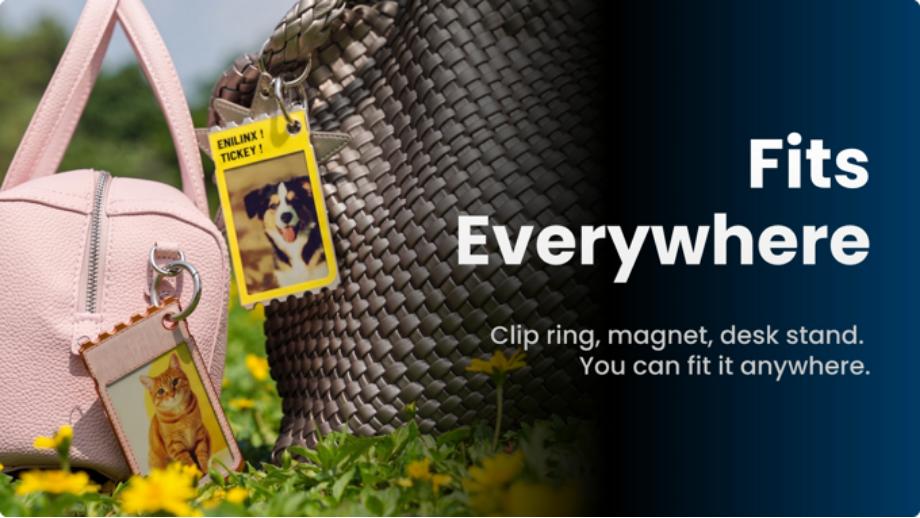
Source: Kickstarter
The official has designed a detachable panel for the product with multiple styles. Users can purchase separate panels after the crowdfunding ends, and match them with different photos and illustrations to realize personalized expression.
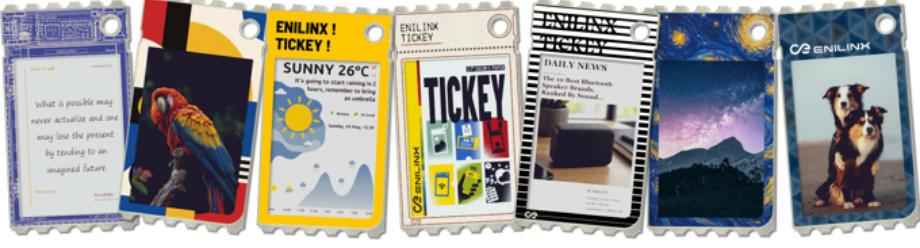
「TICKEY」 supports panel replacement | Source: Kickstarter
At its core, 「TICKEY」 features the "infinite image swapping" gameplay. Users can directly send images by connecting to the device via Bluetooth, or edit images in the supporting app before sending them to the device. In the future, the team also plans to add a timed image swapping function, so that the screen can automatically switch pictures at different times.
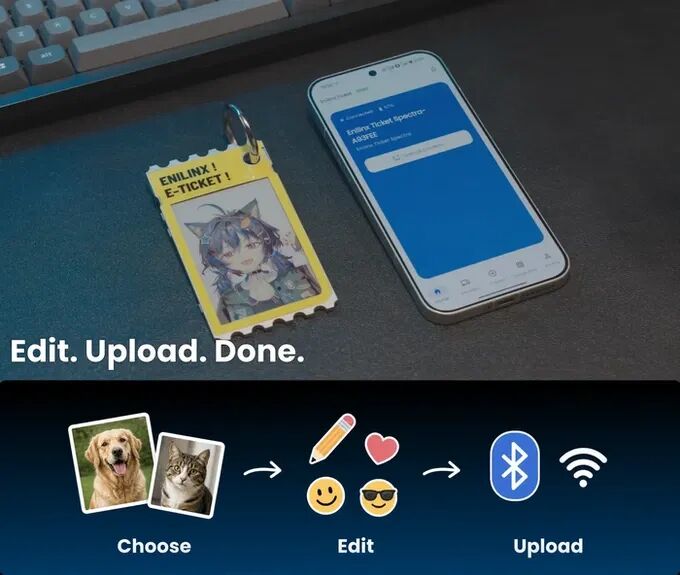
Source: Kickstarter
With one pendant and replaceable accessories, users can achieve full customization of their pendant styles.
However, there is a certain gap between the goal of fully customizable pendants and the implementation method using e-ink screens. Compared with the screen of a mobile phone, e-ink screens can display far fewer colors.
The 3.7-inch color e-ink screen equipped on 「TICKEY」, according to the official, can present more than 48 colors. Compared with the 4-color and 16-color e-ink screens selected by some previous hardware products, it is more suitable for displaying photos and illustrations.
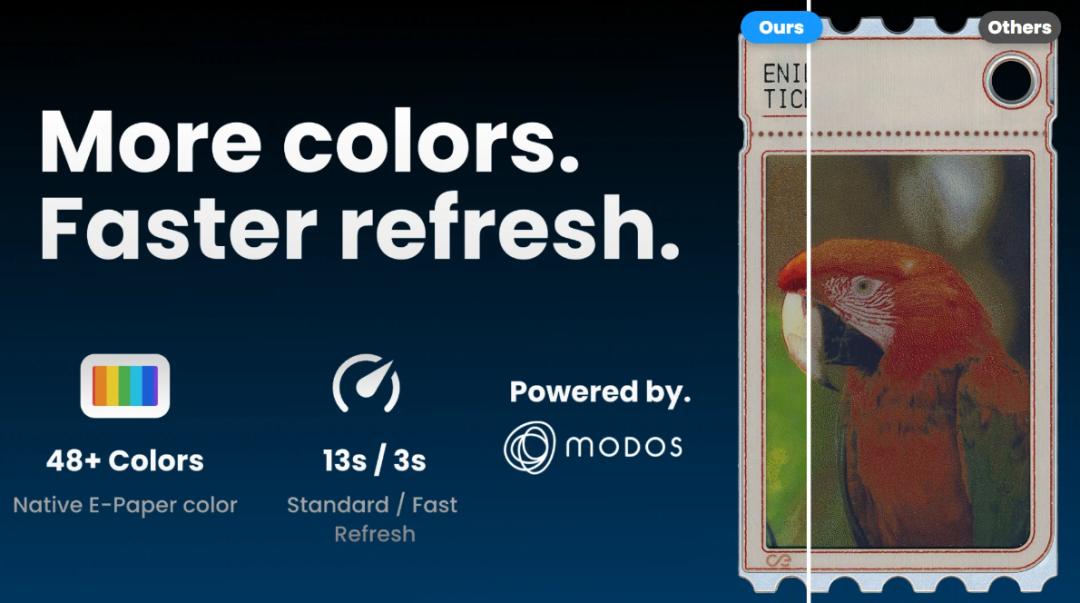
Source: Kickstarter
Since pendants are mostly used outdoors, 「TICKEY」 has also made corresponding adaptations. Compared with some backlit electronic screens that are prone to darkening under strong light and affect viewing experience, 「TICKEY」 can still maintain good color performance in sunlight.
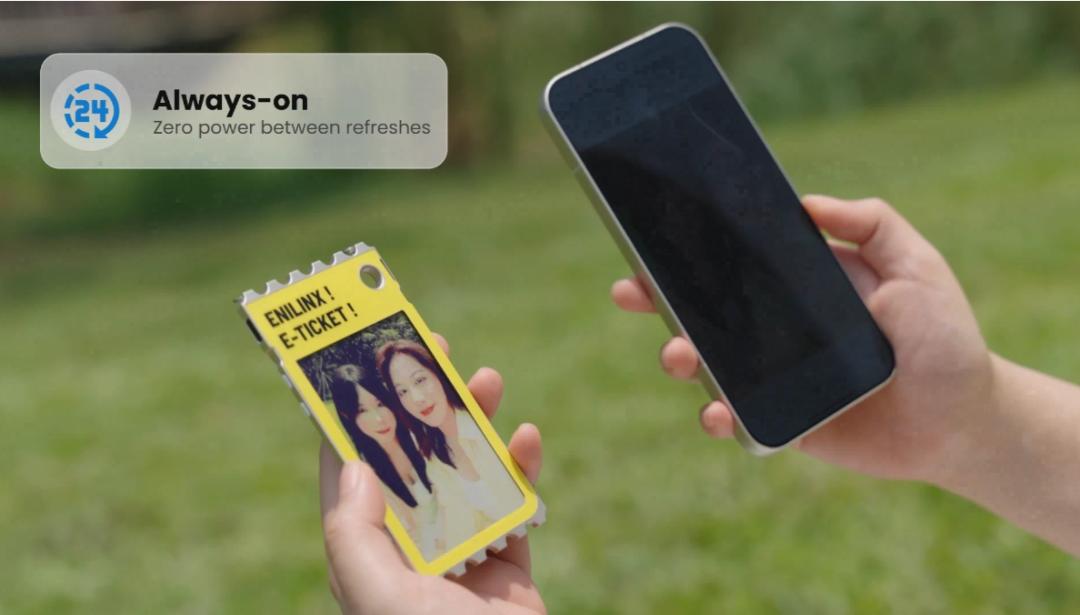
Display comparison between 「TICKEY」 and other electronic products in sunlight, 「TICKEY」 still shows bright colors under direct sunlight | Source: Kickstarter
Battery life is the "traditional advantage" of e-ink screens. Hardly any power is consumed after the screen refreshes the image, and the last picture can still remain on the screen even if the device is shut down. According to official data, if it is mainly used as a pendant, 「TICKEY」 can last for more than two months, making the product closer to an ordinary bag charm rather than an electronic device that requires continuous maintenance.
It can be seen from the Kickstarter comment section that users define this 「TICKEY」 as a pendant. Most of the users' questions focus on the product appearance, with the most mentions of issues such as panel replacement and screen display effect.
However, the team is obviously not satisfied with only making decorative items. In addition to being a pendant, more usage scenarios have been expanded for this screen.
For example, the official plans to add functions such as weather, calendar, and Pomodoro timer to the app. When users do not take 「TICKEY」 out, they can also place it on the desktop or stick it on the refrigerator, using it as an information screen or desktop assistant.
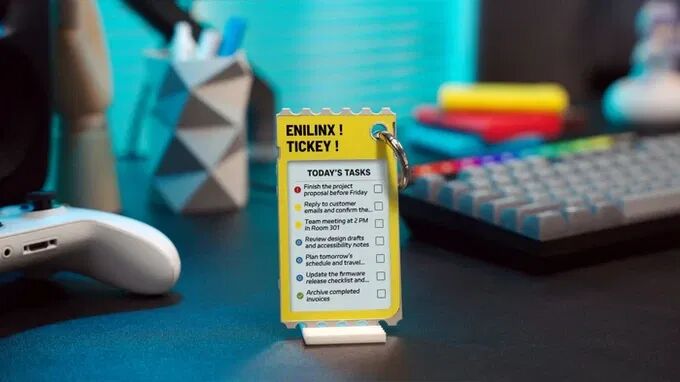
Desktop usage scenario of 「TICKEY」 | Source: Kickstarter
When going out, users can tap 「TICKEY」 with their mobile phones (via NFC) to open their personal homepage, portfolio, event page or social links, and display them to others as an electronic business card, exhibition badge, etc.
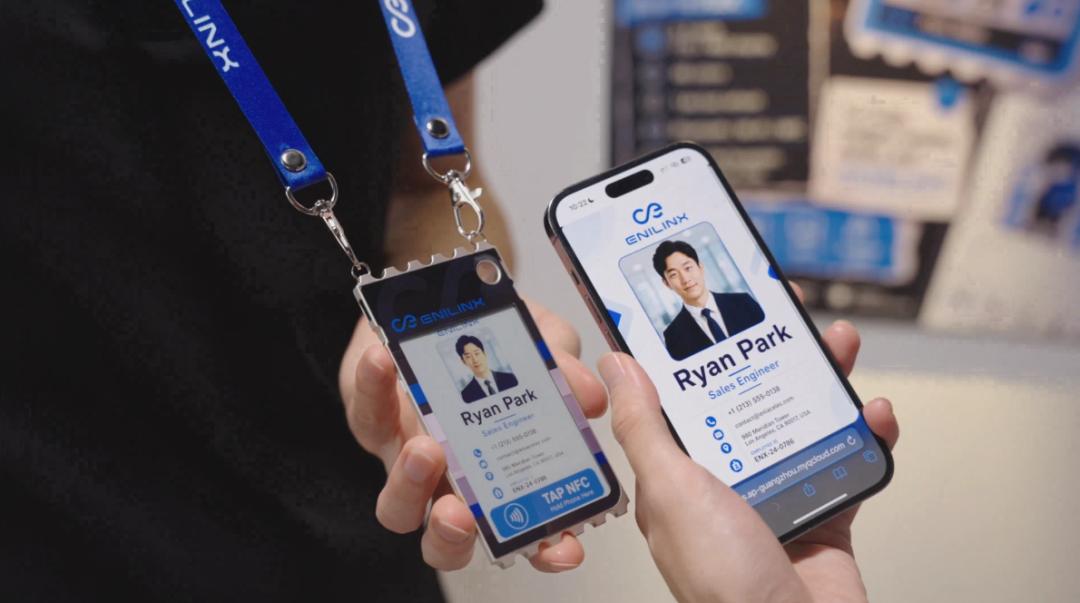
「TICKEY」 used as a badge | Source: Kickstarter
For more advanced users, 「TICKEY」 has also launched a Developer Edition. The developer version adopts the same core hardware as the regular version, but adds an extra 128MB of storage space and opens up the firmware development space, hoping that developers can expand more new gameplay.
However, after all, e-ink screens do not have interactive functions. Taking the to-do list mentioned above as an example, users still need to operate on their mobile phones, and re-send the updated image to the screen after completing the task. There are still many interaction details that need to be optimized.
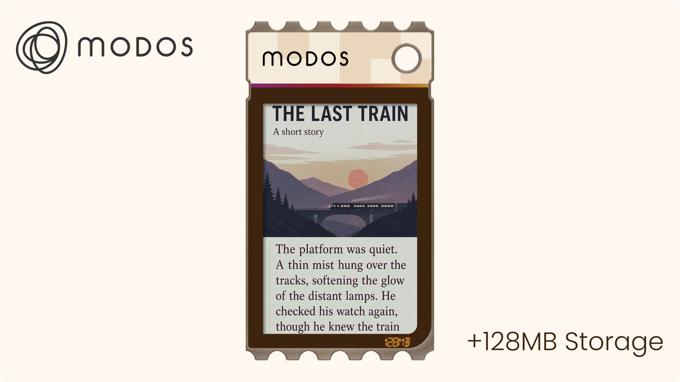
Source: Kickstarter
According to the Enilinx team, the reason for developing 「TICKEY」 is that they "really like the long-lasting presence of e-ink screens. It just displays a picture that is meaningful to you at the moment, allowing technology to exist naturally around us." Whether it is a bag charm, information dashboard or badge, 「TICKEY」 is moving e-ink screens out of fixed devices and into more daily and close-to-life usage scenarios for users.
Capturing small demands in daily life and turning them into hardware solutions with technology is not the first attempt of Enilinx.
II. A small team of 4 people, specialized in making exquisite small tools
The Enilinx team behind 「TICKEY」 has only 4 members. The team summarizes its product logic as "We Build What We Need" on its official website, which means making tools that they need themselves but cannot find on the market. At the same time, judging from its past products, the team also pays great attention to product appearance and personalized expression while exploring user demands.
Its previous crowdfunding product 「Flexbar」 is a typical example. Apple once launched the Touch Bar on MacBook Pro, using a touch screen to replace part of the physical function keys above the keyboard, but this design was cancelled soon after. The Enilinx team believed that devices like the Touch Bar with "customizable appearance and the ability to simplify workflow" still have potential, so they decided to "continue to advance this idea" and launched the desktop hardware 「Flexbar」.
「Flexbar」 is equipped with a 10-inch long OLED strip screen, which can be connected to Windows and Mac via USB. Compared with Apple's original Touch Bar, the product is no longer fixed on the keyboard, and can be placed horizontally, vertically or separately on the desktop. It also supports haptic feedback, shortcut commands, and automatic control interface switching for different software.
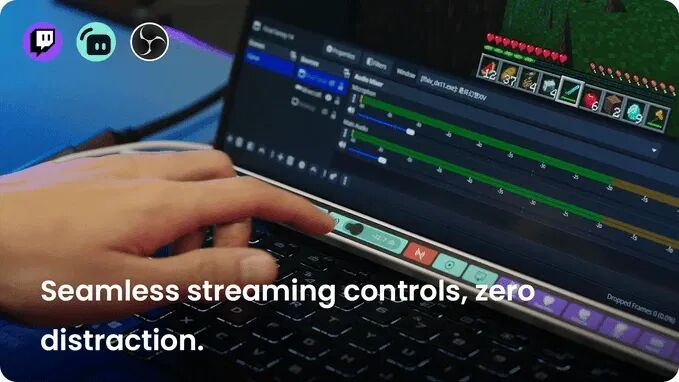
Source: Kickstarter
Similar to 「TICKEY」, 「Flexbar」 also reserves space for users to customize the appearance. The hardware itself comes in different colors such as silver and space black; in terms of display, users can design buttons, icons and interface layouts through the supporting tools, and even turn the entire screen into a "Ita-Bar" with personal aesthetic elements.
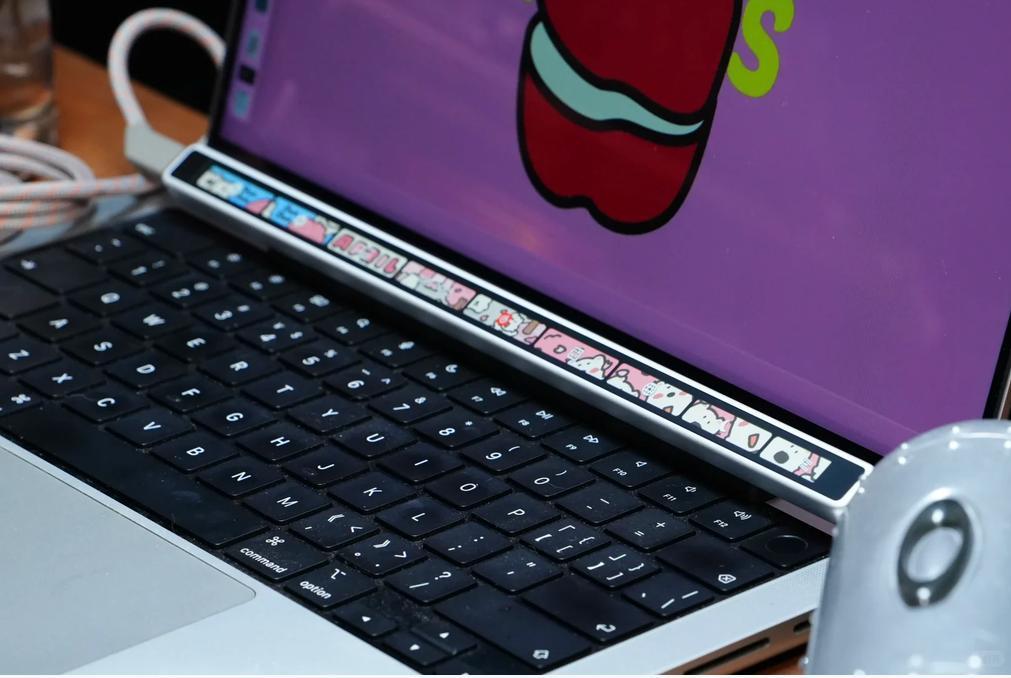
"Ita-Bar" refers to the 「Flexbar」 decorated with personal aesthetic elements | Source: Xiaohongshu
This seemingly niche demand finally received support from 2009 users, raising about 330,000 US dollars.
In addition, Enilinx participated in the design of the e-ink monitor 「Modos Flow」 in 2026, which also fully reflects the team's emphasis on appearance and details. The team said they are not satisfied with "putting components into a box", but repeatedly adjust the body thickness, bezels, etc., and even adjust the ink color many times to make the white of the body printing area closer to the white of the e-ink panel.
From 「Flexbar」, 「Modos Flow」 to 「TICKEY」, the product ideas are actually very consistent: while solving practical demands, they leave users with customization space for their own needs, and attach great importance to the aesthetic design and personalized expression of products. For the Enilinx team, the appearance is not an additional item beyond functions, but an important attraction that determines whether users are willing to try the hardware.
Final notes
In terms of form, 「TICKEY」 is easy to associate with the recently emerged "electronic Ita-plate". Both of them integrate screens with replaceable content into portable items, but their focuses are different.
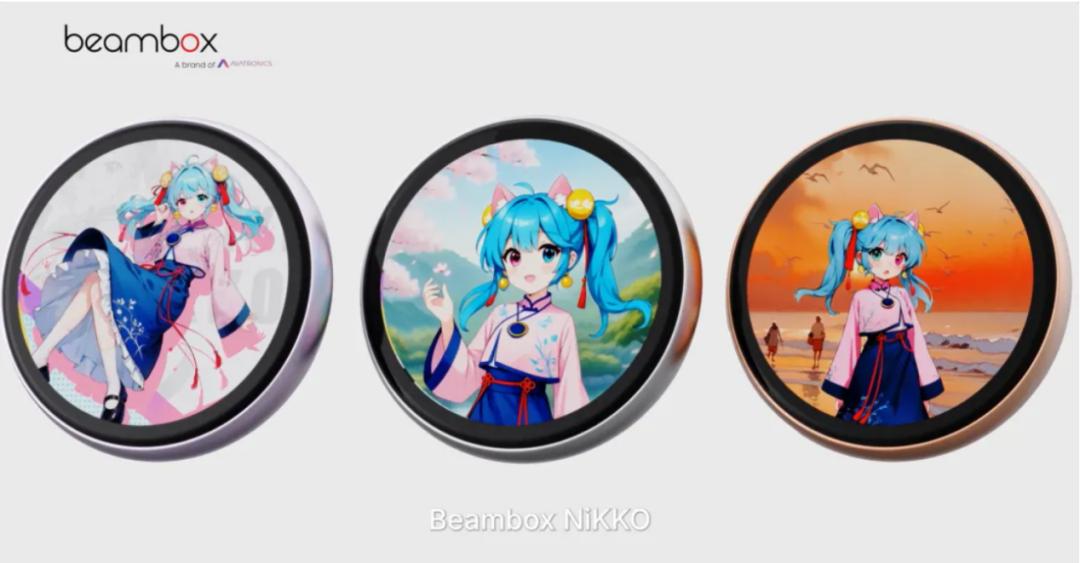
Beambox electronic Ita-plate | Source: Beambox
Many electronic Ita-plates put more emphasis on dynamic display and interactive gameplay, playing GIFs and videos through screens such as LCD, and some products also add functions such as fill light and AI assistant; 「TICKEY」 uses e-ink as the carrier, focusing on the presentation of static images. The limitations of e-ink screens when displaying highly saturated images, on the contrary, make the presentation effect closer to printed products and color newspapers, targeting another group of users with specific aesthetic preferences.
It is difficult to simply judge which route is better, but the current crowdfunding results of 「TICKEY」 show that decorative items do not need overly rich functions, and a good enough appearance is enough to become the reason for users to be attracted.
In addition, 「TICKEY」 is also in line with the consumer hardware trends we have observed recently. Whether it is PixelMug which integrates a pixel screen into a mug, AP30 which designs the player as a retro portable device, or 「TICKEY」 which puts an e-ink screen into a bag charm, these products have achieved good crowdfunding results one after another, which repeatedly verifies that compared with educating users to accept a completely new hardware form, embedding new technologies into familiar items to bring more freshness and emotional value is easier for consumers to understand and accept.