Dissect SHEIN's post-listing long-termism ledger
The Hong Kong stock market has welcomed another leading fashion enterprise.
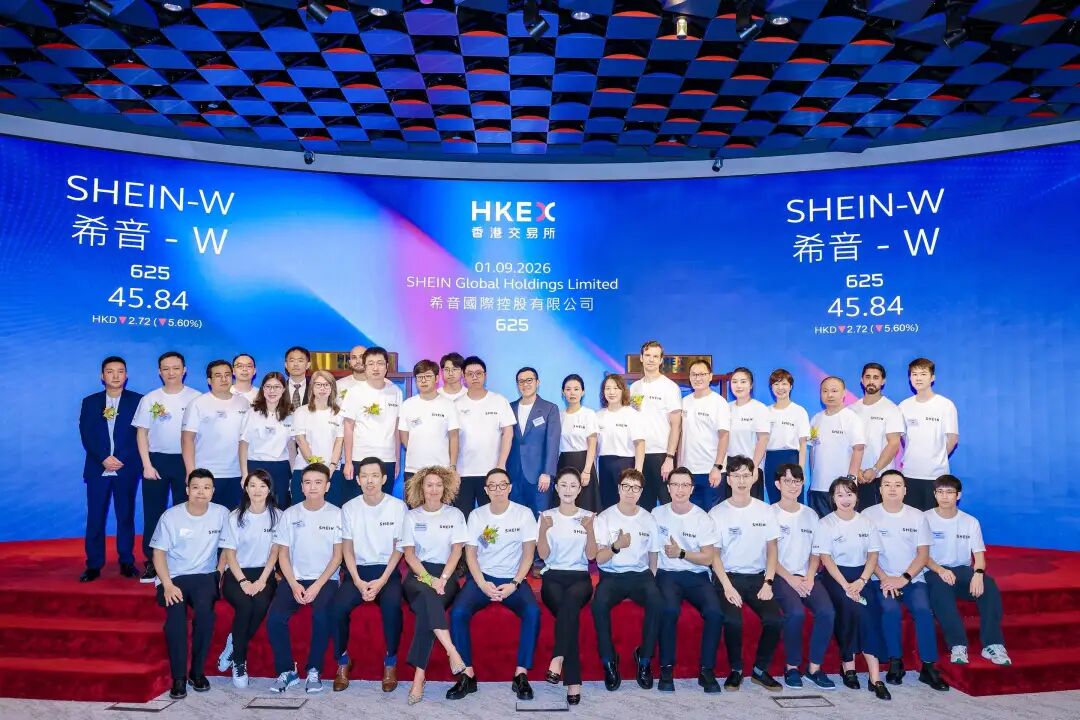
At 9 a.m. on September 1, SHEIN was listed on the Hong Kong Stock Exchange, becoming the largest fashion brand IPO on the Hong Kong stock market in 2026.
A SHEIN spokesperson said, "Listing on the Hong Kong Stock Exchange marks a new starting point for SHEIN. Going forward, we will continue to innovate, optimize our supply, pursue shared growth with our supply chain partners, and embed compliance, transparency and ESG principles across our entire value chain, bringing the beauty of fashion to consumers around the world."
The net proceeds from the global offering totaled approximately HK$13.214 billion; top-tier institutions including Boyu Capital, Tiger Global, Tencent, and Hillhouse Capital are all on the list of cornerstone investors.
In 2025, SHEIN served approximately 273 million active customers across 160 markets worldwide, generating a net revenue of US$41.847 billion and a net profit of US$2.064 billion. Measured by annual retail sales, SHEIN is already the world's largest online fashion destination and ranks among the top five apparel and footwear companies globally.
The use of raised funds can directly reflect the long-term value of an enterprise. Compared with "how much capital has been raised", the more worthy question is: where will this capital flow?
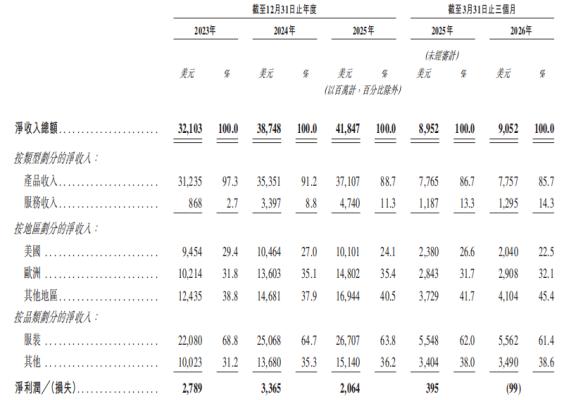
Image excerpted from SHEIN's post-hearing prospectus
The first tranche of funds goes to technology
The answer given in the prospectus is clear and restrained — approximately 40% of the net proceeds will be used to enhance technological capabilities.
To understand the direction of this capital allocation, we first need to understand SHEIN's foundational operating model.
For a long time, the fashion industry has faced an "impossible triangle": the diversity of product selection, the speed of new design launches, and the efficiency of inventory management, which are difficult to achieve all at the same time.
To address this challenge, SHEIN pioneered the "Large-scale Automated Rapid Response for Small Orders" (LATR) model — each new product is first tested in the market with a small initial order of 100 to 200 pieces. After real-time evaluation of customer feedback, restocks for popular products can be completed in as little as 5 days.
The "small-order rapid response" model itself is not new. The difficulty lies in operating it at scale and at low cost.
The results are directly reflected in the financial statements. In 2025, SHEIN's inventory turnover days were only 36 days, the proportion of unsold inventory remained at a low single-digit level, and more than 2 million apparel styles were available on the platform.
Horizontal comparison makes the value of these 36 days even clearer. Under the same metric, ZARA's parent company Inditex recorded 71 days, Fast Retailing, the parent company of UNIQLO, reached 114 days, and adidas had as many as 164 days. SHEIN's inventory turnover days are only a quarter to a half of those of its peers, which means fewer unsold products and much lower pressure from inventory impairment.
Underpinning this model is SHEIN's end-to-end intelligent supply chain system.
Traditional fashion retailers usually only focus on merchandise planning and design, while e-commerce platforms focus on sales. In contrast, SHEIN controls the entire chain — from trend identification, merchandise planning, design development, to order allocation, production optimization, and then to intelligent route planning and fulfillment. Every link is data-driven.
Up to now, SHEIN owns and operates more than 1,700 internally developed software systems, which together form a proprietary technology platform driven by big data and artificial intelligence. This is not just a set of IT systems, but essentially the way SHEIN conducts its business.
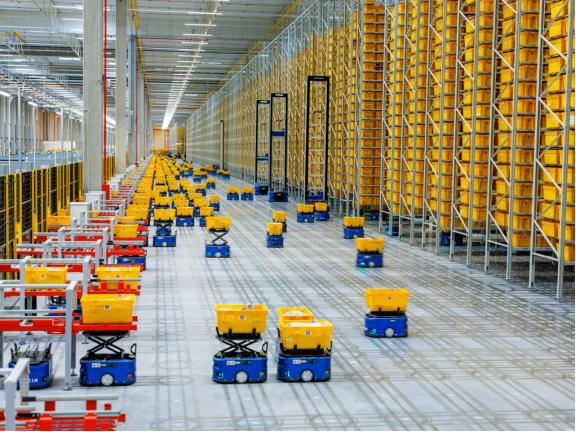
The same applies to the fulfillment side. As of June 30, 2026, SHEIN operates a warehouse network of approximately 6 million square meters across Asia, North America, Europe, the Middle East and South America; in 2025 and the first quarter of 2026, more than 90% of orders were delivered within 10 working days after shipment.
However, the value of technology is limited if it only stays in the "headquarters server room". In addition to intelligent systems, SHEIN also independently develops lean tools and equipment and makes them available to partners to solve the most intractable process problems in the fashion industry.
For example, for bulky items such as down jackets and cotton coats, SHEIN has independently developed a "compressed vacuum sealing packaging machine" that can minimize warehousing and logistics costs. For long-standing process problems such as "broken needles and skin irritation" caused by sequins, beaded embroidery and hot-fix rhinestone fabrics, it has developed a series of tools including the "four-thread overlocking binding kit", among which the "glove sewing positioning template" has obtained a national patent.
Data shows that in the first quarter of 2026 alone, SHEIN delivered 1,200 sets of tools and equipment to suppliers. Whether the tools are practical ultimately depends on the feedback from suppliers.
According to Li Lingna, a women's apparel supplier, she used the custom "rhinestone chain presser foot for zigzag sewing machines" provided by SHEIN to sew 3 rhinestone chains at the same time, reducing the cost to one third of the original level.
After cooperating with SHEIN, Wang Feng, a "veteran apparel worker" who has been making formal dresses for nearly 20 years, finally got the "fishbone puller installed on the interlock sewing machine". In the past, when sewing formal dresses, workers needed to bind strips first and then install fishbones, which required the cooperation of multiple people. With this tool, fishbone implantation and shaping can be completed at the same time as sewing through a special puller, which greatly reduces labor costs, and new employees can master the operation in only 30 minutes.
In addition to the achieved results, the prospectus also clarifies SHEIN's next technological direction — within the next 36 months, the company plans to purchase cloud services and servers, enhance data warehousing capabilities, strengthen cybersecurity, and develop AI-driven demand forecasting models and warehouse automation systems to make all links of the supply chain smarter.
Supporting the technology investment is talent recruitment: SHEIN plans to recruit about 1,500 to 2,000 new full-time technical personnel globally. In the future, about 40% of SHEIN's raised funds will be allocated to these specific initiatives.
SHEIN's intelligent warehouse
The second tranche of funds is for brand enhancement and global layout
If technology answers the question of "how to do it", the brand answers "what to do" and "for whom to do it". The second 40% of SHEIN's raised funds corresponds to such a transformation: from "selling goods on its own" to "selling its capabilities to others".
The change first took place on SHEIN's own shelves.
Starting from the core brand SHEIN, SHEIN has gradually expanded its own brand portfolio covering multiple price points and diverse styles. The change in revenue structure says it all. The prospectus shows that the revenue share of "non-apparel categories" has increased from 31.2% in 2023 to 38.6% in the first quarter of 2026, and the share of "service revenue" has increased from 2.7% to 14.3%.
Behind this, SHEIN is opening up its own capabilities to other partners, including both technical capabilities, brand support and resource support.
In 2021, SHEIN launched the SHEIN X initiative to support designers; in October 2025, the initiative was upgraded to SHEIN Xcelerator, which focuses on opening SHEIN's differentiated supply chain services and mature global sales platforms to other brands, reducing the operational risks of partner brands in production, design, inventory and other links.
Up to now, SHEIN Xcelerator has helped nearly 20 brands around the world, and the British women's wear brand Missguided is a typical example.
Founded in 2009, Missguided initially focused on online business and was once quite popular in the UK, but once entered bankruptcy proceedings due to rising supply chain costs and weak consumer demand. After cooperating with SHEIN, Missguided maintained its original brand and design positioning, while the backend directly accessed SHEIN's mature supply chain and fulfillment system.
In 2025, Missguided's revenue exceeded US$210 million. For SHEIN itself, the operating profit margin brought by empowering other brands is about twice the group's overall operating profit margin.
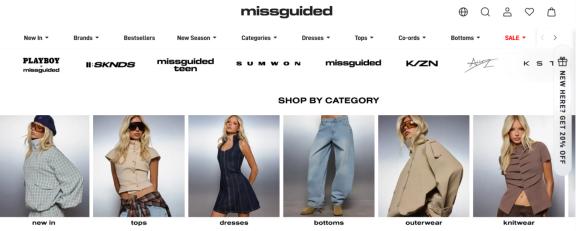
Image excerpted from Missguided's official website
The same changes are also taking place deep in industrial clusters.
In 2022, Deng Ming, a sportswear supplier in Guangzhou, started to cooperate with SHEIN, which kicked off his transformation from traditional sportswear to sport fashion. Since the cooperation, his sales scale has grown 15 times.
According to Deng Ming, SHEIN can provide relatively stable order volumes and payment cycles. "Under the traditional model, we are in a passive position of receiving orders. We produce whatever orders our customers place, and we have no idea how the products sell or what the market feedback is in the end."
SHEIN is different. Deng Ming can closely track the product life cycle through the data system, and arrange subsequent production and processes properly. "For example, one of our hit products has continued to receive repeat orders for two consecutive years."
Zheng Tao from the swimsuit industrial cluster in Jinjiang, Fujian, has been engaged in traditional foreign trade orders for nearly 10 years, and once resisted fragmented small orders. After cooperating with SHEIN, he increasingly feels that the "small-order rapid response" model is very healthy. "Other customers may place one order, and then place another after more than half a month or a month, while SHEIN can continuously place orders on a daily basis, which can quickly identify hit products."
A bigger surprise is that "small-order rapid response" also helps to create personalized and differentiated products. Today, Zheng Tao's factory can even support "one-piece customization", giving full play to the advantages of the flexible supply chain.
Li Weiming, a supplier from the underwear industrial cluster in Puning, Guangdong, also relied on this rapid response supply chain to transform from domestic e-commerce to cross-border brand operation, and the off-peak and peak seasons of his factory are no longer obvious. The common main line of these stories is that SHEIN's suppliers are transforming from OEMs that passively receive orders to operators who understand data and are capable of independent management.
In the current era where customer acquisition costs are getting higher and higher, SHEIN is gradually building up its brand equity.
According to market feedback, its revenue share from regions outside Europe and the United States has increased from 38.8% in 2023 to 45.4% in the first quarter of 2026, maintaining double-digit growth.
In the next 48 months, SHEIN will increase investment in omni-channel and multi-brand empowerment, place advertisements on major online platforms covering the whole world, and increase investment in high-profile brand events. In the next 36 months, it will recruit about 5% more full-time sales and marketing personnel around the world, focusing on expanding local teams in major markets such as the United States and Europe.
SHEIN's listing ceremony
The third tranche of funds empowers the industrial ecosystem with corporate responsibility
Technology and brand answer the question of "how to grow", and the next question is — where will SHEIN head to.
From its founding in 2012 to its listing on the Hong Kong Stock Exchange, SHEIN has taken more than ten years of development. Its long-term value cannot only be measured by the short-term growth curve, but also by its long-term investment in industrial chain technology and talent.
In 2025, SHEIN was awarded the title of "National High-skilled Personnel Training Base". It has established a regular supplier training mechanism and an integrated industry-education-evaluation system that combines "job demand + skill training + skill evaluation + employment service".
In the first quarter of 2026 alone, SHEIN organized nearly 100 training sessions, covering nearly 8,000 supplier person-times, and carried out skill certification for 460 person-times for positions such as pattern making, quality inspection and merchandiser; it also held 5 zero-based training sessions for "sewing" and "pattern making" for the public, serving 74 person-times, and those who pass the assessment can be prioritized for employment in enterprises within the industrial chain.
In terms of humanistic care, as of the first quarter of this year, SHEIN's "Gather Starlight" project has provided financial assistance to 823 families of supplier employees to solve temporary economic difficulties.
In addition to investment in people, from business model innovation to green upgrading that "reduces carbon and cuts costs", the corporate responsibility initiatives promoted by SHEIN have been implemented in large-scale, full-link industrial practices.
First of all, the "small-order rapid response, production on demand" model itself reduces the inventory waste that has long plagued the industry from the source.
In 2025, renewable energy accounted for about 85% of SHEIN's own operational power consumption, up from 76% in 2024. By the end of last year, a total of 142 suppliers had installed rooftop solar photovoltaic systems.
In the production process, processes such as "cold transfer printing for denim fabrics" and "digital heat transfer printing" have greatly reduced water consumption.
In the packaging process, 55.4% of express bags are made of at least 50% recycled polyethylene; on the circular economy front, the second-hand platform SHEIN Exchange launched in the United States, France, the United Kingdom and Germany has more than 9.5 million active users.
In the eyes of many observers, SHEIN's significance to China's apparel supply chain and even the global apparel industry has long gone beyond its own commercial value.
Guo Quanzhong, Professor at the School of Journalism and Communication, Minzu University of China, commented that SHEIN is a "hard-core answer sheet for China's supply chain going global".
Hong Yong, Associate Researcher at the Chinese Academy of International Trade and Economic Cooperation, Ministry of Commerce, believes that the new generation of global enterprises represented by SHEIN are shifting their competitive advantages from cost advantages to new-type competitive advantages centered on "digital-driven, supply chain collaboration, industrial ecosystem construction and branded development".
SHEIN has also written this responsibility into the use of its raised funds.
The last portion of the funds raised from this IPO is allocated to corporate responsibility — approximately 10% of the net proceeds will be dedicated to expanding the scope and depth of the SRS supplier responsibility standards, improving compliance monitoring and training for suppliers, continuously promoting decarbonization, circular utilization and waste reduction programs, with all these initiatives planned to be implemented step by step within the next 36 months.