Investigation on the Academic Lineage of Embodied Intelligence in China: Andrew Chi-Chih Yao's Tsinghua Institute for Interdisciplinary Information Sciences and the Yao Class Legion
The embodied intelligence startup circle in China is a legendary realm co-written by professors, academicians and their students. Names like Li Zexiang, Xiong Rong, Chu Jian, Wang Tianmiao, Lu Cewu... behind every name lies a network of academic lineage.
This series consists of six articles, which will break down the blood ties, geographical connections and capital links of this circle from different factions one by one.
The first article starts from the youngest "institutional faction" — the Institute for Interdisciplinary Information Sciences of Tsinghua University, and the "Yao Class Legion" behind it.
I. "I'm going back to China, permanently"
Let's go back 22 years ago —
In September 2004, at Princeton University, Zhang Shengyu (now head of Tencent Quantum Laboratory), a doctoral student, met his supervisor Andrew Chi-Chih Yao as usual to exchange views on recent research progress. Andrew Chi-Chih Yao suddenly said, "I'm going back to China, permanently."
Zhang Shengyu recalled later, "I was a bit surprised at that moment, but soon felt relieved. From a pure research perspective, there is indeed no place more comfortable than Princeton. He returned to China to do something really significant."
Andrew Chi-Chih Yao was 57 that year. He resigned from his tenured position at Princeton and joined Tsinghua University full-time — no transition arrangements, no fallback options. The person who facilitated this connection was Yang Chen-Ning.
When Andrew Chi-Chih Yao was 11 years old, it was precisely because Yang Chen-Ning and Tsung-Dao Lee won the Nobel Prize in Physics that he set his ambition to study physics.
Half a century later, this closed loop was completed in another way — from studying physics to working in computer science, from Princeton to Tsinghua, from a Nobel laureate to the student of another Nobel laureate.
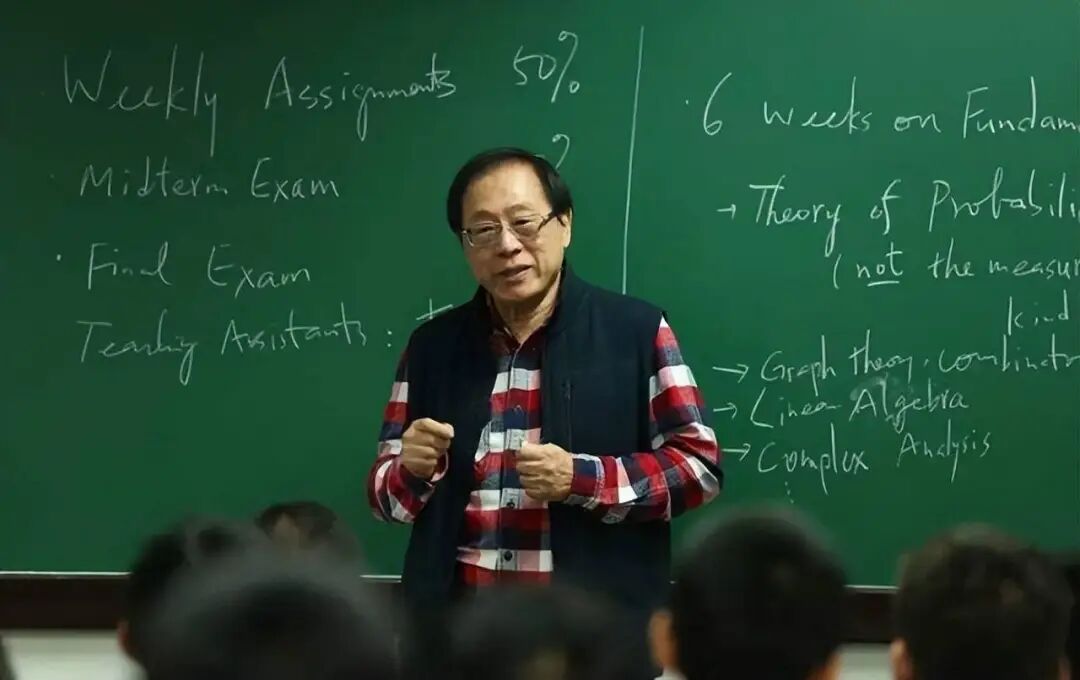
Who is Andrew Chi-Chih Yao?
He is the 2000 Turing Award winner — so far the only Chinese-American computer scientist to receive this honor. He laid the foundation of modern cryptography and founded the theory of communication complexity.
In secular terms: In the field of computer science, he has already stood at the peak.
And the "big thing" he came back to do is not scientific research, but cultivating talents — to build a platform and train a group of talents who can stand on the world stage.
"Our goal is not to train excellent computer software programmers, but to train first-class computer talents with international standards," he wrote in his letter to all Tsinghua students in 2006.
His first step was the Yao Class.
In 2005, the Tsinghua University Special Pilot CS Class was quietly launched, with about 30 students per cohort, selected secondarily from the top freshmen admitted by Tsinghua every year.
Andrew Chi-Chih Yao personally designed the training program and taught courses himself. This is probably the "genius filter" with the highest density in China.
In the following 15 years, this system continued to expand: the Institute for Interdisciplinary Information Sciences of Tsinghua University (hereinafter referred to as "IIIS") was inaugurated in 2011, the Nanjing Turing AI Research Institute was completed in 2018, the Zhi Class was launched in 2019, the Shanghai Qizhi Research Institute was established in 2020, and the Quantum Information Class was launched in 2021 — three undergraduate classes, two research institutes, and a new-type research institution stacked layer upon layer to form the IIIS system of Tsinghua. The entire IIIS revolves around the same goal: screen out the smartest people and put them in the most cutting-edge directions.
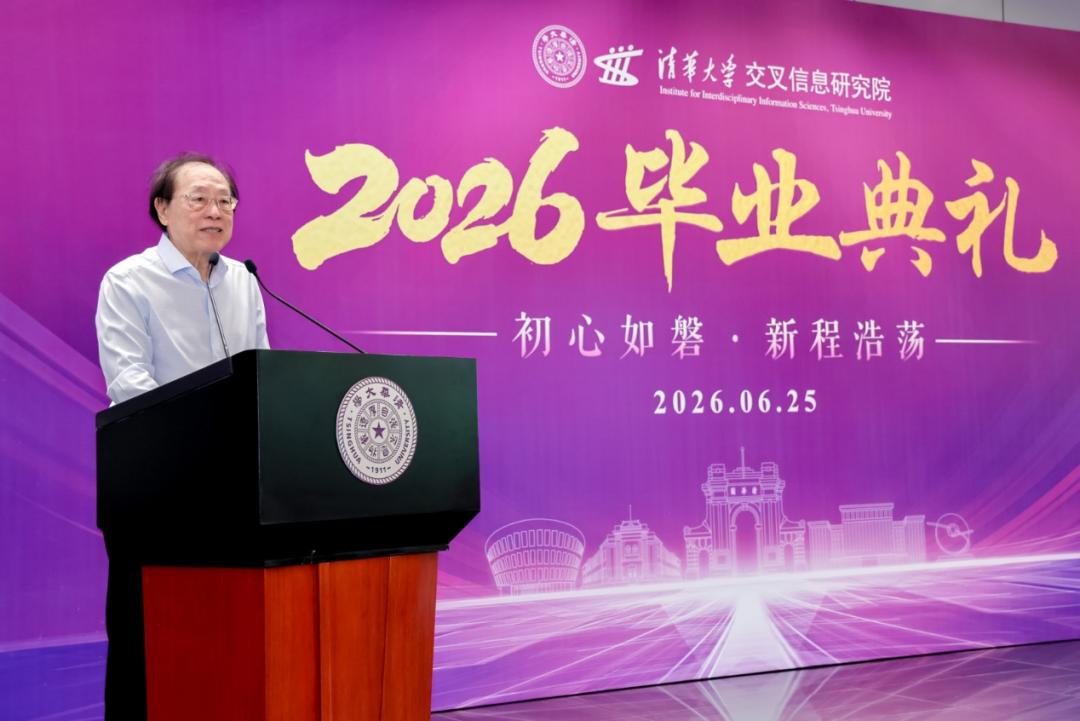
Source: Official website of Tsinghua University, Andrew Chi-Chih Yao's speech at the graduation ceremony
There is a popular saying circulating outside: "Half of the top talents in China gather in Tsinghua, and half of the top talents in Tsinghua are in the Yao Class."
In July 2026, a screenshot showing "DeepSeek interns get a daily salary of 5500 yuan" went viral, and netizens said it was a "special price" for top students from the Yao Class — although the authenticity is unconfirmed, it shows the high recognition of Yao Class talents.
Over the past 20 years, this small class that only recruits more than 50 people every year has nurtured a large number of organized entrepreneurs in the autonomous driving, computer vision, large model and robot tracks; as of 2024, nearly 60 Yao Class graduates teach in universities at home and abroad, 7 of whom have returned to IIIS — the main characters in this article are exactly growing out of this cycle.
II. Andrew Chi-Chih Yao's Talent Strategy
To understand the IIIS faction, you must first understand how the IIIS system operates.
The starting point is Andrew Chi-Chih Yao personally recruiting talents.
In order to form the faculty of IIIS, he personally interviewed and selected 62 teachers one by one — in November 2018, he led a team to the United States to interview dozens of outstanding young talents in a centralized way, and more than ten people including Yao Class graduates were hired on the spot.
In the same year, Duan Luming, the Fermi Endowed Chair Professor at the University of Michigan and Sloan Research Fellow, was fully introduced to set a benchmark for the quantum information direction. This level of density and granularity is almost unmatched in Chinese universities.
Andrew Chi-Chih Yao once summarized his methodology for talent recruitment in one sentence: "The key point of introducing talents lies in the environment." The environment does not wait for itself, but is built by him personally. After the talents were invited back, the next step was to build the platform — in January 2020, the Shanghai Qizhi Research Institute led by Andrew Chi-Chih Yao was inaugurated, which is closely connected with IIIS, providing the young people introduced with a dual-appointment structure of "Tsinghua faculty position + Shanghai PI".
From 2020 to 2024, IIIS introduced 18 assistant professors from top universities such as UC Berkeley, MIT and Stanford, with an average age of 33. The total number of teaching and research faculty is 31 — which means that more than half of the faculty of this research institute were intensively introduced by Andrew Chi-Chih Yao within four years.
Four of them — Wu Yi, Chen Jianyu, Xu Huazhe and Gao Yang — later shared their entrepreneurial experiences on CCTV together, and are collectively called "Four Talents of the Tea Garden" in the industry (IIIS is nicknamed "Tea Garden").
In addition, Zhang Huanchen in the database direction (PhD from CMU, the first Chinese to win the ACM SIGMOD Jim Gray Doctoral Dissertation Award) joined IIIS in 2021; Liu Ziming in the system science direction is the chief scientist of MetaRing Intelligence, etc.
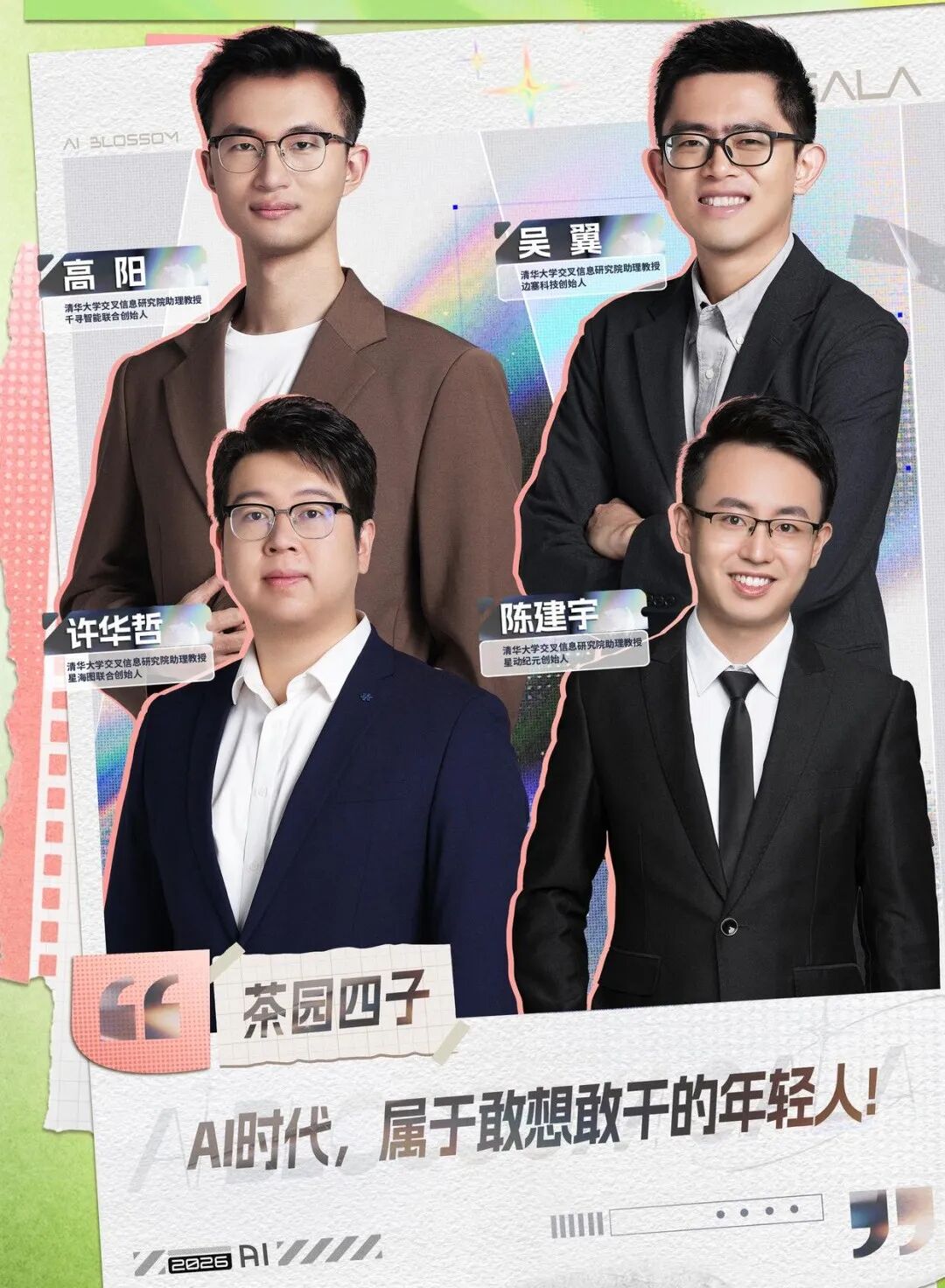
Interestingly, these young professors from IIIS later intensively founded companies, and many unicorns have emerged.
Looking back at the time node when they joined, what Andrew Chi-Chih Yao did was just to bring these people back to the Tsinghua research institute from the other side of the ocean, provide them with laboratories, PI titles and dual-appointment platforms, so that they can focus on research.
Andrew Chi-Chih Yao himself does not participate in company operations or hold shares. He rarely even endorses a specific company — what he does is more fundamental: build a good platform, invite people back, and then let go.
And the "disciples" of the IIIS faction are more than just the assistant professors.
Anyone who has studied in the Yao Class, Zhi Class, Quantum Information Class and the postgraduate programs of IIIS is a student of Andrew Chi-Chih Yao — the other half of the story is hidden among them.
III. 2023: One Compound in Tsinghua Spawned a Whole Track in One Year
To understand what happened next, you need to understand the node of 2023 first.
When these professors were introduced back, they were doing academic research — robot control, reinforcement learning, computer vision, 3D perception, all of which were topics in the laboratory.
Starting a business was not on their schedule.
The turning point took place from the end of 2022 to the beginning of 2023: OpenAI released the large model-driven robot manipulation research, Google DeepMind's RT-1/RT-2 made large language models for robots a prominent academic direction, and Tesla's Optimus humanoid robot prototype was unveiled — the whole narrative suddenly switched from "academic frontier" to "industrial tuyere".
Embodied intelligence changed from a sub-direction in the laboratory to a track competed for by capital and industry.
For the professors of IIIS, this means that what they studied suddenly has the possibility of stepping out of academic papers.
Chen Jianyu later put it very directly: "The funding model of universities cannot support this kind of heavy R&D" — the release of Tesla Optimus at the end of 2022 gave him a huge sense of urgency.
Wu Yi chose to start a business after returning from OpenAI, and Xu Huazhe, Gao Yang and Zhao Xing also launched or joined their respective embodied intelligence companies in the same period.
Therefore, we see —
From March to September 2023, in less than half a year, robot companies directly related to IIIS were intensively established.
The pace is so fast that even insiders describe it as a "blowout" — as if this compound became a startup incubator overnight.
Some of these companies originated from professors' laboratories, while others were secondary startups of "veteran entrepreneurs".
Together, they form the most dense startup cluster in China's embodied intelligence track:
Star Era is the most important company in this outbreak.
Founder Chen Jianyu, born in 1992 in Leshan, Sichuan, was admitted to the Department of Precision Instrument of Tsinghua University through competition recommendation. After graduating with a PhD from UC Berkeley, he worked at Waymo and Denso. He was introduced to IIIS by Andrew Chi-Chih Yao in 2020, and became one of the youngest doctoral supervisors in Tsinghua at the age of 28.
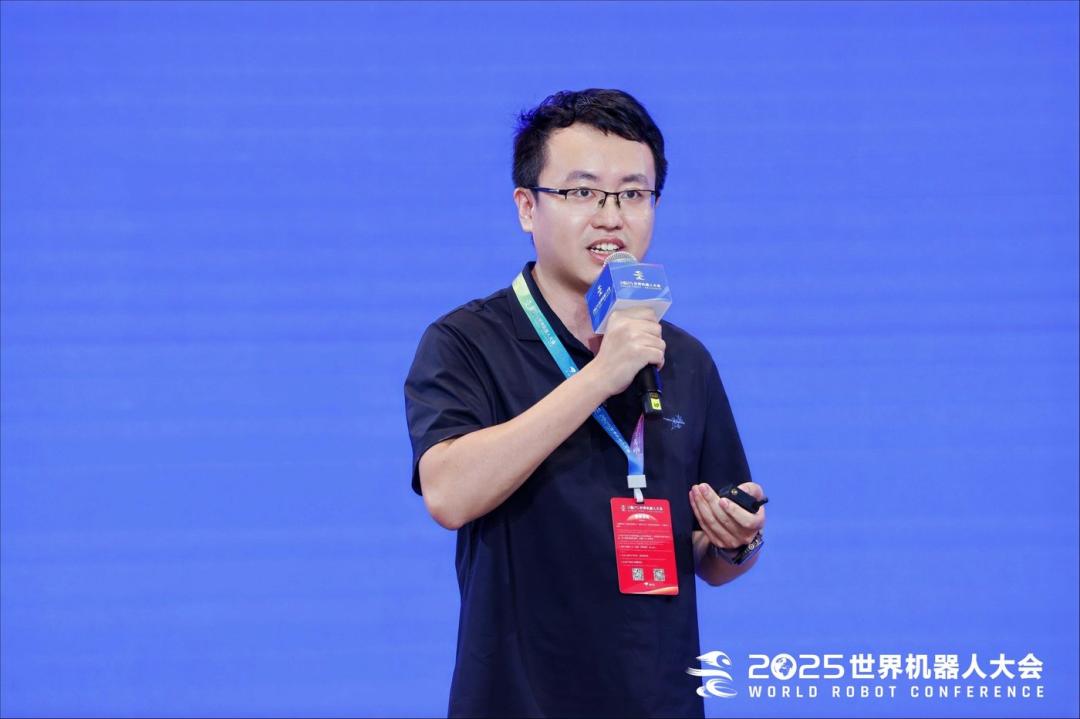
Chen Jianyu of Star Era
It was exactly the "window period" mentioned above that turned him from an academic star into an entrepreneurial star — the sentence he repeatedly mentioned later: "The funding model of universities cannot support this kind of heavy R&D" is the most plain footnote for the collective entrepreneurship of professors in 2023.
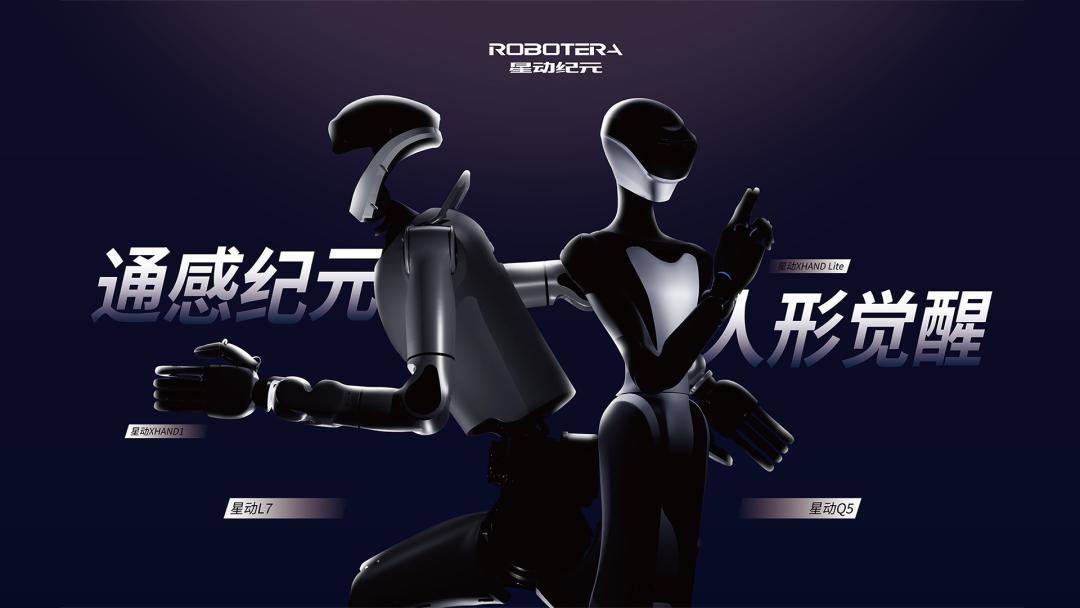
Star Era is currently the only embodied intelligence company in which Tsinghua holds shares directly (Huakong Technology Transfer holds about 3.8% of the shares).
By 2026, the company's financing in that year was nearly 50 billion yuan: 10 billion yuan strategic round in March with a valuation exceeding 100 billion yuan, more than 200 million US dollars in April led by SF Express, 10 billion yuan in July led by Chengtong Fund; orders exceeded 500 million yuan in 2025, landed in more than 10 logistics centers including SF Express and China Post, and there were rumors of applying for IPO in Hong Kong to raise 8-10 billion US dollars (the company denied it).
Stellar Map is the company with the highest "professor density" among IIIS-affiliated companies — CEO Gao Jiyang, graduated from the Department of Electronic Engineering of Tsinghua, PhD from USC, former member of Waymo and Momenta, gave up about 10 million US dollars of options to return to China in 2023; Chief Scientist Xu Huazhe (TEA Lab); Co-founder Zhao Xing (MARS Lab). An industry CEO is matched with two IIIS professors. (Recently, Xu Huazhe left Stellar Map and founded Shell Break Robotics)
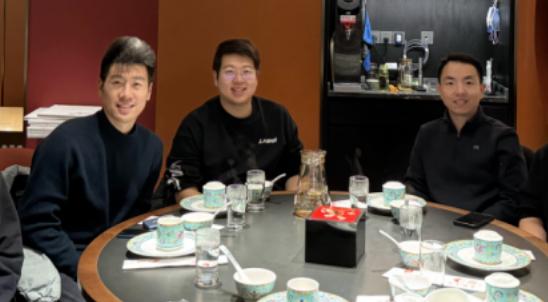
From left to right: Gao Jiyang, Xu Huazhe, Zhao Xing
Xu Xin from Capital Today joined in the angel round in 2024 and led the investment in the A4 round in 2025. By 2026, Stellar Map has accumulated nearly 50 billion yuan in financing, with a valuation of about 200 billion yuan, ranking in the "200 billion club" of embodied intelligence, and is also sprinting for the Hong Kong stock market.
In the following two years, this compound continued to "grow" companies:
Qianxun Intelligence (founded in 2024) — Gao Yang participated in the founding as chief scientist, known as the "Chinese version of Figure". Gao Yang's EfficientZero is still one of the reinforcement learning algorithms with the highest sample efficiency in the world.
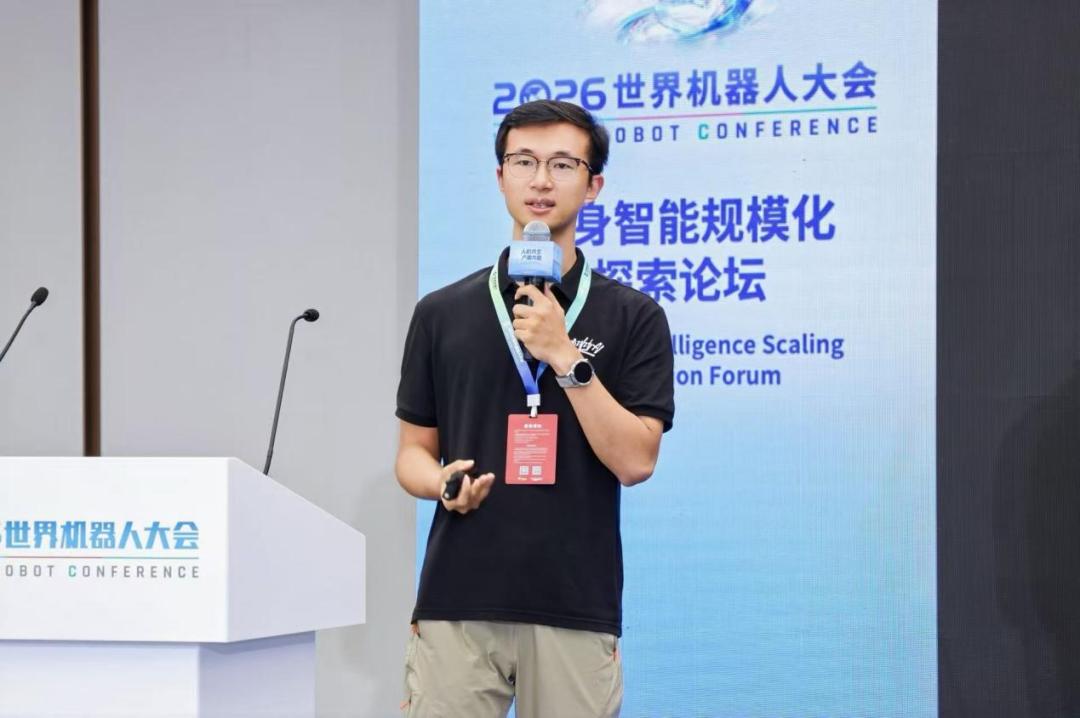
Gao Yang, Chief Scientist of Qianxun Intelligence
In February 2026, Qianxun completed two consecutive rounds of financing totaling nearly 20 billion yuan, with a valuation exceeding 100 billion yuan; its open-source Spirit v1.5 model topped the RoboChallenge list.
Different from Star Era which focuses on "robot ontology", Qianxun takes the "robot brain" route.
<