Why have the wealthy Middle Eastern tycoons become obsessed with games?
$55 billion is the price of the full acquisition of American game company Electronic Arts (hereinafter referred to as EA) by a consortium led by the Public Investment Fund of Saudi Arabia (hereinafter referred to as PIF).
Last September, EA officially disclosed the acquisition framework for the first time. This August, the transaction was formally completed and delivered, with PIF holding approximately 93.4% of EA's shares, and EA delisted from Nasdaq to become a private enterprise. At this point, the second largest merger and acquisition case in the history of the gaming industry has been settled, with the amount second only to Microsoft's acquisition of Activision Blizzard.
The acquired EA is a leading game manufacturer almost as famous as Activision Blizzard. Founded in 1982, its IP portfolio includes Battlefield, The Sims, EA Sports FC (formerly the FIFA series), Apex Legends, and many more. According to Sensor Tower data, EA ranked first among global PC/console game publishers with 206 million downloads in 2025.
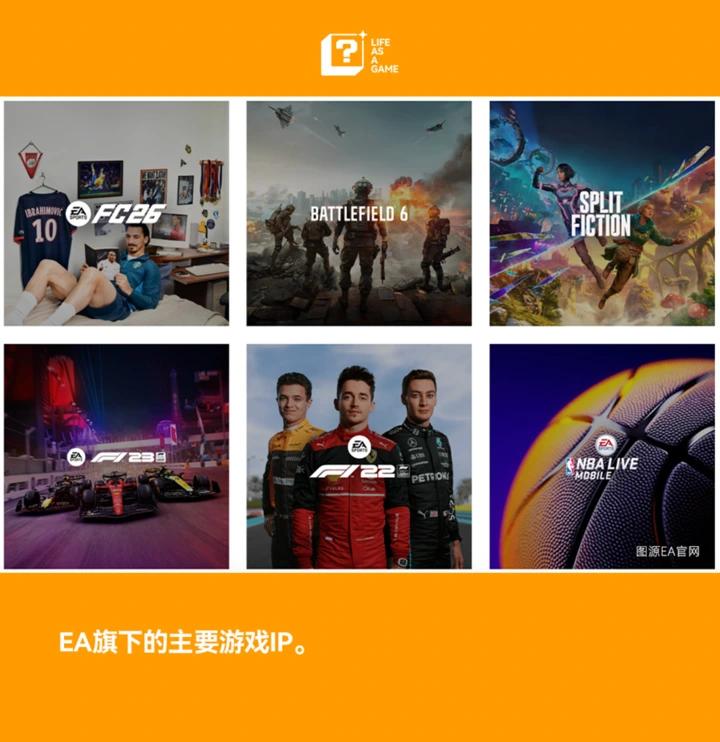
But the protagonist of this acquisition case is not EA, but Saudi sovereign wealth fund PIF. In the past few years, this commercial entity that most players had never heard of before has launched a number of mergers, acquisitions and investments targeting the game industry, with a total investment of more than 70 billion US dollars.
Why are the wealthy tycoons in the Middle East suddenly obsessed with games?

Spending 70 billion US dollars, Saudi capital breaks into the gaming circle
Saudi capital's acquisition of EA is not a whim. In fact, the enthusiasm of Middle Eastern tycoons for games has lasted for nearly 6 years.
As early as the fourth quarter of 2020, PIF purchased stocks of three American game companies at the same time, costing about 3.4 billion US dollars. Coincidentally, the three game companies are respectively Activision Blizzard which was later acquired by Microsoft, EA which was later fully acquired by PIF, and Take-Two, the publisher of the GTA series of games.
Since then, the Saudi tycoons have embarked on a profligate "buy, buy, buy" mode.
PIF specially established Savvy Games Group (hereinafter referred to as Savvy), with an initial capital reserve of 37.8 billion US dollars, focusing on games and esports investment. Savvy also hired Brian Ward as CEO, who is a former executive of EA, Microsoft Games and Activision Blizzard. A series of Saudi investments are basically operated jointly by PIF and Savvy as the main entities.
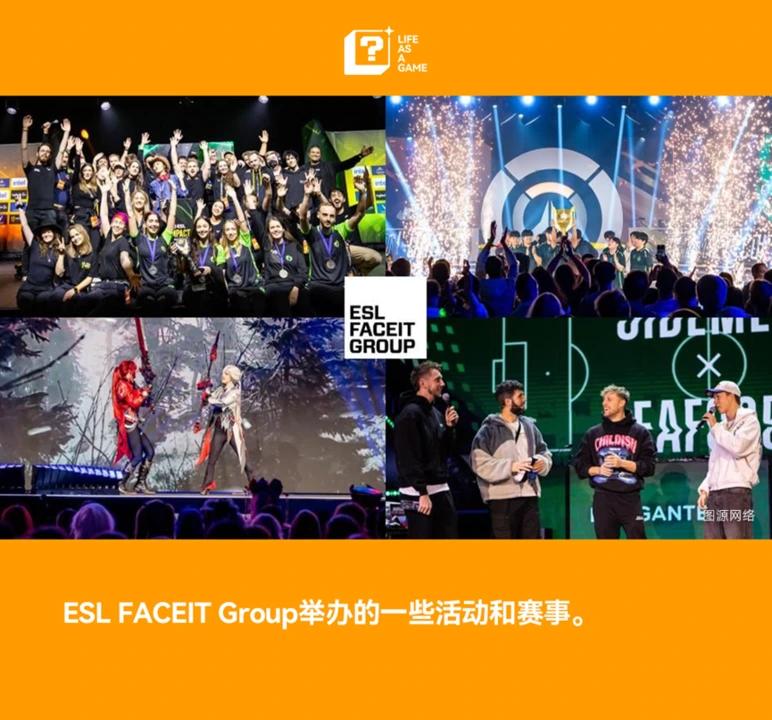
In 2022, Savvy acquired ESL and FACEIT for 1.5 billion US dollars. The former is one of the world's largest esports event operators (the founder of the Intel Extreme Masters IEM), and the latter is a well-known competitive battle platform in Europe. PIF merged them into ESL FACEIT Group, thereby controlling about 40% of the global esports event organization business.
In 2023, the Saudi tycoons set their sights on mobile games again, acquiring Scopely, the developer of the mobile game blockbuster *Monopoly GO!*, for 4.9 billion US dollars. In 2025, they spent another 3.5 billion US dollars to acquire the Niantic game division that once developed *Pokémon GO*. The following year, when ByteDance wanted to sell Moonton Technology (the developer of the Southeast Asian hit *Mobile Legends: Bang Bang*), Savvy spent 6 billion US dollars to take it into its pocket.
In addition, PIF spent a total of 1.2 billion US dollars to buy 5% shares each of Capcom, a long-established Japanese game manufacturer (represented by *Resident Evil* and *Monster Hunter*), and NEXON, a South Korean online game developer (represented by *MapleStory* and *Dungeon & Fighter*), making up for the shortcomings in console games and online games. Even Nintendo, one of the "three console giants", was not left behind. PIF spent 3 billion US dollars to buy 5% of its shares, and later adjusted the shareholding to 6.3%.
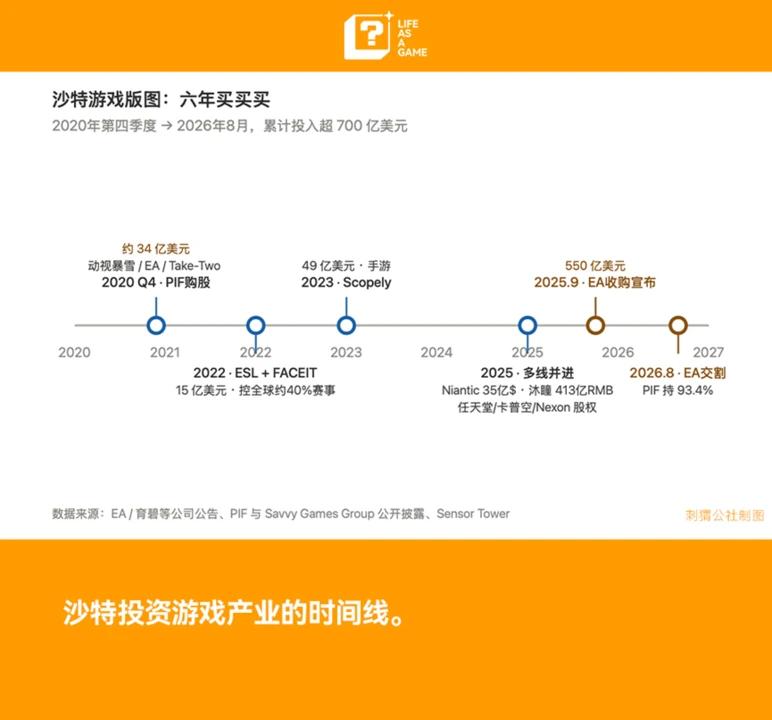
From esports to mobile games, from online games to consoles, Saudi Arabia says "I want all of them", and the direction of each investment is logical: controlling events through ESL/FACEIT, entering the mobile game sector by acquiring Scopely, obtaining sports IPs by purchasing EA, cutting into the Southeast Asian market by acquiring Moonton, and getting a say in the world's most culturally influential game company with Nintendo's shares...
In addition to acquiring game companies from overseas, Saudi Arabia has not forgotten to invest in the local market. In 2024, Saudi Arabia announced the construction of Qiddiya Esports City (an esports arena that can accommodate 73,000 people), and also established the Savvy Academy training system. At this point, a game industry layout covering five dimensions of publishers, event organizations, IPs, studios and infrastructure has taken shape.
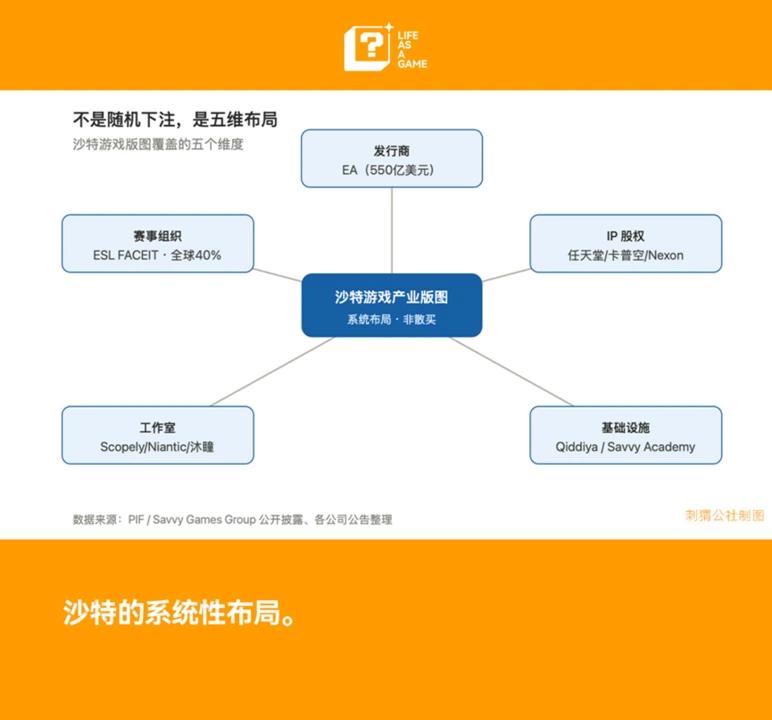
Looking back, the $55 billion Saudi Arabia spent on EA is not an isolated transaction, but the latest step in this overall game plan.

What on earth do the Saudis who spend lavishly on games want?
A series of Saudi acquisition events are inseparable from a key figure — Saudi Crown Prince Mohammed bin Salman (hereinafter referred to as MbS), who is also the main controller of PIF.
There is a popular saying that MbS is not only a fanatical *Call of Duty* player, but also a fan of the EA Sports FC series, so he "used the country's money to buy game companies". After EA was acquired, MbS even changed his Steam account name to "I bought EA", and his pride is palpable.
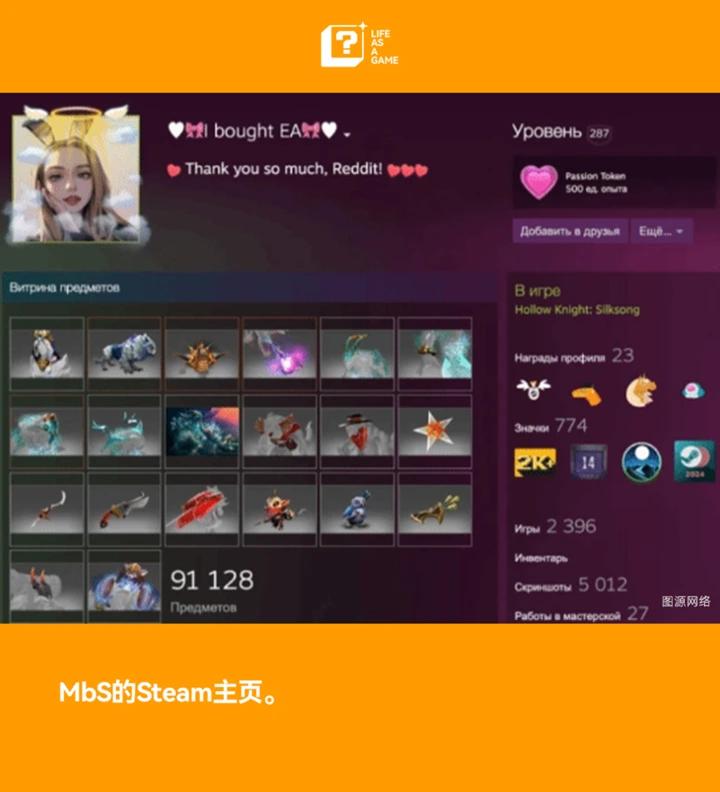
While MbS's personal interest cannot be ignored, it is obviously not convincing to interpret the investment of more than 70 billion US dollars entirely as a trivial prank of the Saudi Crown Prince.
In fact, although PIF's series of investments are related to MbS's personal will, the more important driving force is Saudi Arabia's own macro vision.
In 2015, MbS expanded PIF's function from "managing money" to "driving economic transformation". The following year, Saudi Arabia put forward the so-called "Vision 2030", which aims to make full use of Saudi Arabia's geographical advantages, investment potential and Arab culture to promote Saudi Arabia to enhance its international influence, and PIF has since become the core executing agency of "Vision 2030".
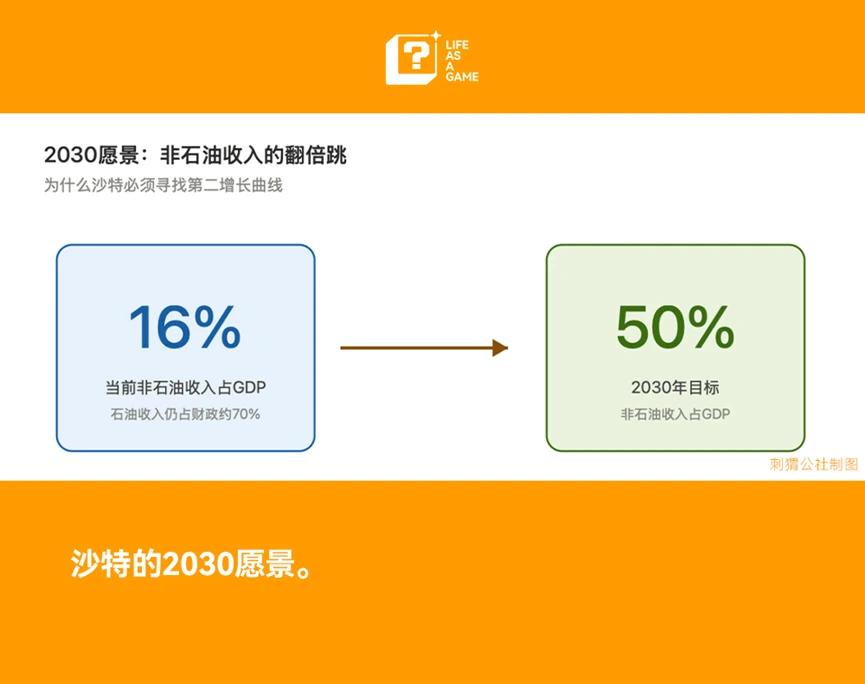
One of the core goals of "Vision 2030" is to increase the proportion of non-oil revenue in Saudi Arabia's GDP from 16% to 50%. The reason is easy to understand: as the world pursues decarbonization transformation, the status of oil as the core of global energy is being shaken, and Saudi Arabia, which relies on oil for 70% of its revenue, obviously cannot stand idly by in the face of external changes.
In this case, new industries that can create value have become the target of Saudi Arabia. According to this line of thinking, the game industry has a scale of more than 200 billion US dollars, which is large enough, and it does not rely on natural resources nor cause direct pollution, so it obviously meets the transformation standards.
However, Saudi Arabia is also familiar with downstream petrochemicals and fintech, so why did it choose the game industry, a completely unfamiliar field?
This is closely related to Saudi Arabia's unique social structure. At present, 70% of Saudi Arabia's population is under 35 years old, and 67% of the country's population are already game players — about 23.5 million people. Young people in this country do not need to develop game habits, as video games are already part of their daily lives.
Another easily overlooked background is that in the early 1980s, Saudi Arabia, which practiced strict Islamic precepts, closed all cinemas on the grounds that they "easily lead to people's moral corruption". It was not until April 2018, as part of the social reform of "Vision 2030", that Saudi Arabia lifted the ban, and the first cinema opened in the capital Riyadh.

This means that in a country without cinemas for nearly 40 years, video games are almost the only legal entertainment outlet for young people. While their peers around the world watch blockbusters in cinemas, Saudi young people choose controllers and screens. Games are not just pastimes, but also provide an alternative public cultural space.
In addition, the development of the game industry can not only meet the spiritual needs of young Saudis, but also drive social employment. Savvy promises to create 39,000 jobs in the game industry, including game testers, event executives, programmers, art designers and so on. These are no longer physical labor jobs in the oil industry, but jobs that are closer to the vision of a "modern digital society".
However, even if we explain "why games", there is a deeper question to think about: Why is Saudi Arabia not satisfied with only buying equity to "enjoy the benefits", but wants to control game companies and deeply intervene in content?

With "super financial power", can you buy the right to cultural narrative?
Today, there are 330 million Arabic-speaking game players in the world, which is more than the total number of game players in Western Europe or the United States. However, their cultural needs are far from being fully met, which is an unforgettable fact in the hearts of Arab players.
Just imagine, American players can play their familiar IP Spider-Man, swinging through the streets of New York in the game; French players can relive the Great Revolution and admire Notre Dame de Paris in the game; Japanese players can not only see Japanese history in their own works, but even play *Ghost of Tsushima* created by American companies after reverse cultural output.
Even China, which was once absent from the 3A game market, has launched *Black Myth: Wukong* in recent years, which turns local mythology into a global hit, and more blockbuster projects are constantly emerging. But what about Arab players? They are still experiencing the "pain" that Chinese players once experienced: despite strong consumption power and a huge player group, most of the time they can only play stories from other nations.
From a macro perspective, the game industry is an industry with extremely high concentration and extremely low skill migration difficulty. This means that as long as some countries seize the first-mover advantage, game talents in developing countries are easily siphoned off, making it difficult for their own industries to take shape.
Therefore, although there seem to be more than 200 countries in the world, only more than 10 countries have a real game industry for a long time, and the right to cultural narrative in games will only be mastered by a few countries.
Saudi Arabia wants to change this situation. According to reports from The Paper, MbS hopes to "promote Saudi and Arab culture" through games, and produce new games that promote Saudi and Arab culture.
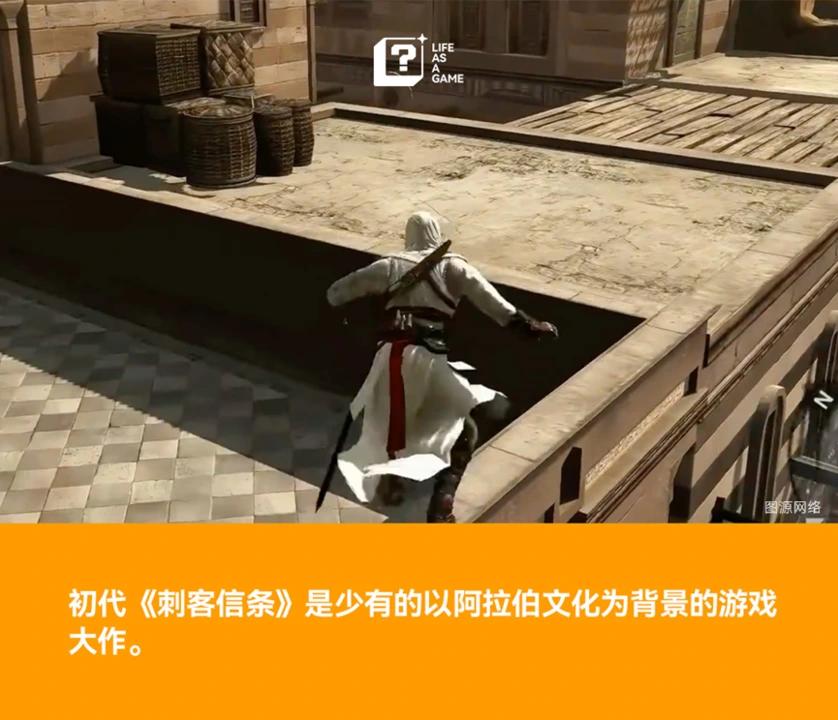
Leading game publisher Ubisoft has already submitted its first answer sheet with actions: In 2025, *Assassin's Creed Mirage* launched a free DLC "Valley of Memory", in which the protagonist Basim travels to the ancient Saudi city of Al-Ula in the 9th century to search for his lost father.
