The 9.9-yuan round-trip intercity buses connecting major cities are crammed full of office workers reeking of the typical drudgery of daily 9-to-5 work.
"Take the ×× intercity bus back to campus for the new semester, departing from subway stations in Guangzhou, Shenzhen and Foshan, heading straight to the school gate with fares as low as 9 yuan. Get on the bus, take a nap, and you will wake up right at your campus!"
Two days before the semester started, a message popped up from a WeChat service account, timely announcing the end of the summer vacation to student groups. Sitting in my cubicle, seeing the "as low as 9 yuan" fare in the headline, I couldn't help muttering: "The intercity bus ticket back to school is even cheaper than a cup of Luckin Coffee, but I can no longer be a student heading back to campus."
I clicked on this service account that I could not even remember how long I had followed, initially thinking it was a "convenient direct bus for returning students" organized by a hometown association, only to find it was the online booked intercity passenger bus I had taken two months ago. That night, I bought a 12.8-yuan bus ticket, sat on the bus for two and a half hours without moving, and traveled from Zhaoqing Seven Star Crags back to Guangzhou Zhujiang New Town, with every seat on the bus occupied.
In an era when the high-speed rail network is increasingly dense, such a scene seems unbelievable no matter how you look at it. After all, in recent years, news related to intercity passenger buses has often been dominated by keywords like "bankruptcy" or "service suspension", which always makes people sigh.
However, in Guangdong, intercity passenger buses have not disappeared. Instead, with the affordable price that "you can take a ride for just 9 yuan", they have been picked up by young people again.
Recently released data from the Department of Transportation of Guangdong Province shows that in 2025, the cumulative number of scheduled trips of internet-based passenger transport across the province reached 2.496 million, the passenger volume increased by nearly 70% year-on-year, and the growth rate has exceeded 20% for three consecutive years.
Specifically in Guangzhou, statistics show that in 2025, internet-based passenger transport in the city carried more than 7 million passengers in total, and the business is so prosperous that it makes some high-speed rail routes jealous.
Passenger stations have become a relic of the times, but why did intercity buses stage a comeback against the trend?
The answer may be very simple — they have become cheaper, and also much more convenient. You can get on the bus almost everywhere, at subway entrances, school gates, and downstairs of residential communities. After a decade of rapid development of high-speed rail, ordinary people have gone around in a big circle, and found another kind of freedom on intercity buses.
Passenger stations are gone, but boarding points are available at subway entrances
Near Exit A1 of Zhujiang New Town Metro Station in Guangzhou, there is an open-air passenger boarding stop. Buses departing from here can reach most cities in Guangdong Province. The buses leave as soon as passengers arrive, and there is almost no need to queue.
During peak hours, more buses stop at this station than cars on the road. People are waiting for buses from morning to night, and passengers dragging suitcases come and go, then come again.
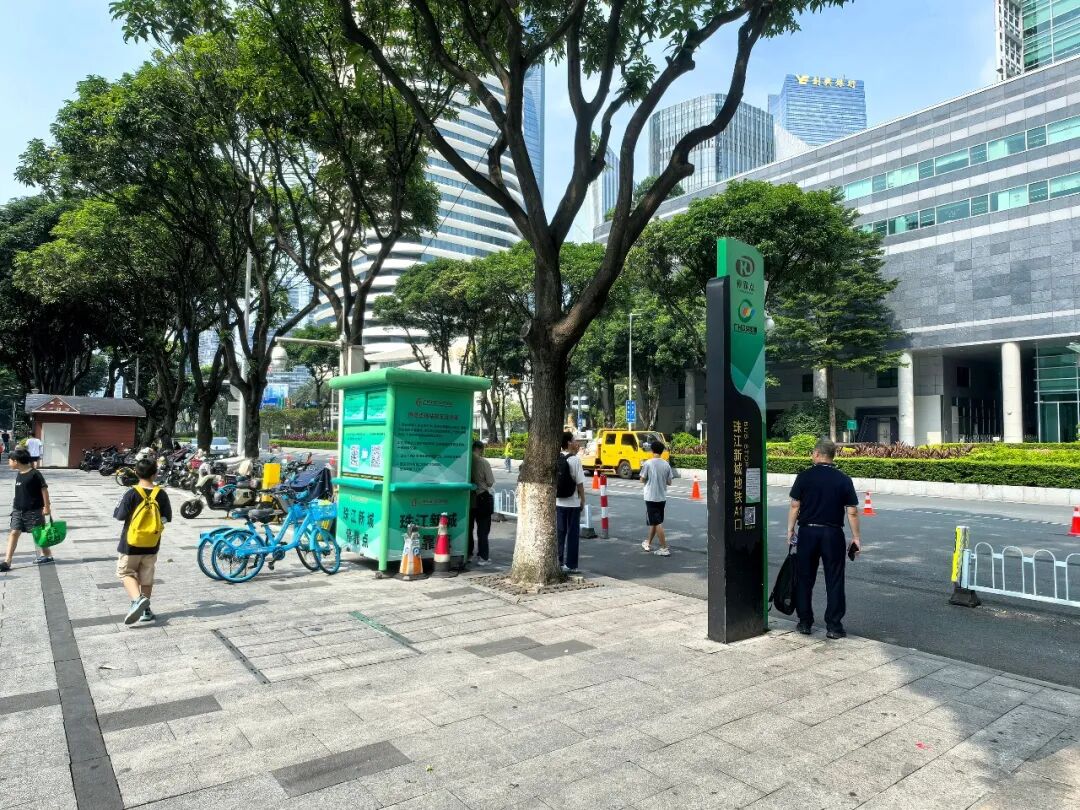
The passenger boarding point near Exit A1 of Zhujiang New Town Metro Station in Guangzhou. (Photo by Liang Hao)
Zhang Yan is a regular at this hail-and-ride stop. He needs to travel between Guangzhou and Zhuhai twice a month. After buying tickets on his mobile phone, he can get on the bus directly from Zhujiang New Town. The trip back to Zhuhai takes two and a half hours, and most of the time he chooses to take a nap on the bus. "When I open my eyes, the window outside is Zhuhai urban area. After arriving at the station, I transfer to a bus and get home in more than ten minutes."
Zhang Yan first came into contact with this kind of intercity bus in 2017. At that time, he was still studying at Guangzhou Higher Education Mega Center, and was always looking for various ways to save money. One night, he was playing with his mobile phone in the dormitory, and saw someone sharing an article of AA Bus in the club WeChat group. The promotion of "special bus tickets from Guangzhou to Zhuhai" caught his eye immediately.
"One of the boarding points is near the school, and the fare is 20 yuan." Although he was skeptical, Zhang Yan still tried to buy a ticket, and took the bus at the specified time and place on the ticket. "There are quite a lot of people waiting for the bus, and almost all of them are college students, the bus is completely full."
Although the journey takes as long as two and a half hours, and the travel time may even double during holidays, the 20-yuan fare is so cost-effective that Zhang Yan, who was a poor student at that time, could not refuse it.
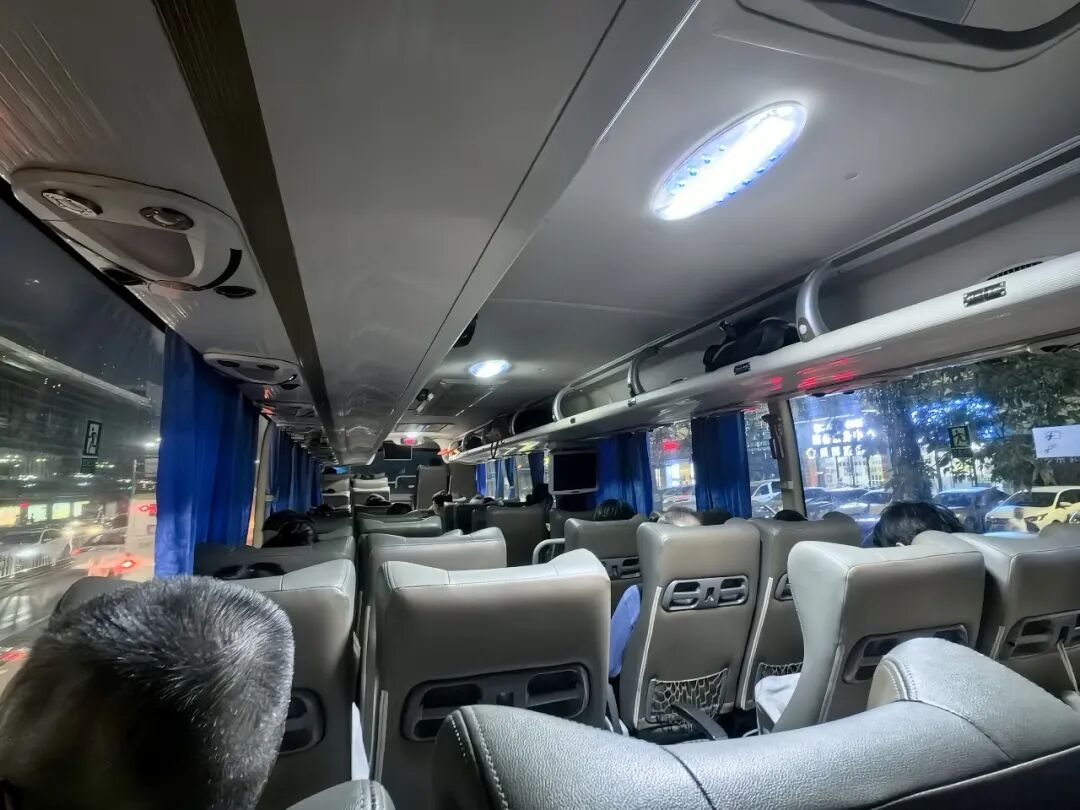
For many people, the advantage of intercity buses lies in their low fares. (Photo by Liang Hao)
Although the bus is cheap, there were also troubles. Zhang Yan recalled that once he returned to Guangzhou from Zhuhai, the bus was stopped by traffic law enforcement officers shortly after departure, on the grounds that the vehicle did not obtain legal operation qualification for scheduled passenger buses. "I sat on the bus for two hours, the bus was seized for inspection, and everyone was asked to get off. It was already 9 p.m., many people complained a lot about this."
In order not to miss the early class the next day, Zhang Yan had to share a ride back to Guangzhou with other passengers who were also studying in the Higher Education Mega Center. He only got all his bus fare back after negotiating with customer service for a whole week. "Because of this unpleasant experience, after that I only dared to take the Guangzhou-Zhuhai intercity railway to go home and go to school."
According to relevant regulations, national road passenger transport is divided into two modes: scheduled buses and chartered buses. The former operates according to fixed routes, time, stops and shifts. Passenger transport enterprises must apply for scheduled bus route licenses, sign an intention letter to enter the station with the passenger station, and passengers must go to the passenger station to take the bus. The latter can only carry group passengers and are not allowed to solicit individual passengers.
For this reason, many online bus platforms have often been interviewed and investigated by traffic law enforcement departments on suspicion of illegal transportation. Many media have also repeatedly called on passengers to refuse to take such "illegal black buses" and choose legal road passenger transport routes for travel.
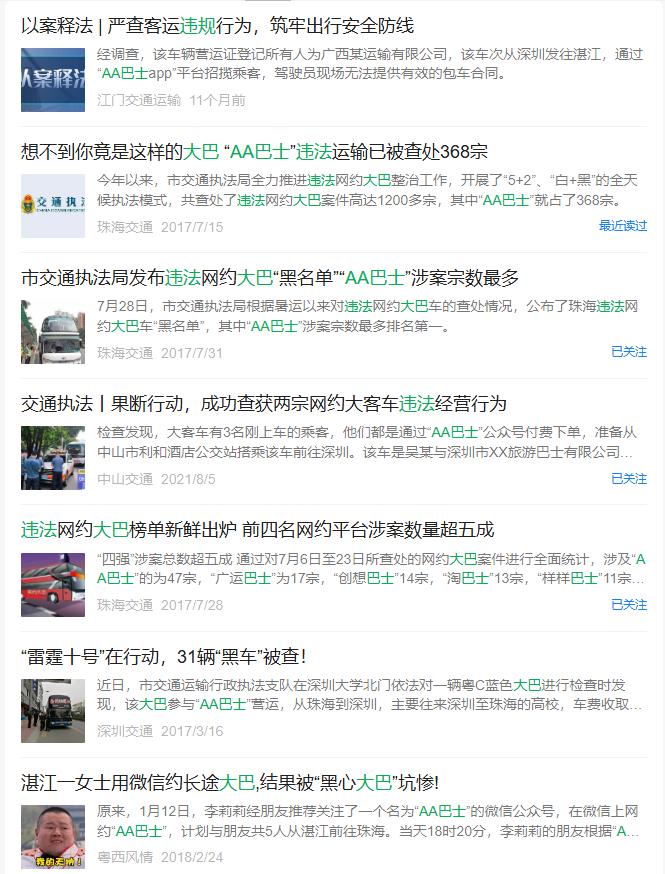
In the past, online intercity passenger buses were once the "thorn in the side" of traffic law enforcement departments, and were often classified as "unscrupulous illegal buses". (Screenshot from WeChat search)
However, with the large-scale opening of high-speed rail and the popularization of online ride-sharing, road passenger transport routes have gradually declined from prosperity. In recent years, the status of scheduled passenger buses has plummeted rapidly, and passenger stations have closed down one after another. Data from the Ministry of Transport shows that in 2022, the national operating passenger buses completed 3.546 billion person-times of road passenger volume, only one-tenth of the peak period in 2012.
Facing the market impact, policies began to loosen, and Guangdong took the lead in this field.
As early as 2015, the Department of Transportation of Guangdong Province issued two documents, listing internet transformation and online ticket booking as reform tasks. A year later, the Ministry of Transport also proposed at the national level to use internet technology to develop "customized passenger transport". By May 2018, the Department of Transportation of Guangdong Province issued a document to guide the pilot of customized passenger transport, which was formally clarified as "internet chartered buses" in 2021.
However, the real recovery of intercity passenger buses in Guangdong did not happen until after 2024. In that year, the Department of Transportation of Guangdong Province approved Guangzhou, Shenzhen, Foshan and Zhongshan to carry out the "scheduled and chartered bus integration" pilot, allowing passenger transport enterprises to choose one operation mode for each trip from traditional scheduled buses, customized passenger transport, traditional chartered buses and internet chartered buses.
In May this year, Zhuhai and Dongguan followed up to join the "scheduled and chartered bus integration" pilot, and then the policy gradually covered 9 cities in the Greater Bay Area and other cities across the province. Various promotional videos of intercity passenger buses have also been pushed to everyone's mobile phones through big data algorithms.
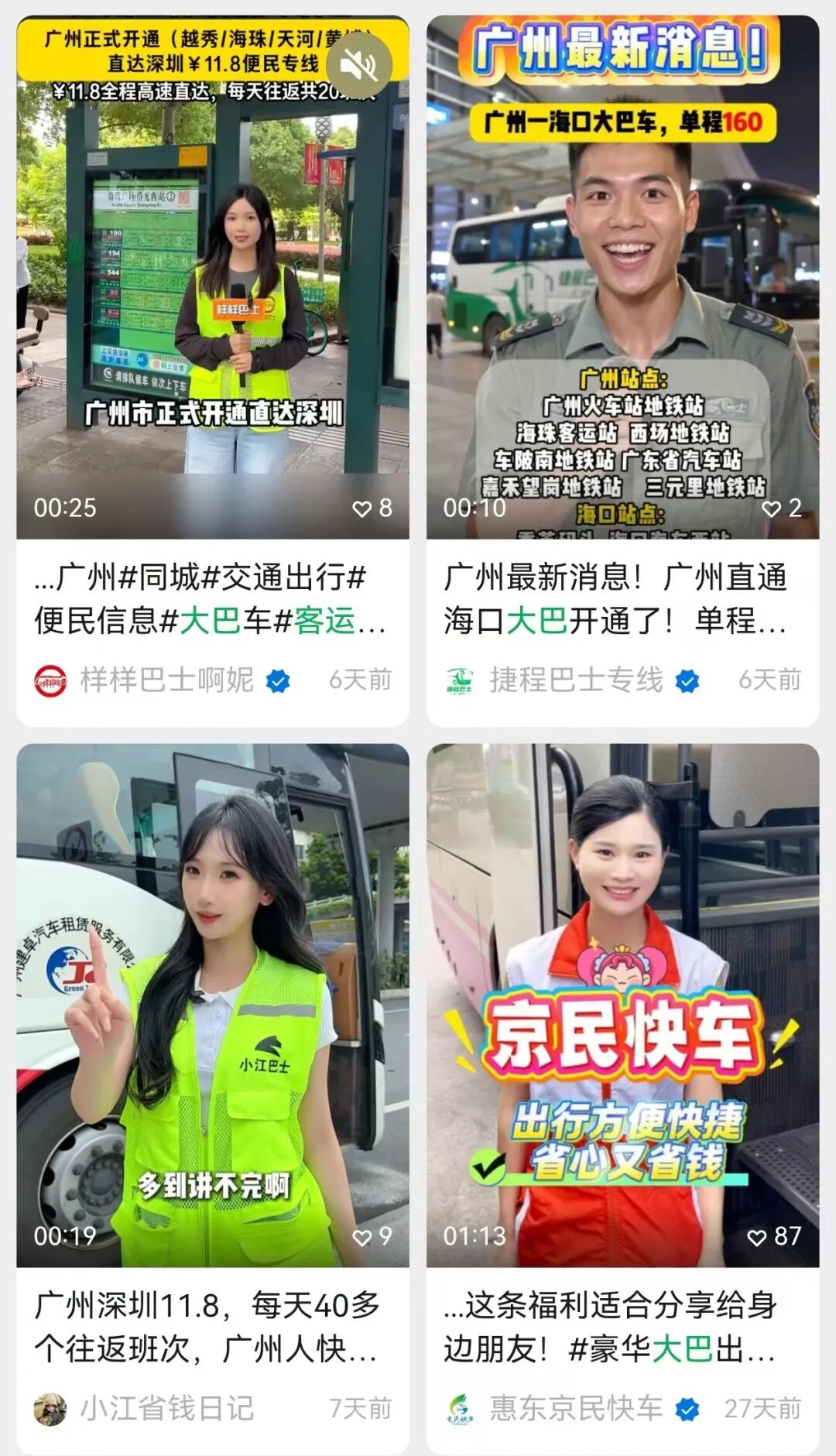
Promotional video of intercity passenger buses appearing on Xiaohongshu. (Screenshot from Xiaohongshu)
The Department of Transportation of Guangdong Province introduced that at present, more than 500 hail-and-ride stops and more than 1000 boarding points have been set up across the province in transportation hubs, subway stations, commercial districts and scenic spots, schools and hospitals, residential communities and other areas. That means, intercity passenger buses have not disappeared, and they may even stop downstairs of your home, which is far more convenient than taking buses in crowded traditional passenger stations in the past.
How long can the ultra-low 9.9-yuan intercity buses last?
According to the regulations of the Department of Transportation of Guangdong Province, internet-based road passenger transport is divided into two categories: customized passenger transport and internet chartered buses. The former flexibly sets up stops and departs based on existing route permits, while the latter approves routes on a per-trip basis with chartered bus qualifications.
There are many vehicles and companies operating these routes, and the ways to buy tickets are also diverse. If you search for "Guangdong Bus" in WeChat mini-programs, dozens of corresponding ticket booking mini-programs will pop up, and the ticket booking pages are basically similar.
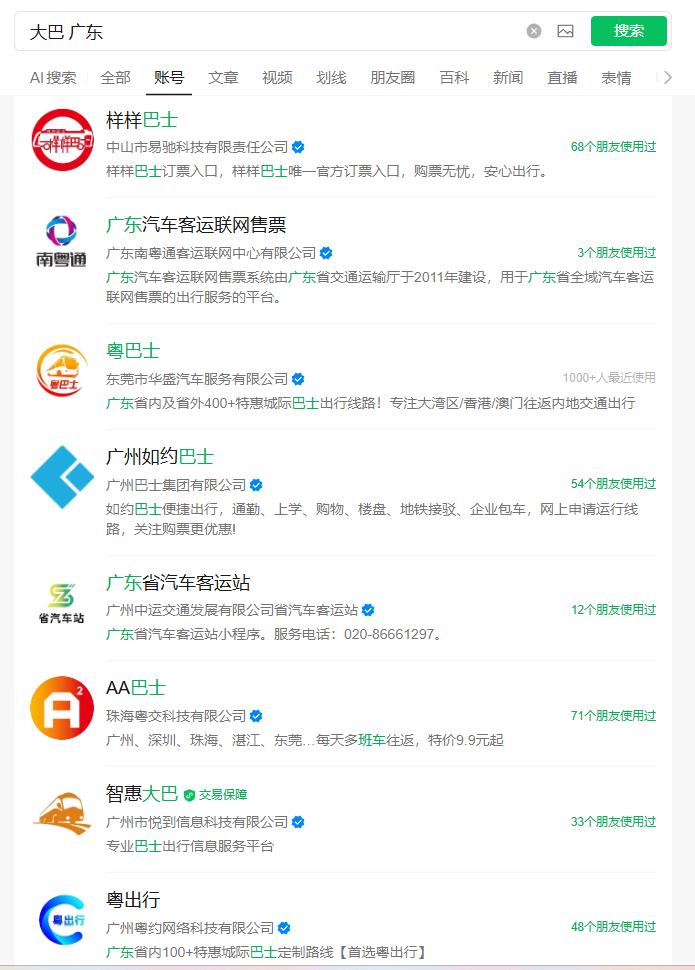
Common online bus ticket booking mini-programs. (Screenshot from WeChat search)
Yue Chuxing is one of the popular intercity passenger bus platforms. My friend Dazi is 23 years old this year, and he became a station staff of Yue Chuxing after graduating from university, responsible for ticket checking, vehicle scheduling and other work. He explained to me that in addition to its own vehicles, Yue Chuxing also rents vehicles from other companies, and cooperates with other transport companies to share buses. Most of the scheduled bus operation licenses of self-operated vehicles come from the overall acquisition of traditional individual passenger transport operators with their vehicles and licenses, which not only saves the process of applying for operation indicators, but also retains the channel of dispatching buses from formal passenger stations.
However, for ordinary passengers, as long as they can get on the bus downstairs of their home or at the subway entrance, it does not matter whether the arriving bus is a traditional scheduled bus or an internet chartered bus — how much the bus fare is, is the top priority that ordinary people care most about.
In a bus shelter near Changgang Metro Station in Guangzhou, there is an advertisement for Yue Chuxing, which clearly marks the fares of intercity passenger buses: departing from Guangzhou to cities in the Pearl River Delta such as Shenzhen, Zhuhai, Dongguan, the lowest fare is only 11.8 yuan; while to eastern, western and northern Guangdong and other regions, the cheapest fare is less than 20 yuan.
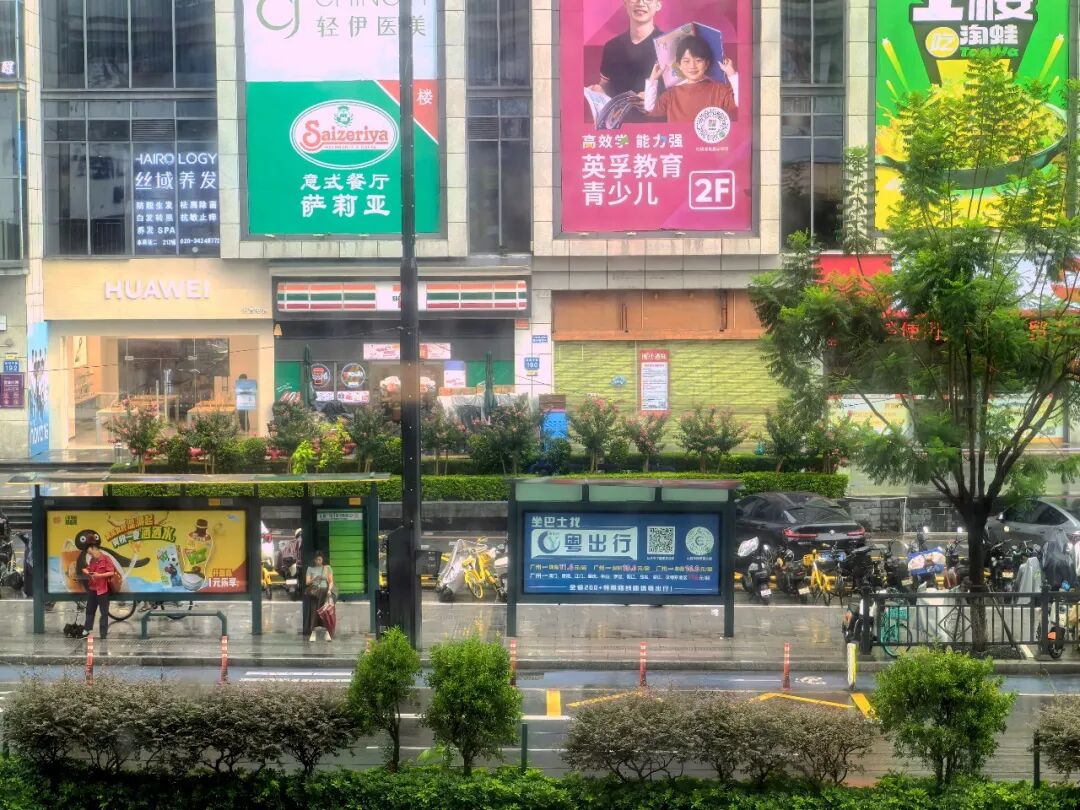
There is an advertisement for the Yue Chuxing platform posted in a bus shelter near Changgang Metro Station in Guangzhou. (Photo by Liang Hao)
But this is not the lowest. When you open the mini-programs of many intercity passenger bus brands, the fares of some routes to Pearl River Delta cities such as Shenzhen and Zhaoqing are as low as 9 yuan — this price is even cheaper than a discounted cup of Luckin Coffee.
Cross-city travel often covers dozens or even hundreds of kilometers, but the fare is cheaper than the budget coffee. Although you can reach your destination safely as usual, you can't help but wonder the moment you get off the bus: the fare is so cheap, can the bus make money?
The profit of intercity online bus platforms mainly comes from the ticket revenue of self-operated routes, and the commission collected from selling tickets for other routes. "The profit of self-operated vehicles belongs to the platform itself. For rented vehicles, the cost is settled every day according to the amount of operation tasks. For cooperative vehicles, after paying the vehicle rental and deducting the operating cost, the remaining profit is shared in proportion." Dazi introduced.
As for the "9.9-yuan special fare" shifts launched by many platforms, the method is very simple and crude, the purpose is only to attract customers. In other words, the low-price 9.9-yuan bus is actually a way for platforms to grab passengers through price wars.
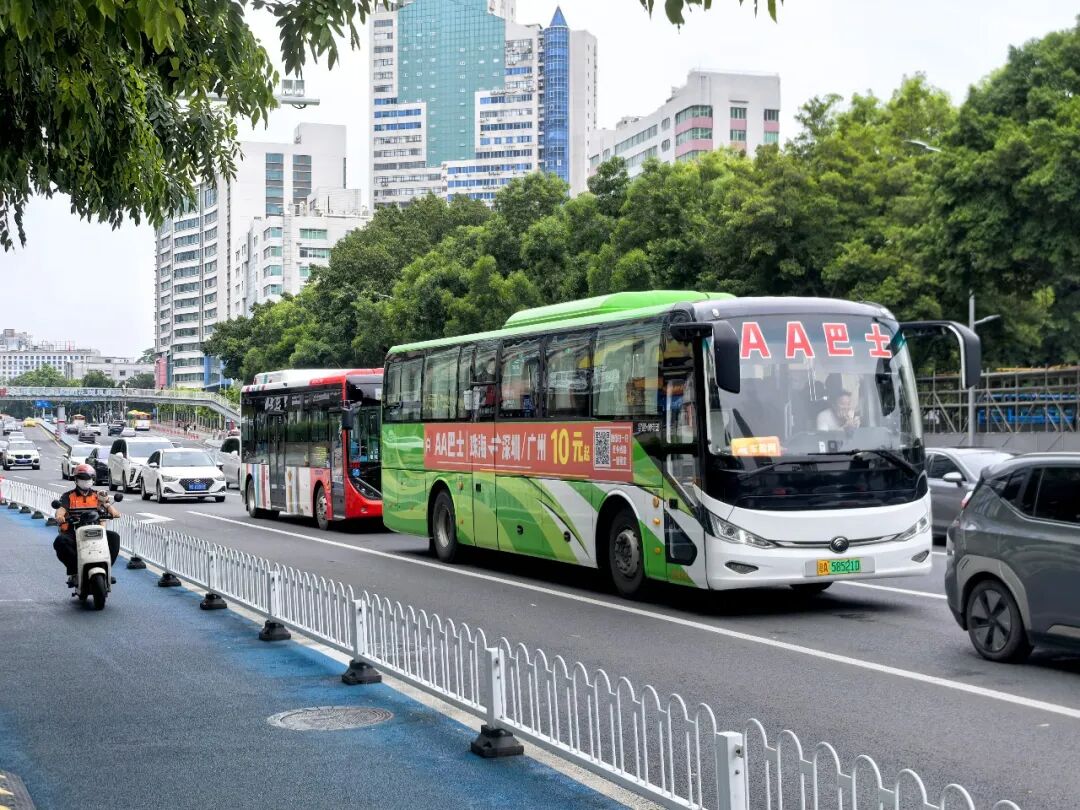
In July 2026, on Xianlie Middle Road, Guangzhou, an AA Bus is waiting for the traffic light, with the promotional slogan "Fares start from 10 yuan from Zhuhai to Shenzhen/Guangzhou" posted on the body. (Photo by Liang Hao)
"Even if the bus is fully occupied on both the round trip, this kind of low-price operation is purely doing public welfare. In the long run, low-fare buses are absolutely losing money and unsustainable." Dazi said frankly.
"Wherever you are, I will drive the bus to you"
The trend of bus recovery is not only happening in Guangdong.
On June 26 this year, the intercity bus that had been