Indian Prime Minister Narendra Modi has issued another call: do not purchase gold unless it is absolutely necessary.
Modi has publicly discouraged Indian people from buying gold again, and jewelry stocks fell immediately in response.
On Tuesday, Modi posted on Instagram, "If it is not necessary, even gold should not be bought." He links the reduction of gold consumption with promoting domestic products and enhancing self-reliance, saying that this is the only way to present a "Developed India" when India marks its centenary of independence.
This is the second time he has made such an appeal this year — back in May, he asked Indian people to stop buying gold for at least one year.
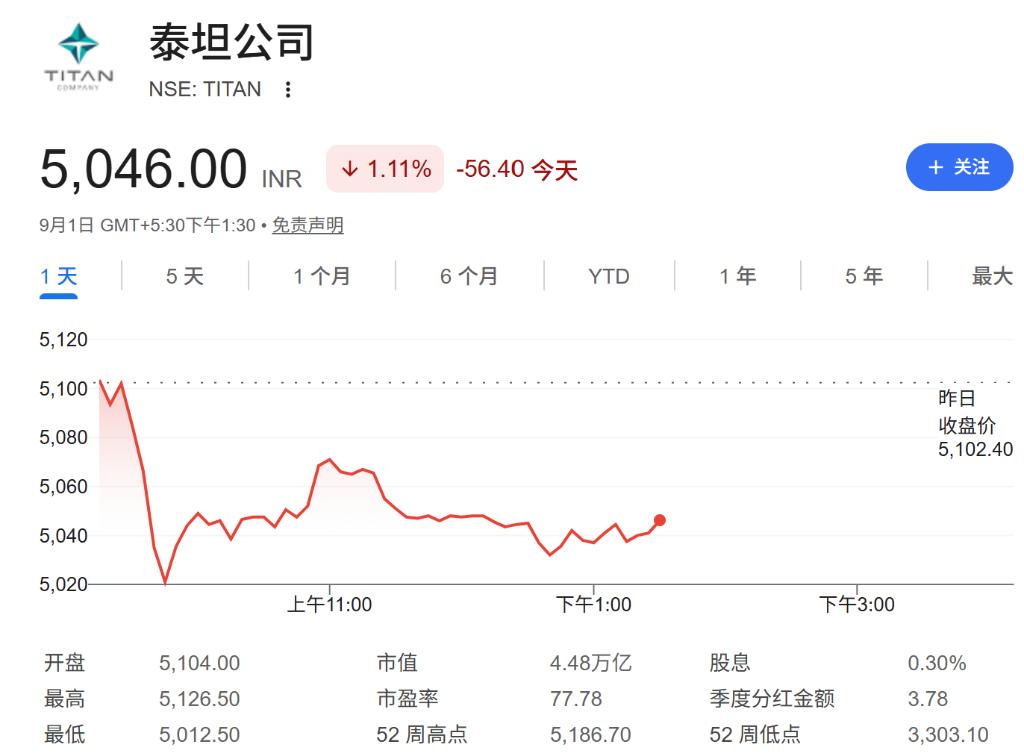
After the news came out, India's jewelry sector immediately moved lower. Titan Company fell 1.12% to 5045.50 rupees, while Kalyan Jewellers plunged 4.50% to close at 587 rupees.
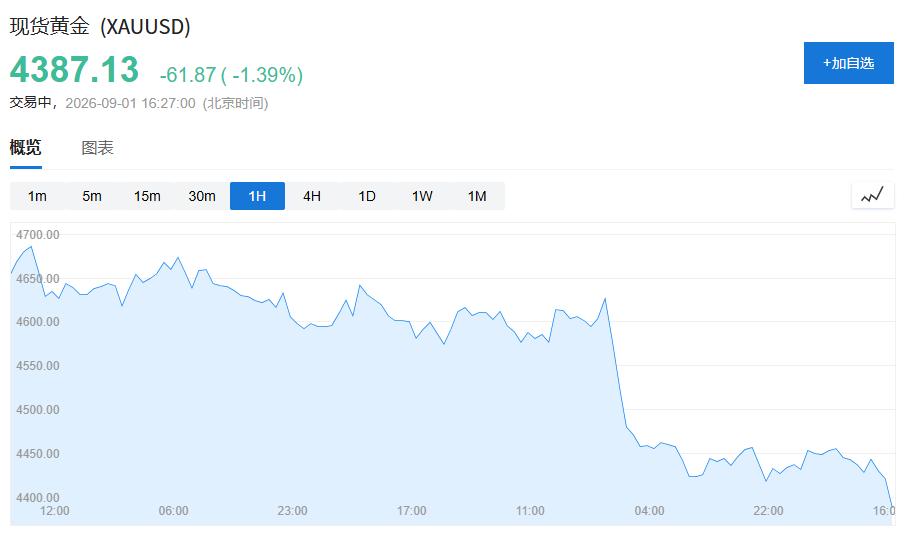
Meanwhile, spot gold fell below $4400 per ounce, trading at $4387 per ounce, down more than 1% within the day.
Record-high Import Bill, Foreign Exchange Pressure as the Root Cause
The macro background of Modi's latest statement is the continuously expanding gold import bill. India's gold import value in the 2025-26 fiscal year reached 71.98 billion US dollars, a year-on-year surge of 24%, hitting an all-time high.
Prior to that, the import value stood at 58 billion US dollars in the 2024-25 fiscal year and 45.54 billion US dollars in the 2023-24 fiscal year, almost doubling over five years.
It is worth noting that the rise in import value is not driven by demand. During the same period, the import volume actually dropped by 4.76%, from 757.09 tons in the 2024-25 fiscal year to 721.03 tons. The sharp surge in import value mainly reflects the substantial rise in international gold prices.
India is the world's second largest gold consumer, second only to China, and its gold demand is mainly driven by the jewelry industry.
As the vast majority of gold in India relies on imports and must be settled in US dollars, every rise in gold demand means larger-scale outflow of US dollars, which directly puts pressure on foreign exchange reserves and the rupee exchange rate.
Deep Cultural Roots, Doubts Over Policy Effectiveness
Gold has both profound cultural and financial attributes in India. It has long been the core asset passed down between generations in Indian families, and is closely linked to wedding customs and religious rituals.
This is one of the reasons why Modi's speech has attracted widespread public attention.
However, the market still has doubts about whether the "top-down" public persuasion can truly change the consumption behavior rooted in cultural norms.
After Modi first made a similar appeal in May, leading jewelry stocks including Titan and Kalyan Jewellers once plummeted by more than 9% to 10% in a single day, but the impact at that time was more reflected in short-term fluctuations in market sentiment.
The relatively narrowed decline of the jewelry sector this time may reflect that the market's expectation of the substantive impact of the policy has become more rational.
According to reports, the Indian government has also previously discussed cutting import tariffs on gold and silver, as the previous high tariff policy has been deemed unable to effectively curb import growth.
This article does not constitute personal investment advice and does not represent the position of the platform. The market is risky, and investment requires prudence. Please make independent judgments and decisions.
This article is from the WeChat official account "Wall Street CN", Author: Zhang Yaqi, published with authorization by 36Kr.