Bessent expects the Bank of Japan's interest rate hike to drive the appreciation of the yen.
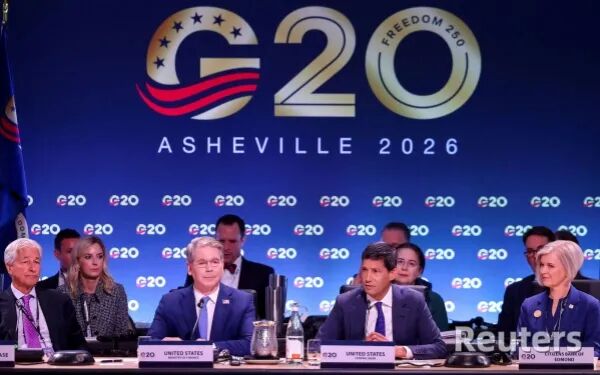
On August 31, U.S. Treasury Secretary Bessent (center left), who chaired the G20 Finance Ministers and Central Bank Governors Meeting, and Federal Reserve Chairman Wash (center right) (Reuters)
Bessent said the joint intervention was launched because "disorderly yen exchange rate fluctuations may trigger financial market turmoil and drive up borrowing costs for U.S. households and enterprises". He believes that the Bank of Japan's delay in raising interest rates is the main cause of the yen's depreciation, and he is putting pressure on the Bank of Japan...
On August 31, U.S. Treasury Secretary Bessent stated, "I am confident that the Japanese government and the Bank of Japan will take measures to appreciate the yen". He pointed out that the financial market has already priced in the interest rate hike, and he is looking forward to the decision of the Japanese side.
Bessent made the above remarks during an interview with U.S. CNBC. He is attending the G20 Finance Ministers and Central Bank Governors Meeting that opened in Asheville, North Carolina, in the southern United States on August 31.
"Disorderly yen fluctuations push up U.S. borrowing costs"
The U.S. government took joint intervention measures to buy yen at the end of July. When responding to inquiries from Democratic Senator Warren on August 27, Bessent said that the joint intervention was launched because "disorderly yen exchange rate fluctuations may trigger financial market turmoil and drive up borrowing costs for U.S. households and enterprises".
The United States has long been alert to the risk that the depreciation of the yen and the rise of Japanese interest rates will push up U.S. interest rates.
This is because Japanese institutional investors such as life insurance companies originally invested their long-term funds in dollar-denominated assets, but now they have expanding space to invest in Japanese government bonds with rising interest rates without bearing the risk of exchange rate fluctuations. It can be said that as Japanese investors shift funds back to the domestic market, U.S. government bonds are more likely to face oversupply.
Bessent believes that the Bank of Japan's delay in raising interest rates is the main reason for the yen's depreciation. On the occasion of the joint intervention at the end of July, he stated via X (formerly Twitter) that he expected to hold talks with Bank of Japan Governor Kazuo Ueda during the G20 meeting one month later. He is putting pressure on the Bank of Japan ahead of the monetary policy meeting in September.
In the U.S. bond market, the yields of long-term and ultra-long-term government bonds are facing upward pressure. The U.S. Treasury Department, which is alert to the increase in government interest expenditure, has been forced to take countermeasures such as expanding government bond repurchases. Against the backdrop of light summer trading, market concerns about the fiscal situation have pushed up the yields of longer-term government bonds.
Bessent told reporters before the start of the meeting on August 31 that "economic growth is the only way to get rid of huge debts". He believes that if economic expansion is promoted through measures such as deregulation, the scale of debt will shrink relatively, tax revenue will increase, and the fiscal crisis can also be alleviated. This idea is the underlying background.
Emphasize alignment of direction with the Federal Reserve Chairman
Against this backdrop, Fed (FRB) Chairman Wash, who co-chaired the G20 meeting with Bessent, delivered a speech at the economic symposium "Jackson Hole Economic Symposium" on August 28, hinting at tightening measures to curb inflation. Market expectations for the Federal Reserve to raise interest rates have strengthened, and the long-term interest rate of U.S. bonds has also risen accordingly.
Bessent told CNBC that "both (Wash and I) agree that the U.S. bond market is the strongest in the world", denying that there are differences between the two sides on interest rate trends.
Regarding the Fed's interest rate hike in September, Bessent said he had "no intention of speculating", pointing out that "my view is that in the face of supply shocks (such as the reduction in crude oil supply caused by the turmoil in the Middle East), interest rates should not be raised". He also said that the ongoing artificial intelligence (AI) boom driven by successive data center construction will improve production efficiency, thus creating a situation where prices are not easy to rise.
This article is from the WeChat Official Account "Nikkei Chinese Network" (ID: rijingzhongwenwang), written by Iori Kawate in Asheville, authorized for release by 36Kr.