The next stop for robots may be Lego-style modularization.
Not long ago, the 2026 World Robot Conference was held in Yizhuang, Beijing. 373 enterprises brought more than 3,000 exhibits to make a concentrated appearance, attracting a total of 557,000 visitors over the five-day event.
Inside the exhibition pavilions of the conference, robots sorted express parcels, cooked noodles, transported goods, and completed encapsulation and packaging. These carefully designed application scenarios once again pushed embodied intelligence into the spotlight.
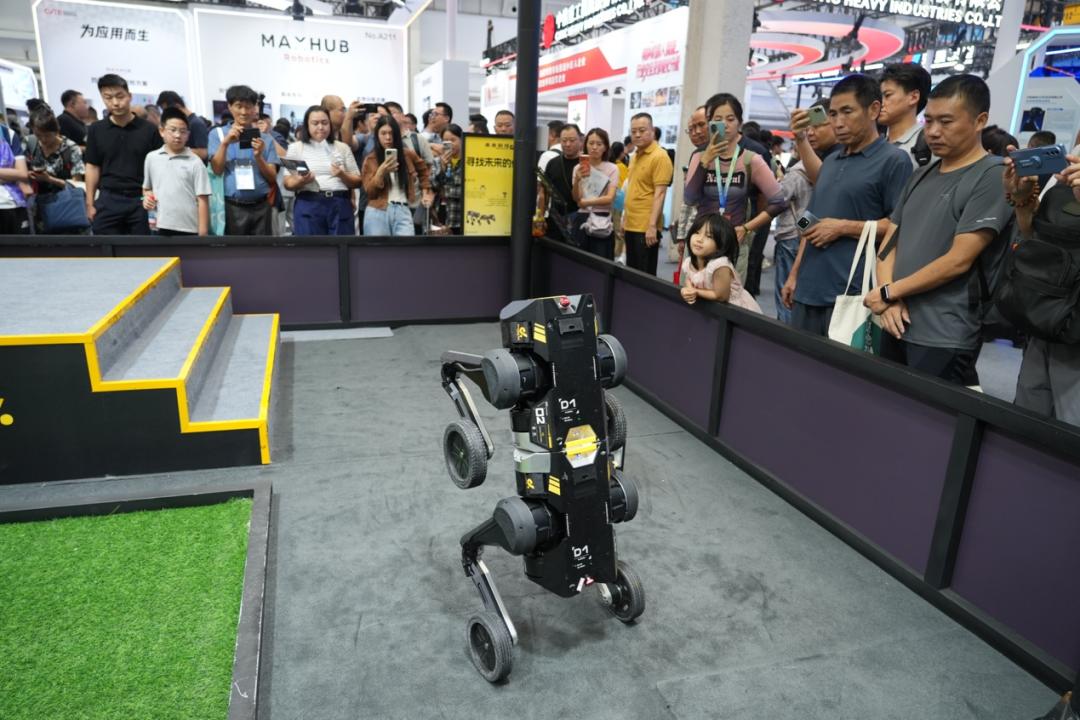
The global outlook outlined in Morgan Stanley's research report shows that in the first half of 2026, about 65% of global robot shipments flowed to fields including entertainment display, front desk reception, education R&D and data collection.
A casual observation in the pavilions of the World Robot Conference will reveal that most robots are still attached to simple, closed and highly vertical scenarios, and manual intervention is required in some demonstration processes. It has become a consensus formed both inside and outside the pavilions that the overall generalization capability is insufficient and there is still a long way to go to achieve the true "general purpose" in the literal sense.
Qian Dongqi, Chairman of Ecovacs, put it more directly at the conference: "Before the generalization problem is solved, all current demos are just skill demonstrations for specific scenarios."
Scenario generalization is too difficult and the development cost is too high
The robot narrative expected by the market is actually stuck at two fundamental problems: one is poor scenario generalization capability, and the other is high development and manufacturing cost.
At present, most robots adopt the development mode of "one scenario for one model": collect data for specific scenarios and conduct targeted training to form a fixed set of capabilities. The smooth movements in demonstration videos are mostly products of this mode. The problem is that once the robot leaves the preset environment, its capabilities will fail quickly.
Industry insiders describe that the biggest bottleneck at present is still the scenario generalization capability — robots can be trained to achieve a very high success rate in a fixed scenario, but their performance will drop significantly when facing a different object or a different environment. A more specific analogy is: the real difficulty for robots lies in "the last few centimeters and the last few millimeters". They can complete tasks in the general direction, but the success rate and deviation of the end effector still cannot match the requirements of the real world.
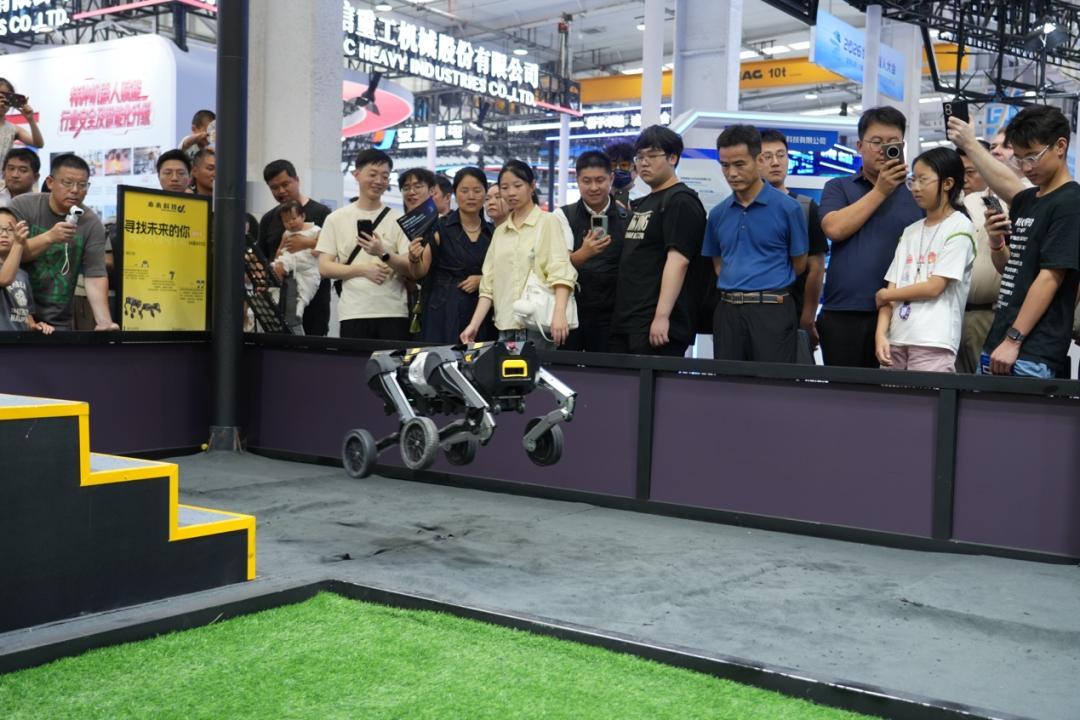
Wang He, founder of Galaxy General, gave the perspective of the industrial side at the conference: almost all given tasks can be completed well, but professional personnel are required to conduct post-training behind the scenes, and such investment cannot be replicated in thousands of industries. He summed up the problem of large-scale application in 2026 in one sentence — whether it is possible to replicate capabilities to 100 factories and 1000 stores with less data collection and fewer engineers dispatched.
One of the industry solutions to the generalization problem is "feeding data": using massive generalized scenario data to fill capability blind spots. But data collection itself is a high-cost business.
According to The Paper, the investment in one teleoperation collection device is about 350,000 yuan, and one collector can only collect about 500 pieces of data a day; Ke Zhendong from Leju Robotics calculated that collecting 10,000 hours of data requires millions of yuan in software and hardware investment.
What is more troublesome is the standard — the sensor interfaces, data formats and annotation specifications of different manufacturers are incompatible with each other, making data isolated islands. A team from Shanghai Jiao Tong University once screened from about 120,000 hours of first-person perspective data, and less than 5,000 hours were truly suitable for model training, with an effective rate of less than 4%. Even if the training is completed, it is still an extravagant hope to cover all real scenarios.
Another more long-term solution is the world model: let robots understand the physical laws of the real world, respond to unfamiliar environments by reasoning rather than memory, and achieve real generalization.
This route has gained increasing attention this year — NVIDIA released Cosmos, a world foundation model that connects text, vision, audio and motion. At the just-concluded World Robot Conference, the Chinese Institute of Electronics also announced the establishment of the World Model Expert Committee.
However, the industry's evaluation of its current status is quite calm. At this year's Zhiyuan Conference, some researchers said bluntly that "no world model capability has really entered the production-ready stage for the physical world for the time being", and more people believe that its short-term role is only a data engine and training tool, rather than the "brain" that drives real machines. Huang Qingqiu, CTO of Mochi Intelligence, stated: "Neither the world model nor VLA is the answer."
The industry has not yet reached a consensus on where the end of generalization lies, let alone a clear timetable.
In fact, in addition to the generalization problem, there is also a cost problem, and the two are mutually causal.
Since R&D relies on the mode of "one scenario for one model", changing an application scenario often means that the mechanical structure, sensor layout and even the whole machine design have to be restarted. The development of each new scenario corresponds to a sharp rise in cost. The scenario demands of enterprises and users are highly scattered, so the R&D and manufacturing costs of the whole industry remain high.
The mass production scale also cannot support the scale effect. According to statistics from industry institutions, the global shipment of humanoid robots in 2025 is about 17,000 units — by contrast, the monthly sales volume of a best-selling car often reaches tens of thousands. Without the mass production depth of the automotive industry, the cost of components cannot be reduced.
Robots with different forms also bring another burden: maintenance. Some media reports summarized the concerns of factories — whether the robot can work stably, how long it takes to repair after breakdown, how many days it takes to adjust when changing tasks, and who will bear the shutdown loss. Many orders are followed by "service liabilities", including on-site engineers, fixture modification and fault maintenance, and the revenue may not cover the subsequent investment.
Wang Li, AI Product Director of Foxconn Industrial Internet, gave a more direct factory perspective: the benchmark for the production line to recover the cost within 3 years, and under the consideration of the whole life cycle cost, the cost of a robot can only be equal to that of a production line worker after 5 to 8 years.
In this case, the conclusion of factories is not complicated: the current robots cannot make the accounts balance.
The way to break the deadlock may be to change the development paradigm
Among all the industry routes trying to solve the problems of "difficult generalization and high cost", one route is worthy of separate review: modularization.
The modularization here does not mean disassembling robots into parts for sale, but enabling robots to have the capability of free disassembly, assembly and recombination — just like Lego, using a set of standardized modules to assemble forms adapted to different scenarios. It targets the two aforementioned problems at the same time: the combination capability expands the scope of scenario coverage, and standardization greatly reduces the manufacturing cost.
This paradigm has long had precedents in industrial history, and the most classic case comes from the automotive industry.
In 2012, Volkswagen launched the MQB modular platform, which used unified interface standards to turn assemblies such as engines, gearboxes and air conditioners into reusable "building blocks". The figure disclosed by then Volkswagen CEO Martin Winterkorn that year was: modularization reduced production costs by 20% and shortened manufacturing time by up to 30%.
The component generalization rate of this platform reached 60%, and the number of versions of large components such as the front air conditioning heating system was reduced from 102 to 28. In ten years, MQB has produced more than 32 million cars in total, covering more than 40 models of four brands including Volkswagen, Audi, Skoda and SEAT.
It can be said that modularization alone has rewritten the cost curve of the automotive industry.
However, the modularization of robots is not exactly the same as that of automobiles. The essence of automotive modularization is the sharing of components on the production side, and car owners do not need to reassemble a car by themselves; robot modularization requires that products can still be disassembled, assembled and reconstructed in the hands of users.
This means that not only the mechanical and electrical interfaces need to be unified, but also the power, perception, control and even the upper-layer algorithm system need to be connected in real time as the form changes — when a new module is assembled, the whole machine needs to "know" what it has become and cooperate immediately.
Precisely because of the high threshold, many products on the market under the banner of "modularization" have essentially only achieved replaceability at the tool or peripheral level: replacing a gripper, adding a suction cup, or quickly replacing an end effector. The body has not changed, the system has not changed, and the capability boundary has not changed naturally. This kind of "pseudo-modularization" is closer to the accessory business and cannot really change the function and development paradigm of robots.
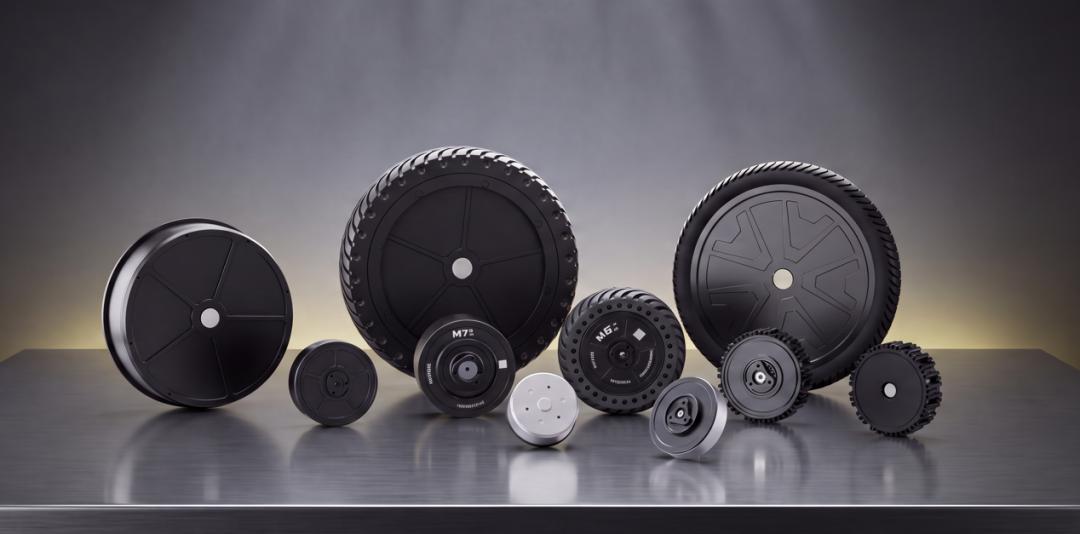
Real modularization should be connected at all layers. The practice of Benmo Technology provides an observable sample. The company's publicly disclosed technical layout is divided into three layers: the bottom layer is the standardized power module, the middle layer is the complete wheel-legged robot, and the top layer is the modular splicing system.
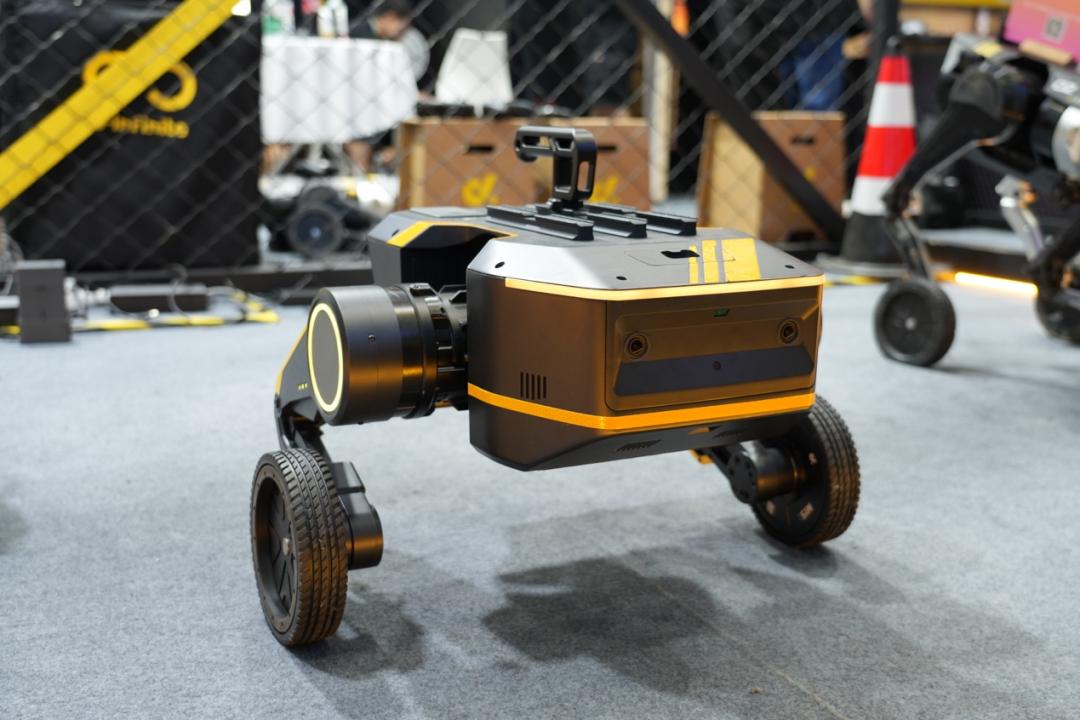
At the end of 2025, it launched D1, the world's first "complete machine module" embodied intelligent robot: the whole machine is built around the self-developed P10 integrated direct-drive joint module, realizing "integrated sensing, drive and control". Cooperating with its "universal cerebellum" collaborative algorithm, two D1s can complete fast splicing within 3 seconds, switching between two-wheel-legged and four-wheel-legged forms. The load-bearing capacity after splicing reaches 60 kg, and the modules can achieve millisecond-level coordinated force output.
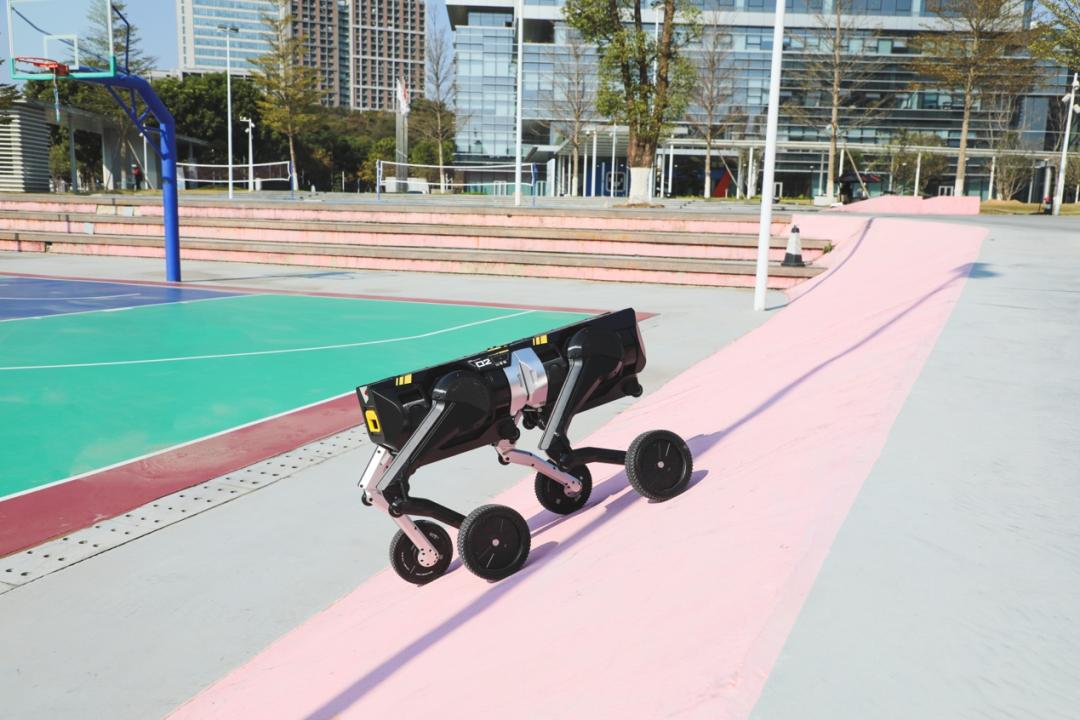
In February this year, D1 demonstrated full-form splicing collaboration of wheel-legged to wheel-legged, legged to legged, and wheel-legged to legged at the Spring Festival Gala in Jining, Shandong. At the World Robot Conference in August, Benmo Technology released the HMD-P series integrated joint modules, further opening the modular base to the industry.
Compared with the two dilemmas in the previous part, the significance of this development paradigm is direct. First, the same set of modules can be assembled into multiple forms such as inspection, transportation, and emergency rescue, and scenario adaptation no longer requires redesigning the whole machine. Second, the generality of modules means that when facing new scenarios in the future, the starting point of development is no longer zero. Third, the maintenance logic has changed from "returning the whole machine to the factory" to "replacing the module" — replace the broken module, and both shutdown loss and after-sales cost are reduced.
In other words, modularization does not directly attack the AI problem of "generalization", but uses an engineering method to eliminate the cost dilemma of "rebuilding the machine when changing scenarios".
The minority route from direct drive to modularization
Benmo Technology, which has made modularization into a complete machine product, is a somewhat "non-mainstream" company. This is not the first time that it has taken a unique path.
The starting point of the company is a counterintuitive discovery.
When studying robot system and control engineering at the Hong Kong University of Science and Technology, Zhang Di found in the process of debugging the robot attitude controller that the control effect became better after removing the reducer.
At that time, "servo motor + reducer" was the standard answer of the industry, while the direct drive route meant bypassing the mature supply chain and putting all the pressure on the motor's own torque density and control algorithm — not many people were optimistic about it, but Zhang Di still chose the latter.
This road that few people take has finally been opened up. After the scale expanded, the cost of direct drive modules was reduced to a very low level, and Benmo has thus become a rare profitable enterprise in the robot track.
In fact, the standardization and large-scale production of power modules have laid an indispensable foundation for its current modularization. Only when the "joint" becomes a standard part with an annual shipment of millions of units, assembling standard parts into a complete machine and then allowing the whole machine to be freely reorganized will be feasible in engineering and cost.
This is also the reason why modularization is gaining more and more weight in industry discourse. CCTV.com cited the judgment of Jiang Lei, Vice Chairman of the Standard Committee of the Ministry of Industry and Information Technology: the industry has developed to the early stage of large-scale production, the shipment in 2025 has reached the 10,000-unit level, and the next step is to solve the problem of "from 1 to 10". In the "Humanoid Robot and Embodied Intelligence Standard System (2026 Edition)" released this year, "limb and component standards" are specially used to provide normative guidance for the modular development of humanoid robots.
Meng Qinghu, academician of the Canadian Academy of Engineering, also said: At present, it is a waste of resources for enterprises to act independently, and only by establishing core component standards can the parts of different manufacturers be "easily interoperable". In the view of many experts, modularization and standardization are indispensable steps for robots to move from technical demonstration to large-scale mass production.
Where exactly is the value of robots? There may be no standard answer at the moment.
But it is certain that robots will go through a long period of iteration, and on the way to large-scale production, modularization — the development paradigm of making robots "Lego-style" — will most likely become an unavoidable stop.
This article is from the WeChat official account "AI Front" (ID: ai-front), author: 150g, published by 36Kr with authorization.