AI writes so fast that human reviewers can hardly keep up. OpenClaw has suspended updates for 7 weeks, and a single release has incorporated as many as 16,000 PRs.
OpenClaw has been in the making for a full 7 weeks.
This fastest-growing open source project in GitHub's history previously released 106 versions in 230 days, rolling out a new build on average every two days or so.
This time, the official version was unexpectedly delayed for nearly 7 whole weeks.
What's more, the birth of this 2.0 version was even an accidental outcome.
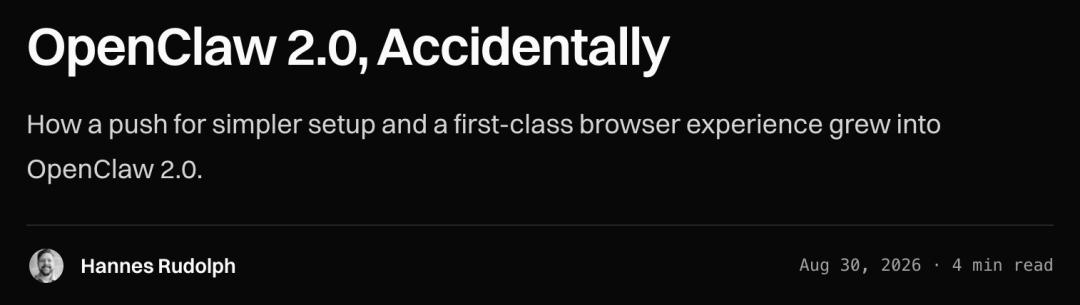
On August 30, OpenClaw published a blog post titled "OpenClaw 2.0, Accidentally".
In the early morning of August 31, v2026.8.1 was officially launched on GitHub.
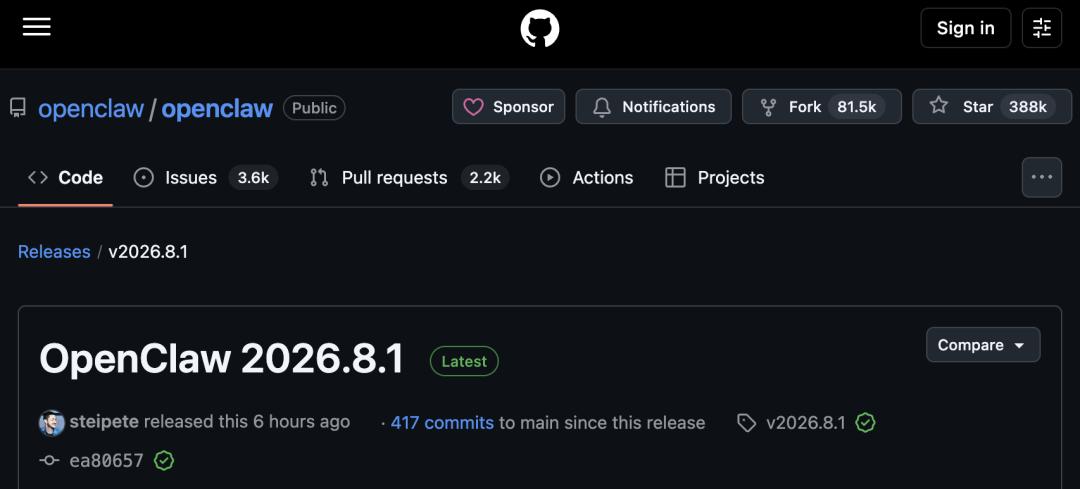
The so-called "2.0" and v2026.8.1 refer to the exact same version. "2.0" is only a promotional name, and the repository still uses the calendar-based version number as always.
According to the official statement, this version was completed by 933 contributors, 569 of whom participated in the project for the first time, with more than 16,000 PRs merged in total.

What is even more striking is the subsequent figure: the number of these PRs accounts for roughly half of all merged PRs in OpenClaw's history.
In other words, most of the code accumulated over the entire lifecycle of this project has been packed into this single release.
For reference, the previous official version v2026.7.1 was released on July 13, with official records showing 3063 contributions from 532 contributors.
After a month and a half, the number of contributors has nearly doubled, and the PR volume has directly increased by an order of magnitude.
The official explanation given is quite reasonable:
They packed half of the project's development history into this single release, and would rather spend extra time ensuring that both new and existing users can install it smoothly, than rush to launch and leave users with a bunch of broken configurations.
Slowing down because there is far more work to handle
According to the official, the slowdown does not come from a lack of tasks. On the contrary, it is caused by a surge in workload.
The team is expanding, and the scale and pace of work have exceeded the capacity of OpenClaw's original underlying architecture and release process.
Therefore, they decided to rework two core components at the same time: rebuild the underlying foundation, and completely redesign the release workflow.
There is an interval of about 48 days between the two official releases.
The development did not stop completely during this period, pre-release versions such as beta kept rolling out, but the stable version was never launched.
The original goal of this update was actually very modest:
They only wanted to simplify the installation process a little bit, and rebuild the browser side as the primary entry point.
Unexpectedly, the optimization work kept expanding as they cleaned up the code, and could not be stopped.
Messages, memory, Skills, models, automation, plugins, security, native apps, almost every module was overhauled, and finally evolved into what they call "2.0".
PR gets a new name: prompt request
What is more thought-provoking than the figure of 16,000 is how these PRs were generated.
A few days before the new version was released, the official GitHub team interviewed a group of OpenClaw maintainers.

Peter Steinberger, founder of the project, said:
I don't even call them pull requests anymore, I call them prompt requests.
Another maintainer put it more bluntly: some users have directly built an automated "software pipeline", submitted hundreds of PRs in one go, and scanned the entire repository to find all possible issues.
As of August 26, OpenClaw has accumulated about 388,000 Stars, 81,000 Forks, and more than 80,000 commits.
This project was only launched in November 2025, and it was originally just a small weekend toy for Peter Steinberger.
Ten months later, so many people joined the project, and a lot of new problems came along.
After code can be generated in batches, the number of PRs no longer means anything.
One person submitting 300 PRs may have actually solved 300 real issues, or he may just run an agent to scan the entire repository and submit batches of PRs randomly to get lucky.
Maintainers cannot tell the difference from the PR list, so they simply replaced the original "trust signal" mechanism.
Now they pay more attention to: your conversation history with the agent, the tests you ran, screenshots, and whether you can clearly explain why you made this change.
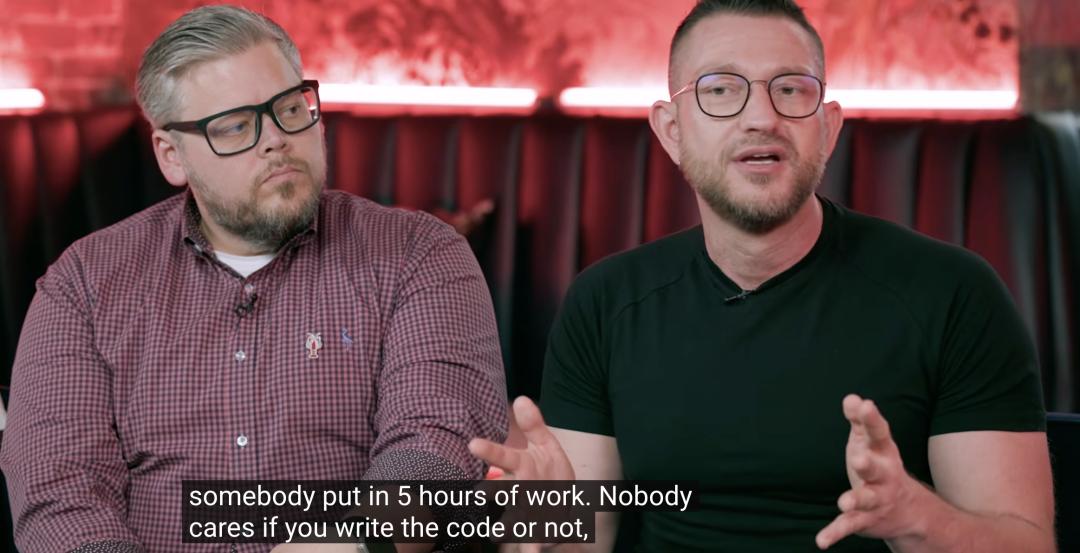
Peter Steinberger's exact words are:
No one cares whether you wrote the code yourself, but we care whether you have really thought about this feature.
Maintainers start using AI to review AI-generated code
The code review process has also changed accordingly.
When a maintainer receives an AI-generated PR, they will directly trigger Copilot to review it, to clarify which files have been modified and what each modification means.
Some people do not send the PR back for rework at all: once they receive a PR, they will modify it directly to make it valid.
Interestingly, the threshold for contribution has been raised, but the door has not been closed.
Maintainers said that a considerable proportion of the newly merged PRs for first-time contributors come from people without any development background.
They just encountered a specific problem, asked the agent to write a patch, and then worked with maintainers to polish it until it can be merged.
What is more troublesome is that even the old metric of "number of merges" has been polluted.
Some people directly copy other people's PRs, just to brush up merge counts and build a seemingly credible contributor profile.
As a result, a slightly absurd situation has emerged: AI has pushed code production capacity to the extreme, but human review, architecture design and release processes have become the bottleneck of the entire workflow.
From a geek toy to a multi-person collaborative project
On the product side, OpenClaw has clearly shifted its focus to ordinary users in this release.
For the first installation, you are no longer forced to configure a bunch of settings in advance.
It will first detect what you already have on your device: logged-in ChatGPT or Claude, available API Keys, locally running models, and connect to all compatible resources directly.
A large number of configurations have been moved out of the installation process. You can start chatting first, and fill in the remaining settings while using the product.
The browser side has been rebuilt as the primary entry point, and most users will meet their own Claw here for the first time.
Looking through the release notes, you can also find a lot of very user-friendly features:
Search past conversations by keywords, task progress cards remain intact after refresh, pin interactive components to the session panel, let the agent ask you for credentials separately once, instead of stuffing them into the chat history.
The example given by the official is also very close to daily use: let your Claw monitor your email, and send you a Telegram notification as soon as there is any homework or activity notice from your child's school.
Another change worth noting is that the project has started to support multi-user scenarios.
The official said that when the team was building this version, more and more tasks were handed over to their respective Claw, and then they encountered a problem: when they wanted to invite colleagues to collaborate, the existing context that Claw had mastered before would be lost.
Shared cloud sessions solve this problem.
The task initiated by one person can be viewed by others, and can also be taken over directly, with all the original context preserved.
Tasks can also be moved to paired devices or cloud machines to run, so that the work can continue even after you close your laptop.
A task can be taken over by three people in turn in a group, and Claw always remembers everything that happened before: this is roughly the moment when the concept of "personal agent" starts to expand beyond individual use.
However, the official has made it very clear in the release notes that this set of team role features belongs to collaborative control, not security isolation for mutually hostile tenants.
It cannot be used as enterprise-level multi-tenant service.
Want to upgrade? Avoid these pitfalls first
This is not a painless update.
The official release notes still list two breaking changes, which means that some functions may stop working after the upgrade.
One is that the built-in OpenProse plugin has been completely removed, and the previous /prose command no longer exists.
The other is that the model names of OpenAI and Codex have been modified. All the old names in your configuration will become invalid, and you need to run openclaw doctor --fix to let the program modify them automatically.
Users who have installed third-party plugins need to take one more extra step.
The official has set a clear deadline for plugin developers: a number of old interfaces will no longer be recognized after September 1. If the plugin author does not update their work in time, the plugin may stop working directly on your device.
For native apps, the signed and notarized macOS version is already available for download, and the new versions of iOS and Android will be released separately, so do not expect all platforms to get updated at the same time.
There is no standard answer for the security part either.
Maintainers once tightened the permission rules, stipulating that Claw can only work in the folders you specified. As a result, many users had previously mounted other directories via soft links, all of which became inaccessible after the tightening, and a flood of complaints came immediately.
But if they do not set any restrictions, they will be overwhelmed by endless security reports.
Peter Steinberger said that finding a balance between "easy to use" and "secure enough by default" is a very difficult battle.
For the release workflow, the team now divides it into four tracks: stable is the official version for ordinary users, extended-stable is the maintenance line for last month's version, beta is the pre-release channel, and dev follows the main branch in real time.
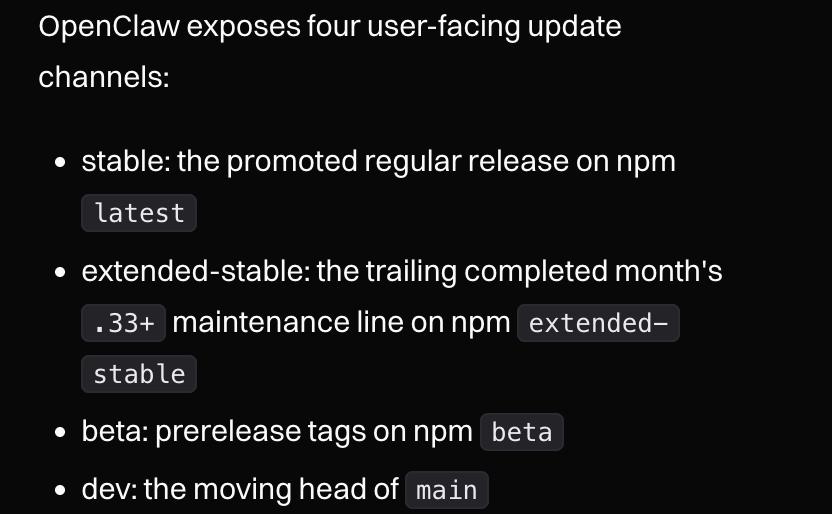
All new features are first put into the beta channel for testing, and will not enter the stable channel until they are fully verified. Users who want to try new features can use the beta version, and users who only want stable experience can stay on the stable channel.
This is more like separating "rapid development" and "stable release" into two independent tracks, running at their own pace without interfering with each other.
Looking back at these 7 weeks, the really interesting part is not the feature list.
In the past, people worried that AI could not write usable code.
Now, this fastest-growing open source project has given another answer: the next bottleneck is that there is so much code that humans cannot review all of it.
OpenClaw spent 7 weeks to launch version 2.0, not because it slowed down, but because humans have not yet caught up with the speed at which AI generates code.
References:
https://openclaw.ai/blog/openclaw-2-accidentally
This article is from the WeChat official account "AI Era", author: ASI Revelation, published with authorization from 36Kr.