With the "strong support" from the north already in place, is the provincial capital in central China about to make its long-awaited dream come true?
Zhengzhou has embraced the opportunity to stand side by side with national-level urban agglomerations.
Not long ago, three authorities including the Ministry of Industry and Information Technology jointly approved 5 urban agglomerations to launch a 4-year pilot program for comprehensive hydrogen energy application. In addition to the Beijing-Tianjin-Hebei region, the Greater Bay Area, Northeast China (including eastern Inner Mongolia) - Yangtze River Delta, Xinjiang - Chengdu-Chongqing Economic Circle, which are already high-level national urban agglomerations, the Yellow River "Ji Zi Wan" - Central Plains Urban Agglomeration led by the dual cores of Zhengzhou and Ordos stands out particularly.
Compared with other pilot participants, this pilot spans 6 provinces including Henan, Inner Mongolia, Ningxia, Shaanxi, Shanxi and Hubei, covering the largest number of provinces. As the two "leading" cities, Ordos has outstanding hydrogen production capacity, and the green hydrogen output in its home region Inner Mongolia ranks at the top of the industry. In contrast to representative cities of other pilots, Zhengzhou's hydrogen energy "label" is not yet widely recognized by the public.
However, Zhengzhou has actually been planning for the development of hydrogen energy industry for many years. As early as 2021, Zhengzhou, as the leading city, formed a "1+11+5" urban agglomeration and was selected as one of the national demonstration urban agglomerations for fuel cell vehicles. Later, Zhengzhou continued to increase investment in the hydrogen energy industry, with fuel cell vehicles as the core priority. In 2024, Zhengzhou put forward the vision of "Central Plains Hydrogen Capital", and set the 2035 target of "the total output value of the city's hydrogen energy industry exceeding 100 billion yuan".
From the perspective of industry insiders, the hydrogen energy industry is still in the early stage of development, but has extremely broad prospects. For all candidates competing for the title of "Hydrogen Capital", this is another forward-looking layout to bet on the future. With the support of national-level policies and the joining of strong partners, can Zhengzhou finally realize its long-cherished dream?
The "Dream of Hydrogen Capital"
Zhengzhou's "dream of Hydrogen Capital" originated from its "automobile dream".
According to local media reports, as early as 2014, when the national new energy vehicle industry was still in its infancy, Zhengzhou decided to take new energy vehicles as a strategic supporting industry, and spare no effort to build a trillion-level new energy vehicle industrial cluster.
At that time, BYETON had not yet set up a factory in Zhengzhou, so local commercial vehicle manufacturers such as Yutong Bus and Zhengzhou Nissan became the main carriers for new energy transformation. The industry foundation dominated by commercial vehicles made Zhengzhou's new energy vehicle industry closely related to hydrogen energy from the very beginning of its development.
Back in 2009, Yutong Bus launched R&D in the field of hydrogen energy, and was one of the first domestic enterprises to launch hydrogen fuel cell buses and obtain relevant operation qualifications. Zhengzhou also started to promote the construction of supporting infrastructure very early: it built the third hydrogen refueling station across the country in 2015, and then opened the first demonstration special line for hydrogen fuel cell buses in Henan in 2018.
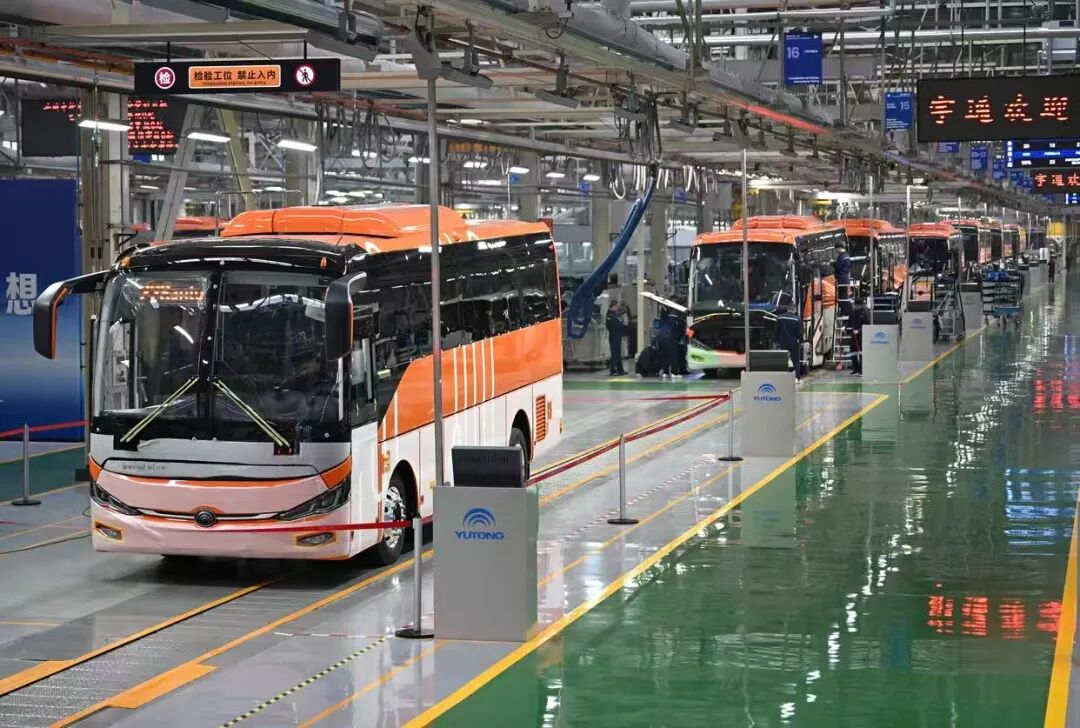
Production line in the workshop of Yutong New Energy Factory. Image source: Xinhua News Agency
At the national Two Sessions in 2019, hydrogen energy was written into the government work report for the first time, and was regarded as "the secondary energy with the greatest development potential in the future" and "a trillion-yuan industrial track of strategic significance", and has since been included in the development plans of provinces and cities nationwide.
Zhengzhou, which took action earlier, got the opportunity to take the lead in obtaining policy support. In 2020, five national ministries and commissions decided to launch the demonstration and application of fuel cell vehicles. After a one-year selection process, the Zhengzhou Urban Agglomeration was finally approved, together with four other demonstration urban agglomerations for fuel cell vehicles: Beijing-Tianjin-Hebei, Shanghai, Guangdong and Hebei.
In a sense, this also gave Zhengzhou's "automobile dream" a more future-oriented direction.
Zhang Cunman, deputy director of the New Energy Vehicle Engineering Center of Tongji University, analyzed in an interview that Zhengzhou's development of fuel cell vehicle application "not only meets the urgent requirements of environmental constraints and energy transformation, but also satisfies the endogenous demand for economic development". Zhengzhou has advantages in the complete vehicle industry and demonstration application foundation, and cities in the urban agglomeration including Xinxiang, Luoyang, Kaifeng, Jiaozuo and Anyang have industrial advantages in fuel cell stack R&D, hydrogen production, hydrogen transportation, hydrogen refueling station equipment and supporting hydrogen energy components.
After that, fuel cell vehicles have been included in the development plans of Zhengzhou's automobile industry more frequently. In the "Overall Plan for the Development of Strategic Emerging Industries in Zhengzhou during the 14th Five-Year Plan Period (2021-2025)", Zhengzhou listed pure electric vehicles, fuel cell vehicles and intelligent connected vehicles as the core development priorities of the new energy vehicle industry. In this pilot program for comprehensive hydrogen energy application, "promotion of hydrogen fuel cell vehicles" is also a key direction.
Fuel cell vehicles are another high-growth track in the new energy vehicle industry. According to the forecast of China Hydrogen Alliance, by 2050, the number of fuel cell commercial vehicles will reach 1.6 million, with a market share of 37%, and the market share of fuel cell passenger vehicles will reach 14% by 2050. By the end of 2025, the cumulative sales of hydrogen fuel cell vehicles in China have reached nearly 40,000 units, ranking first in the world, and there is still huge room for growth.
In a sense, Zhengzhou, which once fell behind slightly in the competition of new energy vehicles, is trying to get involved in the industry earlier before the next round of industrial explosion.
Breakthrough Point
However, the advantages in the "vehicle" field cannot cover up the shortcomings of Zhengzhou in the "hydrogen" sector.
Lin Boqiang, dean of the China Energy Policy Research Institute of Xiamen University, told City Evolution that from the perspective of the whole chain of hydrogen production, transportation, storage and application, the basic technical research in each link has been completed, and there are no technical obstacles in application. The bottleneck restricting the promotion of hydrogen fuel cell vehicles lies in the high cost of hydrogen production, transportation and storage, which needs to be solved by further technological breakthroughs in the industrial chain.
Zhengzhou's bottleneck is exactly in the upstream sector. The "Medium and Long Term Plan for the Development of Hydrogen Energy Industry in Zhengzhou (2024-2035)" points out that Zhengzhou's hydrogen energy industrial chain is not yet complete, and the upstream links are missing, which needs further expansion and extension. The hydrogen energy supply guarantee capacity is relatively weak, the hydrogen source potential in surrounding areas needs to be developed, the construction of hydrogen refueling infrastructure lags behind, and the hydrogen energy transportation system urgently needs to be strengthened.
In response to these problems, Zhengzhou has made a lot of efforts. In recent years, the planning of the "Zhengzhou-Kaifeng-Luoyang-Puyang Hydrogen Corridor" has been promoted, aiming to make full use of the low-cost industrial by-product hydrogen from enterprises within 150 kilometers around Zhengzhou, including Weiqi New Clean Energy, Henan Xinlianxin Chemical Group, and Jinma Coking. According to local media reports, Henan's annual output of industrial by-product hydrogen is about 550,000 tons, accounting for 7% of the national total, which "provides important support for Zhengzhou to produce hydrogen at low cost".
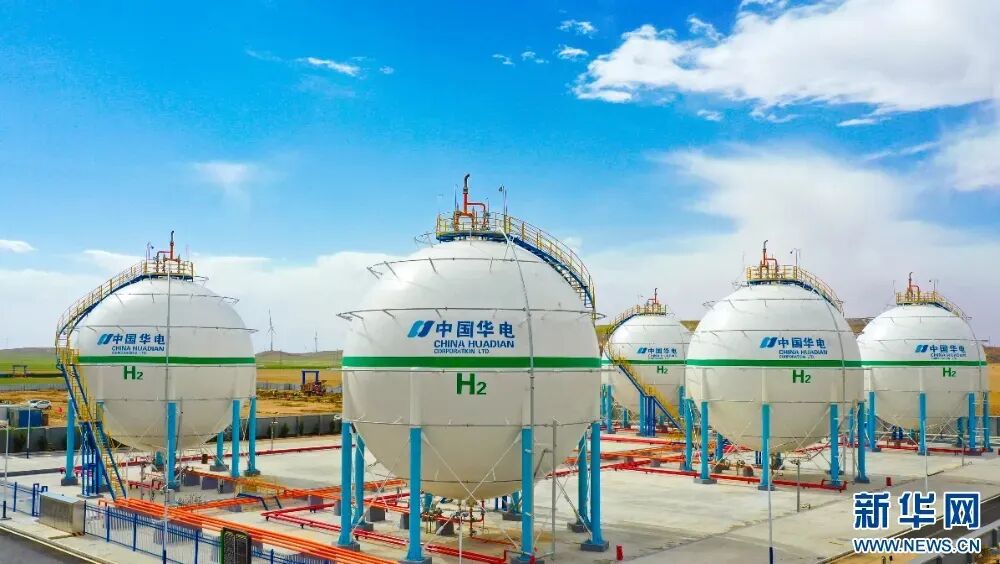
Hydrogen storage tank area of the 200,000 kW new energy hydrogen production demonstration project of Inner Mongolia Huadian Hydrogen Energy. Image source: Xinhuanet
However, relying solely on industrial by-product hydrogen is not enough to support the development of a 100-billion-yuan industry. In Lin Boqiang's view, the overall scale of industrial by-product hydrogen is too small. To truly reduce the cost of hydrogen production, it is necessary to rely on large-scale wind power and photovoltaic power to improve the price competitiveness of green hydrogen. The abundant wind power and photovoltaic resources in the "Three-North" region are exactly the key energy elements for green hydrogen production.
Cities in Inner Mongolia such as Ordos, which are "paired" with Zhengzhou in this pilot, effectively act as the role of "strong allies".
Data shows that as a resource-rich region, Inner Mongolia's power generation reached 851.7 billion kWh in 2025, ranking first in China, of which wind power generation was 203.3 billion kWh and solar power generation was 51.2 billion kWh, ranking first and second in the country respectively. Inner Mongolia is like a huge green "power bank", continuously transmitting power to other regions. Last year alone, its outward power transmission volume exceeded 180 billion kWh, of which green power reached 90 billion kWh.
The resulting green hydrogen output is also amazing. In 2025, Inner Mongolia's green hydrogen output exceeded 10,000 tons, a year-on-year increase of about 4 times. In the same period, its green hydrogen production capacity reached 60,000 tons, accounting for nearly 30% of the national total capacity of more than 220,000 tons.
More importantly, Inner Mongolia is working to transport hydrogen to other regions. In 2024, Inner Mongolia issued the country's first provincial-level special plan for green hydrogen pipelines, building a green hydrogen transmission network of "one main line, two loops and four outlets". At present, the green hydrogen transmission pipeline from Darhan Muminggan Joint Banner to the urban area of Baotou has been fully connected.
Synergy
At present, how to open up the whole path from the hydrogen production end to the hydrogen application end still needs further exploration.
In fact, among the five pilots selected this time, in addition to the Yellow River "Ji Zi Wan" - Central Plains Urban Agglomeration where Zhengzhou is located, the Yangtze River Delta and Chengdu-Chongqing are respectively paired with Northeast China and Xinjiang. In Lin Boqiang's view, this matching arrangement takes into account the promotion of upstream and downstream linkage, and the core goal is to jointly explore ways to reduce hydrogen use costs. Of course, the difficulties at this stage are still obvious, so it is necessary to find feasible solutions through pilots, and even explore the construction of relevant systems and mechanisms, so as to finally realize large-scale promotion.
For Zhengzhou, before realizing "soft connectivity", the first step is to break the physical barrier with large hydrogen production cities and complete the infrastructure interconnection.
In the layout of inter-provincial connectivity channels in the existing special plan for green hydrogen pipelines in Inner Mongolia, the priority of green hydrogen resource export is placed on "hydrogen-consuming regions such as Beijing-Tianjin-Hebei, Liaoning, Shaanxi and Ningxia". The four Inner Mongolia cities of Ordos, Baotou, Wuhai and Xilingol League, which are included in the same pilot as Zhengzhou, also have planned outward transmission channels mainly leading to Shaanxi, Ningxia, Tianjin, Hebei, Liaoning and other provinces, and there is no planned channel directly leading to Zhengzhou.
In a sense, the longer distance constitutes a certain obstacle, but compared with the other two paired pilots, Zhengzhou is closer to the cities in Inner Mongolia, so it should be able to carry out exploration one step faster.
This is also closely related to the long-standing problems of urban agglomerations in the Yellow River Basin.
Previously, Li Zuojun and other researchers from the Institute of Public Administration and Human Resources of the Development Research Center of the State Council studied the night light remote sensing data of the Yellow River Basin from 2000 to 2020, and found that the level of coordinated development in the Yellow River Basin is not high, and the overall economic connectivity has not increased in the past 20 years. One of the core problems lies in "insufficiently close industrial division and coordination".
Further analysis points out that the middle and upper reaches are rich in resources such as minerals, electricity and labor, while the downstream has more developed modern manufacturing industries. However, the industrial development in the upper, middle and lower reaches of the basin lacks overall planning, the industrial division among regions needs to be optimized, and complementarity needs to be strengthened. A closely connected industrial chain covering the whole basin has not yet been formed. Not only is the problem of homogeneous industrial competition prominent, but also the downstream's promotion of the transformation of old and new growth drivers is not sufficiently coordinated with the upper and middle reaches, and a joint force to promote the transformation and upgrading of development drivers in the whole basin has not yet been formed.
The hydrogen energy industry is exactly an industry that relies on regional division and collaboration. In addition to the coupling of upstream and downstream sectors, according to the content of this pilot, cities including Ordos will also carry out pilot application of hydrogen energy in the industrial field, and work with cities including Zhengzhou that promote fuel cell vehicles and innovative hydrogen energy application to "jointly build a hydrogen energy industry ecosystem in the Yellow River Basin that integrates industrial and transportation demonstration applications".
In this sense, we might as well return to the original question again: what does being selected into the national-level pilot mean for Zhengzhou at this moment?
As an important central city in the central region, Zhengzhou, facing the goal of hitting a GDP of 2 trillion yuan during the 15th Five-Year Plan period, needs to find new growth points, and promote the construction of an economic highland in the Yellow River Basin by exerting stronger radiation driving force. The hydrogen energy industry may be a beneficial anchor point.
This article is from the WeChat official account "City Evolution", author: Yang Qifei, published with authorization from 36Kr.