The "mini Sam's Club" on the B1 floor of the shopping mall is unable to retain young people of the post-2000 generation.
4 million, 5 million, 6.2 million... The continuously rising first-month sales figures of fresh snack stores are astonishing.
With monthly sales volume matching the annual revenue of traditional snack chains like Snacks Busy, the "phenomenal stores" such as Qingshan Sen at Zhengzhou Financial Island, Jidu Quan at Hefei Mixc, and Yili at Beijing Hopson One have broken through the ceiling of store productivity; the Shenzhen branch of Jinlimen is so crowded that even its cash register system once crashed.
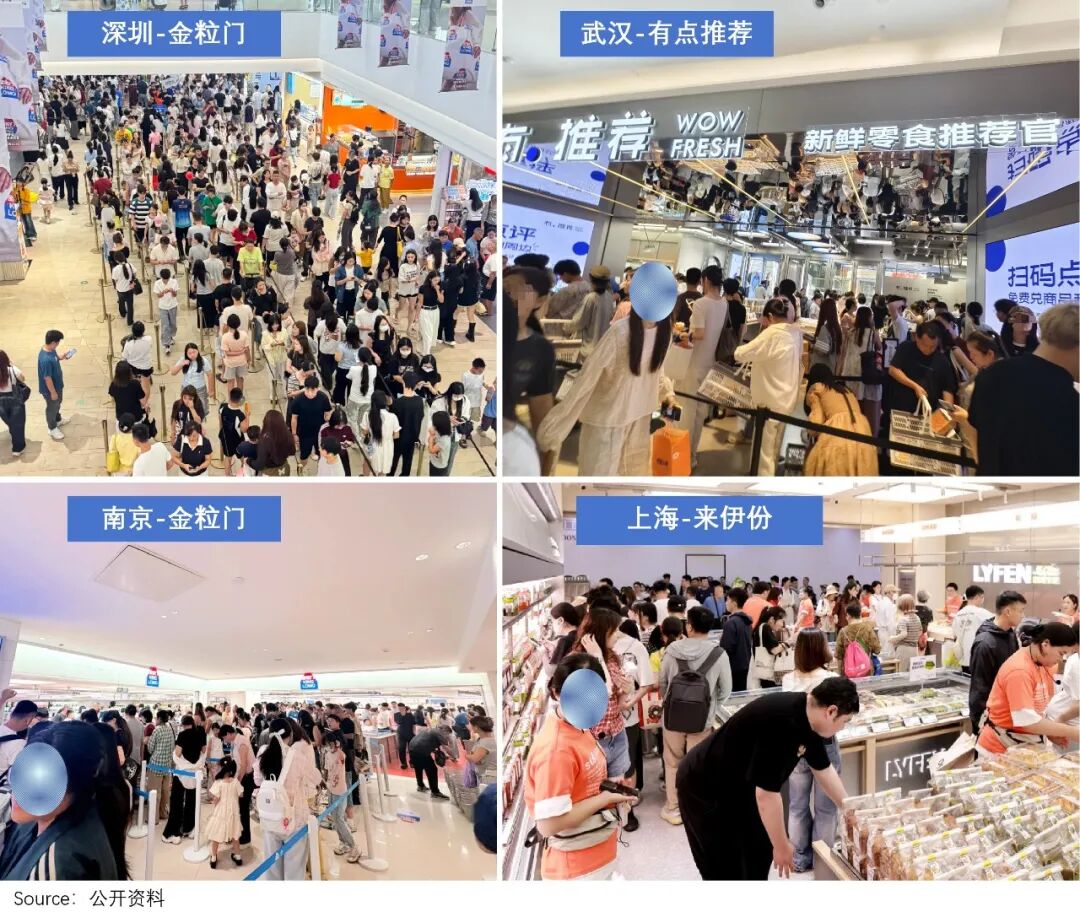
These "mini-Sams in the snack industry" are also expanding their footprint at the speed of opening 5 new stores in a single city. In July alone, 94 fresh snack stores were launched, marking a 35% month-on-month increase①, and the annual store opening plans of various brands range from a dozen to hundreds of locations.
However, subtle signals have emerged amid the boom of "every new store is a hit".
Juewei Fresh Snack, which has always maintained a prudent strategy of piloting before large-scale expansion, has quietly closed 2 of its test stores. While every Jinlimen outlet is packed with customers, the brand has secretly closed and reopened some stores, either locating in "the best malls" or on the way to move to "even better malls".
The founder of the Pumama brand even revealed directly in an interview that the monthly sales of its stores exceeded 1 million yuan in the first three months, and stabilized at around 700,000 yuan in the fourth month. The monthly sales of 1 million yuan is exactly the widely recognized break-even line for large core stores in the industry.
In the consumer sector where "survival" is the core theme, fresh snacks are undoubtedly a rare wave of prosperity and hope. Putting aside the homogeneous competition and no matter how long this trend can last, let us return to the underlying model of retail to see through the essence of this boom.
The new "traffic king" on the negative first floor, mastering the "shelf life philosophy"
At the end of 2024, 12 leading brands in the new tea drink industry fell into a trust crisis overnight: their products were tested to contain Ice Blanc, an ingredient similar to non-dairy creamer, and "tech-made milk tea" sparked widespread public outrage.
Later, Ice Blanc was proven to be lower in sugar and fat, capable of retaining good taste and free of trans fatty acids. The market then realized that the use of Ice Blanc was actually a "health upgrade" in the tea drink industry.
Nowadays, fresh snack stores such as Jinlimen and Jidu Quan are following a similar path to disrupt the mass tea drink market.
Ice Blanc is ultimately modified milk, while Iceberg milk extracted from raw cow milk delivers a truly mellow and silky taste. The fresh milk and original leaf tea freshly made in Jidu Quan stores uses Iceberg milk which is about 40% more expensive, paired with tea leaves and flavor syrup to reproduce the taste of "Boya Juexian", yet each bottle is sold only at the cost price of 6.9 yuan, equivalent to a 40% discount.
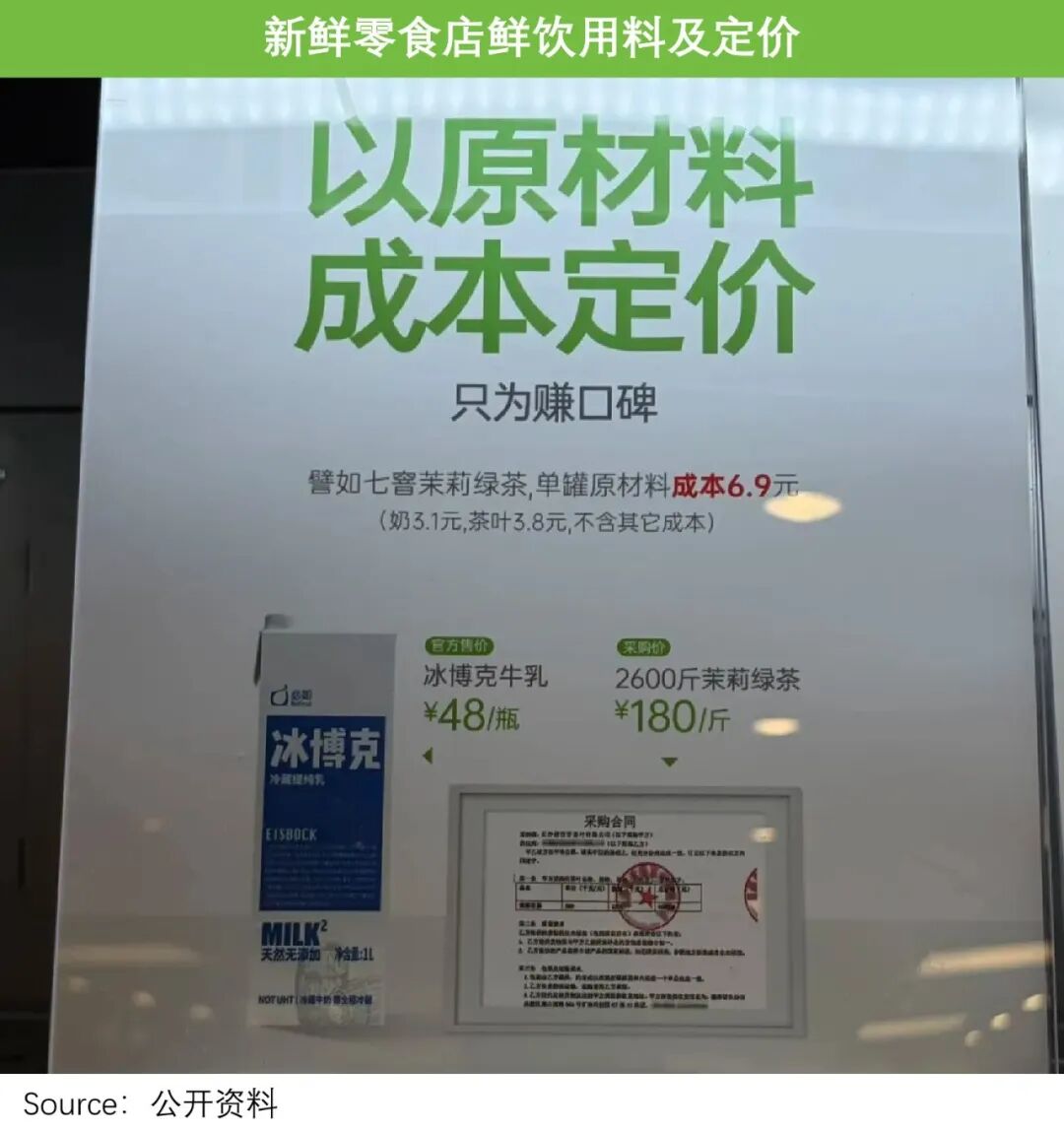
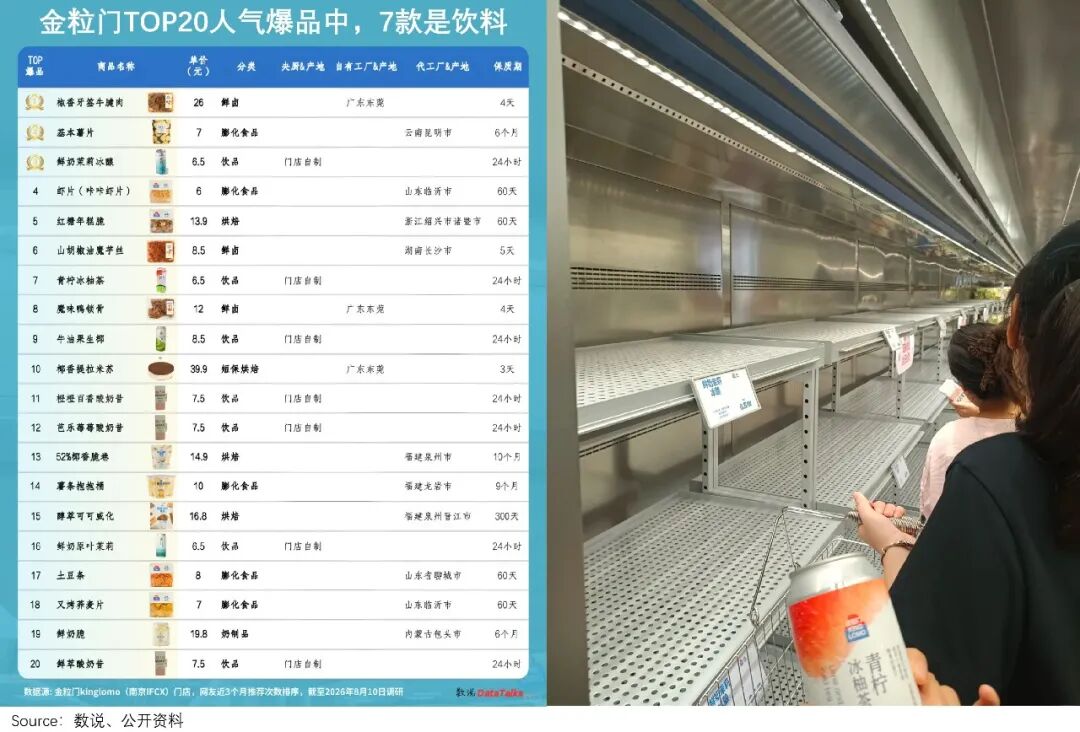
Although the pre-filled bottled design locks the ice level and sweetness, the experience of "enjoying the quality of Bawangchaji at the price of Mixue" is more than enough to outperform competitors. Among the top 20 best-selling products of Jinlimen, 7 are fresh drinks, whose shelves are often swept empty by customers.
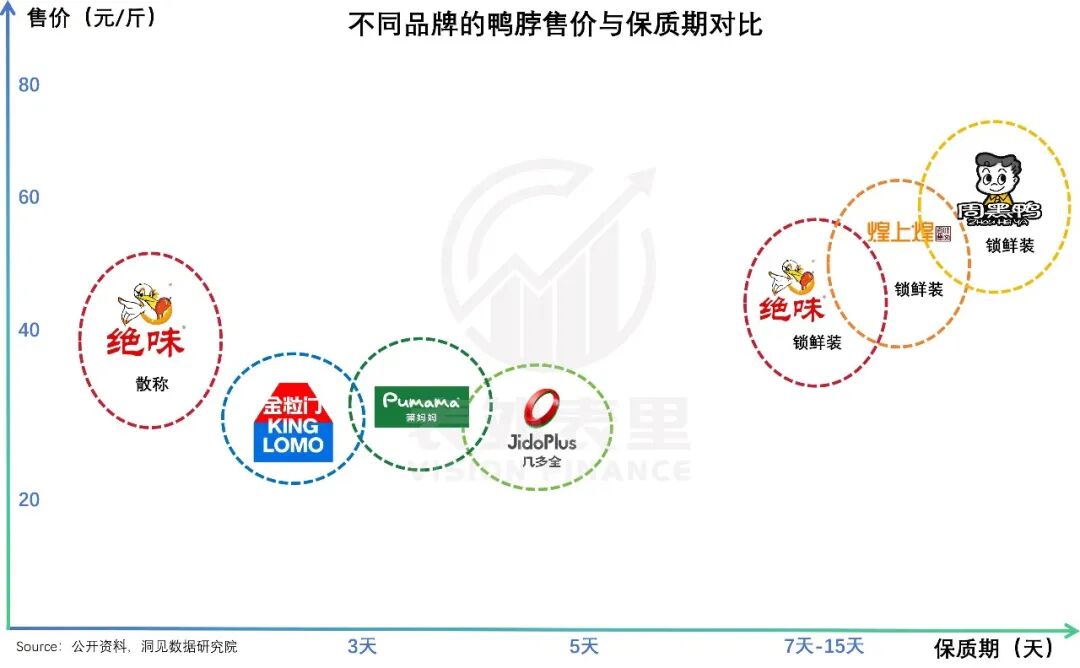
Not only tea drinks have been revamped, but also the "duck neck that people earning 3,000 yuan a month cannot afford" and the "bread that people earning 20,000 yuan a month cannot afford". Especially the braised food, with its unique "Hunan-style roasted savory flavor" different from Zhou Hei Ya and Jue Wei, is extremely popular among young people.
Xi Mu is one of the consumers who came to "pay tribute" to these stores. She visited the nearby fresh snack store on its opening day, saying "The spicy duck feet are more suitable for single-person meals than those in braised food specialty stores, and the fresh fruit milkshakes taste as good as rumors say."
But when she opened the seaweed pack, she noticed something wrong: the seemingly bulging large bag was half filled with air.
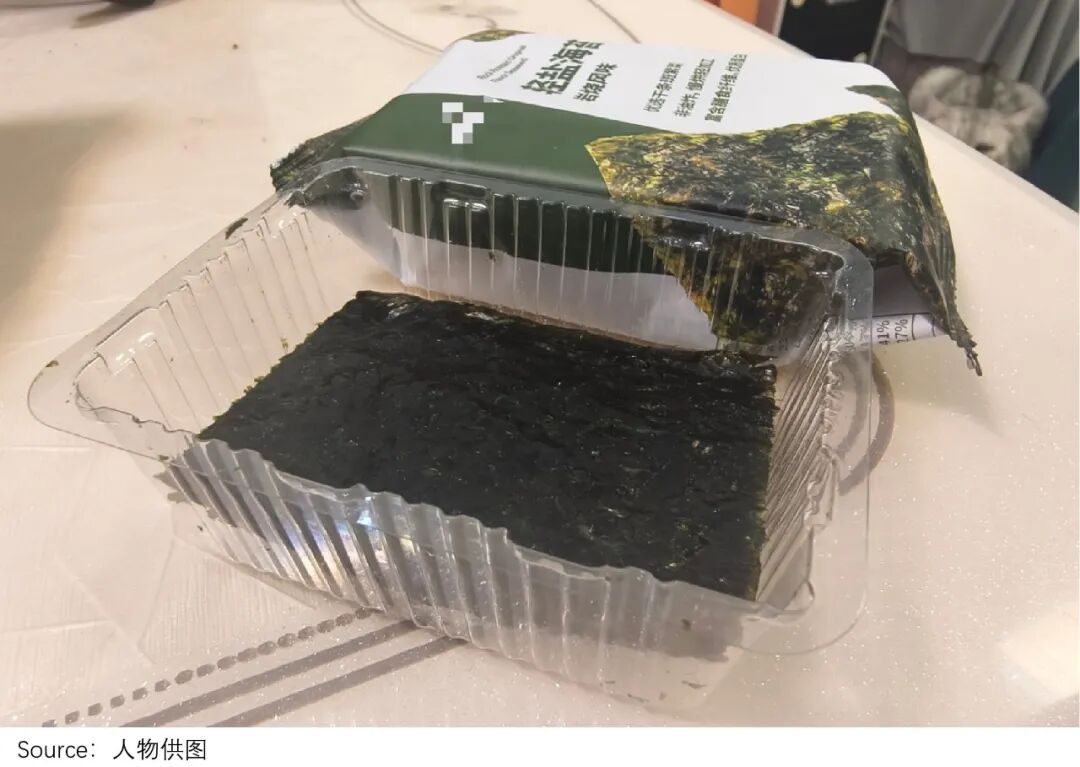
After tasting a piece, she found the seaweed thick and hard, and her mood "turned from sunny to cloudy": imported seaweed products also have "over-packaged" designs, but each pack only sells for 1.63 yuan, while the domestic product not only costs more, but also has worse taste and texture.
The milk bread roll is even more "not worth the price": the toast in bakery stores sells for 16.9 yuan, while the fresh snack store sells it for 8.8 yuan, but the price per gram is 1.4 times that of the bakery store, and there are no raisins added!
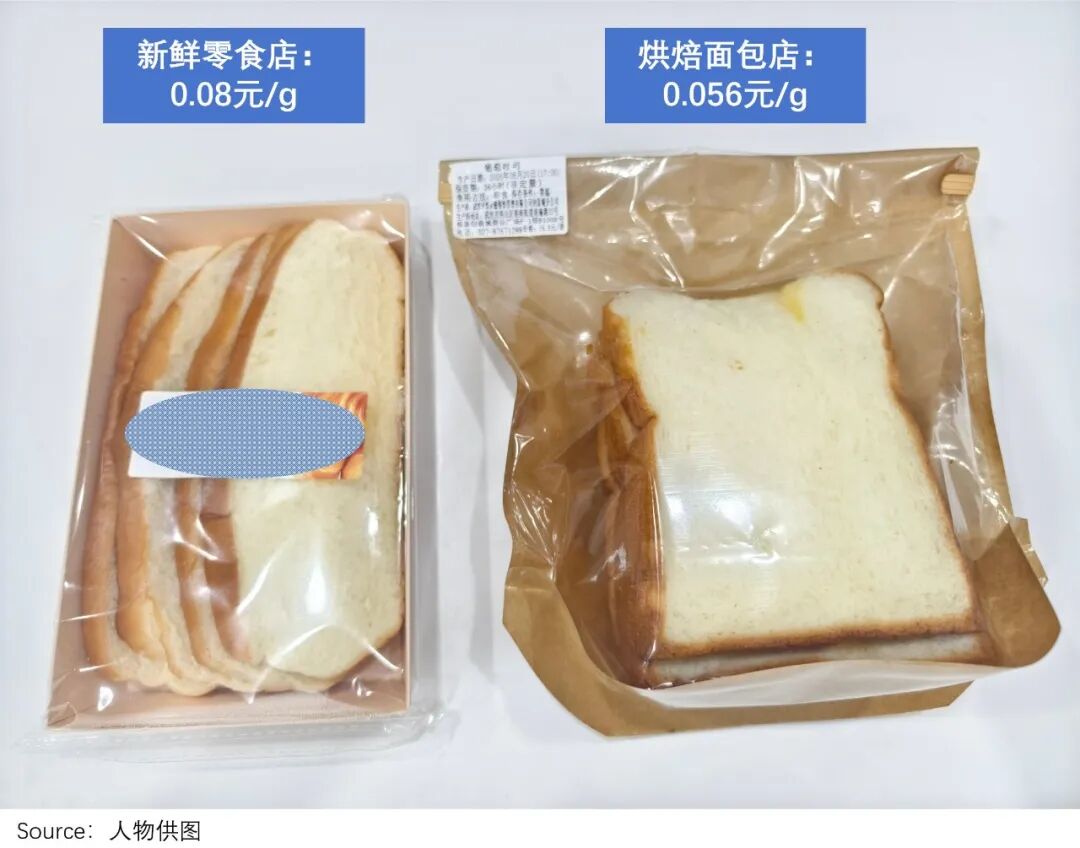
Xi Mu finally realized that not all products in fresh snack stores are cost-effective. What's more, the products in fresh snack stores may not even be fresh at all.
When she bought small cakes, she found the "double standard shelf life": the handwritten shelf life marked by the store was 3 days, but the production label on the package she checked after returning home showed a shelf life of 6 months. It turned out that not all baked pastries are freshly made on site: some have been frozen in the cold storage for a month, and the store will defrost them and stick a same-day production label before selling, to create a "fresh feeling".
The core of the fresh snack business lies in this "shelf life philosophy": use short-shelf-life products that are freshly made in open kitchens with good quality and low price to attract customers, and then promote high-premium medium and long-shelf-life products or "fake short-shelf-life" products, so as to realize the ideal closed loop of "short-shelf-life products bring popularity, long-shelf-life products bring real profits".
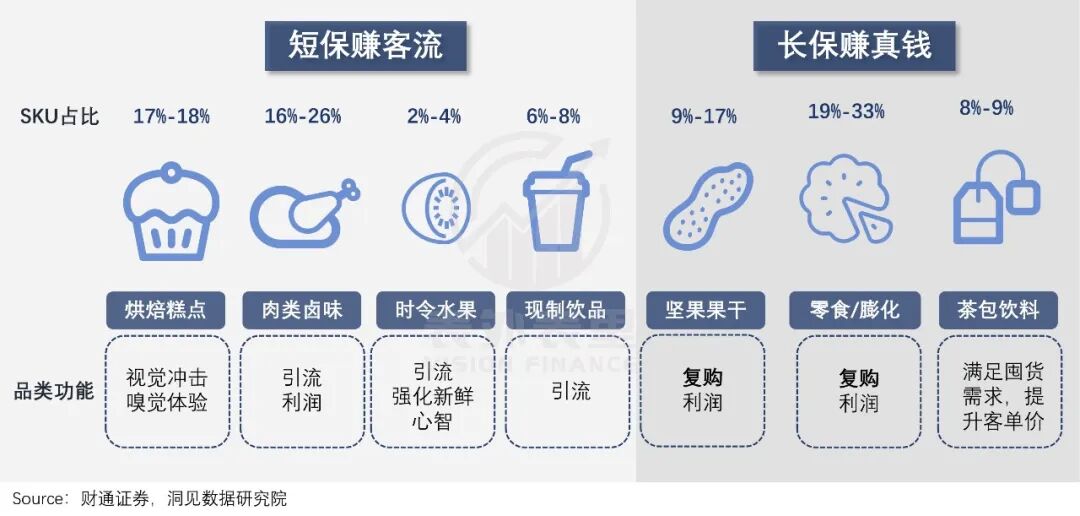
But statistics show that short-shelf-life SKUs of Jidu Quan and Jinlimen account for about 45% of their total SKUs, contributing more than 60% of their total revenue. Yili, which started its business by selling roasted seeds and nuts, even gets 70% of its revenue from on-site fresh production and handmade products. ②
This indicates that the main consumers are attracted by the cost-effective short-shelf-life products, and they have low willingness to pay for medium and long-shelf-life products.
Short-shelf-life drainage products are often low-profit, even priced at raw material cost, which easily leads to the dilemma of "the more you sell, the more you lose". In particular, almost no fresh snack brands have unique hit products: fresh drinks are cheaper alternatives of popular new tea drinks, and the Swiss rolls are "inspired" by Sams, so consumers have no reason to stick to a certain brand.
Once the novelty wears off and the public returns to rationality, the attractiveness of short-shelf-life products may be greatly reduced. At this time, it is unrealistic to expect medium and long-shelf-life products to turn the tide.
The fresh snack brands' medium and long-shelf-life products that advertise cleanliness and "zero extra additives", with small packaging and low unit price, have lower consumption threshold than the large-packaged products of Sams, and better quality than the unbranded bulk products in discount snack stores.
This seems to fill a market gap, but it cannot stand scrutiny: take dried mango as an example, the price of Jidu Quan's product is about 16 yuan per 100g, while Sams' product with higher raw material grade and real zero additives only costs 10 yuan; although its ingredient list is simpler than that of Zhao Yiming and Yanjin Puzi, the six-month shelf life also makes the claim of "natural and fresh" unconvincing.
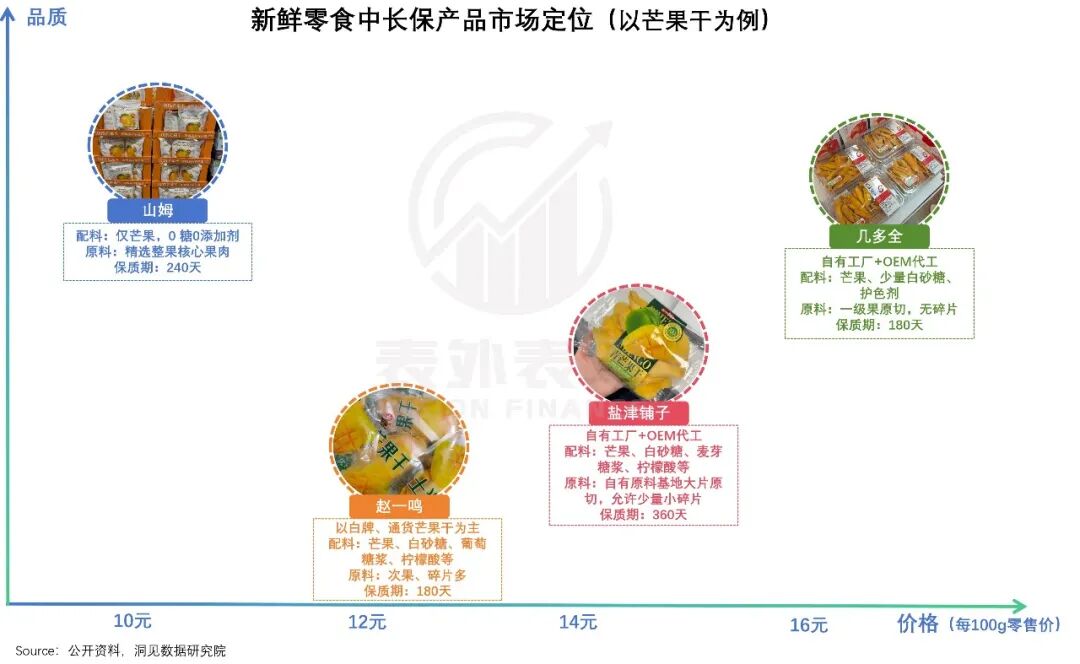
To put it bluntly, the quality upgrade of fresh snacks cannot catch up with the speed of price inflation. Without absolute price advantage, young consumers will compare prices again after buying two or three times, and the brands may face the dilemma of "short-shelf-life products cannot make profits, long-shelf-life products cannot be sold".
The profit model of these stores is hard to run, and the rent, labor cost and loss cannot be easily cut. After all, customer flow does not come by itself, but is obtained through heavy investment in operation.
Every bite of "freshness" comes at a high cost, how long can the low-price strategy last?
No matter the fresh snack brands that take "modern style" or "down-to-earth vibe" as their positioning, dense spotlights are installed above their shelves, and two extra lamps are added at the roasted seeds and nuts and bakery counters.
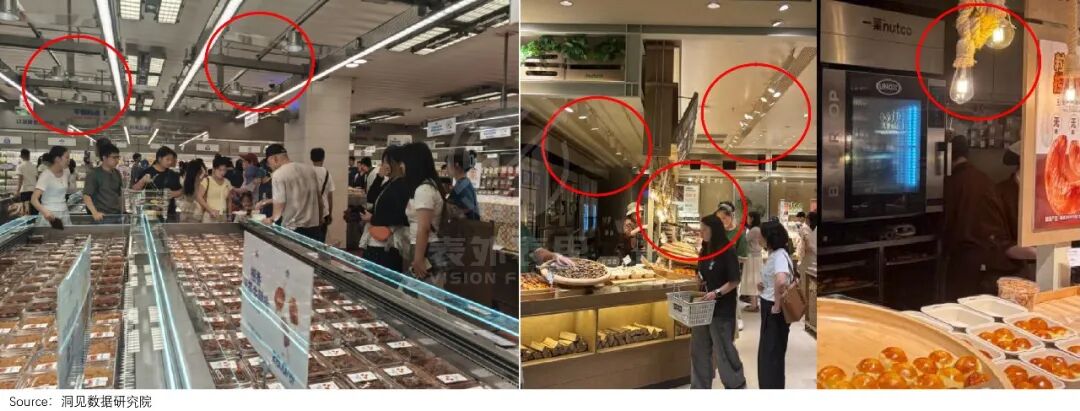
These lamps are not only used for lighting: they emit warm yellow light of 3000-3500K, which is softer than the 4000K natural light of Sams; with a color rendering index of Ra90-95, compared with the Ra80-85 spotlights of Sams, they make snack packages look brighter, bread more golden, and fruits more juicy.
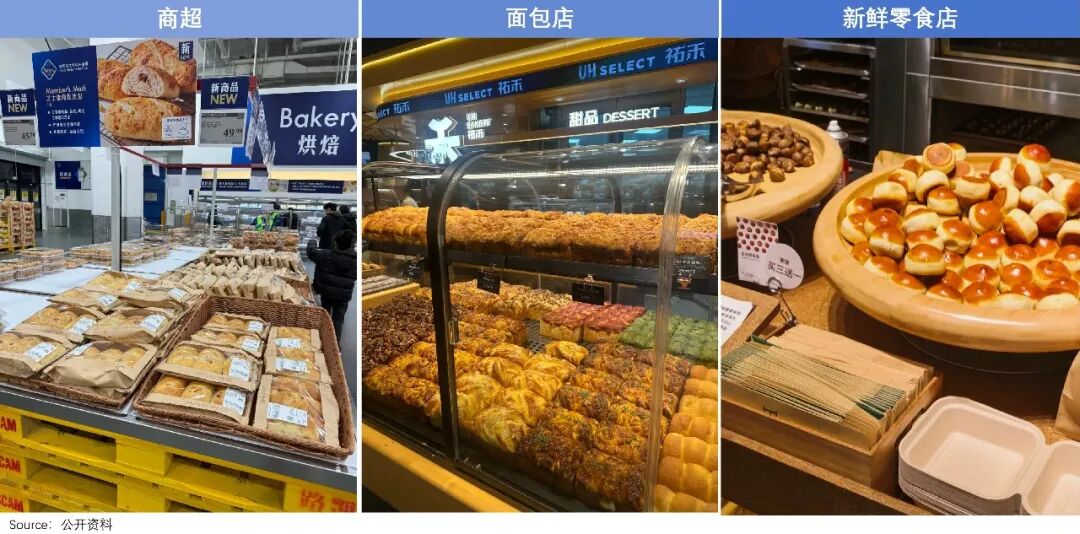
With the aroma of freshly baked bread, roasted nuts, and hundreds of dazzling SKUs, consumers can hardly fail to notice and stop by.
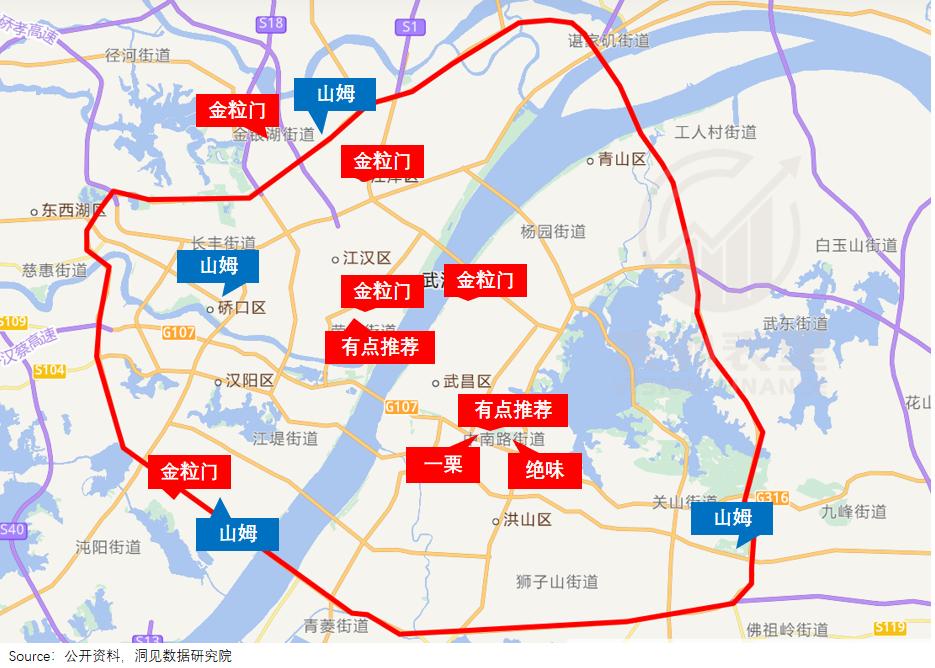
In terms of site selection, fresh snack stores are also closer to young people, either at the entrance and exit of the negative first floor of inner-ring shopping malls, or next to large hypermarkets such as Aeon in the third ring area.
However, these "success codes" have now all become boomerangs that hurt the fresh snack brands themselves.
Choosing prime locations will undoubtedly bring higher unit rent; the decoration designed to create "emotional value" also costs a lot. Taking lamps as an example, for the same store area, the hardware cost of fresh snack stores is about 60% higher than that of supermarkets such as Sams.
As a weekly necessary shopping destination for middle-class families, Sams sells large-packaged products at a fast pace. Fresh snack stores attract customers through atmosphere and aroma. Although they can stimulate orders through free samples, most customers "only sample but do not buy", so the conversion rate is not optimistic.
This is also the deep reason why Jinlimen, Jidu Quan and other brands are scrambling to enter the B1 floor of core business districts: their own "brand traffic" is not enough to break through the market, so they need "channel traffic" to supplement, and use foot traffic to increase purchase frequency.
Even if they operate at a loss, they still maintain a certain scale of short-shelf-life products such as freshly baked pastries and freshly made drinks. The underlying logic is to attract more repeat customers with good taste.
However, the ideal is full, but the reality is cruel.
Xiaoyou, a clerk at a fresh snack store, mentioned that every time croissants are put on the shelf, her anxiety starts counting down: within one hour after being baked, the croissant has a golden and crispy crust that will crack with a "click" when pressed, and the inside is soft and chewy, with butter aroma bursting in the mouth.
After this window period, the water vapor cooled inside the bread will cause the pores to collapse and the dough to become sticky, and the crust will also become soft and no longer crispy. After being placed for more than half a day, the butter aroma will completely volatilize, the taste will become soft and wilted, and even re-baking cannot save it.
"All freshly baked and freshly made snacks have an unavoidable 'taste shelf life'." Xiaoyou introduced. Although the baked bread has a marked shelf life of 3 days, its taste starts