As Chinese enterprises no longer enter its market, India has set its sights on Japanese enterprises: having pulled off far too many pig-butchering scams, it now attempts to ease regulations to nurture market players, only to find the intended targets refuse to take the bait.
India has run out of tricks! Seeing that Chinese-funded enterprises just won't fall for it, India has turned its attention to Japanese companies.
From August 24 to 27, Piyush Goyal, India's Minister of Commerce and Industry, visited Japan with a business delegation of more than 200 people, which India claimed was the largest business delegation it had ever sent to Japan in history.
Goyal patted his chest in front of Japanese companies and assured them that India boasts a first-class entrepreneurial environment, with absolute guarantees for intellectual property rights and data security that will never go wrong, calling on Japanese enterprises to double their operations in India.

Anyone who knows a little about India can hardly hold back their laughter at these words. Just over two months ago, Tata Electronics, Apple's contract manufacturer in India, had 630GB of more than 200,000 confidential files stolen by a hacker group. After Tata refused to pay the ransom, the hackers directly put the data on the dark web for public sale.

Apple's 20-year-old confidentiality myth was shattered with one punch by its Indian contract manufacturer.
While Goyal was talking about "absolute data security guarantees", Tata's servers didn't even have multi-factor authentication enabled, and the hackers lurked for weeks without being detected. The confidence behind this promise is roughly on par with the purity of Ganges River water.
Chinese Capital Is No Longer Coming, India Sets Its Sights on Japanese Enterprises
The background for India's massive investment promotion trip to Japan this time is that Chinese enterprises are no longer coming.
In the past, Chinese capital was one of the main sources of foreign investment in India, but a report released by Natixis in August this year shows that the proportion of China's direct investment in India in India's total FDI has plummeted from nearly 2% in 2020 to 0.27% to 0.32%, ranking 23rd among all foreign investment source countries, not even a fraction of that of Mauritius.
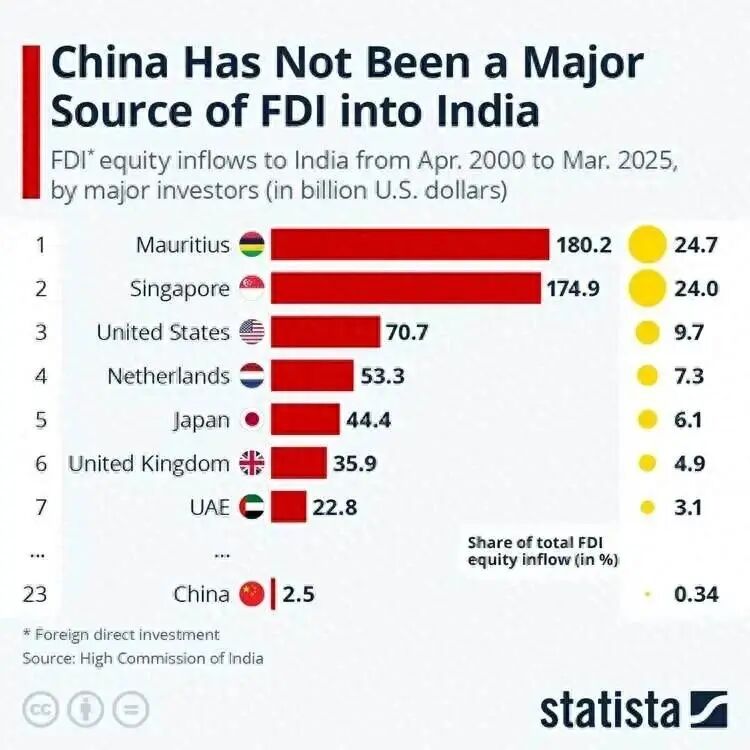
In March 2026, India specially opened an automatic approval channel for Chinese capital, promising 60-day fast-track review for seven major sectors including electronic components and polysilicon. However, five months after the policy was released, not even a decent Chinese enterprise inspection delegation showed up.
India also softened its stance to allow 4 Chinese enterprises to participate in India's national power projects, but two months on, no one showed any interest.
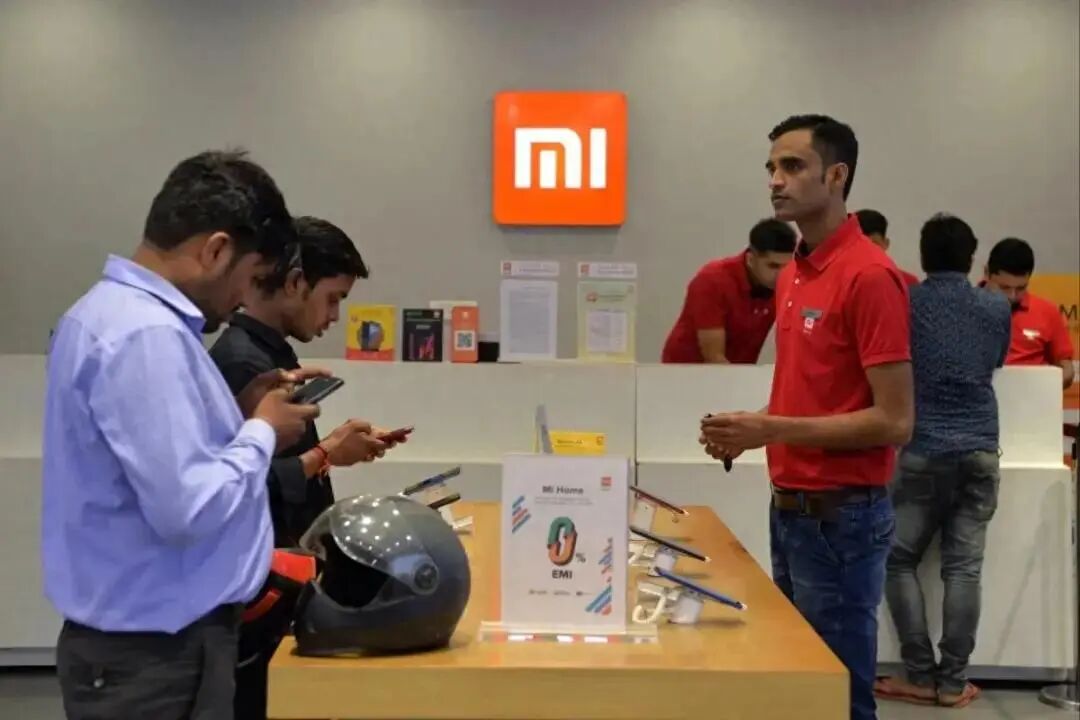
It's not that Chinese enterprises don't want to make money, it's that they are too scared of being exploited. Xiaomi had 4.8 billion yuan of assets frozen, vivo and OPPO were subjected to surprise tax inspections and account freezes, OPPO was ordered to pay more than 3.7 billion yuan in retroactive taxes, OnePlus was fined......
Shanghai Electric has been owed the remaining 135 million USD payment for its power station project for more than 4 years, and even after winning the arbitration case, it is still difficult to recover the full amount; Dalian Heavy Industry won the lawsuit for 140 million yuan in equipment payment only to find the counterparty went bankrupt, so it has to make full provision for bad debts.
Wingtech's industrial land in India was directly sealed off under the pretext of tax investigation; Great Wall Motors' acquisition of General Motors' Indian plant was stuck in approval for two years before it finally gave up the layout; BYD did not build a factory in India, but still received a mistaken tax penalty notice.
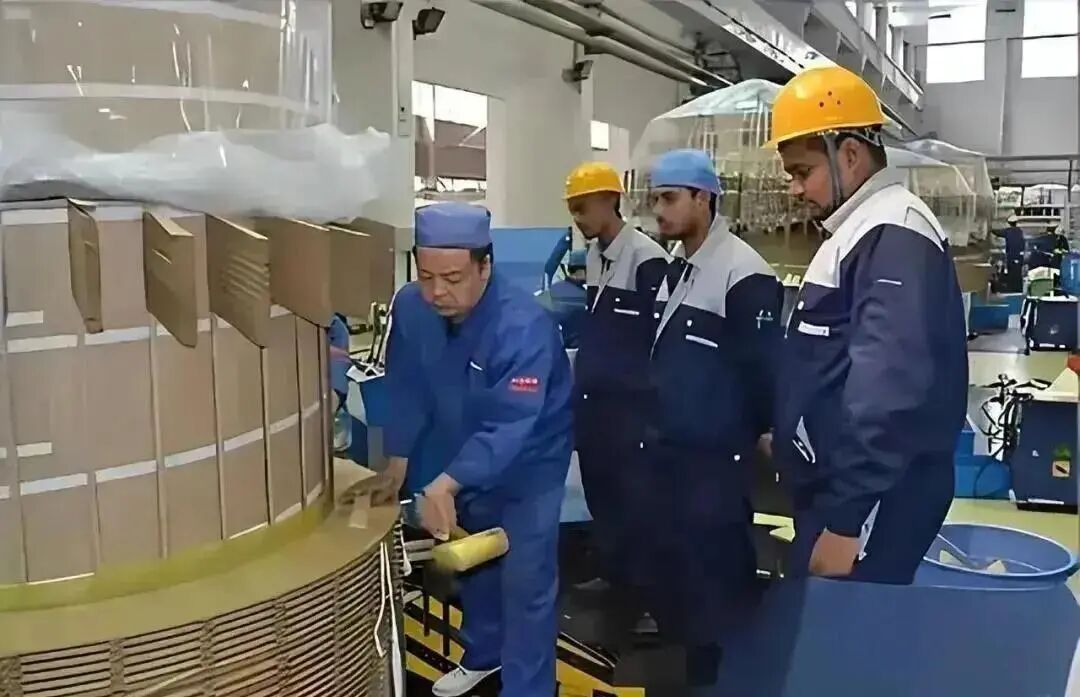
Baobian Electric exported power equipment manufacturing technology to India, trained local talents, but was eventually squeezed out by India, which acquired it at a low price and took away the full set of technologies.
The internet sector has almost completely withdrawn: Alibaba's UC Browser and AliExpress were banned in the name of "national security", Tencent's apps were blocked, and all local investments were shrunk and withdrawn.....
The experiences of Chinese-funded manufacturers in India are enough to write a "Guide to the Death of Foreign Capital in India".
With Chinese capital no longer coming, India has set its sights on Japan, and India's finance minister also went to North America to attract investment, looking for takers all over the world.
Japan Has Also Fallen Into Many Pits in India
There is a reason why India targeted Japan: Japanese enterprises have suffered a lot of setbacks in India, and they tend to bear the losses silently after being exploited, making them easy to manipulate.
The most classic case is the Mumbai-Ahmedabad High Speed Rail. Japanese enterprises offered an ultra-low-interest yen loan with an annual interest rate of 0.1% and a 50-year repayment period, covering 80% of the project's funds, which is almost like giving money away for free.
However, land acquisition dragged on for several years, and the project cost soared directly from the initial 1.08 trillion rupees to 1.98 trillion rupees, an increase of 83%. By March 2024, the overall progress was only 41.72% completed.
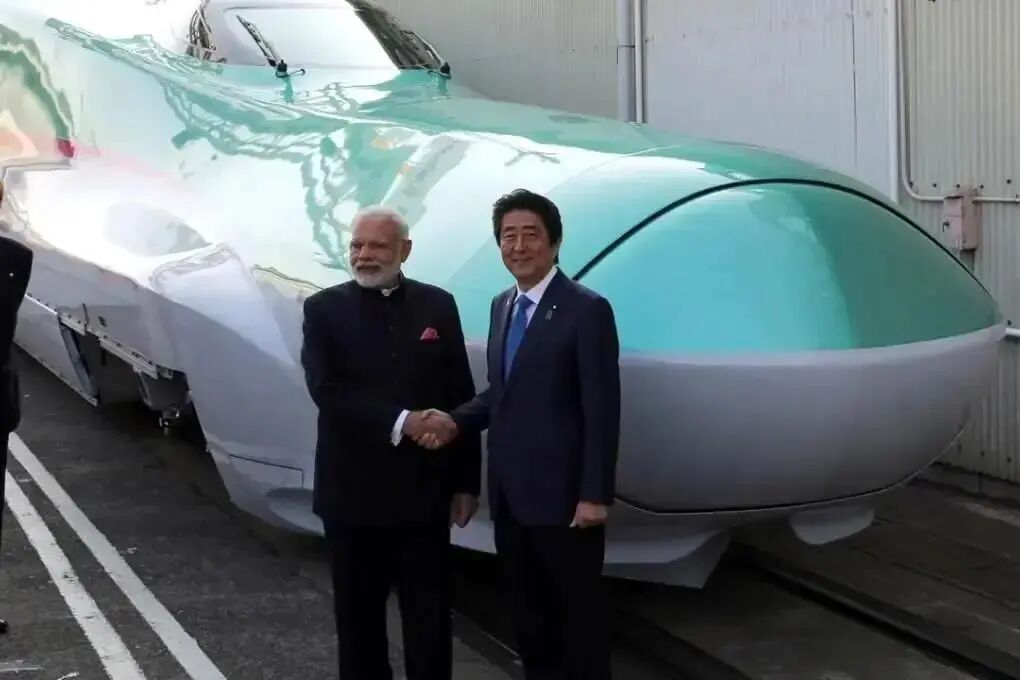
The money was invested, the time was consumed, but it didn't end there. In 2025, India's National High Speed Rail Corporation released a tender document for the signal system, requiring that the European ETCS-L2 standard must be adopted, and the bidding enterprises must be full members of UNISIG, the European railway standards organization.
Japan's self-developed DS-ATC Shinkansen signal system was directly disqualified from bidding, and Japan was even excluded from the train supply contracts.
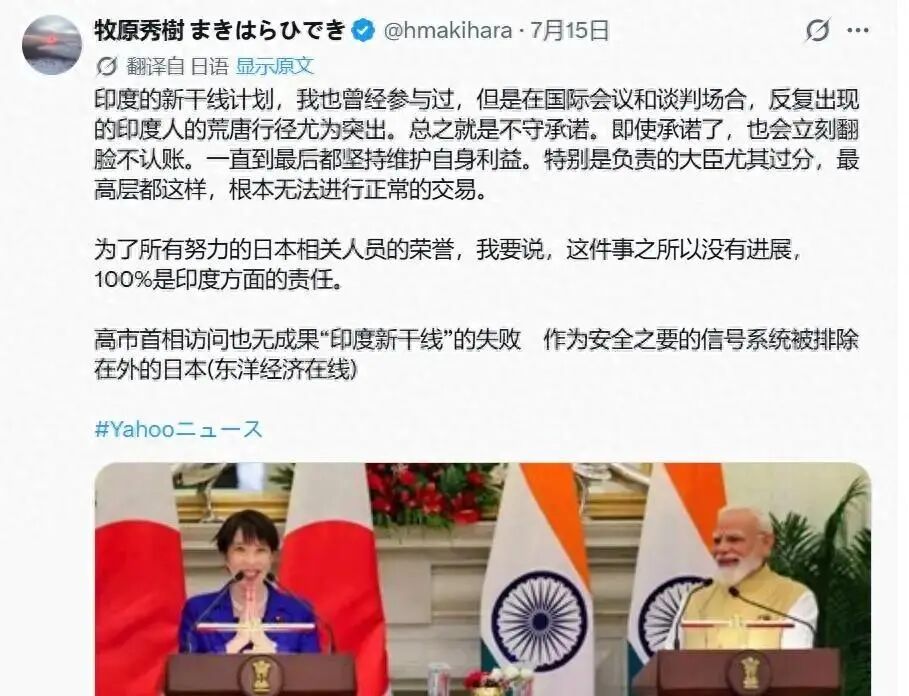
Some time ago, Hideki Makihara, former Japanese Minister of Justice, directly reposted an article on social media criticizing that "Indians have no credibility and are completely unreasonable".
Japan used 0.1% low-interest loans to help India build high-speed railways, but in the end it only became a laborer laying rails, and the core signal system and train supply were all taken away by Europeans.
Maruti Suzuki, Suzuki's joint venture in India, accounts for 55% of Suzuki's global sales, but Indian shareholders hold more than 70% of the shares, almost all core components such as engines, gearboxes and chassis are produced in India, with a local component localization rate exceeding 95%.
Suzuki got this position by localizing its entire business in India and gifting its technologies to India, essentially making itself an Indian automaker.

The pharmaceutical industry has suffered even more. Japanese pharmaceutical giant Daiichi Sankyo spent huge sums of money to acquire an Indian pharmaceutical company back then, only to find several of its factories banned from importing drugs by the United States, and it could only sell the assets at a low price in the end, losing all its investment.
Sony planned a multi-billion dollar merger plan in India, which fell through after two years of negotiations. Sharp simply sold its Indian subsidiary directly this year.
Japanese enterprises have fallen into one pit after another in India, and now Goyal came over and said "our business environment is first-class, and data security is absolutely guaranteed".
Now the aftershocks of the 630GB data breach at Tata Electronics have not dissipated, and India is still promoting new data localization regulations that require multinational companies to store data within Indian territory and open "backdoors" to regulatory authorities. Foreign companies that have been scammed before probably want to curse out loud when hearing these words.
Goyal said "intellectual property rights are absolutely guaranteed", but the average trial period for intellectual property lawsuits in India can drag on for more than a decade, and extreme cases have taken 48 years to get a ruling, by the time you win the lawsuit, you don't even know if your company still exists.
India still has no specific civil or criminal laws targeting trade secrets, piracy and counterfeits are rampant, and multiple markets in India have been directly included in the "Notorious Markets List" by the United States.

As for taxation, that is India's traditional specialty. They let foreign enterprises in and nurture them for several years, and when you grow bigger, they go through old accounts to issue sky-high fines, and often carry out retroactive tax collection.
Volkswagen was ordered to pay more than a billion dollars in back taxes due to its parts import model, Samsung received hundreds of millions of dollars in fines for equipment issues, Vodafone was chased for an old case for more than a decade, and Coca-Cola has been exploited repeatedly over and over again.

A Turkish airline's assets in India accumulated over 17 years were taken over by local entities overnight, and Chinese mobile phone manufacturers have repeatedly been heavily fined for tariff issues related to royalty payments.

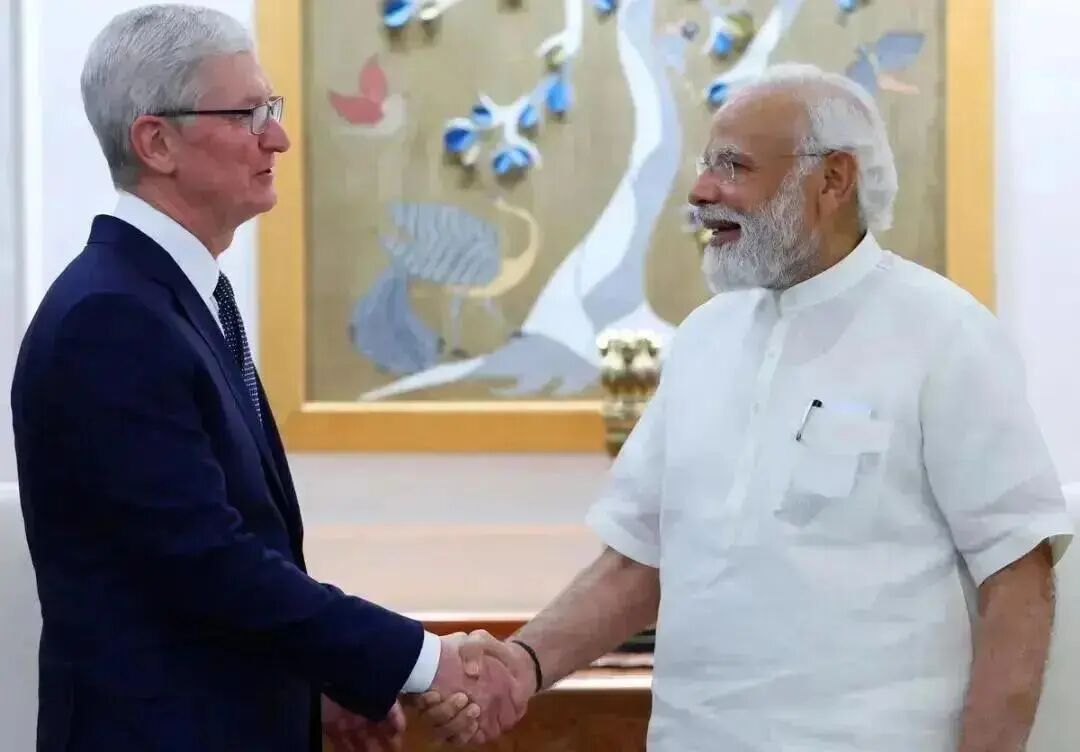
The most severe case is Apple, which is facing an antitrust fine of up to 38 billion USD. Calculated based on Apple's annual revenue of over 10 billion USD and profit of 450 million USD in India, it would take roughly more than 80 years to earn enough to pay the fine.
After Running Too Many "Pig Butchering Scams", India Tries to Nurture Fish But the Fish No Longer Bite
India has now realized that it can no longer keep running these pig butchering scams. India's net FDI in the 2024-2025 fiscal year fell to less than 1 billion USD, foreign investors withdrew a net of 2.87 trillion rupees from the Indian stock market, and even Indian media described the country as a "capital graveyard".
On August 6 this year, India quickly passed a tax amendment, extending the tax exemption for electronic manufacturing equipment all the way to 2041, and for key clients like Apple, it even offered a super package of 15-year tax exemption.
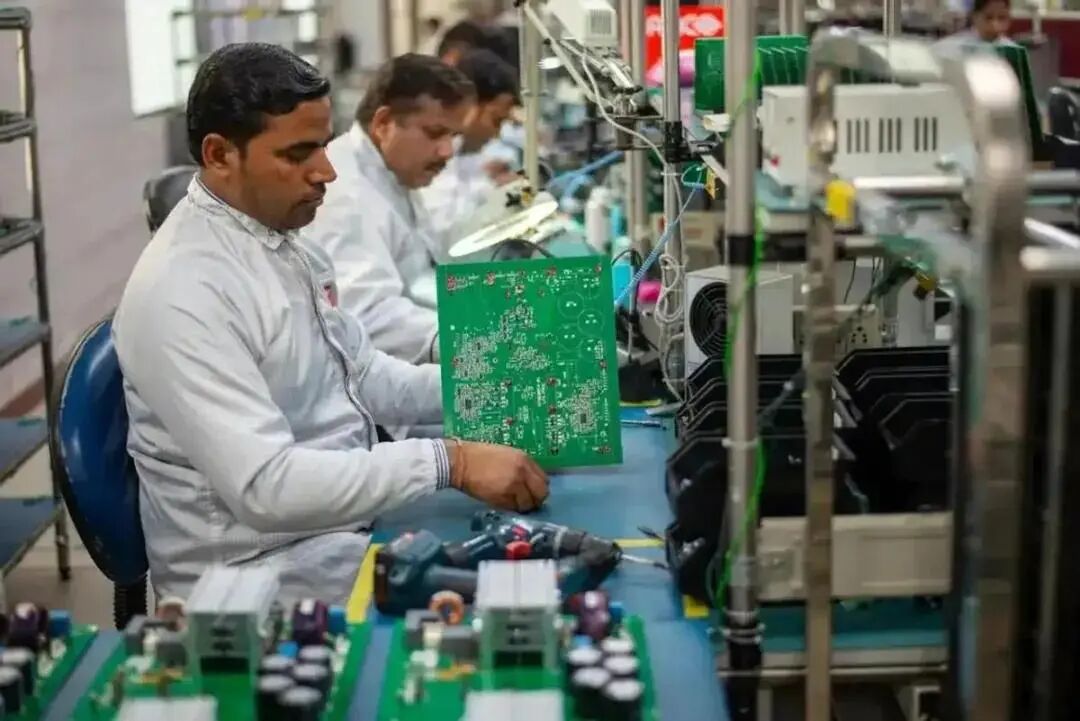
Over the past decade, India has exploited enterprises from almost all major economies around the world, from Apple and Amazon in the US, to Volkswagen