China's venture capital industry is shifting from "selecting people" to "selecting cities"
Changxin Technology has secured a market value of 4 trillion yuan.
In the article "Changxin's Listing, Hefei Earns 1 Trillion Yuan: The Development Logic of Chinese Cities Has Changed", Zhengjie Bureau introduces the story of Changxin and Hefei, as well as the underlying development logic of Chinese cities.
From the perspective of capital investment, Changxin has given Hefei a more distinct industrial label.
The success of Changxin serves as a valuable precedent.
Investment institutions have begun to keep a close eye on Hefei, pay attention to integrated circuit related enterprises, and look for the next "Changxin".
Similar cases are also playing out in other cities.
For robot enterprises to raise financing, Shenzhen is almost an unavoidable stop; for AI startups, it is easier to gain access to capital in Beijing; biomedical projects are largely concentrated in Suzhou.
In the past, the venture capital industry has always believed in one saying: investment is about investing in people.
Now, venture capital is shifting from "selecting people" to "selecting cities".
01
The Golden Age of Internet Venture Capital
What early-stage venture capital values most is often not how many assets an enterprise owns, nor how much money it can make at present.
They pay more attention to the entrepreneurs at the helm.
Wang Xing had suffered repeated defeats before founding Meituan.
He had founded Xiaonei, Fanfou and Hainei, some of which were sold and some forced to shut down, none of which brought him real fame and success.
In 2010, Meituan was just established.
At that time, group-buying websites sprang up everywhere, and there were thousands of similar enterprises in China at its peak, and no one could tell which one would survive.
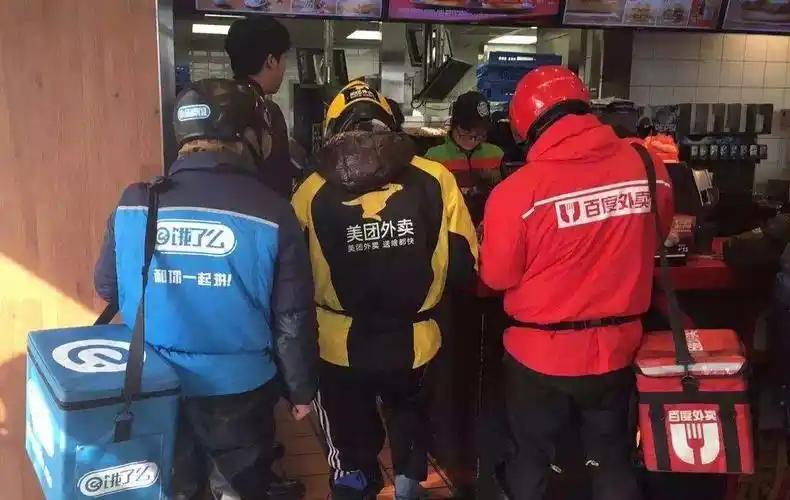
During the early food delivery war, Meituan, Ele.me and Baidu competed fiercely
But in the same year, HSG became the only investor in Meituan's Series A round.
Shen Nanpeng later recalled that when he met Wang Xing for the first time, the two sides basically did not discuss specific operational figures, but talked more about the long-term vision and future of the industry.
At that time, Meituan did not have today's food delivery empire, nor the later 7 million rider network covering the whole country.
HSG was willing to place a bet, largely due to the judgment and execution Wang Xing demonstrated in his previous several entrepreneurial ventures.
Projects can be restarted, but the cognition accumulated by an excellent entrepreneur will not disappear easily.
Li Bin founded NIO in a similar situation.
In 2014, NIO was just established and had not yet produced a mass-produced car, a group of well-known entrepreneurs and investment institutions such as Liu Qiangdong, Li Xiang, Tencent and GL Ventures had already entered the market.
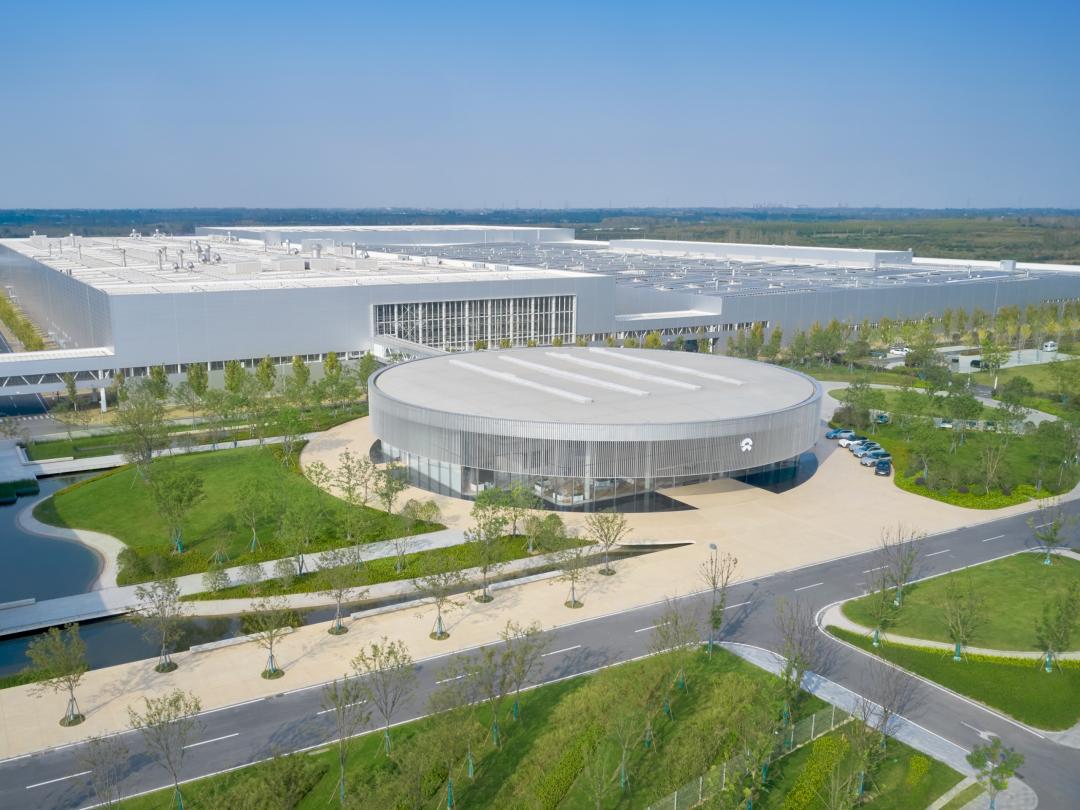
NIO Hefei Factory
Capital was willing to trust Li Bin, because of his accumulation over the past 10+ years.
Before founding NIO, the Yiche platform Li Bin established had already been listed in the United States.
He also participated in the founding and investment of dozens of enterprises around the internet and automotive industries, with long-term accumulation in automotive sales, user services and industrial resources.
Therefore, although NIO is a new company, its helmsman is not a novice without any experience.
When it comes to Li Xiang, the characteristic of "investing in people" is even more obvious.
In 2019, the Li Auto ONE was about to enter mass production, but the money in the company's account was almost exhausted.
At that time, the stock prices of Tesla and NIO were both falling, and the market was extremely pessimistic about new energy vehicles.
Li Xiang later recalled that at that time, he met 150 investors and still failed to get financing.
The last investor to step in was exactly Wang Xing, whom he had once rejected.
In August 2019, Li Auto completed a $530 million Series C financing, of which Wang Xing personally contributed about $285 million.
After that, Meituan and Wang Xing participated in multiple rounds of financing for Li Auto, with a total investment of about $1.15 billion.
In a pessimistic industry environment, why was Wang Xing willing to trust Li Xiang?
From PCauto to Autohome, and then to Li Auto, Li Xiang had been continuously starting businesses for more than 20 years.
These practical experiences prove Li Xiang's product capabilities and industry judgment far better than a beautiful financing plan.
When Li Xiang talked about this period in the past later, he choked up several times when mentioning Wang Xing, calling him the "noblest benefactor" in the entire entrepreneurial process.
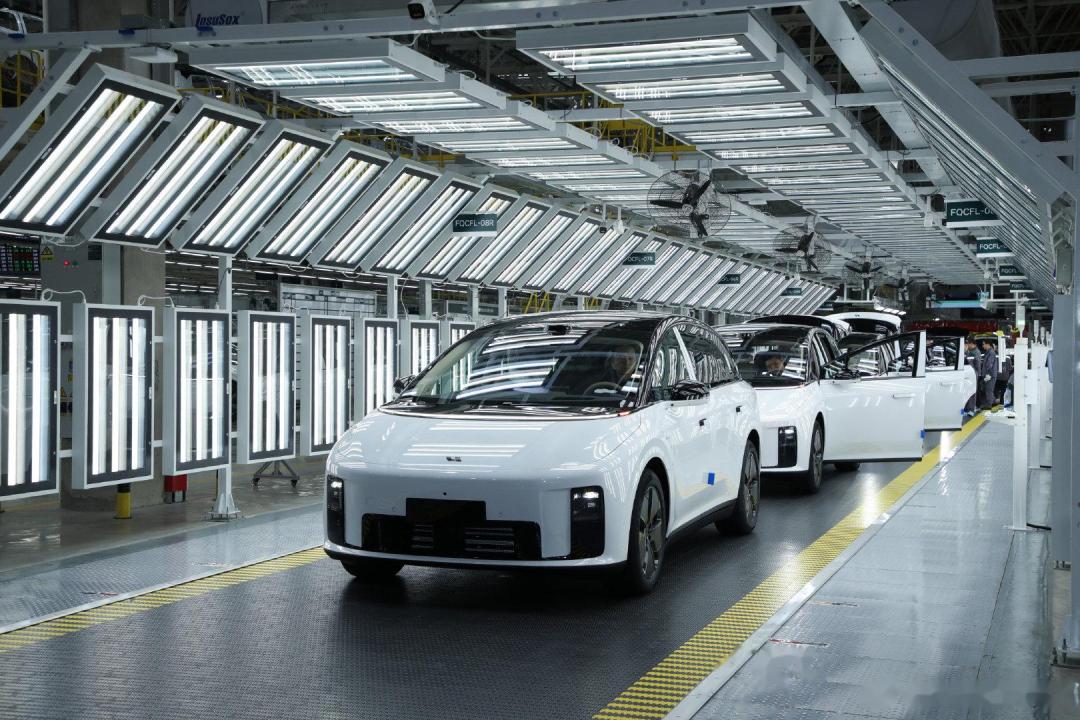
Li Auto production line
Although Li Bin and Li Xiang successively entered the automotive manufacturing industry, the foundation of their fame was rooted in the internet era.
Wang Xing, Li Bin and Li Xiang constitute a microcosm of the golden age of Chinese internet venture capital.
Scholars from institutions such as Stanford University in the United States once surveyed 885 venture capitalists, and the results showed that 95% of respondents believed that the management team was an important investment factor.
For investment institutions, when evaluating a person, they usually investigate his entrepreneurial experience, industry cognition, core team, resource organization ability, and the resilience to keep moving forward in the trough.
These are difficult to write into financial statements, but may determine how far an enterprise can go in the end.
In the internet era, this set of investment methods was indeed very effective.
ByteDance started in Jinqiu Jiayuan, Beijing, and Alibaba was born in Lakeside Garden, Hangzhou.
For internet entrepreneurship, dozens of programmers can develop a product that can quickly serve users across the country.
Where the enterprise is located is important, but what really determines its survival and death is often the vision and leadership of the entrepreneur.
02
Hard Technology Pushes Cities to the Forefront
In the internet era, an idea from an entrepreneur can give birth to an enterprise.
As long as the person is excellent enough and the business model is feasible, capital is willing to place a bet.
In the era of hard technology, the situation has become more complicated.
Robot manufacturing involves motors, reducers, sensors, controllers, batteries and precision processing, etc.; AI development is also inseparable from algorithm talents, computing power, data and application scenarios.
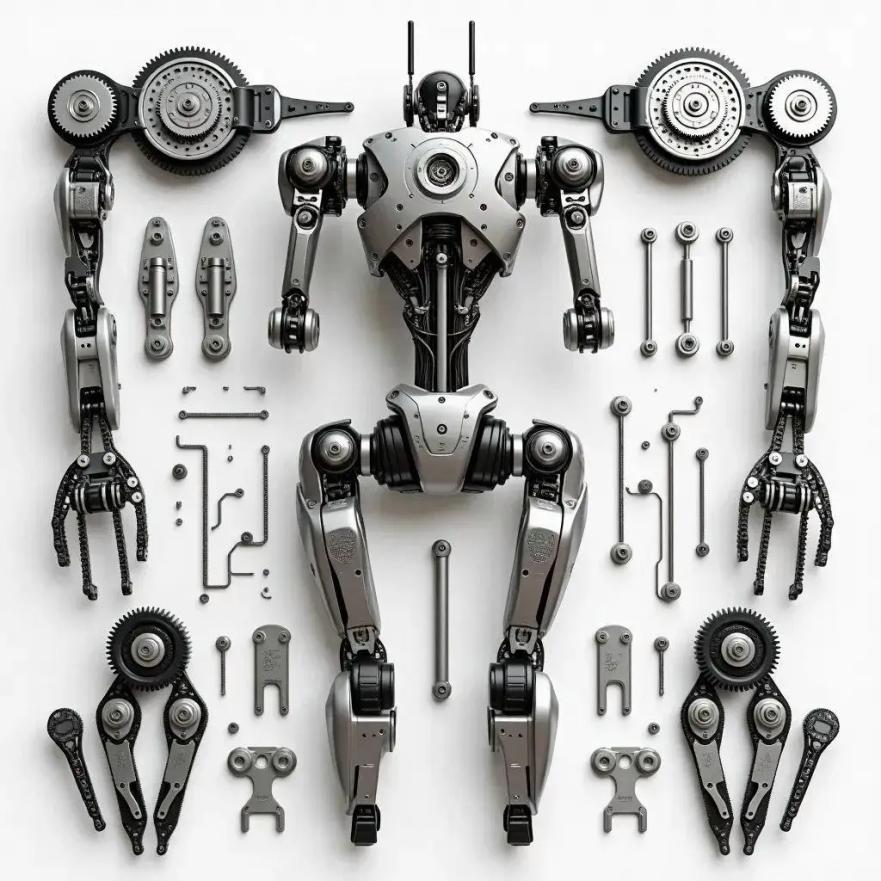
Main components of humanoid robots
Entrepreneurs' ideas are certainly important, but these resources cannot be solved by one entrepreneur alone, and are mostly distributed in cities and industrial chains.
Judgment of investment institutions on enterprises has also expanded to the cities where the enterprises are located.
When mentioning robots, many people first think of Unitree Robotics and Hangzhou, but the truly influential player is actually Shenzhen.
Shenzhen has gathered a large number of motor, sensor, controller and precision processing enterprises. The components required for robot R&D can be purchased nearby, prototypes can be quickly trial-produced, and surrounding factories can also provide application scenarios.
In 2025, the total output value of Shenzhen's robot industry reached 242.6 billion yuan, a year-on-year increase of 20.56%.
In that year, Shenzhen produced 194,900 sets of industrial robots, accounting for about 1/4 of the country's total output; the output of service robots reached 7.9665 million sets, accounting for about 2/5 of the national total.
The complete industrial chain has nurtured a group of enterprises such as UBTECH, Dobot, UBtech, Agile, Exceed Robotics, and Propel Power, which naturally attracts a large amount of capital attention.
In 2023, UBTECH was listed on the Hong Kong Stock Exchange, raising about HK$10 billion; a year later, Dobot was listed on the Hong Kong Stock Exchange, raising about HK$752 million.
By the end of 2025, Shenzhen has gathered 34 listed robot enterprises and 9 unicorn enterprises.
Another example is Beijing's AI industry.
Wang Huiwen, co-founder of Meituan, once drew a box for AI investment on the map of Beijing, roughly covering the area south of Tsinghua University, east of Peking University, west of Xueyuan Road, and north of Dazhongsi.
After reviewing his own investments, he found that projects within this box generally performed better.
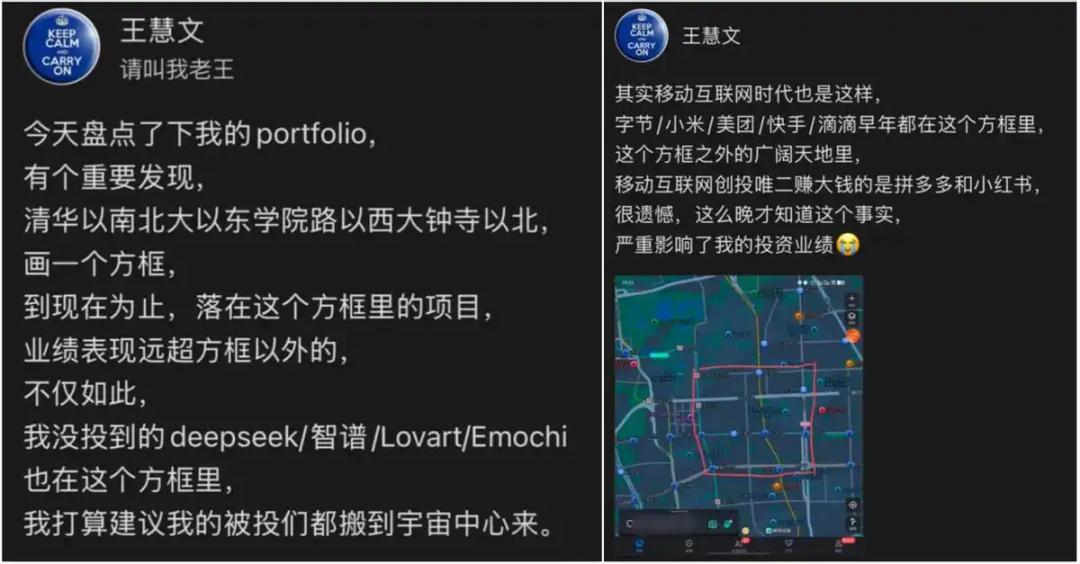
Wang Huiwen reviews his own investment situation
Within this area, there are Zhipu AI, Moonshot AI, DeepSeek, FaceGood, Shengshu Technology, and Galaxy General.
Some of these enterprises have already gone public, while others are on the way to listing.
Looking further back, companies such as ByteDance, Xiaomi, Meituan, Kuaishou and Didi also grew up nearby in their early years.
The most valuable part of this box is the density of talents and innovation accumulated over many years.
Tsinghua University, Peking University, the Chinese Academy of Sciences and a large number of technology companies continuously export engineers, entrepreneurs and technological achievements to the surrounding areas.
Capital is not only investing in an AI company, but also the entire innovation network of Haidian behind it.
In addition to hard technology itself becoming more and more dependent on cities, the change of capital structure is also a factor pushing capital to focus on cities.
Data shows that in 2025, state-owned capital accounted for 90.2% of LP contributions in the private equity market.
Among them, local state-owned assets and government guidance funds have become an important force.
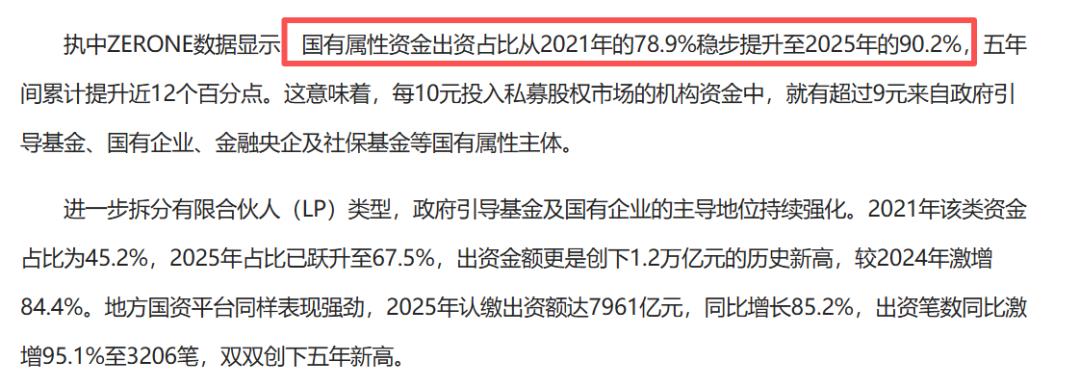
State-owned LP has grown from a key player to an absolute dominant force
When local state-owned assets invest in an enterprise, they not only calculate financial returns, but also consider whether the project can be implemented, whether it can bring jobs and upstream and downstream enterprises to the local area.
This kind of patient capital is willing to accompany enterprises through R&D, trial production and market verification.
Local state-owned assets taking the lead in placing bets will also send signals to the market to attract social capital to follow up.
Local state-owned assets explore the way ahead, and social capital follows in, making cities play an increasingly important role in investment decision-making.
03
Looking for High Win Rate in Uncertainty
From investing in people to investing in cities, the scope of capital investigation has expanded, but the underlying logic remains the same.
The essence of venture capital is to find a higher win rate in huge uncertainty.
In the past, outstanding entrepreneurs like Wang Xing, Li Bin and Li Xiang could increase the success probability of a company.
Nowadays, a city with a solid industrial foundation makes it easier for enterprises to survive.
When investors evaluate entrepreneurs, they first look at their resumes.
Cities also have their own resumes. Whether there are leading local enterprises, whether the industrial chain is complete, whether scientific research achievements can be transformed, and whether talents are willing to stay are all important dimensions for venture capital to make judgments.
More importantly, the ability to organize resources.
Excellent entrepreneurs can bring together technology, talents, capital and customers.
Cities with solid industrial capabilities can also connect universities, laboratories, manufacturing enterprises, funds and application scenarios.
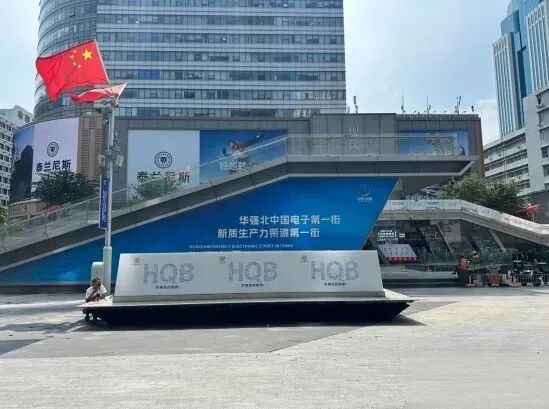
Huaqiang North in Shenzhen gathers more than 5000 component suppliers and is becoming a source of new productive forces
Whether several links can be connected is particularly critical for both entrepreneurs and cities.
In addition, capital will also investigate long-term credit.
Whether entrepreneurs can survive the industry trough and whether cities can maintain the continuity of industrial direction and policies are essentially judgments of resilience.
It took Hefei 10 years to bet on Changxin, and a city that frequently chases hot spots is difficult to reassure long-term capital.
The change can be better illustrated from the perspective of capital flow: in 2025, 6611 investment events took place in Jiangsu, Guangdong, Beijing, Shanghai and Zhejiang, and these five regions accounted for nearly 3/4 of all investment events across 34 provincial-level administrative regions in China.
Capital does not flow evenly to all places, but is increasingly concentrated in cities that can continuously generate projects.
The shift of venture capital from "selecting people" to "selecting cities" does not mean that capital no longer values entrepreneurs.
Because the basic unit of innovation is expanding from one person or one company to the urban industrial ecosystem.