Hard Krypton Exclusive Interview丨The optical chip company that hundreds of investors were unwilling to invest in now has a valuation of nearly 20 billion yuan.
Author | QIAO Xiaofen
Editor | YUAN Silai
In 2023, XIONG Yinjiang, founder of "Optical Standard", visited over 400 to 500 investment institutions, talked to almost all VCs accessible in China until his voice went hoarse.
On one occasion, even though he was unwell, he still flew to Beijing to meet two institutions, feeling "extremely physically uncomfortable". Even so, what he got was still perfunctory clichés: "We are very interested" and "We will follow up".
After meeting hundreds of people, the number of TS he obtained was still in single digits. At that time, XIONG Yinjiang was 27 years old, had just returned to China, and experienced the harsh reality of the capital market for the first time.
XIONG Yinjiang actually knew that he was not the kind of entrepreneur favored by investors. He had no experience in top tech giants, no endorsement from leading academic figures, and chose the unpopular track of optical chips. "Now some investment managers may be asked 'why didn't you invest at that time', but at that time, it was very difficult for the heads of such institutions to make investment decisions on such 'non-consensus' projects."
Until 2024, Optical Standard only raised 200 to 300 million yuan with great difficulty, and its valuation was only a few billion yuan. Even so, he did not stop.
In 2024, the 128×128 optical computing chip of "Optical Standard" was taped out and lit up; in early 2025, the board-level packaging was completed; in the third quarter of the same year, they passed the customer POC verification and won the order for industry vertical model, which was also the world's first optical computing product to achieve commercialization.
The times finally caught up with them. The turning point came unexpectedly.
In March 2025, NVIDIA released a switch using silicon photonics and co-packaged optics technology. Optical computing, which used to attract attention only in academic circles, came to the front of the industry for the first time. Earlier this year, NVIDIA invested 2 billion US dollars in optical module companies Lumentum and Coherent respectively, pouring real money into the "optics" industry.
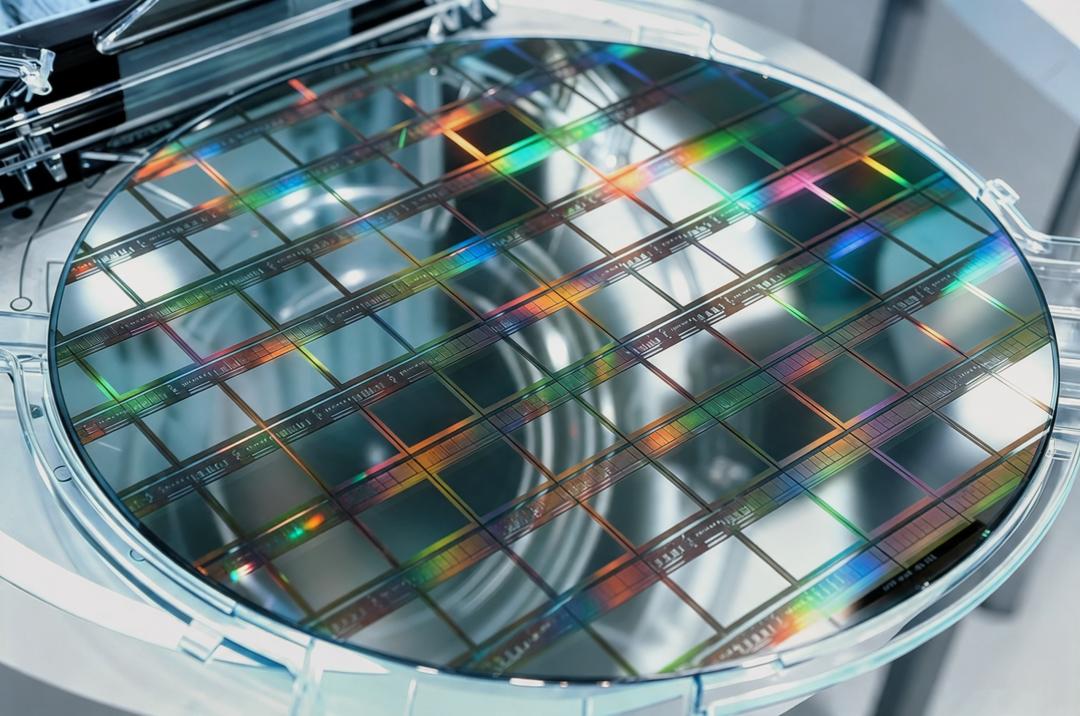
256x256 Photonic In-Memory Computing Chip (Source/Enterprise)
NVIDIA's moves are always a weather vane. Since the second half of 2025, primary and secondary market investors suddenly began to shout the familiar slogan — "Believe in Light".
Soon, the A-share AI and optical module sector "Yi Zhong Tian" (Innolight, Cambridge Industries Group, TFC) became popular in the secondary market, and the total market value of the three companies once exceeded 2.4 trillion yuan. Then optical computing chip company Xizhi Technology went public, and its market value reached a maximum of 10 billion US dollars on the day of listing, providing a new valuation anchor for optical computing companies that previously lacked reference standards.
Objectively speaking, the rise of optical computing chips is also the result of industrial development, and NVIDIA only boosted the confidence of the industry. When large models enter 10,000-card clusters, data exchange between GPUs becomes more and more frequent, and the limitations of traditional electrical connections in bandwidth, power consumption and latency are gradually exposed. Light, which runs faster, is naturally used for high-speed interconnection between chips.
"This is not a market hype chasing hot spots, but the valuation of optical chips as technological assets is returning to its proper level," XIONG Yinjiang said.
"Optical Standard", which prepared three years in advance, naturally moved from behind the scenes to the front stage.
36Kr Hard Krypton learned that "Optical Standard" has completed several rounds of financing in the past year, with total accumulated financing amounting to billions of yuan. Its post-investment valuation soared to nearly 20 billion yuan, making it one of the highest-valued companies in this track.
Its investors are a group of star institutions: SDIC Venture Capital, Shanghai Science and Technology Investment, Monolith Capital, Huakong Fund, Geely Capital, SenseTime Guoxiang, Haitong Kaixuan, CITIC Securities Investment, Zhongbei Communication, Langmafeng Venture Capital, Yunhao Capital, Shenneng Chengyi, Puyao Xinye, Huarui Investment, Haihui Investment, Daohe Long-term, Minghong Quantitative, etc.
In addition, many old shareholders including Jinqiu Fund, Dunhong Assets, Xiaomiao Langcheng, Jieli Capital, and Mushi Capital have continuously increased their investments in multiple rounds.
Compared with most companies that first cut into the more commercially mature optical interconnection field, "Optical Standard" lays out both optical interconnection and optical computing. The difference between the two is that optical interconnection solves the problem of "how to transmit", enabling GPU and switch chips to exchange data at higher speed with lower power consumption; optical computing solves the problem of "how to compute", aiming to replace traditional GPUs and let light directly participate in the operation of AI reasoning.
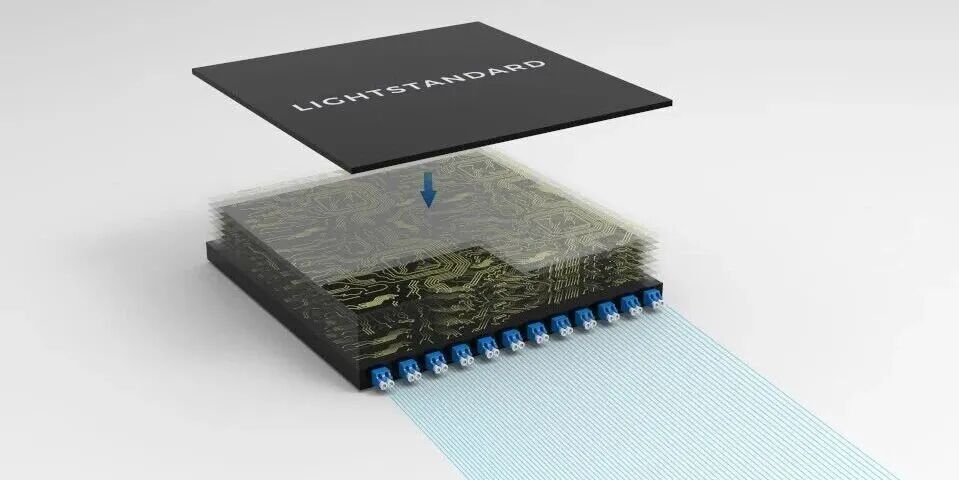
Glass-based Optical Computing Chip (Source/Enterprise)
In terms of products, "Optical Standard" further released 256×256 photonic in-memory computing chips and glass-based optical computing chips this year, and integrated optical chips with electrical chips responsible for signal conversion and non-linear operation into the same computing board — which means that servers no longer need to carry GPUs from other companies, and the core computing is completed by this optoelectronic integrated board.
While most players are still making breakthroughs in products and tackling difficulties in tape-out, "Optical Standard" has gone further and further on the commercialization path. This year, they not only promoted joint product development with Baidu Intelligent Cloud, but also explored satellite payload and on-orbit AI reasoning with Oriental Tiansuan. According to the data provided by the company, it has obtained orders and intent agreements of several hundred million yuan, and completed the large-scale delivery of more than 10 optical computing systems.
The positions of capital and "Optical Standard" seem to have reversed. In the past, the valuation logic of optical chips was that investors who understood the technical logic and dared to bet would refer to the valuation of similar foreign optical computing companies, then give a discount, and the company would choose whether to accept it. But this round, the company sets the price, and investors only answer yes or no.
However, XIONG Yinjiang has experienced the trough and has long disenchanted with valuation. "We went through extremely difficult situations from the very beginning, which made our mentality more solid, we think about problems more realistically, and will not have too many unrealistic expectations."
He is clear that optical computing is still "dancing with hands and feet tied" — in the future, it still needs to adapt to a set of chip, software and data center standards established around electrical computing, which leads to the fact that many of the speed and energy efficiency advantages of light have not been fully released.
But he is still optimistic. XIONG Yinjiang told Hard Krypton that in the next 5 to 10 years, the industry may gradually see hardware, algorithms, communication and energy systems redesigned around light, forming a real "optical-native" architecture.
"Referring to the evolution cycle of the semiconductor industry, optical computing is a track that will last for 50 years, and it is by no means a transitional solution between quantum computing and electrical computing."
The following is the exchange between Hard Krypton and XIONG Yinjiang (abridged and edited)
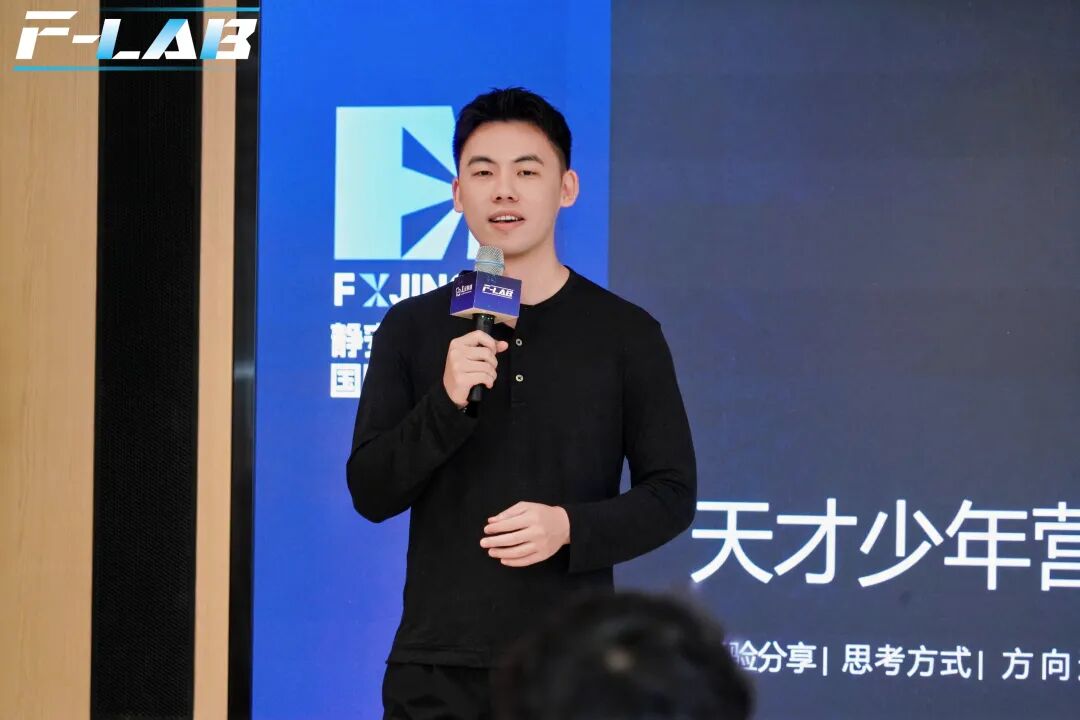
XIONG Yinjiang, Founder of Optical Standard (Source/Enterprise)
Valued at nearly 20 billion yuan, Optical Computing Company Comes to the Front Stage
Hard Krypton: Your valuation and financing have changed a lot in the past two years. How did this turning point happen?
XIONG Yinjiang: The general background is that the overall market situation has changed. On the one hand, the AI CAPEX (capital expenditure) is growing rapidly, large tech giants are deploying more chips, building infrastructure, and training and reasoning larger models, driving the entire computing industry.
On the other hand, earlier this year, NVIDIA first released a silicon optical switch solution with TSMC, and then invested in two light source chip companies Lumentum and Coherent, voting for "light" with real money, which quickly ignited the market's enthusiasm for optical computing and optical interconnection.
Of course, we also just reached the commercialization node. After about three years of development, the supply chain of optical computing has gradually got through, and the products have reached the commercialization inflection point.
Hard Krypton: What exactly did you experience when financing was the most difficult in 2023?
XIONG Yinjiang: In the first two rounds of financing right after we started our business, we met with over 400 to 500 investment institutions in total, talked to almost all VCs accessible in China. I talked to them one by one until my voice went hoarse. At that time, many people would say "We are very interested" and "We will continue to promote", but nothing succeeded in the end. Only six or seven institutions finally invested, and the success rate was in single digits.
At that time, many top dollar funds were short of funds and very cautious in making investments, and most investors preferred teams led by academic leaders, as well as projects with formed industry consensus and clear exit paths. In their eyes, we were a high-risk project with unclear returns and no clear exit path at that time.
Later, some institutions reviewed our project when our valuation was between 500 million yuan and 3.5 billion yuan, but did not invest. When the company's valuation reached tens of billions of yuan, it was psychologically difficult for them to enter, and overthrowing past investment decisions required great courage from the investment committee.
Our team returned to China to start businesses amid the pandemic, and we couldn't go to many places in the first half year. I remember once I went to Beijing to meet two institutions, everyone was infected at that time, I went to meet the investors even when I was sick, and I felt extremely uncomfortable. We went through extremely difficult situations from the very beginning, which made our mentality more solid, we think about problems more realistically, and will not have too many unrealistic expectations.
Hard Krypton: With the valuation soaring, has the pricing system of this track also changed?
XIONG Yinjiang: In early-stage financing, the valuation is set by the lead investor — investors decide how much the company is worth, and the company chooses to accept the offer or continue to find other investors.
But our strategy this year has become that the company sets the price. Behind this pricing is our long-term confidence in this cause, as well as a complete calculation combining revenue, orders and technical routes in the next few years.
I think the company must take the initiative to establish its own price, because we believe that the company's market position and capacity are worthy of this price, and we believe it will fall within the comfortable valuation range of some investors.
The underlying logic of this matter is a deeper change, that is, the valuation paradigm has changed. In the past, China often regarded chips as commodities, and priced them with cost and relatively low PE. For example, the cost of an optical chip may be only tens of yuan, so investors priced the company according to the logic of a single chip.
We think what we are making is not an ordinary optical chip, but a GPU-like computing system, whose pricing should refer to the system value and output capacity of NVIDIA, rather than only looking at the manufacturing cost of a single chip.
Therefore, this round of rise is more like the "valuation return" of Chinese technological assets, rather than just market hype.
Hard Krypton: High valuation is the recognition of the market. Will it also represent risks and shackles at the same time?
XIONG Yinjiang: Our team is very clear about the risks of high valuation. I think entrepreneurs should not just follow the sentiment of investors, but pay attention to the underlying development logic of the business itself. When opportunities come, we must seize them, use this opportunity to make the company's cash flow safe enough, recruit more excellent talents, and convert funds into R&D and commercialization capabilities. The logic of the company is not to shout high valuation arbitrarily, and we also hope that investors at each stage can make profits.
The Commercialization of Optical Chips Takes Off
Hard Krypton: Can you introduce what your main business is?
XIONG Yinjiang: The first category is optical computing, and the second category is optical interconnection.
"Optical computing" products directly target GPUs, including mainstream international GPUs such as NVIDIA, as well as domestic GPU products. Our servers are plugged with our own optical computing cards, and there is no need to carry GPUs from other companies.
But this card does not complete all operations only with optical chips. Optical chips are mainly responsible for large-scale linear operations, that is, tensor operations in AI models. Electrical chips are responsible for optoelectronic signal conversion, and complete non-linear operations such as taking absolute value and exponent. The two together form an optoelectronic integrated computing architecture.
"Optical interconnection" mainly serves computing chip manufacturers including GPUs. We will provide design-in solutions, integrate optical interconnection design into the other party's GPU architecture, and help the GPU "output light".
One of NVIDIA's important moats is NVLink, which uses high bandwidth to combine a large number of GPUs into a large computing cluster. If China mainly relies on PCIe, the bandwidth may be an order of magnitude lower.
When clusters move from thousand-card scale to ten-thousand-card scale, it will become more and more important to efficiently treat multiple GPUs as one GPU and form a large computing pool. This is the value of scale-up and optical interconnection.
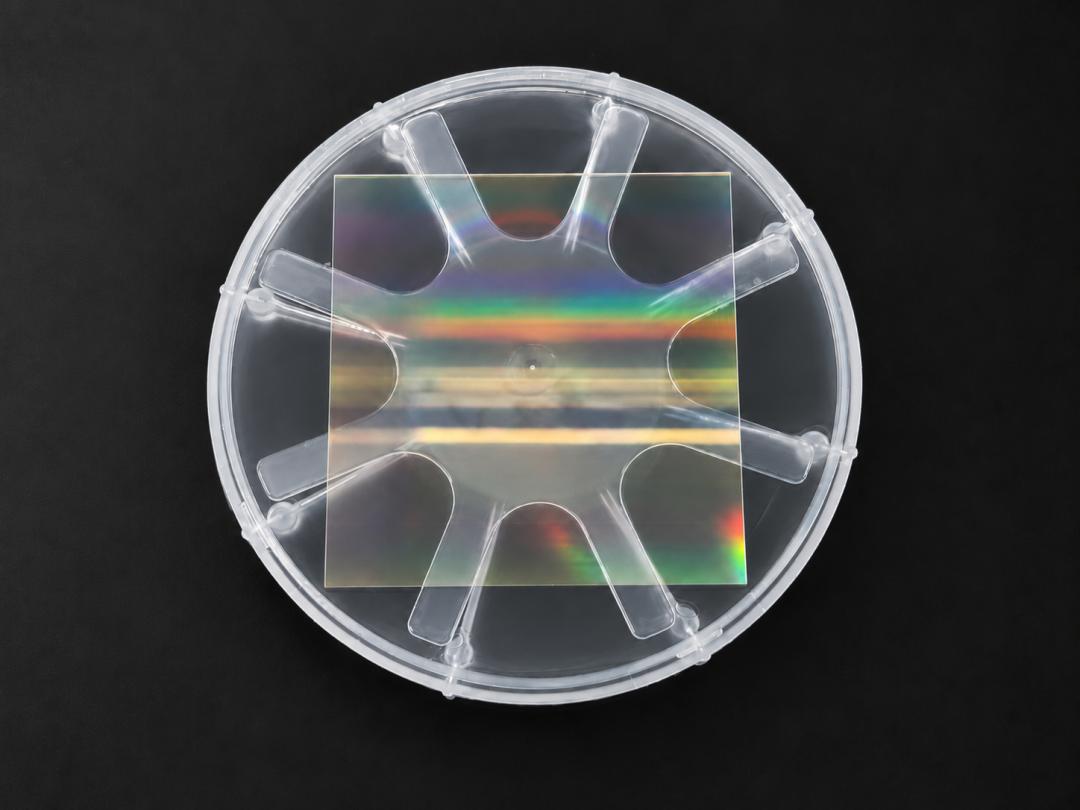
Glass-based Optical Computing Chip (Source/Enterprise)
Hard Krypton: When did the commercialization of the company begin to accelerate significantly?
XIONG Yinjiang: The obvious turning point occurred from April to June this year, and has continued until now. We have formed a more mature commercial team, connecting the market, products and technologies. I myself am also focusing on commercialization on the front line.
The close service for large Internet factory projects in the past 2 years has given us great inspiration, and we have precipitated a set of methodologies for entering large factories, promoting joint R&D and completing delivery. As a result, the number and quality of customers of our on-hand projects have improved, and our partners are mostly large tech companies and model companies with strong cash flow and continuous CAPEX capacity.
Hard Krypton: How did the cooperation with a cloud vendor of large Internet factory start at the beginning?
XIONG Yinjiang: At the very beginning, they wanted to sell us some SaaS tools related to the semiconductor industry. During the conversation, I realized that instead of doing single-point procurement, it was better to bring both technical teams together to see if we could