Will Hefei steal the limelight from Hangzhou?
The two most prominent and dynamic cities at present are none other than Hefei and Hangzhou.
Following the public listings of Changxin Technologies and Unitree Robotics, two major tech companies, a city-led wealth creation myth has unfolded. This has also put Hefei and Hangzhou, two provincial capitals under the Yangtze River Delta urban agglomeration, into the spotlight for further comparison once again.
In terms of economic aggregate, total population and urban development level, Hefei and Hangzhou are clearly not in the same tier. But their real estate markets share similarities, making them typical samples of tech innovation-driven industrial transformation, positive net inflow of population and balanced supply-demand relationship in the property market.
01
Let's first look at the fundamental conditions of the two cities.
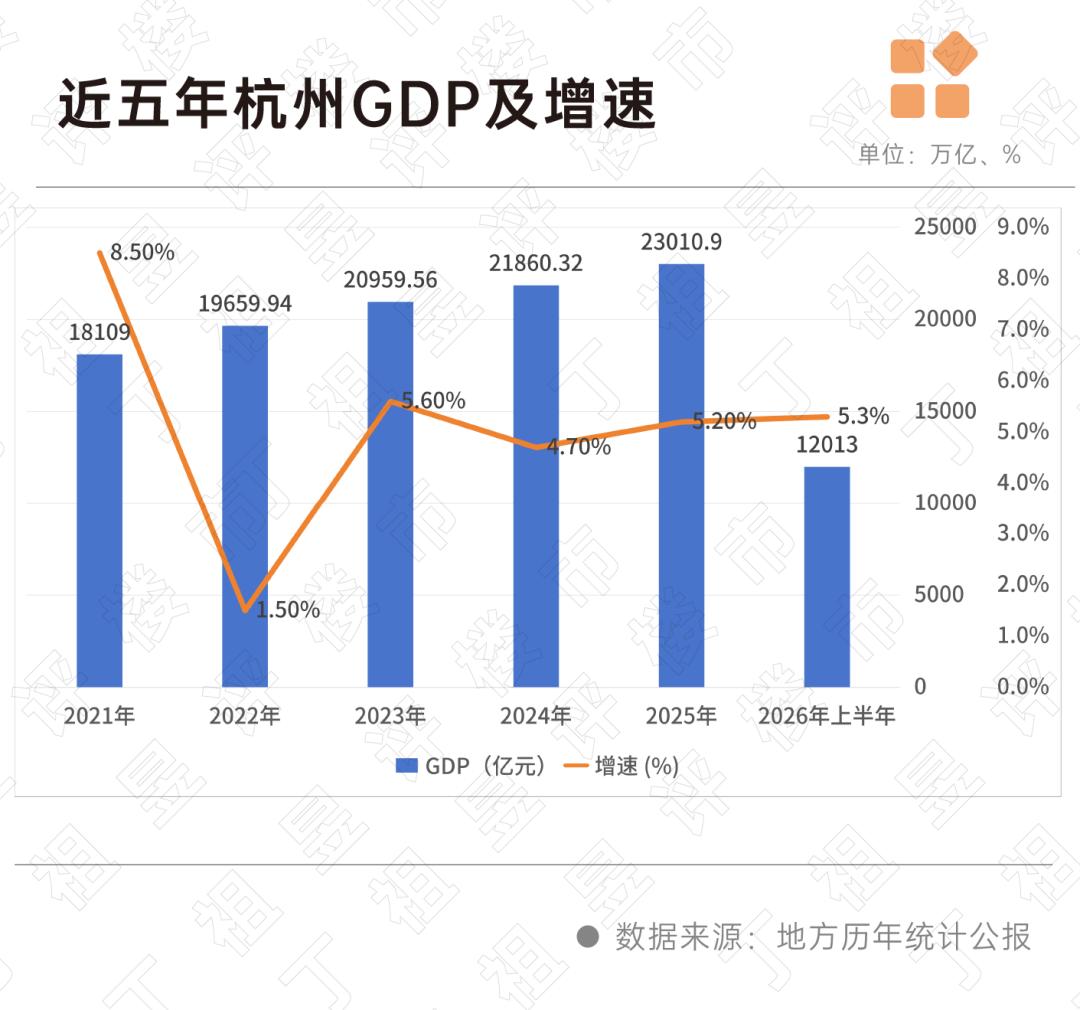
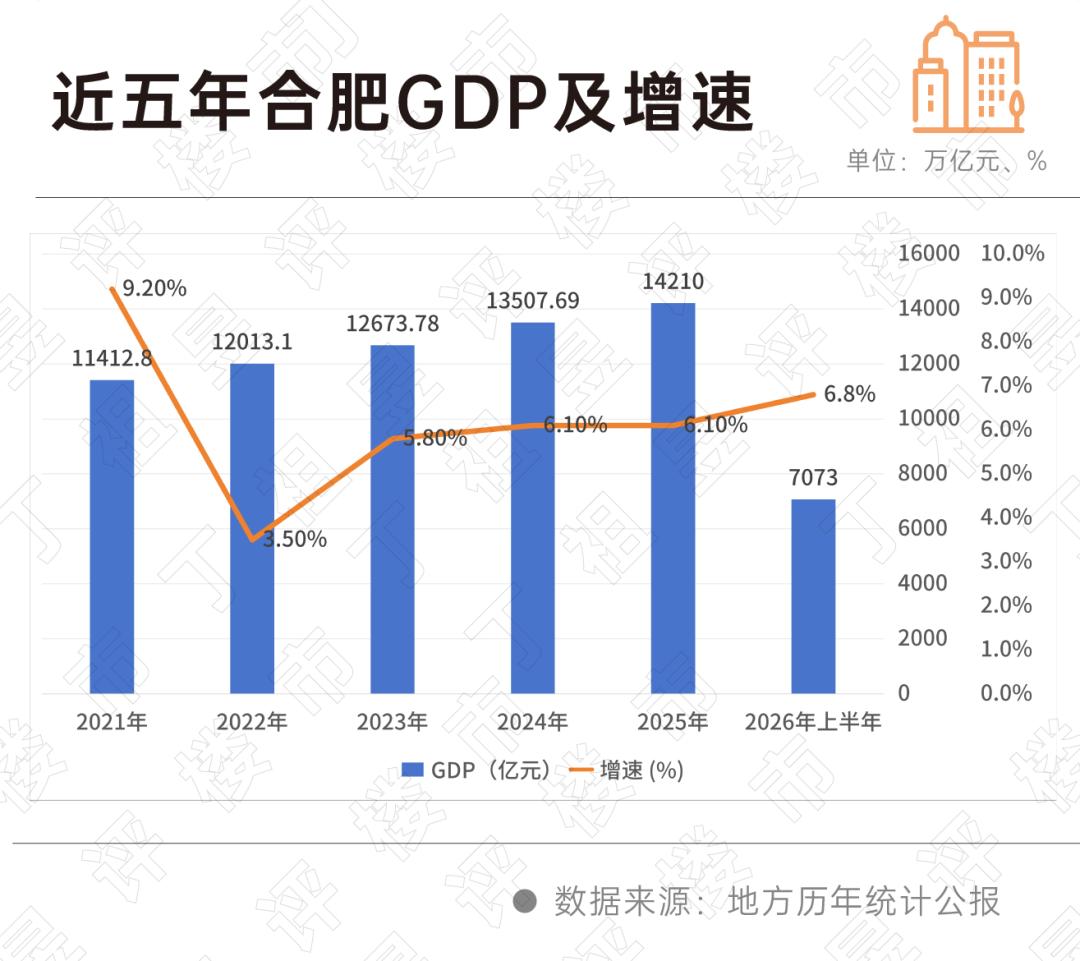
In the first half of 2026, Hangzhou's GDP reached 1.2013 trillion yuan, ranking 8th nationwide. In the same period, Hefei recorded a GDP of 707.3 billion yuan, taking the 18th spot. Hangzhou's economic aggregate is roughly equivalent to 1.6 times that of Hefei, with the gap being as large as the total size of an ordinary second-tier city.
Hefei takes the lead in GDP growth, with its GDP growth rate hitting 6.8% in the first half of the year, ranking first among the top 30 cities by total GDP. Hefei's growth momentum comes from the industrial sector: its secondary industry saw an explosive growth of 10.3%, and the city's value-added of industrial enterprises above designated size rose by 25.6% year on year, hitting a new high in recent years. In particular, the value-added of high-tech manufacturing enterprises above designated size increased by 79.0%, maintaining a high growth rate of over 30% for 12 consecutive months. Hangzhou registered a 5.3% growth rate in the same period, maintaining a steady performance among trillion-yuan GDP cities, with its industrial structure centered on digital economy and high-end service industries being lighter and more mature.
When extending the time horizon to ten years, the growth curves of the two cities are different.
Hangzhou's GDP exceeded 1 trillion yuan as early as 2015, five years ahead of Hefei. Riding the tide of the internet economy, Hangzhou's GDP first broke through the 2 trillion yuan mark in 2023, completing the leap from the "trillion-yuan tier" to the "two-trillion-yuan tier". Its national ranking surpassed Wuhan to enter the top 8 in 2020, and it has steadily stayed at the 8th place nationwide for consecutive years from 2023 to the first half of 2026.
Hefei has followed a different growth path.
Hefei's GDP first crossed the 1 trillion yuan threshold in 2020, reaching 1.0046 trillion yuan and entering the top 20 national ranking for the first time. From 2024 to the first half of 2026, Hefei has maintained a leading growth momentum with a growth rate above 6%, and its national ranking jumped from 31st in 2015 to 18th in 2025. Over the past decade, Hefei has achieved a leap in urban development level with the boost of strategic emerging industries such as BOE and Changxin Technologies, steadily securing a position in the top 20 cities nationwide.
02
Population is the fundamental base of real estate demand. In this regard, Hefei and Hangzhou share similar situations, but also face the same hidden concerns.
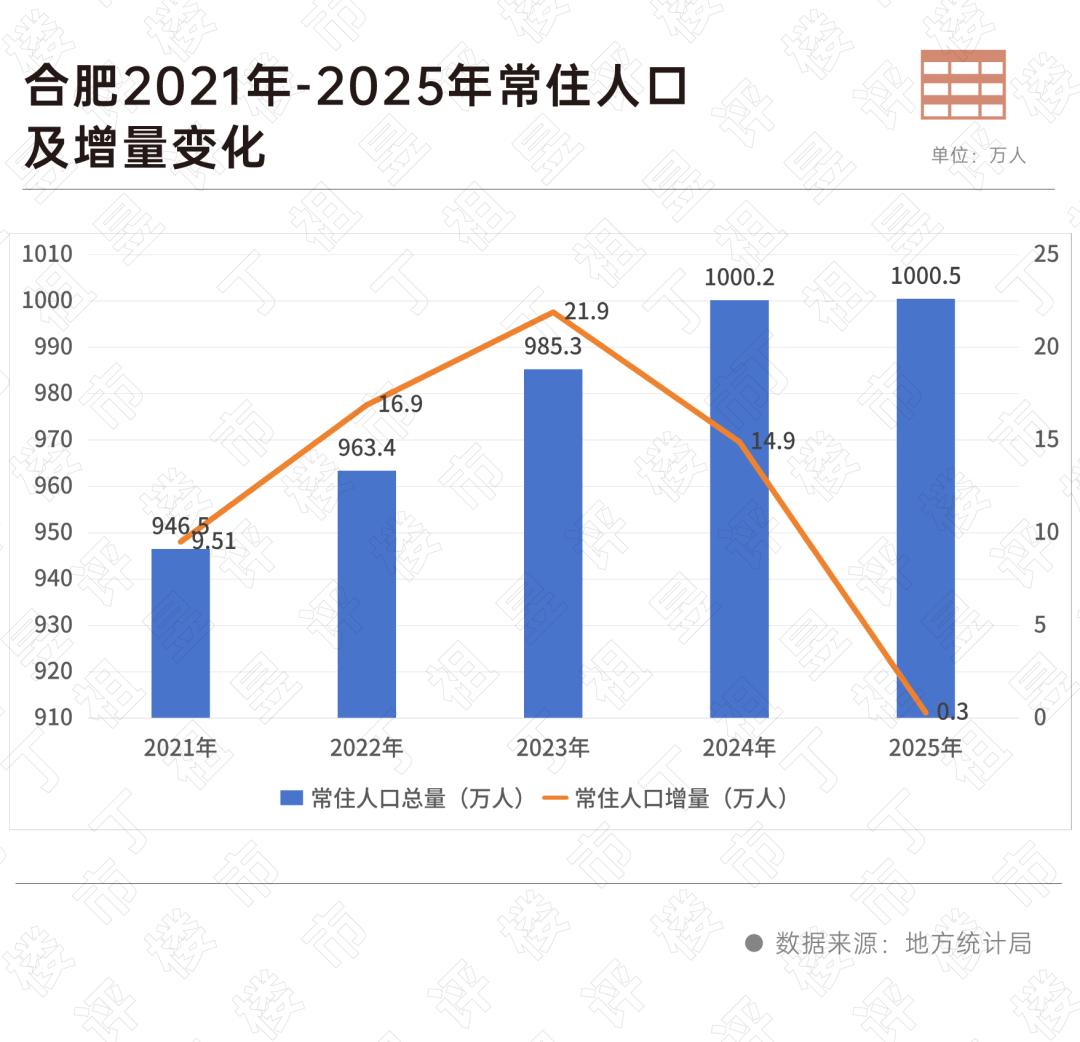
For Hefei, 2024 is a memorable year, as its permanent resident population exceeded 10.002 million, making it the fourth "double 10 million" city in the Yangtze River Delta (after Shanghai, Hangzhou and Suzhou) that has both a GDP over 1 trillion yuan and a permanent resident population over 10 million. However, Hefei's permanent resident population only increased by 3,000 in 2025. Compared with its past performance of taking the first and second place nationwide with a population increment of 219,000 and 149,000 in 2023 and 2024 respectively, the population growth has obviously hit an "emergency brake".
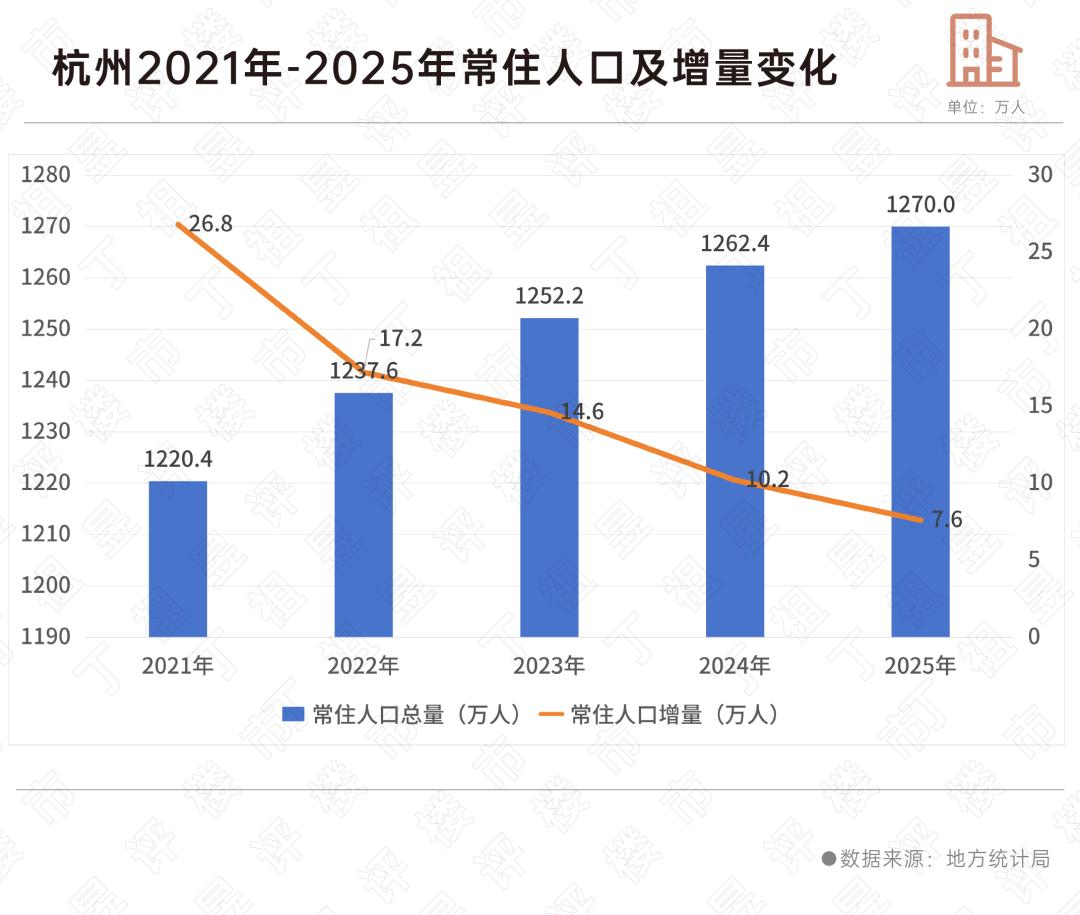
The situation in Hangzhou is similar. Over the past five years (2021-2025), the permanent resident population of Hangzhou has maintained positive growth, rising from 11.936 million at the end of 2020 to 12.7 million at the end of 2025, with a total increase of about 764,000; but the annual increment dropped all the way from 268,000 in 2021 to 76,000 in 2025, hitting a new low in 20 years.
Overall, the population inflow of the two cities is still ongoing. The average annual population increment from 2021 to 2025 is around 130,000 for both cities, ranking in the first tier among second-tier cities. The advantages of economic development are still driving the rapid growth of permanent resident population in Hefei and Hangzhou, but the growth rate slowed down significantly in 2025. This means the fundamental support for real estate demand still exists, but the incremental dividend is gradually diminishing.
What deserves more attention is the population structure: both cities have a solid base of young population.
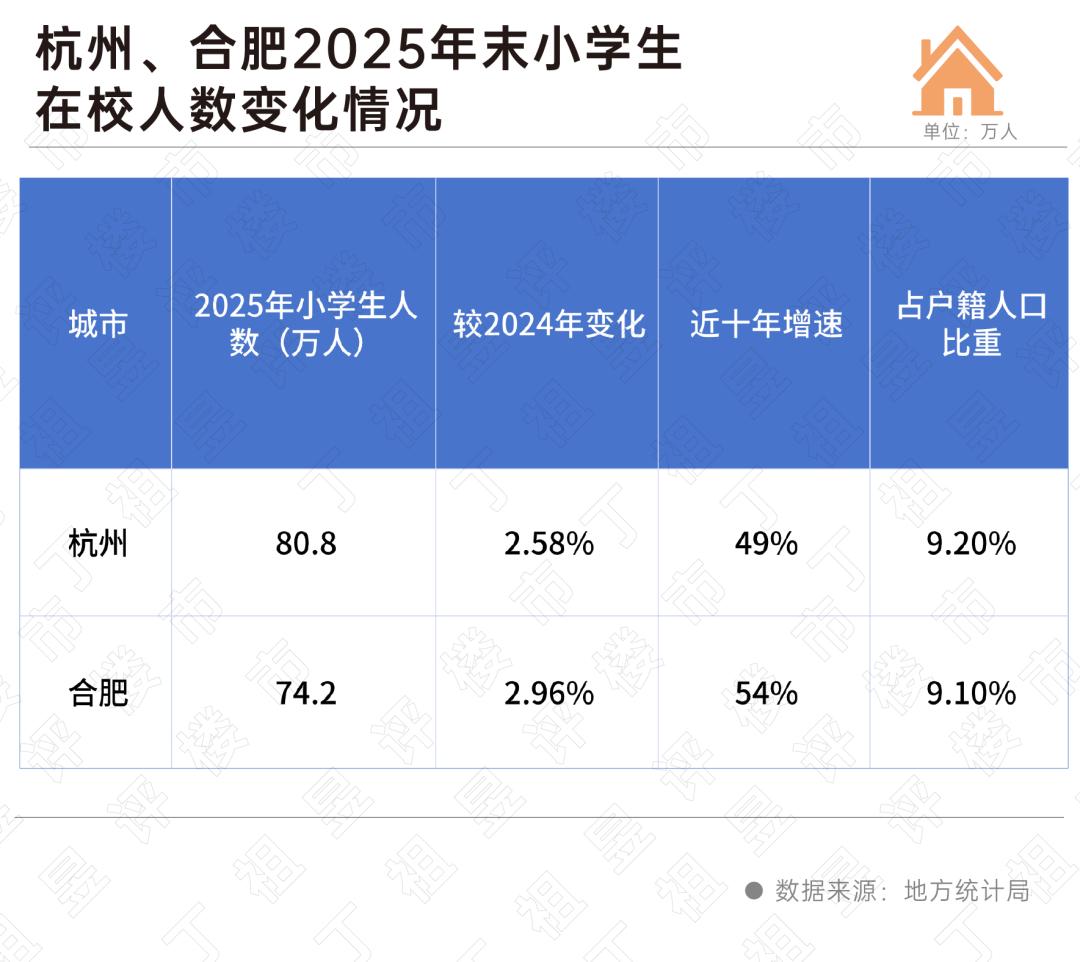
One observation perspective is the number of primary school students in school. At the end of 2025, there were 742,000 primary school students in Hefei, up 2.96% year on year and up 54% over the past decade; the number in Hangzhou was 808,000, up 2.58% year on year and up 49% over the past decade. The growth of primary school students in both cities ranks among the top of typical cities across the country, and behind the size of primary school students are young families that have settled down in the cities.
03
From the perspective of the real estate market, Hefei and Hangzhou are also not in the same tier.
In the first 7 months of 2026, the total transaction area of new and second-hand homes in Hangzhou reached 5.0575 million square meters, down 13% year on year; the total transaction volume of new and second-hand homes in Hefei was 3.079 million square meters, down 6% year on year. In terms of total volume, the capacity of Hangzhou's real estate market is about 1.6 times that of Hefei. For the whole year of 2025, the transaction area of new and second-hand homes in Hangzhou (9.4998 million square meters) was about 1.8 times that of Hefei (5.4027 million square meters).
From the perspective of transaction value, the gap is further widened. In the first 7 months, the total transaction value of new and second-hand homes in Hangzhou was 168.415 billion yuan, while that of Hefei was 46.716 billion yuan, the gap between the two reached 3.6 times.
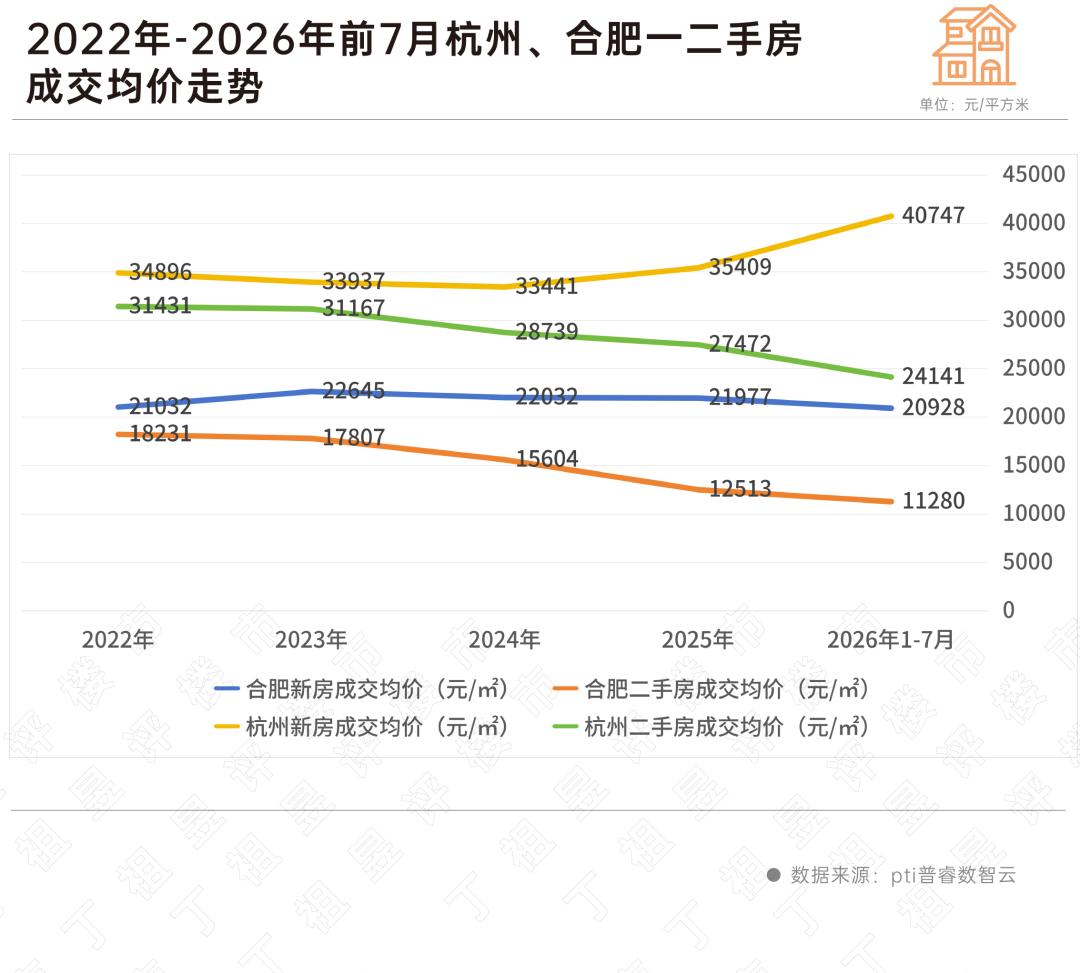
The gap comes from two aspects: on the one hand the transaction volume, on the other hand the house price stratification of the two cities. From January to July 2026, the average transaction price of new homes in Hangzhou was 40,747 yuan per square meter, and that of Hefei was 20,928 yuan per square meter, with Hangzhou's level being about 1.95 times that of Hefei. For second-hand homes, the average transaction price in Hangzhou was 24,141 yuan per square meter, while that of Hefei was 11,280 yuan per square meter, with the price gap between second-hand homes expanding to 2.14 times. At present, Hangzhou's new home market has been largely dominated by high-end improved housing demand, and the second-hand home market is undertaking the overflow of rigid housing demand.
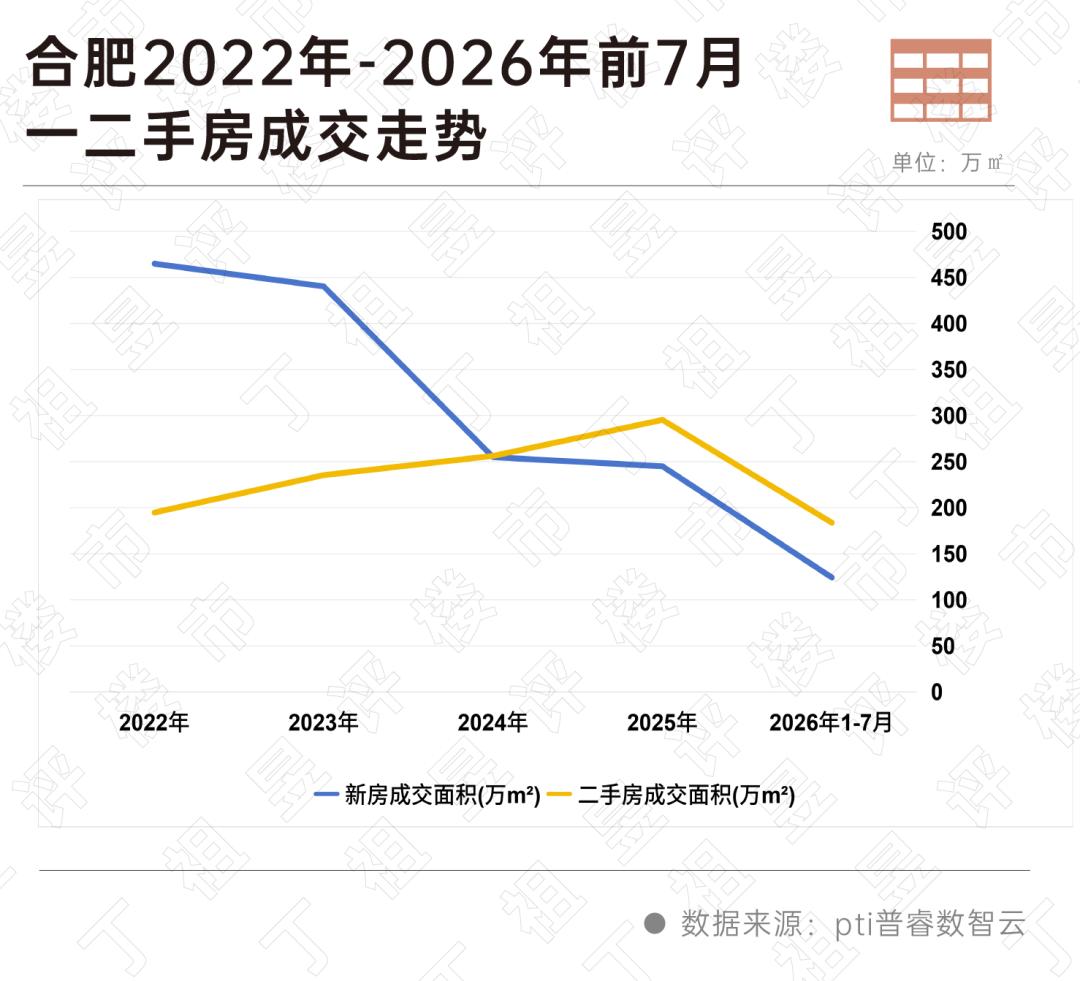
A notable detail: the transaction area of second-hand homes in Hefei has exceeded that of new homes. In the first 7 months of 2026, the transaction area of second-hand homes in Hefei was 1.837 million square meters, while the transaction area of new homes in the same period was 1.242 million square meters. In 2025, the transaction area of second-hand homes was about 21% higher than that of new homes. In terms of the proportion of second-hand home transactions in the total transaction volume of new and second-hand homes, the proportion of second-hand home transactions in Hefei has reached 60% in the first 7 months, while that of Hangzhou is 45%. This means Hefei has entered a "stock-dominated" market structure.
From the perspective of land investment, Hangzhou remains a must-win market for real estate enterprises, while Hefei actively adjusts the supply-demand balance on the supply side. In the first 7 months, Hangzhou has sold 43 residential land plots in total, with the total land transaction value reaching 61.027 billion yuan, second only to Shanghai. Hefei has traded 10 residential land plots in the first 7 months, with the total land transaction value being only 3.288 billion yuan. This reflects not only the gap in market heat, but also the difference in land supply strategies: Hefei has lowered its land supply for four consecutive years, and its 2026 residential land supply plan is 200 hectares, which is nearly 70% lower than the peak in 2022, hitting a new low in the past four years.
According to the 2026 Top 50 Cities for Real Estate Investment Prospect released by Puru Digital Real Estate Research, both Hangzhou and Hefei are ranked in the top 10, with Hangzhou taking the 4th spot, and Hefei rising one place from last year to rank 10th.
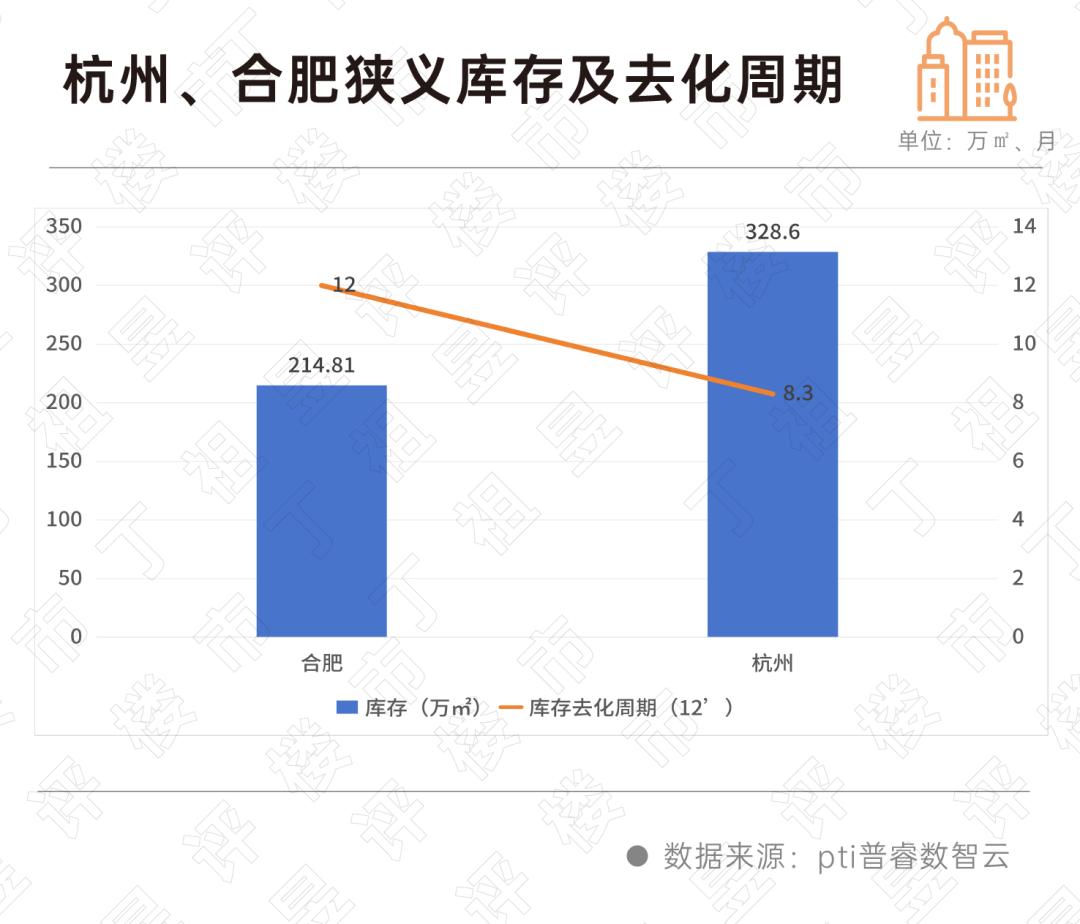
From the perspective of inventory, the inventory levels of both cities are below the 18-month warning line. By the end of July, the new home inventory in Hangzhou stood at 3.286 million square meters, and the inventory digestion period calculated based on the transaction speed of the past 12 months was 8.3 months; the new home inventory in Hefei was 2.1481 million square meters, with a digestion period of 12 months. The two cities are the only two among the 30 key cities with a digestion period below 12 months, having a relatively healthy supply-demand relationship.
Putting all the above dimensions together, no matter in terms of economic level, population size, real estate market volume or purchasing power, Hangzhou is in a significantly higher tier, but the resilience and potential of Hefei are strong enough to support its independent market value. The underlying characteristics of the real estate markets of the two cities also have great differences: Hangzhou is featured by "low inventory, high house price, strong wealth effect", while Hefei is marked by "low inventory, low house price, strong industrial expectation".
The halo effect brought by the listings of tech companies mostly adds positive sentiment to the real estate market. Equity-driven wealth creation will indeed form a group of high-end purchasing power, but both cities have entered the stage of "stock population competition". When the incremental population dividend fades, what will support the real estate demand in the next decade? This is a question of the times that Hefei and Hangzhou, two tech innovation-focused cities, need to answer together.
This article is from the WeChat official account "Ding Zuyi Comments on Real Estate", written by the editorial department, and is authorized for release by 36Kr.