What should you do when there is too much information and you can't tell who to trust?
Shen Translation is a translation team under 36Kr, focusing on technology, business, workplace, life and other fields, introducing new technologies, new perspectives and new trends from abroad.
Editor's Note: We have long been no longer short of information. The real challenge today is that we are flooded with overwhelming information, yet it is extremely difficult to tell what is fact and what is falsehood. The more credible information seems at first glance, the more cautiously we should treat it. This article is translated and compiled, hoping to bring you inspiration.
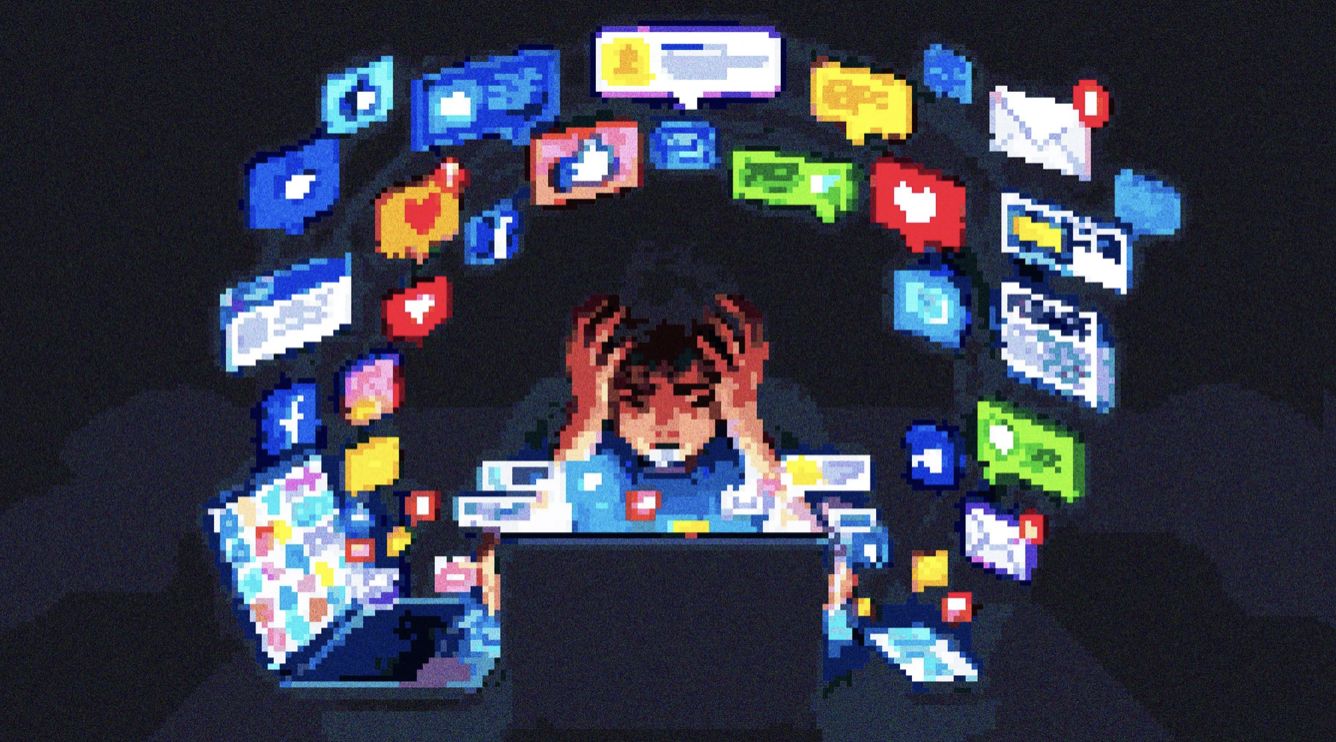
Image source: Adobe Stock
Information overload is triggering a trust crisis. Admittedly, it has never been easier to find the correct answers to questions than it is now. But at the same time, truly reliable answers are also becoming harder and harder to come by. Countless experts, celebrities and online influencers are sharing their personal opinions, and sifting out valid information from the mixed content is simply like looking for a needle in a haystack.
I used to be addicted to social media, and now I am a certified business psychology practitioner who has first-hand experience of this dilemma. Over the past 15 years, I have been building influence online and selling products to unsuspecting users, but ironically, I myself have been trapped by the marketing content I planned. The Internet gives everyone a platform to speak out, but we are increasingly confused about who to trust and why we should trust them.
The Internet has turned almost everything into a monetizable resource. Many people take advantage of the state where the public is overwhelmed by massive information to induce people to make purchases.
Magnitude and Spread Speed of Information
The vast majority of adults spend more than two hours a day on their mobile phones, most of which is spent scrolling through social media. Coupled with browsing news and reading electronic newsletters, the total time spent receiving all kinds of information every day can reach four hours or even longer. Twenty years ago, news was limited and released on a fixed schedule: evening news broadcasts and daily newspapers. Now, the amount of information your brain receives after 10 minutes of scrolling through feeds is equivalent to the total amount of information you received in an entire week in the past.
When the brain cannot cope with information overload, it will activate two self-protection mechanisms. The first is to give up directly and refuse to think when facing overly complex topics. The second is to become passively conformist, too lazy to think deeply, and directly follow the public opinion. Once falling into an overload state, we will give up our right to judge, and be more easily misled by false information. However, the huge amount of information is only the beginning of the problem.
Strong Expressiveness Does Not Equal Conclusive Evidence
Social media can easily create superficial credibility. Many people win trust through exquisite content packaging, confident expression, and deliberately shaped sense of authority. The criteria used to judge credibility in the past, such as professional external image, institutional endorsement, and peer recognition, can all be artificially created now: carefully crafted personal public personas, a large number of fans, best-selling author titles, and platform certification badges. Our brain is good at pattern recognition, and will take these appearances as reliable basis, but they only imitate the look of authority.
Real, solid credibility is completely different. It is not fancy and is easily overlooked. People with real public trust build their reputation through professional qualifications, peer-reviewed arguments, and solid past achievements. They also dare to say: "This matter is very complicated." Real experts know how to embrace the multi-faceted nature of things, and will say "Existing studies show" instead of "Studies have proven". This is exactly the opposite of our psychology of longing for simple standard answers when we are bombarded with information. Remember, speaking confidently does not mean you are highly competent, and it never does.
How Cognitive Biases Affect Our Self-Perception
Understanding the cognitive biases we have can help us identify information more objectively, but it is far more difficult to do than imagined. Beneath the biases, there is a more powerful force — self-identity. How we view ourselves will filter what we are willing to believe. We fully accept content that is consistent with our self-perception without scrutiny; we directly reject content that contradicts our own perception.
The same is true in the workplace. A manager who positions himself as a visionary is more likely to accept information that confirms his decisions and ignore conflicting data. The identity brought by political stances works the same way. Studies have shown that partisan stances will affect people's judgment of objective facts, whether it is economic data or public health advice, even if the evidence is conclusive. The information itself has not changed, it is your self-identity that acts as a filter.
Group camp thinking will further exacerbate this phenomenon. Various industries and niche circles will form unique in-group cultures, making it difficult for us to update our inherent concepts. The most dangerous collapse of trust often occurs at this moment — you are already willing to believe something in your heart, and those superficially authoritative remarks just give you a reason to convince yourself.
What We Can Do
The good news is that you are not born to be gullible. The brain is just following evolutionary instincts, taking mental shortcuts to save time and energy. Major companies are spending billions of dollars to take advantage of these mental shortcuts, and staying aware is your weapon to fight against it.
You can act according to the following methods:
If you see a point of view and your first reaction is that it is completely correct, pause for a moment. The feeling of certainty is often your self-identity making the judgment, not rational thinking.
Verify the person's professional qualifications and check the specific credentials. Credibility in one field cannot be directly applied to other fields.
Learn to embrace the complexity of things. Pay attention to the other person's wording, whether it is "Existing studies show" or "Studies have proven". Maintaining humility is a reliable trait of a real expert.
Separate narrative stories from objective evidence. Moving stories are highly infectious, but stories are not evidence.
See through the underlying interest logic. Think about what benefits the other party can get if you believe this statement.
When a piece of information fully caters to your inherent views, you need to be more vigilant. Unconflicted recognition is worth careful consideration.
Take the initiative to find reliable opposing arguments. Look for high-quality information sources that will challenge your inherent positions. The content that can truly update your cognition will hardly come from channels that completely share your ideas.
This trust crisis is real. It has never been harder to distinguish true and false information, and the problem does not only exist in the dark corners of the Internet. The problem is not whether you will be deceived by superficial authority — after all, people are naturally vulnerable to such tricks. The key is whether you are willing to slow down, examine your own way of thinking, and develop thinking habits that are not easy to be misled.
Translator: Teresa