NVIDIA Quarterly Report Illustrated Breakdown: Net Profit Hits $59.7 Billion, Securitizes GPU Assets, Jensen Huang: "Whoever dines with me will see their stock price double the next day"
NVIDIA (Stock Code: NVDA) released its financial report for the second quarter of 2026 today. The financial report shows that for the half year ended July 26, 2026, NVIDIA's revenue reached 177.837 billion US dollars, compared with 90.8 billion US dollars in the same period of the previous year; its net profit was 118 billion US dollars, compared with 45.2 billion US dollars in the same period of the previous year.
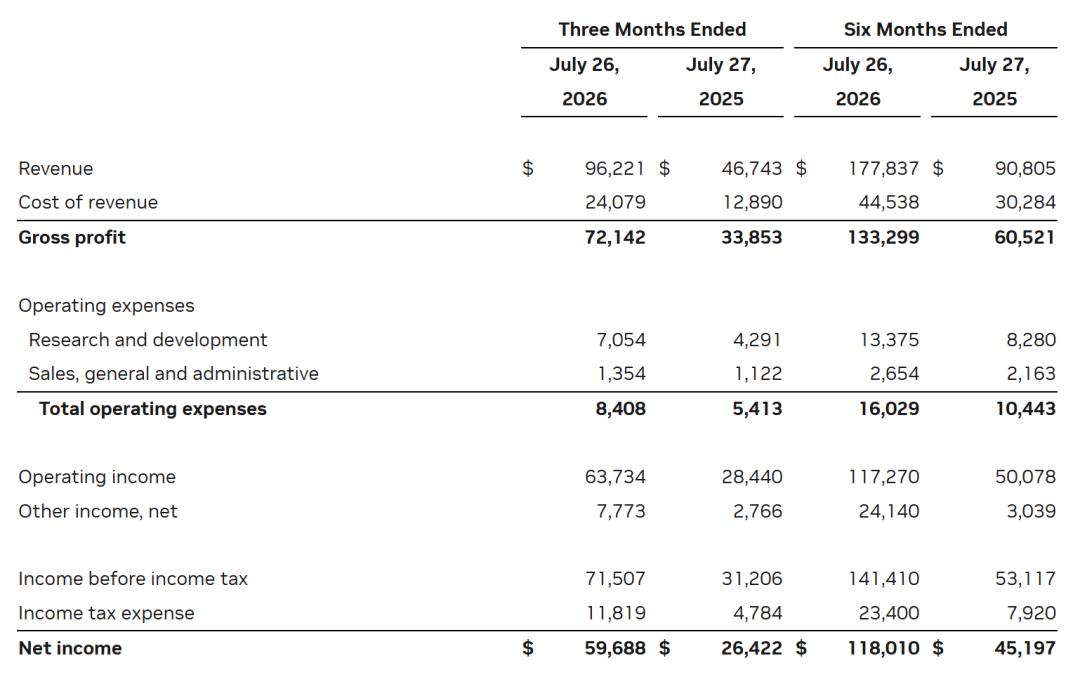
For the second quarter ended July 26, 2026, NVIDIA's revenue was 96.221 billion US dollars, and its net profit was 59.688 billion US dollars.
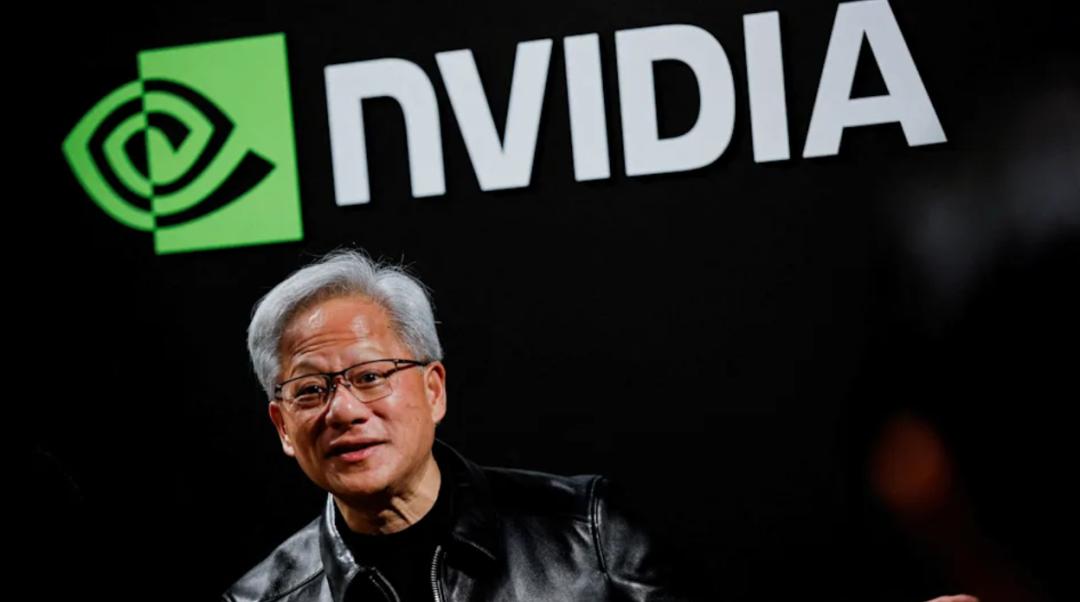
Jensen Huang, founder and CEO of NVIDIA, said, "Artificial intelligence has reached a turning point. It is delivering practical utility, and the Tokens (data units) it generates can both create value and drive profits. Today, computing power is revenue."
"Market demand is accelerating. In the same period last year, only one lab was pushing for infrastructure construction; but today, we are in a golden age where new AI labs and startups are springing up, multiple cutting-edge labs are expanding their scale in parallel, the open model ecosystem is thriving, and Physical AI has already been put into application — this strong momentum is not only across the United States, but also sweeping the globe. AI infrastructure construction is advancing at full speed. The 'Vera Rubin' architecture is now in full production, designed precisely to empower this critical moment."
Jensen Huang also said in a joking tone on the conference call, "The best US stock trading strategy in 2026 is to see who I have dinner with, and their stock price will double the next day."
NVIDIA's Q2 Revenue Reached 96.221 Billion US Dollars, Up 106% Year-on-Year
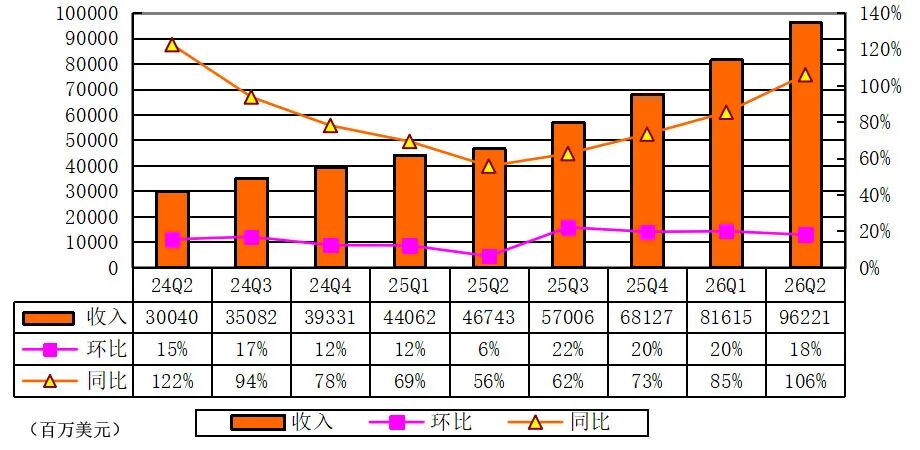
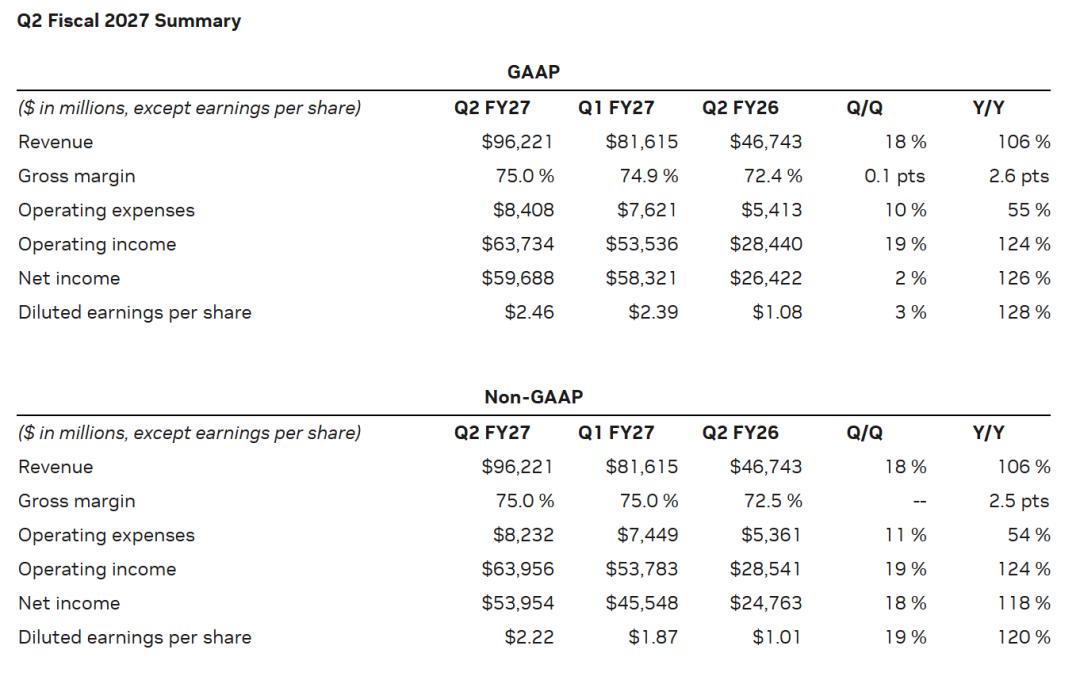
NVIDIA's revenue in the second quarter of 2026 was 96.221 billion US dollars, up 106% from 46.743 billion US dollars in the same period of the previous year, and up 18% from 81.615 billion US dollars in the previous quarter.
NVIDIA's data center revenue in the second quarter of 2026 was 89 billion US dollars, up 18% quarter-on-quarter and 117% year-on-year.
NVIDIA announced in the second quarter of 2026 that the NVIDIA Vera Rubin platform has entered full mass production, and the related racks are running at partners including CoreWeave, Google Cloud, Microsoft Azure, Oracle Cloud Infrastructure and Nebius.
NVIDIA's edge computing business revenue in the second quarter of 2026 was 7.2 billion US dollars, up 13% quarter-on-quarter and 27% year-on-year.
Securitization of NVIDIA's GPU Assets
NVIDIA released NVIDIA Vera, its first CPU built exclusively for AI agents, and plans to widely adopt it among the world's leading technology providers; NVIDIA also announced that the interactive AI inference accelerator NVIDIA Groq 3 LPX is now in full mass production.
At present, Jensen Huang is turning NVIDIA's balance sheet into the credit endorsement for the entire AI infrastructure, transforming from a "shovels seller" of AI chips to a "financial operating system for AI infrastructure".
In mid-August 2026, NVIDIA announced a partnership with BlackRock, Blackstone, KKR, Apollo, Brookfield and Goldman Sachs to establish a $500 billion capital pool, aiming to securitize NVIDIA's GPU assets.
NVIDIA does not contribute capital directly, and mainly plays the role of "ecosystem supporter" and "capital supply and demand matcher", with no debt entering NVIDIA's own balance sheet.
NVIDIA also said it will support SB Energy and OpenAI to build an 8 GW super-large data center in Ohio, with a total investment of up to 150 billion US dollars.
Although NVIDIA's performance is very strong, there is also a problem: those who are willing to buy the cards do not have enough money, and those who have sufficient funds dare not invest. NVIDIA's platform is designed to realize credit enhancement and asset standardization: packaging GPU clusters + data centers + long-term computing power leases into "investable assets" to give institutional investors the confidence to invest; at the same time, providing downstream customers with low-cost financing channels to enable them to afford more NVIDIA cards.
NVIDIA does not contribute directly because it wants to keep risks off its balance sheet and keep profits within the ecosystem. The real purpose of the $500 billion capital pool is not for NVIDIA to raise funds for itself, but to create a "NVIDIA standard" financing channel for the entire AI industry chain — so that long-term capital around the world will get used to allocating AI assets with NVIDIA GPUs as collateral. Once this infrastructure is built, even if NVIDIA's hardware advantage is weakened in the future, it can still continue to earn revenue through its role as a financial intermediary.
However, NVIDIA was previously exposed to have circular investments in customers such as OpenAI and xAI (investing money to customers to buy its own cards).
Although the funds of this $500 billion pool come from third parties, it is essentially to facilitate chip procurement financing within NVIDIA's ecosystem, and the market is worried that this is "self-production and self-sale" that artificially amplifies demand signals.
Jensen Huang defended NVIDIA, stating that these arrangements reflect the unprecedented scale of capital investment required to build cutting-edge AI companies. NVIDIA hopes to be an equity investor in these leading AI companies, and is willing to provide broader support when necessary.
"At the current stage of AI infrastructure construction, these companies do not yet have the financial qualification to borrow more funds to secure computing power resources."
"They do not have US dollar investment-grade credit ratings. They do not have sufficient track records, capital track records, and financial track records to obtain funds at low costs. This is where NVIDIA can play a role."
Once any of these companies falls into trouble, NVIDIA may be forced to bear the losses.
In response, Jensen Huang refuted that the company's computing infrastructure can be redeployed to different customers and workloads, thus limiting the risk exposure to any single investment. "The capital we invest will generate huge returns, and I think the risk is very low."
NVIDIA's Q2 Cost Reached 24.079 Billion US Dollars, Up 87% Year-on-Year
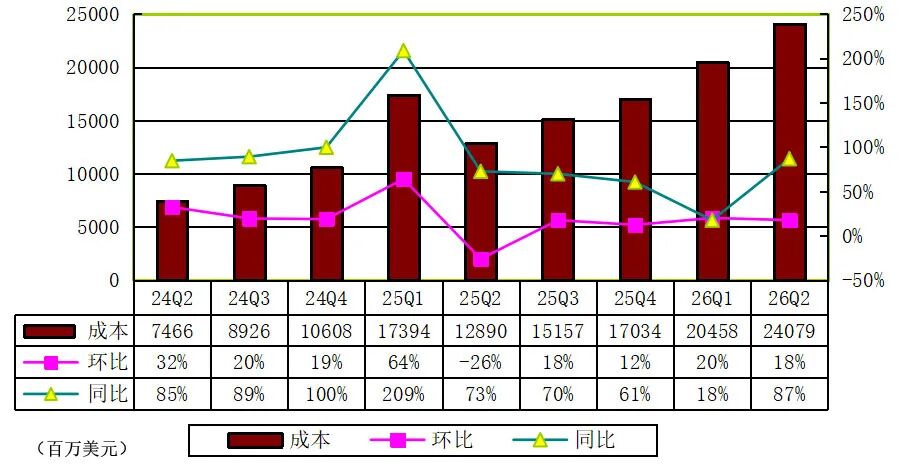
NVIDIA's cost in the second quarter of 2026 was 24.079 billion US dollars, up 87% from 12.89 billion US dollars in the same period of the previous year.
NVIDIA's Q2 Gross Profit Reached 72.1 Billion US Dollars, with a Gross Margin of 75%
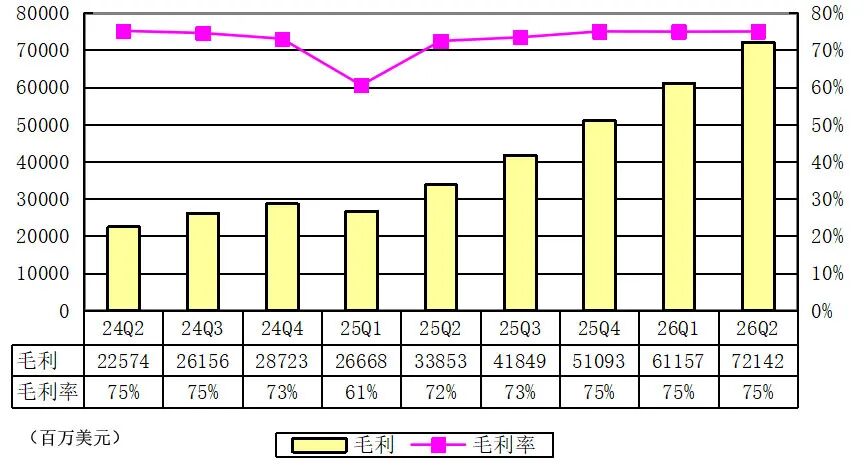
NVIDIA's gross profit in the second quarter of 2026 was 72.14 billion US dollars, with a gross margin of 75%.
NVIDIA's Q2 Expenses Reached 8.4 Billion US Dollars, Up 55% Year-on-Year
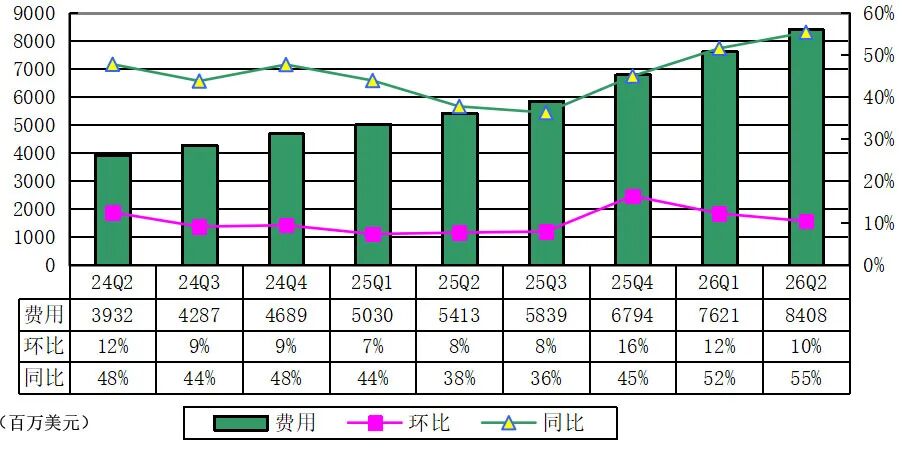
NVIDIA's expenses in the second quarter of 2026 were 8.4 billion US dollars, up 55% from 5.4 billion US dollars in the same period of the previous year.
NVIDIA's Q2 Operating Profit Reached 63.7 Billion US Dollars, with an Operating Margin of 66%
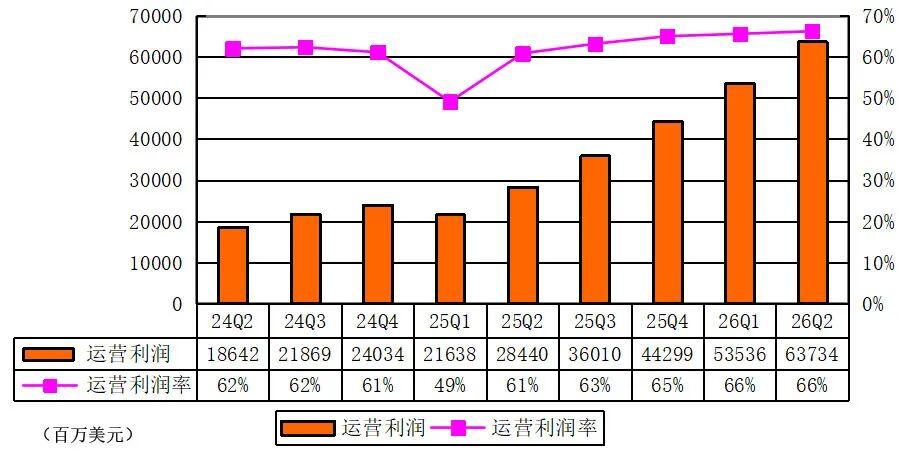
NVIDIA's operating profit in the second quarter of 2026 was 63.734 billion US dollars, with an operating margin of 66%.
NVIDIA's Non-GAAP operating profit in the second quarter of 2026 was 63.956 billion US dollars, up 124% from 28.541 billion US dollars in the same period of the previous year, and up 19% from 53.783 billion US dollars in the previous quarter.
NVIDIA's Q2 Net Profit Reached 59.7 Billion US Dollars, Up 126% Year-on-Year
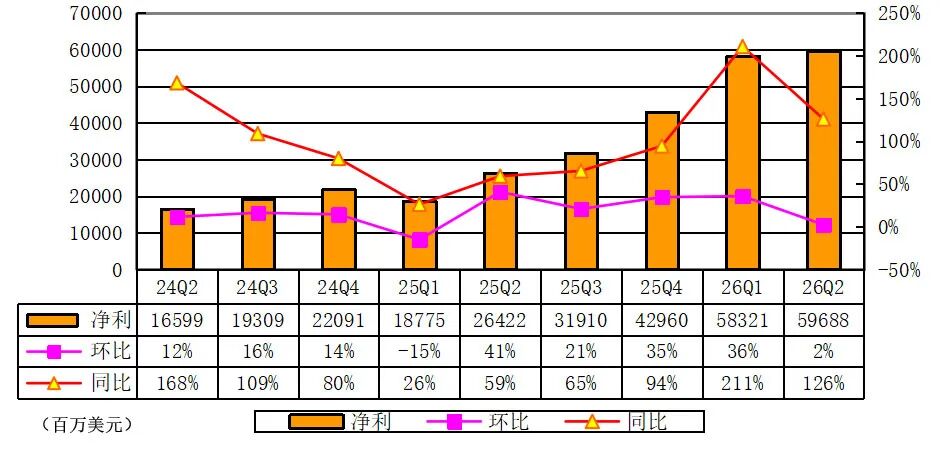
NVIDIA's net profit in the second quarter of 2026 was 59.7 billion US dollars, up 126% from 26.422 billion US dollars in the same period of the previous year.
NVIDIA's adjusted net profit in the second quarter of 2026 was 53.954 billion US dollars, up 118% from 24.763 billion US dollars in the same period of the previous year, and up 18% from 45.548 billion US dollars in the previous quarter.
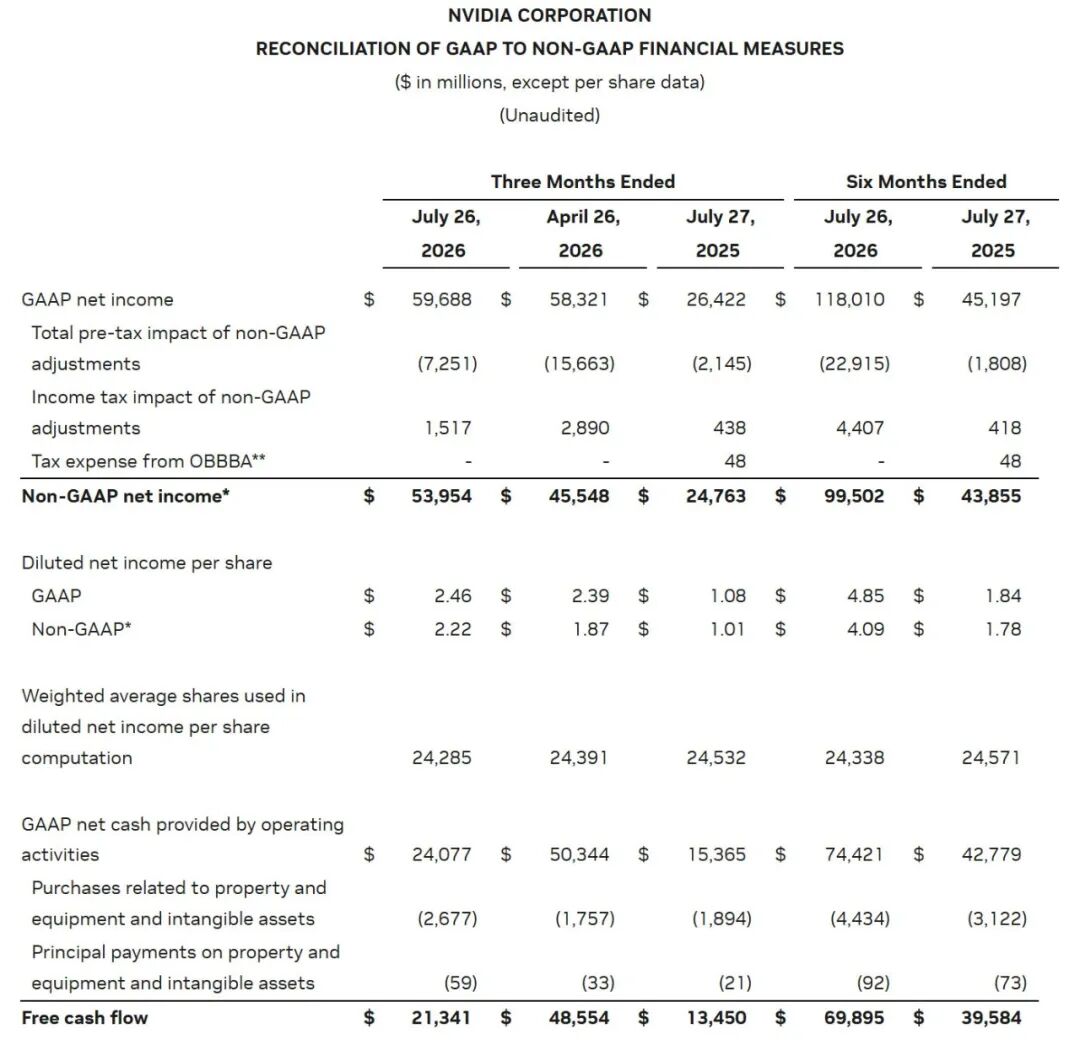
As of June 30, 2026, NVIDIA's free cash flow was 21.341 billion US dollars.
NVIDIA expects its revenue for fiscal year 2027 to be 108 billion US dollars, with a fluctuation of plus or minus 2%.
As of the close of trading today, NVIDIA's share price is 209.66 US dollars, with a market value of 5.0782 trillion US dollars. After the release of the financial report, NVIDIA's after-hours share price rose by nearly 5%.
This article is from the WeChat Official Account "Lei Di" (ID: touchweb), written by Lei Jianping, authorized for release by 36Kr.