Masayoshi Son places a $6 billion bet on 1X, making his return to the humanoid robot sector.
Masayoshi Son is preparing to repurchase a humanoid robot company.
On August 27, according to The Information citing people familiar with the matter, SoftBank Group is in talks to acquire a majority stake in 1X Technologies, with the expected valuation of this humanoid robot company reaching 6 billion US dollars. But as of now, neither SoftBank nor 1X has officially announced the transaction.
The timing of this news is rather subtle.
More than a month ago, Hyundai Motor just announced that it will acquire the remaining approximately 10% stake in Boston Dynamics held by SoftBank. After the transaction is completed, Hyundai Motor will achieve full control over Boston Dynamics. At this point, SoftBank has completely parted ways with this company famous for its robotic dog Spot and humanoid robot Atlas.
In 2021, SoftBank sold an 80% controlling stake in Boston Dynamics to Hyundai Motor, when the entire company was valued at about 1.1 billion US dollars. Five years later, Masayoshi Son is turning around and preparing to take over a humanoid robot company with a shorter establishment time and an early commercialization stage at a valuation of 6 billion US dollars.
Robots have returned to the center of SoftBank's investment map.
01. Masayoshi Son's first big bet on robots
Masayoshi Son's interest in robots dates far earlier than this round of embodied intelligence boom.
In 2012, SoftBank acquired the French robotics company Aldebaran. Two years later, Masayoshi Son personally launched the emotional robot Pepper. This robot, with a tablet computer hung on its chest and capable of recognizing human expressions, was once deployed in shopping malls, banks, hotels and SoftBank stores.
Pepper soon became the most recognizable service robot of that era, but it never formed a sufficiently stable commercial demand. "Core Intelligence Headlines" learned that SoftBank had stopped the production of Pepper in 2020 and began to lay off personnel in its global robotics business. The cumulative output of Pepper is about 27,000 units, which is far from the scale required for consumer electronic products.
Boston Dynamics represents another route.
In 2017, SoftBank took over Boston Dynamics from Alphabet, the parent company of Google. The robots developed by this company can run, jump and cross obstacles, and their videos have repeatedly gone viral on the Internet, but these have not quickly turned into revenue.
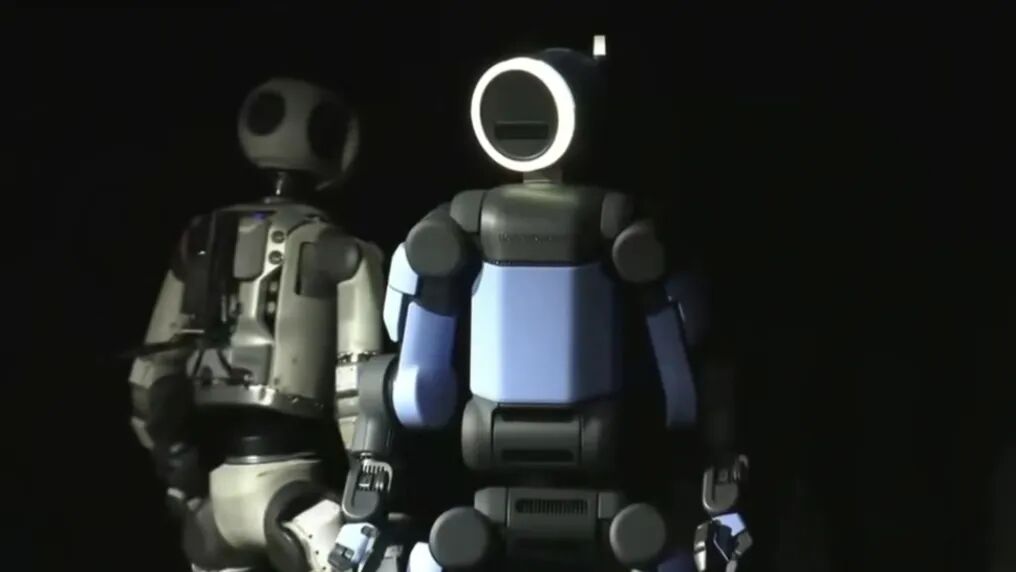
In 2021, SoftBank handed over control to Hyundai Motor. The explanation given by both parties at that time was that Hyundai Motor has manufacturing capabilities, supply chains and application scenarios, which can promote Boston Dynamics to accelerate commercialization. SoftBank retained a 20% stake, waiting for possible value-added in the future.
This judgment was partially verified later. Hyundai Motor has built a mass production system for Atlas, and plans to deploy it to factories in Georgia, USA starting from 2028, first undertaking parts sorting, and then gradually entering the assembly link. In July 2026, Hyundai Motor decided to buy the last part of the shares held by SoftBank.
When SoftBank first entered the robotics industry, it bought the most eye-catching robot at that time, but did not wait for the real arrival of large-scale commercialization.
02. Why is 1X worth 6 billion US dollars
1X was originally a Norwegian robotics company, founded in 2014 under the name Halodi Robotics, and now headquartered in Palo Alto, USA.
In its early stage, it developed EVE, which is equipped with two robotic arms and moves through a wheeled chassis. In 2022, EVE began to enter factories and some commercial facilities. After 2023, 1X focused its main energy on household scenarios and began to develop the bipedal humanoid robot NEO.
The OpenAI Startup Fund led a $23.5 million financing round for 1X in 2023. In January 2024, 1X completed another $100 million Series B financing, with EQT Ventures, Samsung NEXT and other institutions participating.
What really attracts capital to 1X is that it brings humanoid robots into households.
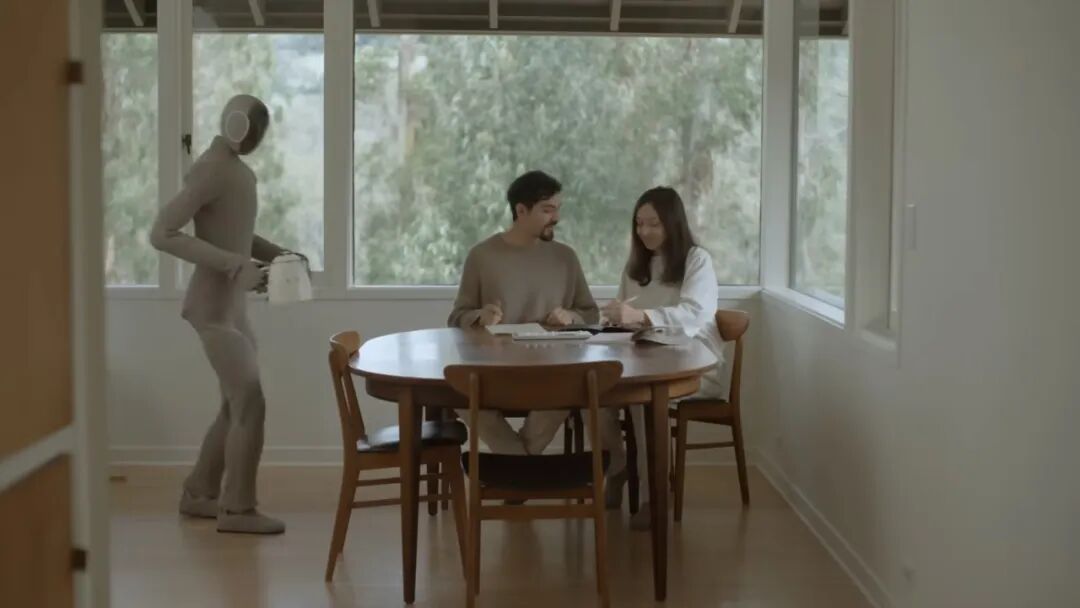
NEO is about 1.68 meters tall and weighs about 30 kilograms. Its whole body is wrapped in flexible materials, and its joints are driven by tendon ropes. It has no exposed metal structure on its appearance, nor does it deliberately show a sense of power. The design focus is to reduce the risks when the robot lives together with the elderly, children and pets.
This robot is already open for reservation: the one-time purchase price is 20,000 US dollars, the subscription fee is 499 US dollars per month, and the first batch of products is planned to enter American households in 2026.
However, the current NEO cannot completely independently complete all housework.
1X clearly stated on its product page that the NEO obtained by early users only has basic autonomous capabilities. When encountering complex tasks that it has not mastered, users can make an appointment for "Expert Mode", where 1X staff remotely supervise or control the robot to complete the operation. While the robot is working, it accumulates data for subsequent model training.
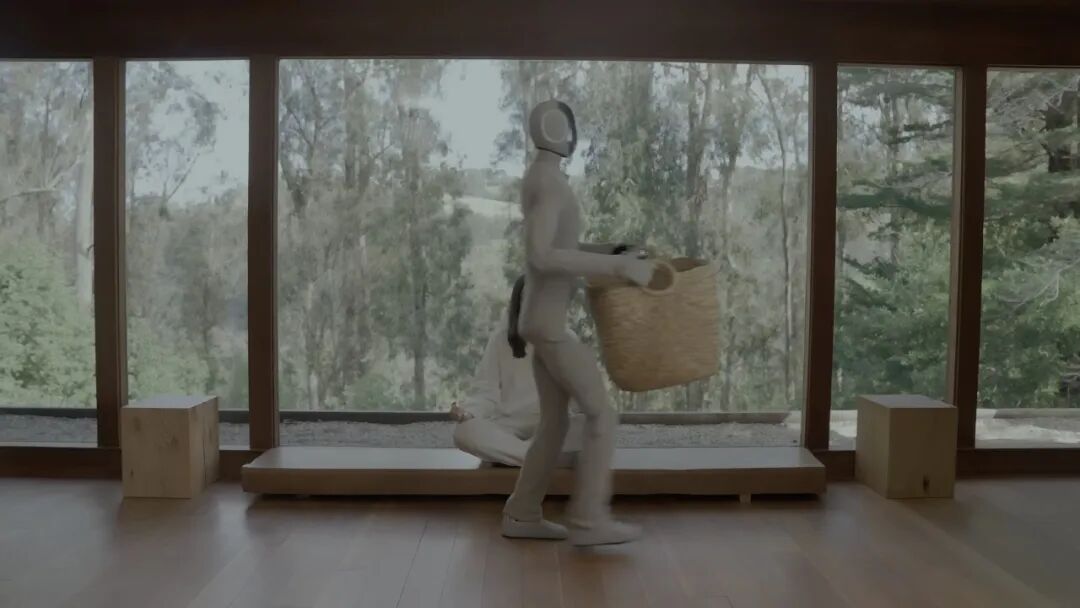
This is precisely the most concerned and most controversial part of 1X.
The household is a far more complex environment than an automobile factory. Even for the same action of putting a cup into a cabinet, the cups, cabinet doors, placement methods and space sizes in different households are all different. A child may suddenly run over, a pet may block the way, and the shape of a piece of clothing will keep changing with the gesture.
Industrial robots rely on standardized environments to reduce difficulty, while 1X chooses to let robots enter the most non-standardized places. Once a large amount of household operation data continuously flows into the model, the robot may gradually reduce its dependence on remote personnel.
But the cost is also obvious: remote operation involves household privacy, manual services will push up operating costs, and it is difficult for users to accept a housework robot that requires staff to "help" through the network for a long time. Whether NEO can succeed depends on whether the frequency of manual intervention can drop rapidly.
SoftBank is willing to give a valuation of 6 billion US dollars, betting exactly on this downward curve.
03. Masayoshi Son starts assembling "Physical AI"
This time, SoftBank has more confidence to do this.
In October 2025, SoftBank announced the acquisition of ABB's robotics business for 5.375 billion US dollars. ABB is one of the "Big Four" global industrial robot manufacturers, with about 7,000 employees, and its related business revenue in 2024 is about 2.3 billion US dollars. The transaction is expected to be completed in 2026.
When announcing the acquisition, Masayoshi Son called "Physical AI" the next frontier direction for SoftBank, hoping to combine artificial superintelligence with robots.
By 2026, SoftBank's cumulative investment commitment to OpenAI is expected to reach 64.6 billion US dollars, corresponding to about 13% of the shares; chip design company Arm is still one of SoftBank's most important assets. SoftBank is also acquiring data center investment and operator DigitalBridge to complement the AI infrastructure link.
Putting these assets together, you can see a gradually forming layout: Arm is in the chip architecture link, OpenAI represents general artificial intelligence, ABB has mature industrial robot products, customers and channels, and 1X brings robots into households.
There is currently no evidence that OpenAI, ABB and 1X have formed a unified technical system. NEO also uses the Redwood AI model developed by 1X itself. Therefore, the "SoftBank Physical AI Empire" is still only a judgment based on its asset layout.
But SoftBank's investment approach has changed.
Previous robotics projects mostly existed as single-point investments. SoftBank had no manufacturing scenarios, nor did it have a foundation model that could support robots to understand the complex world. This time, SoftBank Group chose to directly acquire ABB Robotics. If the transaction with 1X is finalized, SoftBank will also obtain a majority stake.
Masayoshi Son is no longer satisfied with waiting for a robotics company to grow on its own. He began to purchase control rights and tried to put computing power, models, industrial robots and household terminals into the same system.
04. A more expensive choice than Boston Dynamics
What does 6 billion US dollars mean?
In 2021, when Hyundai Motor acquired the control right of Boston Dynamics, the latter was valued at only 1.1 billion US dollars. The remaining equity transaction in July 2026 was estimated by analysts to correspond to an overall valuation of about 5 trillion won, or about 3.4 billion US dollars.
If the transaction between SoftBank and 1X is finally completed at a valuation of 6 billion US dollars, this company, which is still in the early stage of household delivery, will have a significantly higher valuation than Boston Dynamics, which has more than 30 years of R&D accumulation and has begun to prepare for the mass production of Atlas.
This comparison can only be used as a reference, but it reflects the change in the valuation logic of robotics companies.
A few years ago, the core value of robotics companies mainly came from mechanical structure, motion control and engineering capabilities. After the rise of large models, capital began to include data acquisition capabilities, general model potential and terminal entrances into pricing.
Boston Dynamics is most famous for what actions its robots can perform. But 1X's most notable advantage is that it can know what people want robots to do every day, and how many consecutive actions are needed to complete a housework task.
A robot that can do a backflip can attract short-term attention, but only a robot that can tidy up the toys scattered in the living room has the opportunity to become a business covering millions of households.
The problem is that this is still an extremely expensive early bet.
SoftBank will continue to pay investment funds to OpenAI in 2026, and complete the acquisitions of ABB Robotics and DigitalBridge. To support these transactions, SoftBank has arranged a 40 billion US dollars bridge loan, and plans to repay it through bond issuance, asset-backed financing and sale of part of its shareholdings.
If it buys a majority stake in 1X again, Masayoshi Son will need to come up with billions of dollars. 1X must prove that NEO has not only some users who are willing to try new things, but also a commercial path that can reduce manual intervention, expand production and continuously improve the model.
Five years ago, when Masayoshi Son left Boston Dynamics, robots had an amazing body, but could not find a large enough market.
This time, he has large models, chips, industrial robots and data centers in his hands, and is preparing to buy a robot that can enter households.
Masayoshi Son has not returned to the starting point. He has paid a higher price to buy the opportunity to answer the same question for the second time: When will robots finally turn from an amazing video into a truly huge business
This article is from the WeChat official account "Core Intelligence Headlines", Author: Laika, published with authorization from 36Kr.