South Africa's largest diamond mine has stopped production. Has South Africa been defeated by Henan?
For a long time, South Africa has been the world's largest major diamond producing region. South African diamonds have always been the top trend in the market due to their excellent quality. However, it was recently exposed by the media that South Africa's largest diamond mine has suspended production. Some people joked that this South African diamond mine was defeated by Henan? How on earth should we analyze this matter?

1. Suspension of production at South Africa's largest diamond mine
According to the report of Metropolis Express, international diamond giant De Beers Group announced on the 13th that it plans to suspend production at the Venetia Diamond Mine in Limpopo Province, South Africa for two years to reduce costs.
De Beers said in a statement released the same day that its other mining areas will maintain the existing production volume, and the overall production guidance remains unchanged. Al Cook, Chief Executive Officer of De Beers Group, said in the statement that the relevant adjustment is aimed at enhancing the company's operational resilience.
This production suspension is part of De Beers' plan to cut costs and adjust its global business. Since 2024, De Beers has cut annual management expenses by more than 100 million US dollars, and sold or closed some non-core assets.
Venetia Diamond Mine is the diamond mine with the largest output value in South Africa, accounting for about 40% of South Africa's annual diamond production. The mine is close to the border of Botswana and Zimbabwe and has been in operation for more than 30 years.
According to the report of Lanjing Finance, it is often said among the public that it is people from Henan who have brought down the price of diamonds - this statement is not exaggerated at all. Zhecheng in Henan is known as the Diamond Capital of China. There are no natural diamond mines in the local area, but it has achieved "carat freedom" through technology. At present, the annual output of lab-grown diamonds in Zhecheng reaches 12 million carats, and the output has accounted for more than 60% of the national share.
According to the report of Jiemian News, in early August this year, the price of natural diamonds suddenly saw a round of accelerated decline. The DIAMINDX, a diamond standard index compiled by the diamond investment platform Diamond Standard, closed at 2490 US dollars on August 10, hitting the lowest level in history since the index was released.
In the previous month, the index remained fluctuating in the range of 2600 to 2700 US dollars, and the decline was nearly 8% in just ten trading days in August. From a long-term perspective, since the price peaked in 2022, the price of natural diamonds has continued to decline for four years, with a cumulative drop of nearly 50%.
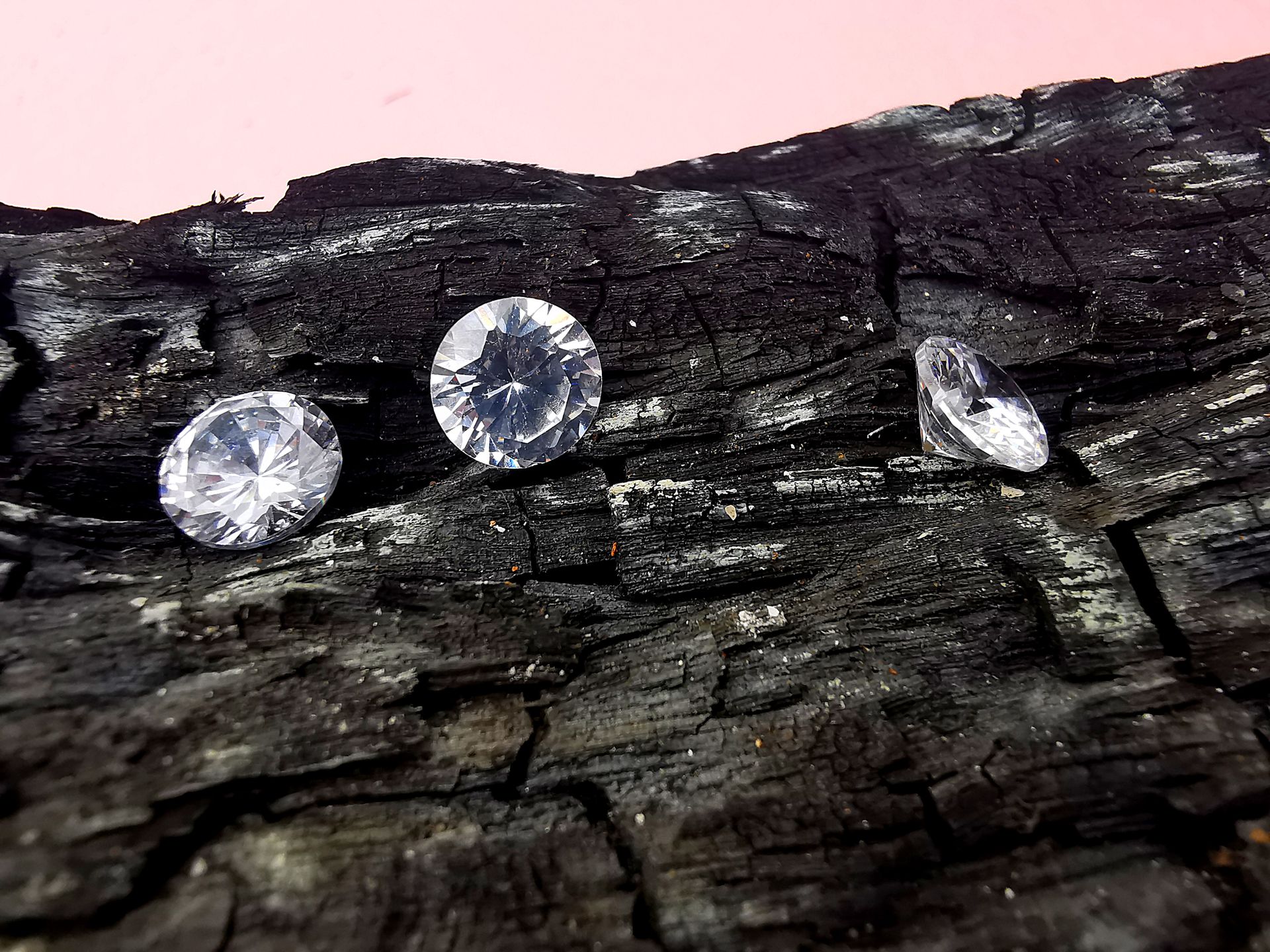
2. Who on earth defeated the South African diamond mine?
Recently, South Africa's largest diamond mine officially announced the suspension of production. Many people's first reaction was not to check De Beers' official announcement, but to turn to the popular meme of Henan's man-made diamonds. How on earth should we view this matter?
First of all, the suspension of production at South Africa's largest diamond mine is essentially a strategic stop-loss move made by the diamond giant De Beers, rather than a passive rout after being impacted by external competitors. For a very long time in the past, De Beers firmly held the right to speak in the global natural diamond market, and the local diamond mines in South Africa were one of its most important bargaining chips. The natural diamond industry has a key feature: its cost is rigid. Every link including mining, exploration and ore dressing requires continuous large capital investment. Even if the market condition is poor, the fixed cost of mining is difficult to reduce quickly.
However, in recent years, the overall market of global natural diamonds has been weakening, the market demand has not seen the expected explosive growth, and the end-market price has been under continuous pressure. For mining enterprises, when the market price of the mined diamonds cannot cover the comprehensive cost of mining, continuing production means that the more they produce, the more losses they will suffer.
Under such circumstances, shutting down high-cost mines and cutting the overall production volume has become the most realistic choice for enterprises. Many people only see the result of the mine's production suspension, but ignore the basic logic of enterprise operation. The mining industry never guarantees that you can make money as long as you have mineral resources. When the market price falls below the cost line, even the highest-quality mineral resources will become a burden. The shutdown of this large diamond mine in South Africa is first and foremost a self-protection action taken by business entities in the face of market downturn, which is the starting point we cannot bypass to understand the whole incident.

Secondly, why do people widely say that "South African diamonds are defeated by Henan"? This statement exactly points to the most core underlying change in the diamond industry. The physical property of diamonds itself determines that its competition logic has been completely changed. In the inherent cognition of many ordinary people, diamond is a scarce underground mineral, a rare treasure bestowed by nature through tens of millions of years of geological movement. But from the perspective of its physical essence, diamond is just a carbon simple substance. A large part of its value does not come from the material itself, but from marketing narratives and resource monopoly. South Africa's diamond industry follows the typical path of traditional mining industry, relying on underground mineral resources to obtain products through excavation, and its development ceiling is limited by underground reserves, mining conditions and geological environment.
The rise of Henan's lab-grown diamonds has just broken this logic. China's lab-grown diamond industry, relying on the mature industrial manufacturing system, artificially synthesizes the carbon simple substance that originally took hundreds of millions of years to form in nature in factories through industrial technology. Henan has a complete upstream and downstream industrial chain, from equipment manufacturing, raw material processing to finished product processing, and has formed a large-scale industrial production capacity. The most direct result of large-scale manufacturing is that the cost continues to drop, and the market price of lab-grown diamonds keeps falling, continuously breaking the price bottom line of traditional natural diamonds.
Consumers have a limited budget. For diamonds of the same quality, man-made lab-grown diamonds can be obtained at a lower price, so the consumption choices in the market will naturally shift. It is precisely because of this that the public easily attributes the predicament of South African natural diamonds directly to the impact of Henan's lab-grown diamonds. This simple cognition has been continuously amplified in online communication, forming the popular saying that "South Africa is defeated by Henan".
Third, the global diamond industry is undergoing a profound reconstruction. This is by no means a victory or defeat between countries, but a reconstruction of the global diamond industry chain from "dominated by natural resource monopoly" to "dominated by industrialized manufacturing". In essence, it is an inevitable historical trend that large-scale industrial mechanized production replaces traditional mining under the impact of technological change. What is the logic of the global diamond industry in the past hundred years? It is that I own the mines, I have no competitors, I hoard the mines and deliberately sell less to drive up the price, so everyone has to pay obediently. This is the typical monopoly logic of resource-based industries. South African diamonds have been popular for a hundred years not because diamonds themselves are so excellent, but because De Beers held the mines in its hands to implement monopoly.
But now the technology has changed, the lab-grown diamond technology has matured, diamonds are no longer scarce resources that can only be excavated in specific regions, but industrial products that can be produced in standardized large quantities. Then the original monopoly logic is no longer feasible. Is this that South Africa lost to Henan? No, it is the old industrial logic of making quick money by resource monopoly that lost to the new industrial logic of reducing cost and increasing efficiency through technology and industrial chain. Let alone South Africa, even De Beers itself will be eliminated if it cannot keep up with this technological change. This is the normal law of the market economy, and there is nothing surprising about it.

Fourth, what is the enlightenment brought by the diamond case? No matter who you are, no matter how sophisticated marketing methods you used in the past to build the scarcity narrative of "A diamond is forever", it has been defeated by today's technological reality. For a long time, the high price of natural diamonds never lies in their physical value, but in the marketing illusion carefully woven by giants about love, eternity and class identity, as well as their hoarding of minerals to drive up prices.
But now, the progress of technology has mercilessly torn off this veil. When factories in Henan can produce lab-grown diamonds with higher purity, better color and larger size at a very low price, the so-called "scarcity" of natural diamonds becomes a false proposition. With the further iteration of technology and the continuous release of production capacity, the price of diamonds obviously has the possibility of further decline. From the perspective of the history of industrial evolution, as long as a product can be tamed by the modern industrial system, its ultimate destination is to become popular and affordable, and become a mass consumer good, rather than a lofty luxury.
Therefore, any commercial barrier established by resource monopoly and story narrative must be alert to the impact brought by technological change. Resource endowment is important, but continuous technological innovation and complete industrial chain are often the most core competitiveness in the era of change. The suspension of production of South African diamond mines is not only an operational event of a mining enterprise, but also a mirror that reflects the deep-seated changes taking place in the global traditional resource industry under the wave of technology.
This article is from the WeChat official account "Jiang Han's Vision Observation", and is published by 36Kr with authorization.