AI Game Pivot: Trillion-Yuan High-Stakes Wagers by Tech Giants, Capital's Rush to Grab AI Native Tracks, and New Products Competing Fiercely Towards UGC
Recently, almost all news in the gaming market is related to AI. On one hand, AI has become an unavoidable keyword in the financial reports of various companies, and related tools have entered the stage of large-scale application, which is accompanied by a significantly accelerated pace of product launch. At the recent ChinaJoy, both the exhibition scale and the "AI content proportion" hit a record high.
On the other hand, the rush to seize the AI era is driving a new round of competition among game companies. Not only giants such as Tencent, NetEase, and miHoYo focus their new-generation products on AI, many emerging forces also break through through this trend and become highly sought-after targets favored by capital. According to the "2026 China Game Industry AI Development Report" released by Gamma Data, AI-related projects accounted for more than 70% of the investment and financing in the game industry in the first half of 2026.
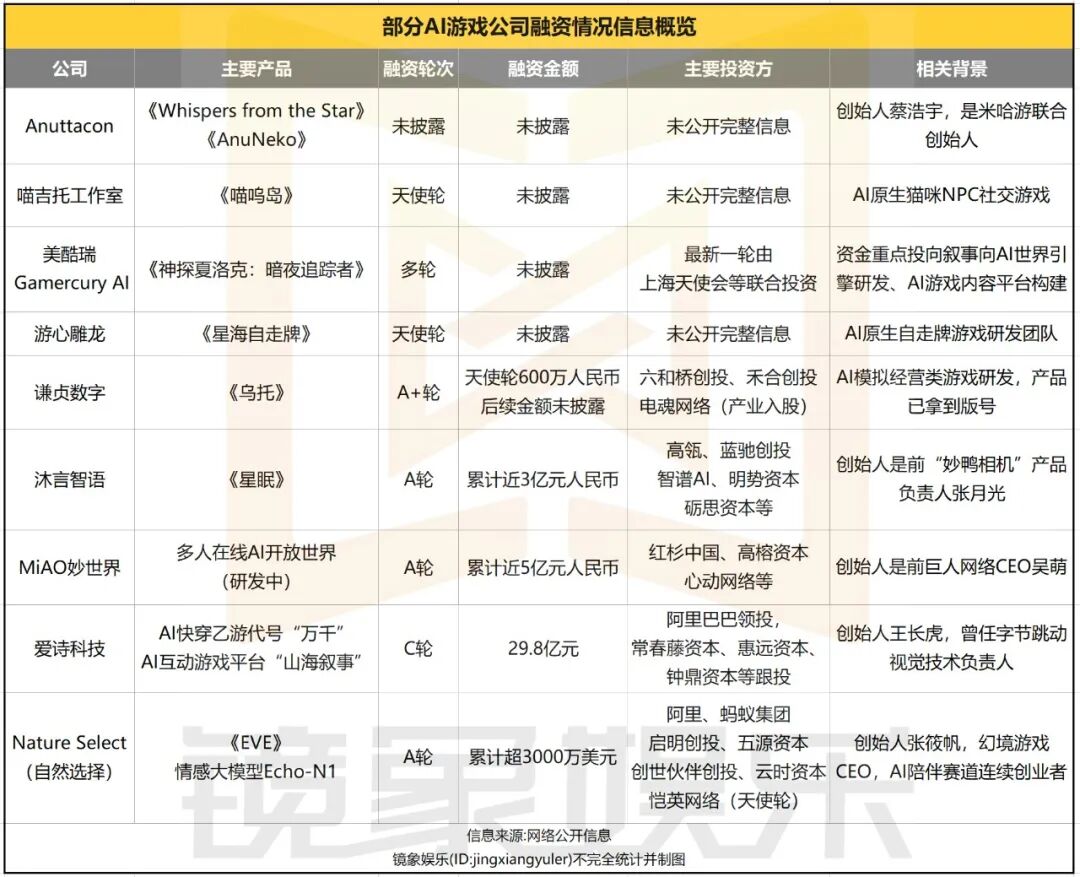
In this process, AI games have quickly pointed to two directions: one is AI-native games with two-way subversion of technology and gameplay, and the other is to lower the production threshold and build a community-style UGC game creation platform.
Shift to AI-native
Rewrite the Underlying Logic of Game Creation
Entering 2026, a clear change in the AI game market is the shift from using AI to make games to creating AI-native games.
The difference is that using AI to make games is already very common at present. Data from relevant reports of the Game Working Committee of China Audio-Video and Digital Publishing Association shows that in 2025, the application rate of AI in game enterprises has reached 86.36%, among which the penetration rate in the art link is the highest, reaching 84.2%. Obviously, the core of using AI to make games is to reduce costs and increase efficiency, taking AI as a production tool to serve game production. The underlying logic is still the logic of traditional game creation, and the whole process can still run even if the part produced by AI is removed.
In contrast, AI-native games are completely different, that is, AI is not only a production tool, but also part of the game operation. AI generates a large amount of content in real time, including plots, worldviews, etc. The whole game process does not rely on a large number of pre-settings, but is deduced by AI according to players' behaviors, and the plot is completely unpredictable. Of course, the game cannot run without AI.
For example, the core concept of Gamercury AI is to build a virtual world that can generate dynamically, give real-time feedback and evolve continuously. Its self-developed AI-native reasoning game "Sherlock Holmes: Night Tracker" is the flagship product under this idea. All NPCs in the game are driven by large models in real time, with no preset dialogues, and can form memories in the interaction with players.
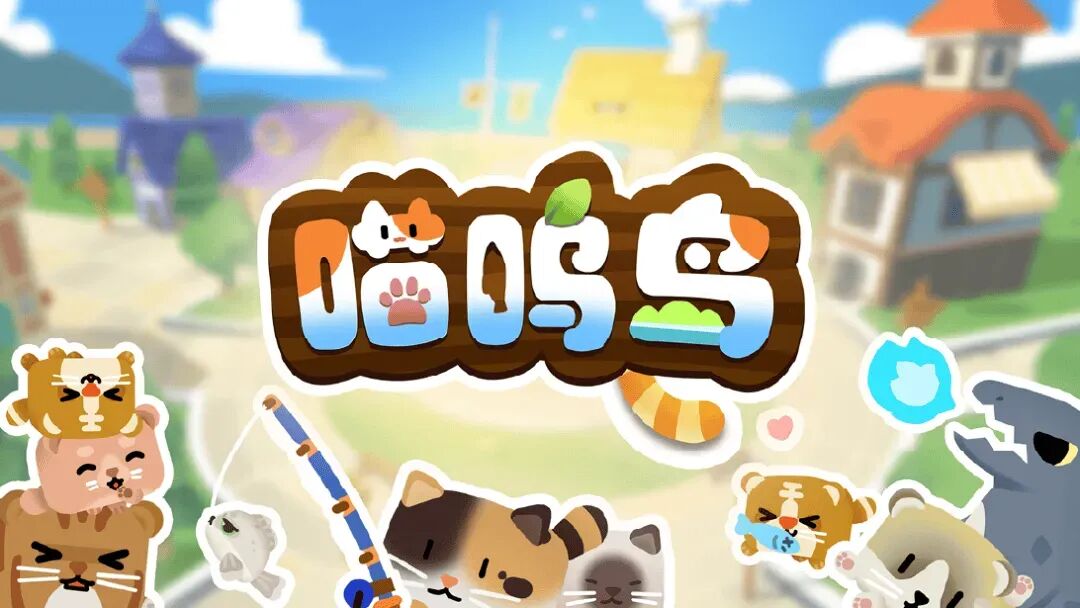
Similarly, "Meow Island" from Miaojituo Studio integrates multi-agent simulation into the game loop of simulation management. Even if players do not intervene, cat NPCs will chat with each other and generate events. The otome game "Star Sleep" focuses on long-term relationship evolution, and the AI companion in the game has long-term memory...
However, it should be noted that although there are already launched products, in the current rapid development of AI, AI-native games have not been widely rolled out. An important reason restricting large-scale promotion is still technology. The AI entrepreneurial path of Cai Haoyu, co-founder of miHoYo, intuitively reflects this point.
In 2023, after stepping down from relevant management positions in miHoYo, Cai Haoyu quickly shifted his core focus to AI games and founded Anuttacon Pte. Ltd. In 2025, Anuttacon successively launched the AI narrative game "Whispers from the Star", the AI companion product "AnuNeko", and a character performance model LPM 1.0.
However, these projects were quickly stranded after launch. For example, "AnuNeko" was officially shut down in July this year, and LPM 1.0 has also been suspended internally. Anuttacon stated that it will concentrate resources, and the shutdown announcement of "AnuNeko" mentioned: "Our team is not large. After a difficult decision, we decided to invest resources in other projects." The new direction points to the LLM large model and Agent intelligent system. At present, Cai Haoyu's LinkedIn profile has been updated to: Independent large model and intelligent body developer.
This strategic contraction reflects that Anuttacon's experimental products for the C-end market have come to a temporary end, and its core will return to the research of underlying technology, trying to solve the core bottleneck of AI-native game development from the technical level.
The reason is that the capabilities of vertical large models, game Agents, memory and worldview consistency that Anuttacon focuses on are almost the common difficulties faced by all current AI-native game startup teams. Although at present, some teams can quickly build prototypes with the help of general large models or access to third-party NPC-Agent SDK to achieve relatively smooth short-term interactions, if the game duration is extended, the corresponding underlying defects will break out intensively. In this process, the consistency of characters' long-term personalities, memory continuity, and the logical consistency of the entire virtual world have become the root contradictions that determine the experience of AI-native games.
This also means that once a breakthrough is found in this difficulty, AI-native games are likely to usher in an explosive period, which is why more capital concentrates on betting on the AI-native track.
For example, Aishi Technology, which is developing an AI quick-wear otome game (codename "Wanqian"), has received nearly 3 billion yuan in its latest round of financing. Muyan Zhiyu behind "Star Sleep" has received nearly 300 million yuan in financing. MiAO World, founded by Wu Meng, former CEO of Giant Network, has raised a total of nearly 500 million yuan. It is developing a multiplayer online AI open world game, and the company's corresponding valuation is nearly 2 billion yuan.

Codename "Wanqian" PV
In addition, in May this year, Liu Wei, another co-founder of miHoYo, stated that he will invest up to 1 trillion yuan in 3 years to deeply develop AI. Among its reserve products, the new life simulation game "Starbluff Valley" introduces all AI-driven community NPCs, and AI has become the core gameplay of the game. "Varsapura" focuses on the open world, and in the recruitment information of this product released on the company's official website, "promote the implementation and optimization of AI systems in actual projects" and "explore and realize AI-native gameplay" are written into the job requirements.
Traditional Revenue Model Fails
Manufacturers Try to Build a "Douyin" in the Gaming Industry
In addition to technical bottlenecks, another factor restricting the large-scale development of AI-native games is commercialization.
While AIGC subverts the logic of game development, the corresponding commercial logic is also changing. The most important point is that the core experience of AI-native games requires continuous invocation of Tokens during game operation. Every dialogue interaction of players, every scene generation, and every independent behavior deduction of NPCs will generate real-time computing power costs.
This means that AI-native games have contradictions that traditional games have never faced: the more immersive the player is, the more frequent the interaction, and the deeper the experience, the higher the marginal cost of the manufacturer. This unique cost structure directly leads to the near-failure of the business model of traditional games, and there are natural structural obstacles in the commercialization landing. This change has greatly impacted users' original payment habits.
A straightforward case is that after the AI-native strategy game "History Simulator: Chongzhen" was launched on Steam, it initially adopted a payment model of 48 yuan for one-time purchase of the main game + recharge of AI points (Tokens) in the game. Interactions, court discussions, war deductions and other related content in the game will continuously consume points. Some players calculated that according to the quotation in the game, the Token consumption for 1 hour ranges from 2 yuan to 12 yuan.
Soon, this model caused fierce controversy, and the Steam positive review rate of the game dropped to 54%. Affected by this, "History Simulator: Chongzhen" was later changed to free of charge for the main game, and players are allowed to access their own API.
Based on this situation, before new payment habits are developed, more enterprises try to explore the possibility of commercialization from multiple directions:
1. Integrate AI-native gameplay into traditional games and follow the monetization model of traditional games
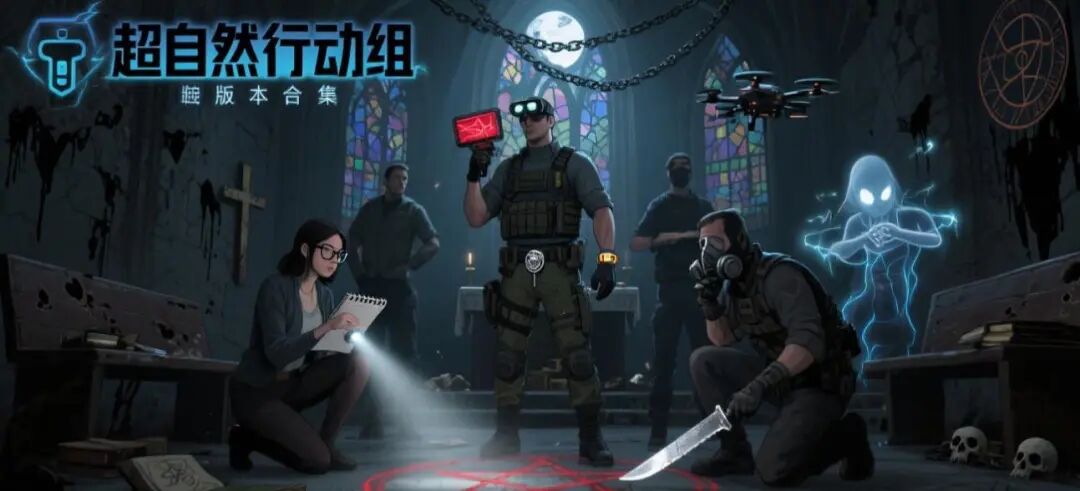
Compared with most startup teams that go all in on AI-native games, more large and mature manufacturers tend to adopt this gameplay. For example, Giant Network's Chinese-style mild horror game "Supernatural Task Force" is connected to the Qwen model, and has a built-in type of AI-driven "AI dummies" that can move flexibly like real people, search for supplies, and even betray and cheat in interactions with people. At present, the game has been launched for one year, with daily active users exceeding 10 million, cumulative registered users exceeding 200 million, and revenue exceeding 5 billion yuan.
Similarly, large manufacturers such as Tencent and NetEase have also quickly integrated AI technology into their own super-head products. For example, "Lingbao", the AI game companion of "Honor of Kings", and the AI map creation tool built into Oasis Open in "Game for Peace" have a DAU exceeding 58 million. NetEase launched the Xile AI editor in "Where Winds Meet", through which players can create AI scripts, and related AI gameplay has also been implemented in products such as "Eggy Party" and "Onmyoji".
2. Monetization of B-end technical products
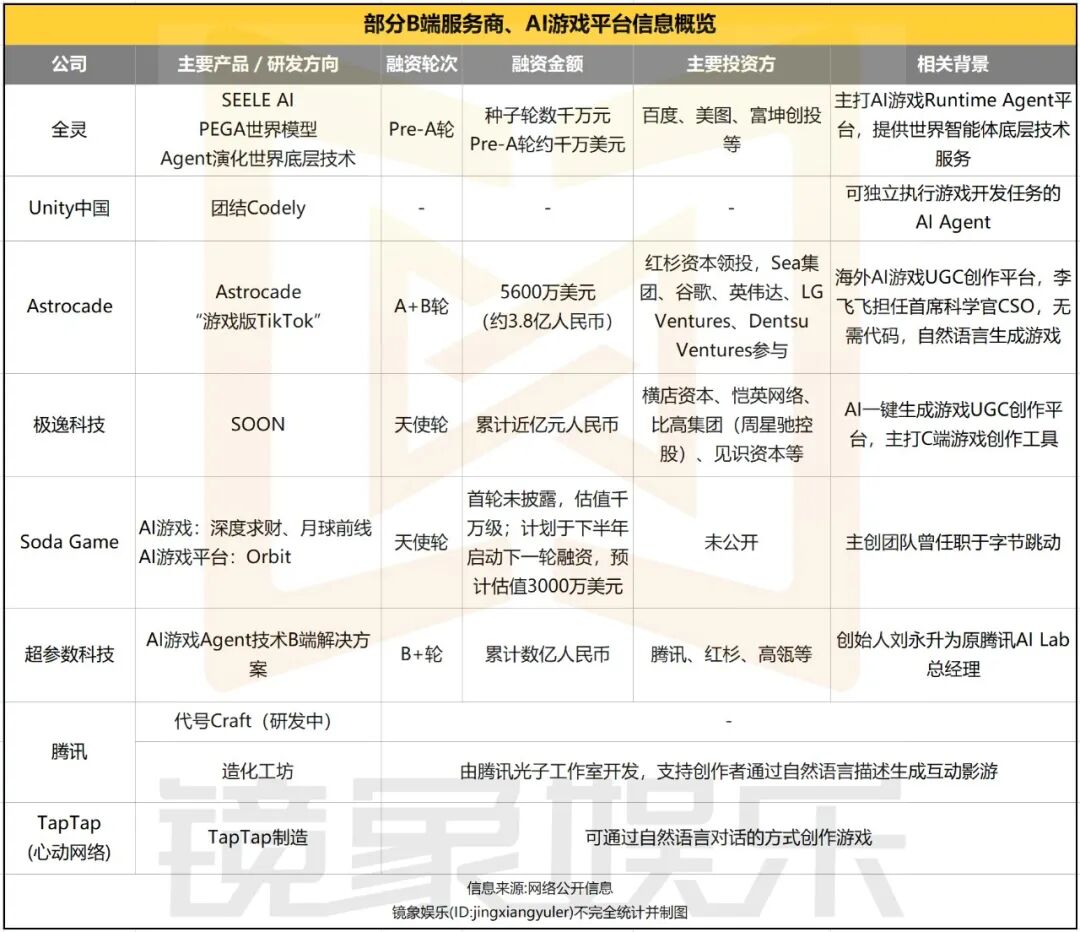
Compared with the cultivation of the C-end market, the pace of commercial exploration for the B-end is faster. The development direction of such companies is basically consistent with the focus of Anuttacon after the transformation, that is, to provide AI technical support for small and medium-sized game teams and traditional manufacturers by outputting NPC dialogue SDK, Agent intelligent framework, model fine-tuning services, private deployment solutions, etc., which is one of the more feasible commercial paths at present. At present, companies such as Hyperparam and Quanling are focusing on this exploration direction.
3. Build a "Douyin-style" AI game creation platform
In addition to AI-native games, AI game platforms dominated by UGC creation are also the direction that the capital market pays more attention to. Its underlying idea is similar to the UGC content community, and it explores commercial space in advertising, payment for creation tools and other aspects based on platform traffic.
Previously, Cai Haoyu predicted that the development of AIGC would divide game creators into two categories: 0.0001% of elite geniuses and 99% of amateurs. What AI game platforms try to support is the creation of amateurs. Users can generate games with one click with the help of background model tools. This idea has completely changed the output logic of the game industry, which is equivalent to creating a "Douyin-style" platform in the game industry, using AI technology to lower the creation threshold, making game development and distribution as common as shooting short videos.
In May this year, Astrocade, an AI game platform co-founded by "Godmother of AI" Li Feifei, received a combined A+B round of financing of 56 million US dollars, equivalent to about 380 million yuan. The main breakthrough of this platform is to lower the threshold of making games. Users only need to input natural language to generate a game with one click. The platform has been launched for only 8 months, with cumulative users exceeding 20 million. There are even news that some popular creators have a monthly income of thousands of dollars.
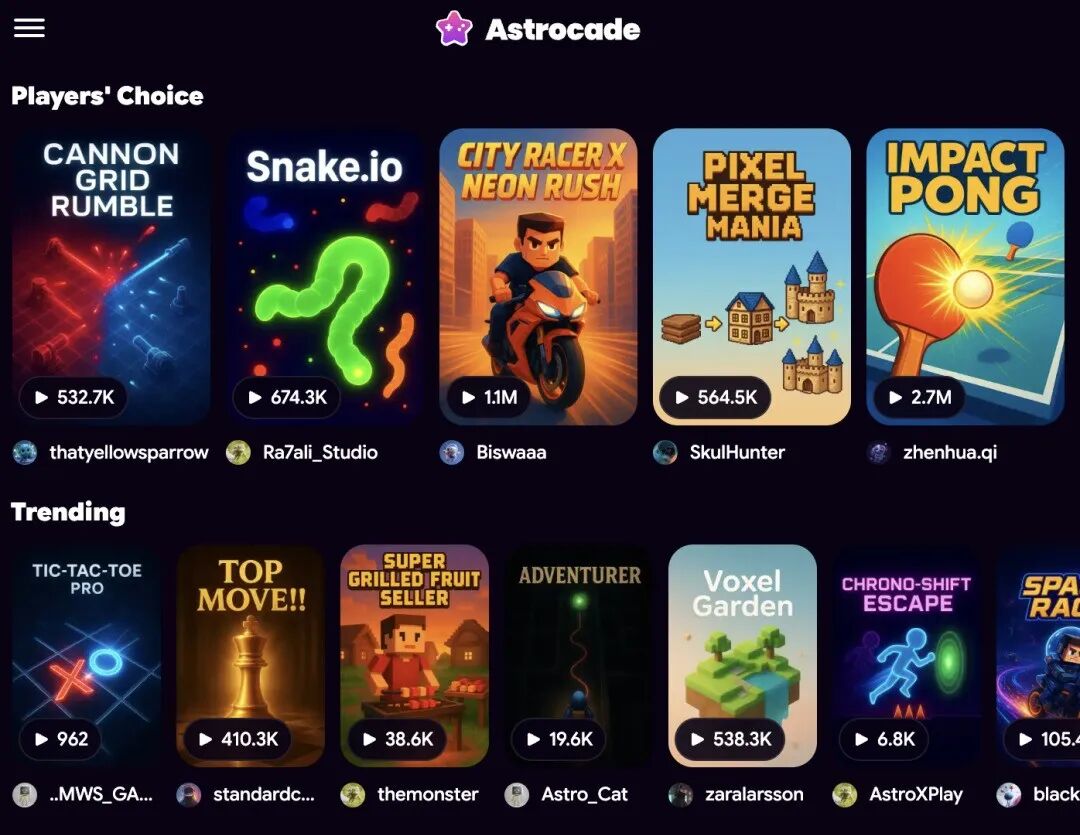
At the same time, the domestic market is also actively building similar platforms.
In January this year, Huang Yimeng, CEO of X.D. Network, on the 10th anniversary of the establishment of TapTap, showed the world a product called "TapTap Create" through a live broadcast. During the live broadcast, he talked to AI through this product, and a game that met his description ran up a few minutes later. Up to now, TapTap Create has 10 million players. Among them, the AI game "Jade Management Simulator" created by users has nearly 1.2 million cumulative players two months after its launch.
Many similar platforms are also under promotion. For example, not long ago, Tencent released a brand new AI game creation platform "Codename Craft", which has a complete built-in AIGC tool and opens more than 10,000 prefabricated art assets to users for free. Jeff, who once worked at ByteDance, founded Soda Game. After producing several AI-native games, the company tried to build the AI game platform Orbit, focusing on turning games from entertainment products into traceable interactive content sharing platforms. At present, Soda Game has completed the first round of financing with a corresponding valuation of over 10 million US dollars, and plans to launch the next round of financing in July-August this year, with a target valuation of about 30 million US dollars.
In addition, the corresponding distribution chain is also improving. For example, platforms such as Douyin and Xiaohongshu have tried to access related tools to facilitate users to upload and promote their own game products. On August 18, the "Mini Tools" built in Xiaohongshu was fully launched, and users who meet relevant conditions can add their own web game links in posts with the help of this tool. Douyin's similar product "Interactive Space" is currently in internal testing.
On the whole, AIGC is reshaping the production, gameplay and commercial logic of the game industry. Although relevant explorations are facing practical obstacles at present, the rapidly developing technology will continue to seek breakthroughs, and the increasingly concentrated capital flow also indicates that a deep industry transformation is already brewing.
This article is from the WeChat official account "Mirror Entertainment", author: Lizijiu, published with authorization from 36Kr.