Dialogue with Wei Jiancang, Chairman of Deepinfar: The marine industry has its own unique characteristics, and competitiveness cannot be quickly obtained solely by capital and scale | Exclusive Industry Interview
Text | Jing Qiong
Editor | A Zhi
Inside the aquarium of Atlantis Sanya, a diver holding a white underwater scooter glides smoothly among more than 86,000 marine organisms. The device powering him is the portable underwater booster robot WhiteShark Mix launched by SUBLUE — a consumer-grade underwater equipment product that unexpectedly became a dark horse bestseller on Amazon, with sales covering more than 70 countries around the world.
In May 2017, WhiteShark Mix was first launched on Indiegogo, a US crowdfunding platform. The crowdfunding period was originally planned for 2 months, but the completion rate exceeded 100% in less than 40 hours. The first step of going global was successfully secured.
In April of the following year, WhiteShark Mix was officially released in the Chinese market, and SUBLUE also decided to further invest in the production, R&D and iteration of consumer-grade underwater booster robots. Along with the continuous rise of China's supply chain and hardware exports, SUBLUE has delivered more than 150,000 underwater booster robots in total over the past 9 years.
Due to its long-term leading sales performance in similar categories on Amazon, many overseas consumers even mistakenly believe that SUBLUE is an underwater equipment company originating from the United States. But in fact, behind the birth and operation of the SUBLUE brand stands a 13-year-old Chinese enterprise, Sublue. The underwater booster robot business represented by WhiteShark Mix is only the tip of its iceberg.
Back in 2013, the underwater robot industry was in its infancy. Based on his early work experience, Wei Jiancang came into contact with the underwater robot field at a relatively early stage. After realizing that China's underwater robot industry had a weak foundation and high-end equipment had long relied on imports, he judged that there was huge room for domestic substitution in this field.
Wei Jiancang resolutely resigned from his stable job and officially founded Tianjin Sublue Ocean Science & Technology Co., Ltd. in 2013 (later restructured into Sublue Ocean Technology Co., Ltd., hereinafter referred to as "Sublue").
Looking back on the early days of entrepreneurship, Wei Jiancang and his team faced almost all-round challenges, "The core problem was that the industrial foundation was almost completely blank — there was no existing basis for products, supply chains or production capacity."
This state of starting from scratch ran through Sublue's budding entrepreneurial period from 2013 to 2015. Wei Jiancang described this stage as almost entirely "vision-driven" — most of the founding team members came from his classmates and social circles, and the company's early financing mainly relied on his personal relationship network.
Although the road was difficult, the core team was finally established. Relying on the technical experience accumulated in past project practices, Sublue successively completed the R&D and multiple technical iterations of the "Tunafish" and "Finless Porpoise" series of Remotely Operated Underwater Vehicles (ROVs), obtained the first batch of orders, and successfully conquered the 7kg-class electric underwater scooter technology.
Wei Jiancang firmly believes that excellent Chinese enterprises will definitely emerge in the underwater robot field. But for the domestic market with an immature industrial foundation, the early development path was not clear, and crossing the river by feeling the stones inevitably led to stumbles. The founding team also experienced a series of adjustments before gradually stepping on the fast track of development.
From 2016 to 2018, Sublue's product system gradually took shape, and the capitalization process also accelerated significantly. In addition to accelerating the construction of two industrial-grade product lines of remotely operated underwater robots and autonomous underwater robots, SUBLUE, a consumer-grade brand mainly oriented to the ocean cultural tourism sector, was also established during this period.
A widely mentioned episode is that in 2017, Sublue brought its underwater booster robot product WhiteShark Mix to display at the annual meeting of its shareholder GGV Capital, which immediately attracted a lot of market attention. After that, a number of important investment institutions including Shunwei Capital came in one after another.
With the further maturity of the product system, Sublue's shareholder lineup has become increasingly "luxurious". According to public data, Sublue has received a total of more than 1.3 billion yuan in accumulated financing in its history, with investors including more than 30 well-known institutions such as Yuanxing Capital, TEDA Venture Capital, Hongtai Fund, and Shunwei Capital.
After 13 years of entrepreneurship sailing into the "no man's land", Sublue has developed from a start-up company with less than 30 people to a national-level specialized, refined and innovative "little giant" enterprise with more than 400 employees. In addition to its headquarters in Tianjin, Sublue has also set up branches/subsidiaries in Beijing, Shenzhen and the United States, and formed two major business segments: the Deep-sea High-Tech Division for the industrial-grade market (To B), and the Underwater Intelligence Division for the consumer-grade market (To C).
In the industrial-grade market, Sublue currently mainly provides products such as Remotely Operated Underwater Vehicles (ROVs), Autonomous Underwater Vehicles (AUVs), Autonomous Underwater Gliders (AUGs), and automatic profiling buoys; in the consumer-grade market, it mainly focuses on underwater booster robots.
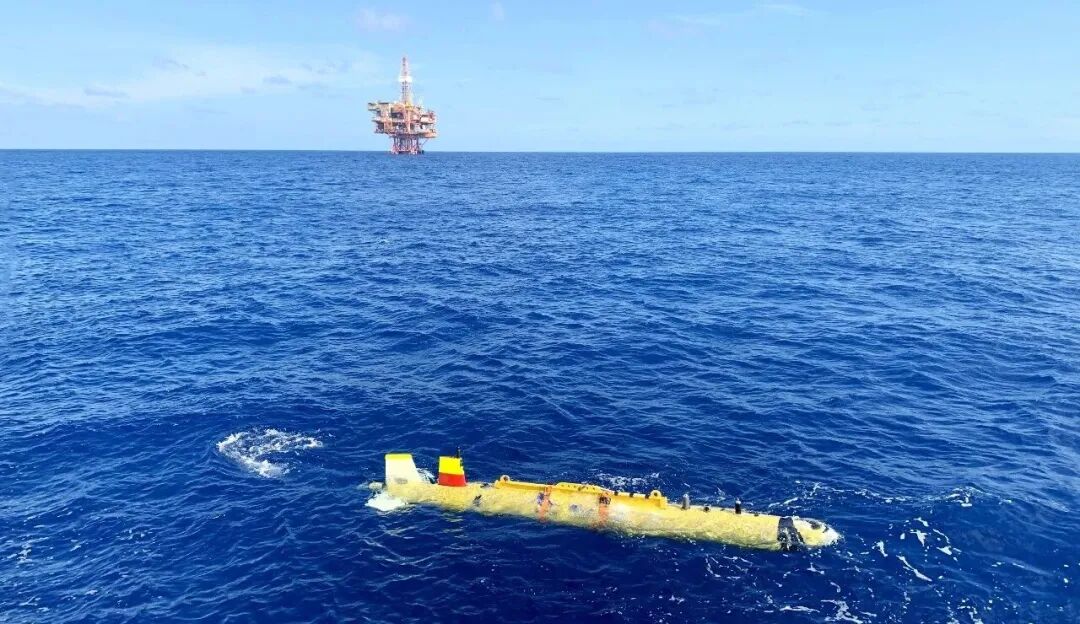
AUV Operation
In simple terms, it can provide product and service support for underwater space exploration ranging from deep-sea operations at a depth of several kilometers to the water surface.
The overall development of the underwater robot industry in European and American countries once led China by about half a century. After more than ten years of continuous catch-up, Chinese enterprises including Sublue have initially built an underwater robot supply chain system, broken through a number of key core technical bottlenecks, and surpassed international similar products in some performance indicators.
But Wei Jiancang also mentioned that the domestic underwater robot industry still faces many common challenges, which are mainly reflected in three aspects: talent reserve, experimental conditions and system reliability verification.
"In terms of talents, due to long-term technical blockades, domestic enterprises have difficulty introducing mature overseas talents. In addition, the industry is still in the early stage of development, and talents are basically trained independently, so the problem of shortage of professional talents continues to exist. In terms of experimental environment, the cost for domestic enterprises to carry out deep-sea tests at the 6000-meter level is extremely high and opportunities are scarce, which leads to relatively slow product iteration speed; while western enterprises started early and have deep accumulation, they have obvious advantages in this regard. In terms of system reliability, the western industry has a long history, and it is still ahead of us overall in supply chain maturity, sensor technology level and long-term verification experience in deep water environments."
The 2025 government work report listed "deep-sea technology" as a key emerging industry field for the first time, which significantly increased the attention of tracks such as underwater robots, underwater communication and deep-sea resource development, and also attracted a number of outstanding entrepreneurs and institutions to enter the market.
Facing the uncertainty of future industry competition and market pattern, Wei Jiancang remains optimistic. In his view, the marine industry has its particularity, and the construction of relevant capabilities cannot be quickly realized only by capital and scale advantages. "It relies on the cognitive sequence gradually formed in the new space environment. Once this sequence is established, it is irreversible in time. We always adhere to positive R&D, which is to systematically build this cognitive sequence, and this itself constitutes the core competitive barrier."
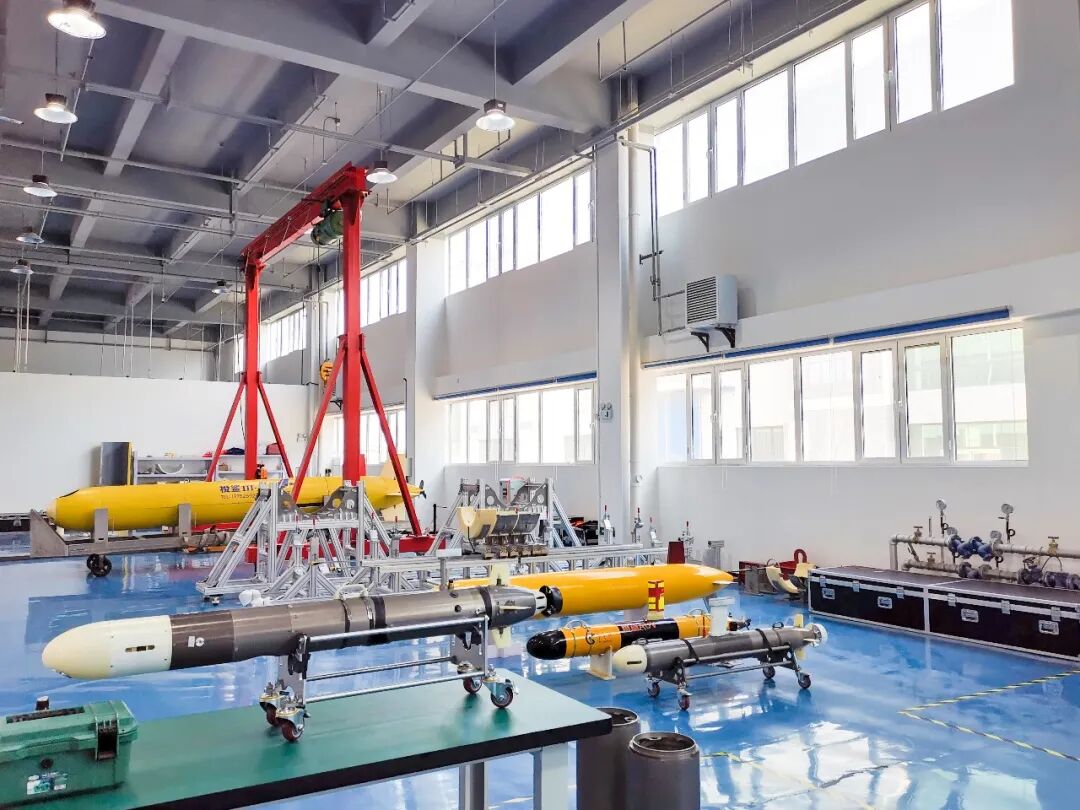
Autonomous Production Line
Although the attention of the current track continues to rise, for a field with long cycle, high barriers and large investment, it is equally important to stay calm and be able to endure loneliness.
Beyond technical parameters, it is a competition for survival. Wei Jiancang's judgment is that "In the underwater industry in the future, there may be no more than three head enterprises that will eventually stay at the table."
The following is the conversation between 36Kr, Wei Jiancang, founder, chairman and general manager of Sublue, and Wu Shiliang, deputy general manager of operations of Sublue.
The content has been edited and sorted:
Break into the "No Man's Land"
36Kr: The marine track has received a lot of attention in the past year. What's your feeling about it? Compared with popular fields such as robots and commercial aerospace, what are the unique development characteristics of the marine industry?
Wei Jiancang: There is no essential difference in the level of attention itself. Our core focus is still on the construction of our own capabilities. The marine economy has huge potential, but at this stage, human cognition of it is still very limited. To realize the development of marine value, the premise is to establish the capabilities of accurate measurement, systematic cognition and effective control of the marine environment.
36Kr: When Sublue was founded, what was the core challenge faced by China's underwater robot industry?
Wei Jiancang: At that time, we faced all-round challenges, and the core was that the industrial foundation was almost completely blank — there was no basis for products, supply chains or production capacity. The start of Sublue can be said to be built from scratch starting from a dream.
36Kr: What was the first specific difficulty?
Wei Jiancang: The initial difficulty was that the development path was not clear. Between 2013 and 2015, I myself was not completely clear about many specific directions. At that time, everyone was more driven by dreams. In terms of team building, we mainly relied on my classmate network in the early stage, because there were no other channels at that time. We continued to precipitate in the process of development, and finally formed a core backbone team that sticks to the direction and keeps moving forward.
36Kr: When did institutions start to be optimistic about this field?
Wei Jiancang: Before 2015, the industry concept was still in its embryonic stage, Sublue had just started, and the attention was only initially emerging.
A key turning point was in 2017, we released the "WhiteShark Mix" product at the annual meeting of our investor GGV Capital, which aroused widespread market attention. After that, a number of important investment institutions including Shunwei Capital came in one after another.
36Kr: What stage has the overall development of the industry reached now?
Wei Jiancang: We have also made an internal summary before: 2013-2015 was the concept innovation stage, the core of which was to clarify the direction; 2016-2018 was the product innovation stage, during which Sublue realized the initial forming of multiple types of products; 2019-2021 was the scenario innovation stage, focusing on exploring the actual application scenarios and value of products; 2022-2024 was the value innovation stage, which formed relatively clear customer value and social value; after 2025, we believe it will be the business innovation stage, with the goal of realizing comprehensive value exchange and large-scale commercial operation.
Break Through in the "Blockade"
36Kr: Sublue has a rich product matrix. What is the overall planning and evolution idea?
Wei Jiancang: Sublue's initial R&D focus was on underwater gliders and small Remotely Operated Underwater Vehicles (ROVs), because their structure is relatively simple, which is more in line with the resource conditions of the start-up team. With the accumulation of capabilities, we gradually promoted the scaling and mass production of products, and successively launched consumer-grade products such as the "WhiteShark" series and the booster series; industrial-grade products continued to evolve in the direction of large scale and large depth.
36Kr: 2013 was a key node for the full rollout of China's new energy vehicle policies. Sublue initially chose the "electrification + intelligence" direction different from Europe and the United States. Was there any related influence in the selection of technical routes?
Wei Jiancang: We have always believed that electrification is a clear technical trend and lays the foundation for the realization of intelligence.
At that time, this choice was more importantly consistent with the company's development path — the start-up stage focused on low-power products, and electrification was easier to implement. With the improvement of technical capabilities, we gradually tackled high-power products, and naturally formed the current technical system. It was not greatly affected by new energy vehicles. Although the underwater power system has common requirements for battery energy density, our overall system design is essentially different from land vehicles.
36Kr: From starting from scratch to product launch, what core bottleneck problems did you encounter in the middle? What problems have been solved?
Wu Shiliang: Due to technical embargoes, we have indeed encountered many bottleneck problems in the process of product R&D. For example, for the underwater intelligent manipulator, after encountering foreign embargoes, we spent three years on technical research to complete the independent R&D of domestic intelligent manipulators. Its indicators such as lifting force, clamping force and pressure resistance have now reached the international leading level.
In 2015, we set up a power center, focusing on overcoming the R&D of the motor and electronic control system of underwater thrusters. At the same time, in terms of underwater navigation, control and multi-source integrated navigation, due to high import restrictions, we have now realized full-chain independent development.
Due to the different media, the technical challenges faced by underwater robots are actually higher than those of aerial drones. Overall, our core barriers lie in the system design and integration capabilities that integrate multidisciplinary fields such as fluid mechanics, automatic control, communication, and energy, as well as breakthroughs in key technologies such as thrusters, manipulators, and non-steel seals.
36Kr: What are the main technical bottlenecks faced by industrial-grade products when developing to deeper sea areas?
Wu Shiliang: At present, the maximum diving depth of our industrial-grade products is 6000 meters. The core challenge of advancing to deeper sea areas is to achieve long-term stability and reliability in extreme environments.
It is relatively feasible to develop an engineering prototype that can dive to this depth, but it is extremely difficult to ensure that it remains reliable in the time dimension and at the mass product level. Deep-sea operations are costly, and equipment reliability is critical, which all rely on long-term iterative testing and data accumulation. In addition, the uneven supply chain capability of the domestic underwater industry is also a challenge.
36Kr: If the intelligence level is divided according to the levels from L1 to L5, what stage are Sublue's products currently at? What is the iteration direction of the next stage?
Wei Jiancang: We have not completely applied this set of grading system. Underwater equipment is essentially an underwater embodied intelligent system, which needs to have autonomous navigation capability and operation capability. At present, the focus of intelligence is to deepen from spatial motion control to task execution capability.
The main iteration directions in the future include improving operation efficiency and expanding functional boundaries, such as realizing fully autonomous complex tasks such as seabed mining.
36Kr: What safety verifications do products need to pass before they are launched on the market? Are there any unified access standards or certification systems at present?
Wu Shiliang: At this stage, the unified mandatory access standards for the underwater equipment industry are still under construction. But we have established a complete safety verification system covering the usage scenarios of underwater equipment, strictly carry out personal safety, equipment safety and environmental safety verification. Each product must pass strict safety monitoring before leaving the factory to ensure that the product is stable and reliable.
36Kr: What is the core logic and challenge of technology reuse when transforming from industrial-grade to consumer-grade products? What is the future iteration direction of consumer-grade products?