China Travel Service will no longer sell out China.
01
Recently, Lao Zhou, the owner of an inbound travel agency in Chengdu, suddenly complained to me that while Taikoo Li is full of foreigners, his office remains deserted.
Lao Zhou has been in this industry for over a decade. Before the pandemic, he mainly received tour groups from Europe and Southeast Asia. Overseas travel agents would send over visitor lists months in advance, and he was responsible for arranging hotels, vehicles and tour guides after the groups landed in Chengdu. During peak seasons, his team of more than ten people worked nonstop around the clock.
At that time, he rarely had direct contact with tourists.
As for why visitors chose China, where they learned about Chengdu, and who they finally paid for the trips, all these issues were handled by upstream travel agents. Lao Zhou only needed to receive the groups properly and settle payments as agreed.
This year, foreign faces on the streets of Chengdu have increased significantly.
When Lao Zhou went to Chunxi Road for meals, he would run into tourists from Thailand, Vietnam and Malaysia every few days, not to mention the areas around the Chengdu Research Base of Giant Panda Breeding. Seeing that Chengdu has resumed and added many new air routes to Southeast Asia, he felt that opportunities had finally arrived, so he specifically asked someone to shoot a number of English videos and posted them on TikTok.
One video introducing Chengdu's local cuisine quickly got hundreds of thousands of views.
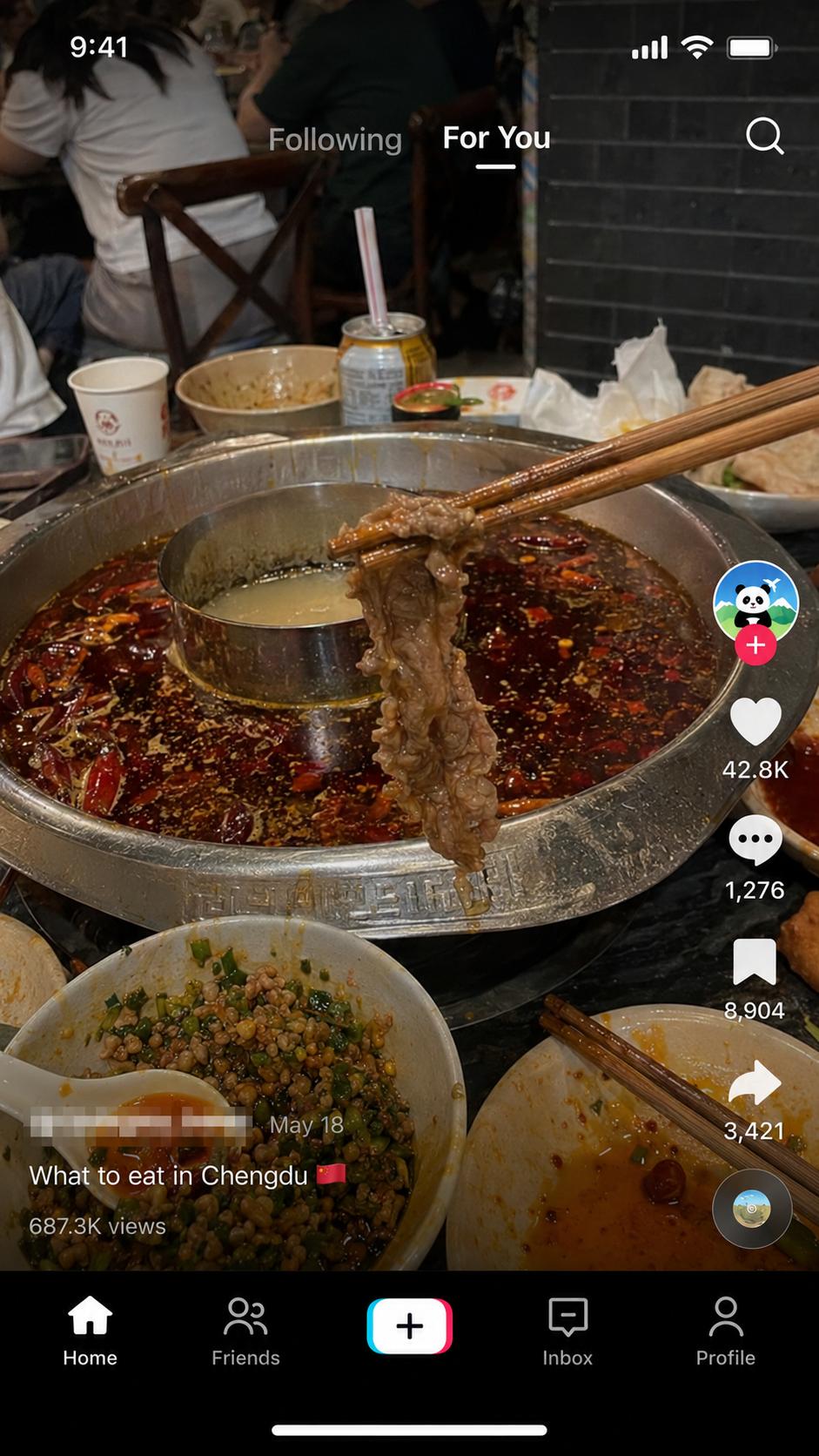
Lao Zhou was very excited at first, and stayed behind the backend to reply to messages for several days. In the private messages, some people asked how to buy tickets for the Panda Base, some asked him to recommend Chengdu hot pot, and even some foreigners sent their 7-8 day itineraries, hoping he could help check if they were reasonable for free.
The conversations were lively, but few people were actually willing to pay.
One tourist asked about the transportation from Chengdu to Jiuzhaigou, then wanted the travel agency to arrange a car. The staff stayed up late to make an English quotation and sent it over, but the other party only replied with a thank you and never got in touch again.
I asked Lao Zhou, apart from TikTok, where else his company looks for clients.
He thought for a while and told me that there is also an English website that has not been updated for many years, which occasionally receives several inquiry emails.
In addition, the company registered accounts on Facebook, only posted a few videos identical to those on TikTok, and later no one maintained them, so the accounts were gradually abandoned.
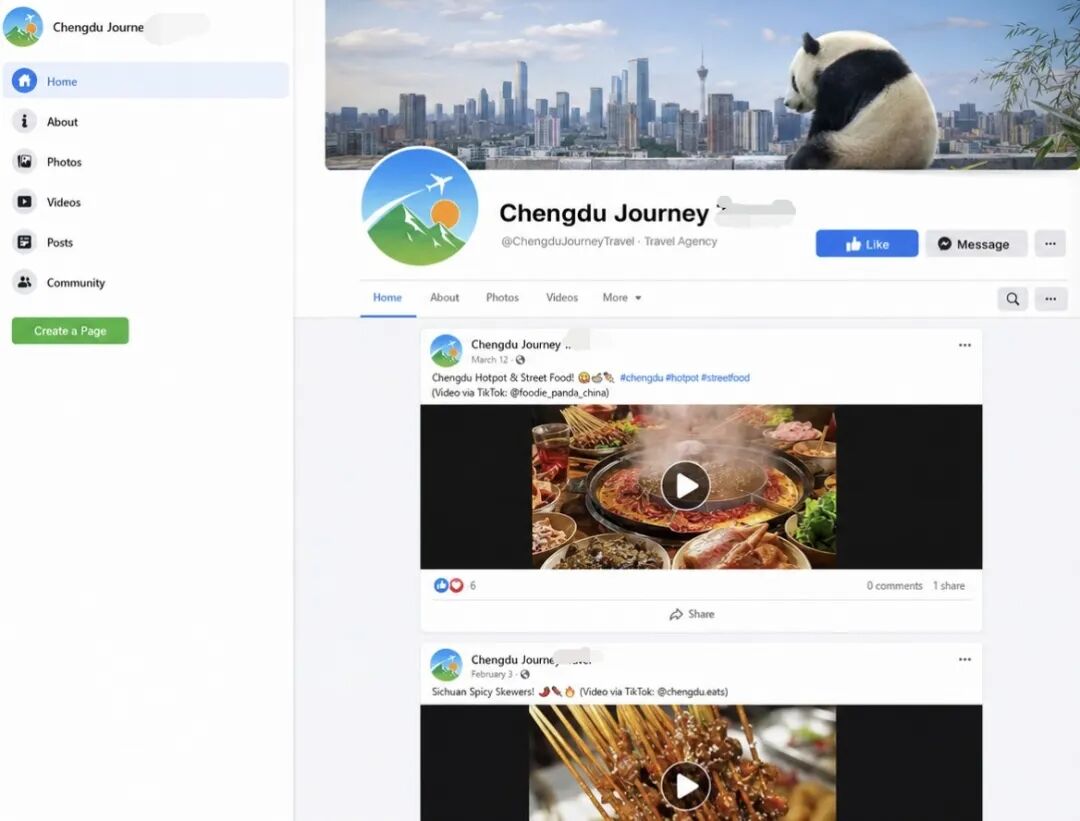
I asked him again which group of tourists he most wants to receive this year.
Lao Zhou said that European and American tour groups are recovering slowly, and it is very convenient to fly from Chengdu to Southeast Asia, so he is most optimistic about tourists from Thailand and Vietnam.
But when we talked further, he couldn't explain clearly where Thai tourists look for Chinese travel products, nor did he know their usual habits of making inquiries and payments.
The batch of English videos made by his company were posted to European, American and then Southeast Asian markets with almost no changes. When the staff see foreign faces, they are still used to sending an itinerary in English first and waiting for the guests' reply.
The so-called optimism about Thailand and Vietnam has so far only stayed at the level of resumed air routes and more tourists on the streets, and has not been translated into products and customer acquisition methods tailored for local markets.
After months of wasted time, Lao Zhou finally realized that receiving foreign tourists and selling Chinese travel services to foreign tourists are two completely different businesses.
In the first half of this year, the number of inbound foreign visitors reached 22.914 million, up 20.4% year on year. Among the top 10 source countries of visitors, Vietnam, Thailand, Malaysia and Singapore are all included.
The market is indeed growing, and foreign tourists have already walked onto the streets of Chengdu.
Lao Zhou has all the resources needed to receive them, but he has no idea who these guests will pay their first sum of money to.
02
This summer vacation, there are many travel agency owners like Lao Zhou complaining that they cannot get enough foreign tourist orders.
Many people tend to attribute the problem to the general environment: free independent travelers are used to booking hotels and checking transportation by themselves, and when domestic travel agencies finally find customers and send out quotations, their offers are quickly undercut by cheaper peers.
But the number of foreign tourists is growing rapidly, so the problem obviously does not only lie on the demand side.
A while ago, I spent some time in Thailand and Japan, looking for several tennis courts and massage parlors with fewer Chinese tourists, and soon found that LINE is almost an indispensable tool.
Some small shops have very little information on mass tourism platforms, and not many reviews on Google either. The shop assistants speak average English, but as long as you add them on LINE, it is very convenient to make reservations and inquire about prices. If there are temporary vacancies in the shop, they will also post the information directly on LINE.

For local people, this is just a social software they use every day, but for foreign tourists who have just arrived in Chiang Mai, registering, adding friends and figuring out how to use it may become a threshold.
It is precisely this threshold that makes some small shops with good services rarely appear in the sight of Chinese tourists.
Conversely, if domestic travel agencies want to receive Thai tourists, they must first enter the familiar online spaces of these tourists.
Many travel agencies regard TikTok as the overseas version of Douyin, thinking that as long as their videos get enough views, orders will naturally follow.
But short videos usually only arouse foreigners' interest in China.
After a tourist scrolls past videos of Chengdu hot pot and the Panda Base and decides to come to China, he will still search for local travel options, compare prices of several service providers, and then confirm whether the reviews are authentic.
When the itinerary is basically confirmed, he will inquire about the tour guide's language, pickup and drop-off range and cancellation policy, and finally make the payment.
In this whole conversion chain, TikTok only takes up a very small part.
Based on my daily contact with tourists from all over the world, the decision-making chain of European and American tourists is concentrated on Google, YouTube, Reddit or Tripadvisor. Tourists from Thailand and Japan are used to looking for more information on Facebook and Instagram, and then communicate via LINE.
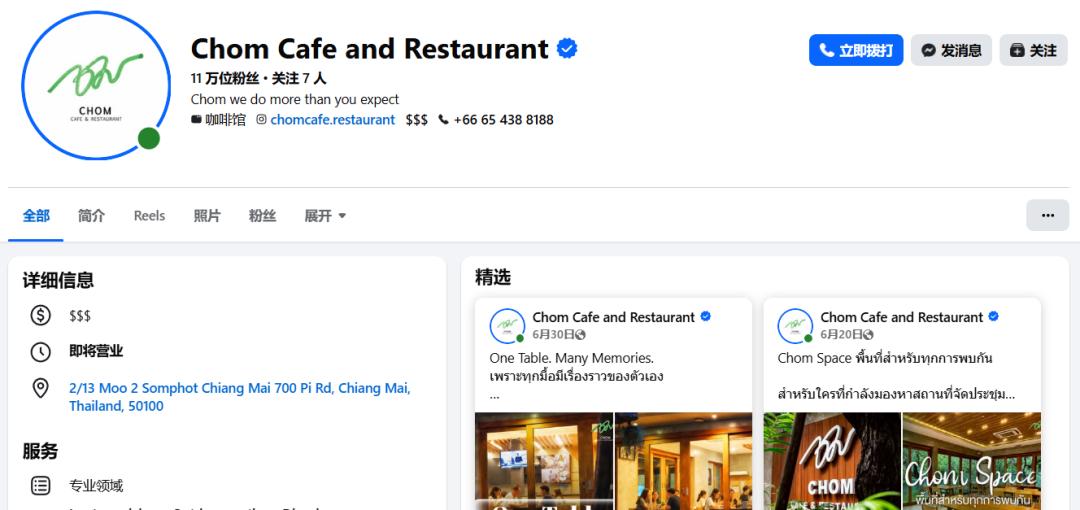
Many stores in Thailand can only be reserved via FB or LINE
Vietnamese tourists cannot live without Facebook, TikTok and Zalo. Japanese tourists often double-check information on X, Instagram and Google, and finally make reservations on LINE.
South Korean tourists have their own Naver and Kakao ecosystem, while when Russian tourists look for Chinese travel products, Yandex and VK also more easily influence their choices.
To put it bluntly, tourists from different countries may not even use the same language to input the names of Chinese cities. Their habits vary widely, which is completely different from China's WeChat and Alipay ecosystem.
However, domestic travel agencies often only produce a batch of English content and post it simultaneously on TikTok, YouTube and X, as if all countries and regions around the world are the same market. Even if one of their videos occasionally goes viral, they cannot convert the incoming traffic at all.
Because after foreign tourists finish watching the content, they cannot find the English product page of the travel agency, and the address and business hours on Google may not have been updated for several years.
For foreigners, if they have to send an email to inquire about the price of a chartered car trip to Jiuzhaigou, the whole process will immediately feel overly formal and inconvenient.
Therefore, Lao Zhou thought what he lacked was more video views, but in fact, his company may lose customers at every step from search, review consultation to payment.
Foreign tourists have not disappeared from the market, it is just that many travel agencies make their decision-making process too cumbersome.
Behind hundreds of thousands of views, the price, review, communication and payment links are not connected, so no matter how lively the traffic is, it is difficult to turn it into a real inbound travel order.
03
So where did the orders that never walked into the offices of traditional travel agencies end up going?
Recently, I searched for Chengdu on several overseas travel platforms such as GetYourGuide and Viator, and found that tickets for the Panda Base, half-day tours, Sichuan cuisine experiences and chartered car services around Chengdu have long been made into products that can be purchased directly.
Take the Panda Base as an example. The page will tell tourists what time to depart, where to gather, what language the tour guide speaks, the price, duration and refund policy are clearly displayed, and visitors can also see reviews left by previous guests.
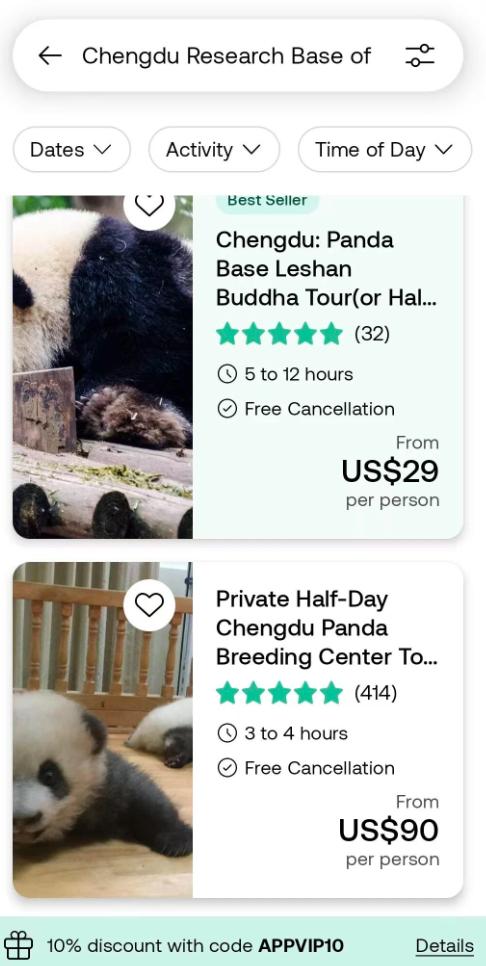
As a tourist, you can only buy a ticket, or pay more to book hotel pickup and drop-off services and an English tour guide. You don't need to know which travel agencies are in Chengdu at all. Just select the date and pay by credit card to complete the booking.
The people who come to pick up the tourists in the end may still be local drivers and tour guides in Chengdu, and the vehicles and hotels they use are no different from the resources Lao Zhou has.
Therefore, the change lies in the entry point of foreign tourists' orders.
In fact, based on my travel experiences abroad over the years, when I want to book a half-day or one-day tour, I am also used to first looking for products on platforms like Viator, or searching for reliable drivers on WhatsApp. For foreign tourists, these are universal platforms they will open no matter where they travel around the world.
If domestic travel agencies are not willing to use LINE and WhatsApp to manage customer relationships, they should at least learn to use platforms like Viator that can actually bring overseas orders.
After all, foreigners may only come to China once in their lifetime, but they will still go back to their familiar platforms to place orders for their annual vacations.
Some small local ground service teams in China have adapted to this model earlier than traditional travel agencies.
They don't have large offices, they only need to turn a travel route into a standard product and maintain good reviews, so that they have the opportunity to directly receive foreign individual tourists.
If Lao Zhou still wants to stay in this business, simply updating the English website and hiring one more overseas operation staff is probably not enough.
His company used to operate around group fulfillment, and the staff are good at booking rooms, arranging vehicles and controlling costs. But to directly serve foreign tourists, someone is needed to operate a specific market for a long time, who not only understands how overseas OTAs work, but also knows the gameplay of different social media. Such talents cannot be replaced by AI for the time being.
In fact, the local resources in the hands of domestic travel agencies are still very valuable.
When foreign tourists travel across cities in China and encounter train ticket rescheduling, failed scenic spot reservations or temporary medical treatment, a travel agency that can mobilize hotels, vehicles and tour guides is still more capable of providing full support than small teams that only sell single products.
But these capabilities must be placed in front of the public, so that guests can see them and purchase related services directly.
In March this year, nine departments including the Ministry of Commerce issued *Several Policy Measures on Promoting the Export of Travel Services and Expanding Inbound Consumption*, proposing to build a one-stop international tourist information service platform for inbound visitors, strengthen precise global marketing, and clearly require the full use of various social media.
These policies can let more foreigners see China, but they cannot update products and manage reviews for a specific travel agency, let alone calculate how much profit each order makes for the agency owner.
Policies are improving the experience of foreign tourists coming to China, but bringing orders to a travel agency still requires another set of supporting infrastructure.
Foreign tourists have arrived, and this is roughly the reason why many Chinese travel agencies are still not open for business.
This article is from the WeChat Official Account "TravelDaily", written by Theodore Xishao, and authorized for release by 36Kr.