With the sales of Lingxi Interactive Entertainment and Moonton, why are major manufacturers collectively pulling back from their "gaming dreams"?
Recently, Alibaba Group has formally reached an agreement with Asian private equity firm Trustar Capital to sell its gaming business Lingxi Games for more than 1.5 billion USD. Lingxi Games operates a number of game titles including the strategy game *Three Kingdoms: Strategic Edition*, *Fantasy Three Kingdoms* and the female-oriented game *Ruyuan*.

Prior to this, ByteDance also sold 100% equity of Moonton Technology, which owns the Southeast Asian national-level mobile game *Mobile Legends: Bang Bang* (hereinafter referred to as *MLBB*), to Saudi Arabia's Savvy Group for more than 6 billion USD.
In just a short span of time, the two internet giants have successively divested high-quality gaming assets that they had previously placed heavy bets on. The public generally interprets this as "big tech firms' gaming dreams are broken, and they are forced to retreat to secure resources for AI". But is this really just a tragic story of "scraping together every penny to fund AI computing power and exiting the gaming industry"?
"Exiting Gaming to Prioritize AI", Have Big Tech Companies Lost Their Patience?
Looking back over the past few years, when big tech companies entered the gaming track, they all had clear ambitions. Alibaba hoped to complement its digital entertainment ecosystem through gaming, while ByteDance tried to replicate its growth path from the internet era by relying on its own traffic distribution capabilities and overseas market experience.
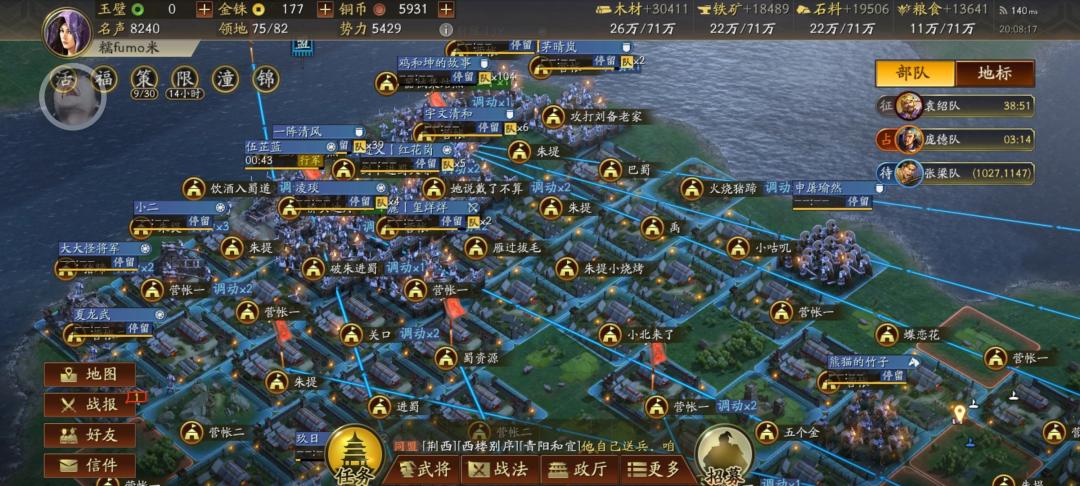
Alibaba and ByteDance did not gain nothing in the gaming track, and both had impressive achievements to show for it. Lingxi Games under Alibaba has long ranked at the top of the global iOS revenue list with *Three Kingdoms: Strategic Edition*, with a single title generating billions of yuan in revenue, building high barriers in the SLG strategy game track and becoming the most profitable and self-sustaining "cash cow" in Alibaba's big entertainment system.
After ByteDance acquired Moonton Technology for about 4 billion USD in 2021, its subsequent self-developed title *Crystal Core* achieved considerable results after large-scale user acquisition in the initial stage, but then experienced a sharp decline. This only proves that ByteDance has the ability to create hit products, but its business model is highly dependent on early-stage explosive growth, and the overall development of its gaming business has not been smooth.
The underperformance after the acquisition also shook ByteDance's determination to continue investing in mid-core and heavy-core game self-development. Moonton's 2024 revenue declined year-on-year, and its gross profit margin in the first quarter of 2025 plummeted from 29.22% to 18.14%. Selling Moonton has become an inevitable choice for ByteDance under its new strategic framework to focus on its core business, recover funds and move forward with a lighter load.
For large internet companies, the gaming business is a typical high-cash-flow business that can bring considerable profits, but it can hardly bring the group a price-to-earnings ratio imagination space of dozens of times as a whole. In contrast, large AI models are at a critical stage of high capital expenditure and high strategic valuation.
Alibaba CEO Wu Yongming previously publicly announced that the company will invest more than 3800 billion RMB in cloud and AI hardware infrastructure construction in the next three years. Its financial report shows that Alibaba's single-quarter capital expenditure reached as high as 67.678 billion RMB, a year-on-year surge of 75%. ByteDance has also placed the vast majority of its free cash flow and computing power procurement indicators on large model and algorithm R&D, so much so that under the high investment in AI infrastructure, the overall profit fluctuated in some quarters, which directly prompted the group to decisively liquidate non-core assets.
At the moment when big tech companies are shifting from diversified expansion to strategic focus, monetizing high-premium gaming assets and directly converting them into strategic reserves for computing power chip procurement and top algorithm talents in the AI field is regarded by the industry as a rational asset allocation restructuring, not a "fire sale of all possessions".
The rationality of the seller also needs to be confirmed from the buyer's perspective. Saudi Arabia's Savvy has previously spent billions of dollars to acquire US gaming giant Scopely (owner of the hit mobile game *Monopoly GO!*) as well as the global esports alliance ESL FACEIT. For Savvy, acquiring Moonton Technology means obtaining the huge esports infrastructure of *MLBB* in Southeast Asia and the Middle East, hundreds of millions of monthly active users and a mature global event operation system, which perfectly integrates with its previous investment map and directly serves Saudi Arabia's national strategy of building a global gaming and esports hub under the "Vision 2030".

As for Trustar Capital, after acquiring Lingxi Games, *Three Kingdoms: Strategic Edition* has entered a stable period with mature user payment habits and no need for large-scale R&D investment. Therefore, what it acquires is the highly moated SLG R&D and operation foundation as well as stable profit-generating capacity.
Algorithms Can't Win the "Patience Game"?
On the surface, it seems that big tech companies have shifted their attention to AI one after another, and capital pressure has squeezed the space for them to continue to "nurture" the gaming business. But the underlying reason is that the fundamental logic of the gaming industry has changed, which to a certain extent has also disintegrated the "morale" of large internet companies in self-developed games.
In the short term, the contraction of the gaming business has become inevitable. From the cold winter of game approvals, the wave of acquiring independent game developers, to the failure of breakthroughs in vertical tracks and then the strategic divestment, successive downturns have long turned the gaming business from a growing cash cow to an unprofitable business.
With the release of representative long-termist content such as *Black Myth: Wukong* and positive market feedback, the gaming business is no longer a simple traffic-driven business, and has increasingly become a long-cycle hardcore content industry.
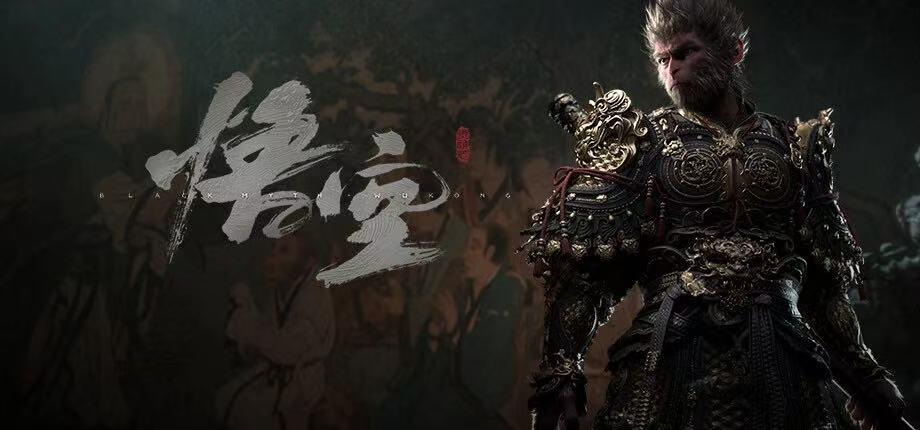
Things have therefore become interesting. The methods that large internet companies are good at, including user traffic, algorithm recommendation, content distribution and even commercialization, can still play a role in the gaming ecosystem of industrialized production, but they obviously can no longer play a decisive role. The internet-style "small steps, fast runs, quick pivots" is gradually failing in the face of gaming industrialization.
On the basis of long-cycle R&D, every link from pre-development such as world view construction and numerical testing, to mid-to-late stage operations such as user operation and IP value precipitation, requires huge resource input.
When gaming becomes a business that requires "waiting" for returns, the algorithm DNA of big tech companies has an irreconcilable contradiction with the creative rules of games. Especially at the moment when AI technology is changing with each passing day and mastering computing power means, to some extent, having the ability to produce amazing content, the answer to whether internet giants still have enough patience to wait is self-evident.
In sharp contrast, AI technology is bringing "dimensionality reduction strikes" to the content production side. On social media platforms, the phenomenon of using AI tools for "Vibe Coding" has swept the industry. Some platforms have even launched "Vibe Coding" competitions to collect small tools programmed by users themselves, and other users can directly experience them by clicking the cards.
Among them, interesting small tools and mini-games such as plot generator for phone fiction, casual companion matching and slime simulation are on the weekly hot list. But the label with the highest overall popularity is still the casual game category. As we all know, there are countless mini-game contents, but the popular mini-games are only a few types in the final analysis, and the top-ranked mini-game in the "Vibe Coding" competition is also a simple stacking type.
From developers to ordinary people without any programming experience, no one needs to delve into boring code anymore. Only through natural language dialogue and "sensory demands" can AI generate runnable lightweight mini-games and prototype demos in real time. It can be said that AI is reshaping content productivity at an amazing rate of iteration by the day or even by the hour, and this drastic change in productivity paradigm has directly broken down the barriers of the big tech companies' heavy asset model.
Not only that, from the perspective of the entire industry, gaming content is, after all, the final application scenario on the pan-entertainment industrial chain, while AI is an auxiliary tool full of imagination and a technical starting point that can leverage the productivity of the entire industry, and the gaming track is only a very small part of it. No longer running this long and uncertain "waiting game" is in itself a clear recognition by big tech companies of the boundaries of their own DNA.
It is worth noting that Trustar Capital, which took over Lingxi Games, and Savvy Fund, which took over Moonton Technology, also indicate that Chinese games are getting rid of the attribute of being a vassal of the traffic of large internet companies. The retreat of big tech companies is by no means the end of the industry. On the contrary, it means that games are returning to their essence of independent cash cow and consumer goods, moving towards a more market-oriented stage.
In sharp contrast to the "decisive divestment and strategic exit" of latecomer gaming companies such as Alibaba and ByteDance is the defense line built by native gaming giants such as Tencent and NetEase. Tencent has long-running IPs such as *Honor of Kings* and *PUBG Mobile* to generate stable revenue, while NetEase has long-term content precipitation and community operations for titles such as *A Chinese Romance of the Son* and *Eggy Party*. For these two companies, the gaming business was once their core business, even their "native business", not a whim. For them, AI is not a transformation outlet to replace games, but a super engine to reduce costs, increase efficiency and empower the industrialized R&D and operation of games.
Even with moats, Tencent and NetEase, the two gaming giants, are also contracting their gaming businesses to varying degrees. Tencent has successively closed multiple overseas studios, contracted its domestic game studios, and integrated TiMi into 4 sub-studios in 2025. NetEase has cut studios overseas and projects domestically. The open world martial arts game *The Legend of the Condor Heroes*, which had an investment of over 1 billion RMB and 6 years of R&D, was shut down only a year and a half after its launch. The intensity of this "strategic divestment" far exceeded external expectations.
Looking at the overall situation: Alibaba and ByteDance recover funds and fully bet on AI; Savvy and Trustar Capital get what they need to complement their respective strategic maps; Tencent and NetEase shrink their front lines and focus on advantageous categories. The divestment of gaming assets from the "traffic vassal" of large internet companies is returning to their content and commercial essence. This is not the end of the industry, but the beginning of a value revaluation. Exiting is another form of stepping onto the stage.
This article is from the WeChat official account "Entertainment Unicorn" (ID: yuledujiaoshou), author: Akagi Bottle, editor: Mia, published with authorization from 36Kr.