E-commerce live streaming studios are packed with "gold coin hunters" who earn as little as 0.5 yuan per hour.
When seeing the recruitment notice offering "50 yuan per hour", streamer Zhang Yan has been waiting for other group members to "fly into a rage" — in the past, anyone who posted a job with an hourly wage lower than 200 yuan would be kicked out of the group immediately.
But half a day passed, no one said a word.
What surprised him even more was that two days later, a peer who had been lurking in the group showed up in that "low-price" live stream, promoting products enthusiastically.
No one spoke out publicly, nor was there any specific time node, the change happened completely unexpectedly. Just like the normally peak July and August season that should have been bustling, it suddenly became deserted. Zhang Yan's monthly salary has also dropped from 100,000 yuan when he first entered the industry to 10,000 to 20,000 yuan now.
In the first half of the year, the retail sales of live streaming e-commerce exceeded the 1-trillion-yuan mark, with its growth rate leading the entire consumer market. Every month, more than 13,000 enterprises pour into this track, from high-end watches under Rolex to roadside stalls, all setting up cameras, announcing the arrival of the "national live streaming" era.
However, what insiders see is the continuously shrinking GMV, the persistently high return rate, as well as factory owners who run away with debts and can never be contacted.
Who on earth has stolen the "golden age" of live streaming e-commerce?
Stay in the live stream for 2 hours, watch but never buy
At a friend's dinner party, the focus was not on the delicious food, but on the live streams on the mobile phones.
Looking at his friends who kept reaching for their phones to swipe the screen after every few bites of food, Zhang Yan couldn't help asking, who on earth is in those live streams? His friend raised his phone to show him: it was for grabbing small benefits, and he had earned 50 cents just by staying in the stream for half an hour.
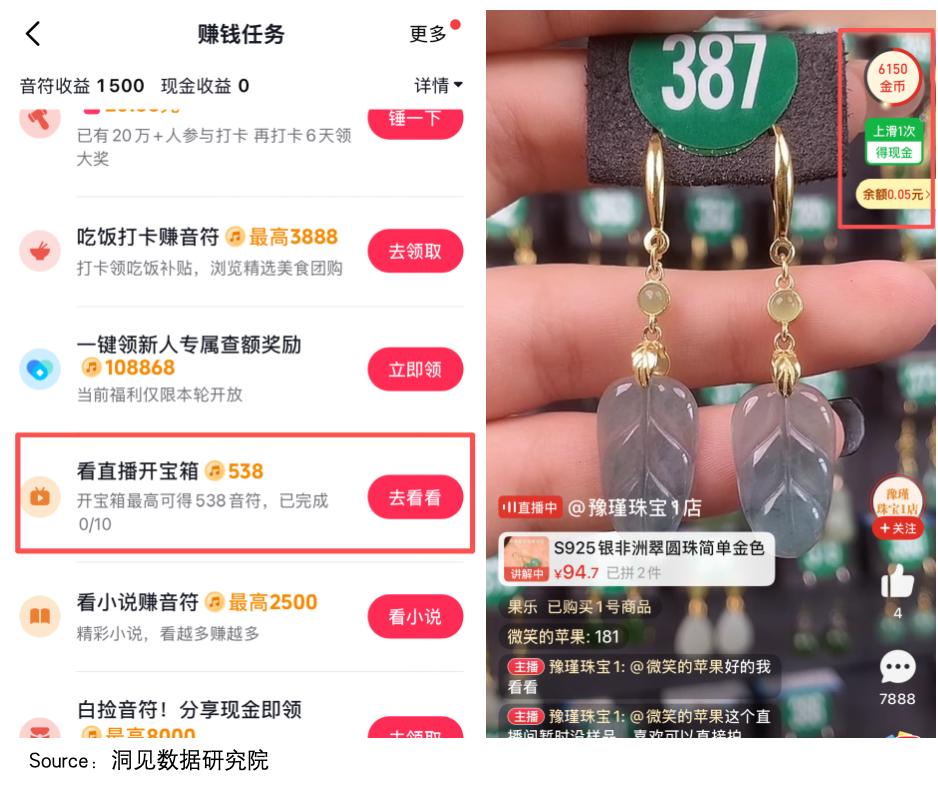
According to his friend, watching live streams is the main source of income, which contributes most of the over 100-yuan monthly rewards, more profitable than watching videos or ads. "Because live streaming requires interactions like commenting and clicking on products, the platform is willing to give higher rewards." Zhang Yan explained, especially during the evening rush hours, you might even encounter a big "gold coin rain" with good luck, so his friend would rather be a "gold coin hunter" even while having dinner.
After ending this seemingly casual dinner, he could not calm down for a long time.
After five years as a streamer, Zhang Yan has mastered superb "live streaming skills": when selling dictionary pens, he can leverage parents' anxiety, and insert retention and pressure-to-buy lines extremely naturally.
However, no matter how hard he tries, the number of viewers in his live stream stays at just over 100, the comment section is dead silent, even if he streams two more hours every day than before, the transaction volume has dropped instead.
Zhang Yan once thought that dictionary pens are not rigid demands, and he knew clearly that parents are starting to be careful with money, but he never expected that the real hidden trouble is the "traffic" itself.
"Watching videos to get gold coins" is an activity launched by platforms to boost user activity. The original intention is to spend a small amount of money to buy users' attention, and help creators and merchants improve exposure and conversion rate. But when too many people come to exploit the traffic benefits, the whole thing goes wrong.
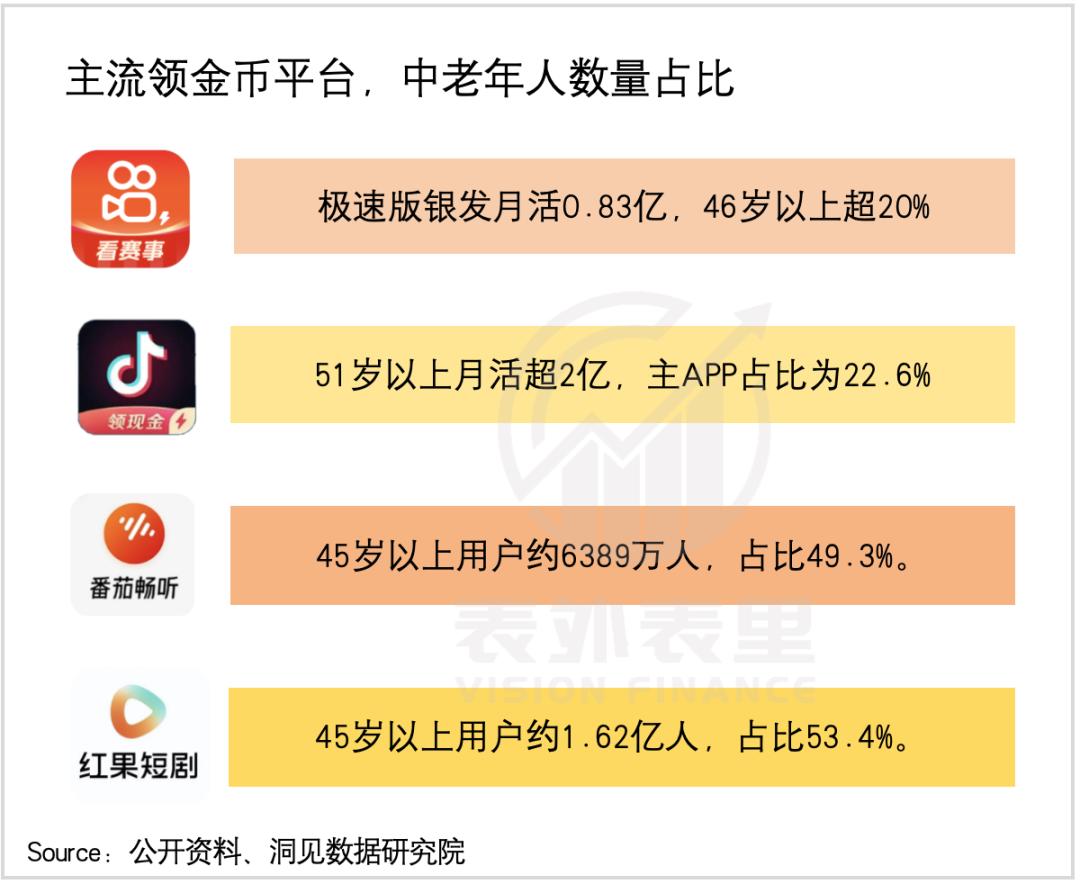
Data shows that the three platforms dedicated to "getting gold coins" — Douyin Speed Edition, Kuaishou Speed Edition and Diantao — have a combined monthly active user base of nearly 1 billion. Among them, the penetration rate of one platform has reached as high as 60%, which means 6 out of 10 people are getting gold coins.
A large proportion of these 6 users are middle-aged and elderly people. "They even queue up to get free eggs, let alone spend money in live streams." Zhang Yan said. He used to wonder why some users stay in the live stream for 2 or 3 hours without placing an order, now he understands, they are just here to earn gold coins.
Misfortunes never come singly. As the public gets tired of live streaming content, the overall traffic of live streaming e-commerce is also on a downward trend — Gao Da, who has been engaged in live streaming operation for five years, found that the actual daily active user data decreased when he gave lectures on a certain platform.
"This means that the proportion of 'polluted' traffic in live streams may have been very high." He said bluntly. This can also be confirmed from the increasingly heavy traffic investment cost.
When he first entered the industry, "micro-payment" of less than 15% was enough, then it turned to "medium payment", and now the traffic investment cost accounts for at least 25% of the total GMV.
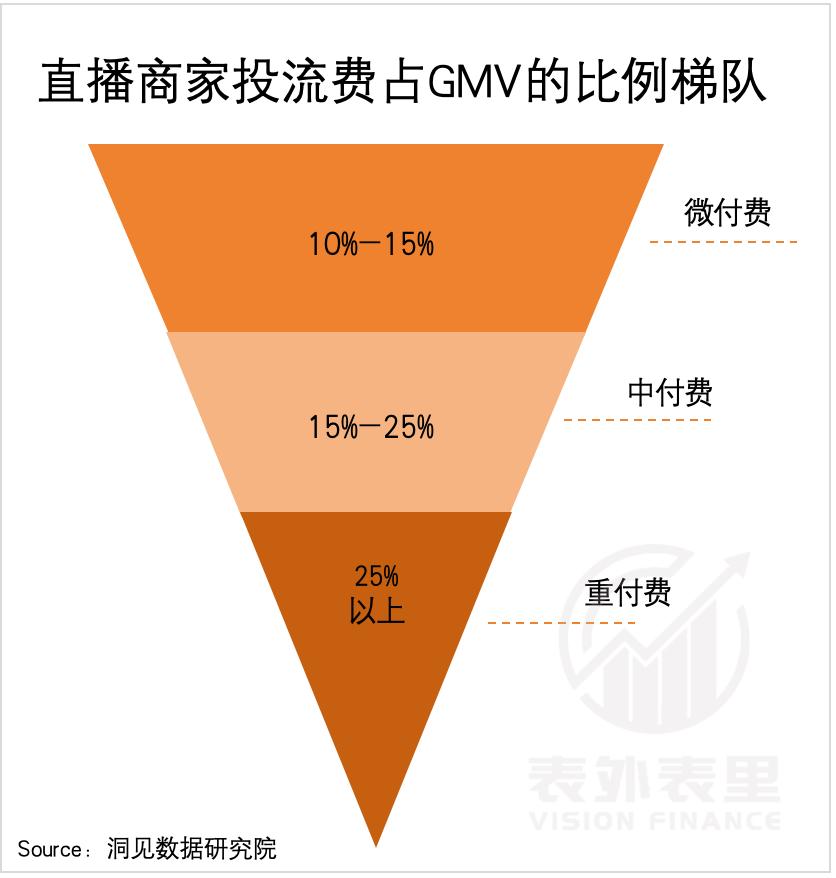
"If you don't spend money on traffic investment, short video platforms won't give you traffic; if you pour money into it and keep showing your products to users, it will easily cause resentment." Gao Da said helplessly. In the past, the ROI of the products he contacted could reach more than 4, and some even exceeded 20. By the end of last year, the ROI had dropped to less than 1.
A lot of money is spent, but no real revenue can be obtained. Merchants who are struggling to survive have no choice but to "compromise" on product quality.
1000-yuan version for streamers, 10-yuan version for buyers
The eco-friendly fur coats in the live stream look thick, but the products delivered get thinner batch by batch, even the length of the coat shrinks. The actual products are totally different from the displayed ones, which is extremely deceptive.
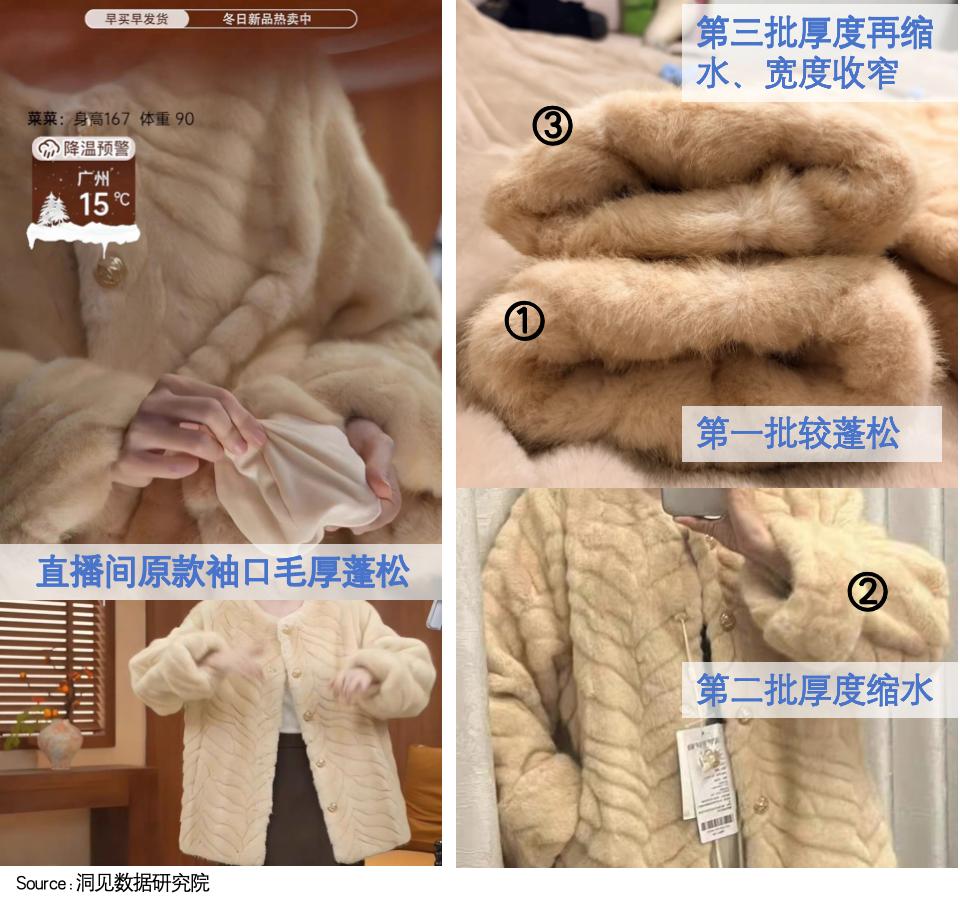
Every time he sees complaints about online shopping, Zhou Zhou just smiles faintly: "They are different versions from the very beginning."
Over the years of his career, he has seen many merchants tailor a "high-end custom version" exclusively for streamers — using high-grade fabrics, repeatedly adjusting the waistline and sleeve length if they do not fit, the cost of the whole set may even reach 1000 yuan. With the soft lighting in the live stream, it is impossible not to look good.
The mass-produced goods are naturally not made according to this standard, but they are not shoddy, and sometimes the first batch is sold at cost price. "This batch of goods is used to build reputation. After customers post a large number of positive reviews and photos, the link rating will be raised, and the platform will give traffic to the store."
The second batch of goods is made purely for making money: reduce the fabric weight by one level, replace the lining with cheaper material, omit one production process... The difference is almost invisible to the naked eye, the sales volume rushes to tens of thousands of orders, and the merchants earn their first bucket of gold.
However, as soon as a hit product comes out, a large number of imitators who smell the profit will swarm in.
Copycats take the sample to the factory overnight, and they can replicate the appearance within 48 hours. The version, pockets and buttons are copied 1:1, they only use cheap fabrics to cut costs, then steal the original main images or buyer show photos to upload links and start live streams, price the products at half the original price, and claim that "the products are from the same factory, other sellers overprice them to earn your IQ tax".
Customers believe it, either rush to buy the low-price version, or hesitate. "If the original merchant cuts the price, they can only reduce the product quality; if they insist on not cutting the price, their traffic will plummet, and eventually they still have to reduce the product quality to free up the budget for traffic investment." Zhou Zhou said helplessly. The curse of "the first batch is amazing, the second batch is passable, the third batch is for harvesting profits" is formed in this way.
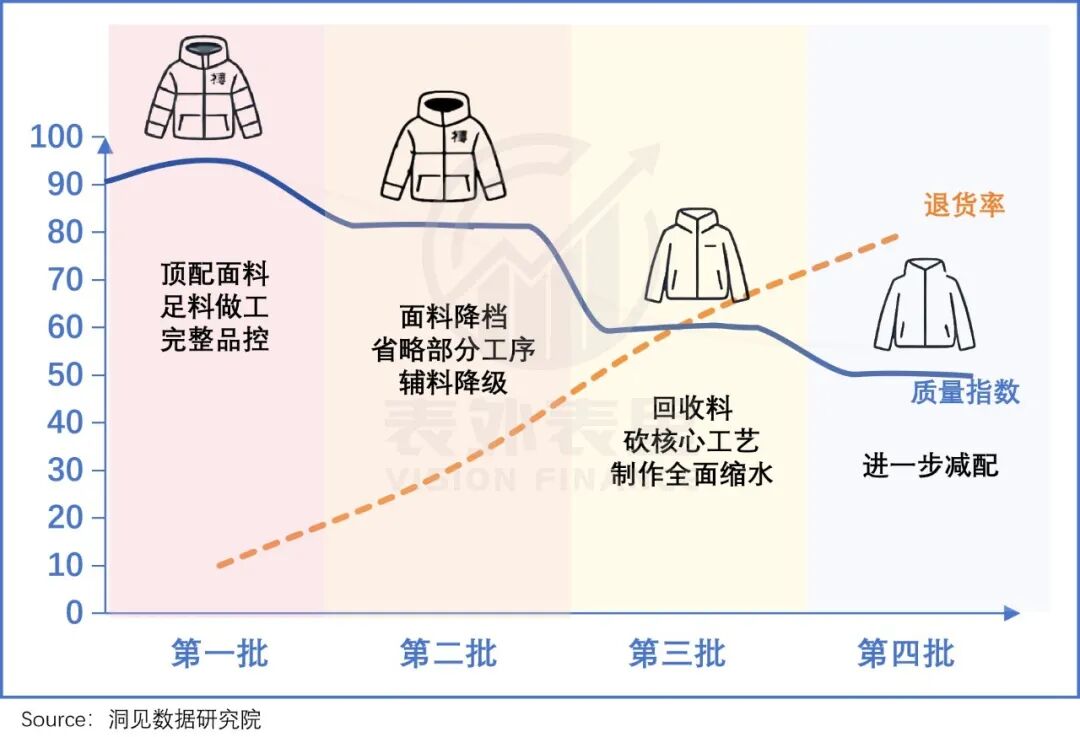
Few people are born to be a crooked merchant, it's just that in an environment where low price is the only rule, it's too hard to be an honest person.
Even a boss that Zhou Zhou cooperated with in the early years never thought of cutting corners, but his store was banned by the platform because the product failed the quality inspection, and 10 million yuan of payment was frozen.
After investigation, it was found that the factory secretly replaced the 60% cotton fabric with similar mixed materials. It turns out that the upstream industrial chain is also playing "batch quality reduction" to set traps for merchants.
Such vicious cycle brings a snowballing surge in return rates. Nowadays, in women's clothing live streaming, "sell 10 pieces, return 8 pieces" is very common, the return rate is 20 percentage points higher than that of shelf e-commerce. For other live streams with more tricks, such as group buying, people would be very lucky if the verification rate can reach 50%.
In Zhou Zhou's eyes, this is the "original sin" of live streaming e-commerce: the demand created by suggestive lines and retention tactics is essentially impulsive consumption, which cannot last once customers calm down.
When the store rating collapses and traffic drops sharply, merchants have to change to new links, and continue to make profits in the cycle of "changing a place after each shot".
Speaking of this, Zhou Zhou suddenly paused, and changed his tone: "But those are the tricks of the early years. Now once you make a mistake, you may never be able to turn over again."
Cash flow is the lifeline for merchants
Lao Zhang has run a clothing factory for more than 20 years. At his peak, he owned a 5000-square-meter factory with 300 to 400 workers, and an annual profit of 20 to 30 million yuan. But after two years of doing live streaming business, his factory went bankrupt.
Senior operator A Shi did not witness Lao Zhang's glory days, but experienced his downfall personally.
When Lao Zhang approached A Shi, the e-commerce department only had 200,000 yuan of working capital left. It was because Lao Zhang, who had been engaged in production for half his life, knew nothing about sales, and couldn't even see through the fake tricks of the previous operation team, so he lost 150,000 yuan heavily in the first three months.
Less than a month after A Shi took over, the business started to operate smoothly again. He admitted that he was not that capable, the only advantage was that they had their own factory and stable product supply: "The drainage products are sold at floor price, the profit products have no middlemen, and we can control product testing, reordering and new product launch flexibly."
However, just when the e-commerce department started to make profits, the back-end factory encountered a crisis.
There were 500 orders yesterday, only 300 today, and 5000 orders suddenly flooded in tomorrow... The explosive growth of live streams is completely unpredictable. When A Shi told Lao Zhang the news of the sudden surge of orders, what he got was not a smile, but the bad news that "we have no money".
Before that, in order to sell more goods, Lao Zhang had provided a batch of influencers and merchants with goods on credit. According to the industry rules, after they sold the 200,000-yuan goods normally, they would return the payment to the factory, and earn the price difference themselves.
Unexpectedly, the other party did not follow the rules, they sold the 200,000-yuan goods at a discount of 150,000 yuan, cashed out and ran away. More than a dozen old factories like Lao Zhang fell into this "pig butchering scam", and millions of real money was lost.
The payment owed cannot be recovered, and the payment from newly sold goods cannot cover the urgent needs right now.
"E-commerce platforms generally have an account period of 15 to 20 days, this time difference is unavoidable." A Shi introduced. Especially after the "e-commerce tax" reform, no matter whether the merchant withdraws the money or not, the platform will automatically declare tax after the account period, which further increases the cash flow pressure.

In order to survive, many merchants taking the low-price route began to close old stores and open new stores in batches. After all, the rolling sales volume of old stores is too high to maintain the low tax rate of 1%. And "if the store is unstable, the payment will be even more unstable."
Lao Zhang's factory didn't even live to that day — when the market was good, Lao Zhang could delay the payment to fabric factories and hardware factories, everyone owed each other money; as the market took a sharp turn for the worse, the partners who used to be in the same boat also turned against each other. After the upstream shortened the account period, the factory's cash flow broke off immediately.
A Shi has imagined countless times later that if Lao Zhang didn't get into live streaming, or stopped when he was making good profits, would the ending be different. But he also knew clearly that for Lao Zhang, who already owed a large amount of money to suppliers and workers, live streaming might have been his last straw.
That day he walked on the street, and saw the family-run shops on the roadside were all doing live streaming, he was filled with emotion: "These merchants are the ones who are really suitable for live streaming. They go offline after selling out, do not stock up goods, and do not owe payment. If they can't sell anything, they can still gain popularity and recognition."
