When it comes to autonomous driving, the United States focuses on developing robotaxis, so why does China bet heavily on heavy-duty trucks?
True high-tech never needs fancy packaging.
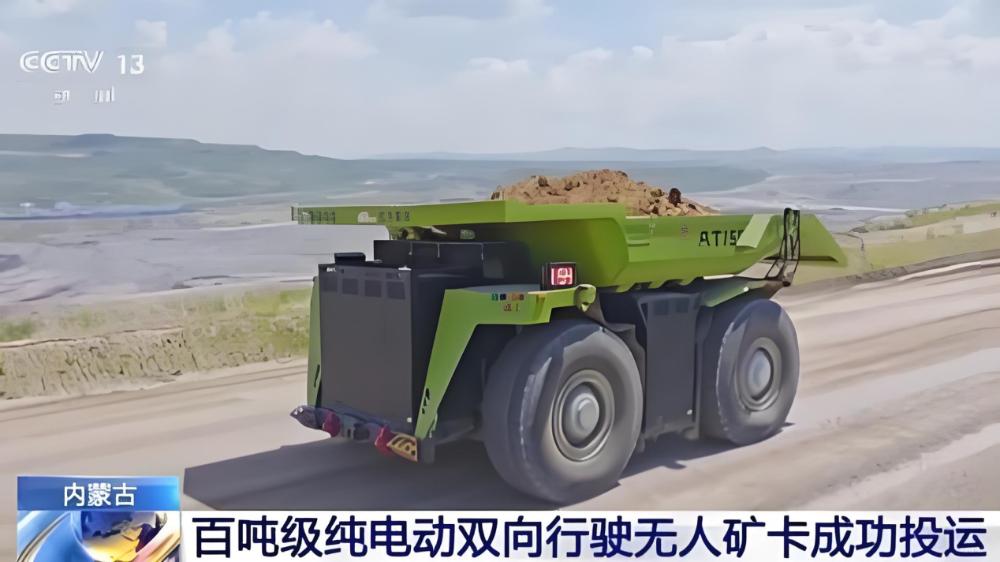
Some time ago, a large mining truck with a load capacity of 136 tons, taller than a two-story building, was officially put into operation at the South Open-pit Coal Mine in Tongliao, Inner Mongolia.
Its most prominent feature: no cab.
——That means there is no steering wheel, pedals or even a driver, and it is even a bit hard to tell the front from the rear of the truck.
Since there is no visual obstruction, there is no need to make a U-turn no matter which direction it drives.
This "giant" is named AT150, the country's first 100-ton-class pure electric two-way driverless mining truck.
What kind of environment does it mainly work in?
The temperature ranges from -30°C to +50°C.
Its tasks cover the whole process without a driver, from automatic loading and unloading, to autonomous driving, autonomous obstacle avoidance and automatic parking.
In terms of technology, it supports ultra-fast charging of 3.4 MW and 900 V, with a battery life of more than 6 hours after full charge, and the unit energy consumption cost is 65% lower than that of traditional diesel mining trucks.
On the other side of the Pacific Ocean.
Waymo, the giant of US Robotaxi (autonomous driving taxi, shared driverless vehicle), has obtained the largest-ever expansion license from California regulators.
The scope of the license covers 18 counties including the San Francisco Bay Area, Los Angeles, Sacramento and San Diego.
As of May 2026, Waymo completes more than 500,000 paid trips in the US every week, with a fleet size of about 4,000 vehicles.
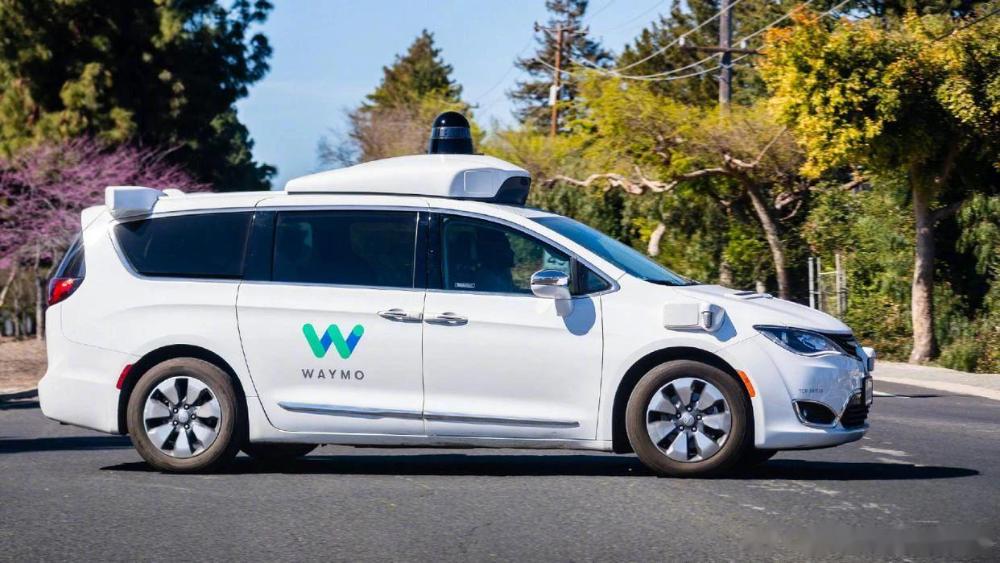
Driverless vehicles in the US are shuttling through cities, while the giant heavy-duty trucks in China are conquering coal mines.
Of course, this generalization is somewhat absolute, because China's driverless passenger vehicles also have excellent performance.
However, when it comes to the "driverless" track, China and the US do have different priorities in their respective layouts.
This scenario cannot be simply summed up as "differences in technical routes".
What is the underlying reason behind it?
Robotaxi vs. Driverless Heavy Trucks
When talking about autonomous driving, we need to start with a well-known fact:
As of the end of March this year, Waymo, the leading Robotaxi operator in the United States, has covered ten major metropolitan areas in the US, with more than 500,000 paid orders per week, and a total of 220.6 million miles of fully driverless mileage.
In other words, the Americans have already blazed the trail of "driverless taxis".
In China, Pony.ai, Baidu Apollo, Didi and other enterprises have long been exploring this field.
But the US seems to be moving faster in commercialization.
Why?
Because it is far more difficult to roll out L4-class driverless taxis in China than in the United States.
First of all, we need to know that the cities where Robotaxi operates in the US are very different from the pilot cities for driverless taxis in China.
Looking at the US first, the pilot cities are typically vast, sparsely populated, and have low vehicle density:
Phoenix, Arizona, the main operating city for US Robotaxi, covers an area of about 1,340 square kilometers with a population of about 1.67 million. Based on the estimate of 2 vehicles per household disclosed by Data USA, there are about 1.8 million vehicles in the city;
Another operating city, Austin, Texas, covers an area of about 772 square kilometers with a population of 990,000. With 2 vehicles per household, it is estimated that there are about 650,000 vehicles in the city.

Phoenix
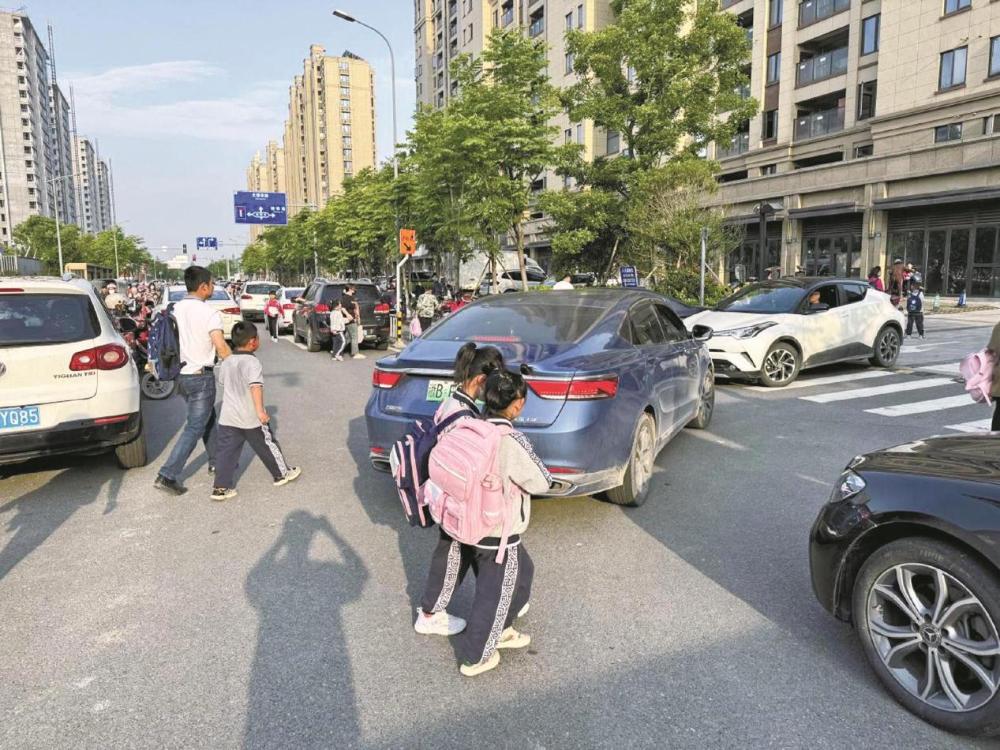
Looking at China, it has a large population and a large number of vehicles, and pedestrians and vehicles often mix on busy roads:
Shenzhen, with an area of 1,997 square kilometers, has a population of about 18 million and the number of civilian vehicles is about 4.59 million; Wuhan is even more extreme, with a population of 13.8 million on 8,569 square kilometers and 5 million civilian vehicles.
In other words, although Shenzhen's land area is not much larger than that of Phoenix, its population density is about 7.4 times that of Phoenix, and the number of civilian vehicles is about 2.6 times that of Phoenix.
The number of civilian vehicles in Wuhan is more than 7 times that of Austin, and its population is nearly 14 times that of Austin.
That is to say, on the same one square kilometer of road, the interaction volume of vehicles, pedestrians and non-motor vehicles that Chinese cities need to process in real time is several times to more than ten times that of US operating cities, which brings more complex and unsolvable moral, public opinion and legal problems behind it.
In this regard, the United States also has a lesson from the past.
In October 2023 in San Francisco, a pedestrian was hit by another car and thrown into the driving path of a Cruise driverless taxi.
Although the vehicle triggered emergency braking, the system failed to detect the person under the car, misjudged the impact as a side scratch, and then executed the pull-over instruction, dragging the injured person stuck under the car for about 20 feet (about 6 meters).
This series of misoperations directly led to the suspension of Cruise's fully driverless operation license, and the National Highway Traffic Safety Administration (NHTSA) also issued a $1.5 million civil fine.
After a long-term investigation and rectification, this once-star company saw its CEO resign, 9 executives fired, 1/4 of its employees laid off, 950 driverless vehicles forcibly recalled, and its commercial operation of Robotaxi across the United States was completely shut down.
Therefore, China is not incapable of building driverless taxis, but compared with "carrying people", we choose to prioritize "carrying goods".
Through technologies such as 5G base stations, smart street lamps and cloud dispatching, China promotes the "vehicle-road coordination" of cargo vehicles, and uses the unmanned transformation of heavy trucks to lead the technical breakthrough of the entire autonomous driving track.
In Shanghai, the "5G+L4 Intelligent Heavy Truck" project at Yangshan Port realizes centimeter-level positioning even in the yard where satellite signals are blocked, through vehicle-road coordination.
On the Donghai Bridge, a convoy of 5 vehicles operates at a speed of 80 km/h on a regular basis, with safety officers assigned to the leading and trailing vehicles, and the following vehicles in the middle running fully autonomously, which can increase the traffic efficiency by about 30%.
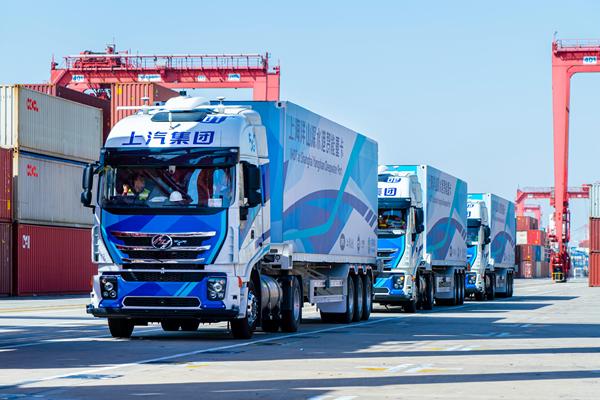
Applying autonomous driving related technologies to the heavy truck sector is a strategic choice we made based on national conditions.
The Rigid Logistics Demand of the "World Factory"
As the world's largest manufacturing country, we have a huge industrial system, rich mineral resources and enormous foreign trade volume.
So how many heavy truck transportation tasks are generated in China's large mines, bulk cargo transportation and large manufacturing sectors?
In 2025, China's total commercial freight volume reached 58.7 billion tons, of which road freight volume was 43.288 billion tons, accounting for 73.8% of China's total commercial freight volume.
Supporting this 43.288 billion tons of road freight are 11.6891 million commercial cargo vehicles across the country, running day and night.
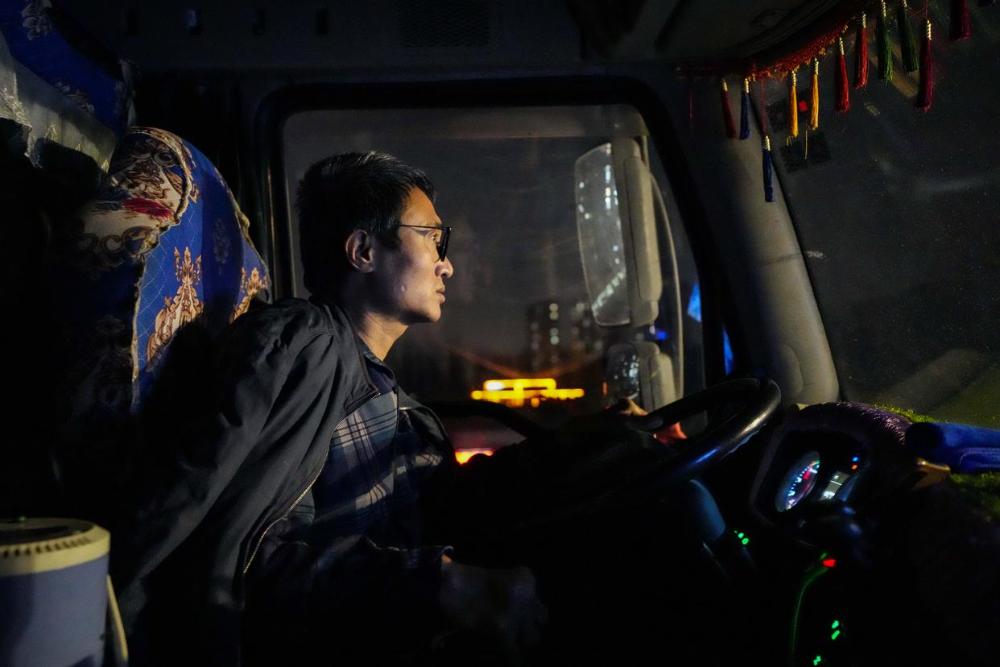
For such an important heavy truck network, we once relied on huge manpower scheduling as support: 84.38% of the drivers are aged 36-55, 69.41% have more than 11 years of work experience, while the proportion of new drivers with less than 5 years of experience is only 13.04%.
More than 1/3 of these drivers have to work more than 12 hours a day.
They travel long distances, work day and night in reversed shifts, and also face the increasingly fierce competition in the industry.
65.55% of them are self-employed drivers, whose cargo source is very unstable.
Many of them suffer from occupational diseases such as cervical spondylosis and stomach pain.

At the same time as these drivers are getting older, the per capita income is decreasing due to the saturated transport capacity.
An experienced driver who has been driving for more than ten years once calculated a detailed account for the media: "The freight rate has dropped from 5 yuan per kilometer to 3 yuan. After deducting fuel costs and tolls, for a trip that generates 8,000 yuan of revenue, I can only get less than 1,000 yuan in hand."
In other words, there are still a large number of heavy truck drivers in China, who are still the main supporters of road transport capacity.
But in the future, as these heavy truck drivers gradually retire, China will soon face a manpower shortage in the freight sector.
This forms an extremely dangerous scissors gap: the horizontal axis is the endless demand for logistics transport capacity from the "World Factory", and the vertical axis is the driver gap caused by the fading demographic dividend.
This forces scenarios such as mines and ports to take the lead in large-scale "technology replacing manpower".
For example, the "1 drag N" mode of mining trucks in Inner Mongolia has been realized: one safety officer is assigned to the leading vehicle, followed by a convoy of four or five fully driverless trucks.
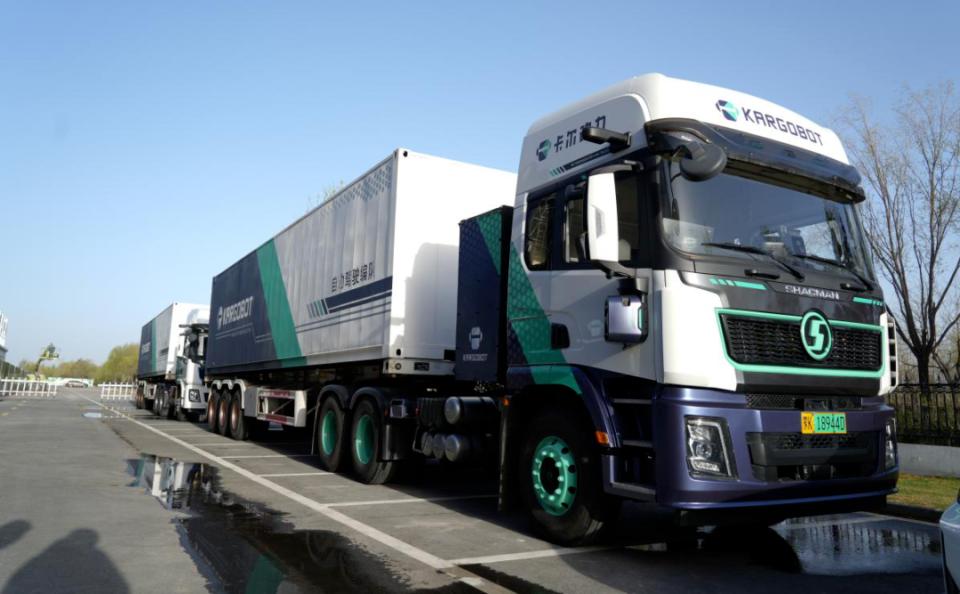
This increases the gross profit margin of each vehicle to 3 to 6 times that of traditional freight transportation.
If traditional fuel heavy trucks are replaced by electric driverless heavy trucks, the fuel cost per kilometer will plummet from nearly 3 yuan to only 0.6 yuan.
Ensuring transport capacity, replacing manpower, and reducing logistics costs.
This is the most realistic appearance of production mode upgrading.
From "Demographic Dividend" to "Technological Dividend"
As the contradiction between "manpower loss on the supply side" and "transport capacity expansion on the demand side" continues to widen, short-term salary increases and welfare improvements only treat the symptoms but not the root cause.
Only technology can solve this problem systematically.
From the human perspective, this frees drivers from heavy, repetitive and high-risk labor, and transfers them to safer and higher-value-added positions such as operation and maintenance, dispatching and remote monitoring.
For the industry, it means assigning the most tiring and toughest work to AI that never gets tired, never fatigues, and never has mood swings, which is the most intuitive embodiment of cost reduction and efficiency improvement.
Therefore, what we are facing is not the replacement of manpower by technology, but the timely complement of new productive forces, so that our technological transport capacity can take over the labor of the previous generation.
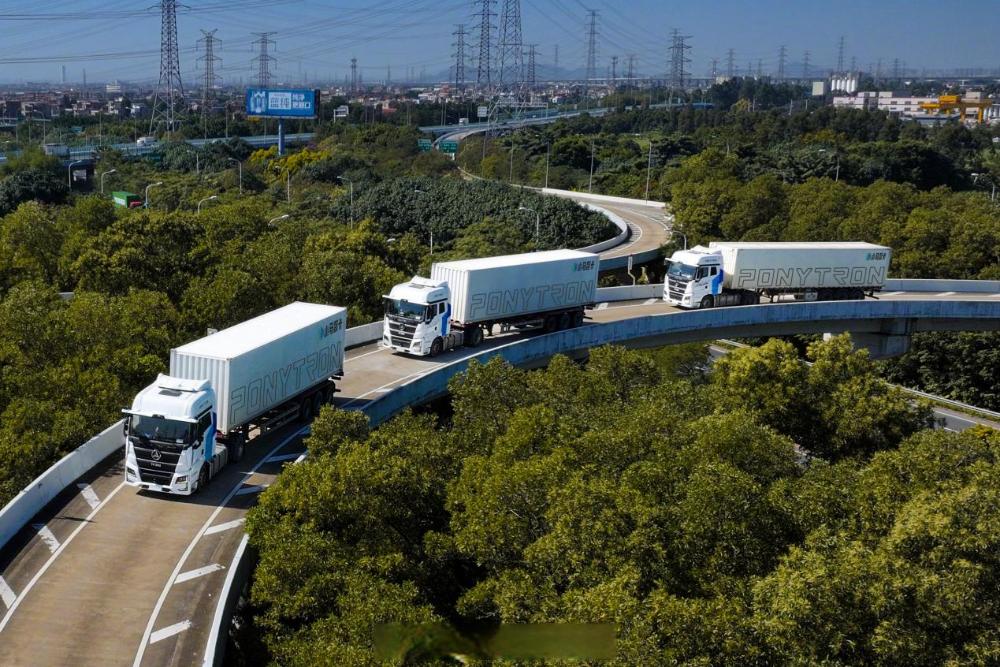
Such a productivity revolution will cover the whole of China.
The revolution is driven by the "national system" that combines policy, capital and industry.
Among several major scenarios, the mining sector has the earliest launch of driverless heavy truck policies, the clearest quantitative targets and the most solid system.
In April 2024, seven departments including the National Mine Safety Administration, the Ministry of Emergency Management, the National Development and Reform