After the collapse of 23 automakers, those who once ridiculed fuel vehicles can no longer laugh.
In recent years, when people who buy new cars talk about vehicles over dinner, they no longer discuss the thermal efficiency of engines, whether the transmission is AT or dual-clutch, or whether the chassis tuning leans towards sportiness or comfort. Instead, they talk about how big the screen is, what level of intelligent driving the vehicle reaches, how many seconds it takes to accelerate from 0 to 100 km/h, and how many cents the electricity cost is per kilometer.
Some new energy vehicle owners believe they are standing on the side of the future, and the era of fuel vehicles has come to an end.
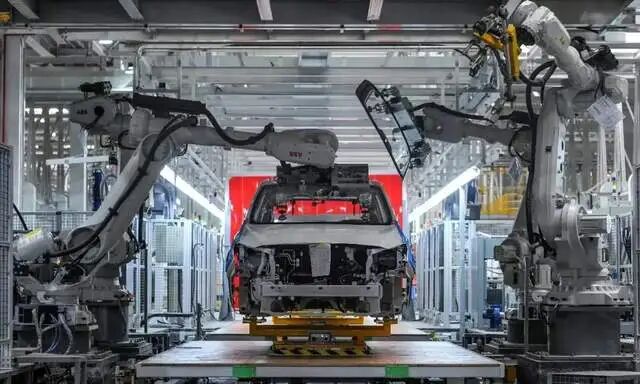
After the Tide Recedes: 23 Automakers and 850,000 Vehicles
The tide recedes faster than many people expected. According to statistics from Liji Consulting cited by Securities Times, as of May 2026, a total of 23 domestic new energy vehicle enterprises have been declared bankrupt through judicial procedures, entered bankruptcy liquidation or restructuring processes, or have essentially completely suspended operations, accounting for nearly 30% of the total number of enterprises in the industry. The cumulative number of compliant new energy passenger vehicles sold by these enterprises is about 850,000.
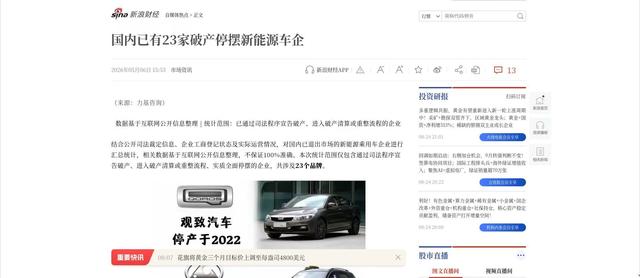
Behind these figures are 850,000 families who have exchanged their savings of hundreds of thousands or even millions of yuan for a car, only to suddenly find that the company that manufactured the vehicle no longer exists.
The list of fallen enterprises includes many once-famous names: WM, HiPhi, Aiways, Ji Yue, Neta, Hycan, Enovate, Hengchi, Yundu, Byton, Singulato, Youxia...
Neta used to be the sales champion among new car-making forces. HiPhi once sold for 500,000 to 600,000 yuan and was known as the "Chinese Rolls-Royce", but now its factories are empty and dealers have quit the network. WM, which was once called one of the "Four Little Dragons of New Forces" alongside NIO, Xpeng and Li Auto, has debts of more than 20 billion yuan, leaving more than 100,000 car owners without any after-sales support at all.
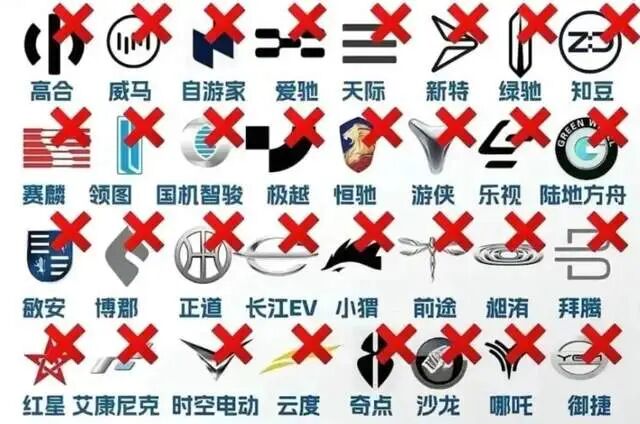
Looking back at these 23 enterprises, their failure patterns are almost identical. First, they have no core technologies, all three-electric systems are purchased externally, the whole vehicle is essentially just an assembly plant, their products have no differentiation, and they can only seize the market by low prices and piling up configurations.
Second, they have no hematopoietic capacity, and rely entirely on rounds of financing to survive, burning money in exchange for sales. Once the financing environment tightens, the capital chain breaks immediately.
Third, they suffer from chaotic management and idle production capacity. WM's two major bases in Wenzhou and Huanggang have a planned annual production capacity of 250,000 vehicles, but the actual delivery in 2021 was only 44,000 vehicles, with a capacity utilization rate of less than 20%, while depreciation and operating costs are not reduced at all.
Byton is even more outrageous. Of the 8.4 billion yuan in financing, less than 15% was actually spent on core R&D links such as the vehicle platform, batteries and intelligent cockpit, the rest of the money was spent on administration, venues, business class tickets for executives and high-priced red wine.
To put it bluntly, some of the new car-making forces that expanded wildly in the past two years were not in the car manufacturing business, but in a financial game of passing the parcel. When the last round of Pre-IPO financing fails to land and no new buyer enters the market, they enter the countdown to collapse.
The Most Affected Party Is Not the Automakers
When automakers go bankrupt, the most affected are consumers who have already driven their cars home.
Enterprises can file for bankruptcy, but the cars in the hands of car owners still need to be driven, maintained, repaired and insured. However, the entire service system supporting these vehicles has already collapsed.
When buying cars, consumers only care about whether the configuration is high, whether the price is cost-effective, whether the appearance is good-looking, and whether the acceleration is fast.
They never thought about whether the brand can survive until the day they change their cars. This problem was almost unnecessary to consider in the era of fuel vehicles, because after decades of elimination, the remaining fuel vehicle brands are all capable of withstanding industry cycles.
But the new energy industry is so new that many people have not had time to build the awareness of "brand sustainability" before the industry reshuffle has already arrived.
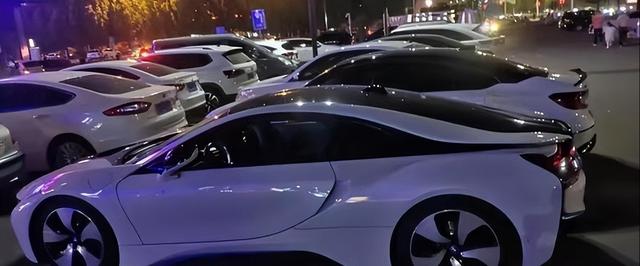
After the brand collapses, the problems faced by car owners are superimposed layer by layer.
First of all, the promises of "lifelong warranty for three-electric systems" and "free maintenance" made when buying the car become completely empty words once the brand goes bankrupt.
Secondly, the after-sales network collapses, spare parts are out of supply, and after-sales outlets close one after another. The vehicle can no longer be maintained as conveniently as promised when it was purchased.
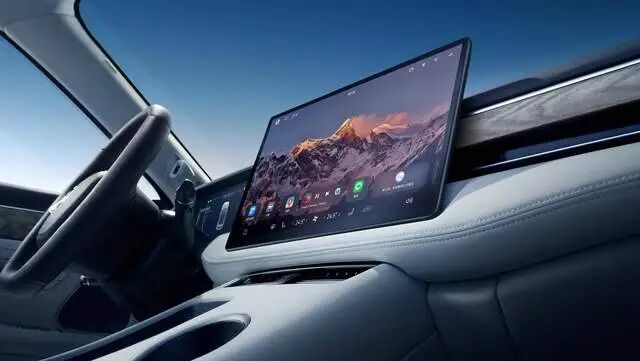
For intelligent electric vehicles, the even more fatal problem is that the infotainment system loses network connection, the App stops working, and software updates are discontinued. After Neta went bankrupt, 400,000 car owners faced the situation of disconnected infotainment systems, disabled Apps, and a completely paralyzed after-sales system.
Intelligent large screens, infotainment systems, OTA updates, and remote control via mobile App. Once the brand goes bankrupt and the servers are shut down, these functions are completely invalid. What you bought is an "intelligent vehicle", but the "intelligent" part no longer exists.
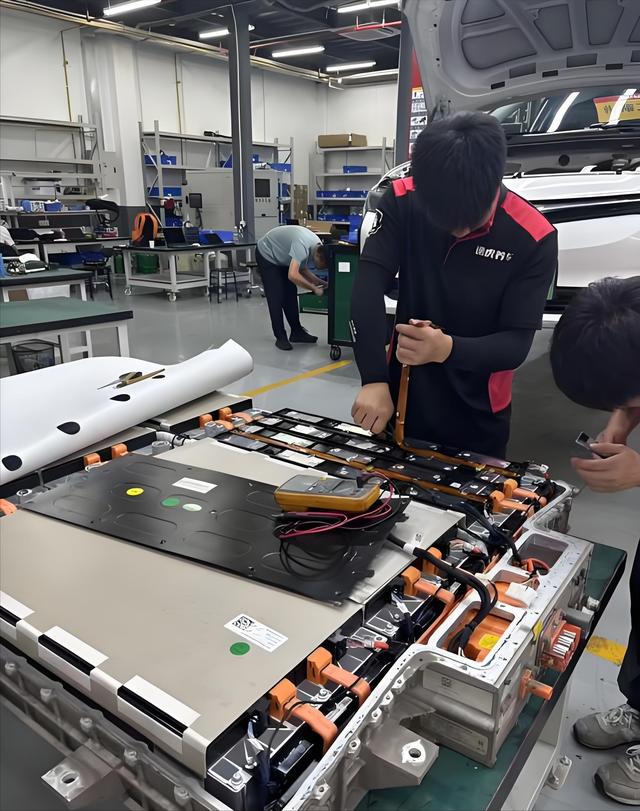
The fourth layer, which is also the biggest concern of car owners, is the battery. It is the most expensive and most failure-prone component of new energy vehicles.
A 2025 report from China Insurance Automotive Safety Index (C-IASI) shows that the average zero-to-whole vehicle ratio of power batteries for pure electric vehicles is 49.59%, which means the cost of replacing a battery is close to half of the total vehicle price.
Original manufacturer batteries are no longer produced, can third-party batteries match the vehicle? Is there any safety guarantee? Each of these problems hangs over the heads of car owners.
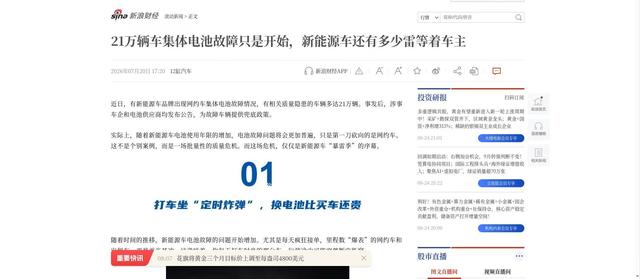
The fifth layer is the collapse of value in the used car market. Used car dealers do not dare to take in vehicles from those bankrupt brands at all, and they cannot sell them even if they take them in.
For car owners, this gap is very tangible. When buying the car, they thought they were purchasing the most advanced technology and the future, but when they want to sell the car, they find that the market does not give the same recognition at all.
The Advantages of New Energy Vehicles Are Real, But You Can't Only Count Half of the Costs
Of course, the advantages of new energy vehicles are tangible: quieter driving, faster power response, lower daily electricity costs, and richer intelligent configurations, all of which are unmatched by fuel vehicles. The rapid development of new energy vehicles in the past few years is based on the fact that they have indeed solved some pain points of fuel vehicles.
But the problem is that when many people discuss new energy vehicles, they only see these advantages in the use process, but ignore the cost of long-term ownership.
In the past, many new energy vehicle owners liked to calculate an account: how much fuel money they save every month, how much they save in a year, and how much they save after several years of driving. This calculation is not wrong, but it only accounts for half of the total cost.
The real cost of a vehicle also includes the depreciation rate after several years, the convenience of maintenance, the cost of battery replacement, after-sales support, and the sustainability of the use experience.
If after several years the vehicle depreciates severely, the brand's after-sales service fails, maintenance costs rise, and the battery cannot be afforded to replace, the fuel money saved in the early stage may be lost all at once when selling the car, or even far from enough.
Fuel vehicles have high fuel consumption, insufficient intelligence, and maintenance costs are not low — but after decades of development, fuel vehicles have formed a very mature and predictable system and maintenance network, the used car market has transparent prices, and people basically know the approximate used car prices.
The new energy market is also moving in this direction, but it still needs time. Only after a round of reshuffle can the remaining brands truly establish this system.
Why didn't consumers consider whether the brand could survive when they bought the car in the first place? Because the industry was so new that there was no reference system.
During the period of frenzied development, every brand was telling stories, raising huge sums of money, and holding press conferences. It is very difficult for ordinary consumers to distinguish who is really making cars and who is just here to make a quick buck.
Coupled with the fact that the entire market was in a frenzied period at that time, the narrative that "new energy is the future" overwhelmed all rational judgments.
Why do the used cars of bankrupt brands depreciate so sharply? Because the used car price is essentially the pricing of future risks. The residual value of a vehicle depends on how easy it is to repair in the future, how easy it is to find spare parts, whether the brand still exists, and whether the battery is safe.
Once the brand collapses, all these certainties disappear, and the risk premium is directly reflected in the price. It's not that the car itself is worthless, but no one is willing to pay for an uncertain future.
When the industry shifts from an incremental market to a stock market, and consumers have learned a lesson, the decision-making logic for buying cars will change.
In the past, the competition was about who had higher configurations, who had a larger screen, who had faster acceleration, and who had lower prices. In the future, the competition will be about who can survive, who has a complete after-sales system, who has guaranteed full life cycle of batteries, and who has more stable used car residual value.
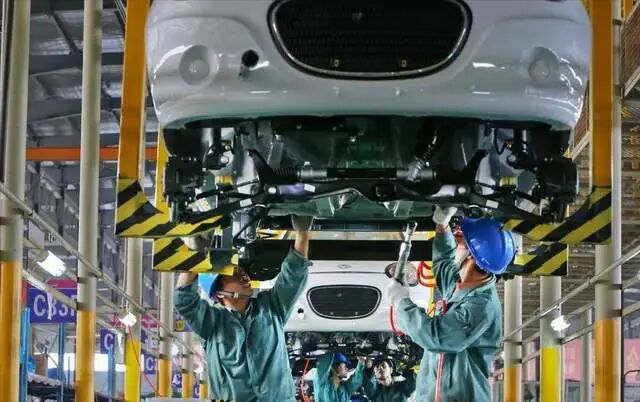
Configurations can be piled up in the short term, but long-term service capabilities require time and capital accumulation.
What consumers will focus on in the future will first be the brand's sustainability, checking whether the enterprise has core technologies, stable profitability, and sufficient cash reserves, rather than whether its press conferences are lively.
The second priority will be the coverage and sustainability of the after-sales system, whether there are outlets in third- and fourth-tier cities, and whether the spare parts supply is stable, as well as the full life cycle cost of batteries and the availability of third-party maintenance channels.
So the current situation is very clear: the electrification and intelligence of new energy vehicles is a general trend that no one can stop.
But this industry is undergoing a necessary elimination process, eliminating those enterprises that only create concepts, tell stories and burn financing, leaving brands that truly have the ability to make cars, have core technologies, have stable profitability, and have the ability to serve car owners in the long run.
Cars are not mobile phones, not fast-moving consumer goods that are replaced after two years of use. They are large assets that a family will own for five or six years or even longer.
The real winner in the automotive industry has never been the one who laughs the earliest, speaks the loudest, or holds the most dazzling press conferences, but the one who can still stand firmly in the market, provide services for car owners, and make car owners trust to leave their cars in its hands after several rounds of cycles.
This truth has been proven by fuel vehicles for decades, and new energy vehicles are now handing in their answers.
This article is from the WeChat Official Account "Hotspot Micro Comment" (ID: redianweiping), written by Wang Xinxi