Didi has begun offering cola for its premium car service, and the move has drawn mixed reactions from passengers and drivers.
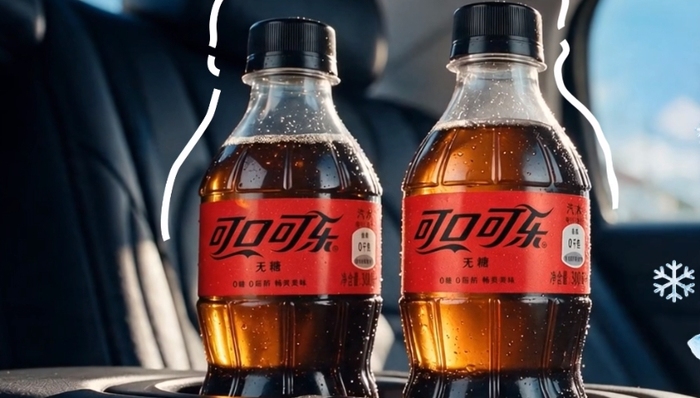
Image source: Didi
Recently, Didi Premium has teamed up with Coca-Cola to launch a pilot new cola service in 12 cities including Beijing, Shanghai, Guangzhou and Shenzhen. This move aimed at creating a differentiated experience has sparked considerable divergence on social platforms, with passengers and drivers holding different views.
According to the Yangtze Evening News, this pilot is a phased summer experience upgrade activity of Didi. Not all Didi Premium vehicles across the country will be equipped with the service. Only some of the pilot-participating premium cars will add 300ml bottles of Coca-Cola in addition to the original mineral water. The platform also distributes free incubators and ice packs to participating drivers to achieve the effect of iced drinking.
On August 24, the customer service of Didi Premium passenger side told a reporter from Jiemian News that some premium cars do provide passengers with sugar-free cola for free during the summer vacation, but the relevant activity will end on October 15, and there is no plan to continue providing cola after that. The customer service emphasized that the original free water delivery service of Premium will still be provided. Generally, one bottle of C'estbon mineral water is placed in the front row, and two small bottles of cola are placed in the back row for passengers to choose from.
The customer service did not give a positive answer to the question of whether the purchase cost of cola is borne by the driver or the platform. Another customer service on the Didi Premium driver side said that the information could only be provided after the driver's order-receiving mobile phone number is submitted.
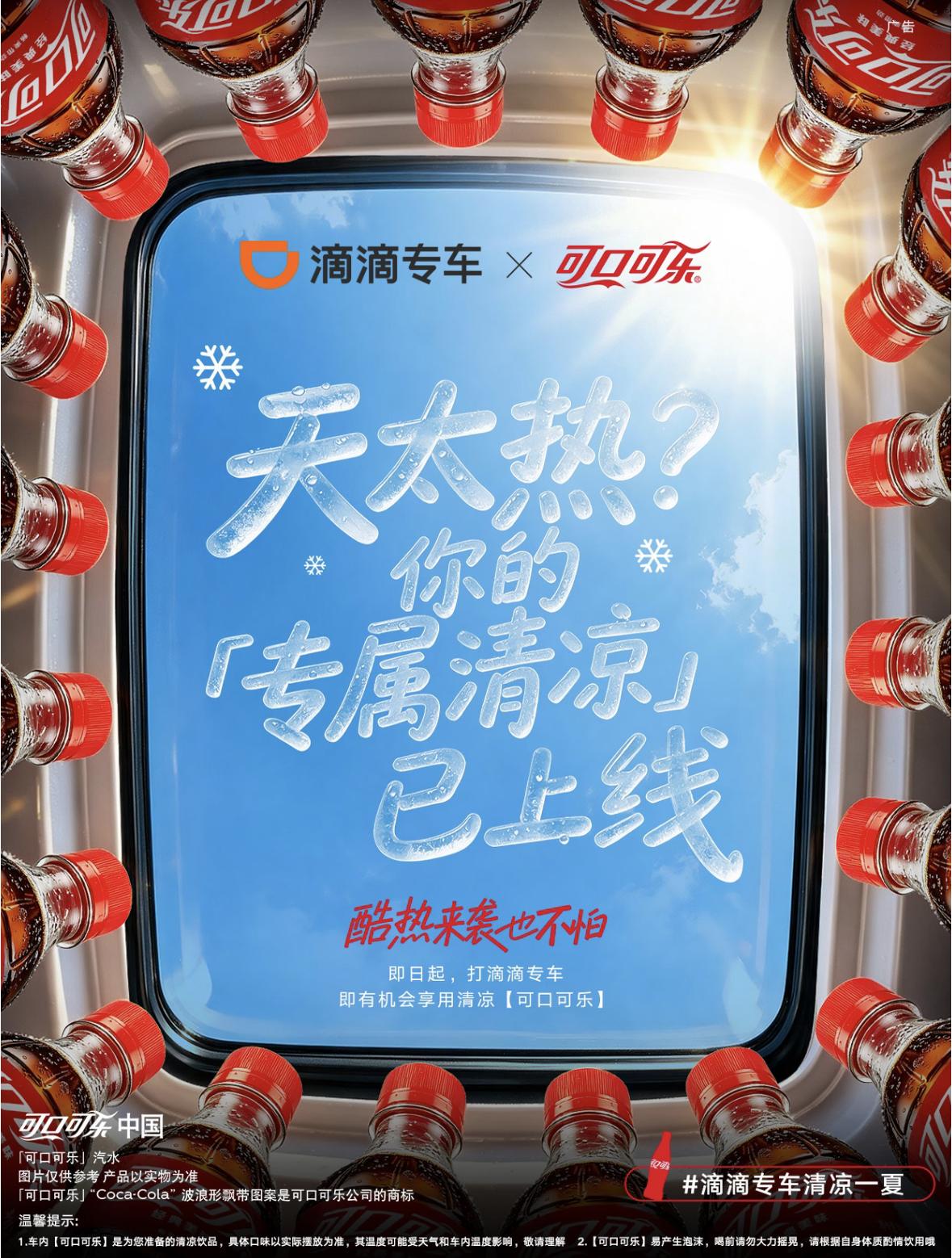
The poster of free cola delivery for Didi Premium released by Didi Chuxing
Jiemian News noted that a large number of passengers have posted real photos of their rides on social platforms. Some regard the cola provided in the car as an unexpected small benefit during the trip, while some passengers do not approve of the move.
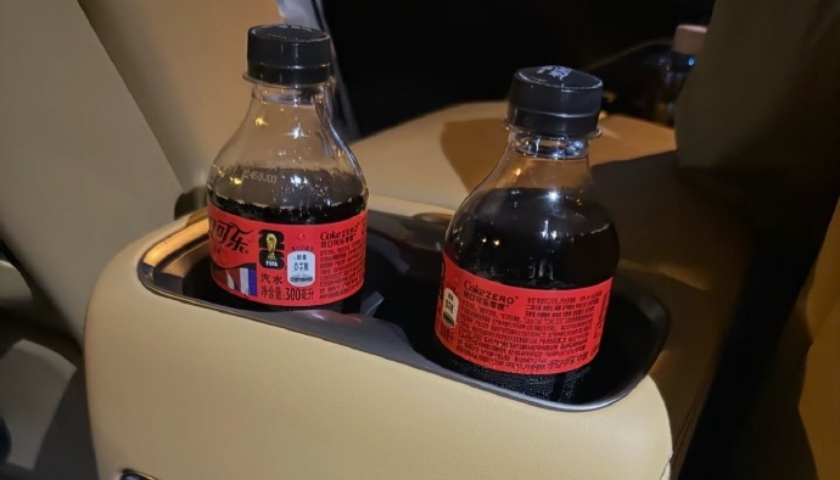
Real shot taken by a passenger
Many passengers taking short-distance trips in summer said that getting a bottle of iced cola as soon as they get in the car under high temperature can bring an unexpected surprise, and also create a more intuitive service difference between Didi Premium and the ordinary Express service. In addition, sugar-free cola also reduces the concern about sugar intake, and they affirm this small detail design.
However, there are also many complaints. In the view of some passengers, compared with mineral water, carbonated drinks have very limited drinking scenarios, and there is almost no demand for drinking during morning peak hours and business trips. Since cola is a carbonated drink, once the car encounters bumps during driving, it is very likely that the drink will spray and leak.
Many other passengers reported that due to the limitation of on-board incubators and ice packs, the cola they get is often only slightly cool, which fails to meet the expectation of iced drinks, and the experience is greatly reduced.
The attitude of the driver side is also polarized. Some drivers said that to participate in the activity for the first time, they need to purchase 96 bottles of cola by themselves, and the platform will give 24 bottles as a bonus. The purchase price per bottle is the same as that of the previously standard mineral water for Premium, which is 1 yuan per bottle. After drivers complete the step-by-step assessment tasks such as no complaints and required order volume, the actual cost per bottle can be 0.4 yuan lower than that of mineral water. The platform provides free incubators and ice packs, but the funds for purchasing drinks still need to be paid in advance by drivers, which will bring certain cost pressure.
In addition, since the trunk needs to store mineral water, cola, incubators and ice packs at the same time, the luggage storage space for passengers will be squeezed when receiving orders from passengers carrying large luggage.
But another Didi Premium driver from Beijing said that since the launch of the activity, she has taken a total of 76 orders within 6 days of full-shift work, and consumed 20 bottles of cola, which is far lower than her expectation. Most passengers are very careful when opening the cola, and some passengers take the cola away directly. The main groups drinking the cola are children and young people, and the overall feedback is positive. The driver also found that after providing cola, the consumption of mineral water decreased, and only 3 bottles were consumed in 6 days. For her, the only trouble is that if the cola can't be used up on the same day, she needs to take the cola home to ice it, and then bring it back to the car the next day.
In fact, providing bottled drinking water in Didi Premium has already been a standard service. The cost of drinking water for Premium is also borne by the drivers. The platform sets purchase standards to ensure the supply of drinks in the car. At that time, the disputes focused on issues such as purchase price, expired supplies, and excessive taking by passengers.
The core reason why mineral water can be retained for a long time lies in its high universality, which is suitable for almost all travel groups with stable consumption. Even if it spills, the cleaning cost is not high. The cola in this pilot has many uncertainties compared with mineral water in terms of universality, drinking risk and consumption stability.
However, for Didi, this move is an experiment for the platform to explore service stratification in the new stage of business growth. According to Didi's financial report for the second quarter of 2026, the total number of orders on the core platform reached 5.052 billion, a year-on-year increase of 13.2%. The total transaction value (GTV) of the platform reached 133.9 billion yuan, a year-on-year increase of 22.2%. The domestic travel business maintained steady growth, but the international business continued to lose money, dragging down the group's net profit attributable to owners for the first half of the year, which recorded a loss of 354 million yuan.
Under such operating background, the platform no longer tends to carry out large-scale money-burning subsidies, but turns to optimize passenger experience through low-cost scenario-based details. Cross-border drink cooperation is one of the low-cost marketing methods, which also helps to further widen the service gap between Didi Premium and ordinary Express service.
However, some analysts pointed out that the core foundation of the high-end development of premium ride-hailing services should be the basic experiences such as smooth driving, clean car interior and standardized driver service. Additional small benefits can only be the icing on the cake. If the extra troubles brought by the additional services exceed the benefits brought to drivers and passengers, no matter how loud the marketing voice is, it is difficult for such services to last for a long time.
This article is from "Jiemian News", written by Song Jiannan, and authorized for release by 36Kr.