The Chengdu Auto Show releases a new signal, marking the shift from "the race to launch new products" to "return to quality focus".
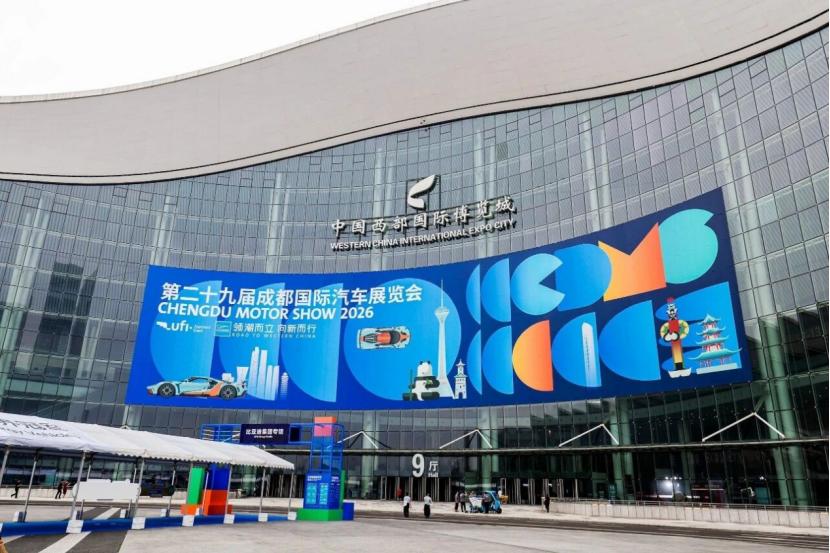
On August 21, the 29th Chengdu International Automobile Exhibition officially kicked off at Western China International Expo City. With the theme of "Leading the Trend, Moving Forward to New Horizons", this auto show gathers nearly 120 mainstream domestic and foreign automotive brands. It is the first heavyweight A-class auto show in China in the second half of 2026, and is also regarded as the core vane of the consumption trend of the central and western China's auto market.
Recently, the Ministry of Industry and Information Technology has further strengthened regulatory guidance on R&D management and quality supervision of automotive products, and standardized and guided the development behaviors of some enterprises that compress R&D cycles and accelerate product iteration. Coupled with the relevant policies introduced one after another before, the quality supervision system of China's automotive industry is continuously improving.
Against this background, this Chengdu Auto Show is no longer just a stage for centralized display of new cars, but has become a display field for the transformation of the industry's competition path: Has the nearly four-year-long price involution and new product launch race reached an inflection point?
Stricter Supervision Brings Constraints to "Quick-and-Dirty Vehicle Manufacturing"
Over the past three years, China's new energy vehicle market has entered a period of rapid popularization. While the industrial scale has expanded rapidly, the pace of product iteration has also been continuously accelerated. In the era of fuel vehicles, the R&D and verification cycle of a brand-new model is generally between 3 and 5 years, fully covering multiple core links such as design verification, mass production verification, and extreme working condition testing.
After entering the new energy era, the popularization of modular platforms and electrical/electronic architectures has indeed provided a technical basis for shortening the R&D cycle. However, some auto companies have alienated the "efficiency improvement" brought by technology into a simple pursuit of "speed-up", showing a tendency to over-rely on simulation tests and delete real vehicle verification links, compressing the R&D cycle of new cars to less than 18 months, and some derivative facelift projects even complete the whole process from project approval to launch within 12 months.
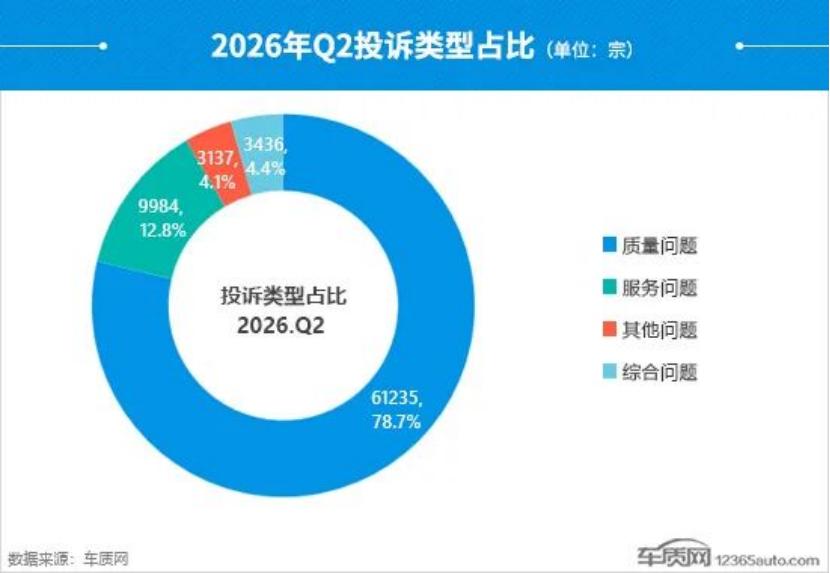
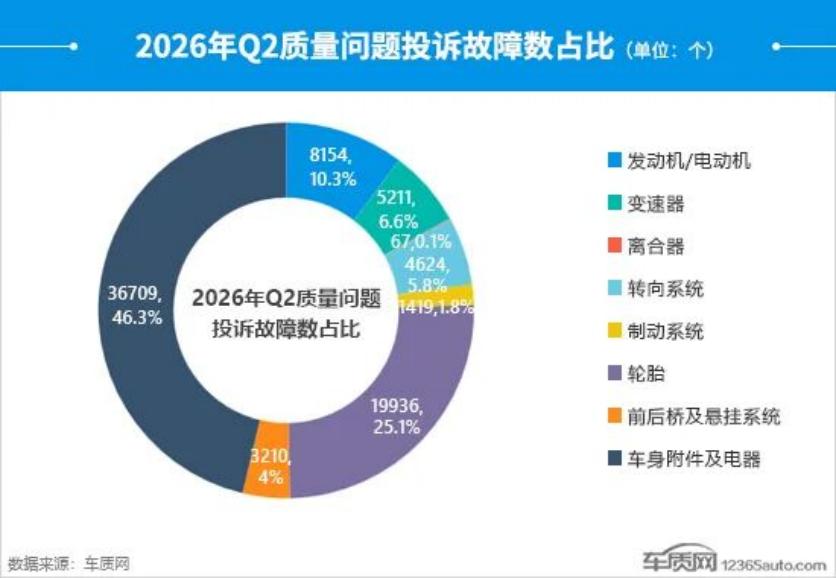
This fast new product launch model helped auto companies quickly seize the window of opportunity in the market growth stage, but it also laid hidden quality risks. According to the Q2 complaint analysis report of China Auto Quality, China's leading defect automotive product information collection and consumer complaint handling platform, the number of quality-related complaints has increased significantly compared with the first quarter, accounting for nearly 80% of the total. The number of complaint failures of steering systems, braking systems, front and rear axles and suspension systems, as well as body accessories and electrical appliances all increased month-on-month.
At the same time, rapid new product launches have also intensified homogeneous competition in the industry. Some enterprises compete for the market by piling up configurations and lowering terminal prices, and the overall profit level of the industry continues to decline. In the first half of 2026, the operating income profit margin of China's above-scale automotive manufacturing industry fell to a low point in the past ten years, among which the average profit margin of the vehicle manufacturing link was only about 1.5%. Many auto companies are trapped in the dilemma of "sales growth but profit decline", and the whole industry is characterized by increased revenue without increased profit.
In response to these problems existing in the industry, regulatory authorities have successively introduced policies since the beginning of 2026, gradually strengthening the institutional framework for standardizing competition order and building a solid bottom line for product quality. In February, the State Administration for Market Regulation issued the Compliance Guidelines for Price Behaviors in the Automotive Industry, drawing the basic red line for compliant competition; in June, the Ministry of Industry and Information Technology, together with the State Administration for Market Regulation, held a centralized interview with auto companies suspected of irrational competition, guiding the industry to abandon disorderly competition; in July, two mandatory national safety standards for electric vehicles were officially implemented, clearly requiring no fire or explosion during the thermal diffusion process of power battery packs, setting a hard standard for the core safety of new energy vehicles; in the same month, the National Automotive Standardization Technical Committee publicly solicited opinions on three new energy vehicle type test procedures, proposing to uniformly increase the total reliability driving test mileage of new energy models to 30,000 kilometers, aligning with the standards for fuel vehicles; recently, the Ministry of Industry and Information Technology held a symposium for key automobile production enterprises, requiring enterprises to strengthen product testing and verification, standardize the industry tendency of compressing the verification cycle from the source of R&D, and firmly guard the bottom line of quality and safety.
The core logic of this set of regulatory policies is mainly aimed at the "pseudo speed-up" that omits verification links and sacrifices product quality. The consensus within the industry is that relying on a mature modular platform and a complete testing system, auto companies can reasonably compress the R&D cycle without lowering quality standards, and such efficiently developed products are fundamentally different from "quick-and-dirty vehicles". The significance of regulatory policies is to bring the launch of new cars back to the track of complete R&D and full verification.
Shift at Auto Show: Product Narrative and Competition Focus Are Transferred
As the first large-scale auto show after the implementation of a number of regulatory policies, the performance of participating brands and new cars at this Chengdu Auto Show has already shown some noteworthy shifting signals. The most intuitive change is reflected in the product promotion caliber of auto companies. At previous auto shows, the core content of most brands' press conferences was to list configuration parameters, announce price concessions, and compete for quantifiable hardware indicators such as screen size, chip computing power, and the number of zero-gravity seats. At this auto show, more and more brands have begun to take safety standards, durability tests, and complete verification processes as the core content of promotion, and the focus of product narration has shifted comprehensively from "complete configuration" to "stable quality".
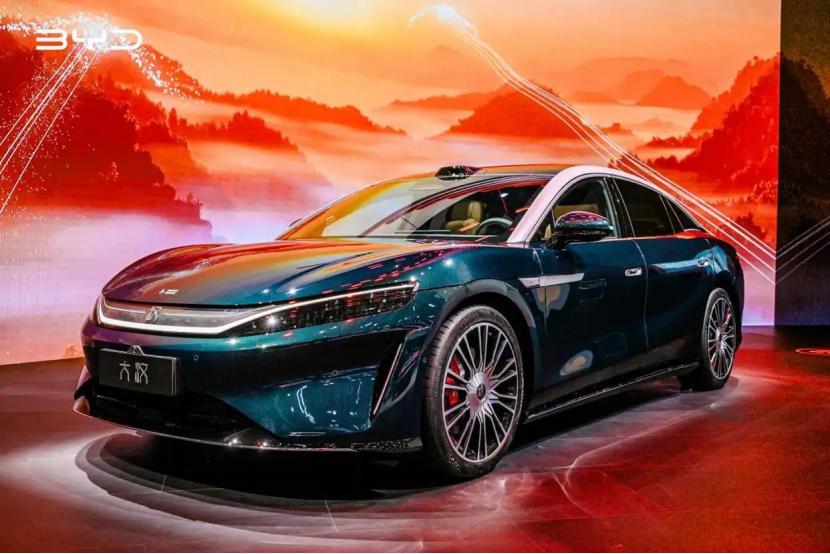
Take the highly concerned BYD Han at this auto show as an example. This flagship sedan of the Dynasty Series did not simply pile up hardware parameters during its release, but focused on introducing the vehicle's safety architecture, full-scenario assisted driving safety redundancy, and complete high and low temperature and durability test processes, so that consumers can understand the compliance of its development and verification.
Beijing Hyundai also clearly stated its position of "rejecting quick-and-dirty vehicle manufacturing" during the auto show, taking the complete R&D and verification system as its own competitive advantage. At the exhibition, many senior executives of auto companies also responded to the "quick-and-dirty vehicle" controversy. Great Wall, SAIC-GM, Deepal Auto and others have also publicly stated their commitments one after another: "We will not manufacture quick-and-dirty vehicles".
In addition to the adjustment of the promotion caliber, the cooling of the price war is also an obvious feature of this Chengdu Auto Show. The previous Chengdu Auto Show, as a warm-up event for the "Golden September and Silver October" sales peak, is often a node where brands intensively launch preferential policies. However, at this auto show, the number of brands that directly shouted the slogan of price reduction has decreased significantly, and most brands prefer to reflect product value through technical experience and service rights. This is not only affected by the guidance of regulatory authorities, but also the active adjustment of auto companies after their own profitability is under pressure. Many senior executives of auto companies have stated in public that simple low-price involution has no long-term value, and the industry will eventually return to the competition of product value itself.
Auto companies from different camps have shown different states in this shift. Leading independent auto companies, with their scale advantages and technical accumulation, are capable of taking the lead in adjusting the pace of product planning and increasing investment in R&D and verification links. Some new car-making forces have also taken the initiative to slow down the pace of new product launches, and put more resources into the optimization and quality polishing of existing products.
For smaller brands, the pressure brought by tightened supervision is more obvious. They not only need to cope with the challenge of rising R&D costs, but also need to balance the speed of new product launches and product quality under limited resources, so their living space will be further narrowed. Joint venture brands, with their long-term accumulated systematic R&D capabilities, have regained competitive advantages in terms of quality and reliability.
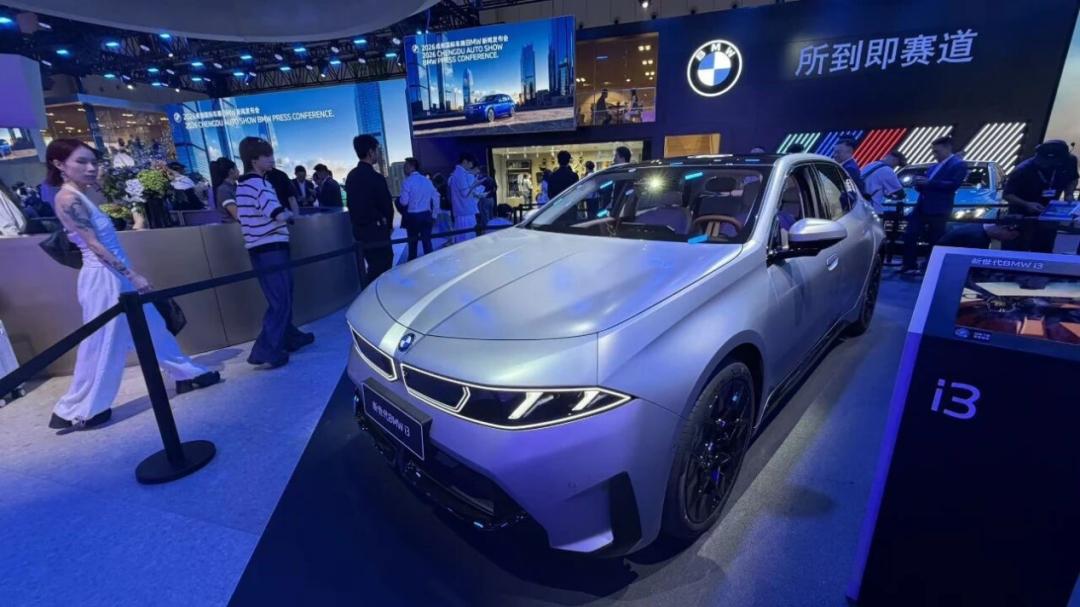
From the feedback of consumers, this shift also conforms to the changes in market demand. After years of price wars and rapid new product launches, consumers have become fatigued by the rapid iteration of new cars, and more and more car buyers have begun to pay attention to the long-term reliability, after-sales guarantee and use cost of products. Industry insiders believe that behind the intensive statements of many auto companies, it reflects the collective anxiety of current consumers about the quality of new energy vehicles.
Overall, the industry shift demonstrated by this Chengdu Auto Show is the result of the combined effect of regulatory policies and market pressure, and it is still in the initial stage of adjustment. The regulatory requirements of the Ministry of Industry and Information Technology for R&D cycles and quality verification have drawn a bottom line for the industry from the institutional level; the current situation that the overall profit of the industry continues to be under pressure also makes auto companies realize that the path of low-price involution is no longer feasible, and they must turn to value competition.
This article is from the WeChat Official Account "Auto Market Insight", author: Auto Market Insight, published with authorization from 36Kr.