Awkward lull or scene reshuffle? The Chengdu Auto Show, a hidden transition of industry dominance.
On August 21, the 29th Chengdu International Automobile Exhibition opened as scheduled. Before the opening, the word "chill" was the preset label given by the industry and the market, and the confusion of "Is the Chengdu Auto Show still necessary?" even overshadowed the expectation for new cars themselves.
However, the official data still gives a solid response: 220,000 square meters of exhibition halls, nearly 120 brands bringing about 1,600 exhibition cars to make their appearance. Coupled with the 33,745 orders and 5.753 billion yuan transaction volume of the previous Chengdu Auto Show, it confirms that the Chengdu Auto Show is still an "examination room" for testing strength and a "sales venue" for facilitating transactions.
But the perception of "chill" is not groundless. On the first day of the auto show, the foot traffic at many booths did drop compared with previous years, the attendance of senior executives of auto enterprises decreased, regional teams became the main force of the brands, and "selling cars" remained the main task running through the exhibition. Beyond the data, at least 22 automotive brands confirmed their absence — Rolls-Royce, Bentley, Porsche, Lamborghini, Maserati, and Lotus have not appeared for two consecutive years; Lexus, Genesis, and Infiniti are nowhere to be seen; What is more noteworthy is that Dongfeng Nissan is absent from the Chengdu Auto Show for the first time, and Dongfeng Honda, Chevrolet, and Yueda Kia also do not appear in the exhibition halls.
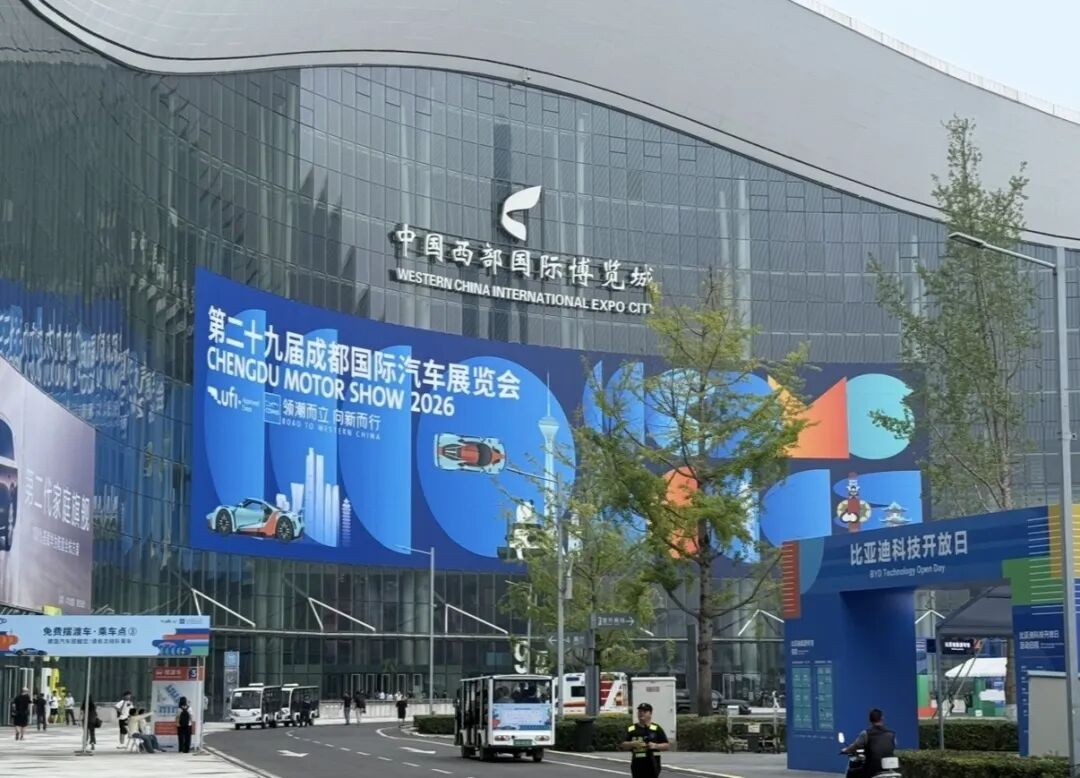
Some left dejectedly, while others made a high-profile debut. The absence list keeps lengthening on one side, while new faces are pouring in on the other side with a completely different attitude, with new brands, new models, and new strategies — the "Five Realms and Three Realms" of HarmonyOS Intelligent Mobility gathered in Chengdu for the first time, and Chinese automotive players are still expanding their lineup; Xiaomi exhibited its pure electric and extended-range models side by side for the first time, as new car-making forces advance on two tracks; the FREELANDER brand, jointly built by Chery and Jaguar Land Rover, made its debut, and Beijing Hyundai's high-end new energy brand IONIQ opened pre-sales, with joint-venture players getting admission tickets with a new attitude.
New faces replace old ones. The apparent desolation of the Chengdu Auto Show is not a decline in industry enthusiasm, but rather a trend chart of a silent replacement of the dominant power in the automotive industry. Those names that once occupied the C position are exiting, while forces that master the new rules are queuing up to enter. Looking at the surging "new" under the appearance of "chill", between absence and debut, a change in the right to speak in the automotive industry has already been staged.
New car-making forces play the "experience card": joint attack of product matrix, building scenarios and emphasizing services
As the main traffic protagonists in previous auto shows, several new car-making forces all participated in this exhibition in a low-key manner this time, pushing parameters to the background and bringing scenarios to the forefront.
XPeng made its appearance with models including the G9L, GX, X9 and MONA M03, and launched new kits for three models: the G9L, X9 and MONA M03. At the same time, it brought products such as the new generation humanoid robot IRON and HT Aero flying car, trying to depict the travel imagination from the ground to the low altitude; NIO moved its battery swap station into the exhibition hall, demonstrating how to start with a full battery on site, allowing the audience to intuitively feel the energy replenishment efficiency; Leapmotor put all its pure electric and extended-range products on the booth; Leapmotor, with the theme of "Keep moving upward, reach every peak", made its appearance in Chengdu with the newly launched Leapmotor A05 and the full A, B, C, D product lineup, and invited the 100,000th user of Leapmotor A10 to share his story.
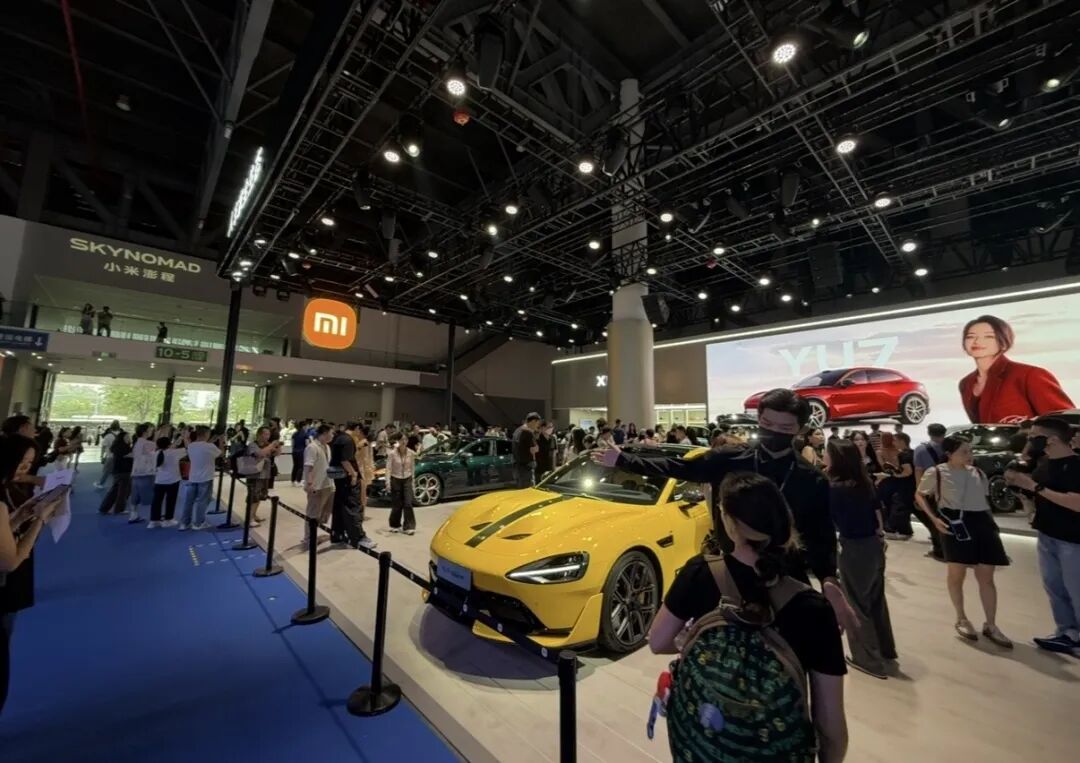
Even without the presence of Chairman Lei Jun, the foot traffic at Xiaomi Auto's booth remains high. Visitors still need to queue up to enter the experience along the pre-set route at the booth. The Xiaomi Pengcheng N90 Max and N70 Max, which just opened pre-sales in July, officially debuted at this auto show, completing the first joint appearance of the complete product matrix from pure electric models to extended-range models. Hu Zhengnan, CTO of Xiaomi, and Li Xiaoshuang, Vice President of Xiaomi Auto, attended this exhibition and completed the door-opening ceremony for the first batch of small-order owners of Xiaomi Pengcheng.
The new car-making forces, which are good at talking about technology, parameters and innovation, did not choose the traditional strategy this time. On the contrary, how to allow users to experience more intuitively, create scenarios that are closer to users and serve users has become the main task of the new car-making forces at this Chengdu Auto Show.
For new car-making forces, the function of the Chengdu Auto Show is shifting from "releasing products" to "operating users", and new car-making brands are turning the auto show from "exhibiting cars" into "exhibiting lifestyles".
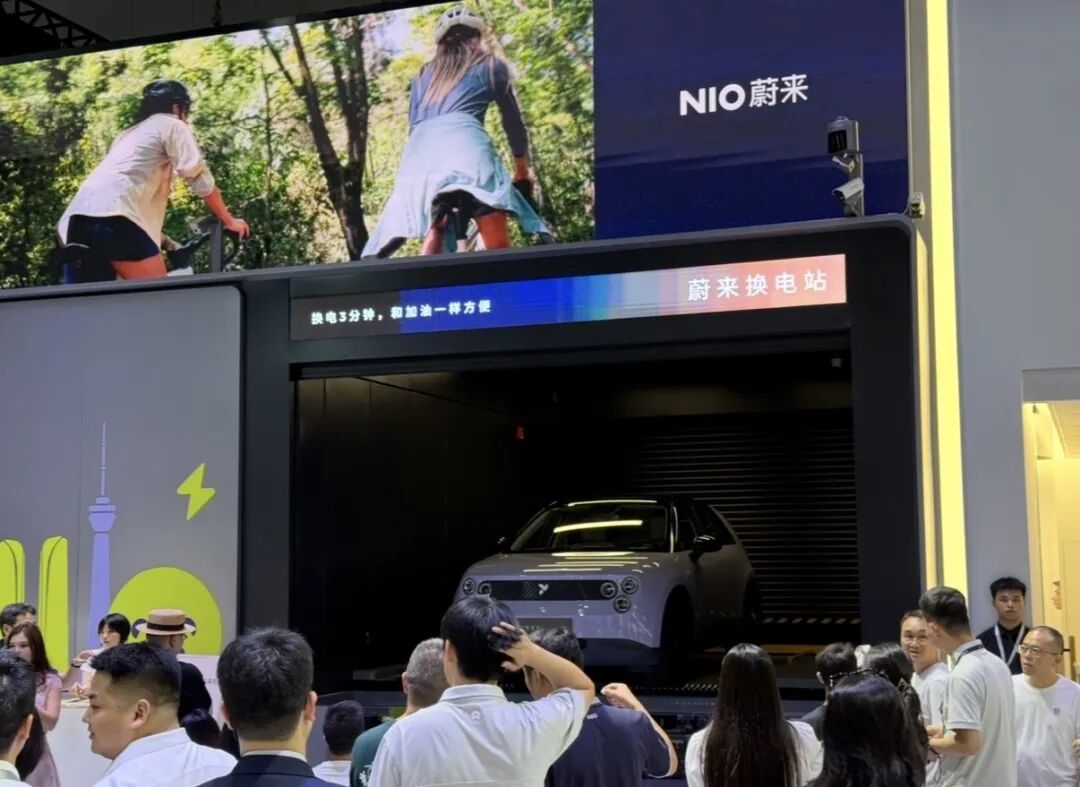
XPeng's flying car, NIO's battery swap demonstration, and Xiaomi executives opening doors for users are essentially not for on-site sales, but to implant cognition in consumers' minds: choosing this brand is not just choosing a car, but choosing a complete lifestyle for future travel.
This experiential and perceptual narrative method is obviously more effective at the Chengdu Auto Show with strong consumption sentiment.
Chinese automotive brands with the "Jing" suffix gather together: group army operation supported by Huawei logo
One of the most important highlights of this auto show is that the "Five Realms and Three Realms" of HarmonyOS Intelligent Mobility gathered in Chengdu for the first time.
The five brands of Shangjie, Zhijie, Xiangjie, Wenjie and Zunjie made their appearance in a matrix, the flagship MPV Zunjie V800 made its national debut, and the Zunjie V680 and Zunjie S800 Grand Collection were also exhibited on the same stage; at the same time, the three series of models Qijing, Huajing and Yijing empowered by Huawei Qiankun made their first joint appearance.
"Large" and "luxurious" are still the core selling points of the Chinese automotive group.
On the eve of the auto show, the Xiangjie G9, the first hardcore SUV of HarmonyOS Intelligent Mobility, was launched. With a square box shape, the Turion platform and the Xuanwu body, it targets the pain point of hardcore SUVs that are "off-road capable but clumsy in cities"; the Zhijie RX opened pre-sales, a mid-to-large pure electric coupe SUV built on Huawei's Turion platform, with pre-sales starting at 299,800 yuan.
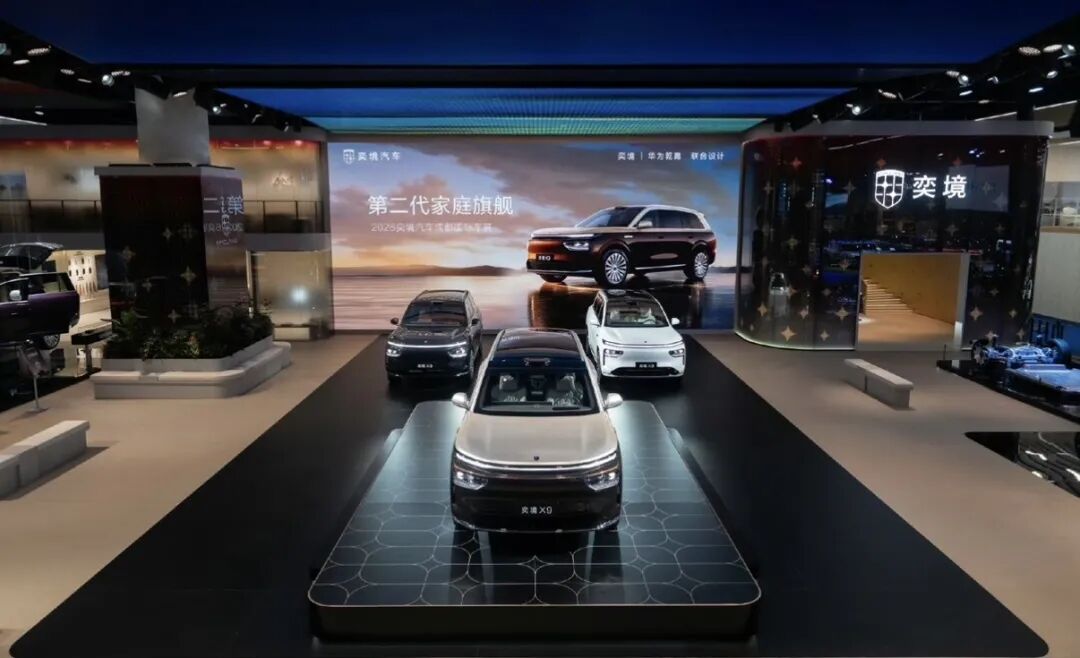
The brands with the "Jing" suffix also target the high-end 9-series market. "Yijing", a new brand co-created by Dongfeng and Huawei, showed a clear banner at the Chengdu Auto Show — the Yijing X9, a large six-seat family SUV with full configuration at the 300,000-yuan price range, directly targeting China's largest rational consumer group: middle-class families, filling the gap of the family flagship beyond Huawei's 9-series business luxury, executive flagship and hardcore off-road segments.
In addition, the first SUV model under Qijing Auto, the GX7, officially debuted. As the second strategic model launched by the brand after the GT7, it is positioned as a mid-to-large SUV and is expected to be officially launched in the second half of 2026; the Huajing S, a large plug-in hybrid SUV, also appeared at the Chengdu Auto Show.
As a latecomer among the "Jing" brands, different from the "Five Realms" of HarmonyOS Intelligent Mobility which are direct bloodlines of Huawei's ecosystem, the "Jing" brands are the product of in-depth integration between traditional auto enterprises and Huawei Qiankun technology — the former represents a deep binding of "Huawei-led", while the latter is a co-creation mode of "auto enterprise-led, Huawei-empowered". These new faces carry the manufacturing heritage and genes of traditional auto enterprises respectively, while injecting the full-stack intelligent hardcore capabilities of Huawei Qiankun, pouring into the high-end new energy competition with different postures.
Traditional auto enterprises are responsible for defining "who made the car", and Huawei Qiankun is responsible for defining "how intelligent the car is". Between the two, there is another hidden line of the power replacement in the automotive industry.
Back at the auto show site, this power transfer becomes more intuitive. Traditional luxury brands and joint-venture auto enterprises exit one by one, giving up booths for these new brands, and these new brands do not hide their intention to place the technical base logo of Huawei Qiankun in the most prominent position of the booth. From "HarmonyOS Cockpit" to "Qiankun Intelligent Driving", these technical terms that originally belonged to Huawei have now become the core labels for new brands to attract users.
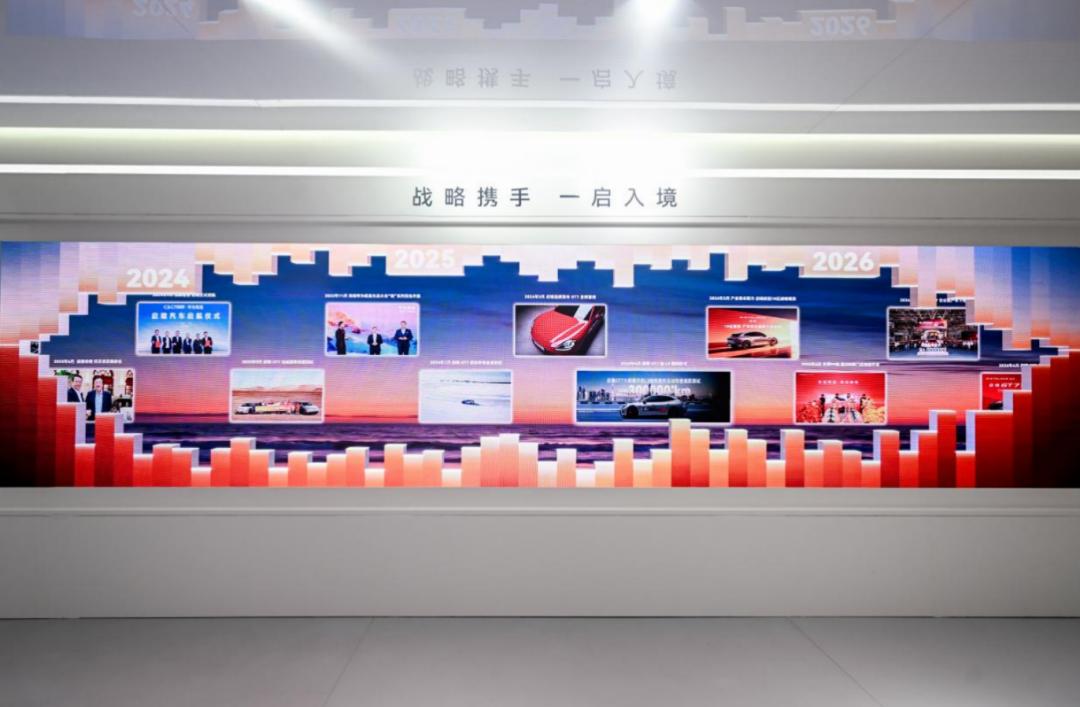
The gathering of the "Five Realms and Three Realms" and the concentrated release of the momentum of Chinese automotive brands repeatedly strengthen the Huawei logo, running through the full product spectrum from Class A to Class D, covering multiple categories such as SUV, MPV and sedan. Huawei's presence in the automotive industry has jumped from a "supplier" to an "ecosystem leader", and what is more noteworthy is that these new faces empowered by Huawei are still increasing.
When the "Huawei content ratio" becomes an important indicator to measure the intelligence level of a car, the Chinese automotive group at the Chengdu Auto Show collectively declares their ambition for the right to speak in the industry; as for the competition between brands, the market will give the final answer on who can succeed.
The "new admission ticket" for joint-venture brands: if you stay, you can no longer play by the old rules
The absence of joint-venture brands seems to have become an unavoidable phenomenon in every large auto show in recent years. Dongfeng Nissan is absent for the first time, Dongfeng Honda withdraws, Chevrolet and Yueda Kia are nowhere to be seen. These brands that were once "standard" at auto shows are now even too lazy to build booths.
Giving up the Chengdu Auto Show is, on the one hand, really "not cost-effective": costs of tens of millions of yuan in exchange for limited exposure and transaction volume, coupled with the continuous decline in the market share of joint-venture brands, profits are far less than before, so "cost saving" is very important for joint-venture brands; on the other hand, the fuel vehicle base is shrinking, the competitiveness of electrified products is insufficient, and some joint-venture brands have limited "hardcore products" to display, so they choose to leave.
While the joint-venture brands that are still on the field must use "new content" to prove that they still have the qualification to stay at the table. Therefore, part of the "new faces" at this year's Chengdu Auto Show are brought by the integration of Chinese and foreign parties.
The FREELANDER brand, jointly built by Chery and Jaguar Land Rover, made its debut at the Chengdu Auto Show, and its first mass-produced model, the FREELANDER 8, officially appeared. This cooperation model itself is worth paying attention to: it is no longer a simple technology introduction or joint venture production, but joint development between Chinese and foreign parties in the context of new energy and intelligence.
The debut of FREELANDER marks that joint-venture brands are exploring a new path of "de-labeling" — neither completely dependent on foreign technology nor simple localized transformation, but redefining product logic on a new technology platform.
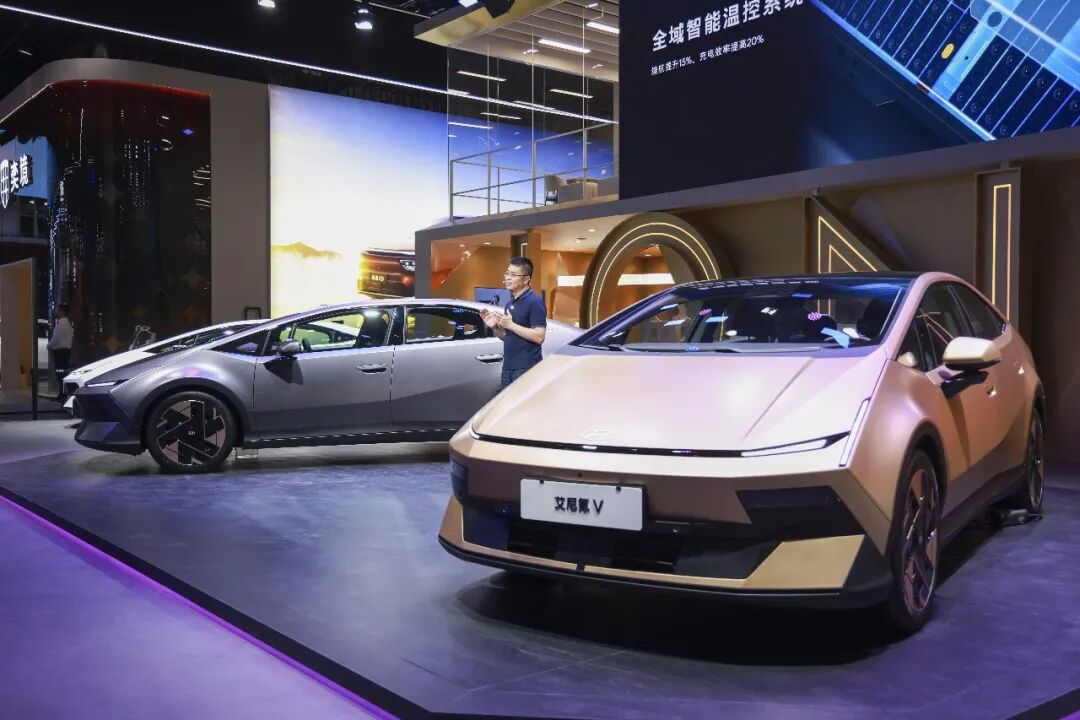
At the same time, the first electric vehicle under Beijing Hyundai's high-end new energy brand IONIQ opened pre-sales during the auto show. As a representative of joint-venture brands that laid out pure electric exclusive platforms relatively early, the pre-sales of IONIQ means that Korean joint-venture brands are trying to get rid of the stereotype of "fuel vehicle converted to electric" in the new energy track, and regain consumer trust with native electric platforms and intelligent configurations.
These joint-venture brands that are still on the field are conveying a signal with their actions: the admission ticket to stay at the Chengdu Auto Show is no longer the past brand aura, but whether they can launch products that truly adapt to the needs of China's new energy market.
Those joint-venture brands that still participate in the exhibition with the inertial thinking of the fuel vehicle era will soon be submerged by new car-making forces and Chinese automotive power even if they come; while those brands that choose to be absent may be waiting for a more mature opportunity, or have temporarily withdrawn from the competition in this process of dominant power replacement.
Conclusion
Absence and debut happen at the same time, desolation and enthusiasm coexist.
The experience upgrade of new car-making forces, the technical assembly of the Chinese automotive camp, the debut of new joint-venture models and brands... The Chengdu Auto Show reflects the most real power map during the industry transformation period: whoever masters the dual variables of new energy and intelligence is qualified to occupy the C position at the next auto show; and those brands that still perform according to the old script, no matter how glorious they were in the past, may gradually fade out of the audience's vision.
This, perhaps, is the real "new" of the Chengdu Auto Show.
This article is from the WeChat Official Account "Phoenix Auto", edited by Gong Zhaoen, and published with authorization by 36Kr.