How many ordinary people's livelihoods are propped up by a single three-wheeled street vending cart?
Street vendors have long existed in the gaps of urban life.
The breakfast stalls in the early morning, the snack carts at school gates, the fried skewer and fruit stalls outside residential compounds at night are not only the most mundane part of the city, but also have long been on the fringes of urban management. In recent years, as jobs have become harder to find and incomes less stable, running a street stall has taken on a new layer of meaning: for ordinary people, it is not just a small business, but also a fallback option that allows them to start earning money quickly.
It does not require going through screening based on academic qualifications, age or resume. A vehicle, a skilled craft, plus long enough working hours, are all you need to get started. But this fallback has never been stable. It depends on foot traffic, on the streets, on the weather, and on how much space the city is willing to reserve for mobile vendors.
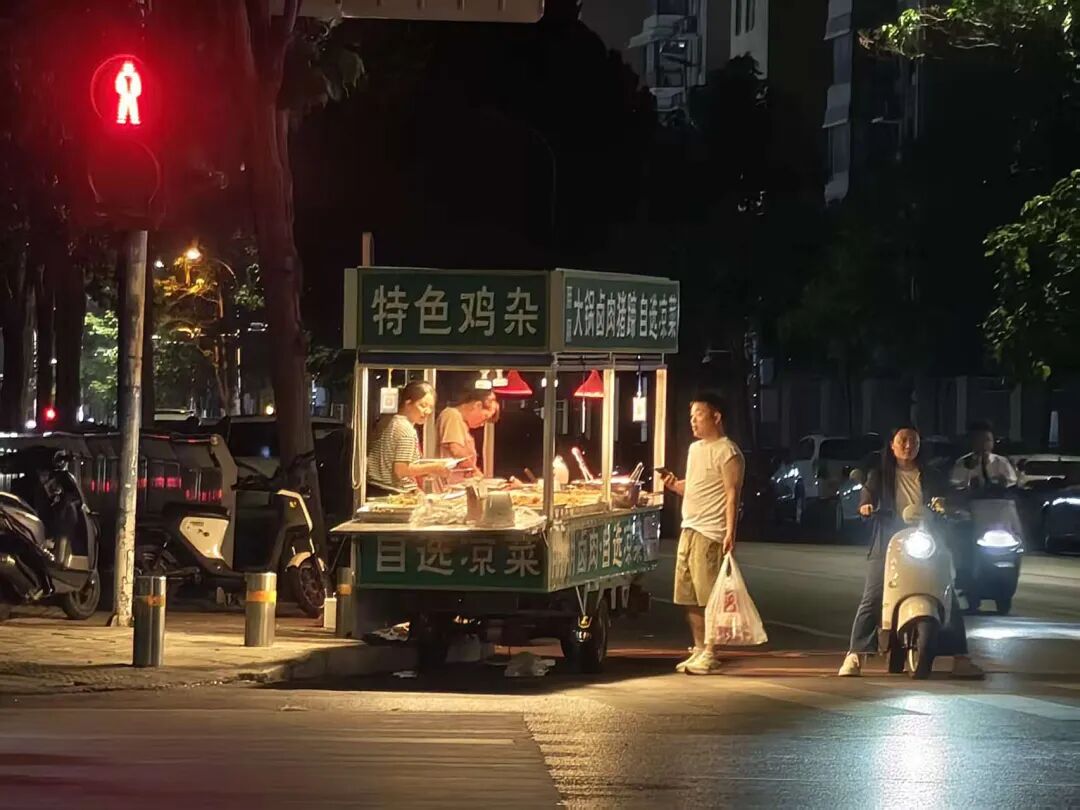
Since the beginning of summer 2026, Zhengzhou has been continuously carrying out standardized rectification of roadside business. This summer, *Human Pixel* documented the stories of three street vendors in Zhengzhou. Zhang Wei's rice noodle stall was shut down, costing him about 9,000 yuan in income per month; Wang Lijuan left the urban area and continued to look for places to settle down among towns, markets and resettlement housing communities; Li Meng was the least affected, as she already ran three stalls, owned a group of WeChat customers and received online orders, and recently started looking for physical storefronts.
The same wave of changes pushed the three people in different directions. For them, running a street stall is not just the "down-to-earth hustle and bustle" of the streets. It is more like a self-built employment buffer: low threshold, fast to launch, and allows people to trade more time and physical effort for higher income.
One job is not enough
At 5 p.m., the temperature in Zhengzhou still had not dropped. Zhang Wei stuffed the last disposable lunch box into his tricycle, and his mother called from behind: "Did you bring the chili oil?" He replied with a yes, and pedaled out.
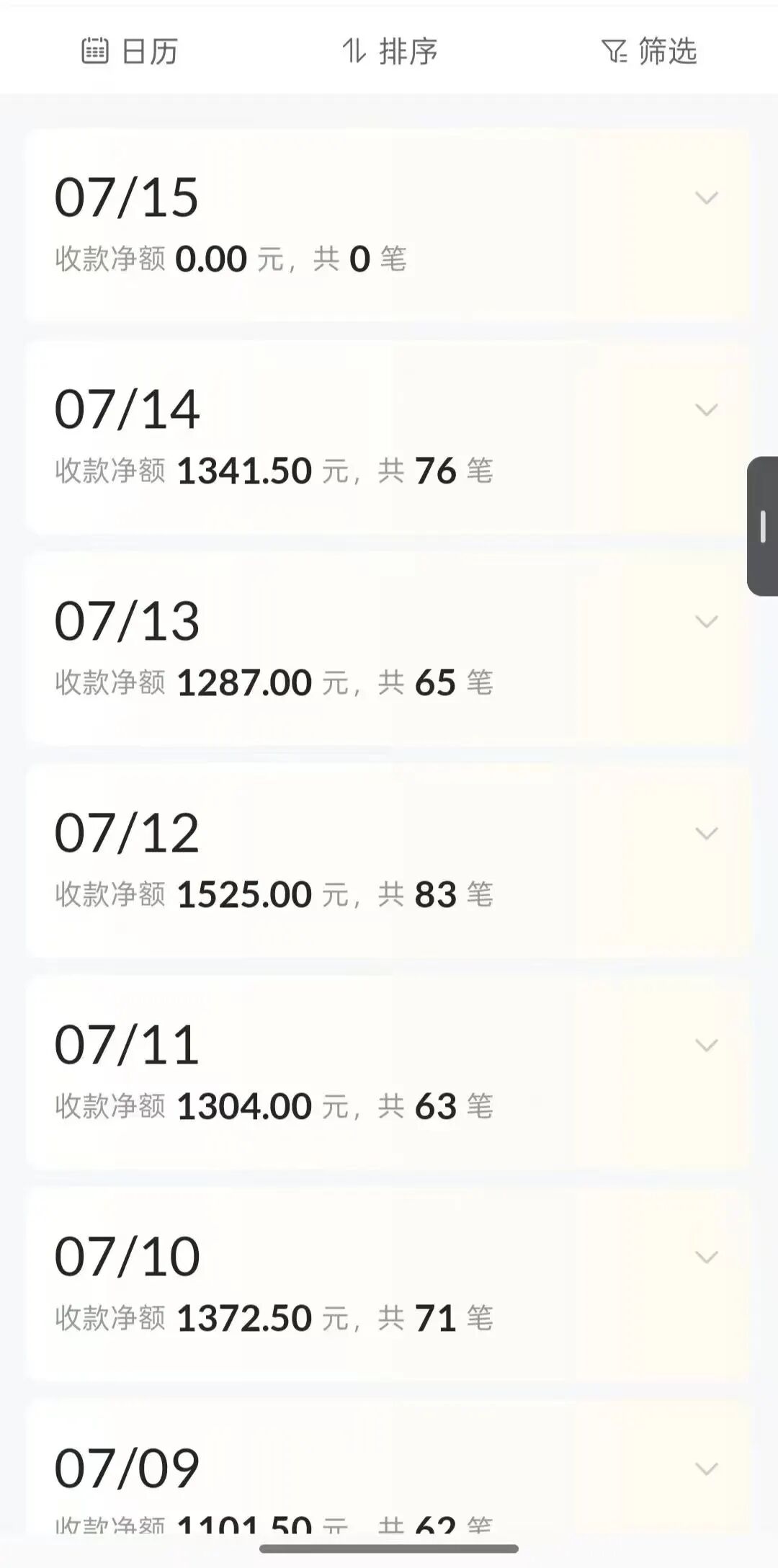
His rice noodle stall near the residential compound had been in operation for more than two years. He sold beef rice noodles, offal rice noodles, with side dishes and instant noodles added, and a large bowl was priced from 23 to 30 yuan. Office workers off work, employees of surrounding shops, and families out for a walk made up the evening peak on this street. He could sell 45 to 60 servings a night, with revenue of around 1,400 yuan, gross profit margin of 35%, and a net income of 500 yuan a day. He ran the stall 18 days a month, earning 9,000 yuan.
This 9,000-yuan income is the "insurance" Zhang Wei bought for himself.
Zhang Wei has two jobs: he works as an online car-hailing driver in the daytime, and runs the rice noodle stall at night.
This is the ideal dual-income arrangement he planned for himself, with one main job and one side job as double insurance. He runs the car with a friend during the day, finishes work at around 4 p.m., hands over the car, and goes home to start the second business. His mother starts preparing ingredients for him at 2 p.m., processing beef offal, making soup bases, preparing side dishes, and packing chili oil, disposable lunch boxes and chopsticks one by one. After Zhang Wei gets home, he loads all these things onto the tricycle and sets out to run the stall at 5 p.m. sharp.
At the very beginning, he and his friend rented a car, with a monthly rent of 3,600 yuan. Plus platform service fees, small parts maintenance costs and other scattered expenses, the fixed monthly cost was just over 4,000 yuan. Later, taking advantage of the price cut of BYD Qin, the two simply bought one together. The car became their own, but making money did not get easier. Zhang Wei recalls that the income he could earn in 8 hours in the past now often takes 12 hours to make. There are more small orders and fewer large orders. After deducting electricity costs, tire costs, maintenance costs and nearly 30% of platform commission, he can get about 5,000 yuan a month after splitting the income with his friend.
9,000 yuan from the stall plus 5,000 yuan from the online car-hailing work is the total income Zhang Wei earns after working at least 14 hours a day, and it is the budget that keeps his family running normally. They have two children: the basketball class for one costs 8,400 yuan a year, the English class for the other costs 1,500 yuan a month, the rent is 1,900 yuan a month, plus daily expenses on food, clothing, housing, transportation and other costs, the family needs at least 6,000 yuan a month.
After June, the street where Zhang Wei ran his stall began to rectify mobile vendors.
People had long been complaining about that road. The outermost lane of the two-way four-lane road was marked with parking spaces, and the gaps in the second layer were crowded with tricycles for street stalls. During the evening peak, vehicles had to wait for several traffic lights to get into the residential compound. After the vendors left, oil stains, plastic bags and discarded lunch boxes would remain on the road surface.
After the stalls were cleared away, the road suddenly became empty. Many property owners found that it took 7 minutes less to get home than before.
Zhang Wei's rice noodle stall was also shut down.
At first, he thought it was a "campaign-style management" that would pass quickly. He parked the tricycle at home for a few days, waiting for the management to loosen up so that he could set up the stall again. But a week passed, two weeks passed, more than a month passed, the stall still could not be set up, and a layer of dust had accumulated on the tricycle.
The batch of beef offal, rice noodles and side dishes he stocked up before were still in the refrigerator. In the past half month, his family did not dare to buy much new food, and kept the edible ingredients for their own consumption first. But ingredients all have a shelf life, and in the end, a batch of them had to be thrown away.
He calculated that he lost 4,500 yuan.
Zhang Wei went out to look for new stall locations. Some places were too remote without enough foot traffic; some required stall fees, which made the business unprofitable after adding the cost. The business that originally seemed to only need a tricycle to start was not that easy when moving to a new place.
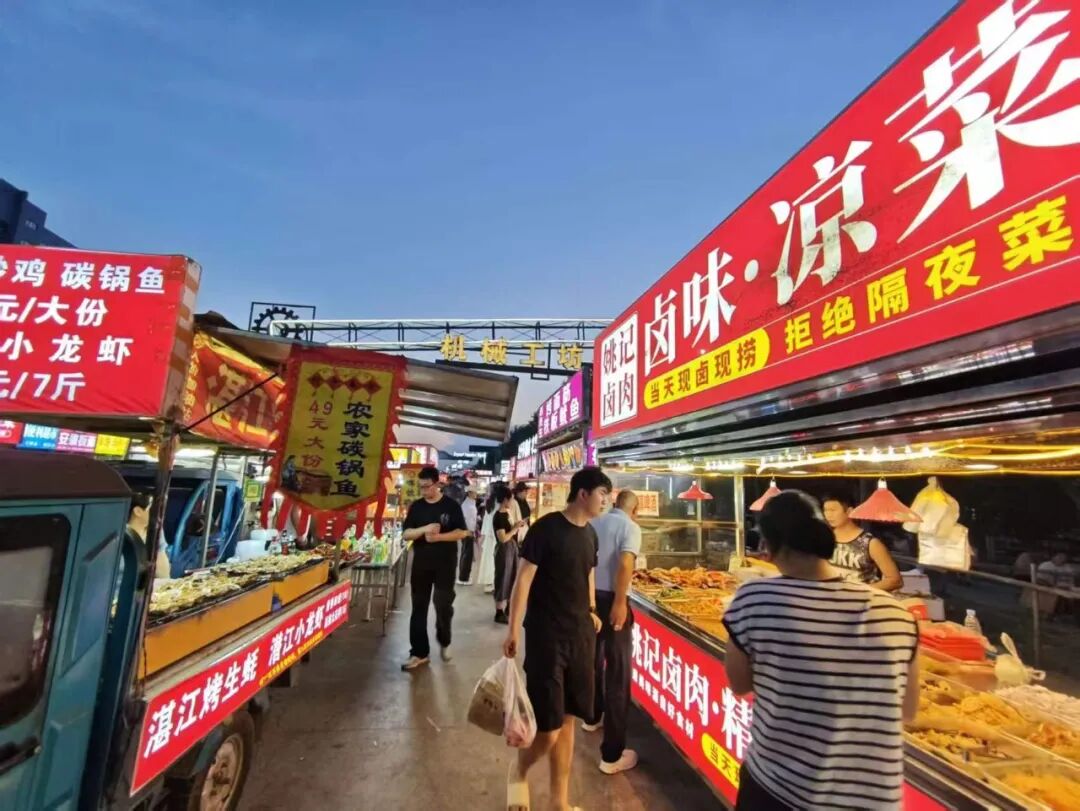
The original location was not "unblocked" for a long time, and Zhang Wei could not sit still. For more than a month, he did not dare to take a real rest. He drove the online car-hailing as usual in the daytime, and asked people around him what other jobs he could do in his spare time.
A couple of days ago, he decided to deliver takeout.
A friend told him that if he completes 40 orders a day and 1,000 orders a month, he can earn about 6,000 to 7,000 yuan. Zhang Wei soon started researching equipment. He took a fancy to a Ninebot M385C Max, which costs 3,999 yuan for the empty vehicle, and 4,899 yuan for the full lithium battery version with a range of 120 kilometers.
If his wife agrees, he plans to buy it.
The rice noodle stall is closed, and he has to add another job for himself.
A woman approaching 40 does not want to go back to the factory
Wang Lijuan's stall cart was not shut down, but she kept changing locations.
After June, it was not easy to run a stall in the urban area, so she traveled to farther towns, markets and resettlement housing communities. She went to a town for market day on the 1st, 3rd and 5th of each month, moved to another place on the 2nd, 5th and 8th, occasionally went to night markets in the urban area, and visited a large number of resettlement housing communities. These places with dense population and not too far distance formed her current stall map.
Recently, she has been going to resettlement housing communities not far from home more often. There is no stall fee, the procurement is convenient, and the foot traffic is considerable. A residential compound has 10 to 20 buildings with 2,000 to 3,000 households, and several connected compounds have tens of thousands of residents.
Wang Lijuan only sells fried chicken. She starts marinating ingredients at 8 a.m., rests for two or three hours at noon, starts frying at 3 p.m., goes out to run the stall after 5 p.m., and usually closes at around 9:30 p.m., sometimes even later than 10 p.m.
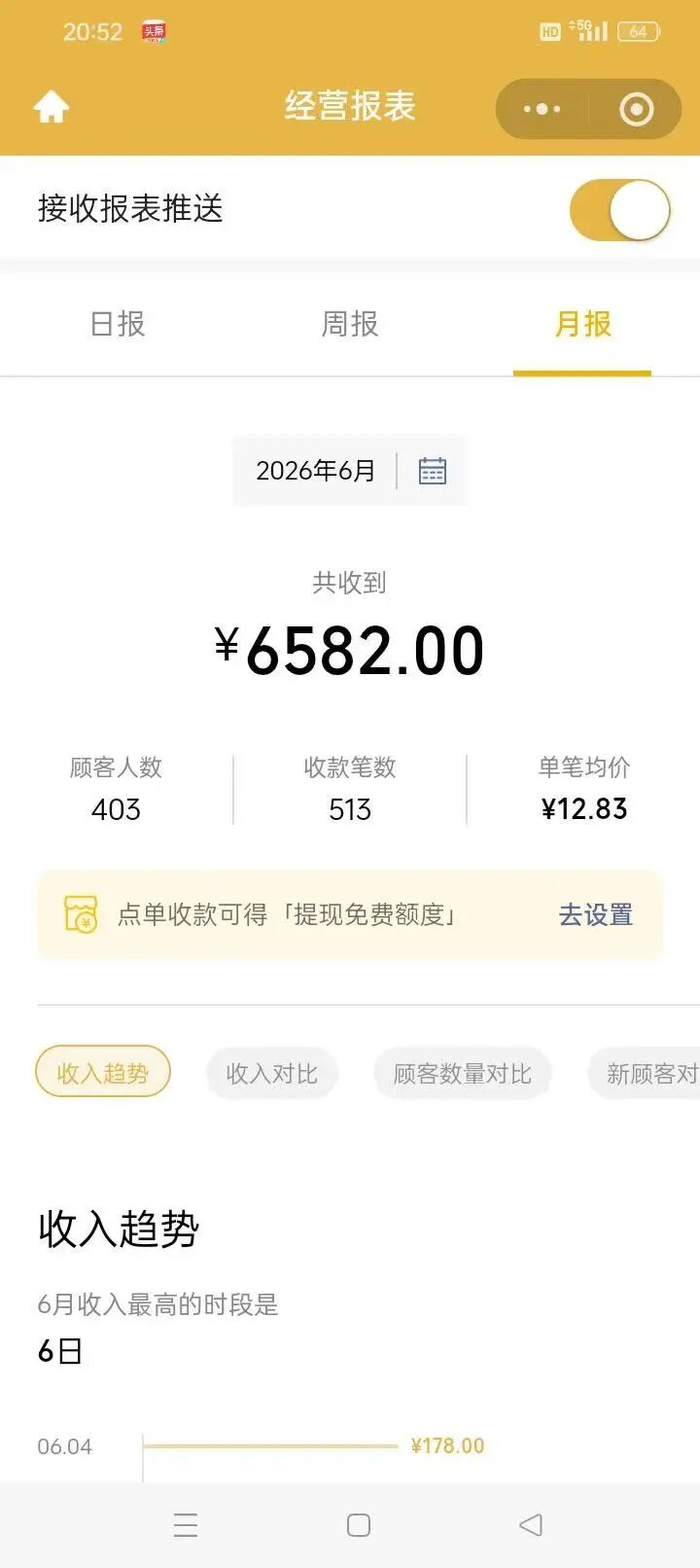
When business was good last year, she could sell 400 to 500 yuan a day, with the highest daily revenue exceeding 700 yuan. This year, business is obviously worse, with an average daily revenue of around 300 yuan, and occasionally 400 to 500 yuan. "600 yuan is out of the question."
She has several WeChat groups with hundreds of people each, and she used to send red envelopes frequently to attract customers. This year, the groups have become much quieter. After she sends out red envelopes, only a few people grab them, and she gradually feels a little discouraged.
Even so, Wang Lijuan has not seriously considered going back to work in a factory.
She is from Zhoukou, and has lived nearby after getting married in Zhengzhou. Her family's cultivated land was later expropriated, and it was difficult to make ends meet just by farming, so she went out to work. There used to be many factories in the local area, including instant noodle factories, pig farms, breweries, stone material markets, and large and small industrial parks. It was not difficult to find a job in the past.
But after the pandemic, some enterprises closed down, some enterprises saw their income drop, and her age gradually approached 40. Several times when she went to apply for jobs, the employers asked about her education background and age, and offered almost the same salary: maximum 3,500 yuan.
A former colleague brought her into the street stall business.
At the very beginning, she learned from others for a month. She gradually got used to talking to strangers, got several blisters on her arm from hot oil, and did not dare to run the stall on her own until her cooking skill was stable. "You have to learn from others. You can't figure out the right taste by groping on your own."
At first, she bought ingredients from her former colleague, 200 yuan for a 10kg box. Later, she got familiar with the manufacturer, contacted them to purchase directly, and with coupons, the lowest price for a box was 170 yuan. The 30-yuan price difference does not seem much, but for this small business, every penny saved is profit.
The biggest investment was the stall cart. She bought a 95% new second-hand cart, spent 9,600 yuan in total including modification, and spent more than 1,000 yuan on modifying the pot, making the light box and advertising cloth. She used private liquefied gas before, and now switched to official gas, 120 yuan for a 11kg tank. No single investment is particularly large, but when added up, it is enough for an ordinary family to calculate the budget over and over again.
Wang Lijuan reserves one day a week to spend with her child, and runs the stall every other day without missing a single day. The family's mortgage and large expenses are mainly borne by her husband who works in a brewery, and her child's tutoring fees and pocket money come from her stall income. The couple have a clear division of labor, each taking charge of their own part.
This division of labor also has moments when it fails to cover everything.
Several times this year when her child got sick, she could not get away and could only ask her mother-in-law to take the child to the hospital. When she got home at night, the child was already asleep. It is even harder to guarantee the time to accompany the child to do homework.
But compared with earning a fixed salary in the factory, she still prefers to run a street stall.
At least there is some room for adjustment in running a stall. If she travels to one more place and sells a few more servings of fried chicken, her income may be a little higher; if there is an emergency at home one day, she can decide for herself whether to run the stall or not.
Of course, she has to bear all the risks by herself.
In October last year, Wang Lijuan ran a red light while riding her cart and scratched a car. The fried chicken fell all over the ground, and a layer of skin on her right leg was also scraped off, with dense blood beads oozing out.
Wang Lijuan was fully responsible for the accident. Fortunately, the damage to the other party's car was not serious, and the driver did not make things difficult for her. The two parties finally settled the matter privately. Her husband found an acquaintance at a repair shop, and spent 640 yuan to spray paint and polish the scratches on one side of the car.
"I worked for nothing for two days."
What made her more upset was that the accident delayed her for more than three hours, and the fried chicken on the cart was not sold out. After dealing with the accident, she continued to run the stall. There were factory workers working night shifts nearby, so she launched a buy-more-get-more promotion, and kept selling until 1 a.m. to clear out the remaining stock.
On the way back, Wang Lijuan felt a little scared, so she turned the headlight to the brightest level, and the light swayed left and right on the road surface.
The next day, as long as her body could hold up, she had to continue running the stall.
With more than 5,600 friends on WeChat, is it a reliable fallback?
Li Meng is not very worried about this round of rectification.
Her stalls are mainly located in towns, so they are barely affected. More importantly, she has long thought about where the business can go if one day she can no longer run mobile stalls.
Before running the stall, Li Meng sold properties in the county, was a top salesperson, and earned more than 300,000 yuan in the best year. After 2021, the real estate market got worse and worse. She could not get several clients a year, and it became the norm that she could not meet the performance target. One month, she paid 2,500 yuan just as fines. In 2023, she was completely disheartened and quit her job without a new offer to start her own business.