AI is about to take over traffic, while the advertising industry is launching a frantic "doomsday counterattack".
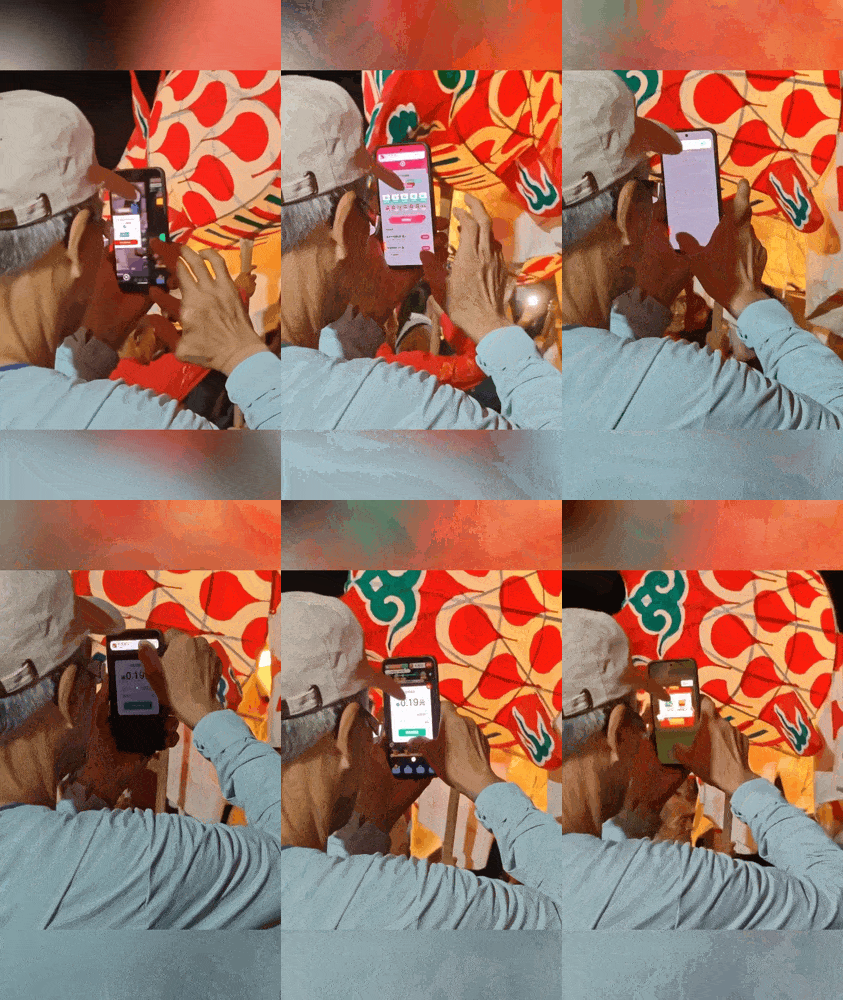
As night falls, colorful lanterns create a festive atmosphere. An elderly man raises his phone, trying to capture the lively beautiful scene in front of him.
Before the shutter can click, the screen suddenly stops responding.
He frantically taps all over the screen, trying to close these unexpected interferences. However, those buttons clearly marked "Close" or "X" never lead him to the exit, but instead direct him into new traps. Wrong clicks trigger a series of violent chain reactions, the screen flashes frantically, and the interface jumps again before he can even see it clearly.
Pop-ups keep appearing, showing scantily clad girls, then jumping to weird games, red envelopes worth a few cents, countless "pending tasks", and download pages of app stores.
It is hard to tell whether it is the colorful lanterns around or the constant flashing ads on the phone screen that illuminate the confused face of the elderly man. He just wanted to take a photo.
We were promised a more equal and inclusive world, but at this moment, what we get is a digital maze that is hard to escape.
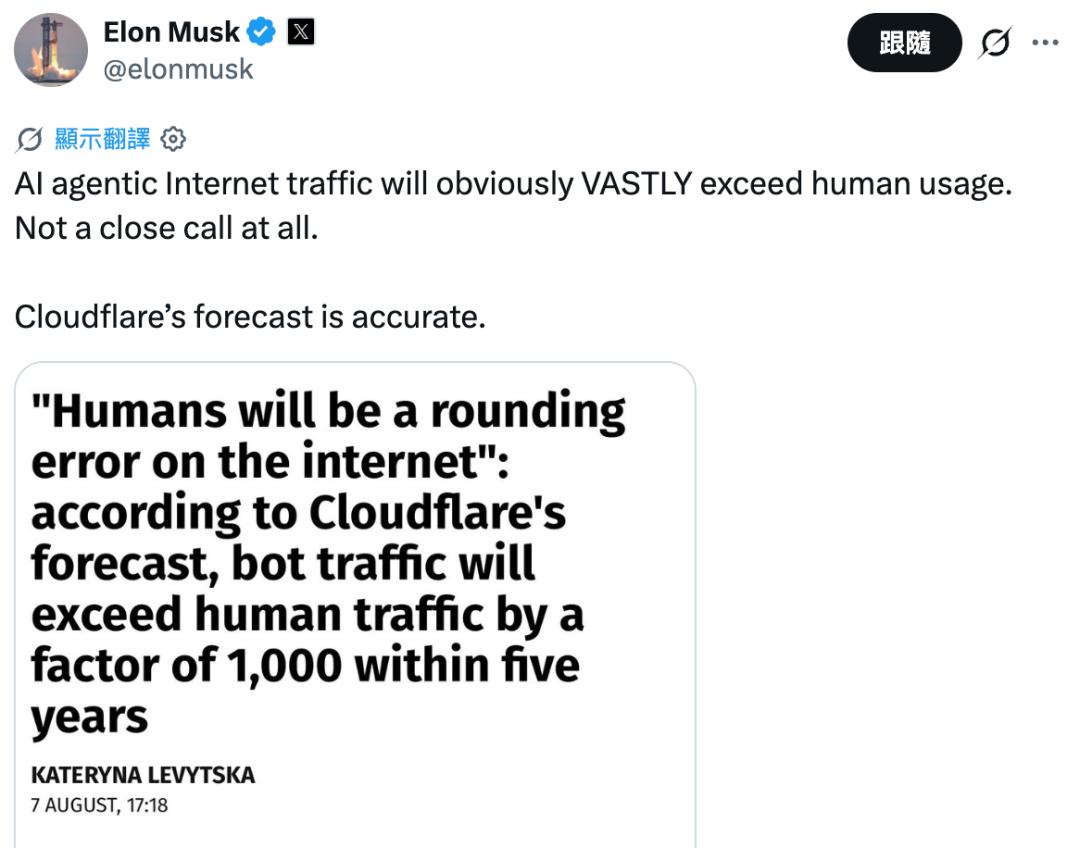
Recently, Elon Musk tweeted to endorse a report from Cloudflare, the giant of internet infrastructure: in the near future, the vast majority of traffic on the internet will no longer come from humans, but be automatically generated by AI and Agents in the background.
Machines search, read, summarize, compare prices, and place orders for humans. The future internet traffic will only multiply compared to today. But most of this traffic occurs in the hidden dialogues between Agents and Agents, servers and servers, and humans do not even need to lift their eyes or move a finger.
This is exactly the extremely absurd but extremely real contrast of the current tech world:
On the one hand, tech giants are in full swing building a highly developed silicon-based civilization called "AGI" to "liberate" humans from in front of the screens. In the cramped real life, the traditional internet commercial forces are indulging in a doomsday carnival before losing control, using radical and even despicable methods to the fullest, trying to squeeze out the last bit of value that "humans" can provide them in the traffic game.
This is the best of times, and it is also the worst of times. We are imagining a bright future while stuck in the messy quagmire of reality.
The AI Era No Longer Needs Eyeballs
The internet is built on the cornerstone of the attention economy. From web portals to search engines, and then to later social networks and short video platforms, all of them are harvesting our attention: attracting us to stay with free content, locking us in with infinitely scrolling algorithm feeds, and then inserting ads and monetization opportunities in every gap of our fragmented time.
Countless top engineers, actuaries and psychologists are devoted to making this mechanism run more efficiently. They rack their brains to come up with smarter button and color matching, more sensational headlines, and extremely complex reward algorithms to hold users' attention.
But with the advent of the AI Agent era, the logic has undergone fundamental changes. We have written many articles describing various drastic changes in the AI era before, let's briefly review:
When you buy air tickets, book hotels, or compare the parameters of several products when changing a new phone, you used to need to open three or four web pages or apps. Every page you flip through and every click of your finger is doing two things at the same time: displaying ads, and accumulating relevant data for more accurate ad display later.
But in the Agent era, you may only need to let the Agent plan a suitable trip for you, it will collect, organize and place the order by itself, and you only need to confirm the payment and enjoy the result. Behind this, the Agent calls interfaces at the millisecond level, crawls web pages and compares data, directly feeds back the results to you in a few to dozens of seconds, and skips all the processes for you.
The mobile GUI Agent capability that was all the rage last year even allows Agents to perform complex operations that cannot be processed by interfaces on your behalf, you just need to leave your phone there and let it read the screen and operate by itself.
Each of our time and attention has been greatly liberated. One day in the future, we will adapt to the new normal where we only need to give orders without operating by ourselves.
The terrifying point revealed by Musk's tweet is exactly this: the future internet behavior traffic will still be huge, and may even explode more violently than before — but all this traffic is "eyeball-free traffic".
This means that the attention that the current cornerstone of the internet, the advertising business model, depends on is eliminated. Without the gaze of human eyes, no matter how sophisticated the advertising algorithm is, it is just exerting force on a mass of air.
Unprecedented anxiety is spreading in the tech industry: if no attention can be obtained at all, who will the ads be sold to?
Doomsday Counterattack: Billboards Everywhere
Since the access to obtain attention is inevitably blocked by Agents, ads begin to counterattack frantically to the physical entities and the underlying operating systems that humans cannot delegate to Agents and cannot easily avoid.
Concealed induction is a thing of the past. Now ads are launching a full-scale invasion, draining the remaining attention to the last drop.
Once, buying a car, a TV or any smart device meant that consumers had absolute ownership over it. But today, when software defines hardware, the devices we buy do not only belong to us. They can also be turned into billboards for manufacturers as needed, displaying ads anytime and anywhere.
BMW, the German luxury brand, has recently fallen into public controversy. After the in-vehicle system was updated, many overseas BMW owners suddenly found that an ad for Sony and Marvel's latest movie *Spider-Man: Brand New Day* popped up on the central control screen of the car when they started the vehicle.
This ad originally appeared in text, occupying a banner position and can be eliminated by clicking; after clicking, an animated ad film will be played. It is known that overseas models produced after July 2020 and running the 7th generation and later operating systems may have this ad.
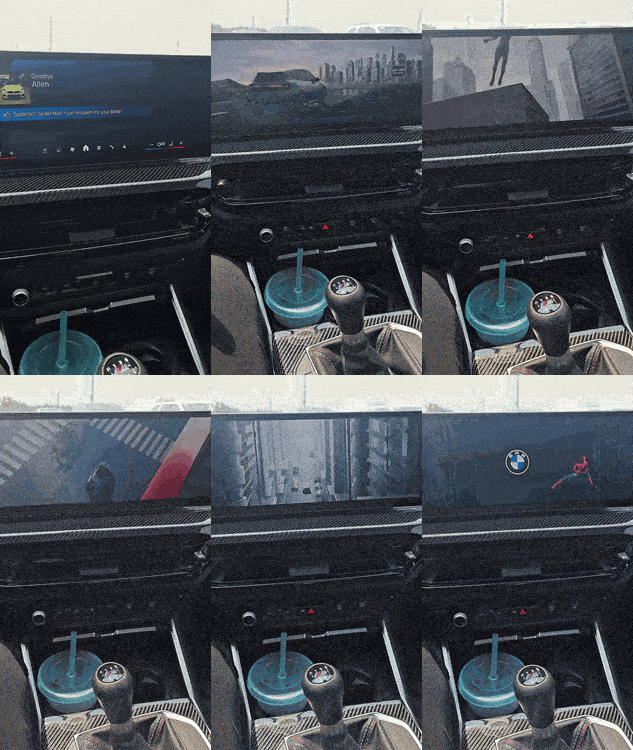
BMW officials have promised many times that they will not use core components such as dashboards and central control screens for marketing. Stephan Durach, Senior Vice President of the group, publicly stated that "the central control screen is the user's private space" and will not sell users to advertisers.
However, BMW still did it. Admittedly, it did not use the ad space to promote any value-added services, but just displaying the ad content in the car, which should be a "private space", on the screen that the owner will notice when starting the vehicle, is enough to make people feel deeply offended.
Some people may remember BMW's previous tricky operation: even though the components for seat heating have been installed in the car, the activation of the heating function still needs to be made into a paid subscription, which means that owners cannot use part of the car they paid for if they do not pay extra.
Although the nature of the *Spider-Man* movie ad is different from the paid heated seats, users do not need to pay extra, but there is no such thing as a free lunch. These two operations of BMW are homologous in strategy: using software and connected services to create revenue in the after-sales stage.
This kind of erosion also occurs in other products, and smart TVs are a typical case.
Everyone should be no stranger to implanted ads in various pause screens, screensavers and menus. But TV manufacturers still seem to be discovering new positions where ads can be inserted...
Roku, the giant of smart TVs and streaming media, was approved a patent called "HDMI Custom Ad Insertion" in 2024 — yes! As the name suggests, this technology directly monitors the external signal of the HDMI interface, and can insert an ad when a pause event is detected.
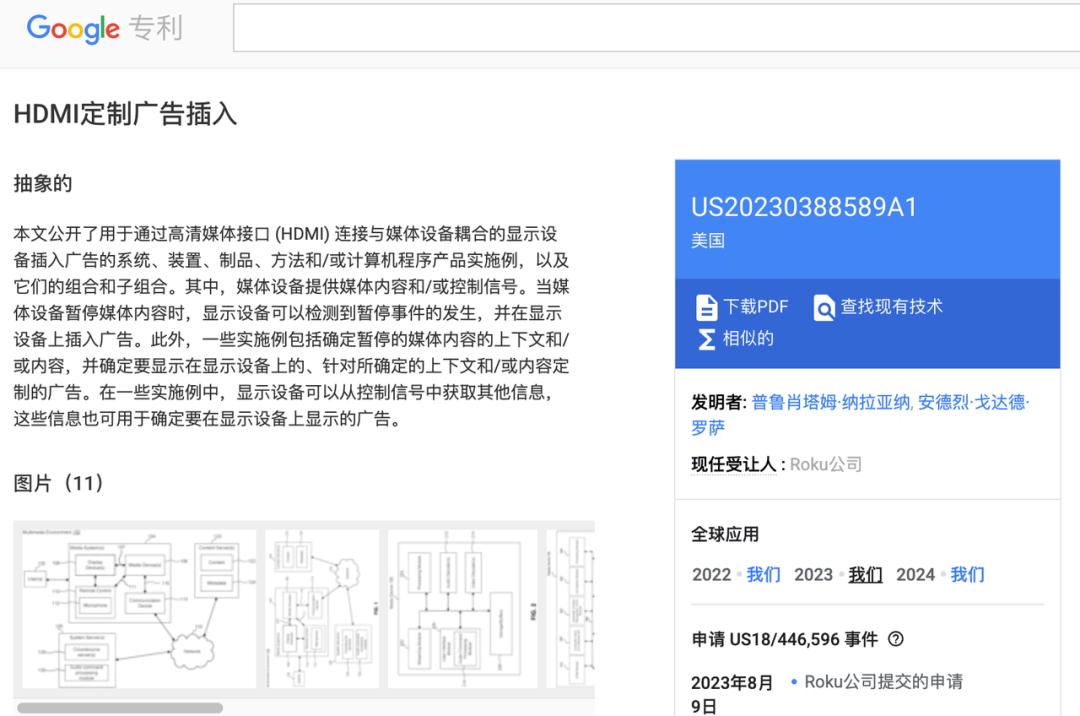
For example, when you play a game on PS5 and press the pause button on the controller, the TV directly recognizes that the picture is static at the hardware level, and displays ads for you — even if you do not use any of the TV's own functions and software, and only use the TV as an HDMI output, you cannot escape Roku's ads.
Fortunately, Roku's patent was met with overwhelming public criticism as soon as it was disclosed. The official stated that the patent is only used as a technical reserve, not a function that will be pushed to end products soon, and there is currently no plan to launch this patent on any products on sale.
Hardware manufacturers occupy the physical screens, while operating system platforms and mobile phone companies are also competing for the entrance to the digital world above the hardware.
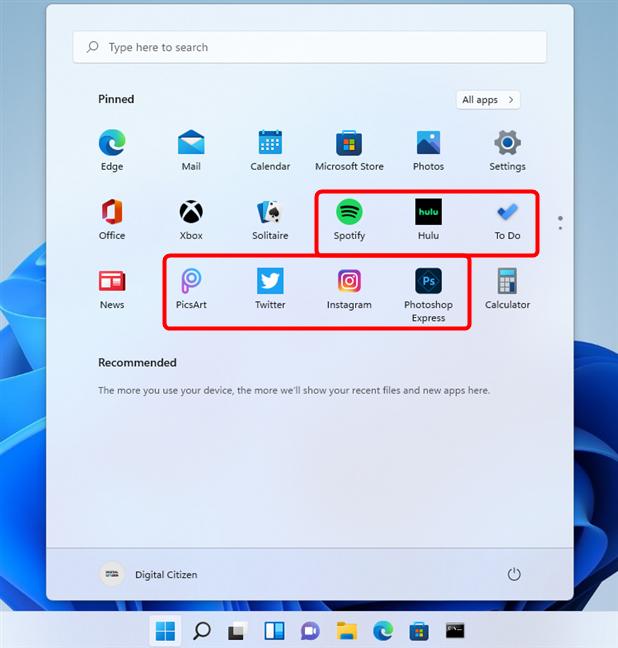
Microsoft added the so-called "Recommended Apps" in the "Start" menu, the most important function entrance of the Windows system, which are ads from software sponsors. Not only that, it also inserts all kinds of irrelevant content such as MSN information feeds, game promotions and Bing ads in every possible place such as the lock screen interface.
Even if users use genuine operating systems and pay for them, they still need to find and manually turn off the corresponding ad switches deep in the settings menu, not to mention that the switch options for many ad spaces are not placed together.
And in the domestic Android mobile phone market, the pre-installed lock screen, wallpaper and information feed services on the top desktop interface have pushed the invasion of ads to the extreme, and it is also very troublesome to turn them off, which has long been a common topic.
Every time the screen is lit up, there are ads and algorithm-recommended content in different positions, big or small, creating tiny visual stimuli for users, tempting them to click on the consultation promotions, mini-games and product links mixed in beautiful wallpapers and useful information.
At this point, we even want to shout to all Android phone manufacturers: if you really want to make AI mobile phones that users love, please fix the bad advertising mechanisms of the past.
AI Brings More Concealed Ads
Who could have imagined that AI itself could also be eroded by ads?
One major factor is the expensive computing power cost of AI inference and huge revenue pressure. For the vast majority of model and AI product companies, it is difficult to support hundreds of millions of free users only by a small number of paying users. In order to support the continuous progress of large models and keep the flywheel running forward, AI platforms need to compromise, and have to open up ad spaces in the process of generating and presenting answers.
Google's AI Overviews is the epitome of this compromise. In the traditional search result interface in the past, users could clearly distinguish the ad spaces marked with "Sponsored" labels from the organic search results ranked behind. But now, Google clearly will directly stitch sponsor ads, whether it is an actual product or just "information", into the AI-generated answers.
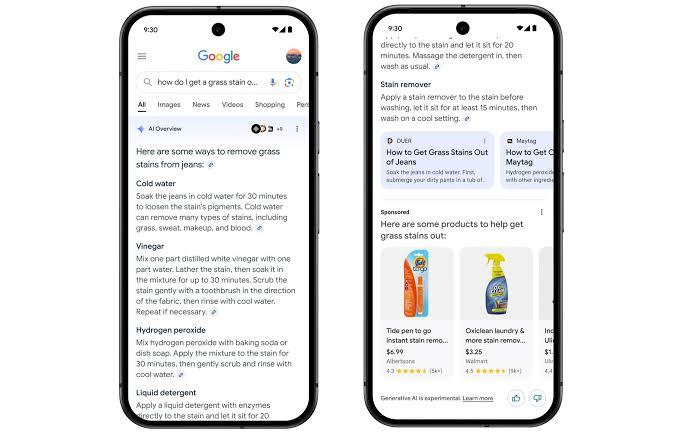
For example, if you ask it how to choose a coffee machine that suits you, while giving you a professional answer, the AI may also insert a product card of a specific brand. The AI really helps you, and at the same time completes a precise product promotion for the sponsor.
When the AI era is in full swing, ads may no longer be placed outside the content, or at least be an independent framework with obvious distinction, but be integrated into the content output by AI through streaming embedding.
Admittedly, traditional giants like Google inevitably have path dependence on advertising. Another Silicon Valley company, Perplexity, which was once hailed as a "search disrupter", also shows another kind of helplessness of native AI products in the face of commercial reality.
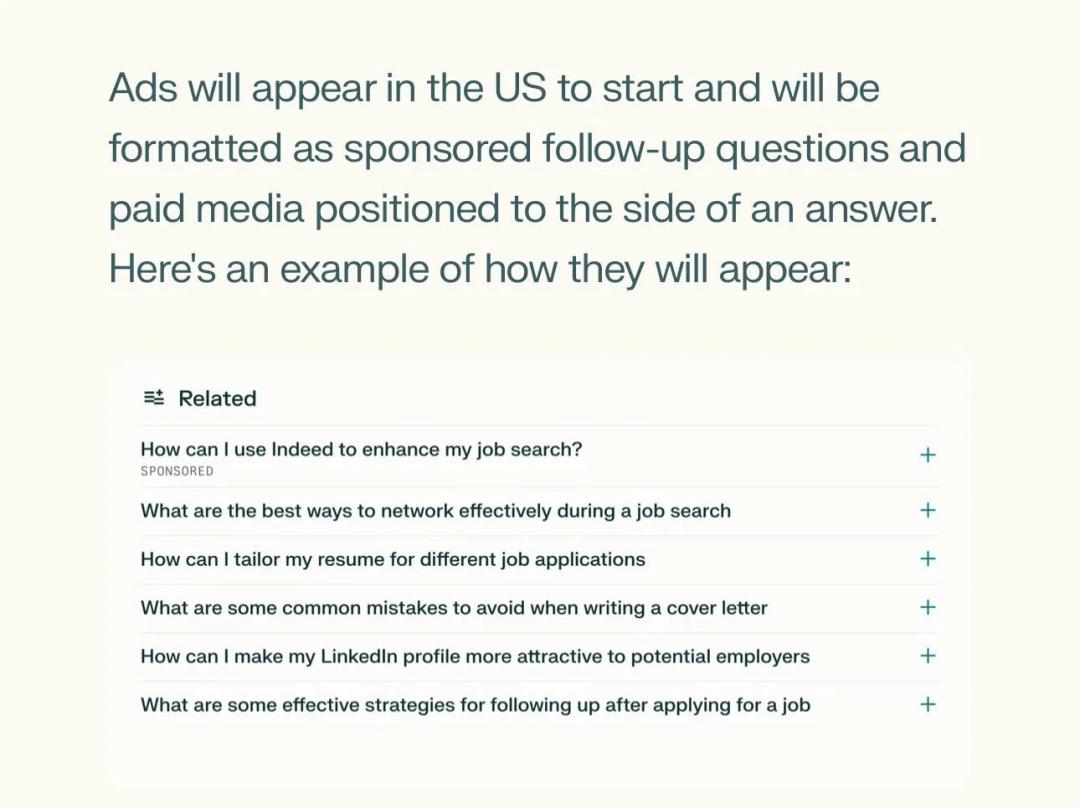
You must have noticed that many AI products now guide you to ask follow-up questions at the end of the answers, which not only makes users feel surprised, but also is a design to maintain user stickiness. In order to achieve diversified commercial monetization, Perplexity took a step forward and launched the design of "sponsored questions".
Previous data showed that the follow-up question function accounts for 40% of all requests of Perplexity. When users are immersed in in-depth conversations with AI, the system will subtly throw pre-designed sponsored follow-up questions, for example, when discussing "how to improve sleep quality", it will naturally lead to mattresses, and then guide you to ask "want to know how Casper mattresses can improve your deep sleep?"
In the past, these follow-up suggestions were generated by large models according to the natural knowledge-seeking logic of human users; but now, brands can bid to buy "follow-up positions". Your curiosity can also be reorganized and packaged as a path for marketing conversion.
Of course, Perplexity is far from the only company doing this. Microsoft's Copilot and various AI products/search tools are all facing the same compromise. For example, subtly embed advertiser links in the reference footnotes of complex answers — it is hard to say that AI will not follow the old path of traditional search engines and online advertising.
In the traditional internet era, there is a visible difference between ads and content. The trained brains of heavy users can clearly distinguish what is content and what is ad, and build a natural immune mechanism.
But this difference becomes more blurred in the AI era, which is a dangerous thing in itself. When users see an answer that looks sincere and professional, they tend to ignore that ads may have been quietly inserted into the reasoning chain. AI does not need to make a big fuss, it can lead users to the direction that has long been pre-purchased by advertisers with a rational, plain and trustworthy tone.
It seems that AI is unlikely to become the terminator of the advertising industry — on the contrary, it naturally becomes a new host for ads, a perfect salesman.
Who Does the Screen Actually Belong To?
From the above examples, it is not difficult to see that the development of technology is often dramatically fated.
We have created smarter algorithms that drive powerful large models, Agents and robots, which are expected to liberate humans from tedious and mechanical physical and mental labor. The advent of the AI era could have given us an opportunity to examine and redefine the relationship between users and devices, products, services and the business society.