How have ice cups become the hottest money-making business track this summer?
Who would have paid specifically for a cup of ice in the past? In milk tea shops, ice was just a free topping added casually; in convenience stores, ice cups were tucked away in the corner of freezers, serving as a backdrop for ice cream bars.
This once-invisible product that was only responsible for cooling down drinks has surprisingly quietly taken the center stage of iced drinks this summer.
Data from Instant Win, a market monitoring institution, shows that in the second quarter of 2026, the offline sales of ice cups surged 94.43% year on year, with the scale nearly 17 times that of the same period in 2024. On Xiaohongshu, discussions related to the "ice cup" topic have approached 400,000, with views exceeding 120 million.
The seemingly ordinary ice cup has unexpectedly become this summer's new favorite. How did it stage a comeback?
Tea Brands and Supermarkets All Jump Into the Market
The ice cup trend was first sparked by netizens hunting for bargains.
Some people order a cup of iced espresso, add ice at home and split it into two portions to drink, aiming to get twice the fun for the price of one. Social media influencers also posted their homemade recipes on Xiaohongshu to share, and the two basic formulas of iced espresso soda special mix and Yakult fruit drink quickly went viral.
As people experimented more, they found that saving money is only the basic benefit, while DIY is the real soul.
With a ready-made ice cup in hand, paired with soda water, Yakult, fruit juice, and bottled tea, you can recreate milk tea and make homemade low-alcohol cocktails at home.
This time, ice has handed young people a "semi-finished script". You can make your own exclusive special drink without complicated skills. The sense of achievement from making it yourself is far more satisfying than the few dollars you save, and it has also driven the popularity of a number of bottled drinks.
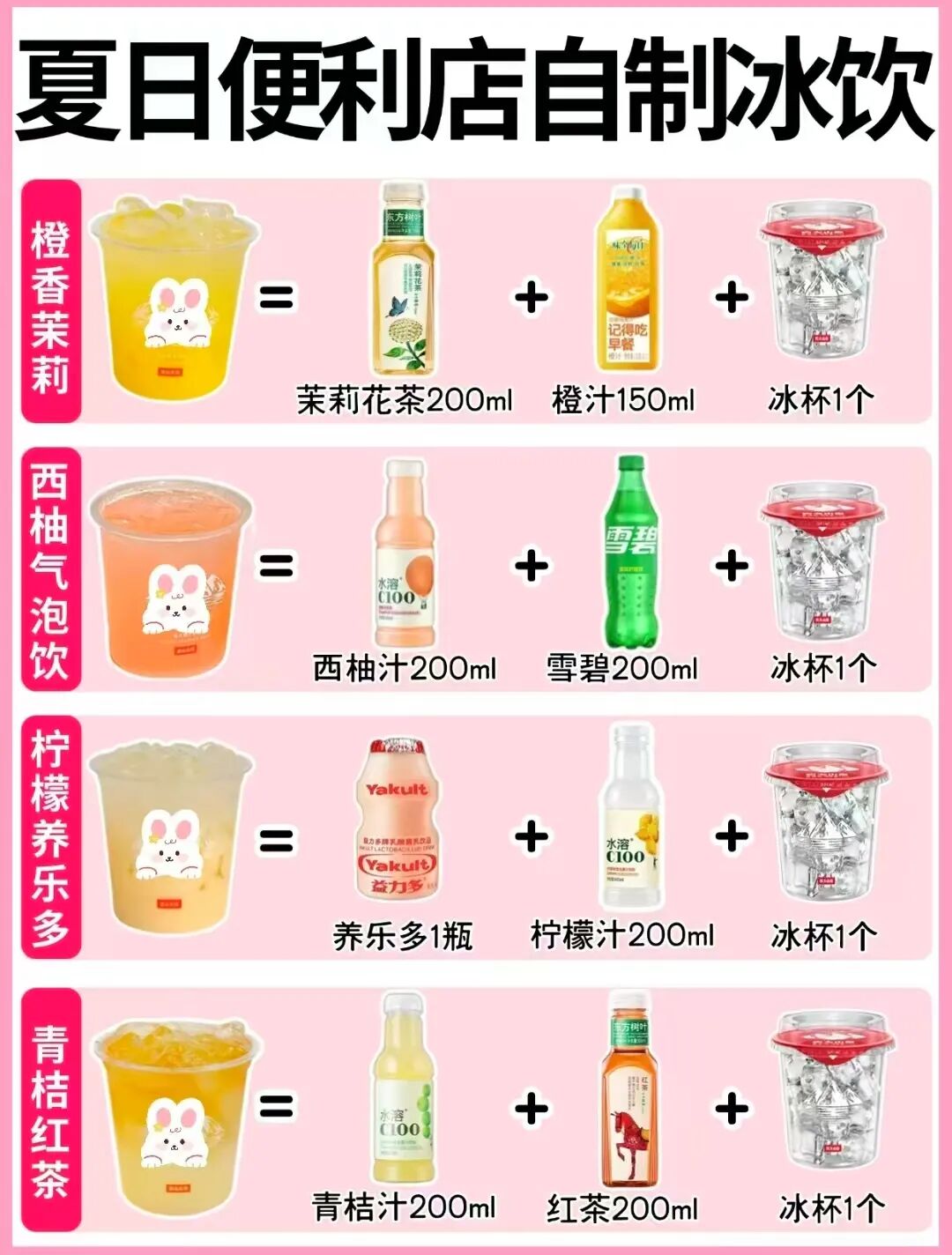
The versatile pairing formula for ice cups. (Source: Xiaohongshu @ Sister Cui's Fat Loss Diary)
Therefore, tea brands could no longer hold back and have joined the ice-selling army one after another.
Guming launched a "cup of iced water" priced at 1 yuan; Mixue Bingcheng increased the volume without raising the price, and you can get a large 660ml Xuewang ice cup for only 1 yuan.
But not all brands follow the ultimate cost-performance path. When it comes to selling ice, Heytea and Luckin have taken a different approach.
Heytea turned ice into a "performance". It opened a "Stir-fried Ice Lab" in Shanghai IFC Mall, where staff in the fully transparent kitchen stir-fry on site with iron shovels, transforming its classic Mango Pomelo Sago and Guava Berry into fresh fruit hand-stir-fried ice, priced from 28 to 33 yuan per cup, with a 2-hour queuing wait to get a serving.
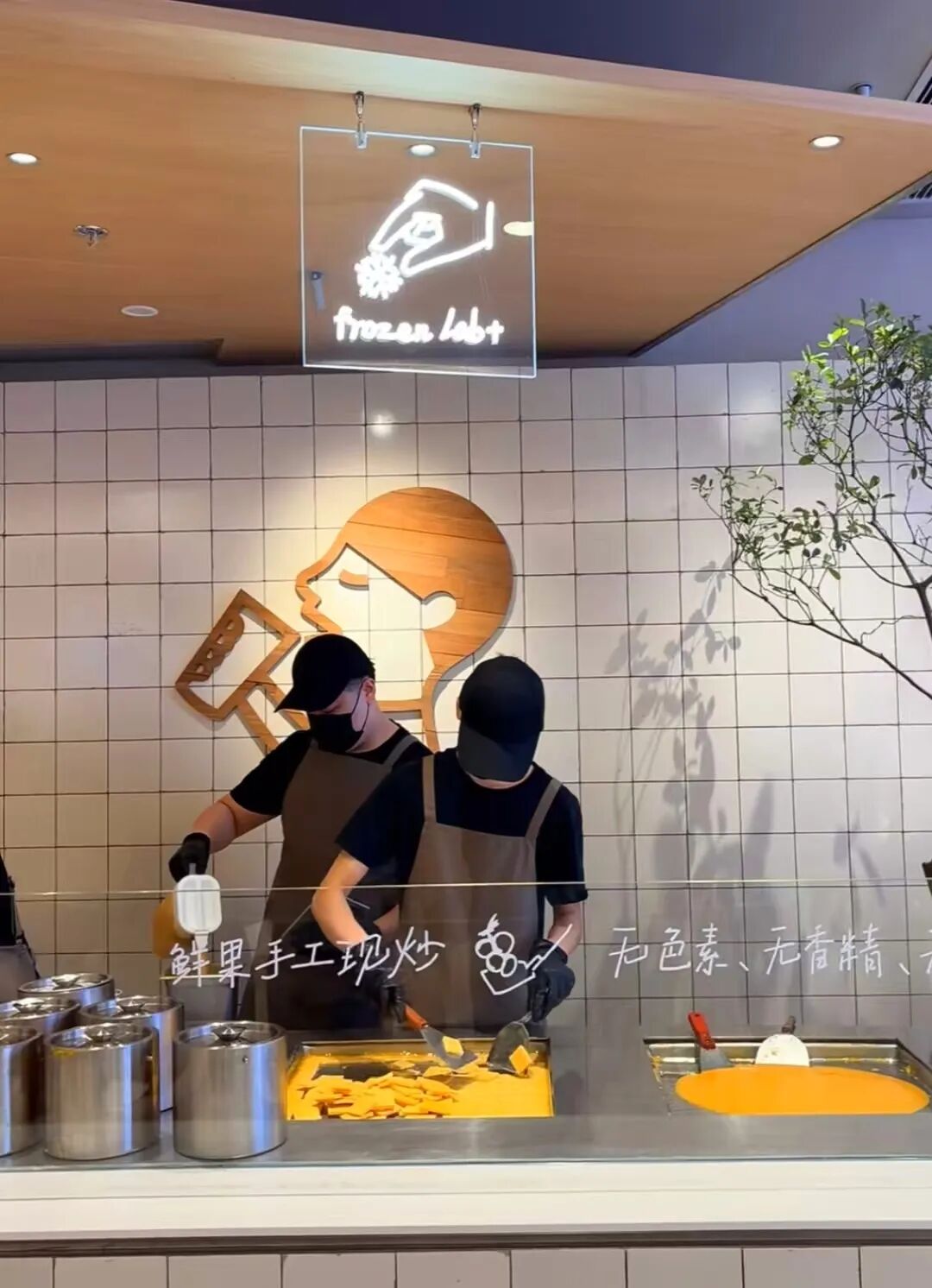
Heytea's stir-fried ice. (Source: Xiaohongshu @ Star Universe)
Luckin went even further. Previously often complained about "all ice, no coffee", this time it simply embraced the self-deprecation trend by launching the "All Ice No Water" series, which is a full cup of ice with espresso, turning netizens' complaints into a hit, with Butter Americano and All Ice Dark Chocolate Americano becoming so popular that they are almost impossible to get.
While the tea track is fiercely competitive, supermarkets are also unwilling to miss this trend.
As a supermarket that entered the ice product track relatively early, Freshippo chose to move the bar into its stores, and developed a variety of ice products around homemade low-alcohol drinks. In June this year, Freshippo even launched the "slow-melting football ice" specially customized for watching World Cup matches. Data shows that after the World Cup started, the weekly sales of its slow-melting series of ice increased by 220% month on month.
A Freshippo purchasing staff member admitted: "In recent years, ice cups have driven the growth of beverage sales." It can be seen that for Freshippo, ice cups have got rid of their supporting role status and been promoted to a professional segmented category.
Not only supermarkets, but convenience stores have also placed ice cups in the most prominent position in the iced drink area.
From the corner of the freezer to the prime center stage, this once-invisible product has finally been noticed.
The comeback of ice cups is actually a transformation of consumption logic. What young people buy is not just ice, but the sense of achievement of having a special drink for just a few dollars, and the sense of participation that "I can also be a barista". And ice cups precisely use the most direct path to meet young people's dual demands for cost performance and emotional value.
Is It Easy to Make Money From Ice Cups?
More than ten years ago when ice cups were first introduced to China, they had high transportation losses and the market education was just starting, making it a niche business that large enterprises disdained and small enterprises could not handle.
The turning point came in 2021, when Freshippo launched its first pure ice cup and 750g ice bag, and accidentally found that the repurchase rate of ice cups was much higher than that of most ice products.
This shows that young people are not unwilling to pay for ice, but they need the convenience of "getting and using it immediately".
The market then began to boom. In 2023, Nongfu Spring entered the ice cup market and carried out small-scale pilots in cities such as Hangzhou; in 2024, Xuewang strongly entered the track with 1-yuan ice cups.
Data from the *2025 White Paper on Chinese Urban Consumer Behavior* shows that the sales volume of the ice cup category has grown by more than 300% for two consecutive years. Oliver Wyman, together with Meituan Instashopping, also predicts that the overall market size of instant retail of domestic ice products and iced drinks will exceed 630 billion yuan in 2026.
The market cake for ice cups looks big enough, but is this money really easy to earn?
It depends on who is making it.
Take Luckin as an example. A 450ml All Ice Dark Chocolate Americano weighs 489g in total, of which coffee + dark chocolate espresso + liquid cheese only account for 195g, and ice accounts for 60% of the total weight. For this reason, online reviews are polarized: some people love this way of drinking, while many netizens complain that it is a disguised way of cutting corners.
But if you have read Luckin's financial report for the second quarter of this year, you can understand the practical considerations behind the "All Ice No Water" products.
On August 3, Luckin released its second quarter financial report for this year: total net revenue reached 15.886 billion yuan, up 28.5% year on year; GAAP net profit was 1.486 billion yuan, up 16.1% year on year. The profit growth rate was 12 percentage points lower than the revenue growth rate. The reason is simple: all kinds of costs have risen sharply, with the cost of materials, store rent and operation all increasing by more than 30%, and marketing and promotion expenses surging by 56.1%.
It should be noted that Luckin has now opened 36,000 stores around the world. If you save a little on the cost of any product, multiplied by the sales volume of all global stores, you can save a huge sum of money.
But not all brands can play this trick, because the profit margin of ice cups itself is surprisingly thin. The average ex-factory price of a 160g ice cup sold in stores is only about 1 yuan. The cost of freezing ice (water for ice making and energy consumption for ice making) only accounts for 35%, and it is the cup that actually costs a lot.
The cups used for ice cups have very high requirements: they must not crack when frozen at minus 20°C, and must not deform under extrusion during transportation. This kind of food-grade freeze-resistant plastic costs more than 50% higher than the ordinary PET plastic used for mineral water bottles we usually drink. After deducting all costs such as transportation, warehousing, and labor, the profit of each ice cup is only a meager 0.1 yuan or even less.
Since single products barely make money, the intention of brands is naturally not to sell ice itself, but to use ice cups as a hook to attract traffic and drive other consumption.
Take Nongfu Spring as an example. Many young people will buy juice, bottled tea, and coffee liquid to DIY after buying ice cups. The brand seized this demand and launched the activity of "add 1 yuan to get an ice cup when buying drinks", driving the sales of other products through ice cups. At the same time, Nongfu Spring already has water sources, a national cold chain and a mature distributor network, so it does not need to build the whole system from scratch, keeping the new additional investment at a relatively low level.
Mixue Bingcheng's launch of 1-yuan ice cups follows a completely different logic. It already has sufficient customer flow, and values the spread heat on social platforms more, so as to consolidate its approachable brand image, and consumers will also buy milk tea and ice cream on the way.
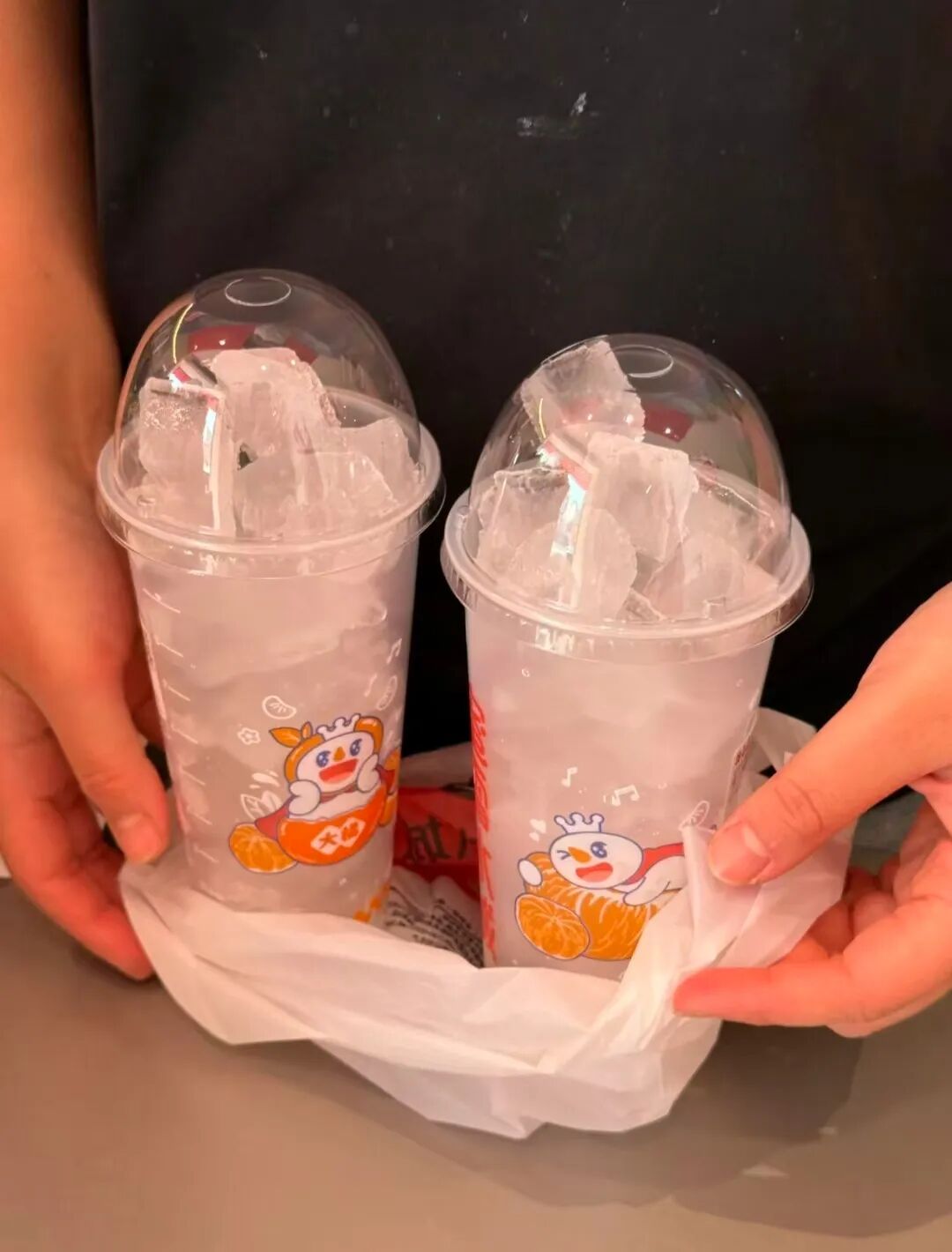
Xuewang's 1-yuan ice cup. (Source: Xiaohongshu @ YuJian Nail)
When Xuewang first launched the 1-yuan ice cup in 2024, it probably didn't expect in advance that the 1-yuan ice cup would become so popular that it accidentally offended two groups of office workers.
One group is the customers who rushed to buy ice cups, but often encountered out-of-stock situations and refused sales; the other group is the store staff who are already overloaded with daily work, and now have to deal with a large number of ice cup tasks. It should be noted that the 1-yuan ice cup leaves almost no profit for the stores.
In addition, one easily overlooked point is that the quality of ice making equipment directly affects the ice making efficiency. Mixue is doing a business of small profits but quick turnover, and the ice making equipment it uses is also a low-cost traditional ice plate ice maker with low ice making efficiency.
Ice cups are so popular that stores have to purchase ice from outside. As a result, the externally purchased ice at 4 yuan per catty can only make 1.2 ice cups priced at 1 yuan, which is obviously a loss-making business.
Therefore, there was no purchase limit when "Xuewang Ice Cup" was first launched. After it became a hit, even with the rule of one purchase limit per person, many stores still suffered losses. This year, significantly fewer stores sell Xuewang ice cups, and a large number of stores would rather bear complaints than sell this loss-making product that the stores themselves do not need for publicity.
It seems that attracting traffic through ice cups cannot be achieved simply by low prices.
The Other Side of Ice Cups
The dilemma of Xuewang's 1-yuan ice cup is only one side of the ice cup boom. The bigger problem lies deep in the industry.
First of all, behind the soaring popularity of the ice cup market, the price war is intensifying. The price of Freshippo's basic ice cup has been reduced from the initial 4.9 yuan to 2.5 yuan, and data from Dingdong Maicai shows that the price of mainstream ice cups this year has dropped by 30% to 40% year on year.
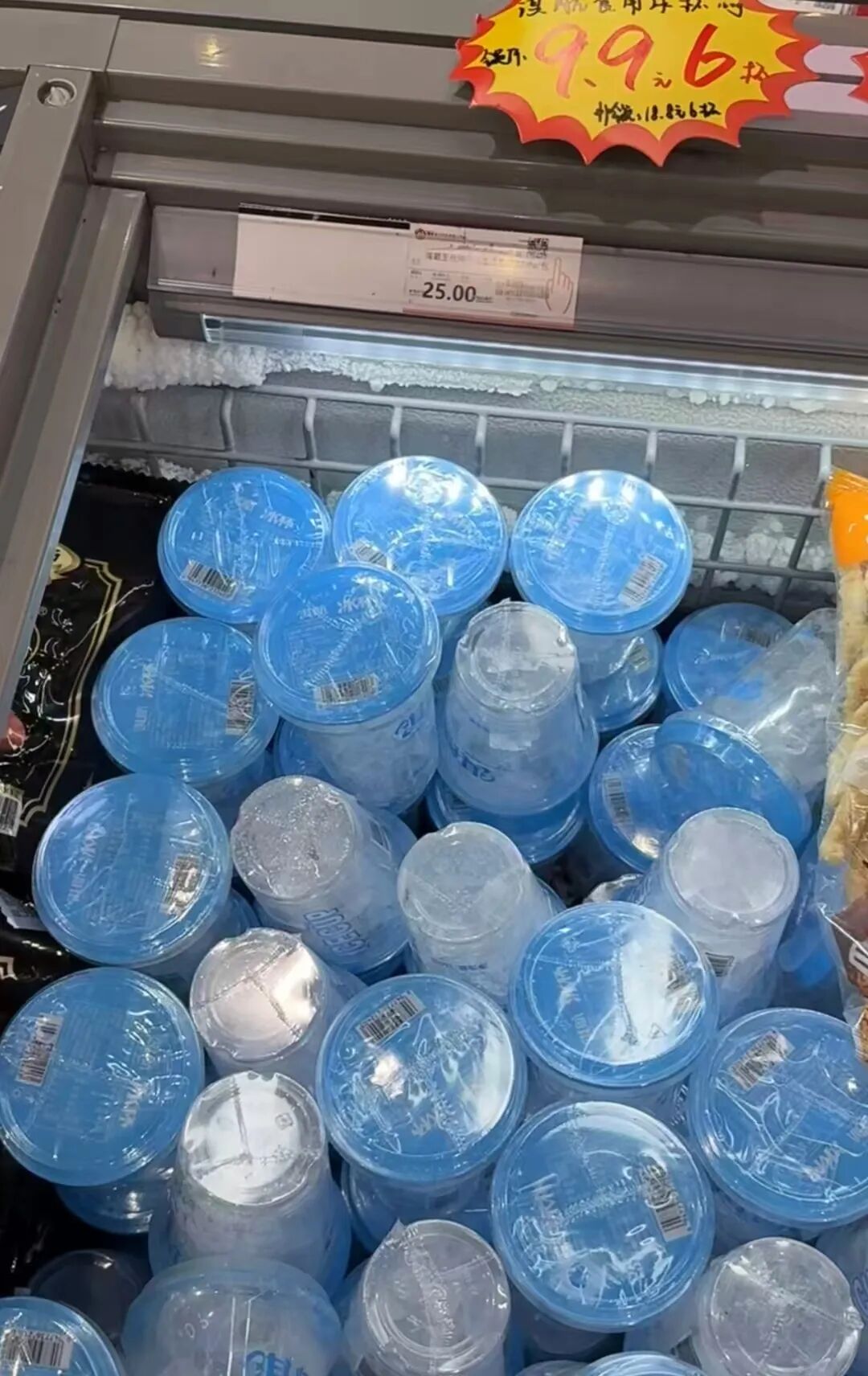
6 ice cups in small supermarkets only cost 9.9 yuan. (Source: Xiaohongshu @ Fierce Little Panda)
But on the other hand, the entry threshold for the ice cup industry is not high. According to statistics, there are 42,500 ice-making related enterprises in China.
Leading enterprises can dilute costs by relying on their huge scale, but the vast majority of small and medium workshops do not have scale advantages. After profits are continuously squeezed, cutting corners has become a survival method for some merchants: simplifying the water purification and disinfection process, and some workshops even make ice directly with tap water; in the storage and transportation process, unqualified freezer temperature will cause the ice to freeze and thaw repeatedly, increasing the risk of microbial contamination.
Such food safety issues have been exposed many times. For example, recently, the edible ice produced by the internet-famous brand "Ice Limit" through OEM was found to have excessive total bacterial count due to cold storage equipment failure and storage temperature fluctuation. A total of 8,000 bags of problematic products flowed into the market, and the actual recall was not completed in the end. Another example is that in March this year, the "Shaking Ice" ice cups commissioned for production by Guangxi Bingjichuan were also detected with unqualified total bacterial count, and more than 400 cups of products in two batches were mostly sold out and could not be recalled.
What is more tricky than food safety is that there is not even a decent product standard in the ice cup industry.
At present, most pure ice cups on the market implement the recommended industry standard QB/T 8022-2024 *Frozen Drinks - Edible Ice* (which replaced the old SB/T 10017-2008 on October 1, 2025), but it is not mandatory.
The only mandatory national standard covering edible ice is GB 2759-2015 *National Food Safety Standard - Frozen Drinks and Their Raw Materials*, but this standard clearly states that "it does not apply to freshly made and sold frozen drinks". That is to say, for self-made ice cups in milk tea and coffee shops and independent ice cups sold in convenience stores, the basis for food safety supervision is still not clear enough.
Ice cups are not ordinary ice after all. They are food that goes directly into the mouth, and are fast-moving consumer goods consumed by millions of people every day.
For this cup of ice to go further, market popularity alone is not enough — standards need to be improved, and supervision needs to keep up.
Only by developing with both scale growth and quality safety can the ice cup market truly expand and integrate into consumers' daily lives.
This article is from WeChat Official Account "BrandPrism", written by LIU Yi, edited by TIAN Tian, and published with authorization from 36Kr.