Why do foreign beer brands fail to perform well in the Chinese market?
In the first half of this year, the foreign beer giants AB InBev and Carlsberg continued their downward trend, with overall declines in sales volume, revenue and net profit in the Chinese market.
This is not caused by the Chinese beer market. In the first half of the year, beer was almost the only segment that still recorded growth in the alcohol market; leading companies such as China Resources Beer and Yanjing Beer all delivered performance reports with all-round growth.
Nor is it that foreign beer is of poor quality. AB InBev still achieved impressive growth in markets including India and South Korea; AB InBev and Carlsberg continue to rank steadily first and third in the global beer market respectively.
The reason is that their product, channel and brand strategies have not kept up with the new rhythm of the Chinese market. As Chinese beer consumers are getting younger, light-style beer products have become the mainstream, and consumers are paying more attention to new trends such as freshness, Chinese-style flavor, zero sugar and non-alcohol.
After Heineken's operation was handed over to China Resources Beer, it quickly returned to the growth track and became an important starting point for China Resources Beer's high-end layout. This business strategy of understanding Chinese beer consumers has set a good example for AB InBev and Carlsberg.
AB InBev and Carlsberg saw collective decline
The collective decline of AB InBev and Carlsberg in the Chinese market came unexpectedly.
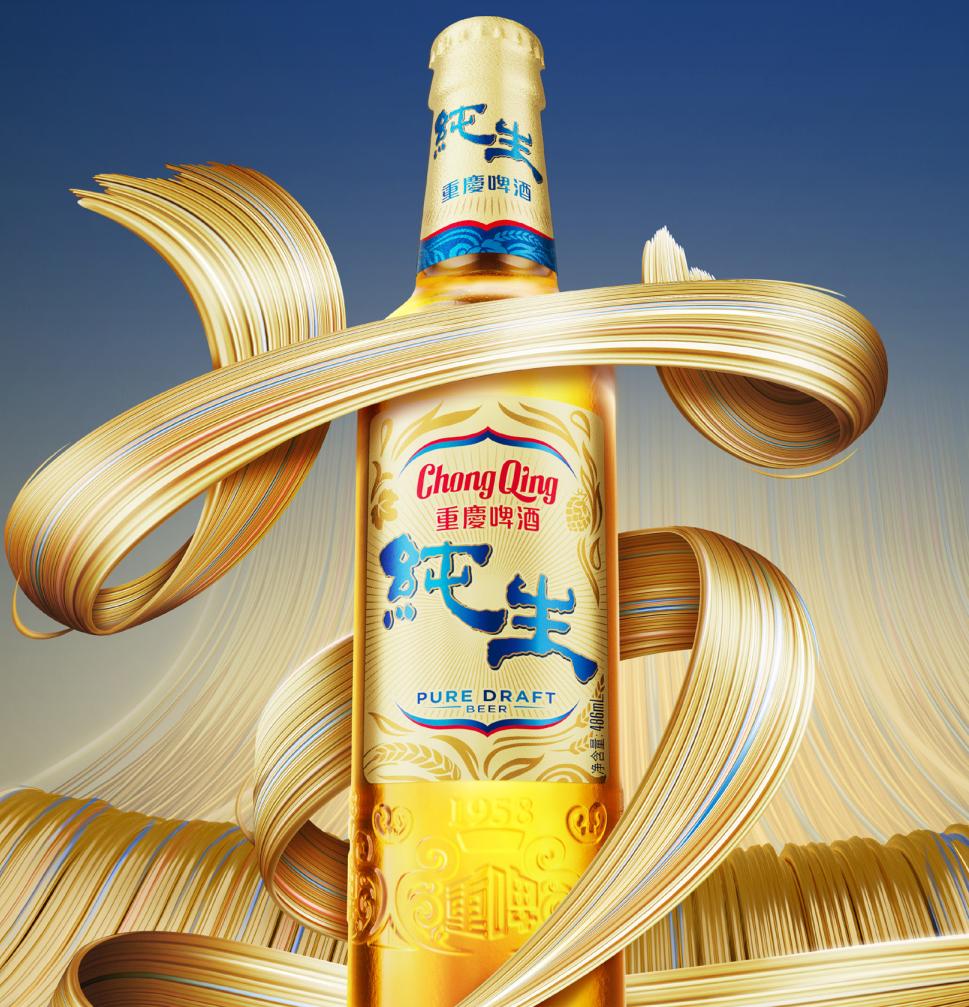
On August 20, Chongqing Brewery (600132.SH), the core business platform of Carlsberg China, released its latest performance report. In the first half of 2026, the company's beer sales volume reached 1.7492 million kiloliters, down 2.9% year on year; its operating revenue was 8.576 billion yuan, and the net profit attributable to shareholders was 796 million yuan, down 2.98% and 7.98% year on year respectively.
The operating revenue of its high-end and mainstream segments decreased by 1.53% and 5.96% year on year respectively, and only the revenue of economy beer increased by 3.17% year on year. This not only dragged down the overall profitability of Chongqing Brewery, but also caused cracks in Carlsberg's long-standing high-end positioning.
Similarly, AB InBev, another foreign company among the top five beer giants, also continued its downward performance trend in the first half of this year.
From January to June 2026, AB InBev China's sales volume, average unit price and revenue decreased by 6.0%, 0.4% and 6.4% year on year respectively, with a more severe situation than Carlsberg. Last year, the above indicators of AB InBev China had already decreased by 8.6%, 3.0% and 11.3% year on year respectively.
AB InBev APAC (01876.HK) stated in its financial report that due to the decline of its China business, even though AB InBev achieved significant growth in markets such as South Korea and India, it still could not avoid the crisis of declining performance.
Last year, AB InBev APAC's overall sales volume decreased by 6%, and its revenue and net profit decreased by 6.1% and 32.6% respectively. In the first half of this year, the company's overall sales volume decreased by 2.2% year on year, revenue decreased by 1.4% year on year, and net profit achieved slight growth.
Therefore, it is not that AB InBev and Carlsberg are no longer competitive, but that they cannot perform well in the Chinese market; nor is the Chinese beer market in a downturn, but their performance is not good enough.
In the past five years, beer has been the most steadily growing segment in the entire Chinese alcohol market; in the next five years, beer will also be the most certain growth segment.
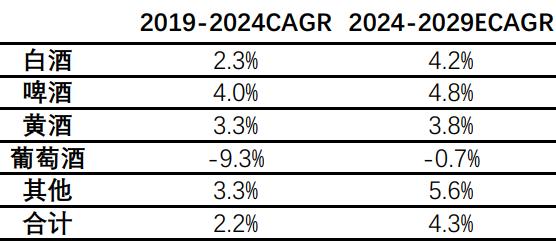
In the first half of 2026, against the backdrop of widespread downturn in the large alcohol market, China's beer industry still achieved growth. From January to June, beer enterprises above designated size accumulated a total output of 19.362 million kiloliters, up 0.2% year on year.
Among the top five beer giants in China, China Resources Beer, the leading player, saw its beer sales volume increase by 1.7% year on year in the first half of this year, and its beer business revenue and business profit increased by 2.2% and 1.2% year on year respectively.
Yanjing Beer (000729.SZ), the dark horse in recent years, continued its rapid growth in the first half of the year, with sales volume, revenue and net profit increasing by 3.2%, 5.5% and 26.9% year on year respectively.
Several other local beer giants, including Tsingtao Brewery, Zhujiang Beer (002461.SZ) and Jinxing Beer, all maintained a steady growth trend.
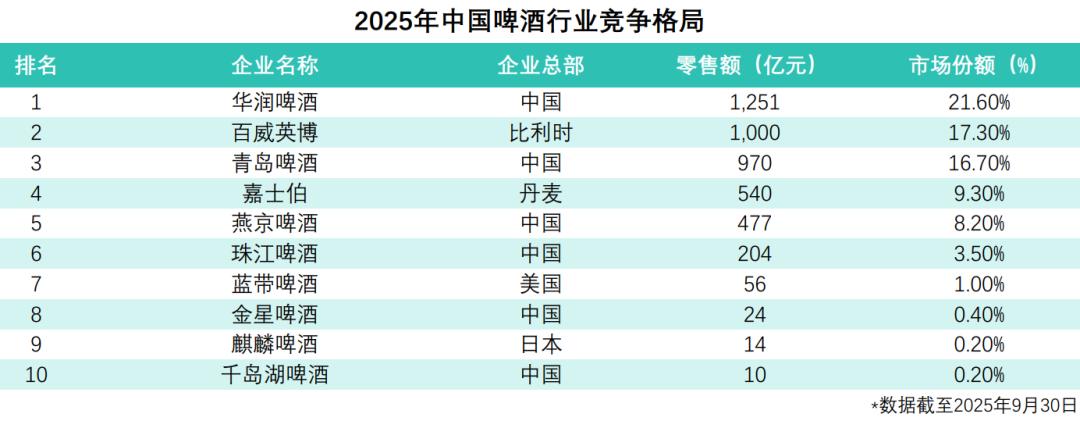
In 2019, five years ago, the ranking of the top five beer giants was China Resources Snow Breweries, AB InBev, Tsingtao Brewery, Yanjing Beer and Carlsberg. Five years later, the top five giants still occupy more than 90% of the market share, but the ranking has been reshuffled, with Tsingtao Brewery overtaking AB InBev.
China Resources Snow Breweries, Tsingtao Brewery and Yanjing Beer are all developing in full swing, while AB InBev and Carlsberg continue to be weak. According to conservative estimates from various industry calibers, the two foreign beer giants have lost more than 5% of the market share.
The differentiation between foreign beer giants and local beer giants has never been as severe as it is now. China's beer market is transitioning from a fragmented market of competition among five strong players to a stock era of rivalry between leading giants, evolving from the knockout stage where big fish eat small fish to the final stage where big fish eat big fish and fast fish eat slow fish.
Foreign beer no longer has advantages
From the establishment of the first beer factory in Harbin in 1900, to the "one city, one beer factory" era in the 1970s and 1980s, the market-oriented integration starting in the 1990s, as well as the competition between giants in previous years and industrial upgrading in recent years, the value of foreign brands to the Chinese beer market is beyond doubt.
They not only brought beer, a pure imported product, but also set an example for local beer brands in terms of product upgrading, channel strategy, brand operation and market integration.
However, the relative advantages of foreign brands are gradually being eliminated along with the industrial upgrading of local beer enterprises.
In the early stage, AB InBev, Carlsberg and other brands relied on relatively high-quality beer products to gain unimpeded access to high-value channels such as nightclubs, and obtained profitability far exceeding the industry average.
Now, their product advantages are gone, brand advantages are no longer prominent, and the nightclub channels have even disappeared directly... Even the most critical on-trade channels in the beer market are far less prosperous than before, and the latest data shows their proportion is less than 50%.
The loss of advantages in products and channels is the fundamental reason for the collective failure of foreign beer brands, rather than the weather reason or market weakness explained by AB InBev APAC or Carlsberg Chongqing Brewery in their financial reports.
As the Chinese beer market caters to younger consumers, consumers' taste preferences are more inclined to light and fresh flavor, and they pay more attention to products with compound aroma and low burden. Categories such as white beer, draft beer, Chinese-style tea beer, dry beer and non-alcoholic beer are gradually replacing traditional lager, and allowing brands such as Yanjing and Jinxing to rise rapidly relying on strong product competitiveness.
At this turning point, AB InBev and Carlsberg instead stick to the traditional direction and invest insufficiently in innovative product categories. In 2026, AB InBev will take its Black Gold series as the main push product in the Chinese market. Can this kind of beer featuring burnt aroma and mellow taste cater to the preferences of young Chinese consumers?
After the on-trade channels no longer have decisive value, local beer brands immediately promoted the increase of canning rate, deeply embraced new channels such as e-commerce and instant retail, and directly delivered beer to consumers' tables through platforms including Meituan and Taobao Flash Delivery. Both China Resources Snow Breweries and Tsingtao Brewery (600600.SH) have reaped huge benefits from this trend.
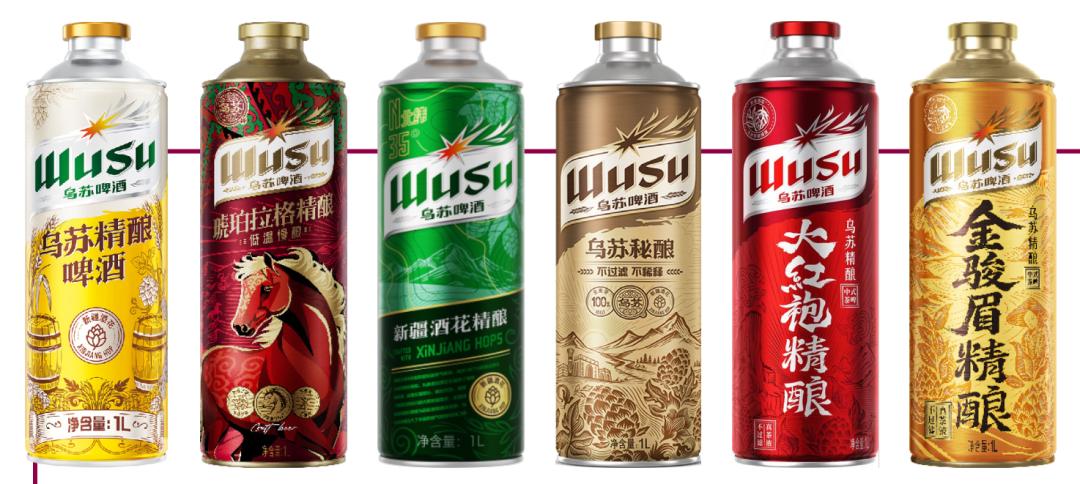
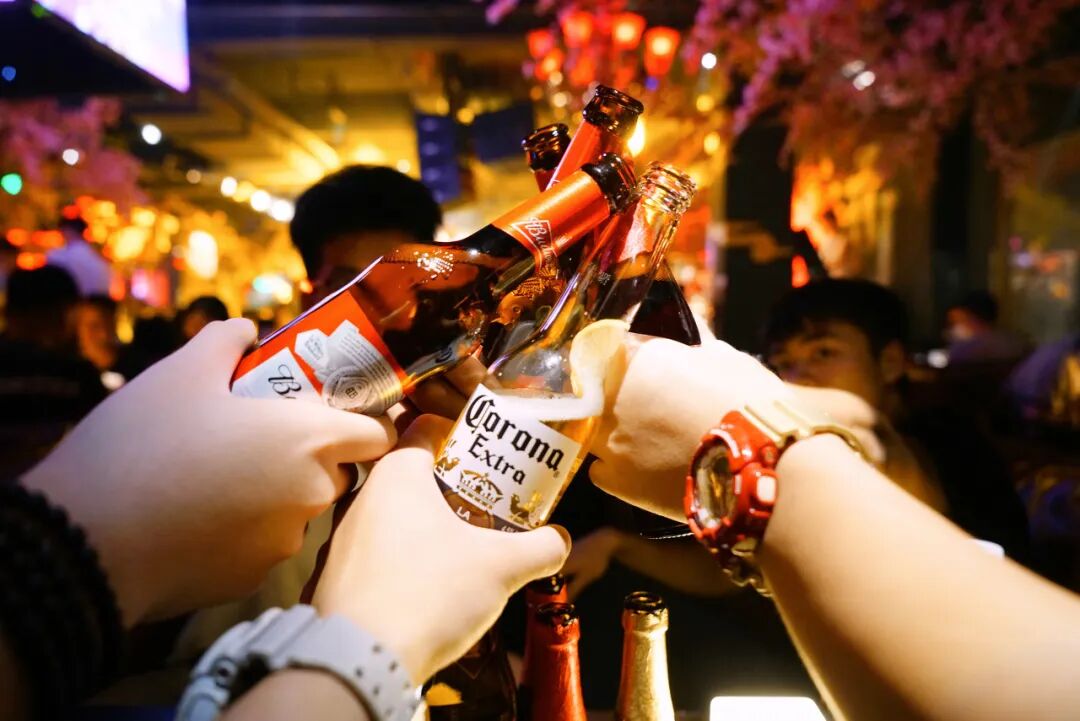
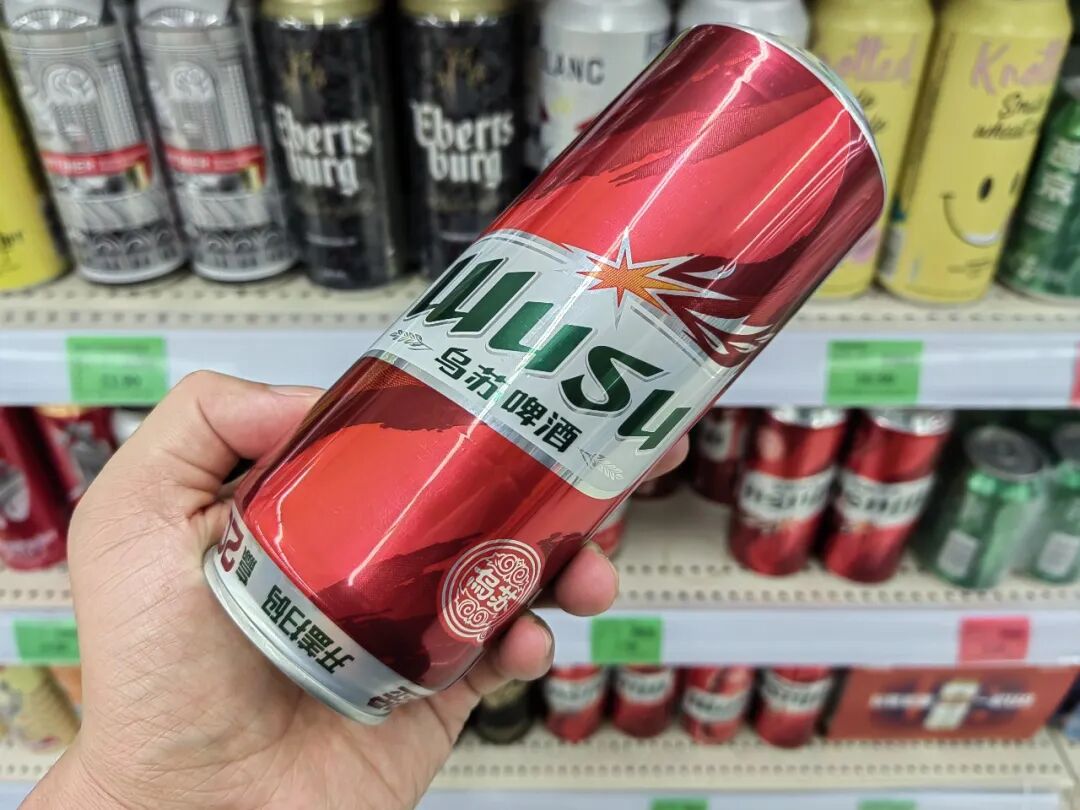
Faced with the dual pressure from products to channels, Carlsberg China has taken 1L tin-packaged beer as the key to break through the dilemma in recent years, while AB InBev has launched 330ML and 500ML canned products of its Corona brand to layout emerging channels. These moves not only came too late and missed the first opportunity, but also put the brands in the contradiction between high-end positioning and large-volume sales of large-bottle products.
Both Carlsberg and AB InBev are masters in beer marketing. In particular, Carlsberg not only replicated its most proud sports marketing to the Chinese market, almost all of its sub-brands have their own independent spokespersons, and the combination of Wusu Beer and catering scenarios is also a pioneer in the industry. As of the end of June 2026, the "Big Wusu with Barbecue" campaign has been launched in more than 130 restaurants in over 60 cities.
However, the problem of insufficiently concentrated brand resources makes it difficult for Carlsberg China to break through the encirclement of the four top beer giants; at the same time, the fact that relying solely on brands cannot make up for the losses in products and channels is reflected in both AB InBev China and Carlsberg.
Foreign beer brands need to recognize the reality
As the world's largest beer group, AB InBev may devote more energy to other markets in the face of its setbacks in the Chinese market. Even AB InBev APAC, listed on the Hong Kong Stock Exchange, can rely on the growth of the South Korean and Indian markets to offset its decline in the Chinese market.
What can Carlsberg do? Carlsberg, the world's third largest beer company, has always regarded the Chinese market as its core business. Faced with the downward trend, it must fight a last-ditch battle.
In the early years, Carlsberg's China strategy was different from the full-integration strategy of China Resources Snow Breweries and AB InBev China. It often adopted the method of investment without holding shares to gain the right to speak in the southwest and northwest markets at low cost. In recent years, this strategy has encountered loopholes at key nodes such as Chongqing Jiawei, Tibet Development and Lanzhou Huanghe.
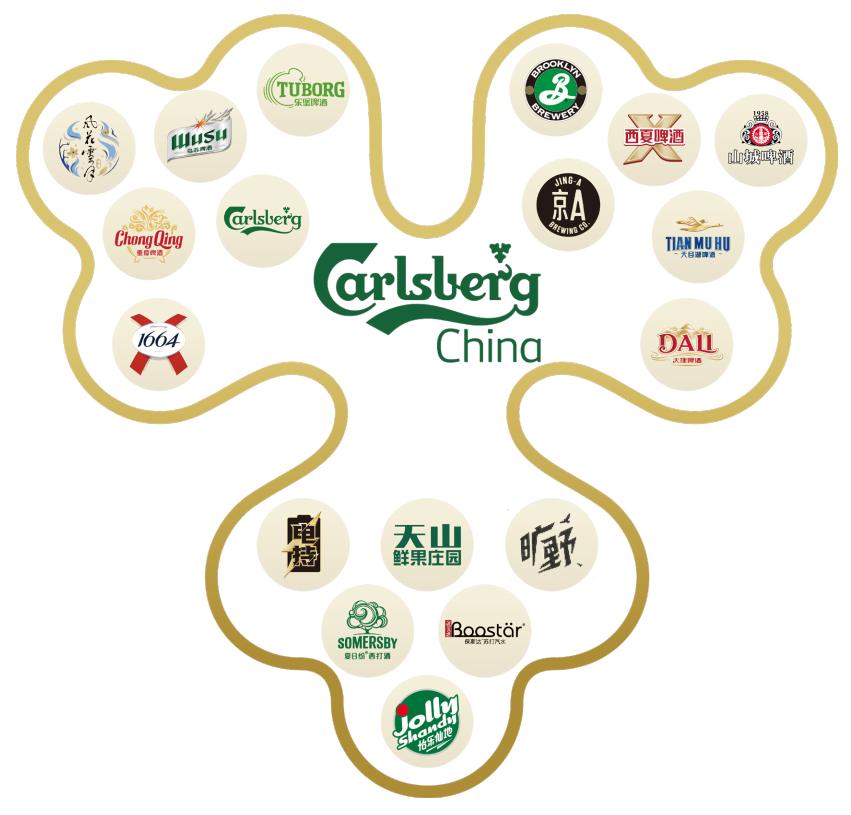
Therefore, in recent years, Carlsberg has begun to clear up these historical legacy issues, and focus its business on the core business platform of Chongqing Brewery, covering brands including Carlsberg, Tuborg, 1664, Wusu, Chongqing, Shancheng, Xixia, Dali, Fenghuaxueyue and Jing-A.
In addition to the beer business, Carlsberg Chongqing Brewery also has high expectations for the beverage business, and has focused on promoting Tianshan Fresh Fruit Manor juice drinks, Energy Charge energy drinks, Wusu Kvass and other products to the market. However, the scale of these products is still small, and they have not been listed separately in the company's financial reports.
AB InBev China has previously launched beverage products such as plant-based sparkling water, Black Krypton energy drinks, and Beibao grape sparkling wine, and has also made layouts in craft beer and offline beer pubs, but these layouts are rarely mentioned in recent years.
Generally speaking, both AB InBev and Carlsberg have adopted follow-up strategies in the Chinese market, and have fully entered the defensive stage. If they fail to hold their positions in the critical stage of beer industry upgrading in the next few years, the consequences will be unimaginable.
In the early years, Heineken, like AB InBev and Carlsberg, operated independently in the Chinese market and fully enjoyed the dividends brought by the incremental market.
Later, with the intensification of market competition, Heineken intended to withdraw, and handed over its China business to China Resources Beer for operation. In recent years, Heineken has performed well and has become the main force of China Resources Beer (00291.HK)'s high-end layout: in the first half of 2026, the sales growth rate of the Heineken brand exceeded 20%; the sales growth rate of its sub-brand, Red Arrow, even exceeded 80%.
In the new stage where foreign brands are striving to achieve complete sinicization through entrustment