Observations on the first day of WRC26: The "dancing" robots no longer take the center stage, and robots have started to "get down to their real business".
If you use three keywords to set the tone for WRC 2026 World Robot Conference, they must be scenarios! Scenarios! And more scenarios!
Convenience stores, express warehouses, emergency fire response, smart parks, pharmacies, competition arenas, catering, every scenario you can think of or never imagined has appeared at this WRC. Almost every company is telling the audience that their robots can do real work.
On August 19, WRC 2026 World Robot Conference was held as scheduled. The theme of this year's conference is "Human-Robot Symbiosis, Industry-Demand Integration". For the first time, the organizer took "industry-demand" as the core priority, and also set up a "Procurement Day" for the first time. The entire industry has reached a tacit consensus: robots have found their proper positions, and are operating continuously in real environments.
The WRC reporting team from Leitech (ID: leitech) also rushed to the scene for industrial observation at the first time. We can say responsibly that the performance period of embodied intelligence has ended, and the formal working period has officially begun.
Working Robots Replace Dancing Ones, Robots Start to "Focus on Their Proper Duties"
At this year's WRC, the number of exhibiting embodied intelligence enterprises has skyrocketed from more than 80 last year to more than 200, with over 300 real machines running dynamically on site. Instead of doing somersaults, they are performing tasks such as direction guidance, exhibition hall explanation, logistics handling, and production line assembly.
OrbitX Dynamics has brought the concept of "going to work" to more hardcore scenarios. In some working environments, people will face unpredictable risks once they enter: for example, the temperature deep in the fire field exceeds 100°C, thick smoke is mixed with toxic gas, and some mountain areas with signal isolation, where rescue teams will lose contact with the outside world once they enter, and face tests every minute.
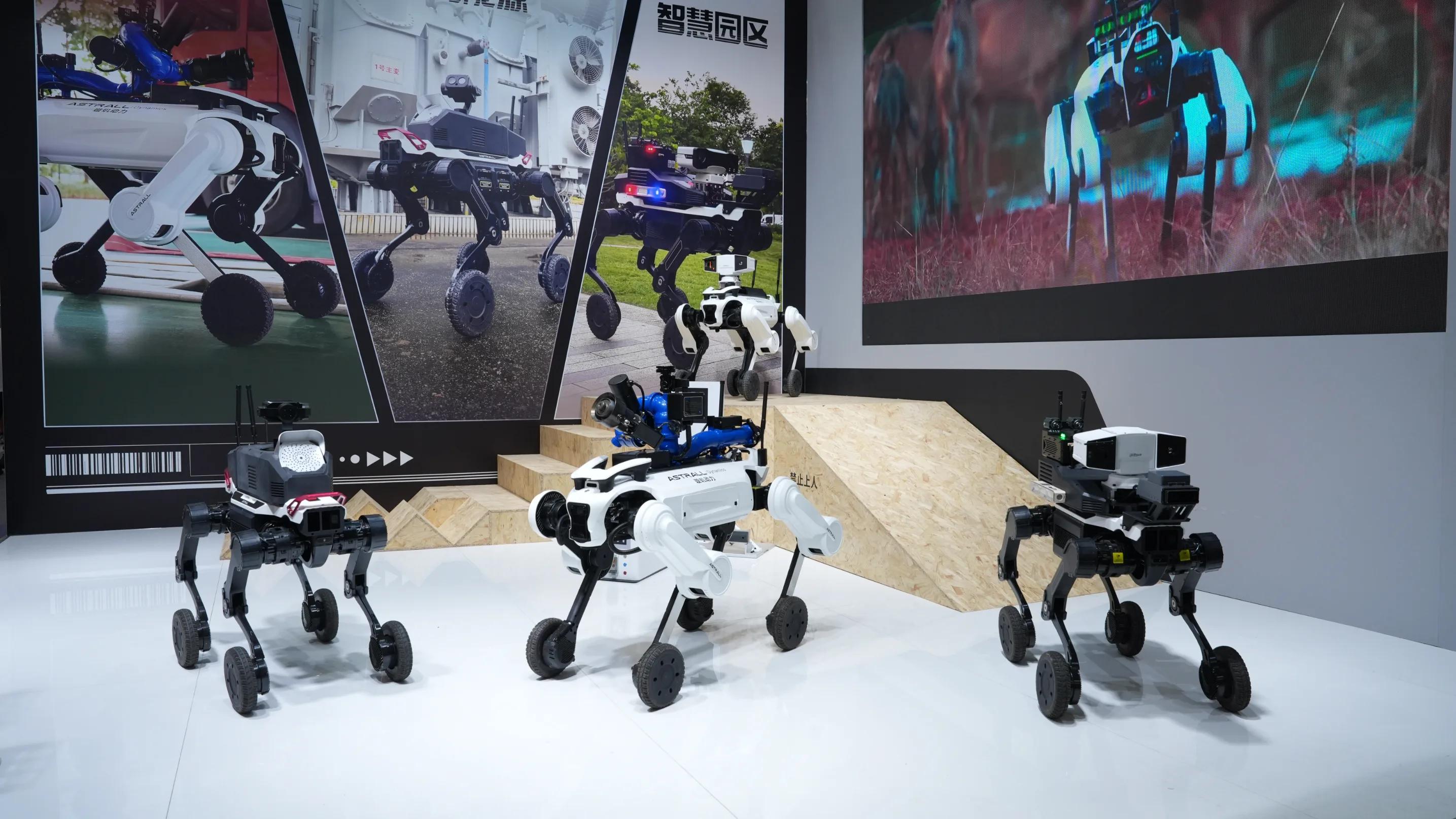
To this end, OrbitX Dynamics has brought two mass-produced products, Hypertron-T01 and Hypertron-SW01, demonstrating their complex terrain traversal capabilities such as slope climbing, gap crossing, and obstacle detouring on site. These capabilities have been put into regular operation in real scenarios such as power inspection, emergency fire response, and smart parks.
Source: Photo by Leitech
The power and energy sector is the earliest landing track for OrbitX Dynamics. The Hypertron-SW01 medium-sized intelligent quadruped robot can realize full-scenario autonomous inspection, accurately read meter values and equipment appearance defects, use infrared thermal imaging to monitor temperature rise abnormalities in real time, and the acoustic camera can capture abnormal discharge sounds, transforming inspection from passive repair to active intervention.
Emergency fire response is the application scenario where the value of quadruped robots is most prominent. The Hypertron-T01 heavy-duty quadruped robot undertakes material transportation and remote fire extinguishing tasks, and can carry an 80kg load deep into the front line of the fire field, while the Hypertron-SW01 medium-sized intelligent quadruped robot is responsible for front reconnaissance and communication support, equipped with a dual-light gimbal to penetrate thick smoke to identify fire sources and trapped people, and carry an ad-hoc network module to build a communication link in the "three disconnections" scenario.
Smart parks represent broader application possibilities. After deploying Hypertron-SW01 in a factory of SAIC, an integrated intelligent inspection system covering security, fire protection, environment, personnel and vehicle management was built. Supported by laser-vision fusion navigation, dual-light perception and edge computing power, 7×24 hour unmanned autonomous on-duty is realized.
Realman takes another route.
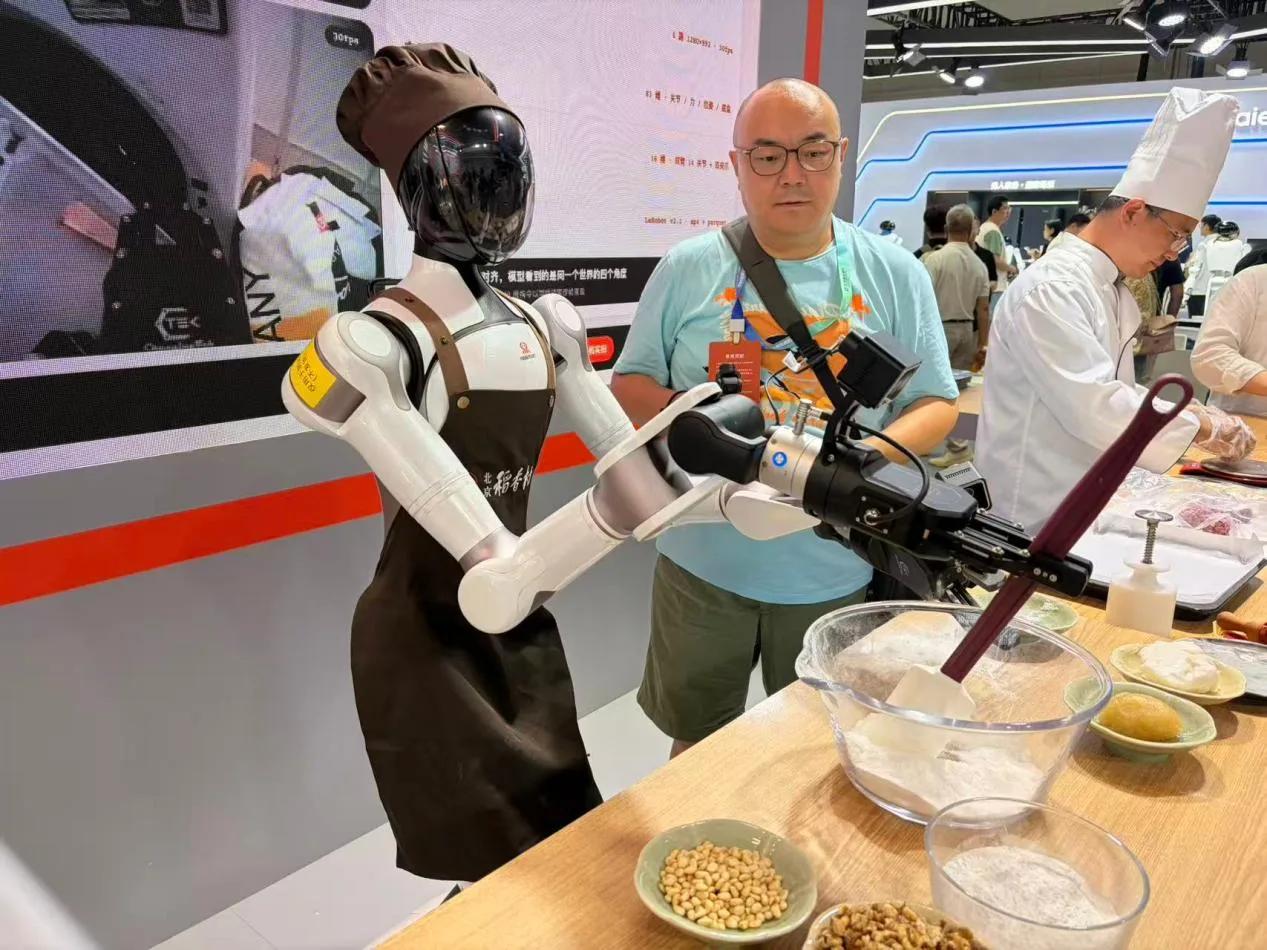
At the WRC site, relying on the GLN remote workforce network, it demonstrated that the RealBOT robot completed restocking and medicine taking in a 24-hour smart pharmacy, completed inspection operations in a power distribution room, collaborated with master chefs from Beijing Daoxiangcun with two hands to make Beijing-style five-nut mooncakes with crispy crust, and also remotely controlled the robot in Realman's embodied intelligence super factory in Changzhou in real time to complete equipment debugging and production line inspection.
Interestingly, the operator is not on site, but remotely controls across cities through GLN, with the delay controlled at the millisecond level. GLN schedules not only robots, but also human capabilities, breaking the geographical limit of human operation capabilities.
Source: Photo by Leitech
On the first day of the exhibition, Shanghai Robot Industry Technology Research Institute awarded Realman the CR L3 level certification certificate. With a mean time between failures of 50,000 hours, Realman's ultra-lightweight humanoid robotic arm has become one of the very few domestic products that have passed this certification, providing authoritative endorsement for the robot's 7×24 hours stable operation. The booth also cooperated with tactile sensor company Pacini to demonstrate the deep integration of the RM75 series collaborative arm with multi-dimensional force perception, six-dimensional force and joint torque sensors, enabling robots to truly have "tactile sense".
From Realman's 50,000 hours of reliable operation to OrbitX Dynamics' regular operations in power, fire protection and parks, the clearest signal on the first day is that the industry assessment standards have changed. Only those who can truly go on duty and work stably can become the C-position on the exhibition booth.
Specialized Players Emerge in Vertical Scenarios, Landing Faster Than General-Purpose Humanoid Robots
The story of general-purpose humanoid robots has been told for many years, but the specialized robots that are "not so human-like" are the ones that can really make profits today.
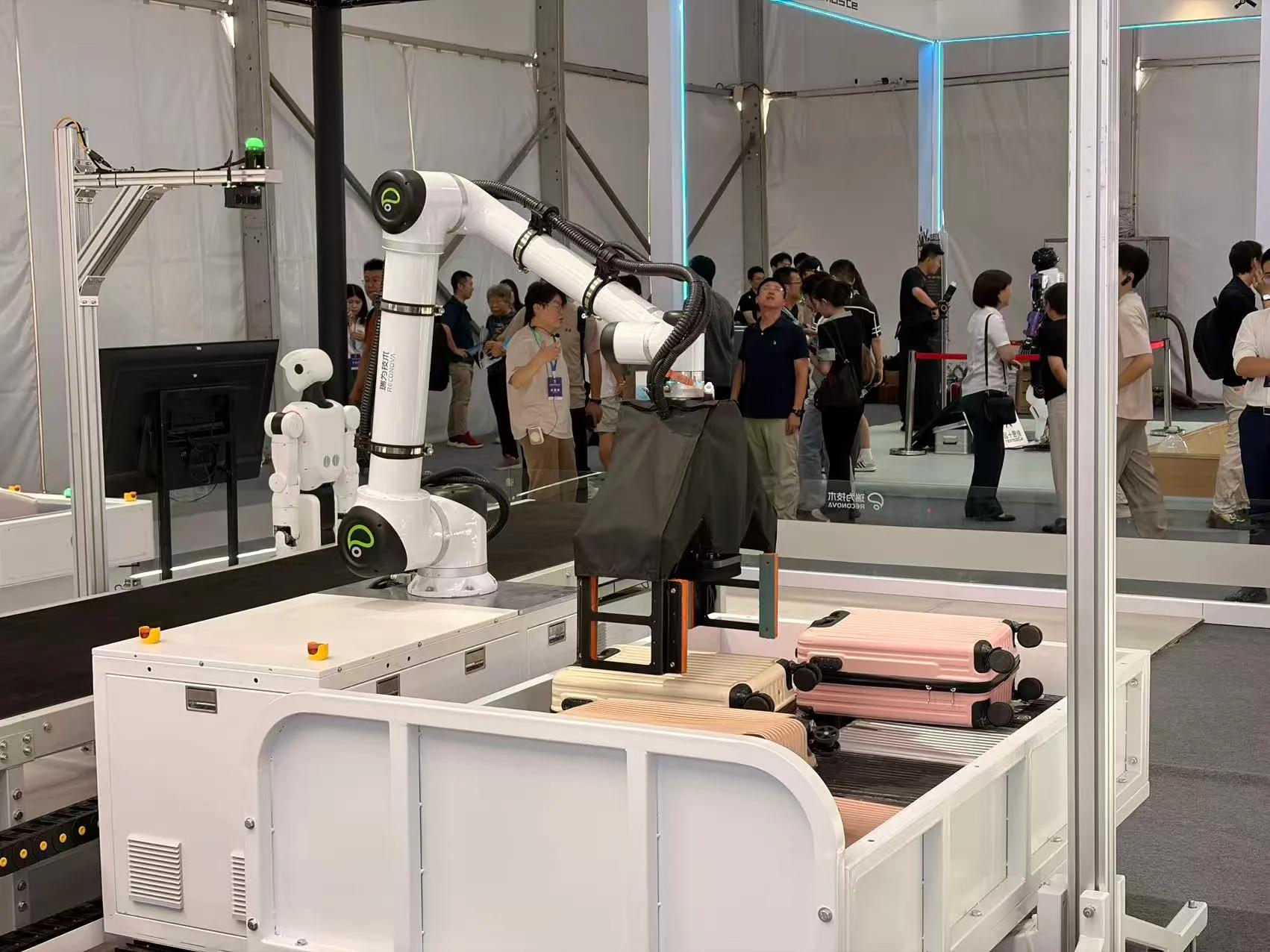
Reconova has brought a complete set of baggage transfer solutions. From the on-site demonstration, when a standard suitcase is sent over the conveyor belt, the Xiaoyi baggage transfer robot uses a composite suction cup plus a gripper to firmly hold it, lift it up, turn around and stack it into the nearby trailer. When encountering soft and irregular baggage such as backpacks and handbags, the wheeled dual-arm humanoid robot takes over, and the two arms clamp flexibly to avoid extrusion damage. The whole process does not require human intervention, and people will only intervene to handle it when encountering particularly abnormal baggage.
Source: Photo by Leitech
Airport baggage transfer is a severely underestimated scenario, which has long been completely dependent on manual labor. High-intensity repeated handling plus night shift operations lead to difficult recruitment and high turnover rate; different people have different operation habits and inconsistent operation standards. When the passenger flow surges during holidays and morning and evening peaks, the manpower gap appears immediately. In addition, it is difficult to grasp soft bags and irregular baggage, and complaints about wrong delivery, missing delivery and damaged baggage have never stopped.
The core of Reconova's solution is human-robot collaboration. Machines undertake 90% of standardized repeated transfer work, and people only handle abnormal baggage and emergencies. The underlying technology supporting this solution is called VTFLA, which is Reconova's self-developed embodied large model architecture, integrating five dimensions: vision, tactile sense, force sense, language and action. In short, this robot can not only see the baggage, but also feel how heavy it is, whether the surface is slippery, and how to grasp it most stably.
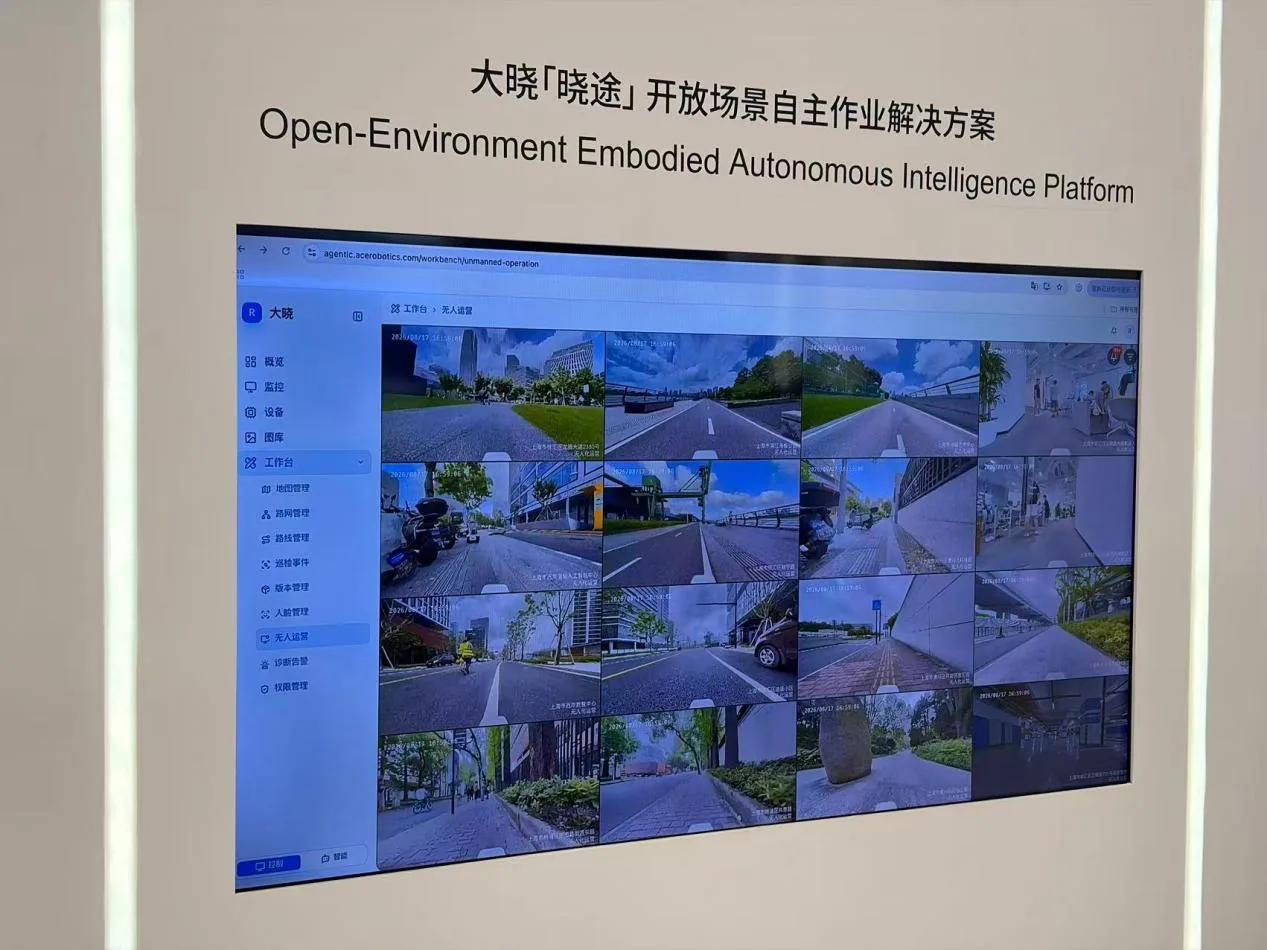
Daxiao Robotics takes another vertical route. It does not make complete machines, but makes "brains", providing world models and decision-making capabilities for robots of other brands. At this WRC, Daxiao released three industry solutions, Xiaoman, Xiaoxin and Xiaotu, for instant retail, hotel services and open scenarios.
Source: Photo by Leitech
Among them, the intelligent quadruped robot equipped with the "Xiaotu" solution has been stationed in the West Bund area of Shanghai, starting 7×24 hours uninterrupted unmanned patrol duty. This solution consists of the embodied super brain module A1 and an intelligent management and control platform. The robot can independently complete environment perception, path planning, anomaly identification and alarm. It does not need preset routes or remote control by humans, it sees the road by itself and makes decisions by itself.
Retail and hotel scenarios are under promotion. Daxiao's plan is to complete the landing of 1000 retail scenarios in the next year. For retail stores, robots can do things including shopping guide, inventory, security and cleaning; for hotels, they can do delivery, guidance and inspection. The common features of these scenarios are relatively standardized processes, high labor costs and high personnel mobility, so the economic account for robot replacement is very easy to calculate.
The common feature of vertical scenarios is that they do not pursue "being a human", but pursue "doing things". The dream of general-purpose humanoid robots is very grand, but before the dream comes true, these specialized robots that work silently in specific positions are the ones that are really creating value today.
Core Components Are No Longer "Stuck in the Neck", Full-Stack Self-Research Has Become the Standard for Leading Players
Whether a robot can be made well depends 30% on algorithms and 70% on hardware. Components such as joint modules and motors determine the motion accuracy, load capacity and service life of the robot.
It is not difficult to find at this year's WRC: the "skill showing era" of quadruped robots is ebbing, and full-stack self-research has become the new key word of the industry.
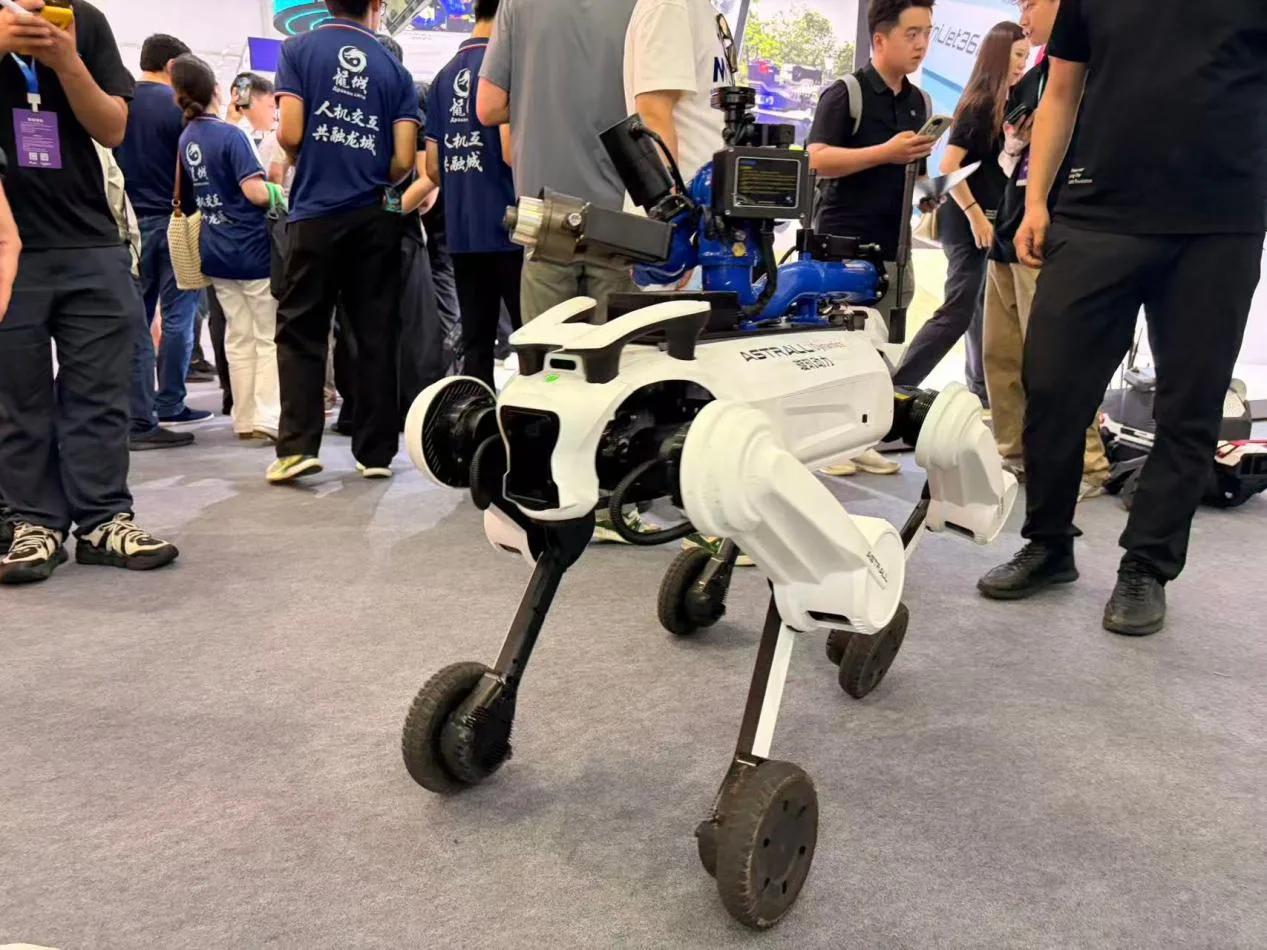
OrbitX Dynamics is one of the few enterprises in the industry that has realized full-link self-research of axial flux motors from design to mass production, with all core components independently controllable.
The value of this matter is not limited to the technology itself, but three underlying advantages: in terms of performance, the self-developed axial flux motor achieves high torque density and high power density, supporting the 80kg class all-terrain load from the power root, opening a performance generation gap with the general integrated solution; in terms of quality, the core components are made by ourselves, the whole process quality control from the source to the whole machine is not restricted by the fluctuation of the upstream supply chain and the yield of standard products, and the high reliability required by customers is guaranteed; in terms of cost, the independent control of core links breaks the cost ceiling of externally purchased components.
Source: Photo by Leitech
On this technical base, OrbitX Dynamics has formed a product matrix of "heavy-duty + medium-sized". Hypertron-T01 focuses on heavy-duty extreme scenarios, while Hypertron-SW01 takes into account battery life and maneuverability, adapting to regular inspection. The combination of light and heavy products covers the industry needs of different levels.
Dynamic Motion Tech is also a representative of full-stack self-research.
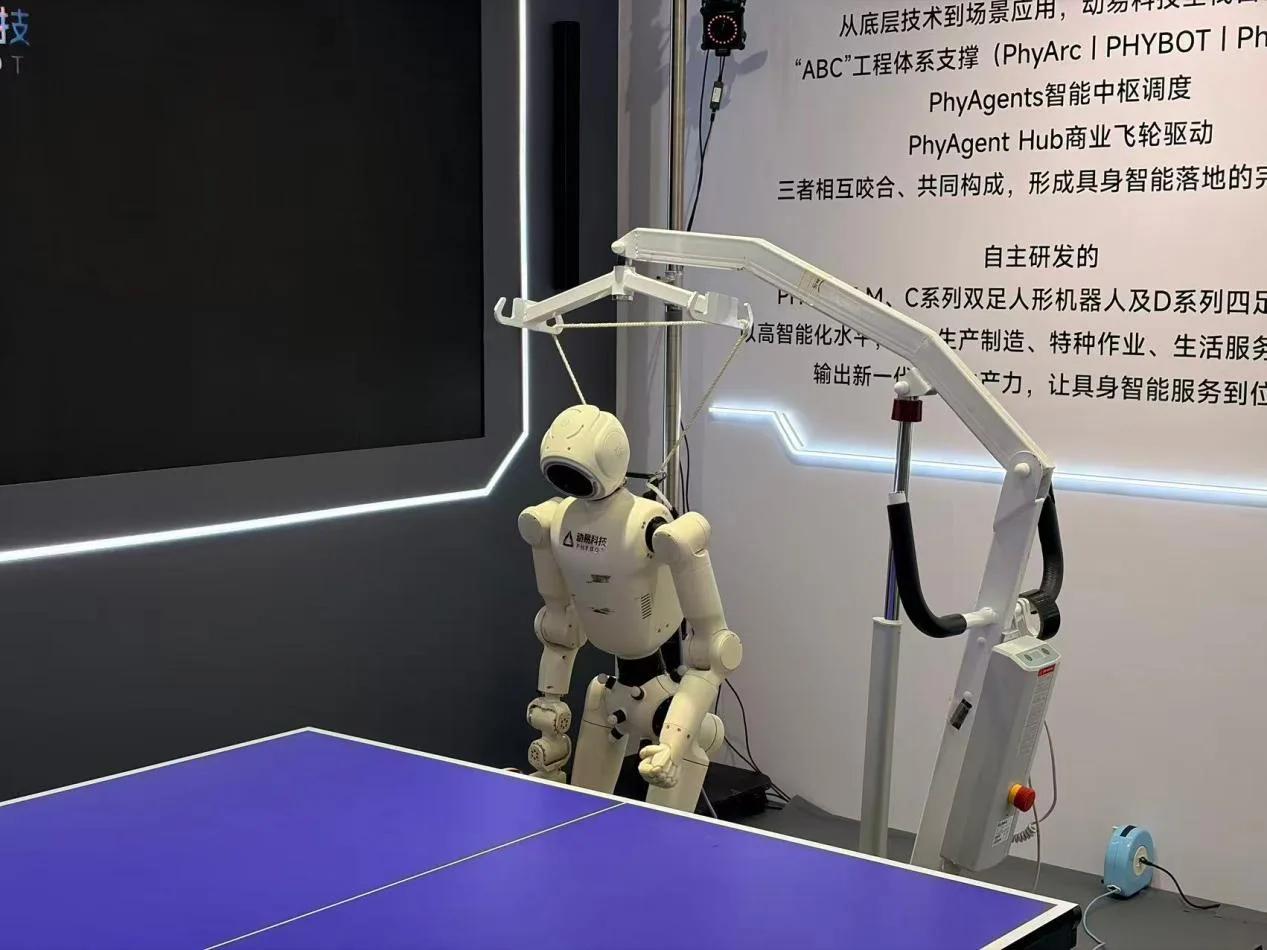
At WRC, a PHYBOT C series humanoid robot is playing table tennis with humans. The robot can identify the trajectory of the ball, judge the landing point, adjust the racket shape, and swing back. The biggest highlight of Dynamic Motion Tech at this WRC is that it has expanded the reuse and migration capability of "Physical Agents PhyAgents" from badminton to table tennis.
In other words, Dynamic Motion Tech's robot is not specially trained for a certain sport, but has a general physical agent architecture. After learning badminton, migrating the same agent to the table tennis scenario only requires a small amount of additional training to get started. This is very similar to the way humans learn: people who can play badminton learn table tennis much faster than people with zero foundation.
Source: Photo by Leitech
In addition to the complete machine, Dynamic Motion Tech also demonstrated the PhyArc integrated cycloidal joint module. The joint module is the "joint" of the robot, which determines the motion accuracy and load capacity of the robot. The cycloidal reducer is the core component in the joint module, which has long been monopolized by Japanese companies.
Dynamic Motion Tech integrates the cycloidal reducer, motor, encoder and driver into one module, making an integrated design, which means that other robot companies can directly purchase this module without developing joints from scratch.
The localization of these core components means that the manufacturing cost of the whole machine has room for further reduction, and also means that China's robot industry is no longer "stuck in the neck" by the upstream.
Although this is not a direction that can see results in the short term, it determines how far China's robot industry can go. When basic units such as motors, joints and reducers are all independently controllable, complete machine manufacturers can really focus on algorithms and scenarios, instead of worrying about upstream supply cuts every day.
Robots Are Fully "Brain-Replaced", the World Model Enables Machines to Think Before Acting
If the key word of the robot industry in previous years was "large model on board", then this year's key word has become "world model".
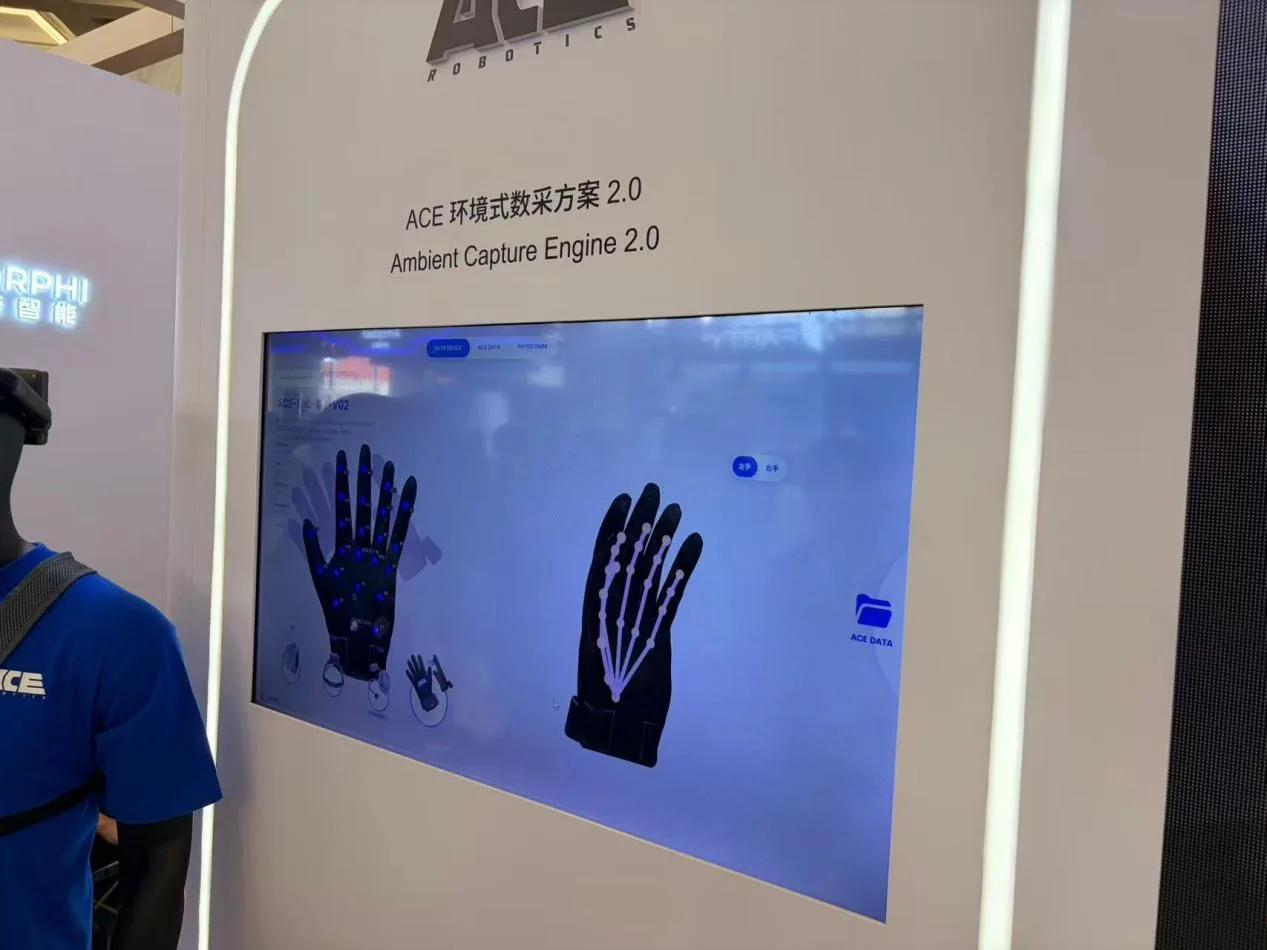
Daxiao Robotics is a representative player in this direction. At this WRC, Daxiao focused on demonstrating the Kairos World Model 3.1, the environmental data collection solution 2.0, and three major industry solutions.
Before the opening of WRC, Wang Fei, head of the world model of Daxiao Robotics, explained the Kairos 3.1 in detail at a Workshop. His core point is: the world model is not used to generate a video, but to allow robots to deduce future states and action strategies before acting. "Given what you see now, predict what the world will look like if you take a certain action next."
Source: Photo by Leitech
This capability is crucial