More than 1 billion pieces of "Little Stars" have been sold at a staggering rate, major well-known brands are scrambling to enter the track, and young people have ignited the explosive popularity of a brand-new product category.
Young people's attitude towards having acne has changed.
If in the past when they got pimples, their first reaction was to cover them up with foundation and concealer, now a new trend is gaining popularity: they simply let the pimples be seen, sticking a star, a heart, or even a small flower on the pimple.
Not long ago, photos of popular actor Zhang Linghe appearing at an offline event in Guangzhou wearing an acne patch spread widely on social media, making the flower-shaped acne patch on his face the "focus" of public attention.
Not just Zhang Linghe, celebrities including Ouyang Nana, Jennie Kim, Dua Lipa, and Jeon Somi are all frequent users of acne patches. Nowadays, those colorful, uniquely shaped acne patches are evolving from an acne-fighting tool designed to be as "invisible" as possible to a visible presence. They have even begun to be incorporated into daily makeup, outfits and stage styling, as young people are openly embracing having acne instead of hiding it.
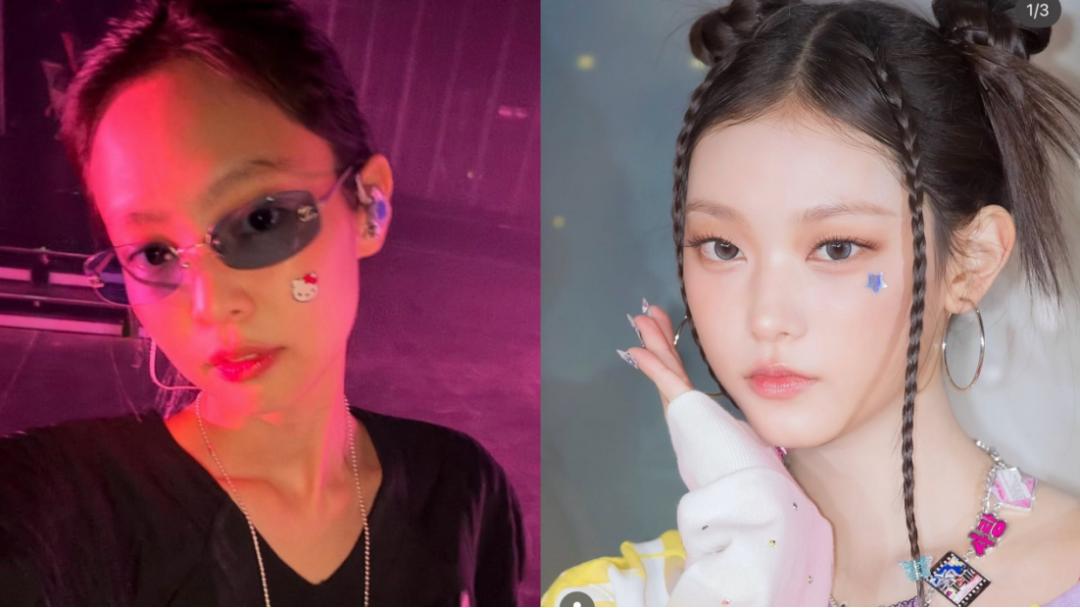
Behind this trend, a mature product category has been revitalized and regained public attention. According to industry insiders, searches and transaction volumes for acne patches have continued to rise in recent years, with the entire category achieving triple-digit year-on-year growth in 2025, and double-digit growth is expected to remain this year. At the same time, medical device enterprises, medical dressing enterprises and beauty brands have all entered the track, making this once overlooked small category increasingly vibrant.
The changes of acne patches seem to be only a few more colors and shapes on the surface, but in essence, it is undergoing a transformation from a functional product to an emotional consumer good. Young people still want their pimples to disappear quickly, but they no longer regard having acne as something that must be hidden.
In 2026, the phenomenon of young people having acne has become a new business opportunity for all players to compete for.
Annual Sales Exceed 600 Million Yuan, A Super SKU Is Born
Every year after the college entrance examination, dermatology departments and medical aesthetic institutions will usher in a wave of "acne removal craze". Young people's demand for "beauty enhancement" has never disappeared, and consumption around acne has always existed.
According to data from Magic Mirror Insight, from March 2025 to February 2026, the market size of acne care skincare products on mainstream e-commerce platforms reached 26.19 billion yuan, a year-on-year increase of 10%, with sales volume hitting 330 million units, up 10.5% year on year, and the market is still in a stage of steady expansion.
However, in this multi-year "acne removal war", a category that is not entirely new is regaining the spotlight — acne patches. In fact, acne patches have long existed. A relevant industry leader from Ali Health told *Tianxia Wangshang* that the mainstream products on the market today mostly adopt the form of hydrocolloid dressing, which is not a new technology at all, but a medical device originally used for wound care. Its basic principle is to absorb exudate from skin tissue and help wound healing. Now, it is made into smaller products more suitable for facial acne, becoming an important form of acne patches.
What really makes this mature category "rejuvenate" is a round of consumer education from overseas markets.
*Tianxia Wangshang* observed that with the recovery of overseas travel consumption, a large number of new acne patch products have emerged in markets such as South Korea, which not only present new expressions in efficacy, but also have obvious changes in appearance. But before this trend, the American brand Starface had already completed an important product "transformation".
In 2019, former ELLE beauty editor Julie Schott and entrepreneur Brian Bordainick co-founded Starface, turning the acne patch that originally needed to be hidden into a striking yellow five-pointed star. It did not try to make the acne patch invisible, but instead became an eye-catching visual symbol.
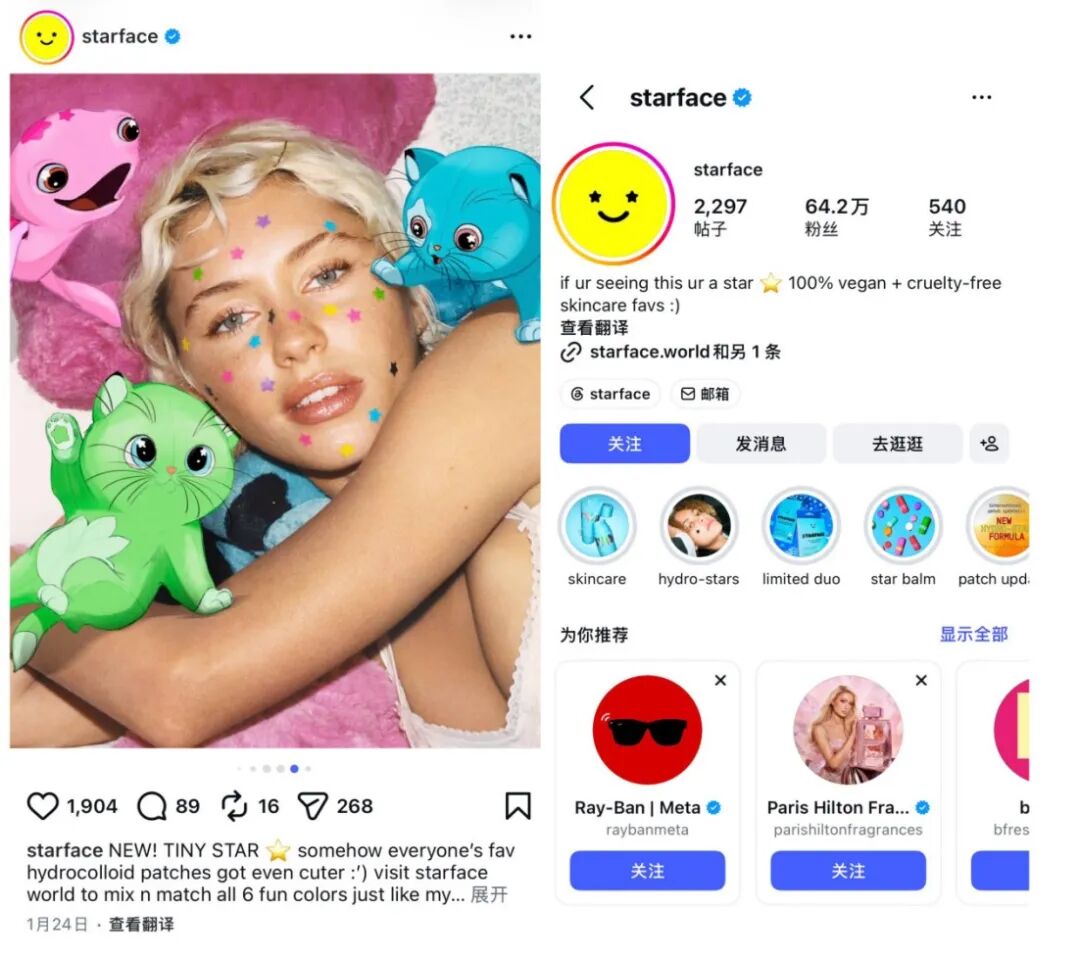
This "anti-cognition" product quickly won the market, and Starface immediately became a breakout dark horse in the acne patch sector. According to media reports, since the launch of its first product in 2019, Starface has sold more than 1 billion patches in total, and its brand revenue exceeded 90 million US dollars (about 600 million yuan) in 2024. Its products are usually sold in packs of 32, priced at about 10.99 to 16.99 US dollars (about 74 to 114 yuan), and limited editions with collectible packaging are often snapped up by consumers.
The rapid explosion of Starface also pushed this small category to develop from functional products to new consumer brands. Subsequently, this trend further fermented in Asian markets such as South Korea, and became widely popular in China last year.
An old category has thus found new room for growth.
Medical and Beauty Brands Enter the Track, Competing in Both Efficacy and Appearance
A large number of merchants have noticed this incremental market.
There are mainly three types of players participating in this track: enterprises with medical qualification background, brands focusing on medical-grade dressings, and beauty brands. The relevant industry leader from Ali Health analyzed that many well-established brands such as Winner, Fufqing and Ferris are also involved. Although for these brands, acne patches are not yet a pillar business, it has already become a category with clear growth trend.
From communication with multiple merchants, *Tianxia Wangshang* learned that the production threshold of acne patches is not high, but the main competition points of merchants revolve around "efficacy competition" and "appearance competition". "Part of the competition comes from raw materials and pricing, and the other part focuses on product form and usage scenarios — shapes like hearts and five-pointed stars, as well as more portable packaging, have all become directions for product innovation," the insider said.
This year, domestic brand Fangxiang settled in the Selected Domestic Goods section of Taobao with its acne patch products. This brand used to mainly operate beauty products, and followed up on the acne patch track after noticing the boom of acne patches last year. This year, it found that the market has expanded from bagged products to more styles of boxed products, so it developed its own boxed acne patches.
Different from its peers, Fangxiang did not blindly pursue fancy designs. Its best-selling products are still nude-colored, round patches, with 51 patches sold for 21.63 yuan, which is an average of 40 cents per patch. During the peak period, it can sell more than 300 orders a day on Taobao. This small item with an average price of 40 cents exploded in sales in May this year. Currently, the Taobao page shows that this product has achieved "over 1 million" hot sales across the network.
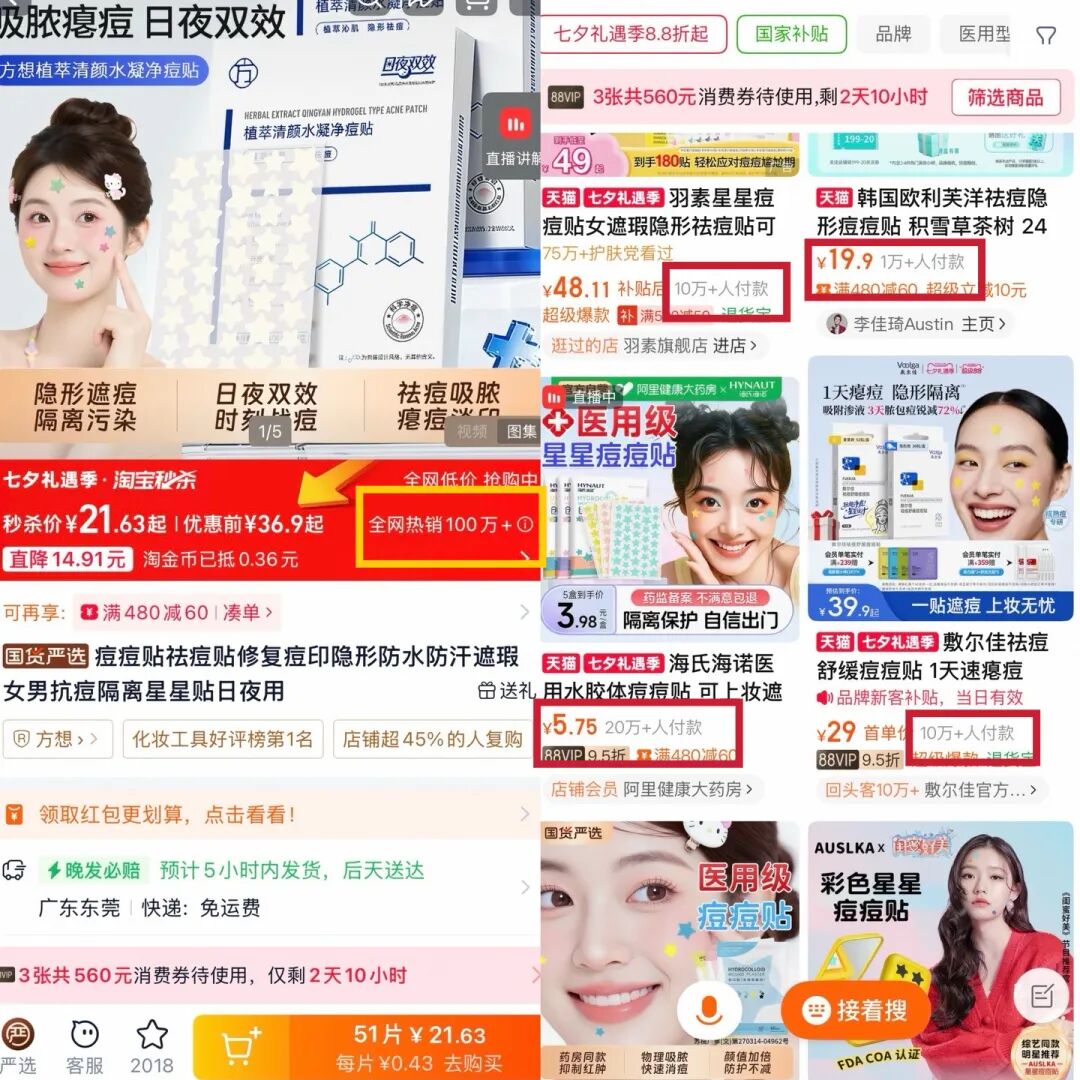
Mr. Xie, Operation Lead of Selected Domestic Goods business of Fangxiang, said that compared with shapes like hearts and bows, most mass consumers still prefer transparent, nude-colored acne patches, because they are invisible enough and will not affect subsequent makeup application.
This just shows that the consumption logic of acne patches has not completely changed. Practicality is still the primary reason for consumers to buy them. "When consumers buy acne patches, their first priority is still to suppress pimples, efficacy comes first, and appearance is secondary," Xie said.
To make high-quality products, they also need to rebuild the entire production chain from ingredients, supply chain to packaging materials. As a large number of low-cost bagged products exist in the market, how to balance quality and price has also become a realistic problem for merchants.
On major e-commerce platforms, when you search for "acne patch", the top displayed products are still mainly colorful acne patches in shapes of stars and flowers. Multiple acne patch products from brands such as Yusu, Fufu and Ferris have annual sales exceeding "100,000+". On the international brand side, "the originator of star-shaped acne patches" Starface has not yet settled in China's mainstream e-commerce platforms, and only appears in some daigou stores, but there are more than 60 million posts mentioning Starface on TikTok. In addition, in the recently popular Korean beauty and snack chain store Olive Young, there are more than 10 types of acne patches alone. With the boom of medical aesthetic services, some niche microneedle acne patches have also attracted a large number of users to pay attention and try.
At present, a new competition pattern has emerged in this segmented track, where brands are competing for better efficacy on one hand and more attractive appearance on the other. This once highly functional small category is thus being redefined by the beauty industry.
New Skincare Concept of Gen Z Drives the Boom of Acne Patches
So how did this long-existing conventional category of acne patches usher in its second spring?
In fact, the key to the real breakout of acne patches is that it has changed the relationship between young people and acne.
In the past, acne patches had to try their best to be invisible, usually presented as white round or square patches, and consumers hoped that they would not be noticed as much as possible. But now, consumers take the initiative to let others see that they have "something stuck on their face".
Behind this reversal is the transformation of acne patches from "blemish concealing magic tools" to beauty tools, as well as young people's higher acceptance of their "imperfect selves". When blemishes no longer need to be covered, they leave room for self-expression.
This is exactly the entry point that Starface found: it did not try to make acne patches disappear, but made them look more attractive. In terms of design language, Starface has a deep understanding of Gen Z's pursuit of fashion and childhood nostalgia, and resonates with users through limited-edition products in cooperation with classic IPs such as SpongeBob SquarePants and Hello Kitty. For the color of the packaging case, it not only has bright tones such as bright yellow, red and blue, but also has less eye-catching neutral color systems such as light brown, nude color and off-white, and attracts consumers' attention with a compact shape similar to wireless Bluetooth earphone cases.
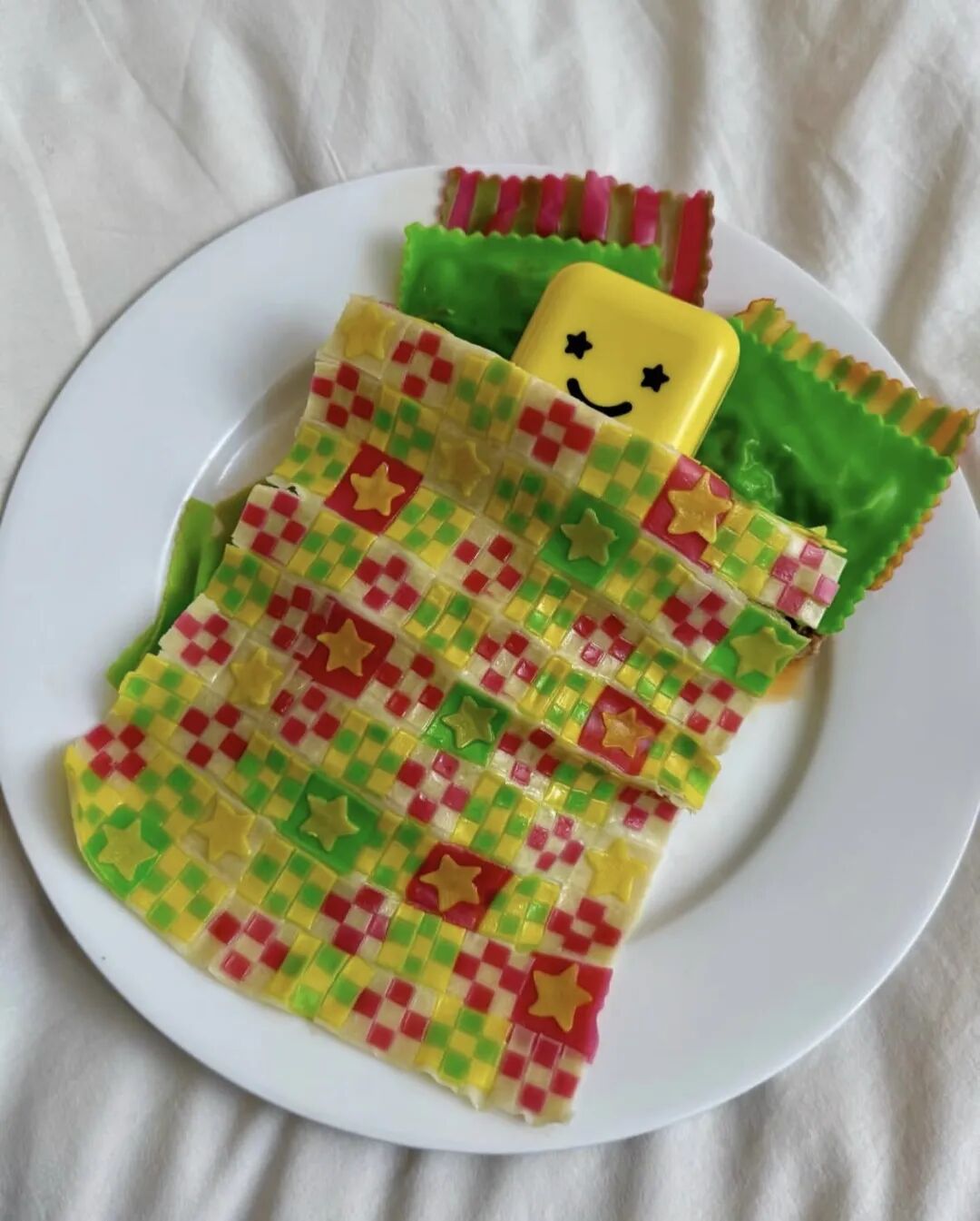
Starface designs its acne patch case into the shape of a Bluetooth earphone case
Celebrities and content creators are the key to detonating this product. This small patch is not only a stage styling item for K-pop idols, but also a daily favorite item in their lives.
In a video of the South Korean girl group NewJeans, Danielle wore a shaped acne patch on the bridge of her nose. When BLACKPINK member Rosé accepted the "What's In My Bag" video interview of *VOGUE*, she took out the Starface Black Star portable mirror case in her backpack, and said it made having acne "a little more fun". Many celebrities have also noticed this trend and started their own related businesses, including South Korean artist Jeon Somi who founded the brand "GLYF" and launched cherry-shaped acne patches. The brand also encourages everyone to show their personality bravely and stop hiding blemishes, which is exactly in line with the attitude of Gen Z.

The brand founded by South Korean artist Jeon Somi launched cherry-shaped acne patches
Social media has further amplified this change.
Starface is a typical case. To keep pace with Gen Z, Starface has settled on social media platforms such as Instagram and TikTok. On Instagram, Starface has more than 640,000 followers, and its account maintains a dynamic and relaxed tone, using elements such as emojis to narrow the distance with users. At the same time, Starface cooperated with top influencer Charli D'Amelio who has 154 million followers on TikTok, and a single product promotion video has more than 10 million views. In addition, through spontaneous wearing by celebrities such as Justin Bieber and Hailey Bieber, the brand quickly broke out of the niche circle.
According to media reports, Starface also cooperated with makeup artist Fara Homidi to appear in the runway makeup of the "Puppets and Puppets" show at New York Fashion Week, making it the first acne patch to appear on a fashion week runway.
From a more practical perspective, the star-shaped acne patches not only rewrote the aesthetic standards, but also changed the way of caring for acne itself.
The product advancement of this type of hydrocolloid patch can not only absorb exudate from the wound surface and maintain a moist healing environment, but also physically block bacterial invasion, extending the care time for acne-prone skin.
The beauty business is always full of opportunities, but in the eyes of Gen Z, the definition of beauty is being reshaped now, so a new consumption phenomenon has emerged: people are removing acne on one hand, and taking acne as a form of beauty on the other.
It is precisely based on this that these tiny acne patches have become popular again, creating an interesting business track.
This article is from the WeChat official account "Tianxia Wangshang" (ID: txws_txws), written by Ding Jie, authorized for release by 36Kr.