The "over-ripened" Kuaishou pins all the hopes of its entire community on Keling.
Kuaishou's Q2 performance was unremarkable. Although it was generally in line with expectations, there were shortcomings in core segments (advertising revenue missed estimates). Judging solely from the financial results, it cannot directly boost the valuation that has been under pressure for a long time recently. The key lies in how the management outlines Kling's growth prospects, especially considering the fierce competition in the video model space and the potential pressure brought by the frequent launch of peer models recently.
Specific details are as follows:
1. Kling delivered high value-added results as scheduled, but subsequent growth remains to be confirmed
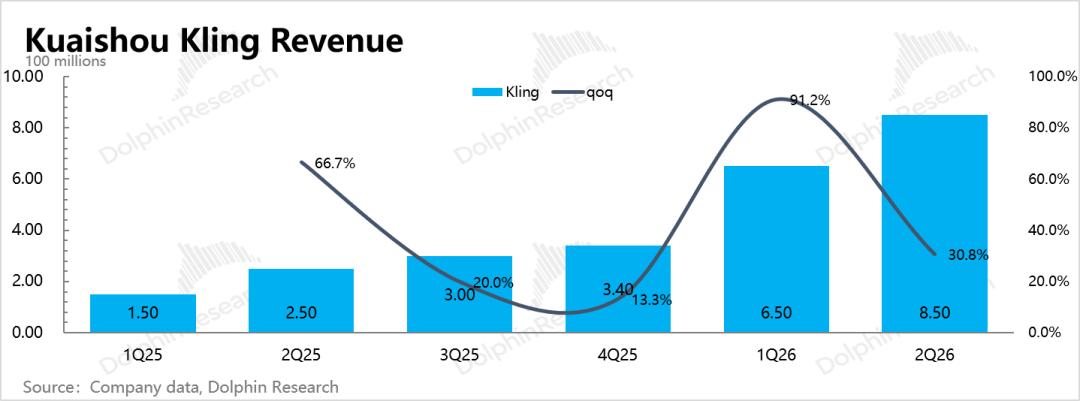
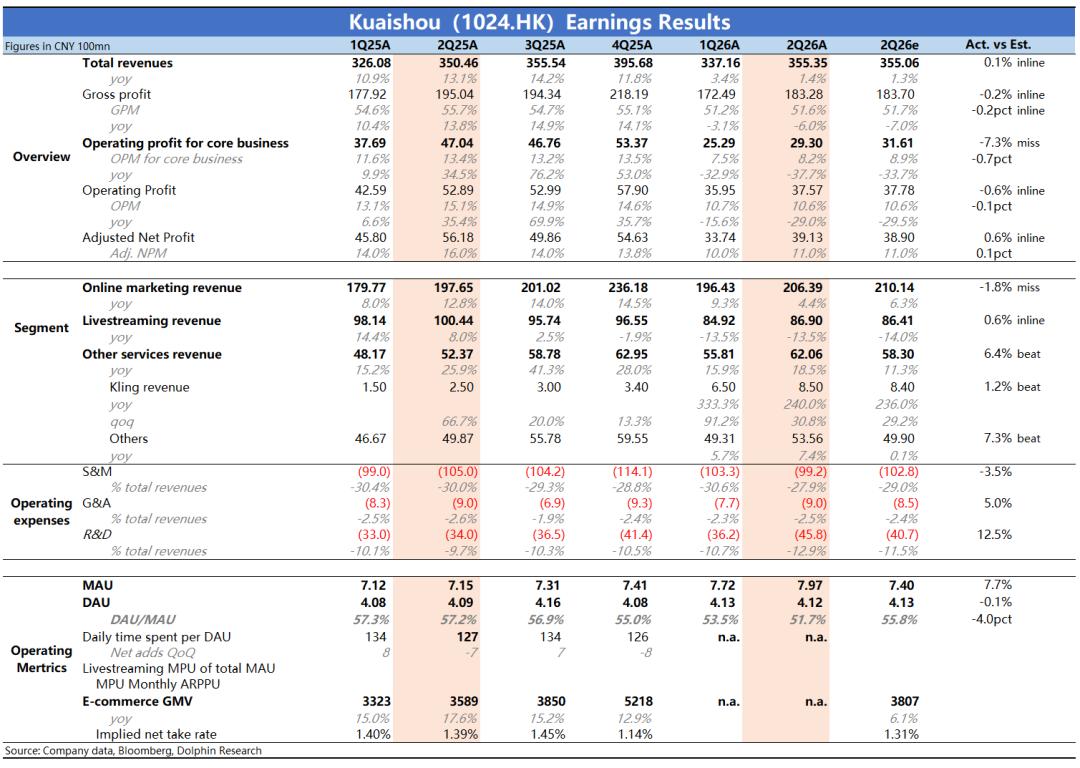
Kling's revenue in Q2 exceeded 850 million yuan, growing by more than 30% quarter-on-quarter, slightly higher than the ~840 million yuan guidance given after the Q1 earnings report.
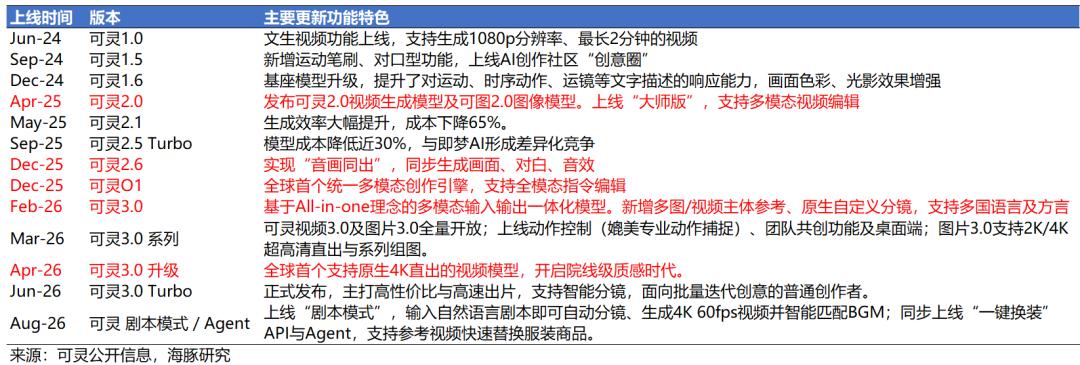
However, with the release of MiniMax H3 in early August which received positive feedback to a certain extent, and the subsequent investment of major manufacturers in multimodal models in line with the trend, Kling's future growth trajectory is expected to be significantly affected. The management needs to provide some current key operating indicators, the release time of the next-generation Kling model, its distinctive functional advantages, and judgments on the medium and long-term strategic outlook in the future.
At present, the progress of Kling's spin-off and listing has the greatest impact on Kuaishou's valuation. The latest move is the new round of independent financing announced in July: it completed a financing of 3 billion US dollars, with a post-investment valuation of 18 billion US dollars, and Kuaishou's shareholding ratio dropped to 68%. The lead investors include PE capitals such as CPE Yuanfeng, Guofang Venture Capital, as well as Tencent.
2. Traditional businesses continue to face pressure
(1) Advertising performance fell short of expectations
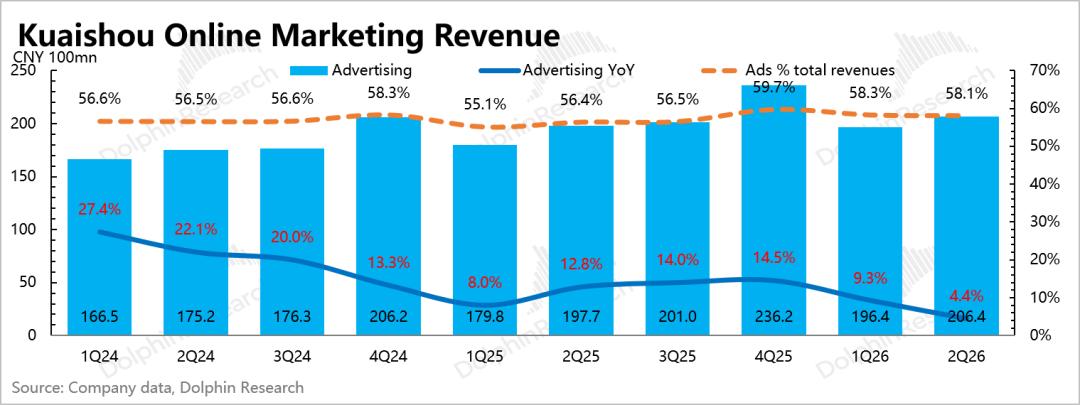
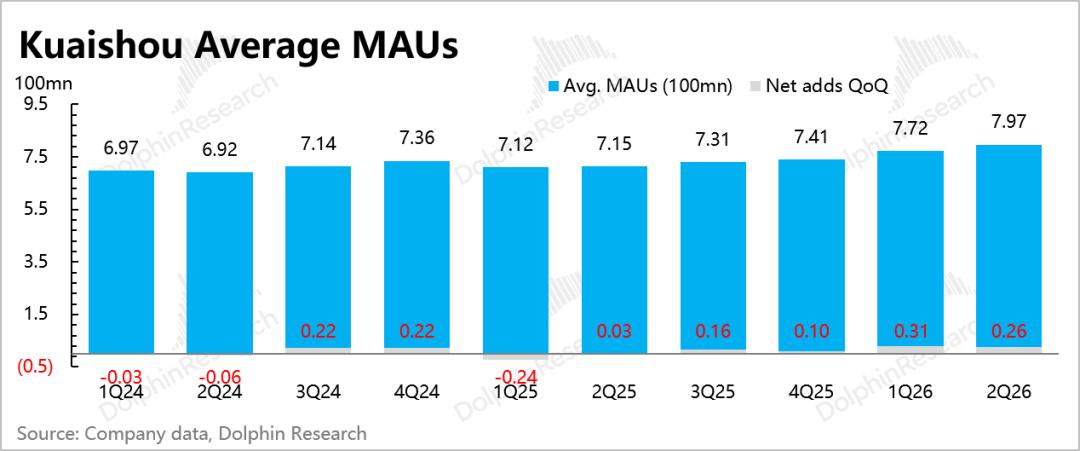
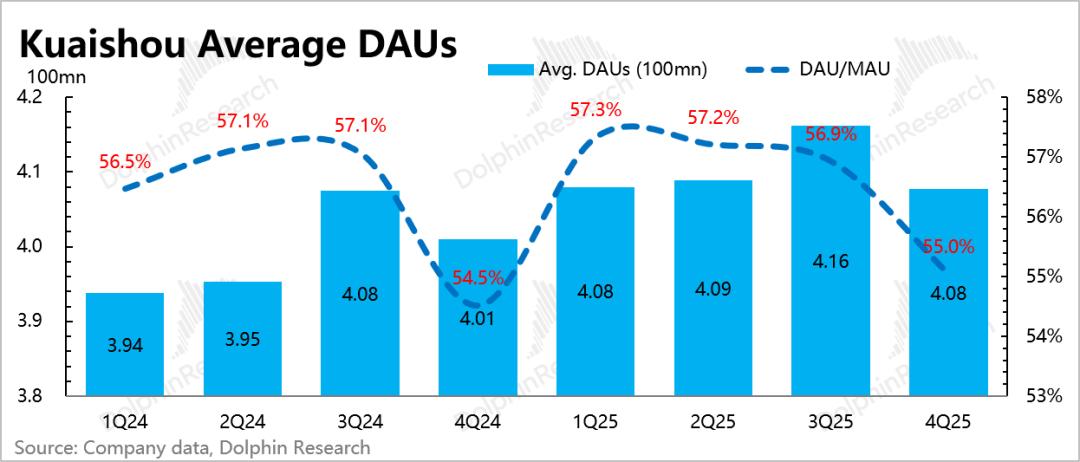
Advertising revenue in Q2 grew by 4%, lower than the previous expectation of 6%. The growth rate has declined in the past three quarters. On the one hand, it is related to the decline of ecological traffic (although MAU still has a net increase of 26 million, DAU related to advertising performance has a net loss of 1 million, so the expansion of MAU is more like a short-term surge brought by specific events or activities);
On the other hand, it is related to the sluggish consumption environment (e-commerce has stopped reporting GMV, but judging from the guidance given in Q1, the growth is also very low. Coupled with the reverse subsidy of e-commerce traffic, the in-cycle advertising is estimated to be flat year-on-year or grow at a low single-digit rate).
Although there is incremental growth brought by short dramas (the investment in short drama traffic in Q2 increased by 100%), the proportion of this part is small and there is also competition. Coupled with the high base pressure in the second half of the year, it is difficult to see a recovery in this growth rate in the short term.
(2) Live streaming revenue continues to decline
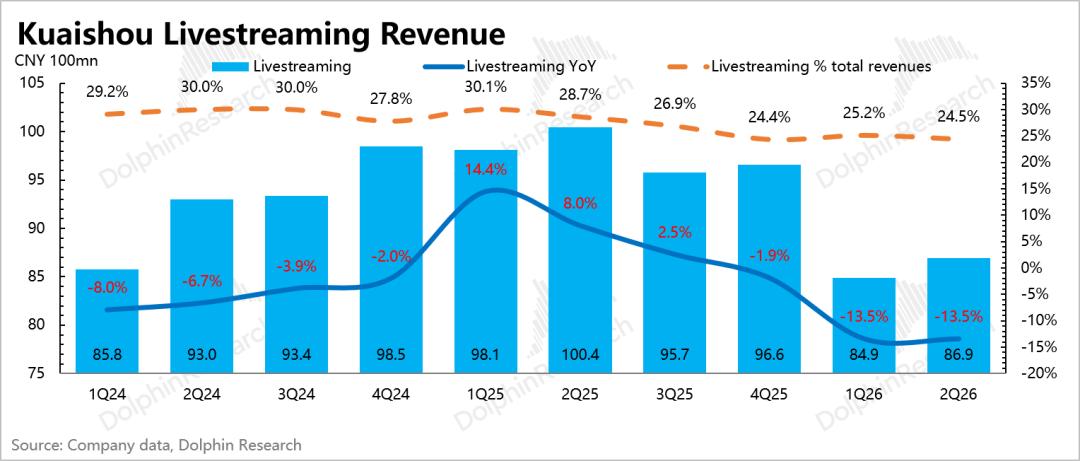
Live streaming revenue in Q2 fell by 13.5%, which is still affected by regulatory rectification and industry trends. The trend may ease in the second half of the year as the base number lowers.
(3) E-commerce and other businesses have some additional increments
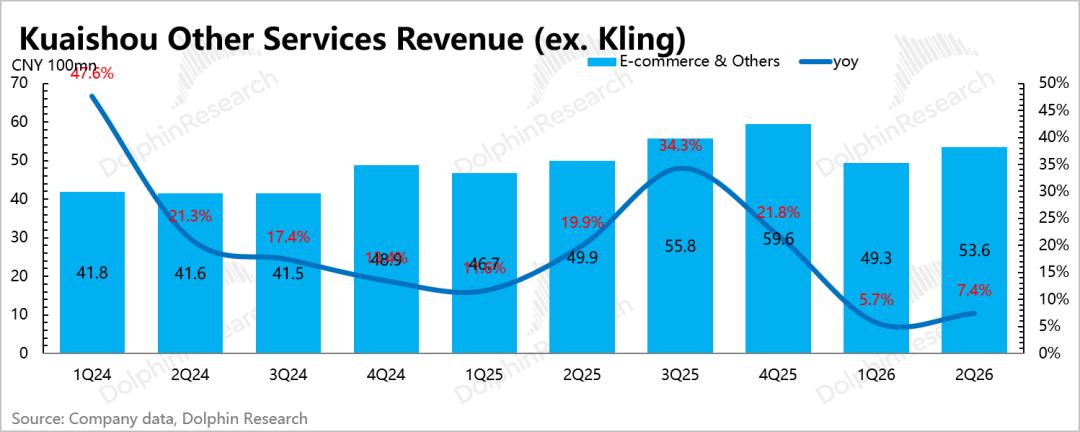
Excluding Kling, other revenues reached 5.4 billion yuan, a year-on-year increase of 7%, higher than the guidance of flat year-on-year growth. The company did not give a detailed explanation for the specific driving factors of this financial result. Dolphin Analyst speculates that it may be the incremental sales brought by product promotion during the CBA event broadcast (it signed the CBA copyright in March, embedded a shopping guide entrance in the CBA live stream to sell sports peripheral products), in addition, the sales revenue brought by the online concert launched in April. The actual situation can refer to the relevant statements of the management in the earnings call.
3. Core profit is lower than expected
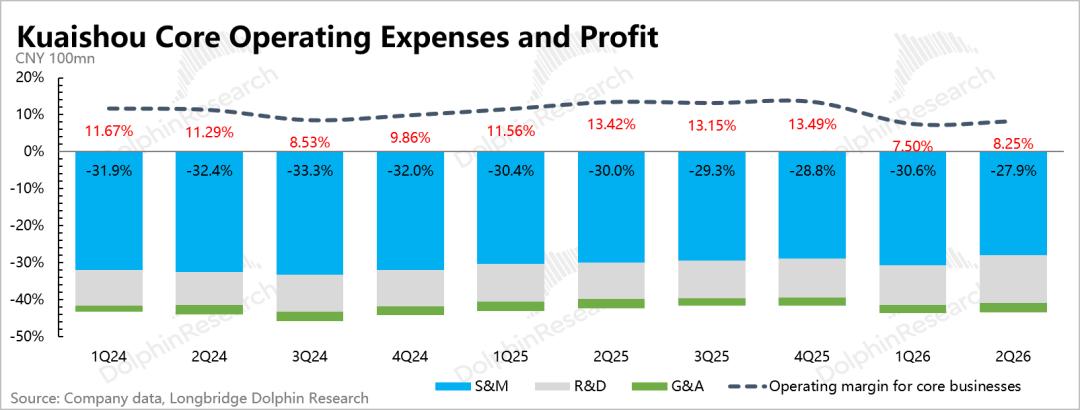
The core operating profit obtained by subtracting three operating expenses from gross profit (excluding other income) was 2.9 billion yuan, down 38% year-on-year, lower than market expectations. This is mainly due to the 35% surge in R&D expenses, which is related to computing power investment and R&D personnel expenditure.
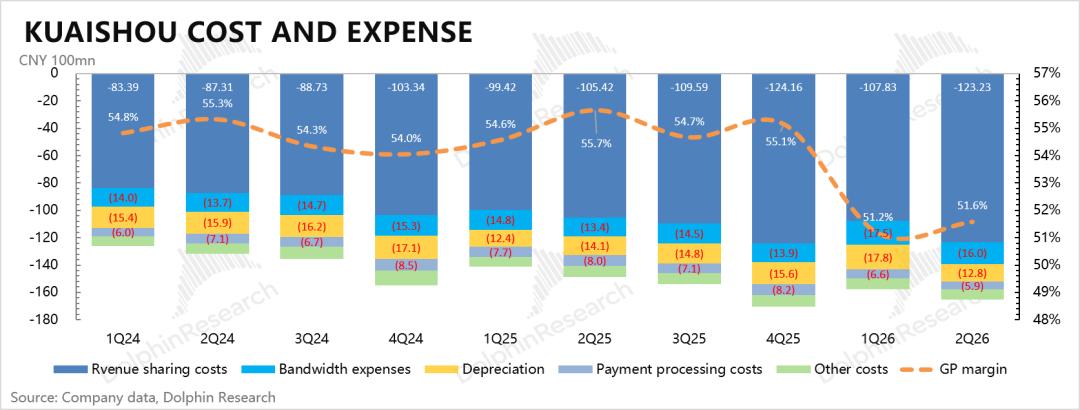
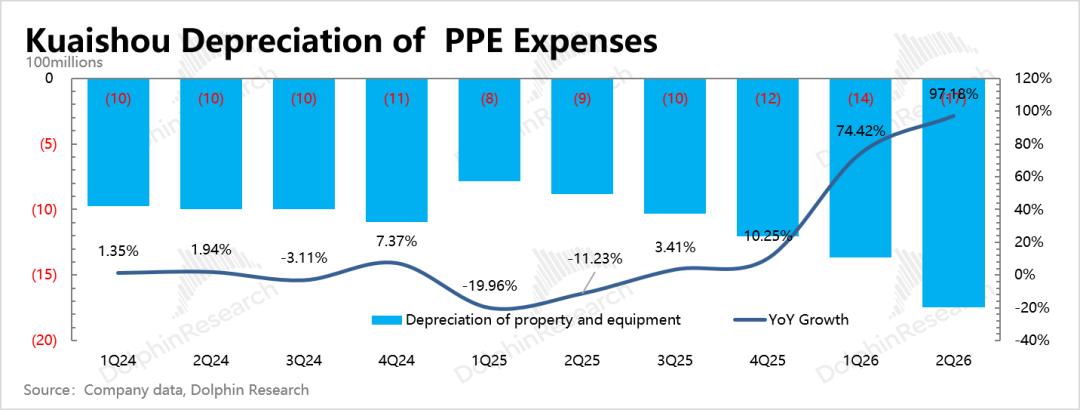
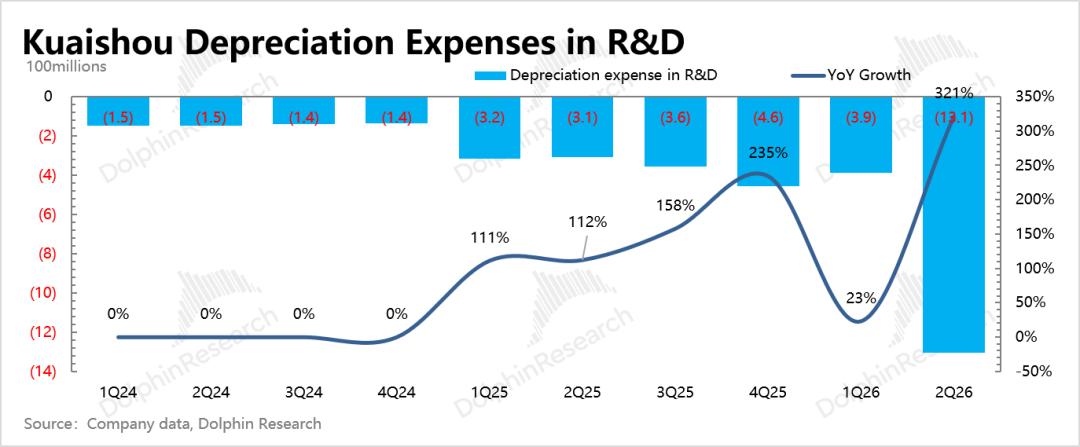
Kuaishou's depreciation expenses are included in costs and R&D expenses respectively. The overall depreciation expenses in Q2 doubled year-on-year. Among them, part of the depreciation expenses included in R&D expenses increased by more than 3 times year-on-year in Q2. We speculate that it is mainly the investment in large model training (depreciation of purchased computing power equipment).
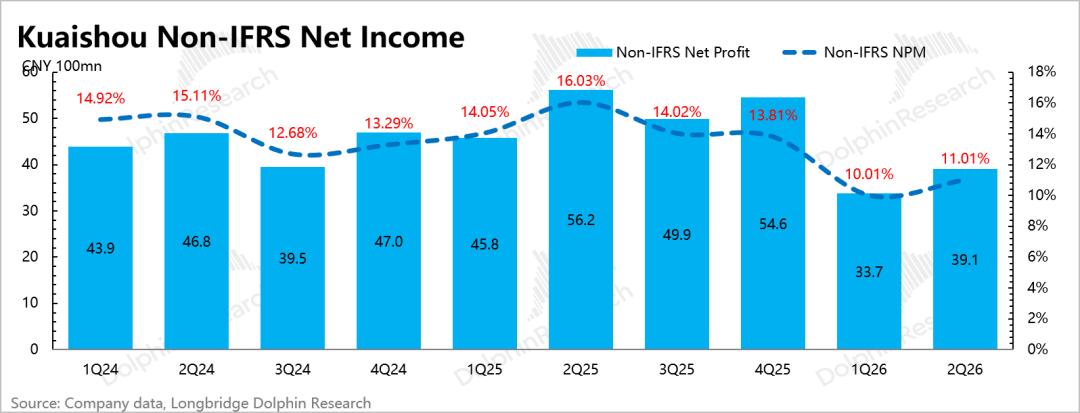
Gross margin was in line with expectations, flat quarter-on-quarter and down year-on-year, which was mainly due to the increase in the proportion of Kling's computing power investment and IAA short dramas (low gross margin). Sales and management expenses were further tightened and controlled in Q2. Finally, the adjusted net profit was 3.9 billion yuan, with a profit margin of 11%, down 30% year-on-year, which was in line with expectations.
4. The balance between capital expenditure and shareholder return
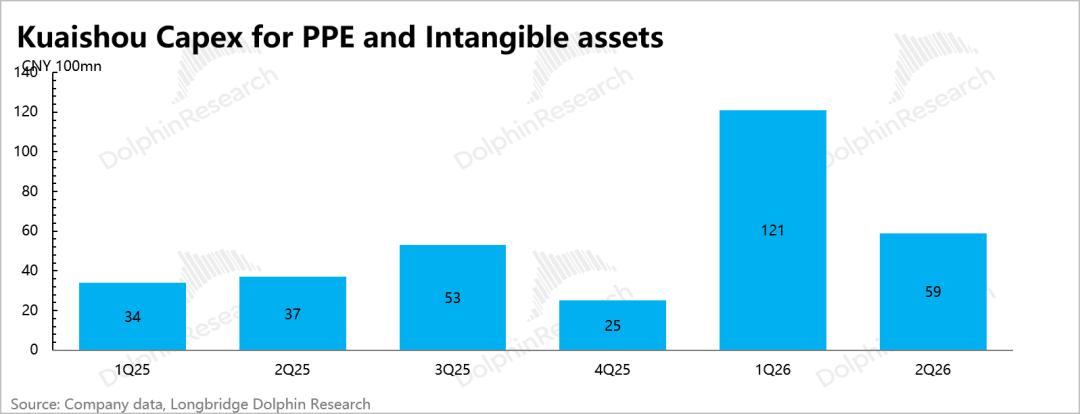
Q2 Capex was 5.9 billion yuan. The company gave guidance of 26 billion yuan for the whole year at the beginning of this year. The total for the first half of the year is 18 billion yuan so far, which is in line with the statement from last quarter that most of the Capex investment was spent in the first half of the year in order to purchase computing power in advance.
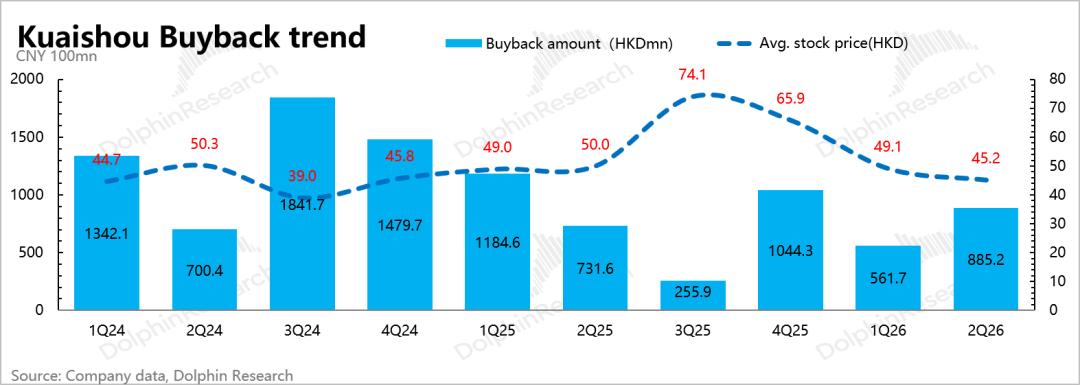
In terms of shareholder return, the repurchase intensity increased in Q2, spending 880 million Hong Kong dollars to repurchase 19.6 million shares at an average price of 45 Hong Kong dollars per share. According to the guidance of last quarter, this year's shareholder return will be higher than that of 2025 (5 billion Hong Kong dollars). Special dividends and repurchases will be added on the basis of 3 billion Hong Kong dollars in dividends, implying a return rate of more than 4%.
At present, Kuaishou's short-term net cash on the account is 67.8 billion yuan (= cash + short-term investments - short-term borrowings). The usable funds disclosed by the company are 121.3 billion yuan (the calculation caliber is larger than that of Dolphin Analyst, including long-term fixed deposits, long-term financial assets, restricted cash, and not deducting short-term borrowings), so the company has spare capacity to provide shareholder returns beyond the plan.
5. Overview of detailed financial data
Dolphin Analyst's Viewpoint
The Q2 performance does not look good, mainly because the core advertising business fell short of expectations. Advertising is already the only business in the traditional main business that still has hope to maintain positive growth, and the Q2 performance shows the image of a helpless platform that is powerless under the sluggish environment. From the trend perspective, the guidance given at the end of May was still missed, which indicates that the trend in June was even worse. Considering the high base pressure in the second half of the year, advertising can no longer provide much growth support.
In this case, the main business is basically stagnant this year, and the group's dependence on Kling is even heavier. But Kling is not without flaws. The competition threshold of video models is lower than that of basic models. After the release of MiniMax H3 in August, user feedback shows that its performance is basically at the same tier as Kling (T1). Although the quality is slightly inferior, H3 is priced lower. At the same time, Seedance still maintains its leading position at the T0 level.
According to recent news, Wang Xintao, one of Kling's core R&D backbones, also left his job recently and it is rumored that he joined Tencent. The official version of HY4.0 that Tencent will release in Q4 will also be equipped with multimodal capabilities. Therefore, Dolphin Analyst is not very optimistic about the impact of fierce competition in the video model space on Kling in the second half of the year.
It is hoped that the management at the earnings call will disclose more current operating progress of Kling, not only the listing and financing information, but also focus on information such as user paid renewal status, ARR expectation, the release time of the next-generation model Kling 4.0, and core functional features.
Combining the capital attitudes reflected in the earnings reports of Baidu and Tencent, it can be seen that the capital market currently has relatively clear "assessment indicators" for traditional Internet companies' transformation to AI: (1) Direct monetization after AI investment needs to be seen, and ROI needs to be calculated; (2) The traditional main business needs to be able to provide a safety cushion, in other words, it cannot be directly replaced by AI, and more importantly, it cannot continue to be siphoned off by the Douyin ecosystem.
As shown in the figure below, the continuous decline of Kuaishou's ecological traffic in the past two years has already laid hidden dangers for the current growth pressure of its main business. Although Kuaishou has tried to make efforts, such as expanding overseas to bring incremental growth, the actual results are mediocre, and related businesses have been scaled down for control at present.