Dong Mingzhu "crosses boundaries" to open a technical school
Gree has started to cultivate the next generation of industrial workers on its own.
On the evening of August 17, Zhuhai Gree Technical School, which is under Gree Electric, released its first enrollment information. The school plans to recruit 300 junior high school graduates of current and previous cohorts aged 15 to 18, with a 3-year schooling system, and tuition fees ranging from 9,000 yuan to 15,000 yuan per year. Dong Mingzhu serves as the principal.
Among the first 9 majors, majors such as refrigeration equipment operation and maintenance, mold manufacturing, intelligent equipment operation and maintenance, mechatronics technology, electrical automation equipment installation and maintenance, and mechatronic product testing technology application almost correspond to the production chain of a manufacturing enterprise; IoT application technology, multimedia production, and computer application and maintenance further cover the skills required for the digital transformation of the manufacturing industry.
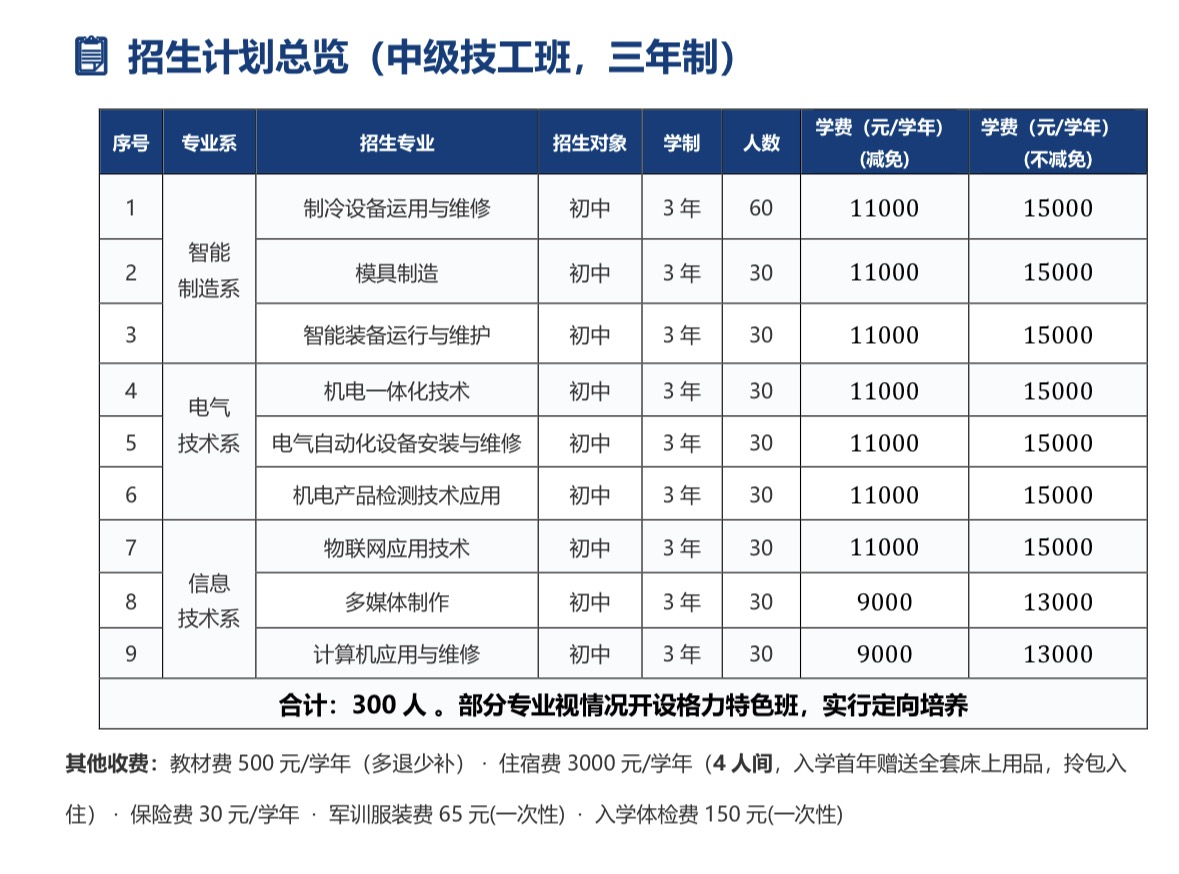
Source: Enrollment brochure of Zhuhai Gree Technical School
The training path proposed by Gree for this school is also very straightforward — "Entering school means entering the enterprise, and graduating means being competent for the post". Students get access to enterprise resources from the very beginning of enrollment. The teaching staff is composed of senior engineers and senior technicians from Gree and professional teachers of the school. The teaching emphasizes "connecting the classroom with the workshop, and aligning works with products". Graduates are given priority to enter Gree Electric and its industrial chain enterprises for internships and employment.
For Gree, this is more like a pre-positioned talent supply chain.
Dong Mingzhu's Another "Production Line"
Over the past few decades, Dong Mingzhu has been most familiar with factories.
She has repeatedly talked about manufacturing, technology and the craftsmanship spirit. Now, she has taken this logic one step further: from producing products to cultivating the people who produce products.
It is particularly noteworthy that Gree did not start from universities or industrial colleges, but directly targeted junior high school graduates as enrollment objects. This means that the time point for enterprises to participate in talent cultivation has been greatly advanced.
Traditional recruitment usually takes place after students graduate, and enterprises then train graduates to become people who can actually take up posts. Gree tries to change talent cultivation from "post-graduation recruitment" to "cultivation right after enrollment".
This is related to the changes in the talent structure of the manufacturing industry. Today's manufacturing industry is no longer just assembly lines and single types of work. The development of industries such as intelligent manufacturing, new energy, and industrial Internet has enabled enterprises to need skilled talents who can understand machinery, electricity, automation and even digital technology at the same time.
The major combination set by Gree this time exactly reflects this change. Refrigeration, molds, mechatronics, and electrical automation are still the basic foundation of the manufacturing industry, but majors such as intelligent equipment, Internet of Things, and computers are also included in the same talent cultivation system.
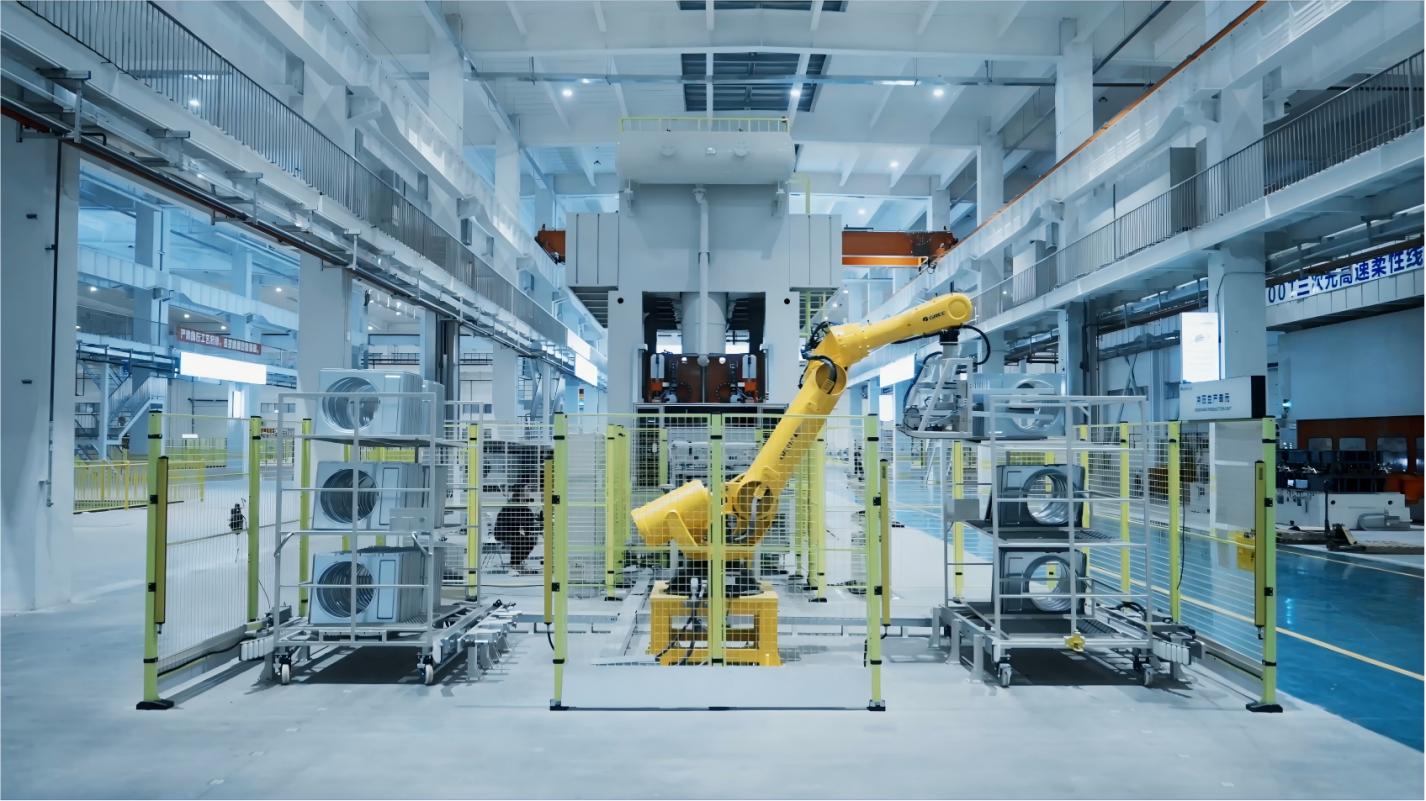
Gree Intelligent Factory Source: Gree
What enterprises increasingly need is no longer a single type of work, but compound skilled talents who can understand equipment, technology and production processes.
This is exactly the biggest advantage for enterprises to participate in vocational education.
Enterprises are close enough to posts, facing production and technological changes every day, knowing which posts are short of people, and knowing what abilities a student still lacks after actually entering the production line. By introducing enterprise demands into the major setting and curriculum system in advance, schools can shorten the distance between "industrial demand - major setting - curriculum - practical training - employment".
This is also the integration of industry and education that vocational education has emphasized for a long time. Gree puts engineers and senior technicians into the teaching team, turns production equipment into practical training resources, and takes real products as teaching objects. In essence, it is trying to shorten the distance between schools and factories.
And Dong Mingzhu personally serving as the principal also makes this enterprise-run school particularly eye-catching. But there is no answer yet as to how many talents Gree needs this school can finally cultivate. With only 300 students in the first cohort, it is more like an experiment.
Enterprises Not Only Recruit Talents, But Start to Cultivate Talents
Gree is not the first enterprise to run a school.
In the field of manufacturing, XCMG has been doing this for more than 30 years. Xuzhou Construction Machinery Technician College, run by XCMG Group, cultivates skilled talents around the construction machinery industry. Since its establishment, it has cumulatively cultivated and delivered more than 14,000 skilled talents for XCMG Group and the society, and a large number of graduates have entered XCMG and local enterprises for employment. The college has also cultivated high-skilled talents such as national technical experts, chief technicians, and great craftsmen of the country. For XCMG, the school has become part of the enterprise's talent system.
What Gree is taking is a path similar to XCMG: enterprises directly run technical schools, and advance the post demands, production scenarios and technical standards of enterprises to the talent cultivation stage.
But the boundary of enterprise-run education does not stop at technical education.
Back in 2000, Geely Group founded Beijing Geely Specialized College, which later developed into Beijing Geely University. It was upgraded to an undergraduate university in 2014, moved to Chengdu and renamed Geely University in 2020. In this way, enterprise-run education has extended from "cultivating skilled talents" to "cultivating application-oriented undergraduate talents", and the connection between education and industry has further extended from employment to major construction and practical teaching.
Huawei has chosen another way.
It did not simply copy the model of "running a school on its own", but brought the enterprise's technical standards and industrial demands into universities through ICT colleges, industry-university cooperation, industrial colleges, curricula and certification systems. The way enterprises participate in education has further extended from running schools to participating in the construction of curricula, teaching staff and talent standards.
One step further, entrepreneurs such as Cao Dewang and Yu Renrong have promoted the establishment of universities.
Cao Dewang initiated the establishment of Fuyao University of Science and Technology, which welcomed its first batch of undergraduate students in 2025. Positioned as a new type of research university, its first batch of majors cover computer science, intelligent manufacturing, vehicle engineering, materials and other directions; Yu Renrong promoted the establishment of Dongfang University of Technology, which is also positioned as a high-starting point, small but refined, innovative research university.
Neither of the two schools is simply positioned as a talent training base for enterprises, but tries to participate in higher education and scientific research with the industrial experience, funds and resources of entrepreneurs.
The paths are different, but the logic behind them is interlinked: enterprises are increasingly dissatisfied with waiting for schools to cultivate talents, and have begun to actively participate in the process of talent cultivation.
This is also the biggest difference between enterprise-run education and traditional school-enterprise cooperation. In the past, enterprises were more like internship bases and employment units for schools; now, some enterprises have taken a step forward to participate in major setting, curriculum design, teacher training, and even directly become the sponsors of schools.
Policies are also making room for this change.
In October 2021, the General Office of the Communist Party of China Central Committee and the General Office of the State Council issued the Opinions on Promoting the High-quality Development of Modern Vocational Education, which clearly put forward "encouraging listed companies and leading enterprises in the industry to run vocational education, and encouraging various enterprises to participate in running vocational education in accordance with the law". At the same time, it proposed to promote schools and enterprises to jointly build and manage industrial colleges and enterprise colleges, and encourage leading enterprises in the industry to deeply participate in the professional planning, curriculum setting, textbook development and teaching implementation of vocational education.
The Regulations for the Implementation of the Law on the Promotion of Private Education, which came into effect on September 1 of the same year, also clearly states that the state encourages the running of private schools in accordance with the law through donations, the establishment of foundations and other methods, and encourages enterprises to run or participate in the running of private schools offering vocational education in accordance with the law through sole proprietorship, joint venture, cooperation and other methods.
Apart from policies, the more realistic driving force comes from the industry.
Enterprises are more aware of what skills posts require than schools, and they also have real production scenarios, equipment and engineers. Bringing these resources into schools in advance can shorten the distance from the classroom to the post.
For enterprises, this is also a forward shift of the talent supply chain. In the past, it was "school cultivation - enterprise recruitment - enterprise re-training", but now it has become "enterprise participating in cultivation - pre-screening - graduation and employment". The talent cultivation cycle is extended, and the recruitment cost of enterprises and the time for new employees to adapt to posts also have the opportunity to be reduced.
But the value of enterprise-run education should not only stay at "cultivating employees for enterprises".
Xiong Bingqi, dean of the 21st Century Education Research Institute, told Jiemian News: "The volume of public education is getting larger and larger, and the supplementary function of private education is weakening. Under this background, the most important value of private schools lies in exploring personalized and diversified school-running modes, forming competition with public schools, which is conducive to improving the overall level of education and providing differentiated education choices for educatees."
In the past, when discussing private education, people paid attention to scale, enrollment and market share most of the time. After enterprises enter the education sector, what is really worth observing is whether it can bring different education modes.
Gree's advantage lies in manufacturing scenarios, XCMG's advantage lies in the construction machinery industry chain, Geely's advantage lies in the automotive industry, Huawei's advantage lies in digital technology, and Cao Dewang and Yu Renrong try to transform entrepreneurs' industrial experience, funds and resources into university education and scientific research resources. These resources are difficult for traditional schools to obtain on their own.
But enterprise-run education also has its own boundaries. Enterprises know best about their own post demands, but they may not know best about the laws of education. Enterprises can adjust posts quickly according to business changes, but it is difficult to adjust the 3-year, 4-year or even longer cultivation cycle of students at the same speed. Enterprises can cultivate people who are highly adapted to their own production systems, but students need to face a longer career path.
Therefore, the most common misunderstanding that enterprise-run education easily falls into is to run the school as an extension of the enterprise's recruitment system.
For an enterprise, "employment upon graduation" means efficiency; for education, whether students can continue to learn, change posts, enter other enterprises and adapt to industrial changes after graduation is equally important. This is also the question that Gree really needs to answer in the next few years.
This article is from the WeChat official account "Jiemian News", written by ZHA Qinjun, edited by WEN Shuqi, and authorized for release by 36Kr.