Keker | When AI Steps Into the Kitchen, Robam Accelerates Its Transformation Into an AI Cooking Technology Enterprise
When AI is no longer limited to conversations on screens, but truly steps into the steaming, lively kitchen — a technological revolution centered on cooking and the kitchen has officially begun.
Recently, Robam held an event themed "AI Makes Cooking More Meaningful — Robam AI Cooking Technology Experience Day", inviting a large number of media representatives to visit the site, experience the products firsthand, and have in-depth exchanges with relevant leaders of Robam's technical system.
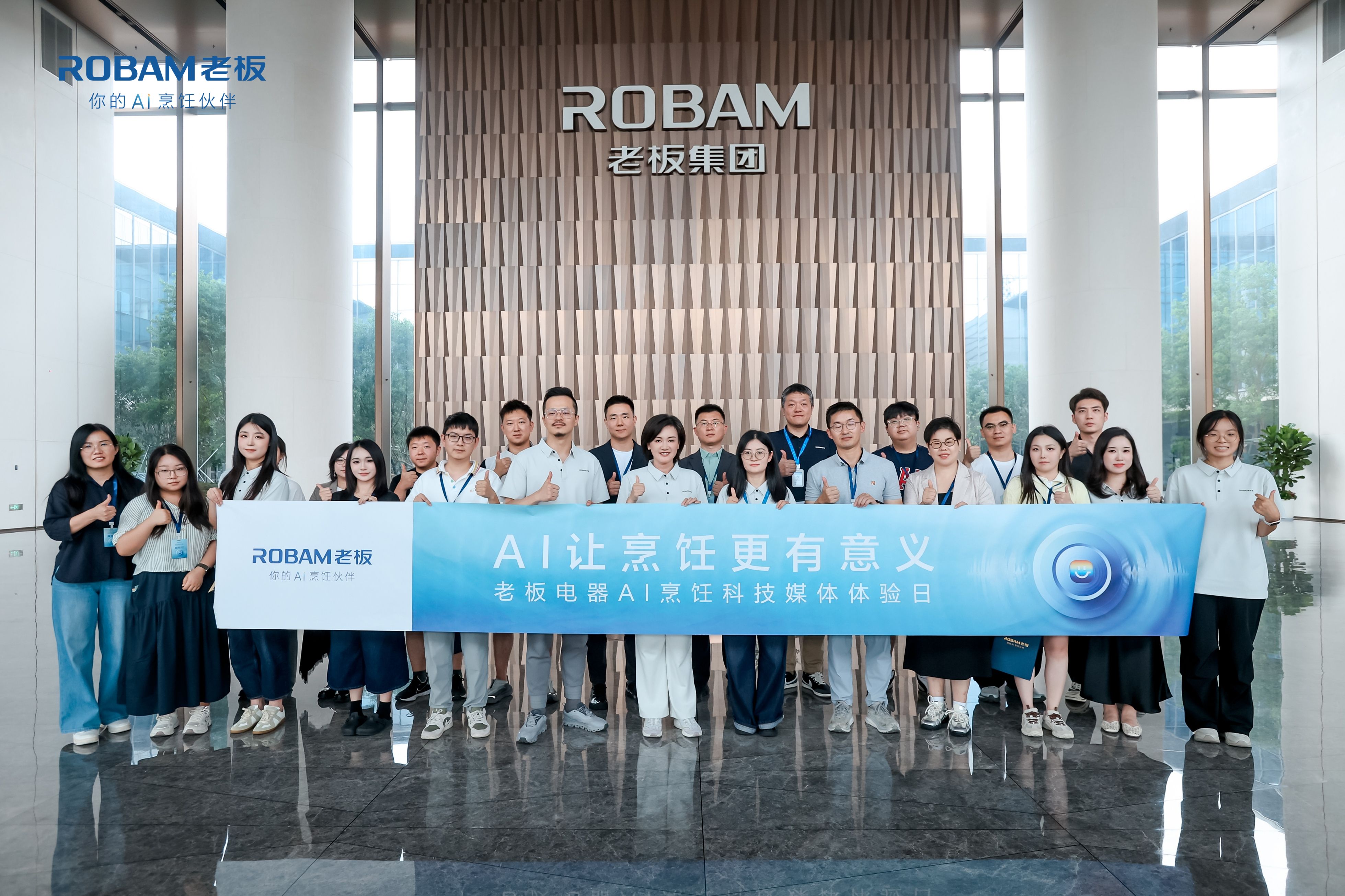
Group photo taken at Robam AI Cooking Technology Experience Day
At the event, Robam systematically demonstrated for the first time its investments, technical layouts and innovative achievements in the AI cooking field, and shared its in-depth thinking on the future of AI cooking. This is not just a technical showcase, but also marks that this kitchen appliance enterprise that has been deeply rooted in the cooking track for 47 years is accelerating its transformation into an AI cooking technology enterprise.
When AI Enters the Kitchen, Why Robam Deserves a Fresh Look
Over the past few decades, the growth logic of the kitchen appliance industry has been "urbanization + real estate + product function iteration". But today, every link of this logic is under pressure: the real estate industry has entered the stock era, and new demand is slowing down; product homogeneity is serious, the competition for hardware parameters is approaching the ceiling, and consumers are increasingly difficult to be impressed by the concept of "bigger and stronger"...
The old path of relying solely on hardware to compete for parameters is getting narrower and narrower.
At the same time, new dividends are emerging. AI is no longer just a chatbot on the screen, it has begun to step into the real physical world — and the kitchen is one of the most complex and valuable physical scenes in the home.
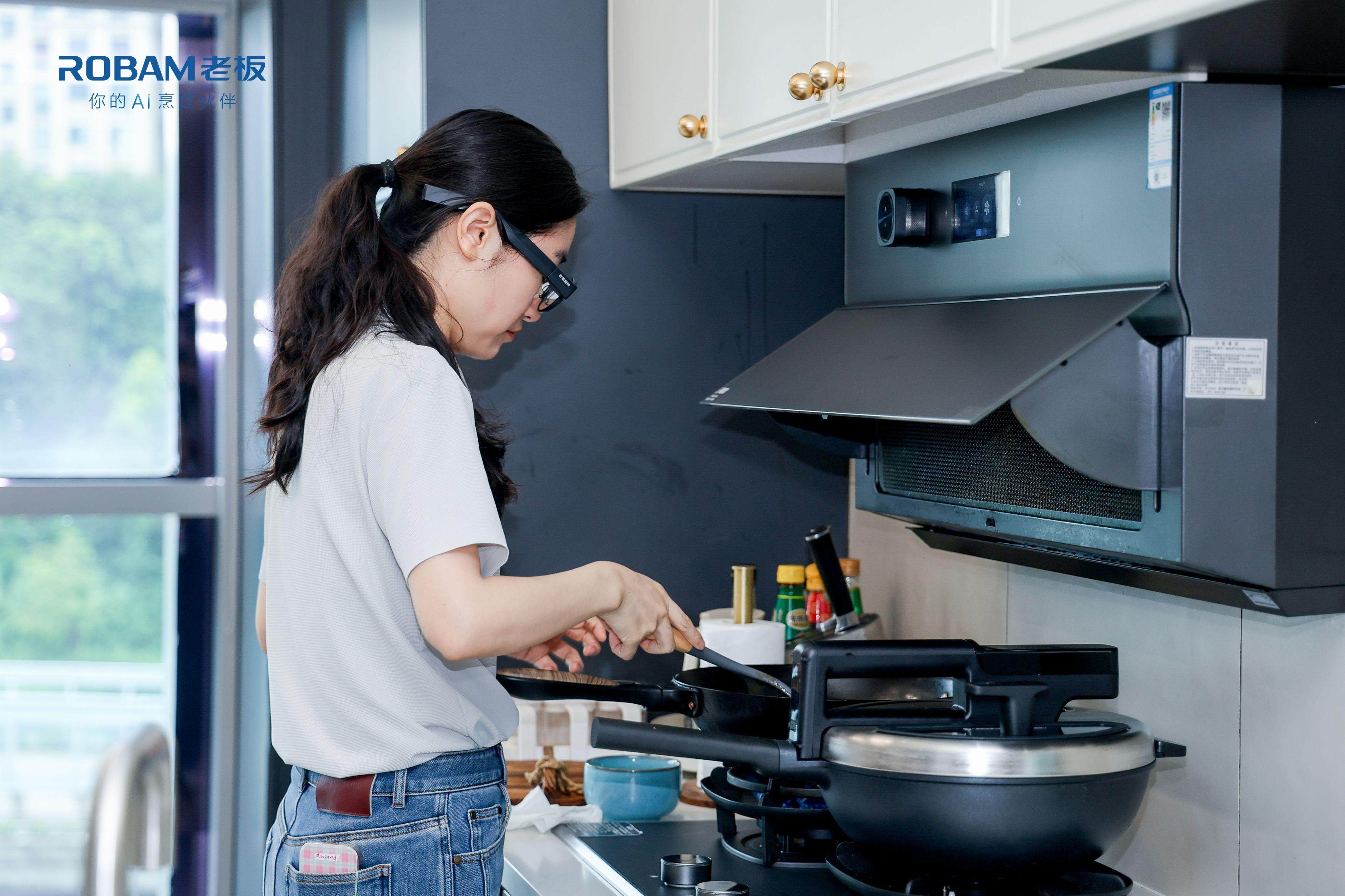
Staff demonstrating how to cook with AI cooking glasses
Compared with other scenarios, the kitchen is a dynamic environment full of variables: full of oil fume and steam, the heat of the fire changes rapidly, and multiple variables such as temperature, ingredients, time and safety are intertwined in real time, which puts extremely high requirements on AI: it must not only perceive accurately under complex interference, but also make judgments and coordination in an instant.
When AI enters the kitchen and is truly embedded in the cooking process, the industry's growth paradigm changes accordingly: shifting from "competing for hardware parameters" to "how to improve and enhance users' cooking experience"; shifting from "one-time equipment sales" to the long-term value of "hardware + software + experience + service".
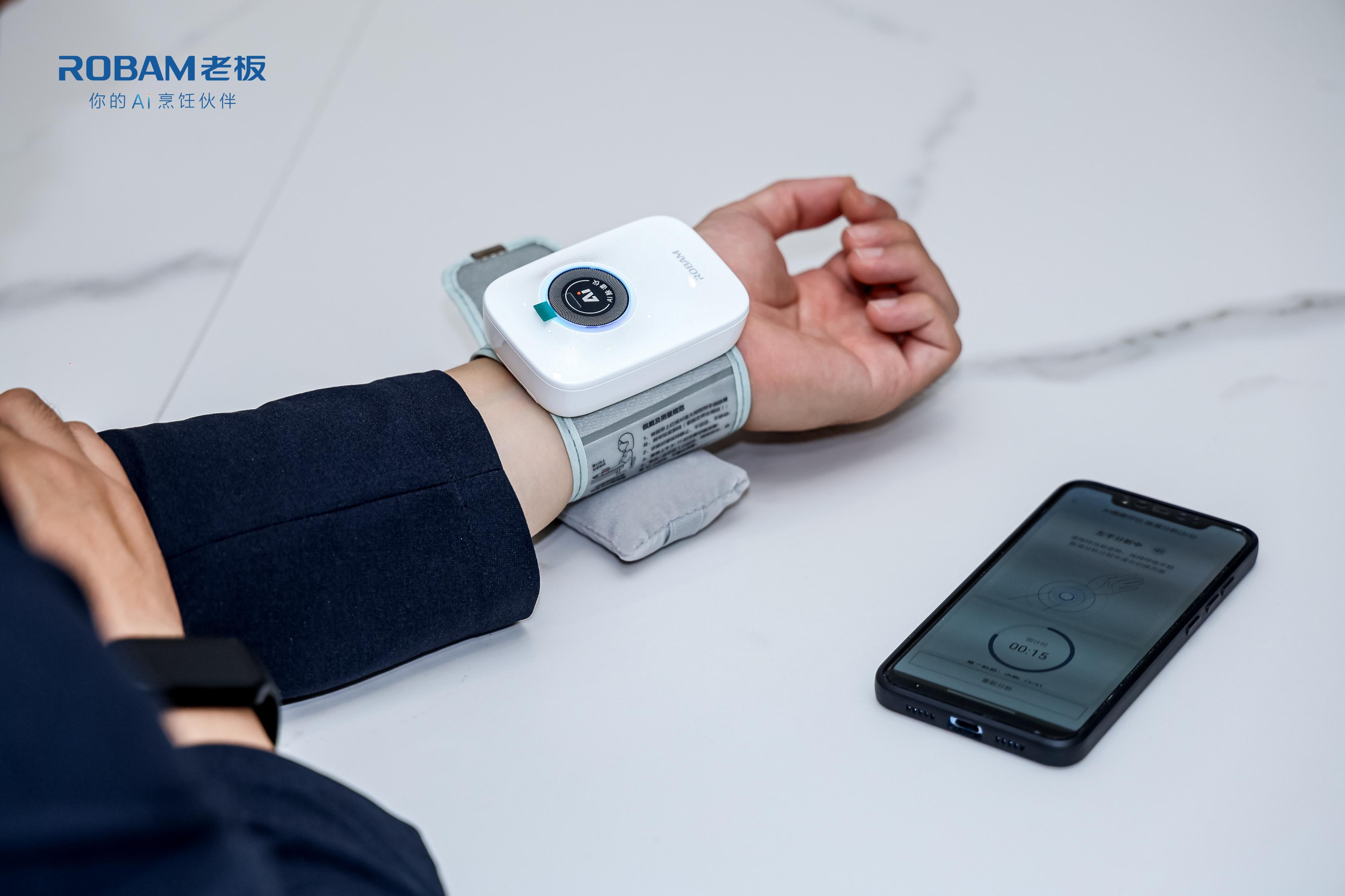
Robam AI spectrum analyzer is analyzing the spectrum state
This is not a simple product upgrade, but a paradigm shift — just like the leap from feature phones to smartphones. The winner has never been the company that sold the most mobile phones in the past, but the one that first defined "what a smartphone is".
Facing this window of opportunity, Robam's attitude is very clear: embrace the biggest technological dividend in the new era, take the lead in defining and implementing "AI cooking", and continue to evolve unremittingly.
"Transformation is not simply adding Wi-Fi to existing products and labeling them as 'smart'," said Dr. Zhou Haixin, Senior Vice President of Robam. This requires a systematic transformation to AI cooking from organization, technology to culture.
Why Robam? Three Layers of Barriers Built by Organization, Technology and Culture Form a Moat
AI cooking is a huge track, and Internet giants, technology companies and entrepreneurial teams have all entered the market. Why can Robam take the lead in defining and implementing it?
The answer first lies in the organization.
On July 31, 2026, Robam launched the board of directors re-election, 5 people including Ren Fujia were nominated as candidates for non-independent directors, and 3 people including Zheng Xiaolin were nominated as candidates for independent directors. The new leadership team presents distinct characteristics of youth, specialization and technology orientation. Ren Fujia started from the grassroots level of product R&D, has been deeply engaged in the field of cooking technology for decades, and personally led the enterprise to grow from a scale of billions to tens of billions — his background in product R&D determines that this AI transformation is not a capital story, but a long-term route driven by the technical system. At the same time, the head of AI digital kitchen appliances entered the board's decision-making level, and top scholars from the Institute of Artificial Intelligence of Zhejiang University were introduced as independent directors, ensuring continuous and stable resource support for the AI strategy from the top-level governance level.
Only when the organization is ready can the strategy not be empty talk.
The second barrier is technology.
The God of Cookery AI Cooking Agent created by Robam is no longer a passive response model, but more like the "brain" and "operating system" of the entire kitchen: it understands user needs, perceives the real kitchen status, plans cooking tasks, schedules kitchen appliances and robots to work collaboratively, adjusts the process in real time, and learns and evolves in continuous use.
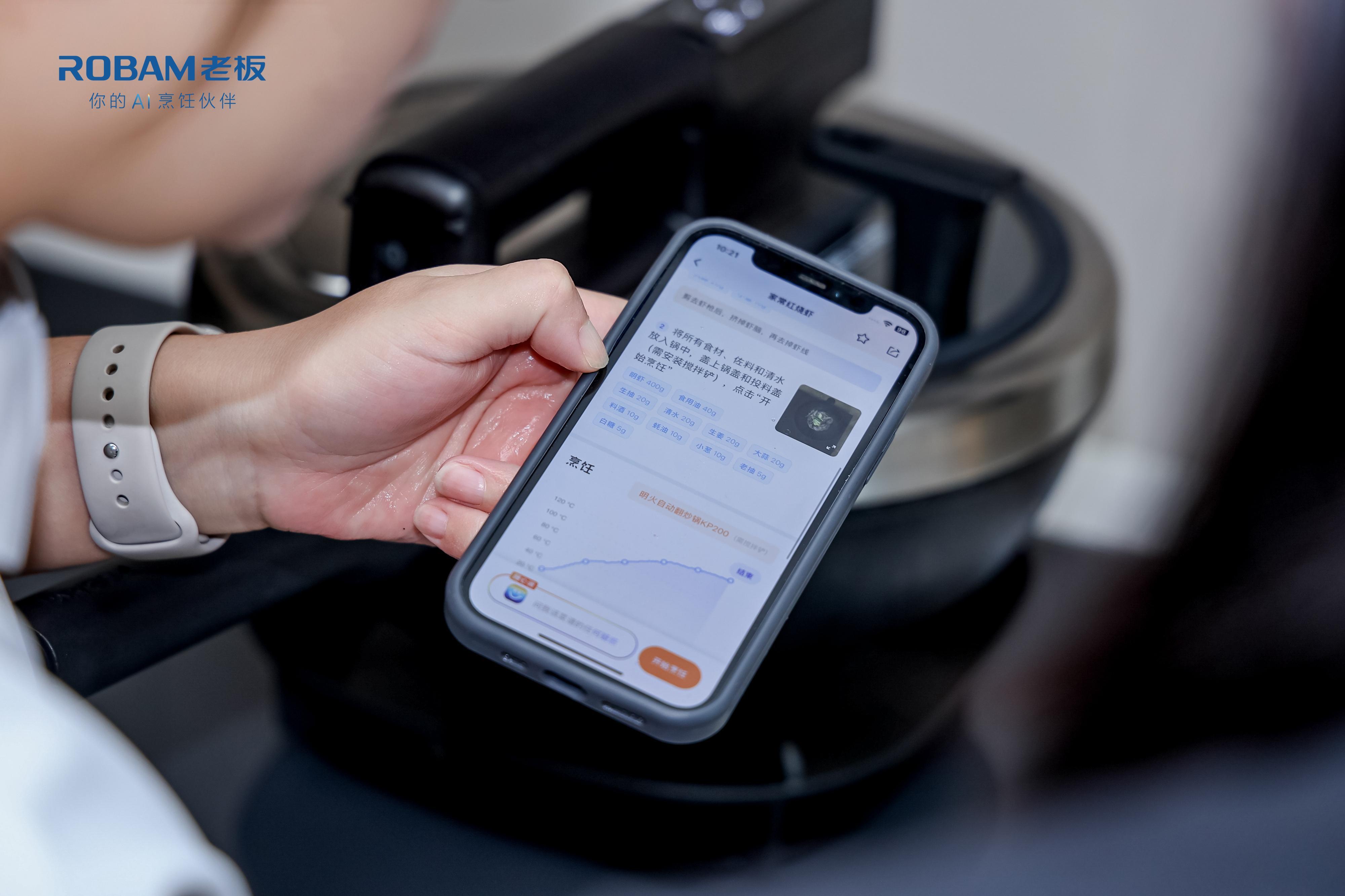
Cooking interface of the God of Cookery App
While the market is still talking about stories of conversational large models, Robam has already launched the God of Cookery AI Cooking Agent, forming a collaborative system of "central agent + device-side sub-agents". While each AI kitchen appliance obeys the overall scheduling of the central system, it can independently complete response and safety control in the rapidly changing cooking scene. What this system brings to users is a unified "God of Cookery" brain serving them, and behind it is the coordinated operation of the entire operating system — which is the core difference that distinguishes the God of Cookery from any single device or single model.
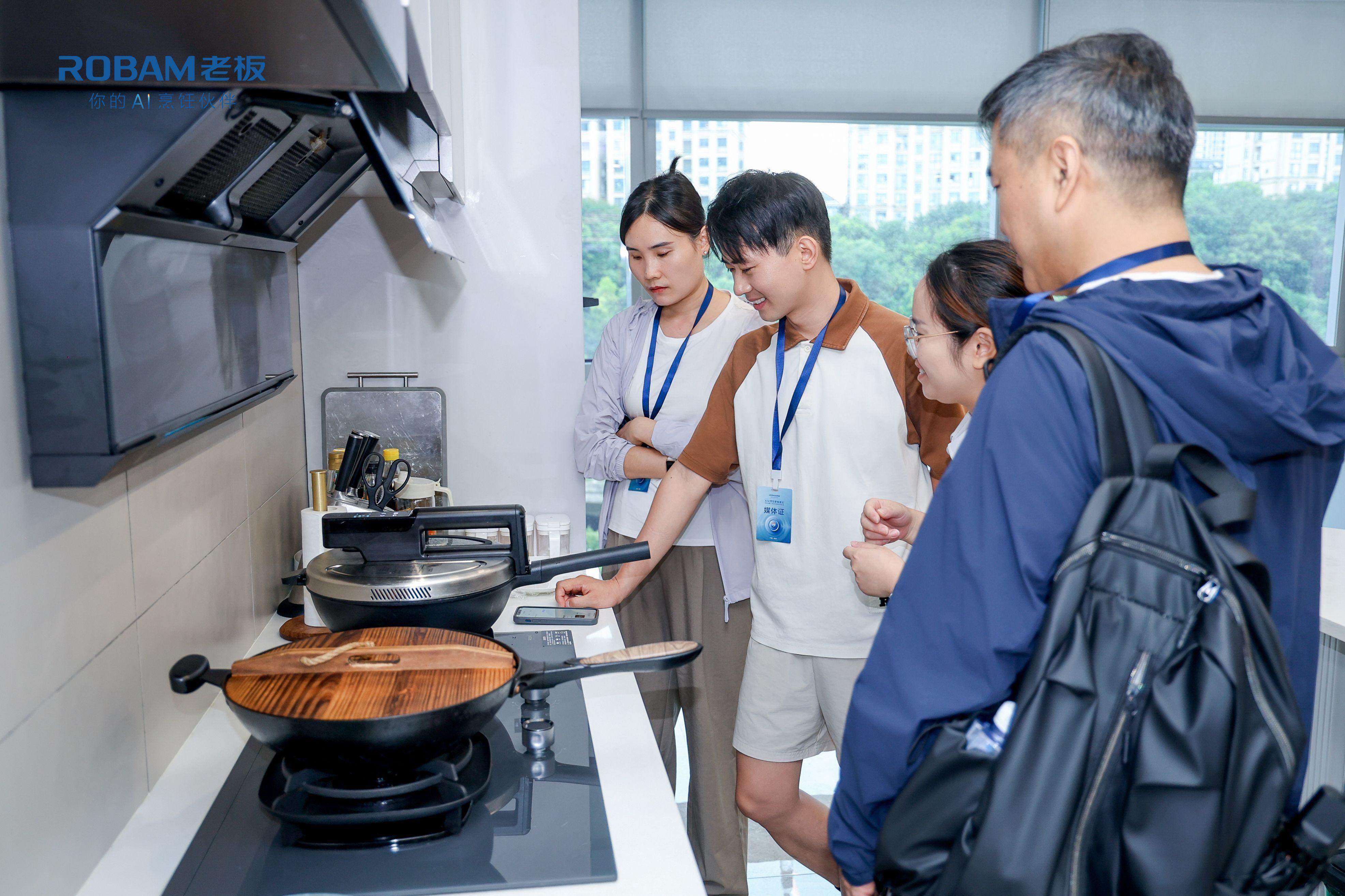
Journalists experiencing the God of Cookery linked open-flame automatic stir-frying wok to cook dishes
Such capabilities stem from Robam's 47 years of accumulation in the cooking field: real kitchen usage data from 50 million global household users provides massive and real cooking scene training materials for the AI model; the world's largest cooking curve library with more than 5000 dishes allows AI to truly "understand" the complex relationship between heat, time and ingredients; in addition, there are 6612 valid patents accumulated in the past six years, and the largest number of AI cooking large model patents in China — all of which point to a fact: Robam is not "accessing AI", but using its profound accumulation in the cooking field to train an AI that truly understands cooking.
The deepest barrier is culture.
The organization can be adjusted, and technology can be caught up with, but the understanding and reverence for cooking are honed over time and cannot be copied.
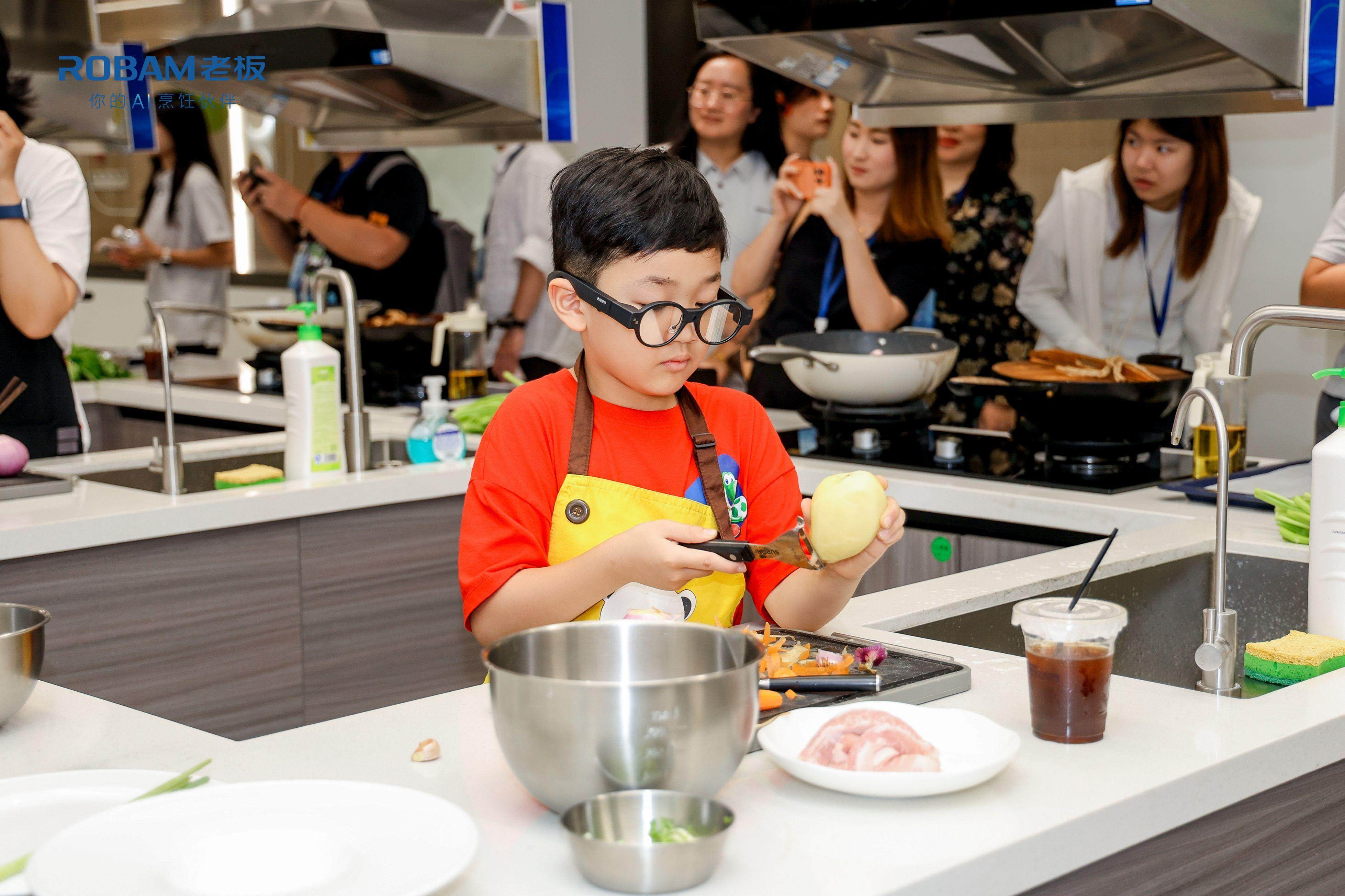
Food education research group using AI cooking glasses to learn to cook a dish
In order to study cooking, Robam has done many seemingly "meaningless" things: established the first domestic cooking humanities research institute focusing on cooking humanities and civilization research; published "Outline of Cooking History", which expounds the relationship between 1.5 million years of human cooking history and civilization evolution through 15 key historical nodes in five chapters; publications such as "Food Time" magazine and "Cooking Tao" endow cooking with deeper cultural weight with the power of thought; jointly built the Global Culinary Art Center with China Academy of Art, with an investment of 200 million yuan, which has received more than 60,000 visitors and held 410 Chinese and foreign cooking cultural activities.
Robam believes that only by understanding where cooking comes from can it be qualified to define where cooking goes.
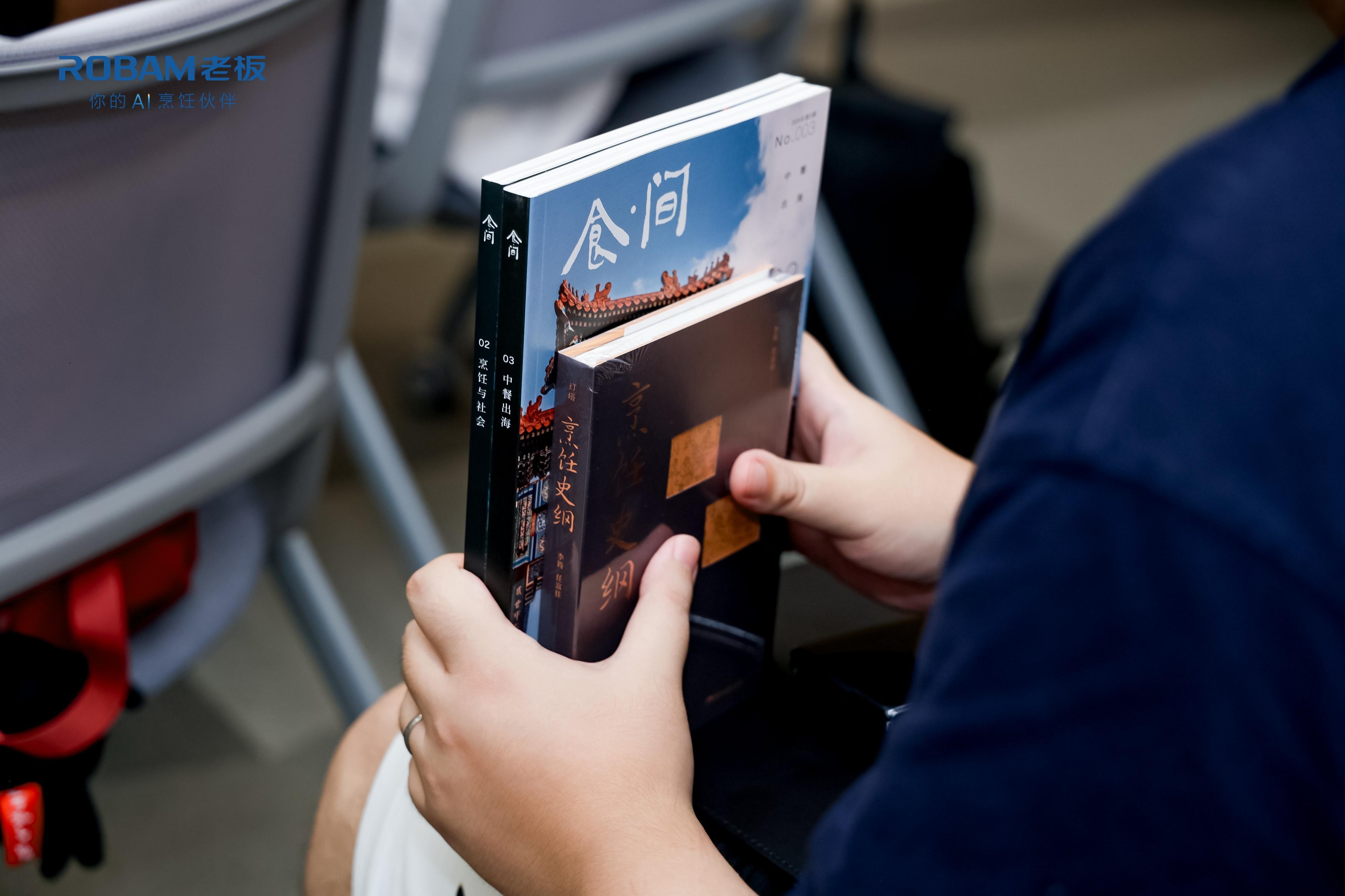
"Outline of Cooking History" and "Food Time" magazine
At Robam, there is also a seemingly "unusual" rule: all employees work with a chef's certificate. This is not formalism, but a firm belief — only by loving and understanding cooking themselves can they make products that truly understand cooking. This 47-year focus on doing only one thing ensures that Robam will not go off track when facing the AI wave: technology is a means, and the goal is to make people enjoy cooking and life more.
No Empty Stories, Only Results: AI Cooking Has Moved From Concept to Reality
While other enterprises are still arguing about whether "AI + cooking is a gimmick", Robam has already handed in its own answer sheet.
Numbers are the most direct proof.
At the product level, there are 827 product models equipped with AI functions, and the whole cooking chain from ingredient management, cooking execution to post-meal cleaning has basically realized intelligence. At the user level, the registered users of the "God of Cookery" APP and mini-program exceed 7.5 million, and active users increased by 70% year-on-year. At the market level, Robam's AI digital kitchen appliances achieved annual sales of 2.35 billion yuan in 2025, a year-on-year increase of 36%, and the i-series increased by 65% year-on-year.
The steady growth of sales and the continuous increase of user viscosity confirm each other, and AI cooking is being verified by both the real market and real users.
Apart from the achievements, Robam still maintains a clear phased judgment on its current AI capabilities. Dr. Zhou Haixin confessed during the exchange: "From the end point of view, we are still in the early stage of AI cooking. What has been realized is the agent collaboration of the God of Cookery large model, as well as the closed-loop capabilities from perception, decision-making to execution in household kitchens, and a positive cycle has been formed for user data backflow and model iteration; what is being accelerated is the in-depth connection between cross-device scenarios, as well as the quantitative modeling of AI for subjective experiences such as 'taste' and 'aroma' in cooking, which still requires repeated verification in more real scenarios."
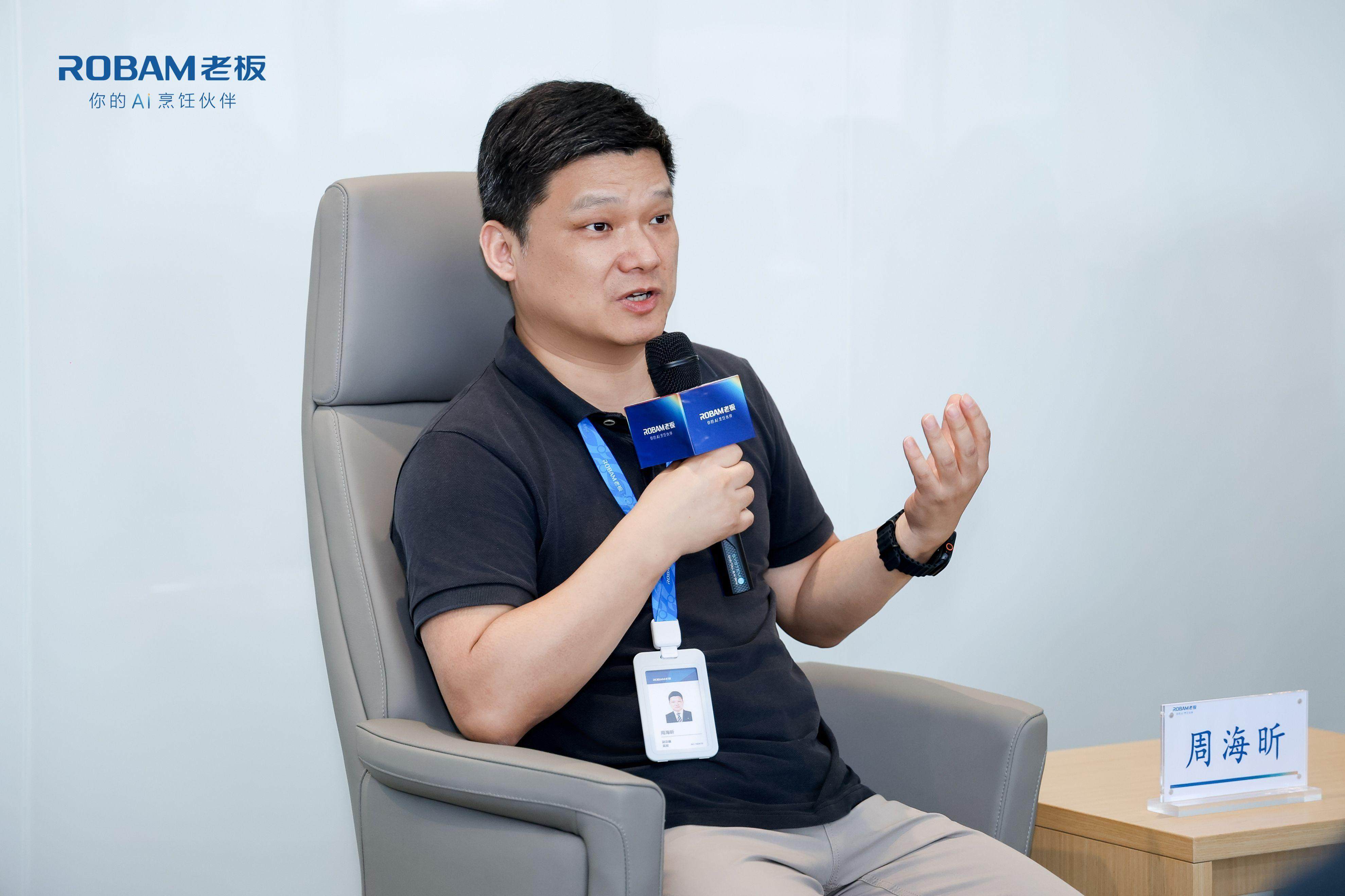
Dr. Zhou Haixin, Senior Vice President of Robam, sharing during the exchange
At the same time, AI is still evolving continuously in the kitchen scenario. At 2026 AWE, the world's first AI cooking glasses that can cook and the first AI seasoning robot made their debut. Robam's AI capabilities are moving from the intelligence of a single kitchen appliance to the cooking system capabilities of cross-device collaboration and full-process assistance. In Hangzhou, Zhejiang Province, AI cooking glasses have been practically applied in primary school labor education (food education courses). In labor classes, students wear AI glasses for cooking practice, and the glasses can display operation guides in real time and act as a "personalized teaching assistant". When students encounter questions, AI can answer them immediately. At the same time, it can also guide students to think about the history, nutrition matching and taste ratio behind the ingredients, turning a simple labor class into an interdisciplinary exploration integrating history, nutrition and mathematics.
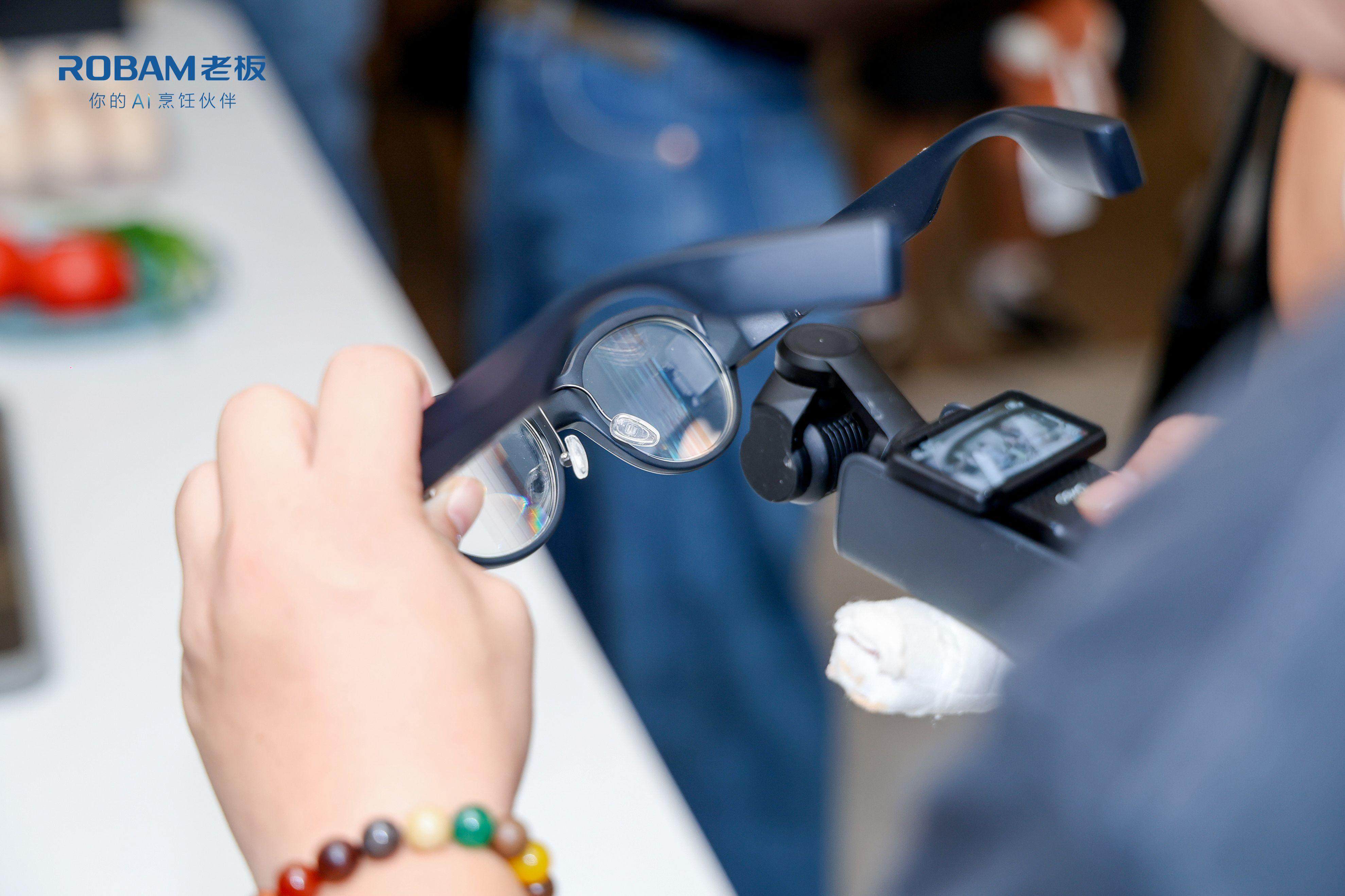
Media experiencing Robam AI cooking glasses
Beyond commercial value, AI cooking is also stepping into more people's lives:
The "National Cooking Day" public welfare action has attracted more than 100,000 people to share their cooking stories; the new "AI + food education" science education paradigm built around the God of Cookery AI cooking large model has been deeply reported by CCTV's "Focus Interview", and no less than 1000 food education practice bases will be laid out across the country in the future; the "Warm Kitchen Plan" has helped nearly 7000 needy families in total, bringing the warmth of the kitchen to more people.
The first step has been successfully taken, and broader space is opening up.
In the commercial kitchen field, Robam has invested 100 million yuan strategically in Youte Smart Kitchen, an intelligent stir-frying robot company, to transfer the AI cooking capabilities verified in the household market to commercial scenarios such as restaurants and canteens; in terms of overseas expansion, it has deployed globally with the "overseas business partner" model, exporting not only products, but also AI cooking technology and culture.
Facing the future, Robam has established an Embodied Intelligent Cooking Laboratory, to make forward-looking layout for the "ultimate form of AI cooking", and continuously evolve towards real cooking freedom.
