Bezos Consortium Takes a 15 Billion Stake in Liverpool, the Football Industry Embraces Tech-Focused Capital
Whether tech capital has started to take equity stakes in Premier League clubs, or tech companies have rolled out a string of sponsorship and technical partnerships with top-tier football clubs, they actually point to the same trend: sports is becoming a critical entry point for tech companies to connect with global consumers, while technology is evolving into a core tool for the football industry to unlock its next round of commercial value.
Last weekend, Arsenal sealed a 3-0 victory over Manchester City at the Millennium Stadium in Cardiff. The moment the Gunners lifted the Community Shield marked that the new season of the English Premier League is about to kick off. Compared with other top clubs' frequent moves in the transfer market, Liverpool, which made high-profile signings worth 400 million pounds last summer transfer window, has seen no progress in squad reinforcement on the eve of the new season. Key players including Mohamed Salah, Andrew Robertson and Ibrahima Konaté left the club on free transfers, with only two young players, Gabriel Múñoz and Duje Jaksa, joining the first team, while the club has not yet reached an agreement on long-targeted signings such as Mathys Barkola.
Compared with the slow progress in the transfer market, Liverpool's shareholding structure has ushered in changes first. At Beijing time on August 15, Liverpool officially announced that Fenway Sports Group (FSG), the owner of the club, has reached a final agreement on the sale of a minority stake in the club with the 1892 Holdings consortium. FSG will sell about one-third of the club's shares at a price of 1.65 billion pounds (equivalent to about 15.049 billion RMB).
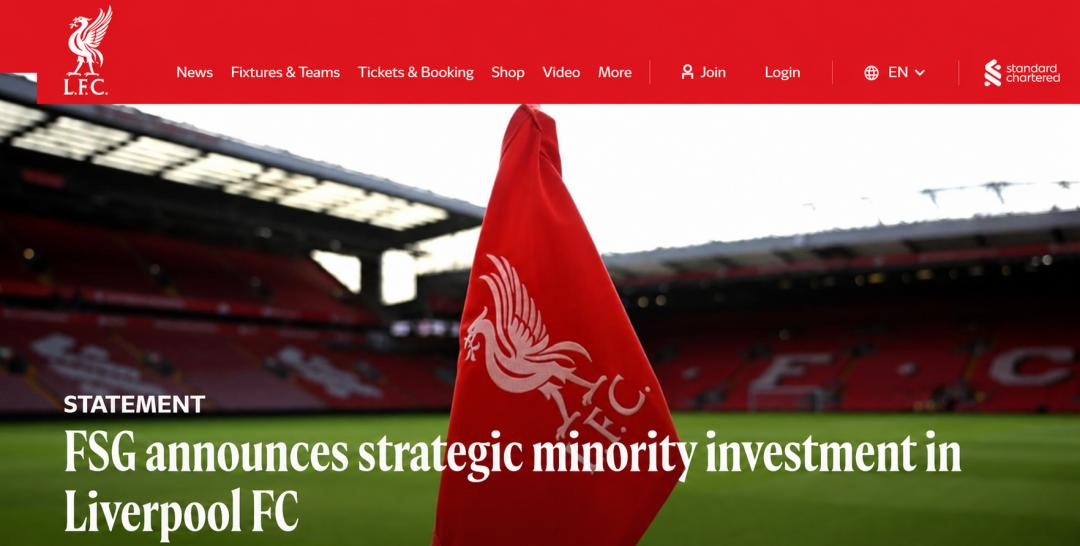
Liverpool officially announced the equity transfer, Source: Liverpool official website
According to reports, the 1892 Holdings consortium is led by Amit Bhatia, a British entrepreneur of Indian origin. The son-in-law of Indian steel tycoon Lakshmi Mittal previously served as the chairman of Queens Park Rangers, a Championship club, for 5 years. In addition to Bhatia and the Mittal Family Trust, the consortium also includes K5 Global Fund, whose main investor is Jeff Bezos, founder and executive chairman of Amazon, as well as EE Capital founded by Eduardo Saverin, co-founder of Facebook. As Liverpool's official announcement puts it, "this strategic investment brings together experts from the global business, technology and investment sectors". This equity transaction also makes football clubs increasingly become rare assets competed for by tech capital and financial capital.
Priced at 1.65 billion pounds, FSG has closed a highly profitable deal
Since two American businessmen, George Gillett and Tom Hicks, bought Liverpool from former owner David Moores in 2007, this top English football club has officially entered the era of American capital. However, the American capital at that time did not bring the prosperity that people expected to Liverpool. Instead, the club once fell into crisis due to problems such as debt, management and competitive performance. It was not until 2010 that Fenway Sports Group (FSG) took over the mess from Gillett and Hicks for about 300 million pounds that Liverpool got back on track to revival.
In the 16 years under FSG's management, Liverpool has won two Premier League titles, one UEFA Champions League title, one FIFA Club World Cup title, one FA Cup title and three EFL Cup titles, achieving unparalleled success on the competitive field. In terms of economy, Liverpool has grown into a club with an annual revenue of up to 703 million pounds. FSG's investment and operation of Liverpool can be regarded as a classic successful case in the football industry. For this reason, when FSG now sells about one-third of its minority stake for 1.65 billion pounds, the market no longer sees the old football club that needed to be rescued in 2010, but a global sports asset valued at about 5.5 billion pounds.
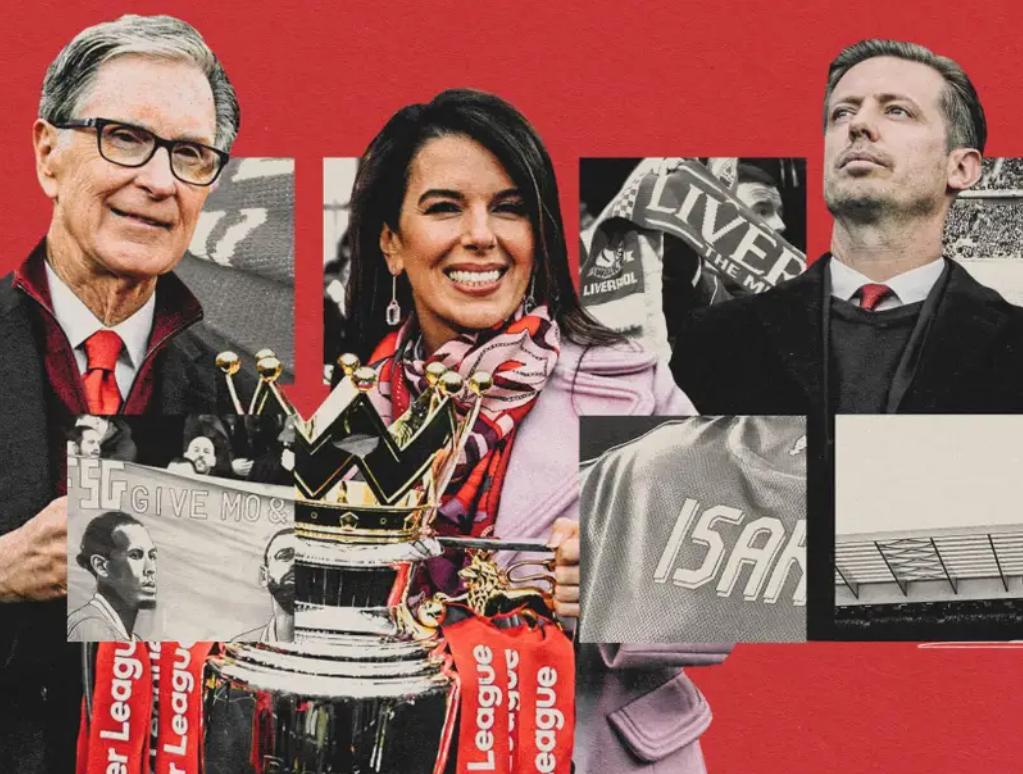
Under FSG's management, Liverpool has regained its glory as a top club, Source: The Athletic
In fact, this is not the first time FSG has sold the club's equity to external parties. In 2023, FSG sold a minority stake to Dynasty Equity, an American sports investment institution, with a transaction size of about 150 million US dollars. The funds were mainly used to repay bank debts formed during the epidemic, as well as capital expenditures such as the renovation of Anfield, the construction of the AXA Training Centre, and the repurchase of the Melwood training ground, while supporting the long-term development of the club. However, Dynasty Equity only acquired less than 4% of the equity at that time. In contrast, the acquisition scale of the 1892 Holdings consortium is larger. Considering the name of the consortium (the founding year of Liverpool is exactly 1892), it is obvious that the ambition of the 1892 Holdings consortium is not limited to becoming a small shareholder of Liverpool, and it is very likely to launch a full acquisition in the future. With the departure of former group CEO Billy Hogan and the termination of FSG's multi-club plan, rumors are rife that FSG will soon stop to cash out and exit. However, at least from this transaction, FSG will not exit completely in the short term, and it still retains operational control of the club. In fact, both FSG and the new investor emphasized that this transaction will not change the club's existing operational control and long-term strategy.
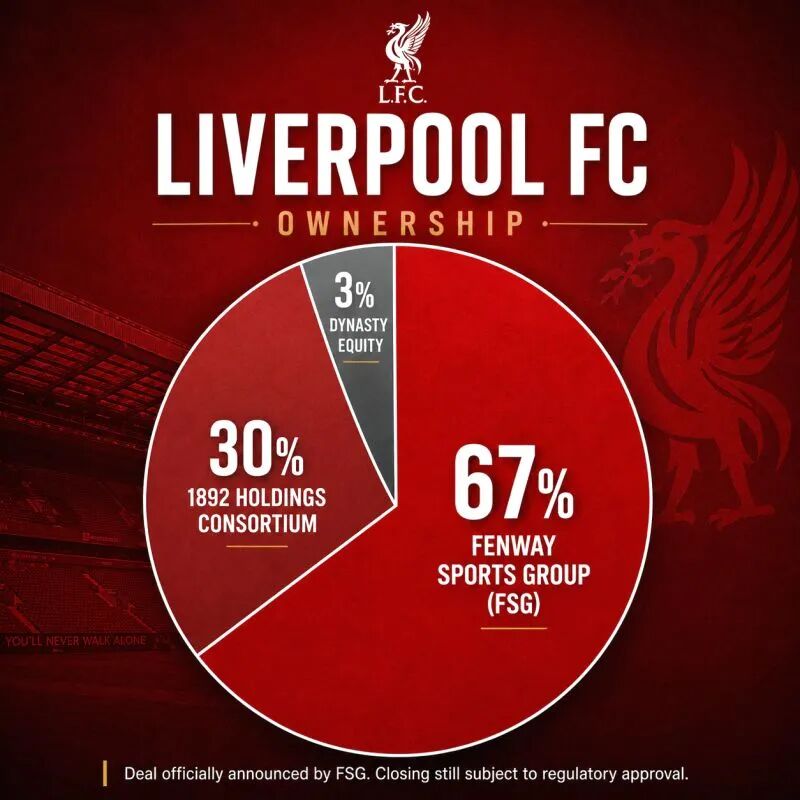
Current shareholding structure of Liverpool, Source: Internet
Although according to the latest data from Forbes, Jeff Bezos, once the richest man in the world, now has a net worth of 269 billion US dollars, and Amit Bhatia (22 billion US dollars) and Eduardo Saverin (31.7 billion US dollars) are both billionaires with a net worth of tens of billions of dollars, the entry of super-rich investors does not mean that Liverpool will be able to spend freely in the transfer market immediately. How much money the club can invest ultimately depends on its own revenue scale, commercial development capabilities and the squad cost space allowed by financial regulations. With the lesson of Newcastle United after being injected with capital by PIF, Liverpool's purchasing power in the transfer market will not be greatly improved.
For FSG and Liverpool, Bhatia's Asian background and resources are expected to help the club further expand the Asian market, while the equity participation of Bezos and Saverin's capital will "help the club's already strong brand to grow further". For tech capital, what they focus on is not just football itself, but hundreds of millions of global users behind football, as well as the content, data and consumption scenarios generated around these users.
Tech capital enters football: A new narrative of digitalized sports investment
If traditional capital pays more attention to the competitive performance, commercial revenue and asset appreciation space of football clubs, then tech capital focuses on the global user assets and digital commercial potential behind the clubs with longer-term value.
As one of the most commercialized football leagues in the world, the Premier League has a huge global fan base, a mature media copyright system and a highly active digital content ecosystem. According to reports from AS, the latest overall valuation of the Premier League reaches 125.6 billion euros, accounting for nearly 40% of the total valuation of the top five European football leagues. Premier League clubs themselves have actually become important traffic entrances connecting sports, media, consumption and the Internet.
When tech capital invests in Premier League clubs, it is not simply betting on the competitive performance of the team, but obtaining a super IP with global influence, high user stickiness and long-term consumption potential. The event content, social media accounts, fan communities and offline scenarios owned by the club can provide natural user touchpoints for tech companies, and further extend to businesses such as streaming media, advertising, data services, e-commerce and digital consumption. At the same time, the capabilities of tech capital in artificial intelligence, data analysis, digital content and global operation can also empower the club in reverse, further releasing the commercial value of sports assets by improving the efficiency of fan operation, content production, commercial marketing and data decision-making.
From this perspective, the core logic of tech capital investing in the Premier League is not simply buying a team, but taking football clubs as super IP and global traffic entrances to connect sports content, user data, digital technology and consumption scenarios. With the continuous digitization of sports consumption, the value of clubs is evolving from the traditional model of "ticket sales + match day revenue + broadcast rights + sponsorship" to a comprehensive business model of "IP + traffic + data + consumption". For tech capital, this means that football clubs are not only a sports asset, but also likely to become a digital commercial platform that can continuously connect global consumers.
In addition to Liverpool, which has received attention from technology and Internet capital in recent years, there is also Hoffenheim in the Bundesliga among the top five leagues, which has been held and supported by Dietmar Hopp, co-founder of SAP, for a long time. However, compared with the large-scale investments of tech giants in the fields of Internet and AI, the cases of tech capital directly taking equity stakes in top five league football clubs are still relatively limited. Compared with directly acquiring or taking equity in clubs, becoming a team's sponsor, technical supplier or commercial partner is still a lighter and more common way for tech companies to enter the football industry.
Logic iteration of tech companies entering the football industry
Under the pressure of government supervision and public opinion, the Premier League will implement the regulation that sports betting related advertisements are not allowed to appear on the front of jerseys starting from the 2026/27 season. As many as 11 Premier League teams need to replace their jersey front sponsors. Therefore, the front jersey sponsorship of the new season's Premier League has ushered in a new round of reshuffling, which also opens a rare window for tech companies to enter the industry. In the new season, in addition to Manchester United continuing to use the Snapdragon logo on the front of its jerseys, Fulham has reached a partnership with ClickHouse, Crystal Palace has cooperated with Temporal, and Ipswich Town has chosen Halo Service Solutions. The front jersey advertising positions of four Premier League teams are all occupied by tech companies.
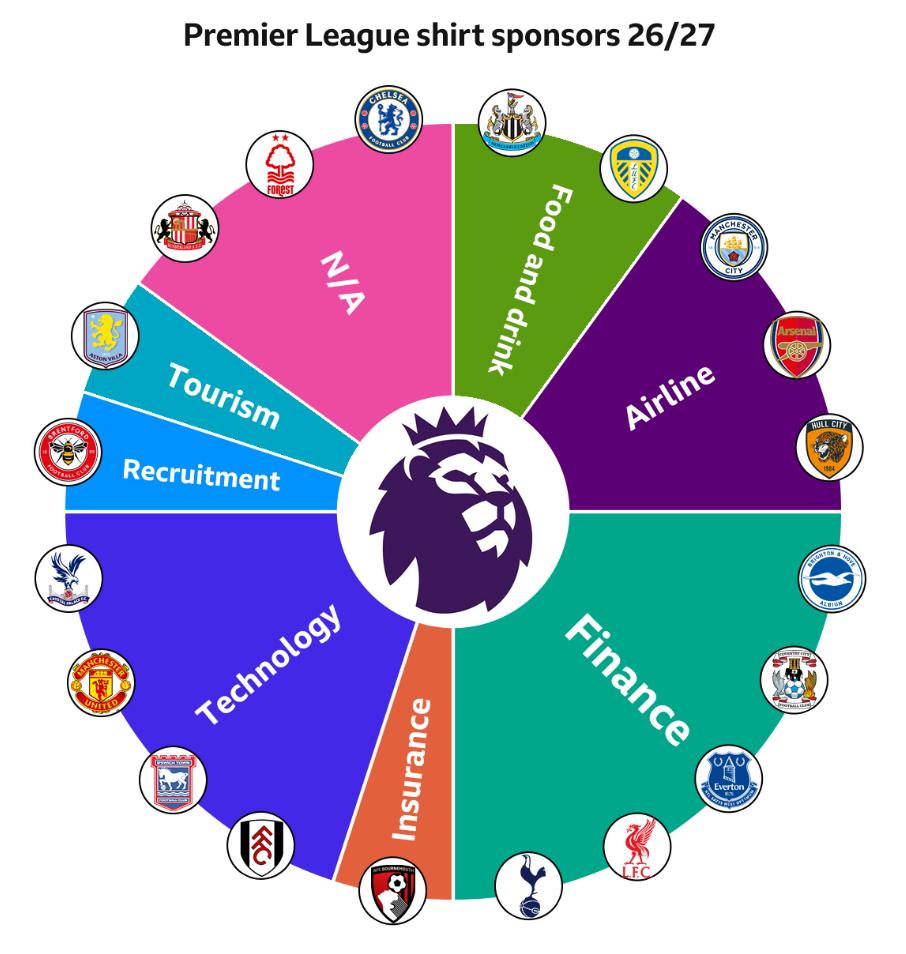
Composition of front jersey sponsorship categories in the 2026/27 Premier League season, Source: BBC
It is worth noting that at present, there are still three Premier League clubs, namely Chelsea, Nottingham Forest and Sunderland, that have not finalized their new season's front jersey sponsorship. Chelsea was once rumored to be close to reaching an agreement with Oracle, but finally reached a sponsorship agreement with IFS, an AI enterprise from Sweden. As the cooperation between the two sides expired, Chelsea's front jersey advertising position for the new season is vacant again. Considering Chelsea's own brand influence and the high quotation for its front jersey advertising, potential buyers in the future are still likely to be concentrated in industries with abundant cash flow such as technology, finance and consumption.
However, in the view of Sports Money, sponsoring top teams is not an ideal business for most tech companies. The biggest difference between tech companies and traditional consumer brands is that their target customers are usually not ordinary fans, but enterprise customers, developers or professional users.
Take TeamViewer, the former front jersey sponsor of Manchester United, as an example. The core product of this German software company is remote control and collaboration software. Manchester United can bring it huge global exposure, but there is still a long B2B decision-making chain between "seeing the brand" and "purchasing enterprise software". For a tech company that mainly relies on enterprise customers to generate revenue, sports sponsorship can solve the problem of brand awareness, but it is difficult to directly solve the problem of sales conversion. At the beginning, TeamViewer reached a 5-year 235 million pound sponsorship agreement with Manchester United, but ended it early after maintaining three seasons, which shows that the sponsorship effect was not as expected.
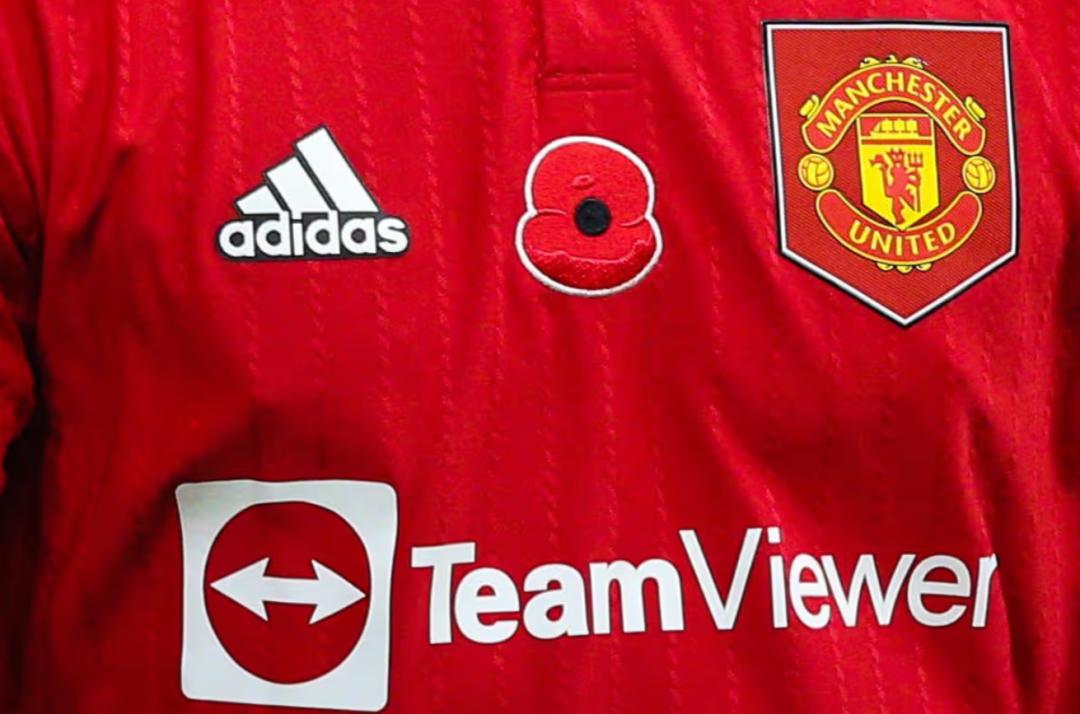
TeamViewer appeared on the front of Manchester United's jerseys for three seasons from 2021 to 2024, Source: Manchester Evening News
In contrast, the front jersey advertising position of Manchester United is now occupied by Qualcomm Snapdragon. Qualcomm also has obvious B2B attributes, and its core business is still chips, communication technologies and platform solutions, but the Snapdragon brand will eventually reach consumers through terminal products such as smartphones, personal computers and automobiles. Therefore, the global exposure brought by Manchester United can not only affect B-end customers such as mobile phone manufacturers, but also directly act on C-end consumers. This means that Qualcomm can build a more complete marketing closed loop between its B2B technology brand and consumer electronics brand, and the commercial logic of Qualcomm sponsoring Manchester United is more reasonable than that of TeamViewer.
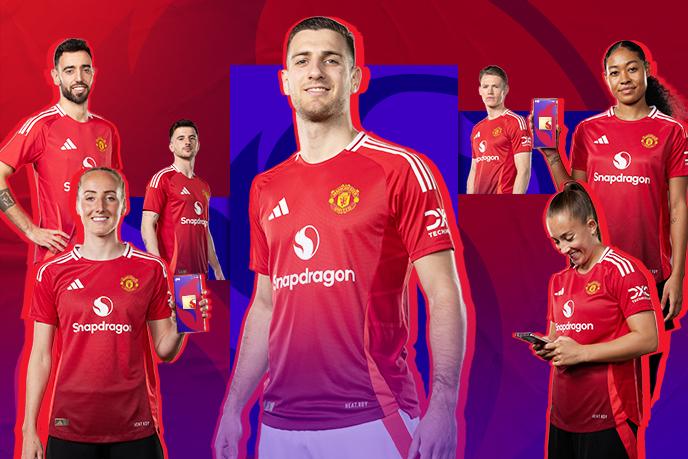
Qualcomm Snapdragon has become Manchester United's front jersey sponsor since the 2024/25 season, Source: Qualcomm official website
Compared with direct front jersey sponsorship, more tech companies now prefer to reach deeper technical cooperation relationships with top teams, and Google is a very typical case. In recent years, Google has successively established different forms of cooperation with top European clubs such as Arsenal, Liverpool, FC Barcelona, Bayern Munich and Paris Saint-Germain. Its participation method is not simply to put the logo on the jersey or the edge of the stadium, but to integrate products such as Search, Cloud, Artificial Intelligence, YouTube and Pixel into the club's content production, fan experience and digital operation.
Google Gemini becomes Liverpool's official consumer AI partner, Source: Liverpool official website
The logic behind this cooperation model is actually very clear: the club provides global traffic and real application scenarios, and tech companies provide technology, products and digital capabilities