Luckin Coffee's Qixi Festival co-branding campaign backfired, why do those anxious giants need to engage in "defensive co-branding involution"?
"I just wanted to order Thai milk tea, but I was completely caught off guard by the co-branding."
Not long ago, Luckin Coffee just won the cross-border lawsuit against the counterfeit "Thai Luckin" in Thailand, and took the opportunity to launch this year's trending Thai milk tea in the tea drink sector during the Qixi Festival. The warm-up line "The inspiration brought back by our legal team after the lawsuit in Thailand", which has a bit of a satisfying underdog plot, fully raised consumers' expectations. But when they got the Thai milk tea on Qixi Day, consumers were confused by the co-branded packaging on the cup sleeve: "Who are these two people?"
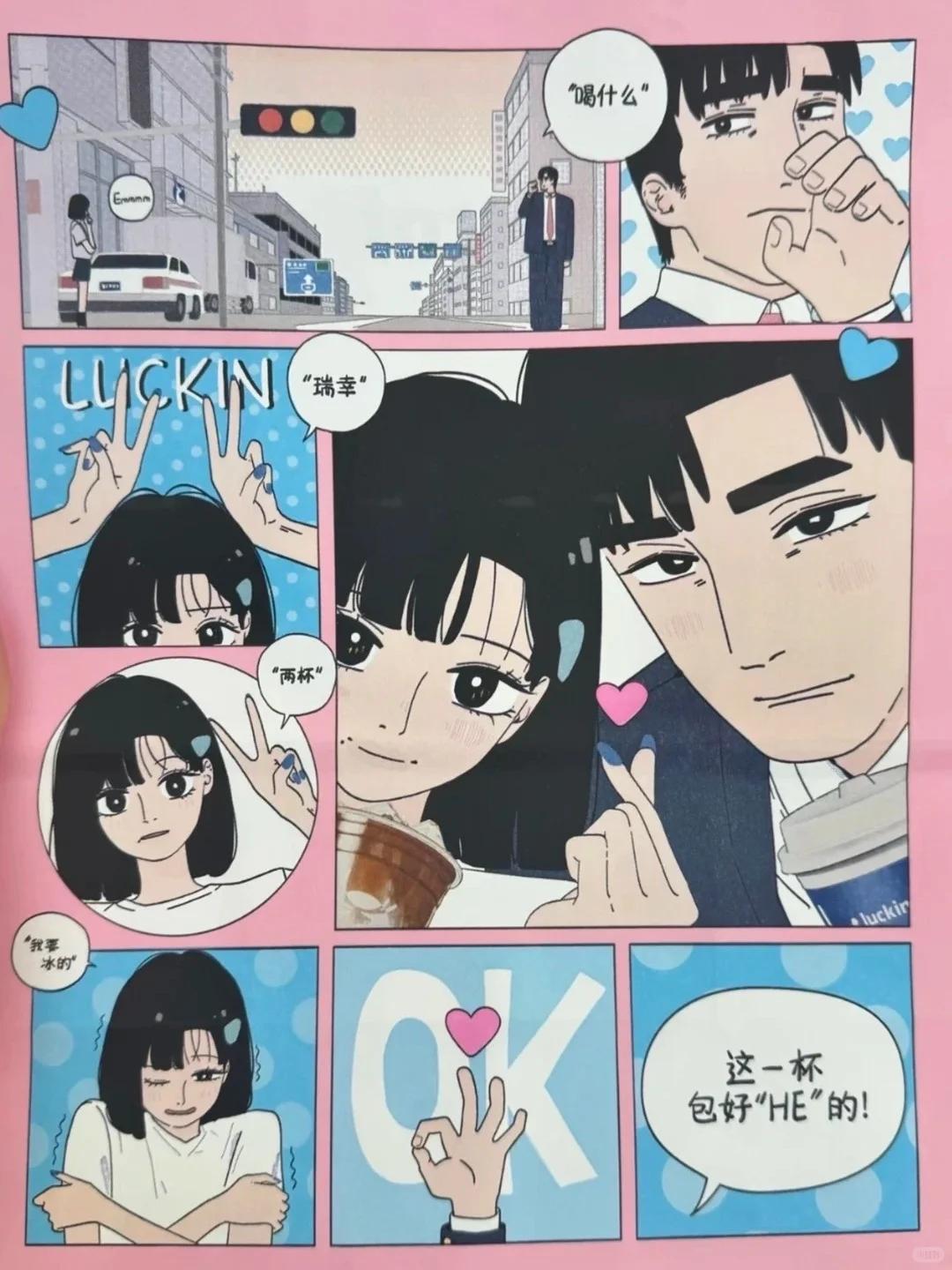
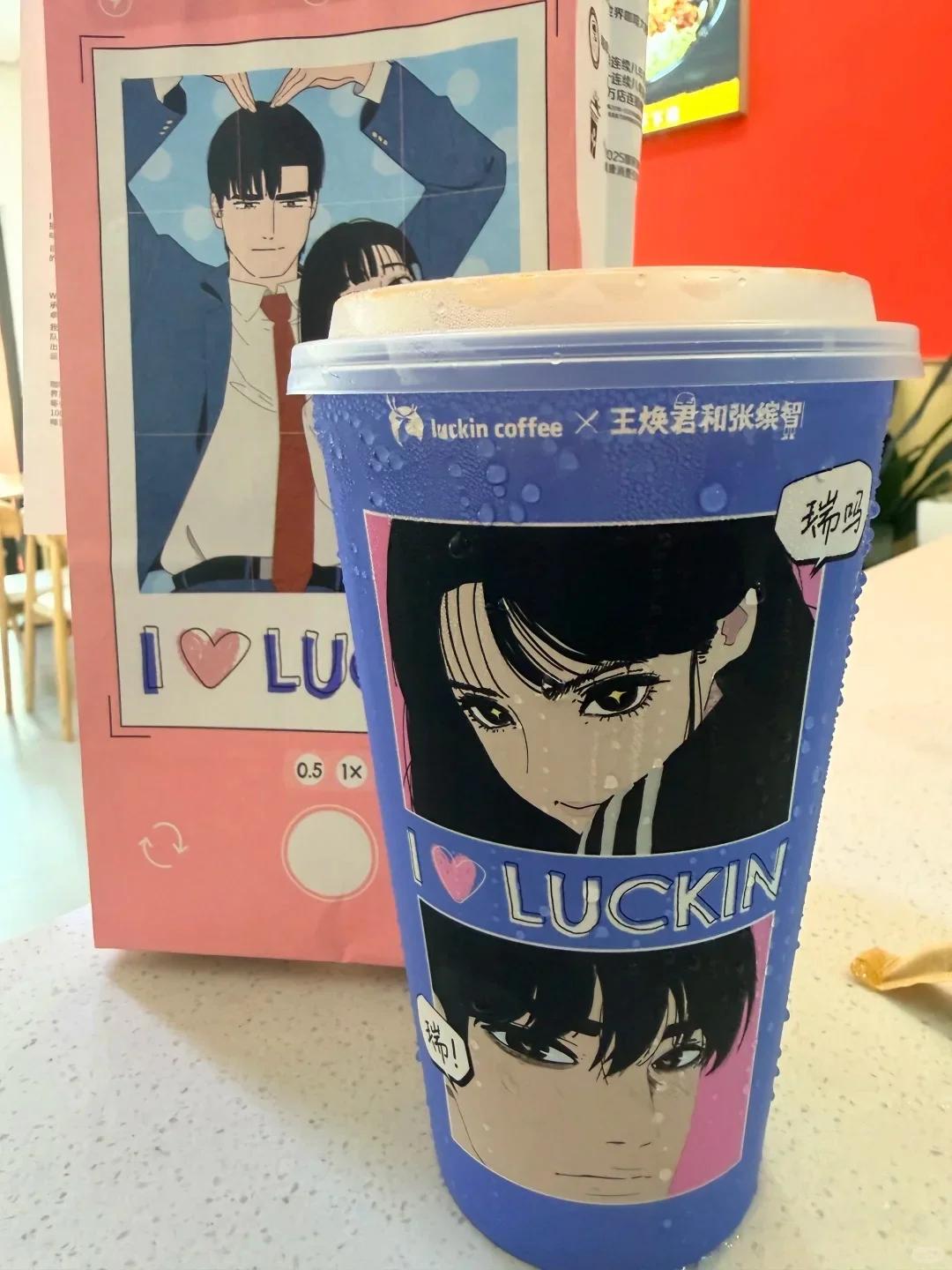
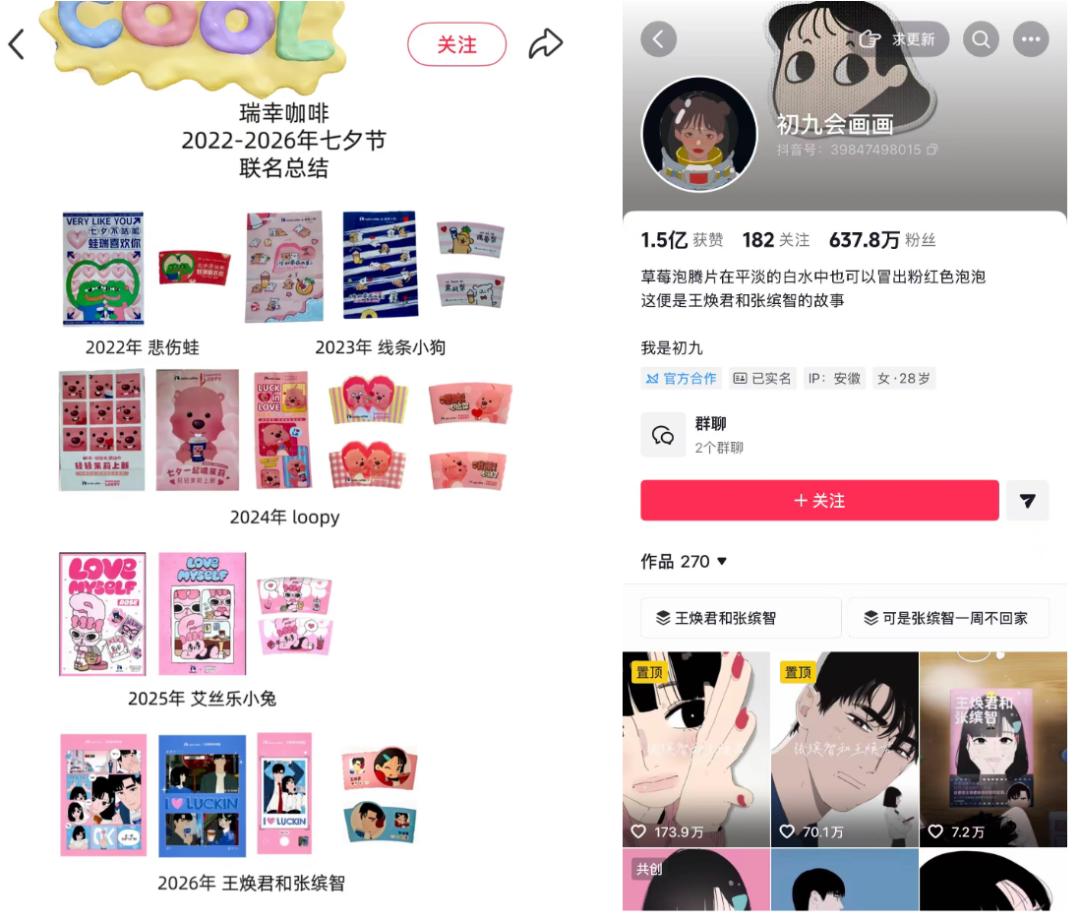
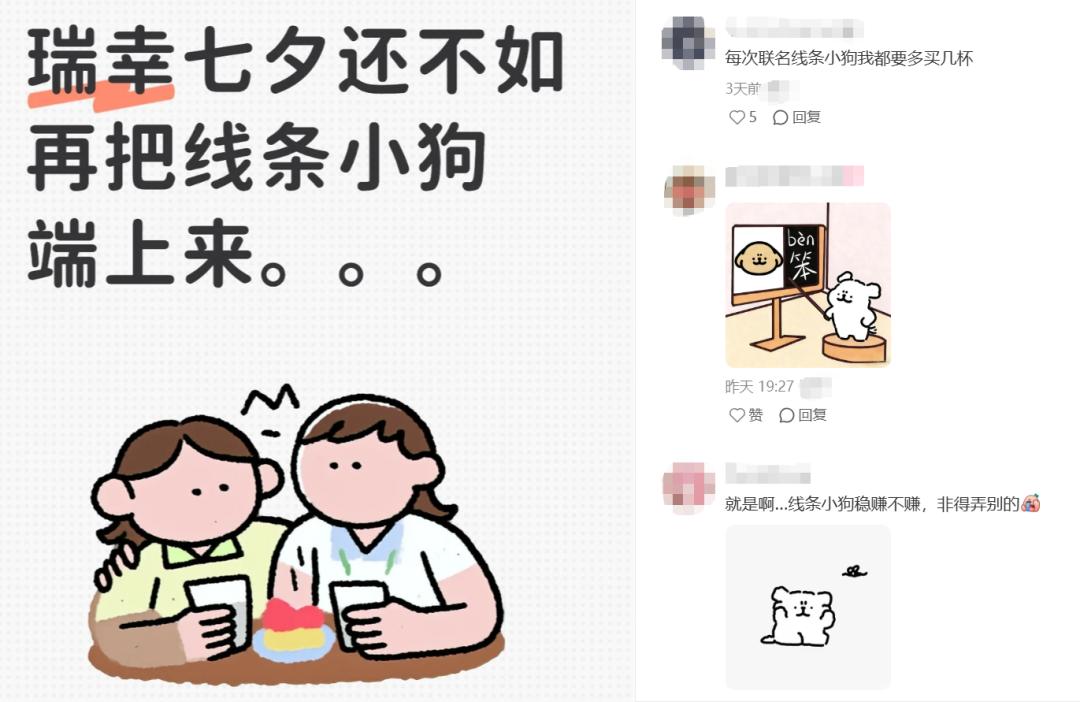
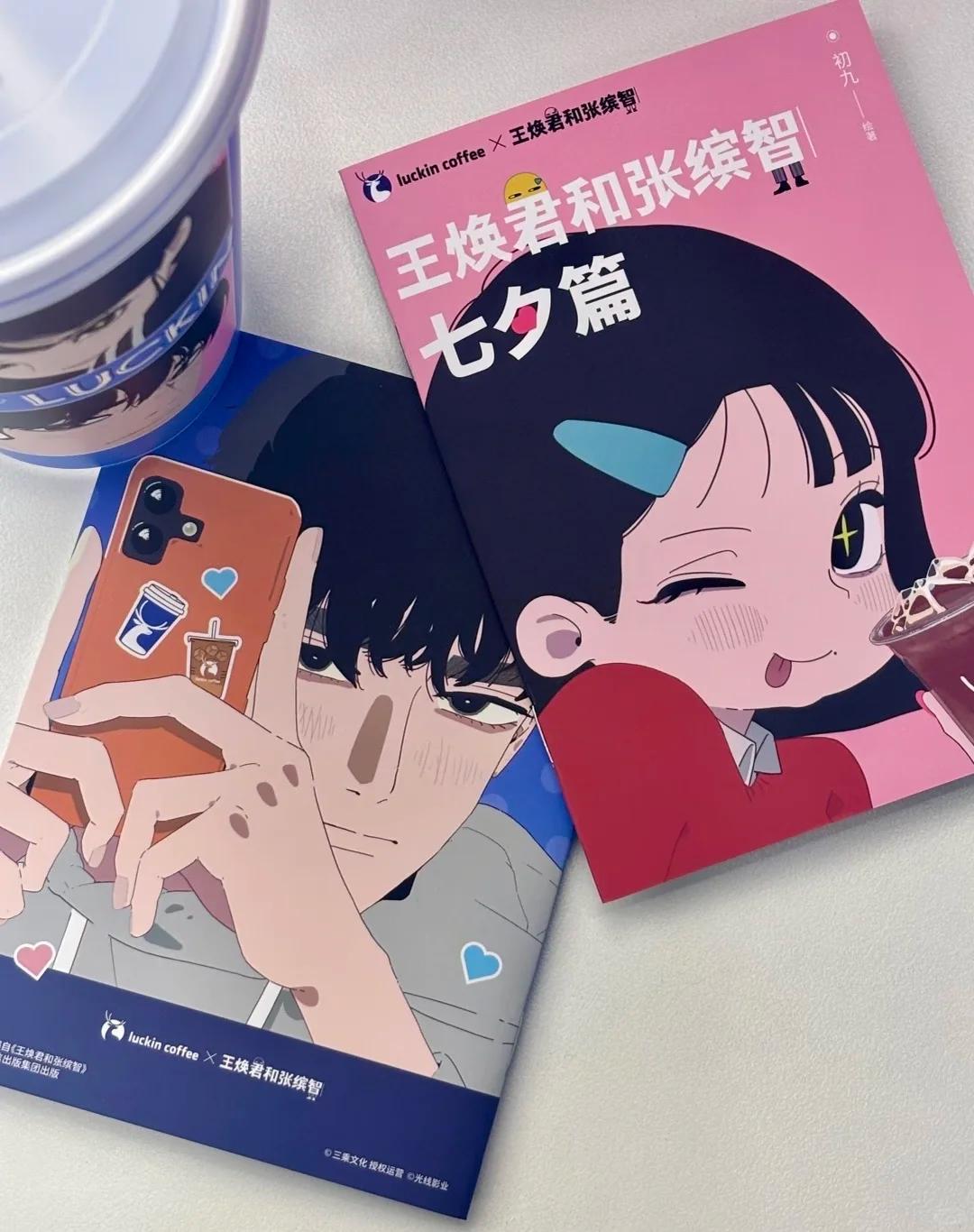
The IP that Luckin co-branded for this year's Qixi Festival is the comic blogger @Chujiu Can Draw, and the IP Wang Huanjun and Zhang Binzhi created by the blogger based on the real love story of herself and her boyfriend. The blogger has more than 6 million fans on Douyin with over 150 million likes, and has previously cooperated with brands such as Usmile electric toothbrushes. But compared with the top-tier Qixi co-branding partners Luckin used to work with, such as the viral line-drawn puppy Maltese, or the pink-toned Loopy and Asle Bunny, this IP is indeed a relatively niche one.
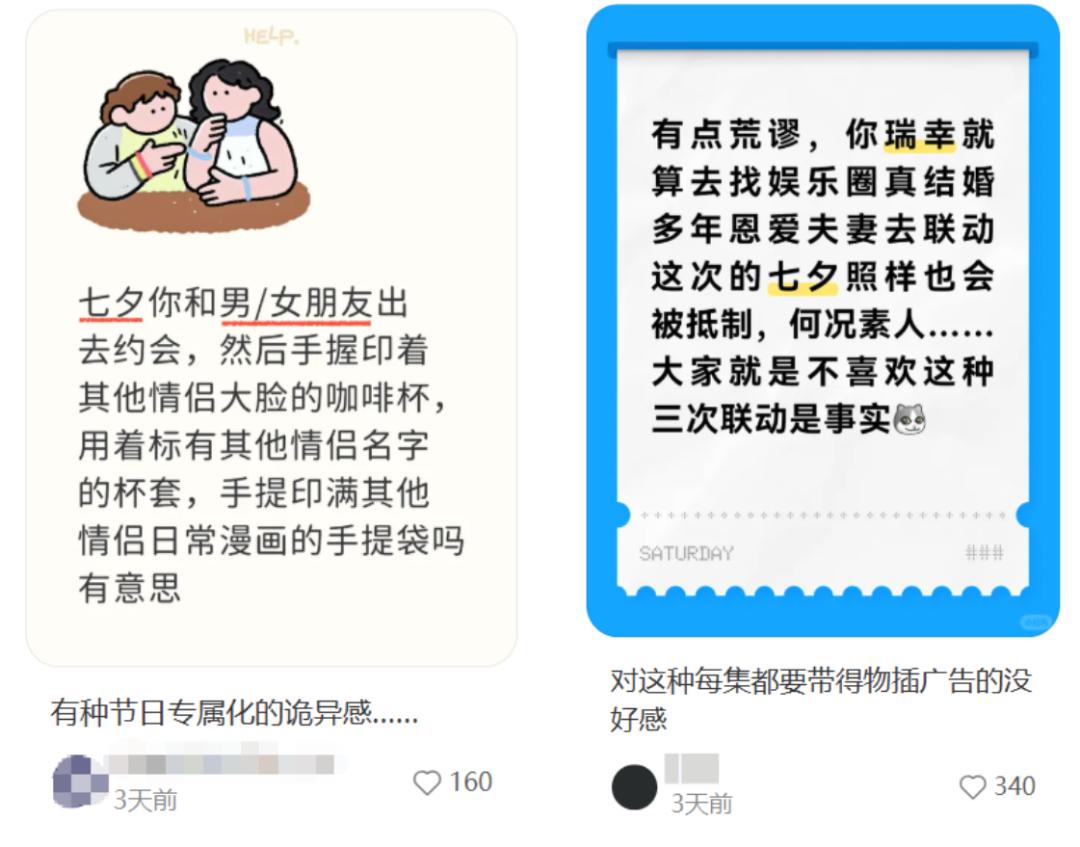
It is precisely this point that has sparked dissatisfaction among consumers: "Co-branding is supposed to be a win-win situation, but this looks like Luckin is using its resources to promote a small blogger for personal interests. Besides, it's Qixi Festival, I ordered coffee for my partner, but there's a picture of a couple I don't know printed on the cup? I don't have an obligation to 'chip in for other people's love'."
The dissatisfaction soon evolved into criticism of the IP itself. Some netizens found that the composition and storyboarding of Wang Huanjun and Zhang Binzhi are highly similar to many Japanese and Korean comics, suspected of being a "patchwork comic". Others complained that the blogger's content is too narcissistic and even makes people uncomfortable... As public opinion spread to Luckin, some customers specifically noted "no co-branded cup" when placing orders, some posted asking for help on how to delete the automatically obtained co-branded badges in the mini-program, and even some said they would wait until the co-branding period ends before buying the Thai milk tea.
This is not the first time Luckin has sparked controversy over co-branding recently. Not long ago, for the "first cup of milk tea in autumn" campaign, Luckin used co-branded cup packaging of the animation Big Fish & Begonia, but the public outcry caused by the animation director's 10th anniversary "long post" that offended fans of singer Zhou Shen had just passed, which made Luckin get caught in the crossfire.
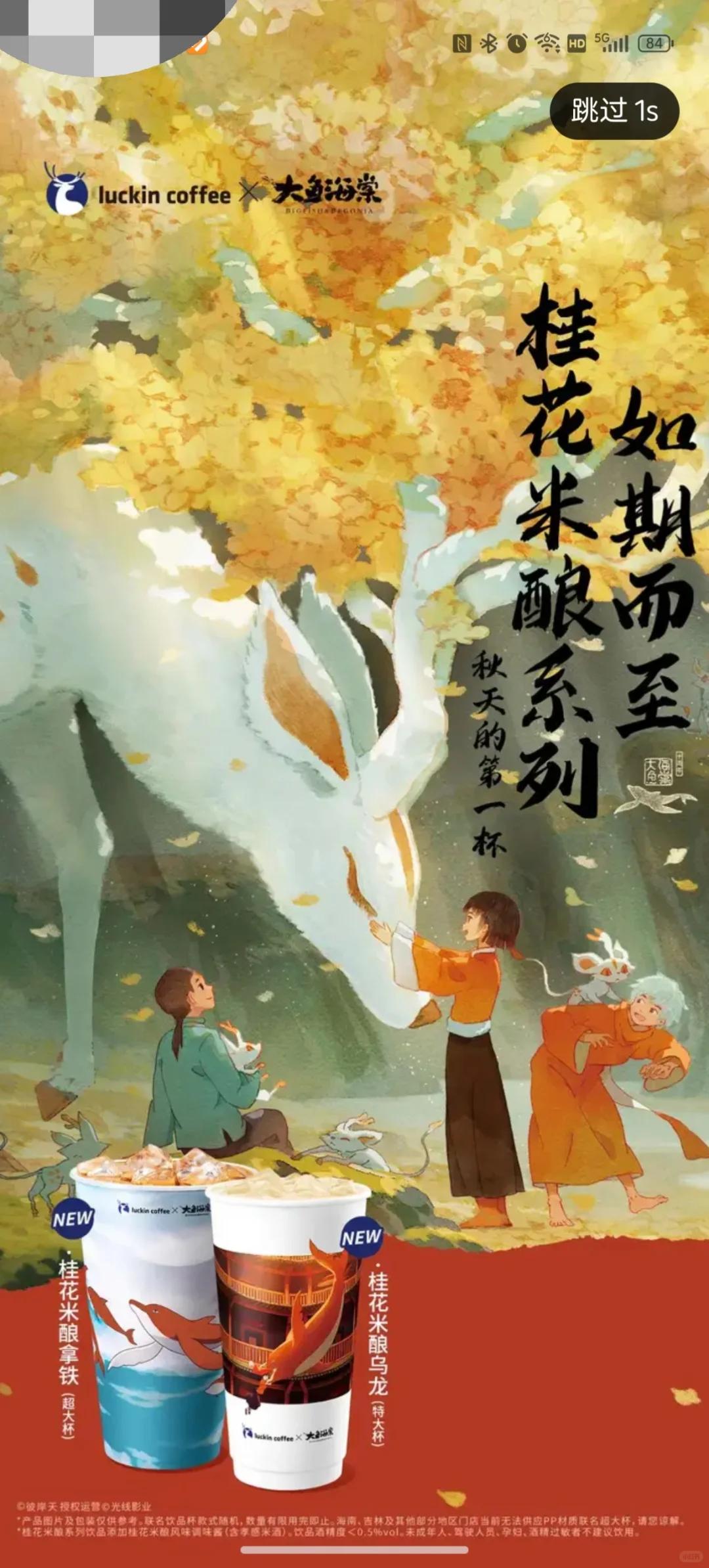
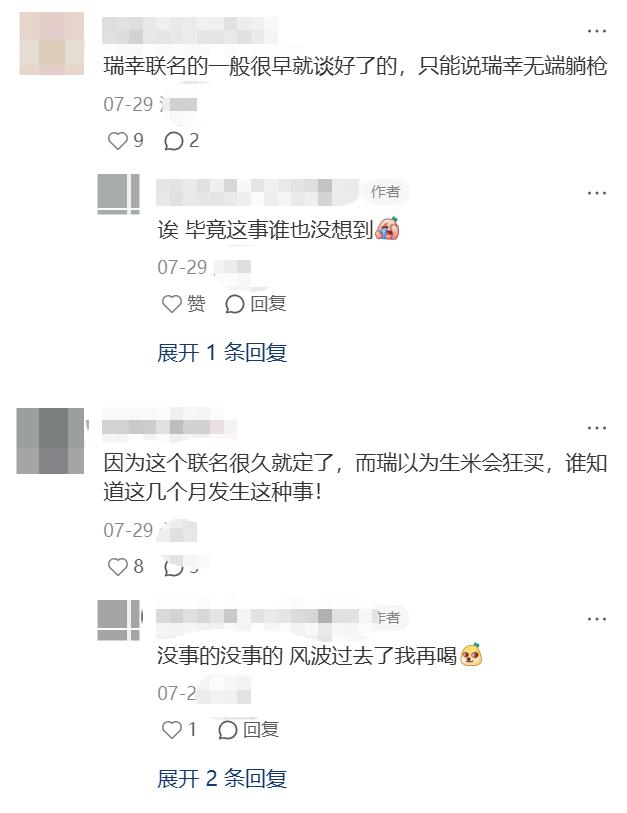
The two incidents happened so close to each other that the public can't help but wonder: at the great nodes of autumn milk tea and Qixi Festival, with highly anticipated new products, why has the always shrewd Luckin repeatedly launched controversial co-branding plans?
Counting from the collective cross-border co-branding of Heytea, LELECHA and other brands in 2019, the IP co-branding trend in the tea and coffee industry has entered its seventh year, and both consumers and the marketing teams of major brands have fallen into a burnout period to some extent. Now, the co-branding cycle of Cotti Coffee and Nowwa Coffee has been stably maintained at about once a month; after operating independently, Starbucks China has accelerated its co-branding pace, but still maintains a restrained frequency of once every few months; Lucky Coffee, which focuses on the sinking market, has significantly slowed down its co-branding actions after signing the spokesperson, and only launched two major co-branding campaigns this year, with Feng Zikai and Sword of Coming respectively.
Against the backdrop of peers reducing co-branding frequency one after another, Luckin is still speeding ahead, with an ultra-high iteration speed of about 3 co-branding events per month, firmly occupying the top spot in the IP co-branding frequency ranking of tea and coffee brands.
For Luckin, whose co-branding schedule is fully packed, it is inevitable to encounter situations where the co-branding partner is unpopular or even causes negative feedback when you often walk by the river. This time, the niche non-celebrity IP just happened to collide with the highly emotionally charged Qixi Festival node, which amplified consumers' resistance several times.
But beyond emotions, the more worthy of exploring business proposition is: as the absolute leading player in the co-branding field, why does Luckin take a fancy to non-celebrity IP? To go a step further, at a time when peers are looking for new ways out and reducing co-branding frequency, why is Luckin still running co-branding campaigns in a large-scale, assembly-line manner?
Why do leading players take a fancy to "non-celebrity IP"?
The biggest controversy of this Qixi co-branding lies in the "sense of misalignment".
Many people think that Luckin, as a national coffee brand with over 10,000 stores, using huge channel resources across the country to display an IP whose popularity is obviously far less than its own, is a forced promotion, and even gets labeled as "using public resources for private interests": "Who should pay whom for this cooperation?" Some netizens even believe that Luckin has become a part of large-scale capital operation of the IP.
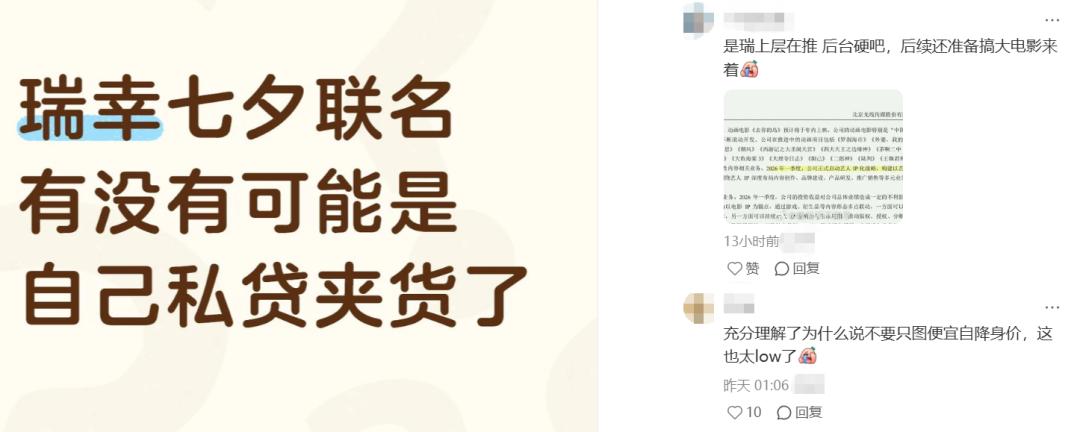
Objectively speaking, although Qixi Festival is an important node in the consumer industry, in the tea and coffee track, the actions of brands are generally relatively "light". Because the topic of love itself has a certain degree of exclusivity and subjectivity, observing this year's tea brands, almost all of them avoid in-depth co-branding on Qixi Festival, and most of them only launch new products, hold lottery activities, or distribute some atmosphere packaging materials with pink and heart elements.
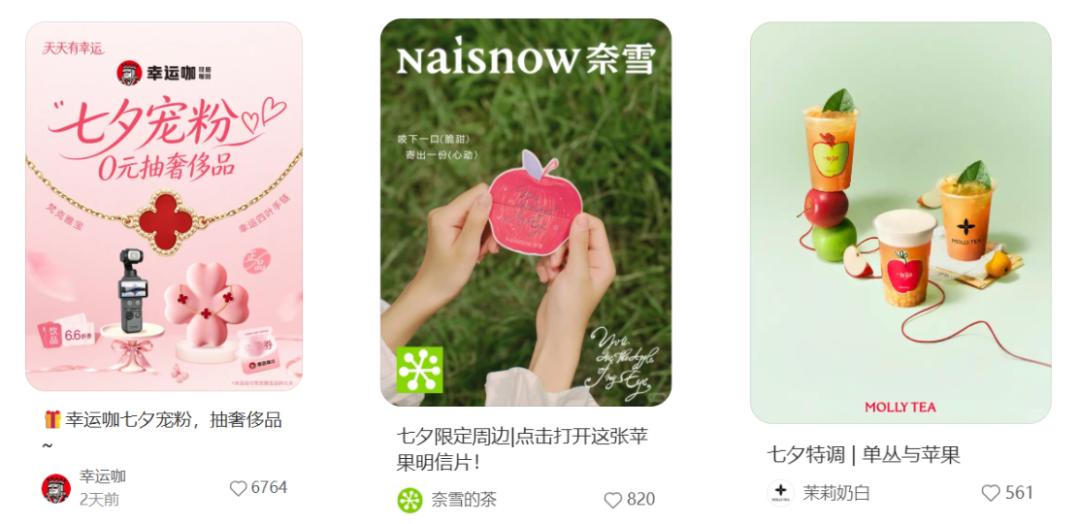
Consumers' minds are also very clear: buying a cup of milk tea or coffee on Qixi Festival, with a nice new packaging to fit the occasion is enough. Unless the brand can find highly popular mass CP with extremely likable personalities such as the line-drawn puppy, Wolffy and Red Wolf, Misae and Hiroshi, any IP content with strong directional attributes can easily cause resentment or confusion among some groups.
In fact, compared with Luckin's previous co-branding campaigns, this Qixi co-branding is also a relatively "lightweight" one. The store materials are regular cups, cup sleeves and paper bags, and the peripheral products deeply bound to the IP are small comics, not the ones that require separate mold opening, proofing and design. The coffee cup hangings and T-shirts launched simultaneously only have Luckin's own logo. At the publicity level, although the official has taken some actions, this is obviously not the type of campaign that Luckin invests heavily in and promotes vigorously. Even a large number of consumers did not realize the existence of this co-branding until they got the coffee at the beginning of the activity.
So why did Luckin insist on adding a non-celebrity IP into the campaign?
Although Luckin is already the most famous and mature co-branding player in the market, it does not mean that it can have absolute strong bargaining power with all IP owners. The licensing fee for heavyweight IPs is still a considerable expense. Luckin Coffee's Q2 financial report shows that sales and marketing expenses reached 925 million yuan, a year-on-year increase of 56.1%, and the proportion of total net revenue also climbed from 4.8% in the same period of the previous year to 5.8%. The company stated in the financial report that this increase is mainly driven by the increase in advertising and other promotional expenses, as well as the commissions paid to third-party food delivery and live streaming platforms.
According to industry insiders, Luckin's current co-branding cooperation model is mostly "guaranteed minimum revenue + revenue sharing". But for most IP owners, unless they really create a phenomenal cross-border hit like Duolingo or the line-drawn puppy, the majority of the income they get is still the guaranteed minimum fee. For example, the co-branding licensing fee for a certain artist is about millions of yuan.
This means that if Luckin wants to maintain a high-frequency co-branding rhythm of about 3 events per month, investing heavily in top-tier IPs will not only make the budget unbearable, but also easily lead to the loss of control of marketing expenses. In order to balance the overall budget and fill the schedule, interspersing some lightweight and low-cost activities is an inevitable choice in business logic. Under this logic, it is reasonable for brands to favor non-celebrity IPs or niche IPs with low licensing fees that are internally evaluated as "potential".
The unstoppable "defensive co-branding"
In the early business context, the core purpose of tea and coffee co-branding is to "seek incremental growth", converting the fans of the IP into their own consumers through linkage. But for Luckin, whose volume has far exceeded its peers now, continuously carrying out high-frequency co-branding with a super scale may no longer be simply seeking market increment, but a defensive action that cannot be actively interrupted.
The high-quality IPs on the market are limited, and it is extremely difficult to achieve "exclusive monopoly" for IP co-branding. Tea drink co-branding has become a common action for many animation and game IPs to promote themselves at important nodes. The same popular IP often co-brands with different brands successively or even simultaneously within a few months. For example, when Slayer God 2 was launched in July this year, it co-branded with Nowwa Coffee and Cotti Coffee at the same time.
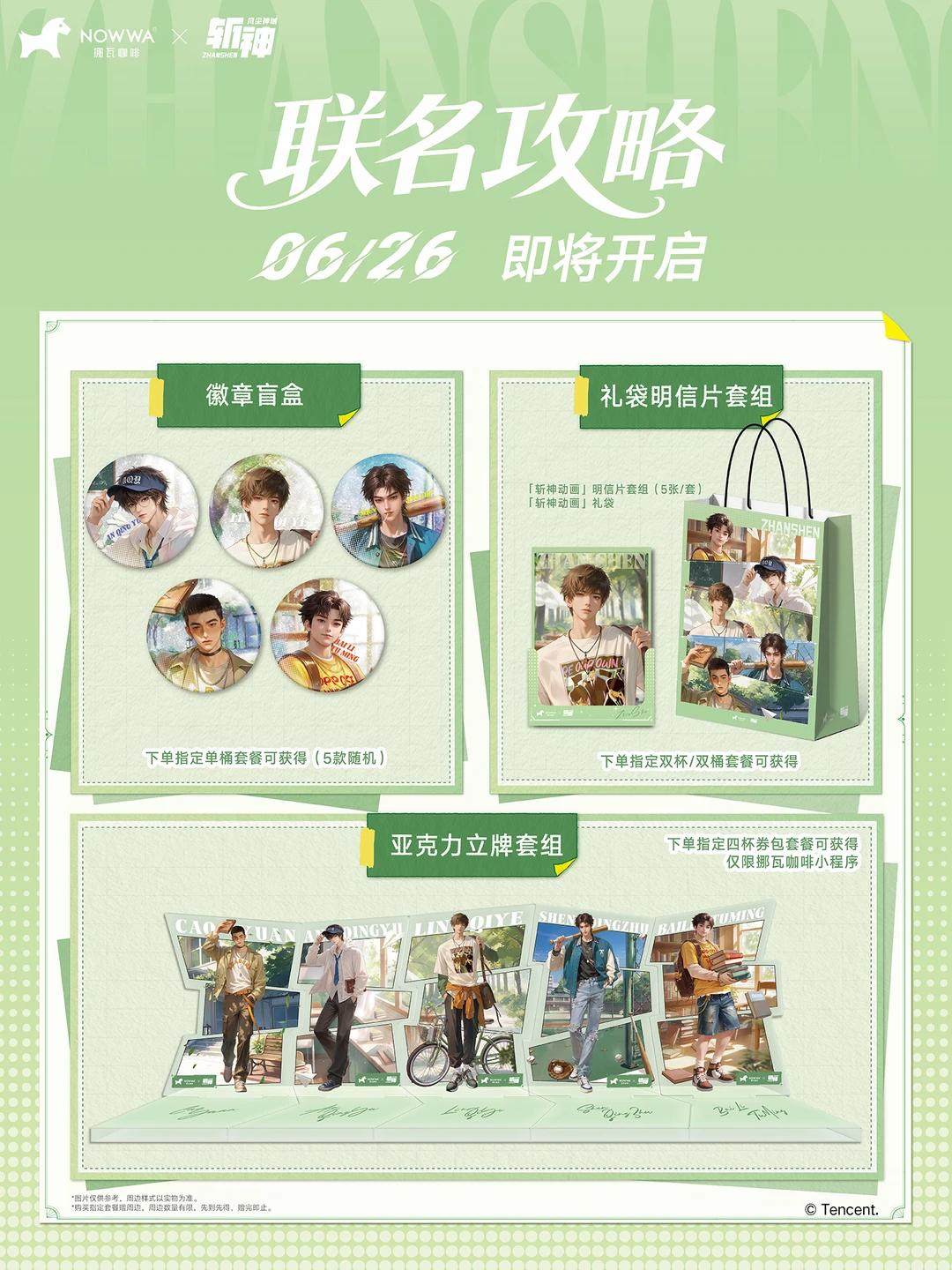
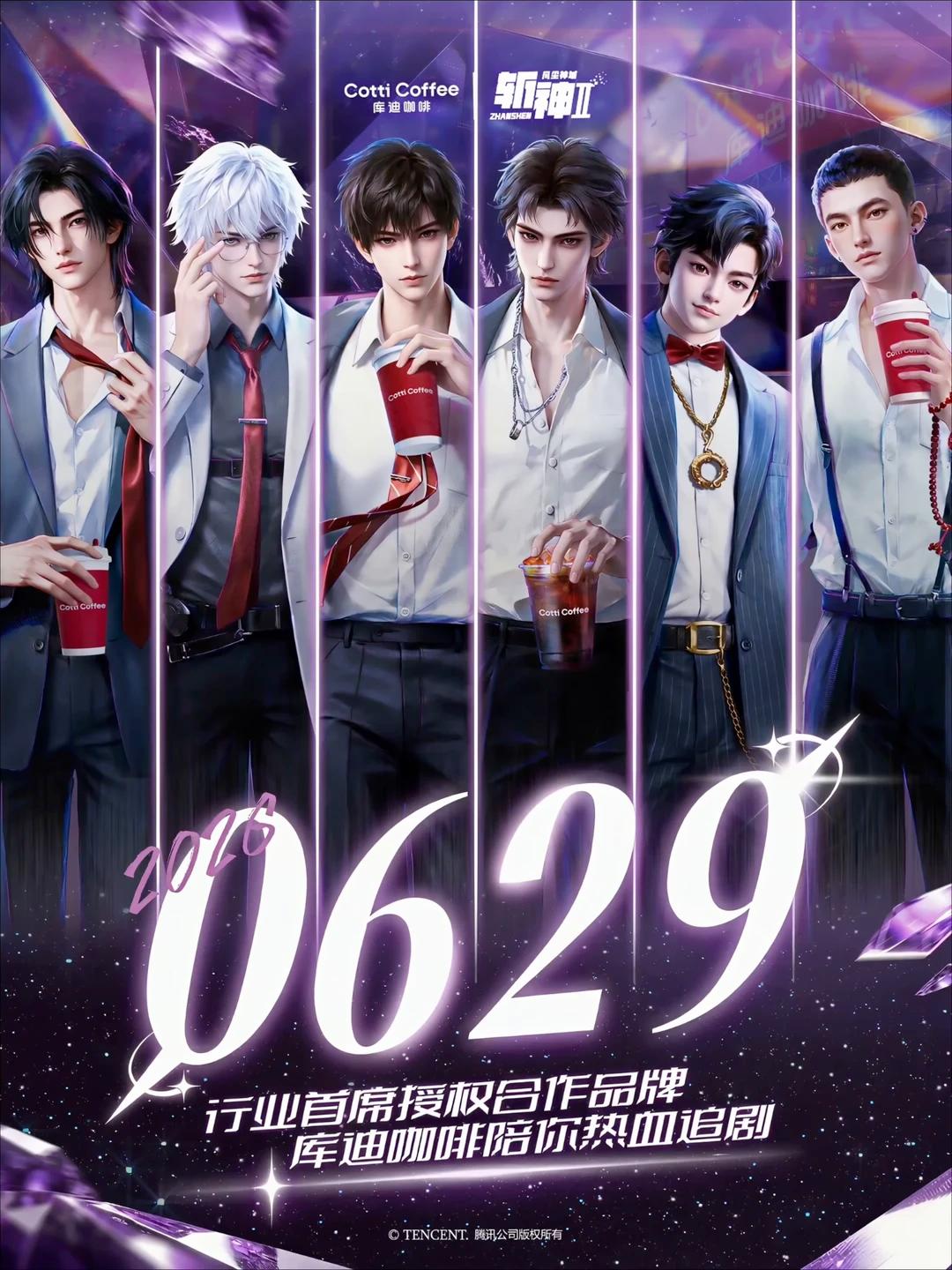
For tea brands, the frequent appearance of the same IP will disperse and blur consumers' brand awareness, and fans will inevitably compare the implementation effects of different brands: from the taste of co-branded products, the aesthetic of poster design, the creativity of materials, to the attitude of store staff, the sufficiency of peripheral stock, and even the coverage of stores, all may become hidden dangers for the co-branding reputation to "collapse". Fans will also make wishes for the co-branding direction based on their impression of the brand.
