Will gasoline car owners buy electric vehicles once the cruising range of electric cars reaches 1000 kilometers?
It can reflect the progress of battery technology and the sincerity of automakers, but it is not necessarily a rigid demand of users.
It is an indisputable fact that the new energy vehicle market has achieved leapfrog development. According to data from the China Passenger Car Association, the penetration rate of domestic new energy passenger vehicles in 2026 has exceeded the 60% mark. New energy models are steadily replacing traditional fuel vehicles and becoming an important choice for family car purchases.
However, while the market size is expanding, the trend of homogeneous involution in the industry has not eased. Instead, it has penetrated into all dimensions of product R&D, pricing and configuration, making competition increasingly fierce.
Looking back at the iteration path of new energy models in recent years, the competition track of automakers has been continuously expanding. From basic body size, interior space and interior materials to high-level intelligent cockpit, assisted driving and vehicle energy consumption control... every parameter and every configuration has become the focus of competition among automakers.
Among all product selling points, cruising range has always been one of the core indicators that consumers perceive most intuitively and have the highest decision-making weight.
A large number of potential users who are wait-and-see about electric vehicles always have the biggest concerns about insufficient cruising range and inconvenient energy replenishment. It can be said that the strength of cruising range directly determines whether consumers are willing to give up fuel vehicles and choose new energy models, and it is also the key for automakers to leverage market increment.
Nowadays, great progress has been made in battery energy density, safety and cost control. In the early years, the CLTC cruising range of mainstream pure electric models was only maintained at 400 to 500 kilometers, and at most no more than 650 kilometers. Today, a large number of mass-produced models have broken through the 1000-kilometer cruising range, doubling the mileage parameters. Many mass-produced models have officially announced that they have exceeded the 1000-kilometer cruising range mark, and the cruising range parameters have doubled.
As a result, people begin to discuss this phenomenon: is it a rigid demand for consumers that automakers are rushing to launch models with a cruising range of more than 1000 kilometers?
1000 Kilometers Becomes the Norm, Ultra-long Cruising Range Is Popularized
In the early stage of the popularization of new energy vehicles, range anxiety was the core pain point restricting the development of the industry and hindering users from purchasing cars.
At that time, the domestic power battery technology was not yet mature, the battery energy density was generally low, coupled with problems such as high car manufacturing costs and imperfect vehicle energy consumption management systems, the CLTC cruising range of mainstream mass-produced pure electric models in the market was generally less than 500 kilometers.
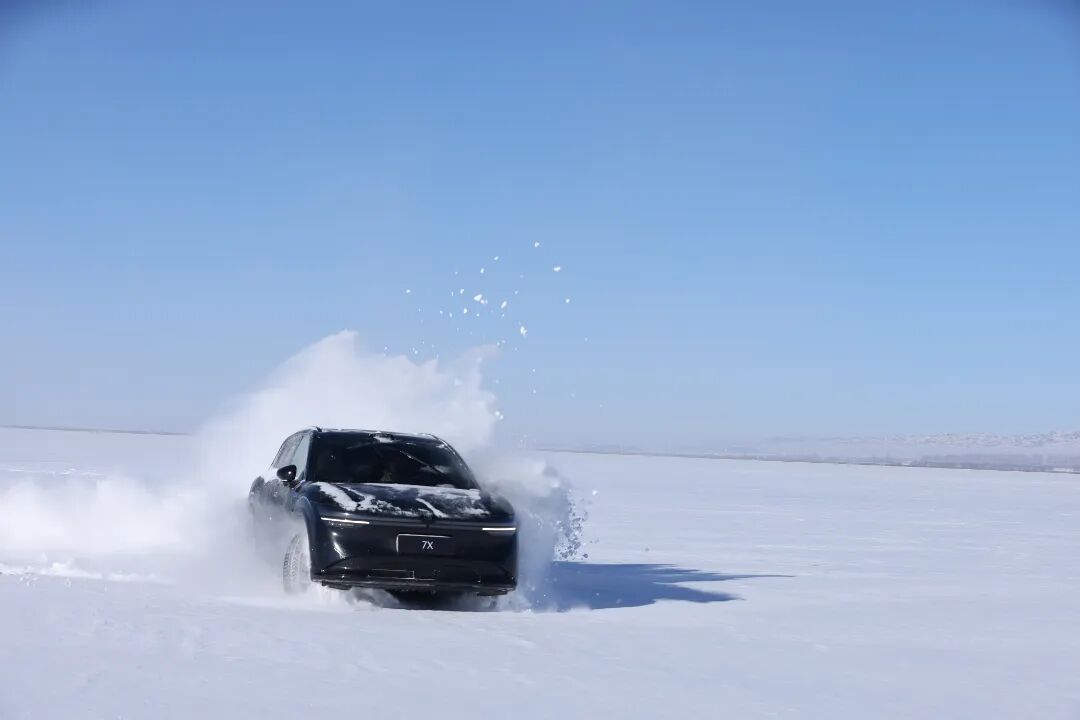
The limited cruising range has greatly reduced the travel radius of electric vehicles. Compared with fuel vehicles with stable cruising range and convenient energy replenishment, the practicality gap is obvious. It can meet the needs of daily short-distance commuting in the city, but once it involves cross-city travel and long-distance self-driving, users will have concerns, and electric vehicles have never been able to get rid of the limitation of "mobility tools".
The low-temperature environment is even the biggest shortcoming of early electric vehicles.
Industry measured data shows that under the low-temperature working conditions in northern winter, the battery activity of the first-generation pure electric vehicles drops significantly, and the actual cruising range discount generally reaches 40% to 60%. The original calibrated cruising range of 400 to 500 kilometers is directly halved in actual available mileage. Users dare not turn on the heater or drive long distances in winter, and always worry that the vehicle will run out of power and break down halfway.
At the same time, the construction of domestic charging pile infrastructure lags behind, and energy replenishment points in high-speed service areas, towns and counties, and remote scenic spots are scarce. Problems such as difficult charging, slow charging, and difficult to find piles are widespread.
The superposition of multiple shortcomings not only makes fuel vehicle users continue to complain about the insufficient practicality of electric vehicles, but also makes a large number of potential consumers choose to wait and see, which greatly limits the expansion speed of the new energy market.
Nowadays, with the continuous maturity of the domestic power battery industry chain, core technical bottlenecks have been broken one by one.
The energy density of batteries has been steadily improved, and the unit battery installation cost has dropped significantly. Combined with the lightweight design of the whole vehicle and the optimization of the global thermal management system, automakers have completely got rid of the cost and hardware constraints of cruising range upgrading, and the mass production and landing of ultra-long cruising range models has become the norm.
For example, the Denza Z9S, which opened for pre-sale on August 3, 2026, relies on the second-generation Blade Battery technology and the ultimate energy consumption optimization of the whole vehicle, and the CLTC pure electric cruising range of the single-motor flagship version reaches 1100 kilometers, refreshing the cruising range record of mass-produced pure electric sedans at the current stage, marking that the civilian pure electric cruising range technology has reached a new height.
More critically, the 1000-kilometer cruising range is no longer exclusive to high-end flagship vehicles, but is rapidly sinking and popularizing to the mass mainstream market. At present, Zeekr, NIO, and BYD's high-end series have all launched mass-produced models with a 1000-kilometer cruising range, and the cruising range competition in the high-end market has taken shape.
The iteration speed of the mainstream household market is even more rapid. In the past two months, BYD's Dynasty Network, Ocean Network, and Formula Leopard three product lines have concentrated on new launches and completed model iterations. The CLTC cruising range of mainstream 200,000-yuan-class household pure electric models has generally exceeded 800 kilometers, greatly improving the cruising range standard of household models.
The pure electric coupe MG07 launched by SAIC MG at the end of July 2026 has a pre-sale price starting from only 125,900 yuan, and the high-end version can achieve a CLTC cruising range of 845 kilometers. That is to say, now cars priced at just over 100,000 yuan are equipped with a long cruising range of more than 800 kilometers, which greatly lowers the entry threshold for ultra-long cruising range models.
But now the product value system of family cars, when it comes to the cruising range item, does it really need to be reconstructed by 1000 kilometers?
Rigid Demand or Non-rigid Demand
At the moment when the whole industry is rushing to achieve 1000-kilometer cruising range, an industry issue needs to be clarified urgently: in the ordinary household scenario, does the 1000-kilometer-level ultra-long cruising range have real rigid demand value?
Combined with big data on domestic users' car usage and daily travel scenarios, the vast majority of urban family users simply do not need a 1000-kilometer cruising range, and high-end long-range configurations have shown obvious performance surplus.
Statistics on commuting in major domestic cities show that the average daily driving mileage of users in first-tier cities such as Beijing, Shanghai, Guangzhou and Shenzhen is less than 50 kilometers, and the commuting distance in second- and third-tier cities is even shorter. Daily travel is dominated by short-distance mobility, and the energy consumption demand is extremely low.
At present, the mainstream 200,000-yuan-class pure electric models on the market, with a CLTC cruising range of about 650 kilometers, are enough to fully cover the travel needs of ordinary families. Even with the addition of short-distance outings on weekends and suburban travel on holidays, the comprehensive energy consumption is limited, and it only needs to be charged once a week, which will not affect the convenience of daily car use at all.
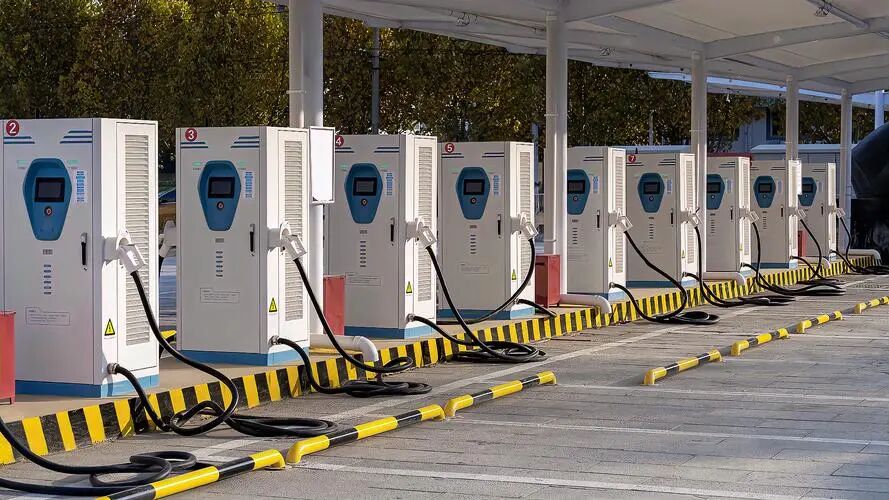
In contrast, the experience improvement brought by the 1000-kilometer cruising range of charging once every half a month or once a month is barely perceptible to ordinary users, and may not be transformed into substantial car use benefits. For users who are rooted in the city and have fixed energy replenishment conditions, blindly pursuing a 1000-kilometer cruising range is not a must-have option.
Even for long-distance self-driving and cross-city travel scenarios, a 1000-kilometer cruising range is still not a rigid demand.
Because according to the law of human driving, most car owners will not drive continuously for more than 4 hours at a time. Driving continuously for more than 500 kilometers is very prone to fatigue, and they must stop halfway for rest and meals. At present, China's new energy energy replenishment infrastructure has become increasingly perfect, and charging piles in service areas of the national high-speed trunk road network have basically achieved full coverage. Some service areas have implemented the mode of entering the station with license plates and charging in an orderly manner, which completely solves the old pain points of snatching charging piles and difficult charging on high-speed, and greatly improves the convenience of long-distance energy replenishment.
At the same time, the full popularization of ultra-fast charging technology further weakens the irreplaceability of ultra-long cruising range.
Nowadays, 800V high-voltage platforms and 5C ultra-fast charging technology have become the mainstream configurations of mid-to-high-end models, and the energy replenishment efficiency is comparable to that of fuel vehicles refueling. Many models can achieve efficient energy replenishment within 15 minutes. Users can quickly replenish hundreds of kilometers of cruising range during the rest period of long-distance travel, which can fully support the subsequent journey without relying on the ultimate long cruising range as a fallback.
Of course, the premise is that automakers put an end to serious false marking of cruising range, ensure that the deviation between the actual working condition cruising range of the model and the calibrated data is reasonable, and the mainstream 600-800 kilometers cruising range is enough to cover the full-scenario travel needs of the vast majority of users.
From the perspective of the long-term development of the industry, blindly stacking batteries and pursuing mileage is also a manifestation of the involution model. Ultra-large capacity batteries will increase the self-weight of the whole vehicle, raise the cost of car purchase and use, and significantly increase power consumption under urban low-speed working conditions, which violates the core original intention of energy saving and low carbon of new energy models, and also causes waste of battery raw material resources.
The so-called 1000-kilometer cruising range meets the needs of brand technical endorsement and marketing, and some users can really use it, but at present it is not the core rigid demand of users.
What is more important than the 1000-kilometer cruising range is that automakers match gradient and reasonable cruising range configurations according to different scenarios such as user commuting, mobility, long-distance travel, and operation, so as to achieve the optimal balance of cruising range, energy consumption and energy replenishment efficiency.
This article is from the WeChat Official Account "Auto Community" (ID: iAUTO2010), written by Li Chen'ai, authorized for release by 36Kr.