Unprecedented reshuffle in the coffee sector: 53,000 new outlets opened in one year, with a net increase of only 1,065?
The coffee track after the price war can be described as nothing less than "brutal".
Statistics show that 53,000 new stores opened in the past year, but the net growth figure was only 1,065.
This is an unprecedented major industry reshuffle. Luckin Coffee added a net 5,000 stores only in the first half of 2026, bringing its total store count to 36,000; Nowwa Coffee and Lucky Coffee are also expanding rapidly. On the other hand, a large number of small and medium-sized coffee brands have hit the brakes and fallen behind.
We use data to document the most brutal differentiation trajectory of China's coffee market over the past year.
Overall View of the Coffee Market: Luckin Coffee Takes a Clear Lead, Forming a "Four-Tier" Structure
Data shows that the total number of coffee stores nationwide has reached 227,000, forming a pattern of "one leading player with multiple strong competitors" (the following data is sourced from Zhaimen Canyan, whose statistical caliber may differ from the official standards of individual brands).
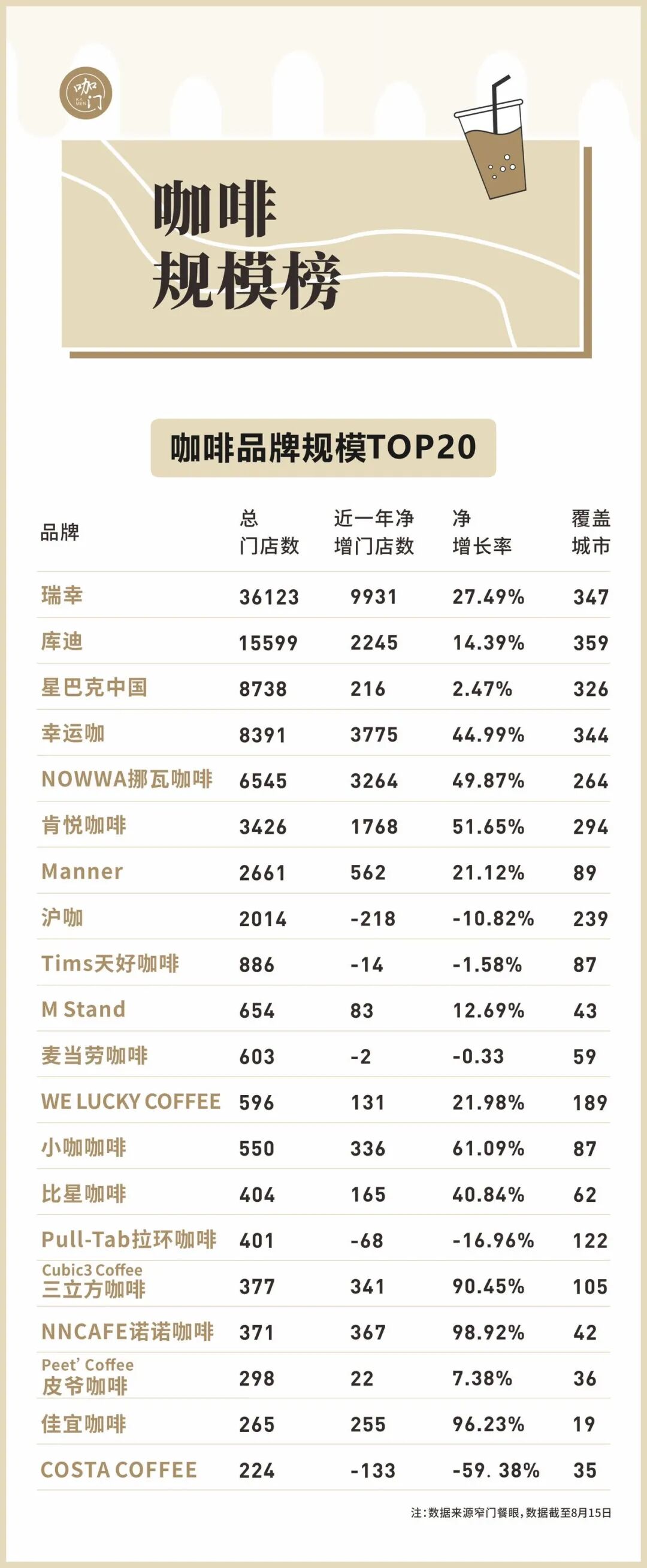
The first tier (30,000+): Luckin Coffee takes an absolute lead with 36,000 stores. It covers 347 cities, and its store count is more than twice that of the second-ranked Cotti Coffee (15,000 stores).
The second tier (8000-20000): Representative brands include Cotti Coffee, Lucky Coffee and Nowwa Coffee.
Cotti Coffee has 15,599 stores covering 358 cities, making it the coffee brand with the widest city coverage in the industry. Cotti's "joint operation model" allows it to quickly penetrate blank markets that Luckin has not yet covered. The distance between stores of the two brands in many cities is often less than 500 meters, and "close-range head-to-head competition" has become the norm.
Lucky Coffee added a net 3,775 stores in the past year. Backed by the 10,000-store supply chain system of Mixue Bingcheng, it has great advantages in expanding in the sinking market. Nowwa Coffee added a net 3,264 stores in the past year.
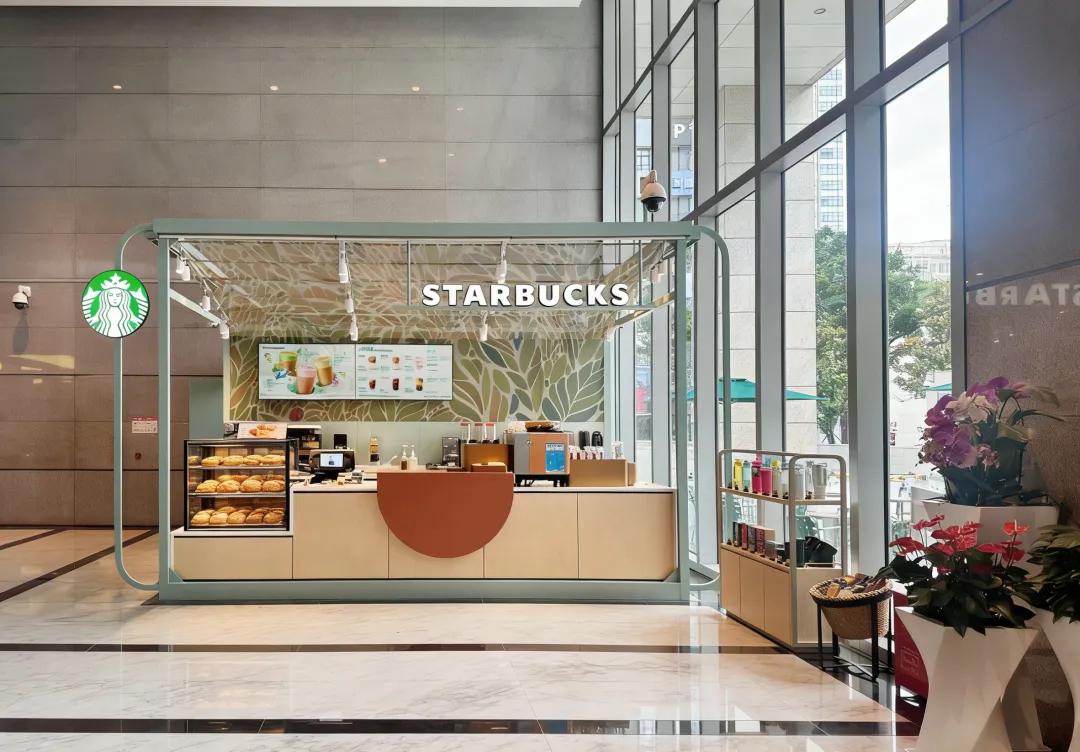
After Starbucks China established a joint venture with Boyu Capital, it set a target of expanding to 20,000 stores, which requires a net increase of about 1,200 stores per year in the future. Recently, Boyu appointed former Sam's Club CMO Zhang Qing to reform the supply chain and operational efficiency, to optimize Starbucks China's operating model.
The third tier (2000-3000 stores): Tim Hortons Coffee has 3,426 stores, with a net increase of 1,768 in the past year; Manner has 2,661 stores, with a net increase of 562; Huka Coffee has 2,014 stores, with a negative net growth in the past year.
The fourth tier (less than 1000 stores): Tims Coffee, M Stand, Peet's Coffee and other brands, which are mostly positioned as premium or regional coffee brands.
Summary: In 2026, the three-year-long extreme price war among coffee brands has gradually subsided, and a consensus has formed in the industry: low-price competition is unsustainable. The *2026 China Urban Coffee Development Report* shows that the annual per capita coffee consumption in China has risen to 28.57 cups in 2025, an increase of about 70% compared with 16.74 cups in 2023. The industry has completely shifted from "space experience and brand premium" to "accessibility and ultimate cost-effectiveness".
Who is Growing Explosively? — The Fastest Expanding Brands
Brands with high growth rates have different underlying growth logics.
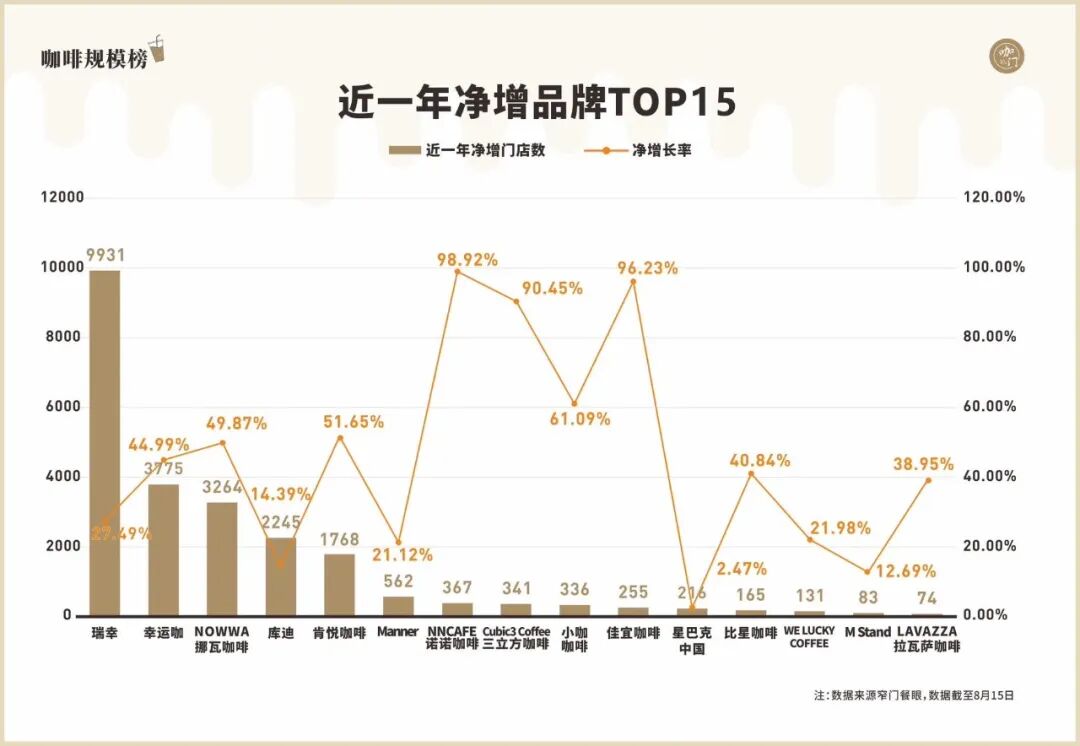
Luckin Coffee: The "Scale Acceleration" of the Absolute Leader
It added a net 5,000 stores only in the first half of 2026, and in the second quarter, it added about 30 new stores on average every day — this expansion speed is extremely rare in the history of global coffee chains. Luckin has already become the coffee chain brand with the largest number of stores in China and even around the world.
However, in the second quarter of 2026, the same-store sales of Luckin's self-operated stores decreased by 5.3% year-on-year. At the same time, the average monthly number of transaction customers reached 112.7 million, a year-on-year increase of 23% — the number of customers is larger, but the output of each single store is declining.
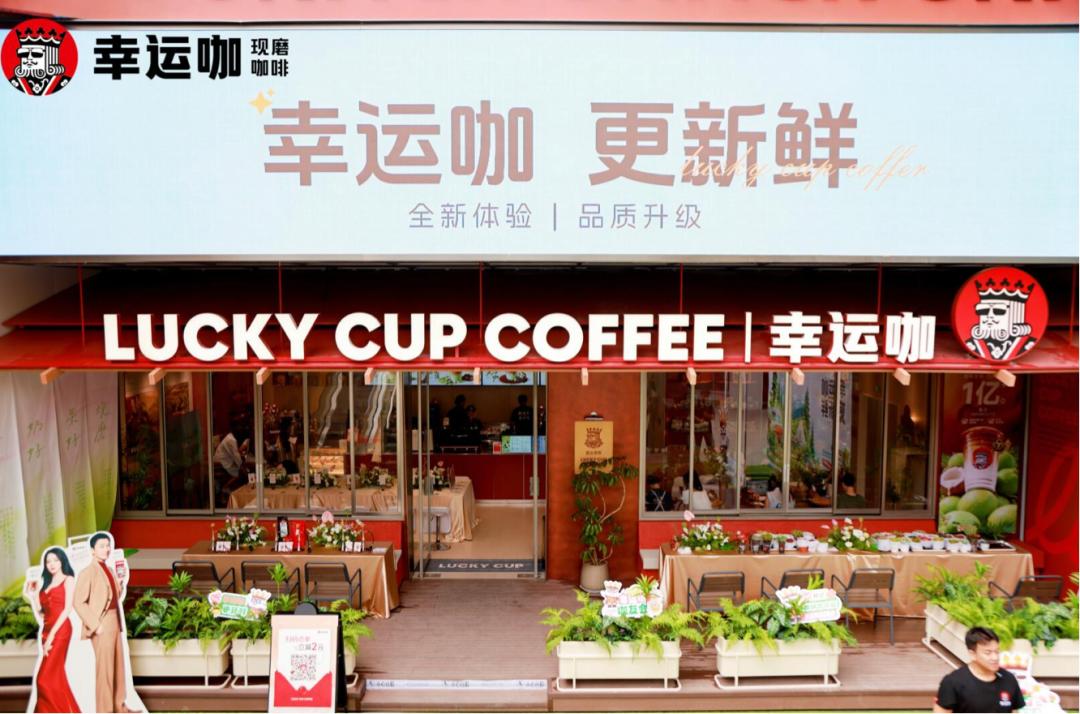
Lucky Coffee: Taking the Initiative to "Hit the Brakes" in 2026
It added a net 3,775 stores in the past year, with a growth rate of about 45%, but the latest move of Lucky Coffee is to actively control its expansion speed.
In July 2026, the brand publicly clarified that the total number of new stores in 2026 will be controlled within 2000, and the number of new stores in the second half of the year will be limited to 1000. Its strategic focus will be tilted to core commercial streets and high-potential business districts in prefecture-level cities and above, and it will invest 500 million yuan in brand upgrading and store support.
Nowwa Coffee: The "In-Store Store" Model Rewrites the Expansion Logic
It added a net 3,264 stores in the past year, second only to Luckin Coffee and Lucky Coffee. About 80% of Nowwa's current stores are in-store stores, mainly in cooperation with Meiyijia convenience stores. According to statistics from reporters from South Metropolis Bay Financial Daily, in Guangzhou and Shenzhen, such in-store stores account for more than 95% of its total stores.
In July 2026, Nowwa launched a new franchise policy with a franchise fee of 49,800 yuan, continuing to accelerate expansion with the "in-store store" model. Quickly expanding its store network at an extremely low marginal cost is the most unique expansion path of the coffee industry that distinguishes it from the tea drink industry.
K Coffee: "Accelerated Growth" Backed by Yum China
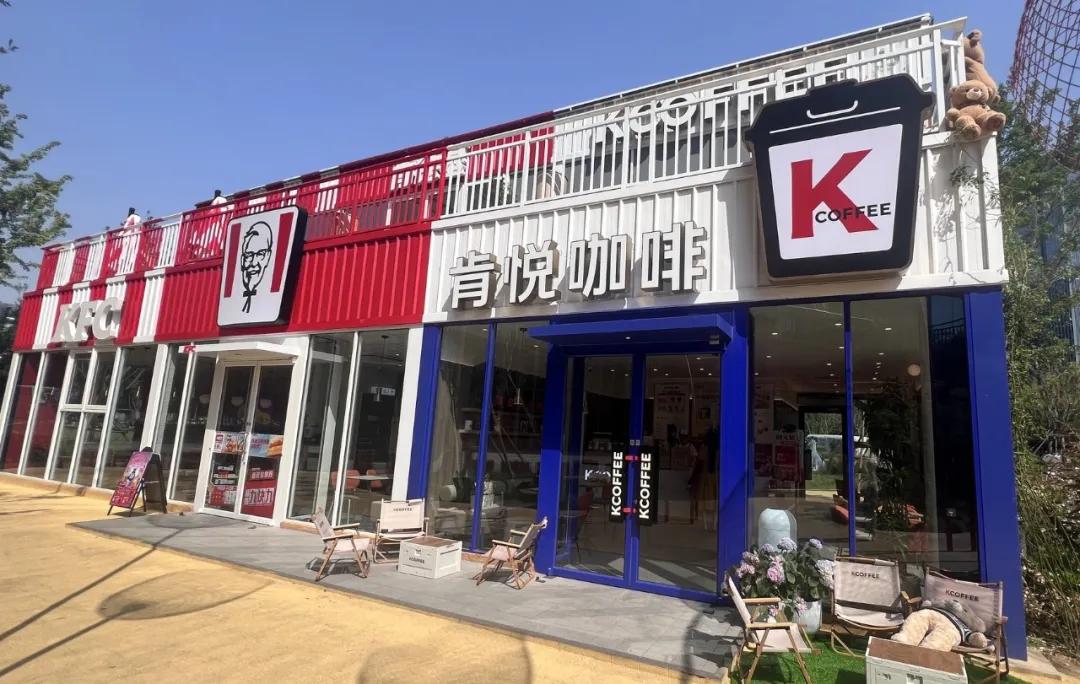
It added a net 1,768 stores in the past year, with a growth rate of 52%. Relying on the low-cost "side-by-side" model with KFC, it has expanded rapidly. It currently has 3,426 stores, ranking sixth among all fresh-brewed coffee brands in China. It added about 700 new stores in the past quarter, and its goal is to reach 5,000 stores by the end of 2027.
The coffee ambition of the fast food giant is rewriting the industry pattern. Different from independent coffee brands, the expansion of K Coffee is essentially the implementation of Yum China's strategy of "activating KFC's existing store assets with coffee".
Dark Horses Among Small and Medium Brands — The Growth Story of "Small but Beautiful" Brands
Brands with small scale but amazing growth rate represent the potential direction of niche tracks or new models.
Cubic3 Coffee: Founded in Shanghai in 2021, it added a net 341 stores in the past year, with a growth rate of 90% and a total of 377 stores. Positioned as affordable premium coffee, it pursues classic coffee quality but controls the per customer order price at around 15 yuan, with stores densely distributed in residential communities and business districts.
Grid Coffee: It added a net 66 stores in the past year, with a total of 151 stores. Founded in 2021 and invested by the parent company of Yuanfudao, it is positioned as premium coffee, adheres to single-origin coffee beans and does not add syrup. Its stores are mainly located in "core business districts and high-traffic scenarios" in first-tier cities such as Beijing, Shanghai and Chengdu, and it is a representative of premium coffee brands that are accelerating expansion.
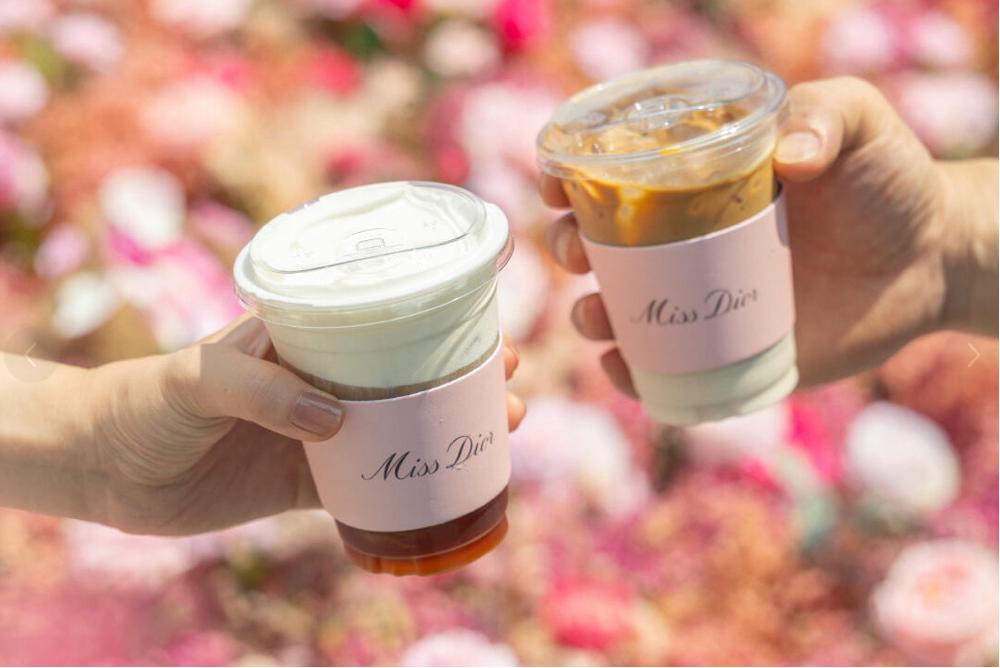
Xiaoka Coffee: It added a net 336 stores, with a growth rate of over 60% and a total of 550 stores. Focusing on the lightweight store model and digital operation, it replicates rapidly through the in-store store model, and its "technology-driven" development path is being verified.
NNCAFE: It is a coffee brand that operates in chain Internet cafes, and also sells other drinks and food. It added a net 367 stores in the past year, with a growth rate of 99% and a total of 371 stores.
Jiayi Coffee: It is the self-owned coffee brand of Xijiayi, a well-known local convenience store chain in Hunan. It added a net 255 stores in the past year, with a total of 265 stores, demonstrating the explosive potential of convenience store coffee.
store by.jpg: It added a net 67 stores in the past year, with a total of 175 stores. Founded in Guangzhou in 2017, it focuses on the window store model with strong local characteristics, and the vast majority of its stores are located in Guangdong — it achieves ultimate premium and deep cultivation, with extremely high store density in a single city.
Although these brands are not large in scale at present, they can still open a large number of stores under the squeeze of large chain brands, which proves that there are still structural opportunities in the niche market.
Changes in Urban Market Pattern — The "Density War" of Coffee Stores
The total number of stores does not equal density, nor does it equal market vitality. Three sets of data reveal the changes in the urban coffee market pattern.
Top 5 cities by total number of stores: Shanghai (9708), Guangzhou (7581), Beijing (6705), Shenzhen (6474), Chengdu (6400). First-tier cities are still the regions with the most dense coffee stores, and Shanghai ranks first in the country steadily with nearly 10,000 stores.
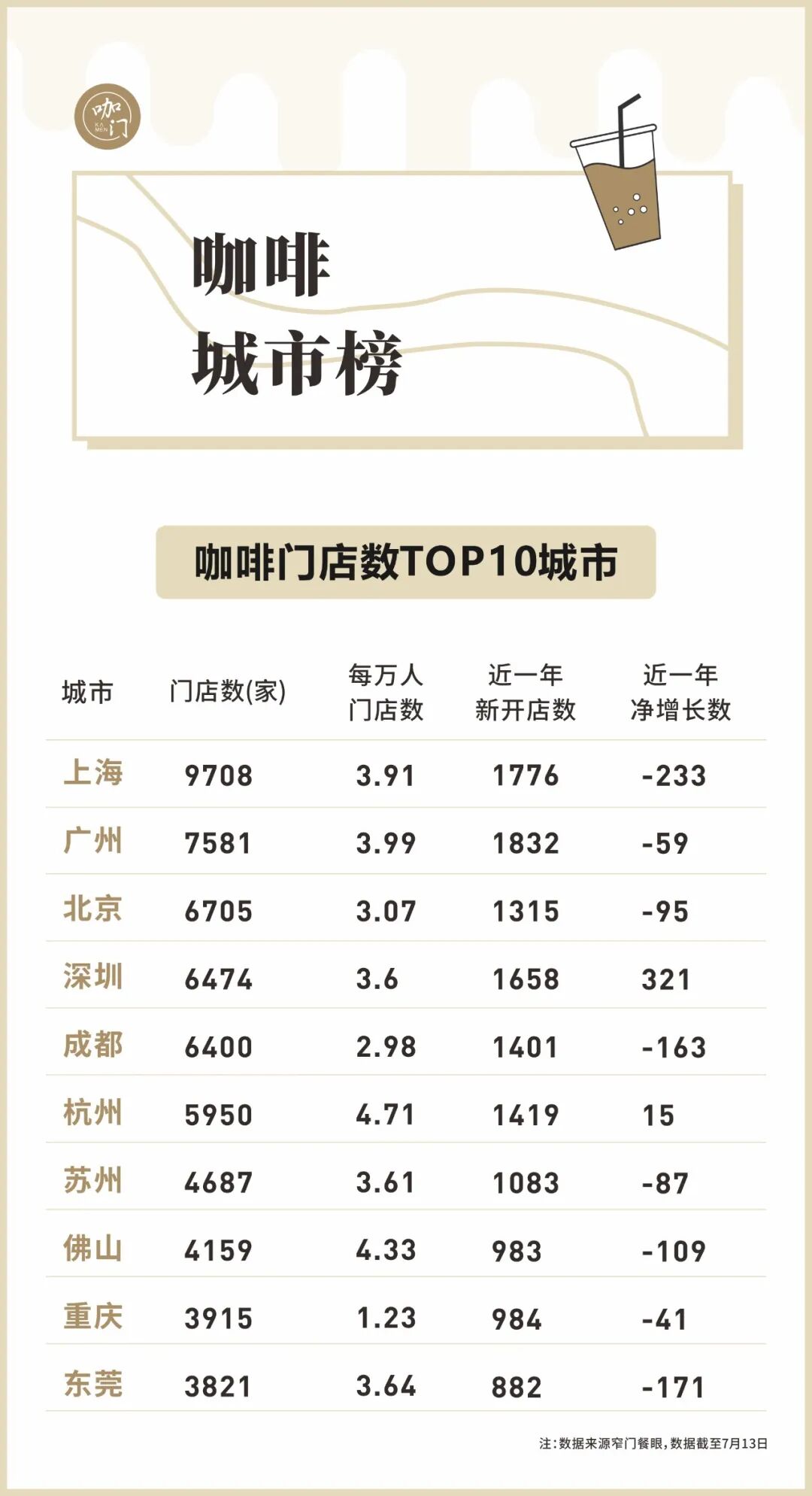
Top 5 cities by number of stores per 10,000 people: Lhasa (7.62), Lijiang (5.86), Haikou (5.22), Zhuhai (5.17), Jiangmen (4.88). The store density of small cities has surpassed that of first-tier cities — the coffee density of tourist cities such as Lhasa and Lijiang is far higher than that of Shanghai (3.91). "Snow mountain coffee" and "plateau coffee" are becoming standard scenarios for tourism; coffee consumption is shifting from being a standard product for white-collar workers in first-tier cities to a daily consumer product in more regions.
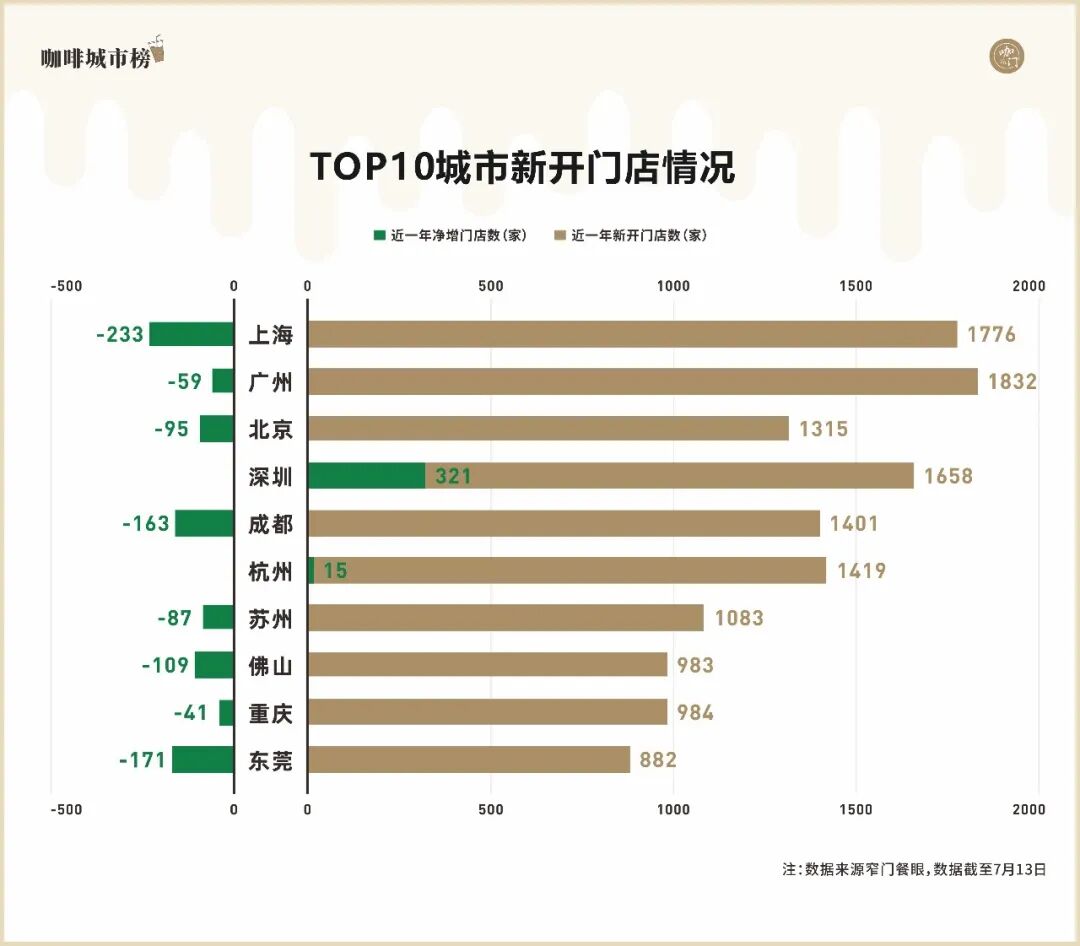
Net growth in the past year: Shenzhen (+321), Xi'an (+378), Qingdao (+245), Wuhan (+193). Cities such as Shenzhen and Xi'an are still expanding rapidly, while mature markets such as Shanghai (-233) and Guangzhou (-59) have entered the stock game stage. This trend is highly consistent with the tea drink industry: first-tier cities are saturated, and new first-tier and strong second-tier cities have become the main battlefield for market increment.
The Second Half of Coffee Industry: Shifting From "Who Opens Stores Faster" to "Who Survives Longer"
1. The industry is still expanding, but the incremental market is occupied by leading brands
The industry has entered the "era of giants", and the store increment in the past year is mainly taken by the top 5 brands — the total net increase of Luckin, Nowwa, Cotti, Lucky Coffee and K Coffee has exceeded 21,000 stores.
With the advantages of scale effect, supply chain and brand recognition, leading brands are building increasingly deep moats. The increment is concentrating on the top players, and the living space of small and medium brands is further compressed.
2. The price war is subsiding, and the competition focus shifts to "upgrading"
Lucky Coffee takes the initiative to control the speed of opening stores, Cotti suspends franchise cooperation in provincial capitals and above, and Luckin is facing the pressure of declining same-store sales — all leading brands are conveying the same signal: the era of scale expansion is ending, and the era of refined operation has arrived.