Li Shufu has stepped back behind the scenes, and the "One Geely" has completed its de-familyization transformation.
After the industry shifts from scale competition to profit competition, from price competition to value competition, and from single-product competition to system-wide competition, the factors that determine the upper limit of an automaker have changed from a single hit model, a single capital operation or a short-term sales surge, to organizational efficiency, strategic resolve, technology reuse capability and global operation capability. Li Shufu completed another "strategic transformation" in his unique way — the transformation from an entrepreneur to an institutional designer.
The 63-year-old Li Shufu took another preemptive step on August 17.
He announced that he would step back from the front line in the 21st year of Geely Auto's listing on the Hong Kong Stock Exchange, and passed the baton to An Conghui, the successor cultivated by Geely itself. An Conghui was born in 1970 and is 56 years old this year.
Geely, one of China's largest private automotive groups, has taken the historic lead in completing de-familialization management.
01. Li Shufu's Report Card
Known as the "auto maniac", Li Shufu made a brief summary of his performance in his speech after stepping down as chairman of Geely Holding:
On May 19, 2005, Geely Auto was officially listed and traded on the Hong Kong Stock Exchange. Its stock price rose from HK$0.4 on May 19, 2005 to HK$18.06 on August 12, 2026. The company's market value increased from HK$1.6 billion to HK$194.8 billion on August 12, 2026. Dividends rose from HK$40 million in 2005 to HK$5.4 billion in 2025.
The implication of Li Shufu's remarks is that Geely's performance lives up to the expectations of shareholders and investors.
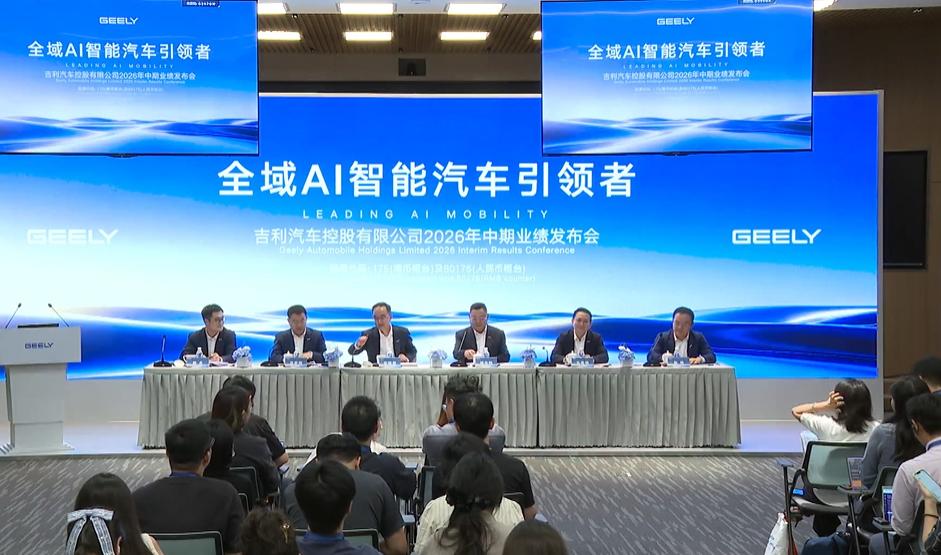
After resigning as Chairman and Executive Director of the Board of Geely Automobile Holdings, Li Shufu remains the Lifetime Honorary Chairman. Meanwhile, An Conghui takes over as Chairman of the Board, Gui Shengyue is transferred to Vice Chairman of the Board, and Gan Jiayue is appointed as Chief Executive Officer.
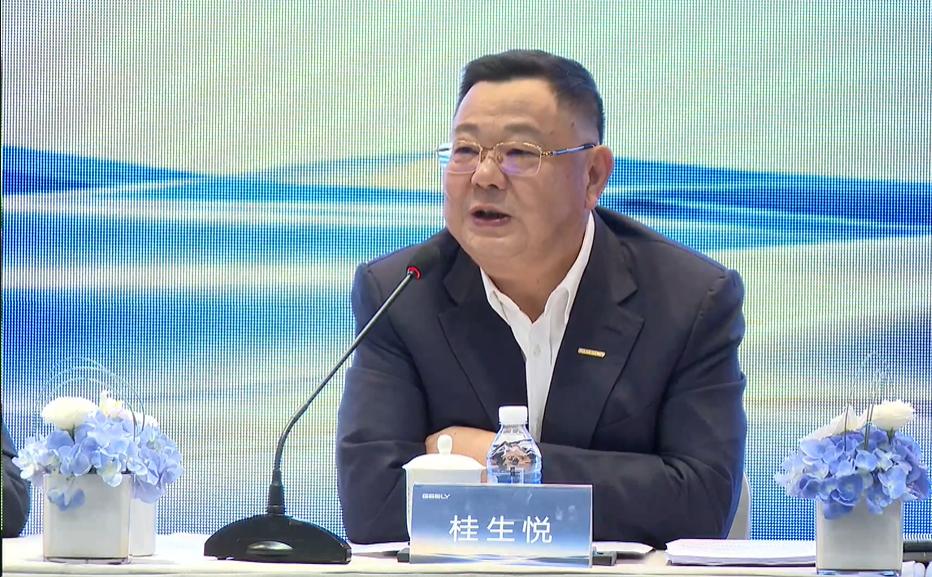
Regarding Li Shufu's departure, Gui Shengyue, Vice Chairman of Geely Auto's Board of Directors, defined it as "a strategic organizational evolution declaration of Geely Auto":
"Li Shufu's resignation (as Chairman of the Board) and An Conghui's succession are a declaration of de-familialization, marking that Geely Auto has moved from the founder-driven entrepreneurial and development stages to the mature stage driven by systems and teams."
"The enterprise will no longer rely on personal charisma and authority, but on organizational systems and talent echelons. It means that Geely Auto's future governance will be more transparent and management more scientific. For internal talents, it is also a signal to break the career ceiling, which is conducive to enabling the enterprise to bring greater returns to shareholders and make greater contributions to the country."
Of course, the 63-year-old Li Shufu has not completely left.
He will continue to serve as Chairman of Zhejiang Geely Holding Group, and other positions in the group remain unchanged for the time being.
When asked why he chose to step down from the front line at this time, Li Shufu said bluntly, "The automotive industry is a never-ending marathon, and enterprise inheritance and value orientation determine the sustainable development capability of an enterprise", and "People are the core element that determines the inheritance of corporate culture and value orientation."
For a large automaker that spans multiple brands, multiple technology routes and multiple overseas markets, strong central leadership is still required for strategic resolve, while professional decentralization is needed for operational execution.
The current structure of Geely is closer to "the founder sets the direction, and the professional managers run the system", which not only ensures the continuity of corporate strategy, but also gives the professional manager team full operational autonomy.
Against a deeper background, Li Shufu believes that "the era of global economic integration and investment and trade liberalization has come to an end. A new era of economic globalization is taking shape. Geely must take root in the Chinese market and accelerate its layout in the global market."
To achieve that two-thirds of its sales come from overseas, Li Shufu has left An Conghui a localized production network covering the European Union, the United Kingdom, Malaysia and other regions, but the new generation needs to fulfill this vision.
As Gui Shengyue said:
"Any cause needs younger physical strength, as well as younger wisdom."
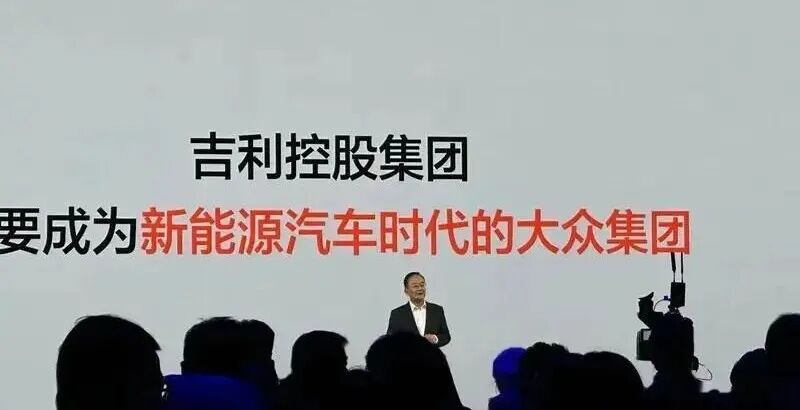
Toyota and Volkswagen used to be the targets that Geely chased and learned from, but Li Shufu went further than Kiichiro Toyoda. He completed the de-familialization of the company during his tenure; in early 2024, after An Conghui put forward the slogan of "becoming Volkswagen in the new energy era", in September of that year, Li Shufu keenly released the resounding "Taizhou Manifesto", launching the "One Geely" initiative featuring strategic integration, contraction and expansion, and continuous reflection and adjustment of the multi-brand model.
Li Shufu chose a proper timing to step down, ending his tenure with the best half-year report since Geely's listing:
In the first half of the year, Geely Auto achieved revenue of 173.6 billion yuan, a year-on-year increase of 15%; core net profit attributable to shareholders reached 9.68 billion yuan, a year-on-year increase of 46%; gross margin rose to 17.9%; overseas sales reached 474,000 units, a year-on-year increase of 158%.
This half-year report featuring "simultaneous growth in volume, price and profit" is exactly the first report card delivered after Li Shufu gradually withdrew from daily management and the professional manager team took over comprehensively.
The simultaneous landing of performance delivery and governance transition verifies a key proposition: when the founder voluntarily transfers management power and the enterprise completes the transformation from "family-driven" to "system-driven", the operating quality will instead achieve a leap.
02. "Geely of Li Shufu" Becomes "Geely of the System"
According to data from the All-China Federation of Industry and Commerce, about 80% of Chinese private enterprises are family businesses, and the first generation of entrepreneurs from the reform and opening-up era have generally reached the age range of 60 to 70. The power transfer from the "first generation of founders" to the "second generation of enterprise successors" is happening in batches.
Among private enterprises, the "founder's exit" is often accompanied by the script of "second generation taking over", but Geely has chosen a completely different path.
Although Li Shufu's son Li Xingxing is a supervisor and shareholder of Geely Holding, he has not appeared in the core of Geely's system in recent years; his daughter Li Ni has not entered Geely's core management either, and mainly operates supporting businesses around Geely.
This means that Li Shufu did not choose the traditional path of "son inheriting father's business", but relied on the professional manager team to realize the modern governance and sustainable development of the enterprise.
In fact, Geely's de-familialization was launched as early as 20 years ago.
In May 2002, Geely Group carried out corporate restructuring, Li Shufu's three brothers completely withdrew from the decision-making level, and professional managers began to enter the senior management. In March 2003, Zhejiang Geely Holding Group Co., Ltd. was officially established.
Li Shufu's own exit path also presents a clear feature of "from the shallow to the deep, from the partial to the overall".
In July 2021, Li Shufu stepped down as Chairman of Geely Automobile Group Co., Ltd.
In March 2022, he withdrew from the position of director of Zhejiang Geely Automobile Co., Ltd.
In June 2026, Li Shufu systematically expounded the concept of enterprise inheritance at the Chongqing Forum, and clearly stated that he would build a "modern enterprise operation system with clearer governance structure, clearer rights and responsibilities, efficient operation and global compliance". From governance structure, personnel adjustment, endogenous talent training to the release of the Taizhou Manifesto, the inheritance work has been carried out in an orderly manner.
Li Shufu stepped down as Chairman of Zeekr Intelligent Technology that month, and the Chairman of Lynk & Co also changed simultaneously.
From a family-owned enterprise to a modern joint-stock enterprise, Geely has spent more than 20 years, and finally completed the most critical and most symbolic step today.
03. Platform Enterprise Under "One Geely"
In Geely's official announcement, this management adjustment is defined as:
"In accordance with the requirements of corporate governance and the talent echelon construction plan, further improve the authorized operation mechanism of professional managers and promote the sustainable and healthy development of the company", with the goal of "strengthening 'One Geely' with a modern corporate governance system".
In other words, the founder's exit and the "One Geely" strategy are two sides of the same coin.
The launch of Geely's "One Geely" initiative began with the "Taizhou Manifesto" released in September 2024.
The core of this manifesto at that time was not simply to shrink the business lines, but to systematically promote strategic focus, internal integration and collaborative efficiency improvement in the face of resource dispersion caused by industry price wars, overlapping technology routes and parallel multi-brand operations.
By January 2025, Geely further concretized the Taizhou Manifesto into the "1-3-3" concept and the "two horizontal and seven vertical" structure:
Geely Automobile Group integrates mainstream businesses including Geely, Galaxy, Radar, and Extream, while Zeekr Technology Group integrates Zeekr and Lynk & Co. The high-end new energy sector is thus incorporated into the same entity, and the technology, products, supply chain and organizational system begin to be restructured according to a unified logic.
Subsequently, the equity integration of Zeekr and Lynk & Co was completed, marking that "One Geely" has advanced from business collaboration to substantive integration at the capital level; later, Zeekr was privatized, delisted from the New York Stock Exchange and returned to Geely Auto's main platform, which further re-converged the high-end new energy assets scattered in the external capital market into a unified listing system.
After entering 2026, Geely put forward the 2030 strategic goal of "One Geely, All-round Leadership", and began to straighten out the relationship between Geely Automobile Group and Geely Automobile Holdings, and close down, suspend, merge or transfer redundant entities.
Before today, "One Geely" has gone through strategic declaration, brand integration, equity restructuring and capital convergence, and at the point of this year's interim report and management adjustment, it began to show a clearer institutional meaning:
Only when the founder no longer clings to the direct control of each subsidiary can the systematic integration be truly implemented.
Geely is becoming a unified platform with more concentrated resource allocation, higher collaboration efficiency and stronger globalization capability.
It chose to complete the most strategic organizational adjustment at the best time.
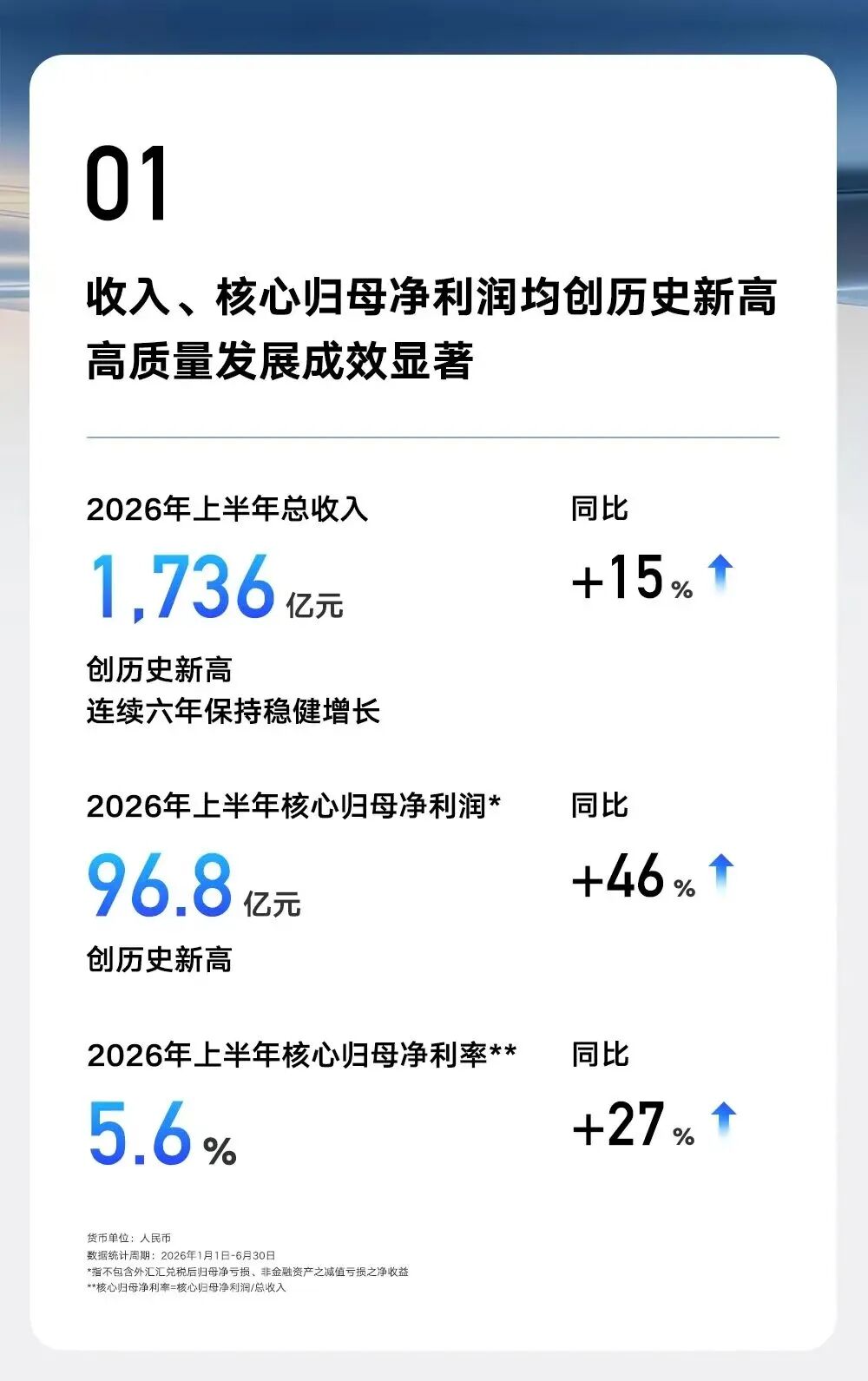
In the first half of 2026, Geely Auto's operating scale and profitability improved simultaneously, with total sales exceeding 1.42 million units, hitting a new high for the same period; total revenue exceeded 170 billion yuan, up 15% year on year, achieving positive growth for six consecutive years; core net profit attributable to shareholders reached 9.68 billion yuan, up 46% year on year, significantly outpacing revenue growth; gross margin rose to 17.9%, and core net profit attributable to shareholders per vehicle increased 45% year on year to 6,806 yuan.
Zeekr sold more than 178,000 units in the first half of the year, accounting for only 12.5% of total sales, but contributed 31.7% of operating revenue, with an average customer unit price of about 350,000 yuan, surpassing traditional luxury brands such as BBA.
Geely Galaxy sold nearly 520,000 units in the first half of the year, ranking among the top three new energy brands worldwide; China Star sold more than 580,000 units in the first half of the year, winning the sales championship of Chinese brand fuel passenger cars for the 10th consecutive year.
This two-wheel drive pattern of "building brands at the high end and expanding scale in the mainstream market" is exactly the result of the professional manager team coordinating resources under the framework of "One Geely".
With the in-depth implementation of the "One Geely" strategy, the administrative expense ratio decreased by 0.2 percentage points year on year to 1.7%, the R&D investment ratio decreased by 0.3 percentage points year on year to 5.2%, while the absolute value of R&D investment increased by 8% year on year to 9.06 billion yuan. While increasing technology investment, the efficiency of resource use has been significantly improved through platform-based collaboration and centralized procurement.
High-quality growth has brought sufficient capital reserves to Geely. As of the end of June 2026, the capital reserve reached 69.56 billion yuan.
However, Geely's management did not package this financial report as a triumphant victory. At the performance meeting, Gui Shengyue defined it as a "bright but not amazing financial report".
Behind this positioning, in the first half of 2026, China's new energy vehicle sales reached 7.446 million units, and auto exports reached 5.096 million units, with the scale still expanding; but the industry's profits continue to face pressure.
Data from the National Bureau of Statistics shows that in the first half of the year, the operating revenue of the automotive industry was about 5.19 trillion yuan, up 1.8% year on year; operating cost was about 4.61 trillion yuan, up 2.8% year on year; total profit was about 195.4 billion yuan, down 20% year on year, and sales profit margin was only 3.8%.
According to the public analysis of the China Automobile Dealers Association, the profit margin of the automotive industry from January to May 2026 was only 3.4%, at a relatively low level.
The data from the China Association of Automobile Manufacturers is even more striking: the average profit margin of the industry in the first half of the year has dropped to 1.6%.
Although there are differences in statistical scope and time window between the several calibers, the conclusion is consistent:
China's automotive industry is still growing, but the difficulty of making profits has risen significantly.