The top-traffic shopping mall that rakes in over 1 billion yuan in revenue a year is no longer the reigning "king" overnight.
An online video selection event has earned Chef Fei the title of "National King of Stir-Fried Pork with Chili" for nearly 6 years. However, under the recent compliance rectification of honors by industry associations, this title that accompanied the brand's national expansion has been officially revoked.
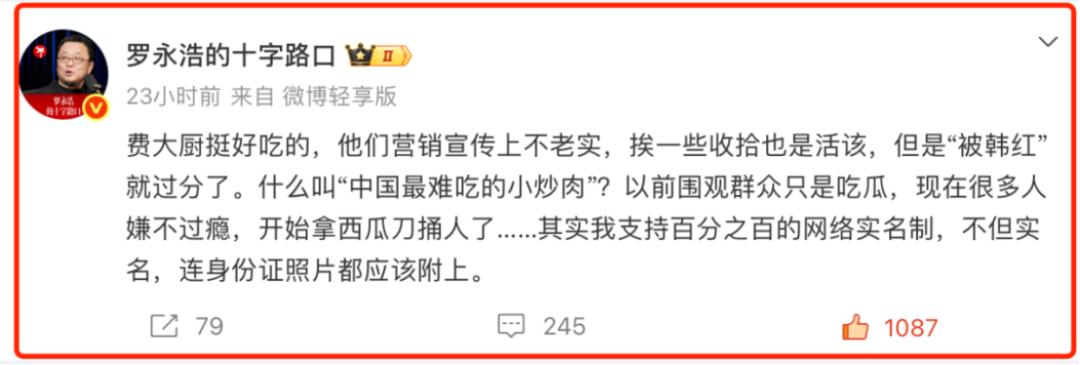
Overnight, after losing the "King" title, various controversies have emerged. Luo Yonghao's evaluation of Chef Fei is much more lenient than that of Xibei, affirming that "its products taste good", but "its marketing is not honest", and he hopes that netizens will be more moderate in their "criticism" of it.
The practice of claiming to be "king" has always been a tried-and-tested marketing method in the catering industry. Yang Guofu once used the title "King of Chinese Malatang" for promotion, Mr. Li's Beef Noodles directly added "California Beef Noodle King" to its brand suffix. A large number of brands are keen on various titles such as "No.1", "National King", "Master" and "Urban Food Landmark" awarded by various associations, using third-party endorsement to reduce user decision-making costs and achieve rapid growth. Leading brands such as Banu Maodu Hot Pot and Tai Er Sauerkraut Fish have all reached the top of the industry through precise category penetration.
Relying on the momentum of its signature single product and titles, Chef Fei quickly opened up the national market. According to Zhaimen Catering Eye, by 2026, the number of directly-operated stores of Chef Fei across the country has exceeded 200, all of which are located in core shopping malls in first- and second-tier cities, with a cumulative number of receptions exceeding 100 million, making it a phenomenal Hunan cuisine brand nationwide.
According to China Entrepreneur reports, Chef Fei's revenue exceeded 1 billion yuan as early as 2023, when the annual sales of stir-fried pork with chili was 5 million portions — now the figure has doubled, reaching the 10 million level. In cities such as Beijing, Shanghai, Guangzhou and Shenzhen, Chef Fei ranks at the top of the must-eat lists. Some netizens said: "I only hope that the price of dishes will be cheaper after the title is revoked."

However, as the industry shifts from high-speed growth to stock game, this set of narrative gradually no longer works. For Chef Fei, saying goodbye to the "King of Stir-Fried Pork with Chili" may not be a bad thing.
Chef Fei who no longer calls itself king: the slogan has been changed, and the new materials are still on the way
Amid the turmoil, the operation of Chef Fei's offline stores has not shown obvious shocks.
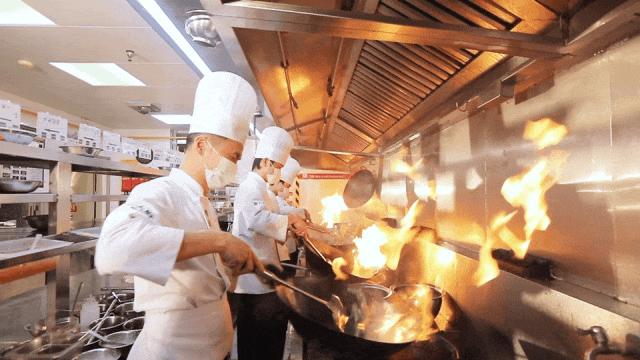
At 6:30 p.m. on a weekday in August, the Xixi Tianjie Mall store in Hangzhou was already full, with a small number of customers waiting in line at the door. The store adopts a minimalist design of dark green with brown logs, and the walls are covered with portraits of chefs from Hengyang, Hunan, most of whom have more than 20 years of experience in cooking Hunan dishes. The service staff in the store are all dressed in white chef uniforms and tall chef hats, deliberately strengthening the brand symbol of "Chef".
"Chef" is the core of Chef Fei's brand narrative. Fei Lianghui, the founder, was born into a chef family. Influenced by his father, he entered the industry early and became a chef in charge of the spoon in his early twenties. At the beginning of his entrepreneurship, one of his original intentions was to improve the professional situation of the chef group and enhance the social status of the industry. He once mentioned, "A chef is always changing jobs constantly, which is not the life I should live, nor should it be the norm for practitioners in the chef profession."
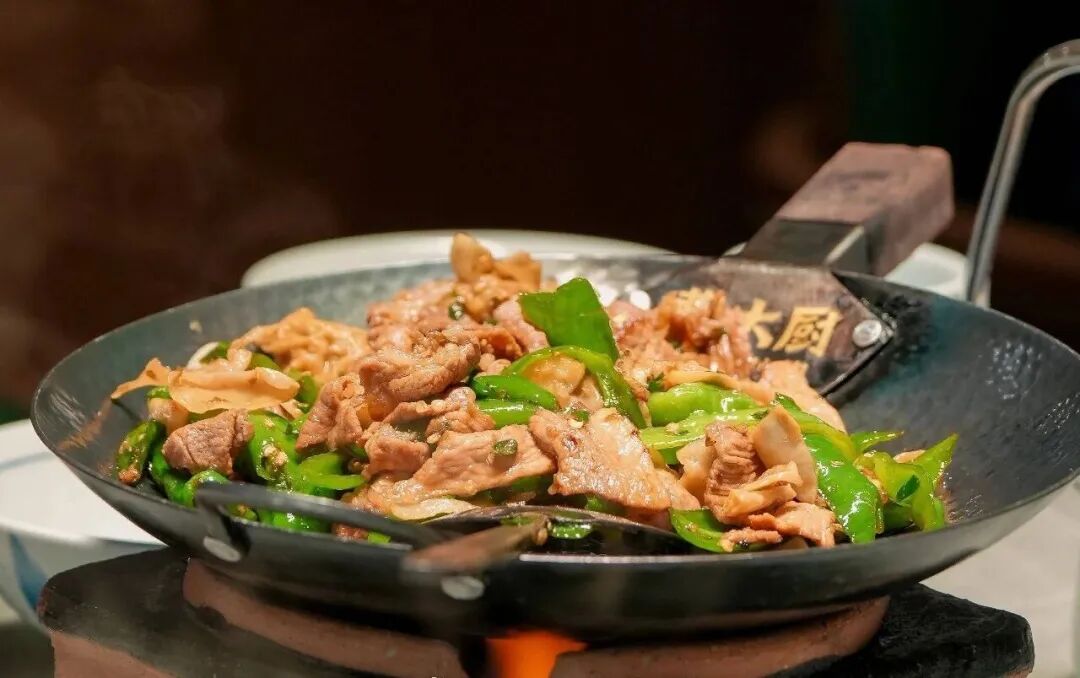
Chef Fei's SOP (Standard Operating Procedure) for dining experience is highly standardized. After being seated, the waiter will serve high-temperature disinfected tableware. When serving dishes, there is an exaggerated ritual and slogan called "Fei's Spell". The price of rice is 5 yuan, and the waiter will bring a small green rice cooker for unlimited refills. There is a freezer in the store that provides free old popsicles to relieve spiciness.
At present, Chef Fei has more than 200 stores across the country and is still in a stage of rapid expansion. The standardized process and ritual settings are convenient for management and expansion, and also shape a unified brand image and strengthen user memory. Compared with Lan Xiangzi and Xun Xiang Ji in the same business district, the sense of ritual in the latter two stores is significantly weakened.
Fei Lianghui said in an open letter that the brand launched store upgrades on August 3. Elements of the "King of Stir-Fried Pork with Chili" can still be seen everywhere in this restaurant, and materials related to menus and paper towels have not been replaced. The changes are concentrated in the waiter's oral announcement when serving dishes. After carrying the scalding special Zhangqiu iron wok to the table, the slogan has been updated to "Hello, hello, selected black pork, stir-fried by professional chefs", while the previous slogan was "Hello, hello, Chef Fei, the national king of stir-fried pork with chili, serves stir-fried pork with chili".
Store staff said that the new slogan has been implemented for several days, and it is explained to the outside world as a brand upgrade that focuses on high-quality ingredients and professional chefs.
Using "upgrade" to package "rectification" and trying to turn a passive event into an active action of the brand.
Ingredient upgrading and on-site stir-frying are the confirmed directions of the entire catering industry. Chef Fei wrote the promise on the order menu: "Stir-fried pork with chili selects black pork, fish and frog products are delivered fresh to the store every day", "Stir-fried by professional chefs, some dishes are made of selected organic ingredients, truly organic and truly healthy."
However, standardization also brings practical contradictions. Although it emphasizes on-site stir-frying, the spiciness of most dishes cannot be adjusted. When Tianxia Wangshang asked on the spot whether the spiciness of the dishes could be reduced, the staff said that Chef Fei "the spiciness of some dishes is stipulated by the headquarters, and in principle, modification is not supported".
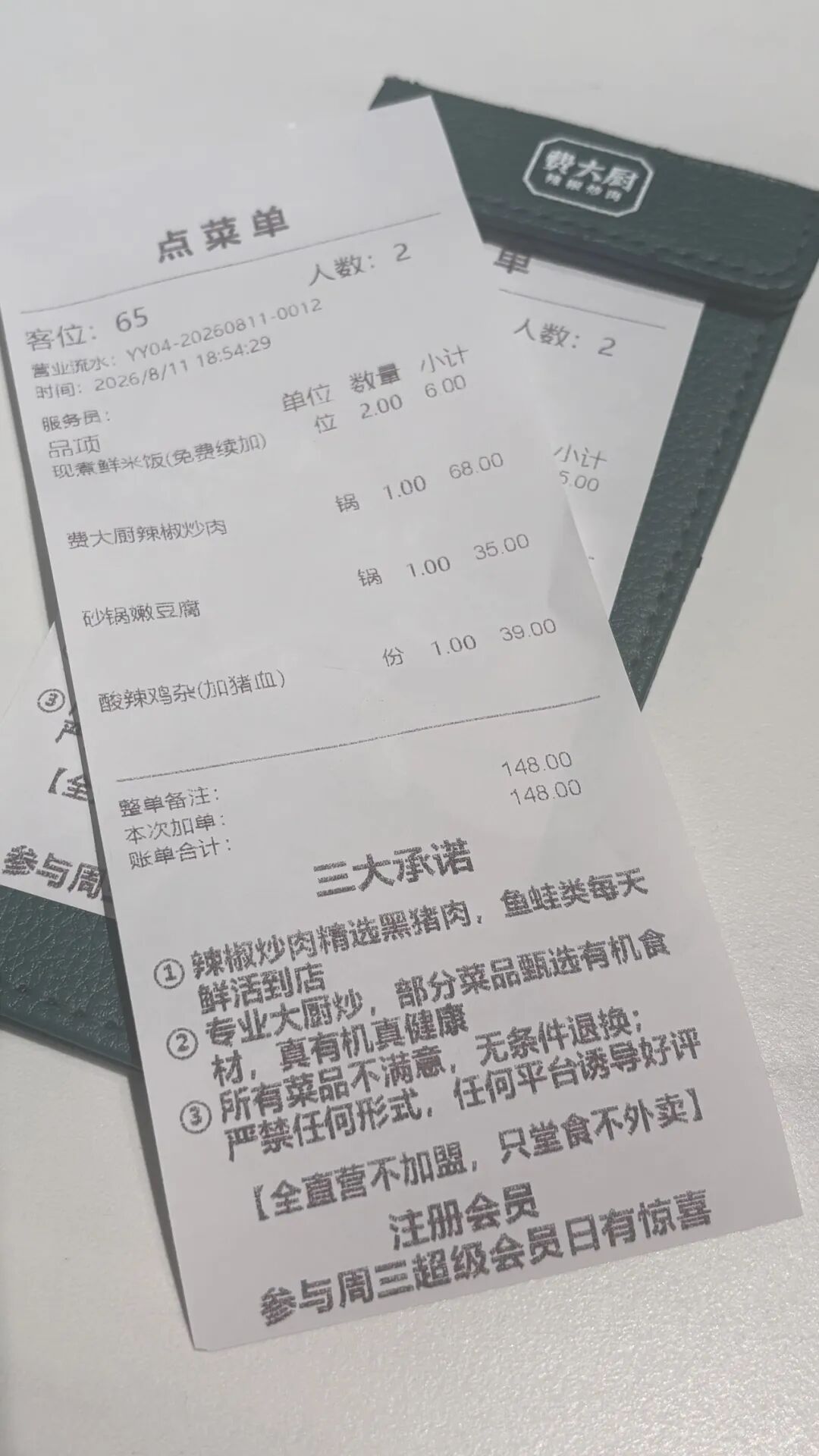
Another impressive feature of Chef Fei is that in the highly competitive catering environment, it maintains a sense of restraint and independence, hoping to rely on dishes and word-of-mouth rather than price to speak — there are no activities of giving gifts for checking in and collecting, nor any preferential mechanisms such as group buying and vouchers, and all bills are settled at the original price. The order menu even clearly marks that "inducing positive reviews in any form and on any platform is strictly prohibited".
This more or less makes consumers who are surrounded by catering merchants' welfare feel a little unaccustomed, but this may filter out real loyal users to a certain extent.
In terms of price, the signature dish of Chef Fei, stir-fried pork with chili, costs 68 yuan per portion, and the average customer unit price is 70-80 yuan. This price is considered "relatively expensive" by many consumers, but many users also said that the taste matches the price, and "it feels worth it after eating".
More than 200 directly-operated stores, 10 million portions of stir-fried pork with chili sold in a year
Looking back on the cases of single product breakthroughs in Chinese cuisine in the past ten years, Chef Fei is an unavoidable sample.
Founder Fei Lianghui was born in Hengyang, Hunan. He started learning cooking in 1997 and opened his first restaurant "Original Flavor" in his hometown in 2003. In the following years, he iterated multiple catering brands in Hunan, but was always trapped in the regional market and failed to go out of Hunan. His early attempt to open a store in Shanghai even encountered acclimatization and ended in losses.
The turning point came in 2016, when the brand was officially named "Chef Fei Stir-Fried Pork with Chili" and made a key strategic choice: to shrink the menu and focus on stir-fried pork with chili, a home-cooked dish in Hunan.
Stir-fried pork with chili has a low threshold in Hunan, and there is no strict and unified standard. Chef Fei has polished this home-cooked dish into a replicable, highly recognizable chain signature single product. It has established strict standards for ingredients, heat control, and serving time: the fat-to-lean ratio of black pork, the specification of screw peppers, and the wok gas when serving are all standardized. It insists that chefs stir-fry on site, does not provide takeout, and maximizes the retention of the wok gas experience.
This set of strategies quickly succeeded. After gaining a foothold in Changsha, Chef Fei left Hunan in 2018 and settled in Shenzhen, officially embarking on the road of national expansion.
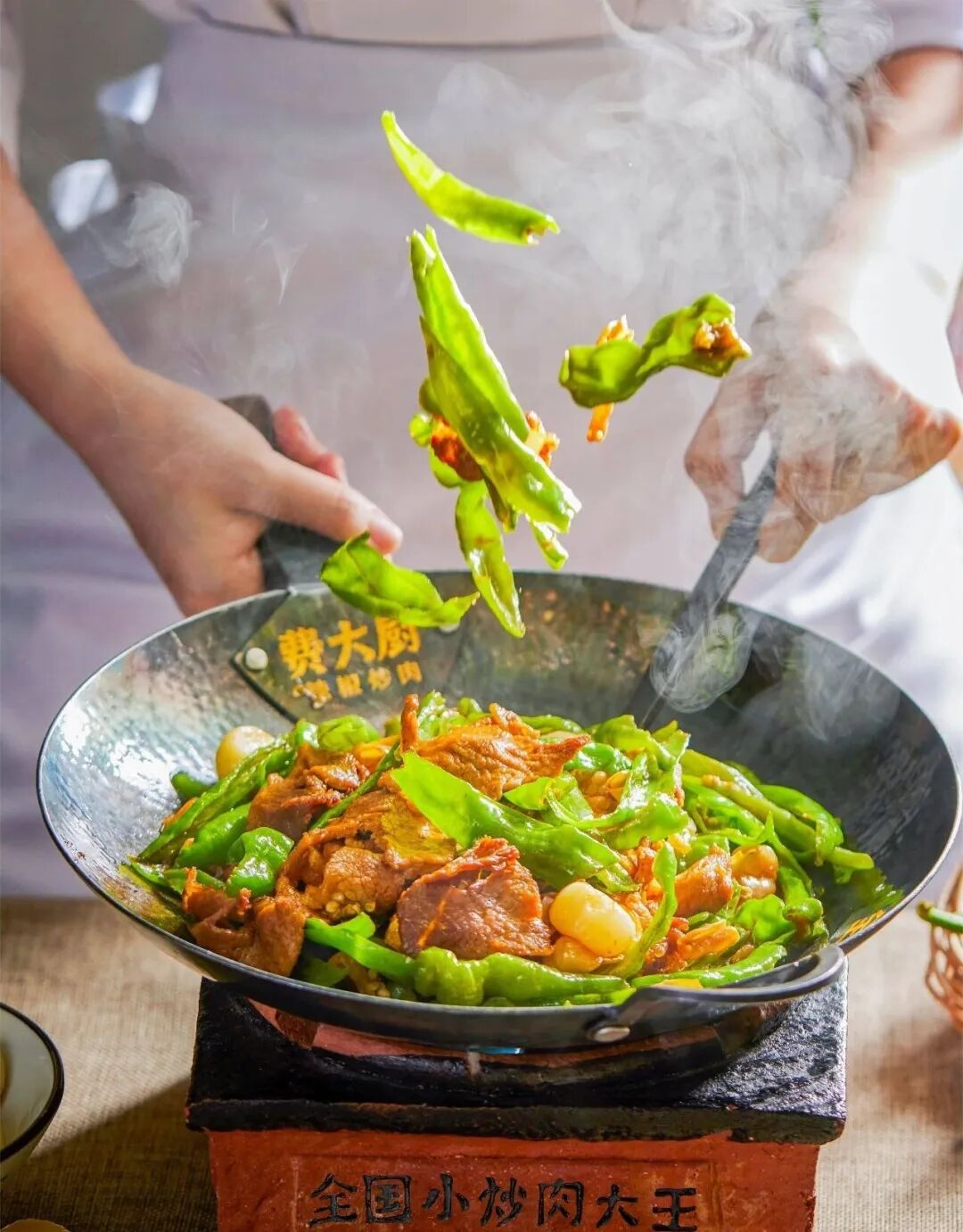
What really turned Chef Fei from a "delicious Hunan restaurant" into a nationally renowned brand was a competition in 2020.
In the online stir-fried pork with chili PK competition hosted by the China Cuisine Association, Fei Lianghui won the first place with the entry video and online voting, and was awarded the title of "National King of Stir-Fried Pork with Chili".
This selection did not have offline on-site tasting, and the result was only determined by the submitted videos, dish photos combined with public voting. However, it was widely used commercially by the brand, from store posters, menus, paper napkins, to the waiter's oral announcement when serving dishes. "National King of Stir-Fried Pork with Chili" penetrated every link where consumers came into contact with the brand, and also gave birth to a widely popular magic oral announcement meme, becoming a powerful marketing lever for the brand.
In fact, the brand with the largest number of Hunan cuisine stores is Lan Xiangzi, which relies on the "direct operation + internal partner" model to replicate rapidly and has more than 400 stores. It focuses on serving all dishes within 25 minutes, with an average per capita consumption of just over 60 yuan, which is more affordable than Chef Fei, and achieves rapid store expansion through an efficiency model.
Lan Xiangzi has an advantage in scale, but Chef Fei has formed a differentiated advantage in popularity and user reputation. Some consumers commented, "Let me put it this way, as a Hunan restaurant that has gone out of Hunan, it can't be said to be the best, but it is definitely one of the best brands!" "I am from Hunan. It may not rank high in Hunan, but outside Hunan, Chef Fei is second to none."
Chef Fei may not be the most delicious Hunan restaurant in Hunan, but it is one of the most successful business cards for Hunan cuisine to spread outward.
In the stock era, the catering industry is saying goodbye to the single signature product narrative
"Spicy, wok-heated, and perfect with rice", catering to the public's demand for highly lively catering, Hunan cuisine has ushered in a golden growth period.
According to Hongcan Industrial Research Institute, the national Hunan cuisine market size has exceeded 1.1 trillion yuan in 2025, with a total of 113,000 stores, and its market growth rate is significantly higher than the industry average.
Behind the expansion of the track, the competition is becoming increasingly fierce. On the one hand, the natural contradiction between "wok gas" and "standardization" makes the industry highly fragmented, most of which are small family-run shops, and the promotion of chain operation faces many obstacles; on the other hand, Jiangxi stir-fry and Sichuan-Chongqing stir-fry chains are rising in batches, competing for the same group of customers who love "rice-friendly stir-fries".
Chef Fei taking off the "National King of Stir-Fried Pork with Chili" title is ostensibly a compliance rectification, but in the deep sense, it is a microcosm of the ebb of "title marketing" and the arrival of the "de-bestseller" wave in the catering industry.
This kind of title is essentially a kind of trust lease, which can quickly reduce user decision-making costs, quickly establish the mind of category leaders, and achieve low-cost customer acquisition. In the incremental era of the industry's savage growth, this model has been tried and tested.
However, in the stage of stock competition, the contradictions of the single bestseller model are gradually exposed. Single products have a natural repurchase ceiling, and it is difficult for consumers to repeatedly repurchase the same dish at high frequency; bestsellers are easily imitated by peers, and the brand will quickly fall into a homogeneous price war; the iteration speed of consumption trends is accelerating, once the trend recedes, the brand lacks a second growth curve, and the operational risk will be infinitely amplified.
A number of leading brands that once rose by relying on large single products have taken the initiative to start de-labeling transformation. This phenomenon is particularly obvious in the sauerkraut fish track.
Tai Er Sauerkraut Fish once became popular all over the country with its unique brand persona and the sauerkraut fish signature single product. But recently, Tai Er has also carried out brand upgrades. The "Tai Er Sauerkraut Fish" on the store sign has been replaced with "New Tai Er · Fresh Ingredient Sichuan Cuisine", and the brand slogan has changed from the familiar "Sauerkraut is more delicious than fish" to "Use fresh ingredients to make fresh Sichuan cuisine". Stir-fried fresh beef, cheese spicy shrimp, boiled fish and other Sichuan dishes enrich the menu, and sauerkraut fish has changed from the C position to a "regular dish".
Long-term reliance on a single category has become a bottleneck for Tai Er's development. The semi-annual report of Jiu Maojiu Group shows that Tai Er's revenue in 2025 fell by 15.7% year-on-year to 3.72 billion yuan, and the number of self-operated restaurants decreased from 623 at the end of 2024 to 477. In the past ten years, the number of dishes in Tai Er has long been maintained at around 22, and consumers will inevitably get aesthetic fatigue gradually.
Not only Tai Er, Yu Ni Zai Yi Qi has established a dual-category model of "sauerkraut fish + hot pot", Yu Shi Hu has added dozens of new Sichuan-style stir-fries, Jiang Yu Er has been renamed "Jiang Yu Er · Sichuan-style Small Canteen", Tan Yu has also added barbecue and stir-fry series...
Behind this, the sauerkraut