Zhang Xue is "rich" now.
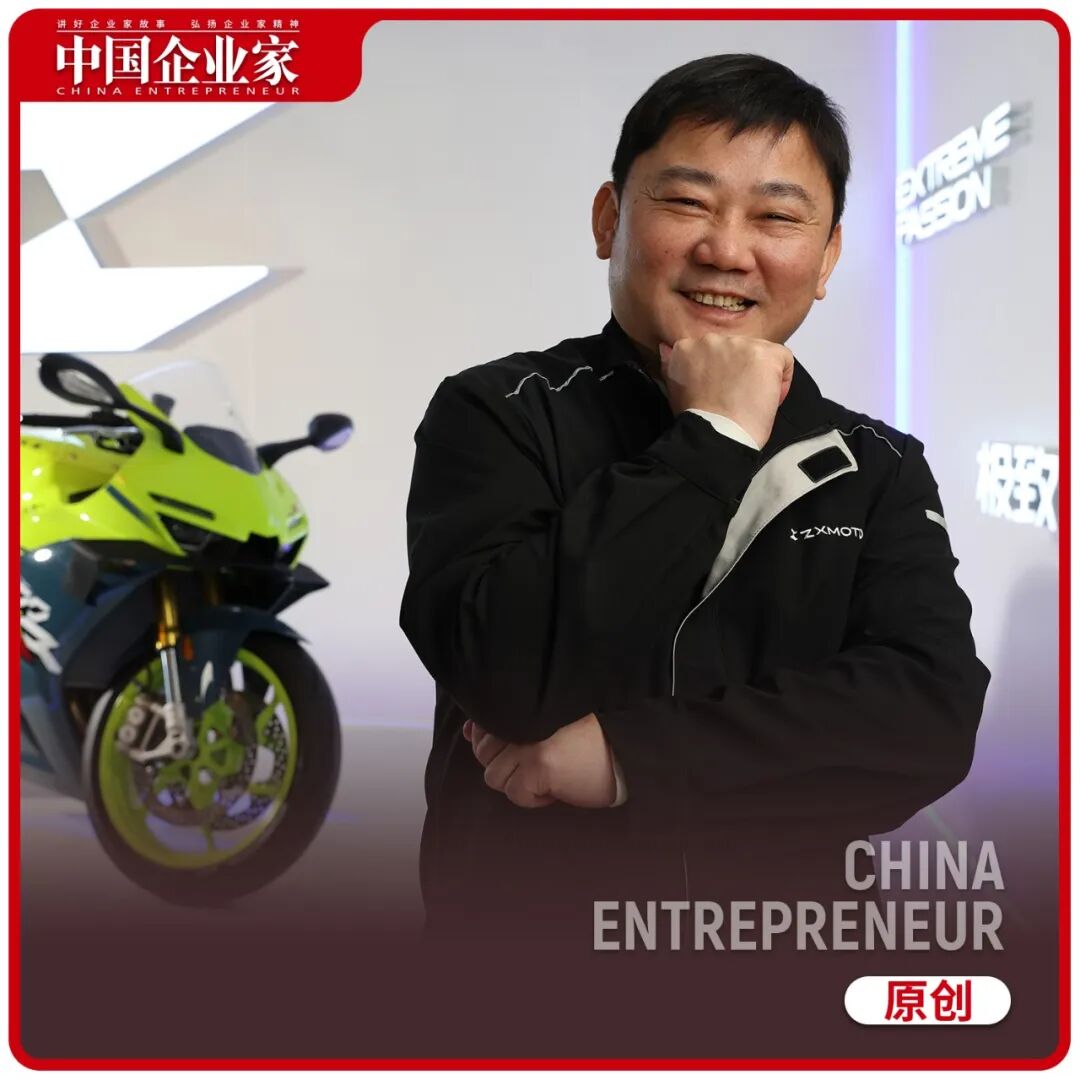
Since Zhang Xue Motorcycle claimed the championship at the Portuguese round of WSBK (World Superbike Championship) this March, discussions around this company have never ceased.
News from the racetrack kept coming in succession: the Hungary round, Czech round, and Italy round brought one championship after another. The championship headlines frequently topped Weibo's trending searches. A domestic motorcycle brand has diverted a large share of public attention away from basketball and football — in sports communities such as Zhibo8, match reports of Zhang Xue Motorcycle often draw three to four thousand comments, outnumbering those of many traditional sports events including tennis and snooker.
Within half a year, Zhang Xue Motorcycle rose to fame from the racetrack to streets and alleys. Capital also came pouring in voluntarily. "All kinds of capital flooded in through various channels, which caught us totally off guard," Zhang Xue, founder of Zhang Xue Motorcycle, stated bluntly in a video posted on his social account back in April.
Rumors about Zhang Xue Motorcycle's financing also spread widely across the market, with valuations ranging from 1 billion yuan, 2 billion yuan to 5 billion yuan. Half a year later, the answer was revealed: the investor that backed Zhang Xue Motorcycle is HSG.
According to news on August 13, Zhang Xue Motorcycle secured a 150 million yuan investment from HSG, with a post-money valuation of 6 billion yuan. What draws more discussion than the financing itself is the explosive surge in its valuation. In its Series A financing at the beginning of this year, Zhang Xue Motorcycle's post-money valuation was only 1.09 billion yuan.
The dramatic reversal of capital also pushed Zhang Xue to the forefront of public opinion. Just a month ago, he revealed that he owed nearly 100 million yuan in debt and only paid off all the liabilities by selling old shares. This contrast added a touch of real-life complexity to the narrative of "a grassroots making it big".
Zhang Xue appeared rather calm about it. "The entry of HSG adds a long-term partner that can walk alongside Zhang Xue Motorcycle," he said. He added that the team will continue to improve the engine and complete vehicles, carry out further verification on the racetrack, and keep listening to real feedback from users.
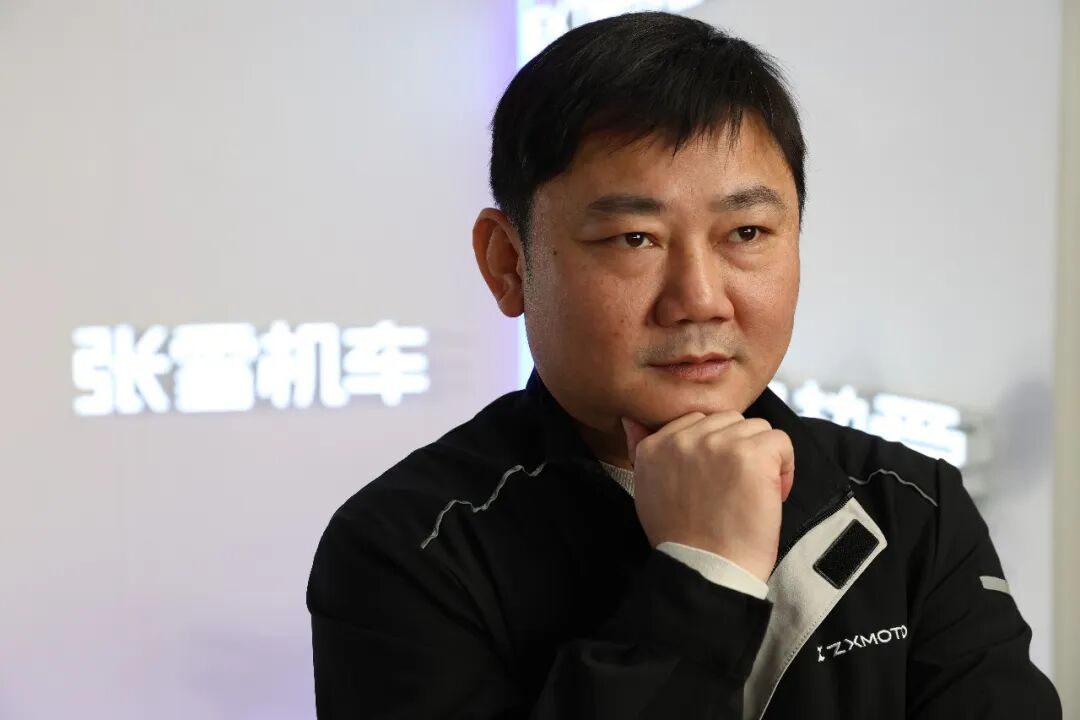
Photography: Deng Pan
The story of Zhang Xue is, in short, a history of pursuing dreams revolving around motorcycles: he dropped out of school at 14 to work as a mechanic; at 19, he chased a vehicle in the rain just for a chance to be noticed; at 30, he started his own business but had to restart from scratch due to disagreements... (Known as "Lei Jun in the motorcycle circle", Zhang Xue's speeding life as a champion | Exclusive) After 20 years, Zhang Xue turned his "passion" into an admission ticket for top-tier capital, but he has only got the ticket so far, not the final answer.
Behind the 6 billion yuan valuation, what the market really wants to ask is: Is this sum of money enough to support a "world-class" dream?
"Money"
The core that cannot be avoided around Zhang Xue is money.
At the initial stage of his last entrepreneurial venture, he was determined to pour money into independently developing a three-cylinder engine. He faced a harsh reality: if he did not take the independent R&D path, Chinese motorcycles would always be just assembled products.
To achieve that, he paid a huge price — he parted ways with Kove Motorcycle.
Back when he was still at Kove Motorcycle, he advocated increasing investment to independently develop high-performance large-displacement engines, which led to strategic disagreements with the investors. In the eyes of the investors, this was a choice that burned too much capital, had a long R&D cycle, and showed no visible commercial returns.
Zhang Xue simply said: "Life would be meaningless to me if I don't develop this engine. If I stayed in the company, I could still make money, but that's not what I want. I want to do the things I am passionate about, the things I believe are worth it."
In March 2024, he posted his resignation letter on his WeChat Moments, gave up all his shares, and left the company with no personal assets.
When founding Zhang Xue Motorcycle, he remained committed to breaking international technological monopolies, and even mortgaged his property to raise start-up capital.
The capital burn of Zhang Xue Motorcycle is clearly reflected in its financial statements. In 2025, the company's total output value reached 750 million yuan, with R&D investment hitting 69.58 million yuan, and the full-year loss was about 22.78 million yuan.
He has done the math clearly — the break-even point is 1.5 billion yuan in sales revenue, and positive profitability can only be achieved when sales reach 2 billion yuan. This means Zhang Xue must figure out where the capital will come in before hitting the break-even point.
This sense of crisis persists all the time. He told *China Entrepreneur*: "In February 2025, we ran out of money, and there was no money to pay salaries. I borrowed money everywhere, from friends, peers, suppliers, and even borrowed 1 million yuan from my landlord. I raised a total of 7 million yuan to pay the salaries."
Borrowing money can only be a temporary solution, while capital burn is the underlying reality. The subsequent explosive fame brought both advantages and disadvantages to Zhang Xue. The advantage is that he no longer has to be trapped by the pressure of making ends meet, but the disadvantage is how he can prove his value to the market.
The market values Zhang Xue Motorcycle at 6 billion yuan. According to market calculations, if Zhang Xue Motorcycle's sales scale ranges from 1 billion yuan to 3 billion yuan, its price-to-sales ratio is 2 to 3 times, while that of most peers is lower than 1.5 times.
To maintain this valuation for a long time, the company not only needs to expand its business scale, but also make solid progress in sales price, gross margin and other indicators. In the consumer market, the title of "champion" alone does not equal product strength, nor does it guarantee a reasonable premium, let alone lock in customer orders.
According to reports from Huxiu, in China's domestic medium and large-displacement motorcycle market (above 250cc), annual sales volume is between 700,000 and 800,000 units, and the growth rate has dropped from 40% in 2021 to around 15% in 2025. Among this market, CFMoto and Qiangjiang Motor together hold a market share of about 20%. According to Zhang Xue Motorcycle's current annual target of 50,000 to 60,000 units, it will inevitably compete head-on with these two peers.
From this perspective, going global is critical, but it is a track that burns even more capital.
Entering the European market requires whole-vehicle type certification, which may correspond to a pure investment of tens of millions of yuan to cover all vehicle models; although Zhang Xue Motorcycle has entered multiple overseas markets, its channel density and after-sales capabilities are far behind its competitors, and overseas channel construction will take at least 2 to 3 years; an imperfect after-sales network will directly hit repurchase rates and brand reputation, so the company needs to set up multiple parts warehousing centers overseas.
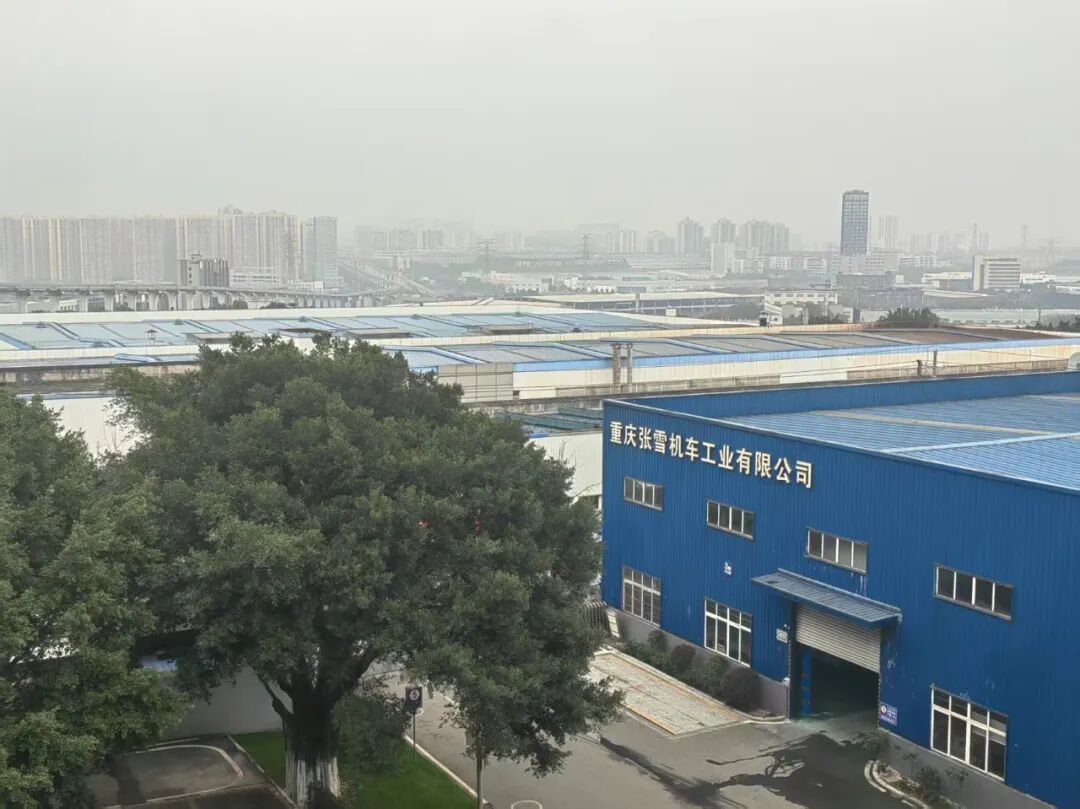
Photography: Deng Pan
There is some good news among all this, for example, the overseas order volume of Zhang Xue Motorcycle in April this year has caught up with the total amount of the whole of last year. But that is not enough. To compete on the global stage, the company must have sufficient "chips".
In the past six months, Zhang Xue has indeed been ramping up production capacity. In June this year, Zhang Xue Motorcycle secured land for a production base in Liangjiang New Area; in July, it signed an agreement to jointly build a R&D and production base with an annual planned output of 500,000 units in the local area.
Sales channels also require capital investment. According to the plan, Zhang Xue Motorcycle will open at least 450 stores this year to strive for 2 billion yuan in sales; at the same time, it is promoting the layout of the UK market, with the time window to expand the distribution network set within six months.
Not to mention the ongoing R&D work. Zhang Xue Motorcycle has laid out a clear plan: it plans to launch 7 new models in the future, raise R&D investment from 69.58 million yuan in 2025 to 135 million yuan, build a full-range independent R&D system covering 500cc to 820cc within two years, and simultaneously set up an electric vehicle team.
In July 2026, Zhang Xue revealed that he owed nearly 100 million yuan in debt, but announced that he had paid off all liabilities that month. This seems to show strong confidence, but from another perspective, it means a new round of capital burn has just begun.
The story of Zhang Xue Motorcycle about money has turned to a new page, and what is written on this page is not "we have money now", but that the question has changed from "where does the money come from" to "how to spend the money to prove we are worth this valuation".
Every expenditure in this process is a mandatory question he has to answer.
Click the cover to subscribe to the full-year magazine
Whose money?
If you look at Zhang Xue's entrepreneurial history, it can almost be strung together by the question "whose money".
In the first 20 years, he needed to think about whose money he could use. This year, he needs to think about whose money he should take. These correspond to two completely different sums of money on the entrepreneurial path: one is for saving the business, the other is for calculating the value.
Back in the Kove Motorcycle era, money was a "painful" topic.
At that time, Zhang Xue held less than 40% of the shares, while the investors held 51%. The core founder lacked the right to make decisions. Once disagreements arose between him and the investors, the company would easily fall into internal friction, and it would be difficult to obtain more venture capital later. The result was the widely circulated "naked resignation letter".
So when founding Zhang Xue Motorcycle, he was more sensitive than anyone else about the issue of whose money to take. Although the public is mostly familiar with the early days when the company was struggling to make ends meet, there is also a much-told story.
In July 2024, Shanghai Gaoxin Lingzhi Venture Capital Partnership (Limited Partnership) under Gaoxin Capital became the exclusive angel round investor of Zhang Xue Motorcycle, with an investment of 20 million yuan. At that time, it was only 3 months since Zhang Xue Motorcycle was officially established.
Cao Bin, chairman of Gaoxin Capital, watched a large number of Zhang Xue's videos online. With more than ten years of investment experience, he believes that the essence of investment is "investing in people". And because he invested in the person, the whole process from contact to final decision was faster than normal investment procedures, taking less than a month. Later, Zhang Xue repurchased half of the shares for executive equity incentives, reducing Gaoxin Capital's shareholding ratio to 10%.
In January 2026, Zhejiang Venture Capital, which has a state-owned background in Zhejiang Province and was also moved by Zhang Xue, joined the list of investors.
Few people know what happened behind this investment. The motorcycle industry has extremely strong consumer attributes, and if compared with this year's popular investment tracks such as artificial intelligence, semiconductors and robots, it is definitely not a priority choice. In the past, the capital market preferred mature, stable projects with clear commercialization paths, and Zhang Xue Motorcycle, which was losing tens of millions of yuan, would most likely be defined as a "high-risk" target.
But two months after Zhejiang Venture Capital's capital entered, Zhang Xue Motorcycle won the championship, its brand value skyrocketed, and the investors achieved several times of book returns. Some people called the investors of this deal "god-level", and this investment reaped huge profits.
The person who facilitated this cooperation was Shen Qianyang, a post-90s investment manager at Zhejiang Venture Capital who had just joined the company. As a motorcycle enthusiast, he knew Zhang Xue's story very well and had been paying attention to his second entrepreneurial venture.
The Zhejiang Venture Capital team did not entrust a third-party agency, but flew directly to Chongqing to conduct on-site due diligence one by one. They found that Zhang Xue's mastery of this business had reached the level of muscle memory. But what they faced was Zhang Xue's proposed 1 billion yuan valuation, which was obviously too high for a company that had not yet achieved mass production and was making losses.
Later, after detailed calculation, they still decided to accept Zhang Xue's quotation and invest 90 million yuan in Zhang Xue Motorcycle. This investment only took 4 months of due diligence. In the words of the investor, it was Zhang Xue's "genuine personality" and unique management style that impressed them.
This sentence almost brings people back to 20 years ago. At the age of 19, Zhang Xue rode an old motorcycle older than himself, chasing the Hunan TV program team for more than 100 kilometers in the rain just to get a publicity opportunity, in order to be noticed.
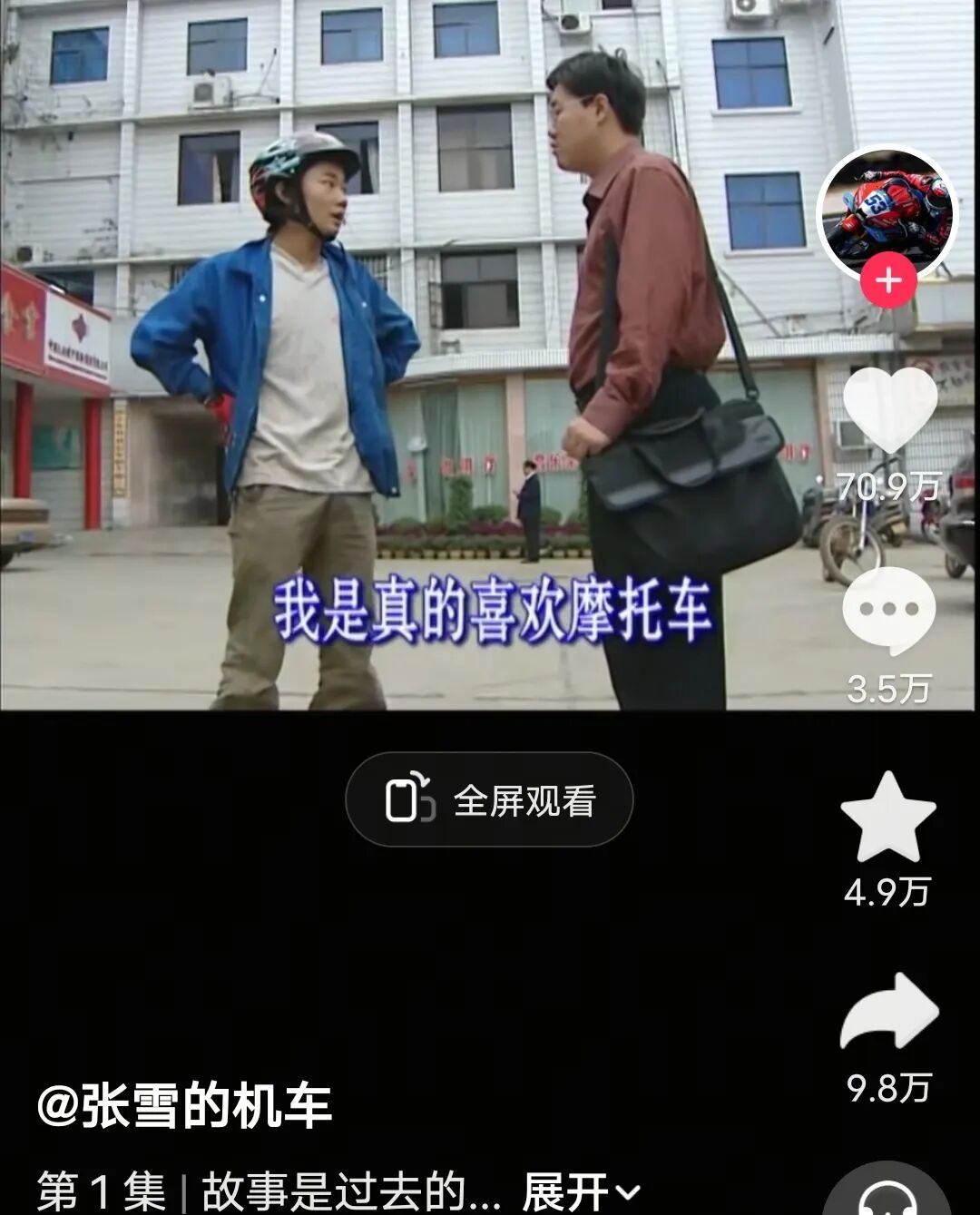
Source: Screenshot from Douyin
20 years later, his "paranoia" finally got a response. This is a win-win investment. With this sum of money, he was able to send Zhang Xue Motorcycle to the international racetrack and win the championship at one stroke.
After getting that sum of money, he mentioned in a live broadcast: "My 'ammunition' is relatively sufficient now, so I can be more courageous and sleep more peacefully."
Now, HSG stands behind Zhang Xue, and this is the first time HSG has made an investment in the motorcycle complete vehicle manufacturing track.
Su Kai, partner of HSG, believes that Zhang Xue's almost persistent pursuit of products — his long-term