How to deliver services that truly resonate with users through the "integrated delivery and installation" solution?
In the past, the consumer experience of large home appliances was "fragmented".
When your washing machine breaks down and you need to use it urgently, you quickly place an order for a new one online. It turns out that the old unit is removed quickly, but the new one will take several days to be delivered; when the goods finally arrive, you have to reschedule the installation, and the technician's schedule will be delayed for several more days. After a whole week of tossing, the new washing machine is still not installed, so you have to wash your clothes by hand.
This is a long-standing pain point in the home appliance and furniture industry: the separation of delivery and installation makes consumers wear out their patience in repeated appointments and passive waiting.
Looking at the present, this experience is being rewritten. If you place an order for a washing machine on JD in the morning, the technician will deliver it to your door and complete the installation synchronously in the afternoon if everything goes fast. No need to make appointments, no need to wait, no need to contact multiple people. You will find that buying "large-sized goods" can actually be very simple.
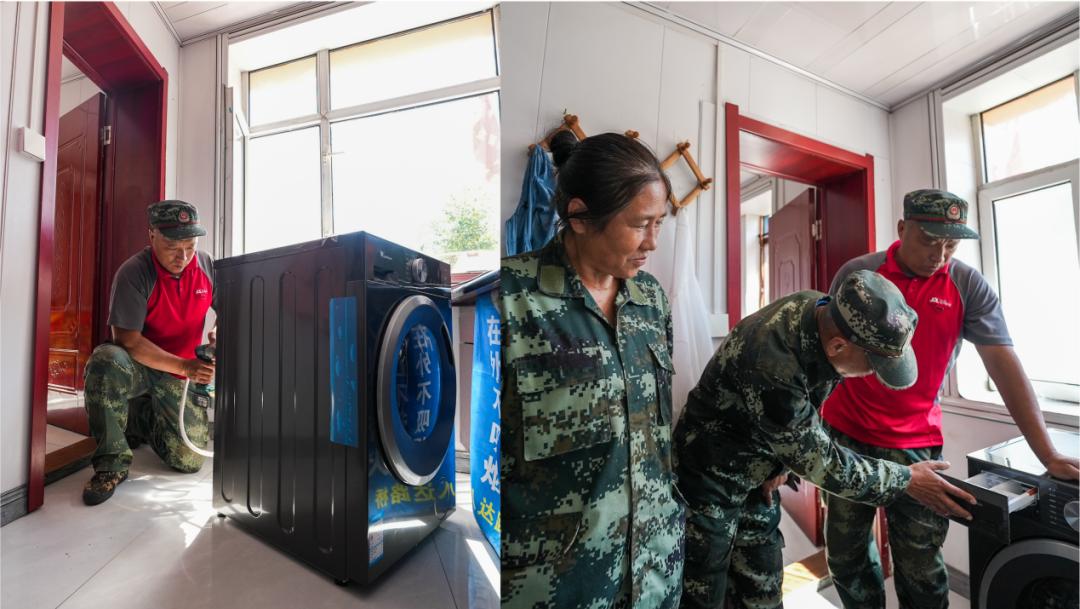
This is not a time-limited welfare provided during the "JD Home Appliances 18th Anniversary Celebration" event, but a service experience that consumers can enjoy every day in the future.
Between "waiting" and "not waiting", there is a "wall" that JD spent several years gradually breaking through.
The thickness of this wall comes from the long-term separation of the two systems of delivery and installation, as well as the layers of resistance from brand authorization, system interconnection, engineer training, and resource scheduling in peak and off seasons. JD chose to put in hard work to break through: building a self-operated engineer team of tens of thousands of people, a national training and certification system, and an elastic scheduling network for cross-province support... After several years of efforts, JD reconnected the two long-separated links of delivery and installation.
At present, the home appliance and furniture industry has entered the era of "delivery experience" competition. After the goods are delivered, the real test has only just begun.
Where there is a pain point, there is a solution
Consumers buy air conditioners to get cold air on hot summer days; buy washing machines to stop washing clothes by hand; buy smart toilets to avoid the cold feeling when sitting on the toilet in winter mornings.
Essentially, when consumers buy home appliance and furniture products, they are not buying the machine itself, but the life experience brought by the machine, and ideally the experience that allows them to put it into use immediately, effortlessly and quickly.
However, this simple wish has not been realized for a very long time.
The person in charge of the air conditioning service project of JD Home Appliance & Furniture Business Group shared a scene that impressed him deeply. One summer in Beijing was extremely hot. When he visited offline shopping malls, he witnessed a customer standing in front of a brand counter shouting: "Whoever can install the air conditioner for me this afternoon, I will buy from whom." When the weather is hot enough, price does not matter, brand does not matter, and installation timeliness becomes the only decision-making factor.
This is not a joke, but a real consumption scene that actually happened.
The data confirms consumers' anxiety. In the peak season of air conditioner sales, the average waiting time from delivery to installation in the industry is as long as 2.5 days. This number seems not long, but it is extremely long in the sweltering summer. Consumers pay first, wait for delivery, then wait for installation. Even if the air conditioner is delivered to their home, they still have to wait for installation through repeated phone calls, and they have to survive two more muggy nights.
This is a true portrayal of the service gap in the home appliance and furniture industry. The consumption chain of large-sized goods naturally includes multiple links: delivery, door-to-door service, installation, commissioning, and old unit removal and recycling. If any link breaks, "expectation" will turn into "suffering".
JD saw this service breakpoint earlier than the entire industry.
The person in charge of the delivery and installation service project of JD Home Appliance & Furniture Business Group recalled that JD launched the integrated delivery and installation service exactly based on users' consumption demands. At that time, users bought TVs on JD's platform, but no technicians came to install them after the goods arrived, and complaint calls kept coming in.
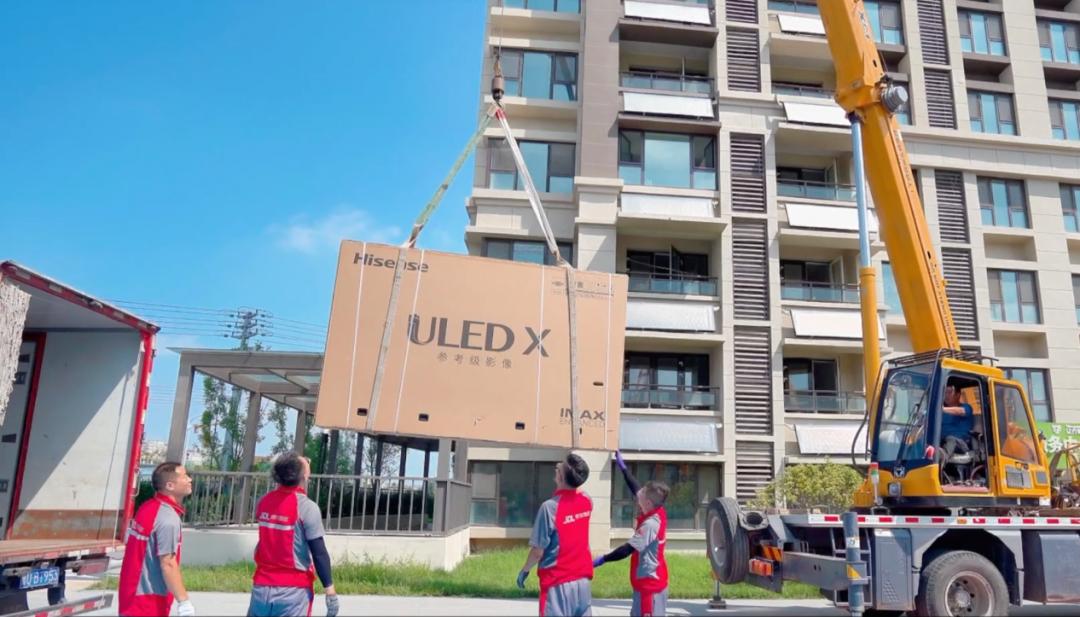
This pain point is obvious enough, so it must be solved immediately.
In December 2021, JD piloted the "integrated delivery and installation" service for the TV category for the first time, covering tens of thousands of fourth-level townships in 11 provinces and cities. The delivery staff confirms whether the user has installation needs on site, and completes the wall mounting and commissioning in one visit. Although it was a pilot, the overall positive rating reached 99%, which verified that users have strong demand for integrated delivery and installation services.
In the following five years, the integrated delivery and installation service expanded from TVs to nearly 100 categories including air conditioners, refrigerators, washing machines, smart toilets, and electronic locks, extending from cities to nearly 99% of the county-level administrative regions across the country.
In 2026, JD further optimized the service time efficiency during the peak air conditioning season into the "6+6" mode, realizing that units delivered before 15:00 will be installed on the same day, and units delivered after 15:00 will be installed the next day, which improves the delivery and installation efficiency and user experience.
The value brought by the integrated delivery and installation service capability has also been verified at the brand end.
In the past, many brand merchants suffered from user complaints because delivery and installation belonged to two separate systems, leading to long installation schedules after the goods arrived in peak seasons. The problems mainly focused on long waiting time and troublesome multi-party appointments. These problems usually lower positive ratings, increase return and rejection rates, and directly damage brand reputation and repurchase rates.
Since GREE launched in-depth cooperation with JD on integrated delivery and installation, the two sides have jointly realized "installation on the day of delivery", creating an industry service benchmark that "the installation can be completed within 1 hour at the fastest after the air conditioner arrives". As the first air conditioning brand to access JD's "integrated old unit removal, delivery and installation" service, GREE's service timeliness rate increased by 9% year-on-year, 31% higher than the industry average.
In the words of the relevant person in charge of GREE: "From small-scale pilot to national rollout, and then to the integrated delivery and installation service that withstood the order pressure in the peak promotion season, the performance fulfillment positive rating has increased significantly, which proves that the model is feasible."
As the person in charge of the delivery and installation service project of JD Home Appliance & Furniture Business Group said, over the past 18 years, the unchanging core of JD in the field of home appliance and furniture service has always been only one thing: taking user experience as the core.
When the industry is still discussing how to deliver the "last mile", JD has reconnected all links, trying to assign all work to the same person, the same team, and complete all tasks in one visit, so that users can bid farewell to the long and hard waiting. This is exactly a very forward-looking step taken by JD: it is not solving a delivery problem, but truly implementing the concept of "buy and use immediately".
What "integrated delivery and installation" brings is not only products, but also services
Deep in the vast forest of the Greater Khingan Mountains, 56-year-old forest ranger Tian Guifu has stuck to his post at the observation tower for more than ten years. His wife accompanied him to take root in the deep mountains, washing clothes by hand all year round, and he has felt distressed about this for more than ten years. In the past, he dared not place an order for a washing machine, because the mountain road was rugged and distant, and he was not sure whether large home appliances could be transported to the mountain and whether the machine would be damaged by bumps.
In recent years, the Amur Forestry Bureau has continuously promoted the upgrading and transformation of observation towers, opened vegetable gardens, drilled deep wells, repaired residences, and expanded communication baseboards, solving practical problems such as difficult drinking water, difficult power consumption, and inconvenient travel one by one. As living conditions get better day by day, Tian Guifu's long-cherished wish for a washing machine finally has the possibility to come true.
During the JD Home Appliances 18th Anniversary Celebration this year, the Forestry Bureau equipped the forest rangers' living quarters with home appliances. What Tian Guifu didn't expect was that this "big guy" sent from JD Logistics's large warehouse in Shenyang traveled 2000 kilometers, crossed the forest, drove into the deep mountains, and was delivered to the foot of the observation tower deep in the Greater Khingan Mountains.

JD's installation technician completed delivery, installation and commissioning all in one visit. "I really didn't expect that JD's installation technician managed to carry the washing machine up the mountain in the deep old forest. Our living conditions in the mountains are getting better and better." Looking at the brand-new washing machine in front of him, the couple still found it hard to believe. The hard days of washing clothes by hand are over, and Tian Guifu's words are full of steadiness. This is something that was impossible to imagine in the past.
But at JD, this is not an isolated case. The reason why these "impossible" orders can be fulfilled is not because of a miracle, but because JD spent five years solidly building a set of hard-core service systems.
The person in charge of the delivery and installation service project of JD Home Appliance & Furniture Business Group divides the evolution of integrated delivery and installation into three stages: the first stage is the exploration period of service business, solving basic problems such as allowing users to view the service process and technician contact information on the APP; the second stage is the pilot period of integrated delivery and installation, starting with the TV category and gradually rolling out service capabilities across the country; the third stage is the construction period of large-scale service capabilities, bringing more categories into the scope, polishing the terminal network, and establishing industry standards.
JD looks further. When peers still regard service as part of the after-sales link, it has regarded service as the business itself.
This systematic capability can be disassembled from four dimensions.
In terms of coverage dimension, the difficulty of large-sized goods delivery lies in the "service breakpoint" in the "last mile". Most platforms only deliver goods to urban areas or towns, and villagers need to rent vehicles for transshipment by themselves. Bumps on mountain roads easily cause damage to the goods; after finally getting the goods home, they still need to find installers by themselves. The high handling and installation costs in remote villages make many elderly villagers hesitate to place orders.
Through the "cloud warehouse + satellite warehouse + integrated delivery and installation" model, JD has fully sunk its services, covering nearly 99% of the county-level administrative regions across the country, and extending to the vast township areas.
Nowadays, JD's installation technicians have footprints all over extreme scenarios such as Ngari, Tibet at an altitude of 4900 meters, Yushu, Qinghai with a one-way distance of 1200 kilometers, and Turpan, Xinjiang with a surface temperature of 89.2℃, truly realizing that "where JD can sell goods, JD can deliver and install goods there".
In terms of category dimension, from the pilot of TV category in 2021 to now, JD has expanded to nearly 100 categories including electronic locks and bathroom cabinets, with more than 500 cooperating home appliance and furniture brands.
For the platform, adding a new category means that the training system, installation standards, and scheduling logic behind it must be completely reconstructed and adapted. For example, air conditioner installation requires drilling holes, smart toilet installation requires modifying water and electricity circuits, and electronic locks involve door body transformation.
In just five years, JD has successfully operated nearly 100 complex categories. It does not rely on simply adding more staff, but on three hard strengths: strong standardization capability, excellent system replicability, and the persistence of "taking user experience as the core".
In terms of fulfillment dimension, in the traditional mode, delivery and installation are separated from each other, and consumers need to wait for delivery and then make an appointment for installation again. Through "integrated delivery and installation", JD coordinates the links of delivery, installation and commissioning, which has shortened the average waiting time for installation to 0.88 days, and realized "delivery upon arrival" for categories such as flat-panel TVs and electronic locks.
This efficient fulfillment has even forced profound changes in the industrial chain. Leading brands represented by GREE now pre-adapt to JD's delivery and installation process when launching new products, realizing in-depth coordination between product and service standards.
"Match good products with standardized services to make the complete experience of buying home appliances online solid." The relevant person in charge of GREE said.
In terms of system dimension, the ultimate competitiveness of integrated delivery and installation lies not only in wide coverage, but also in stable service. JD has built a self-operated engineer team of tens of thousands of people, covering multiple tracks such as home appliances, furniture, building materials, and new energy.
In 2026, JD further launched a recruitment plan for 20,000 engineers, and simultaneously implemented the "intelligent fair dispatching" and "working hour pricing" compensation system, to ensure the stability of engineer supply and the consistency of service quality from the source.
Over the past five years, from keen insight to small-scale pilot, and then to full large-scale expansion, JD has worked hard all the way, only to provide users with the ultimate service experience. This is exactly the value that JD always adheres to: putting user experience first, and filling the long-neglected service gap in the home appliance and furniture industry at all costs.
"Integrated delivery and installation" is exactly the best practice of this value. It is not only a service, but also reflects an attitude: install the goods as soon as they are delivered, so that consumers can "use the goods as soon as they arrive".
Resolve bottlenecks before services are provided
The integrated delivery and installation service is a "heavy business". In the traditional account book of the home appliance and furniture industry, service departments such as delivery and installation are regarded as "cost centers". Every extra cent invested means one cent less profit.
But on JD's account book, a set of data is rewriting this formula.
Hisense Washing Machine has cooperated with JD's integrated delivery and installation for nearly three years, with a cumulative delivery of 200,000 units, and the annual year-on-year growth has continued to exceed 20%. The data of TCL TV is more convincing: 1.5 million users have enjoyed the integrated delivery and installation service in 3 years, and the national delivery and installation area coverage exceeds 99%.
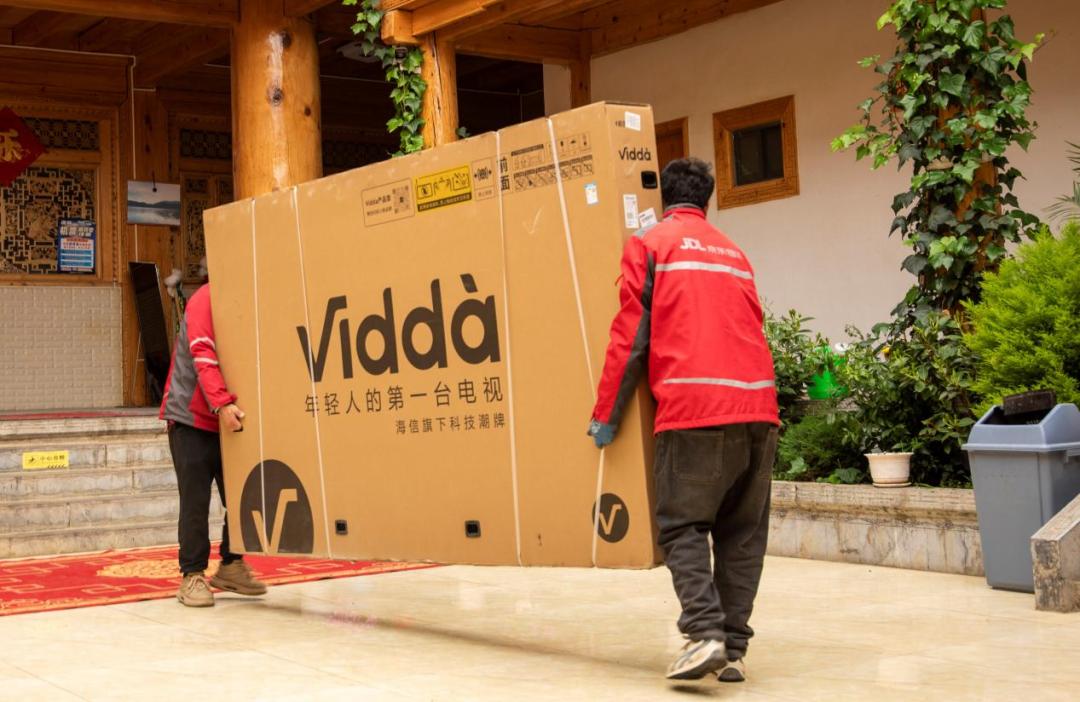
When service certainty becomes the reason for consumers to place orders, integrated delivery and installation is no longer an after-sales cost, but a real incremental engine.
What is more noteworthy is that now JD is no longer satisfied with solving the pain point of "goods delivered but not installed", it has begun to think one step ahead of users.
Take air conditioners as an example. In the past, the standard path was user placing order, waiting for delivery, technician visiting to drill holes, wall